2013 DIALOGUE OF THE PENJING WORLD FORUM– Part 2

ZHENQUE GARDEN

Image

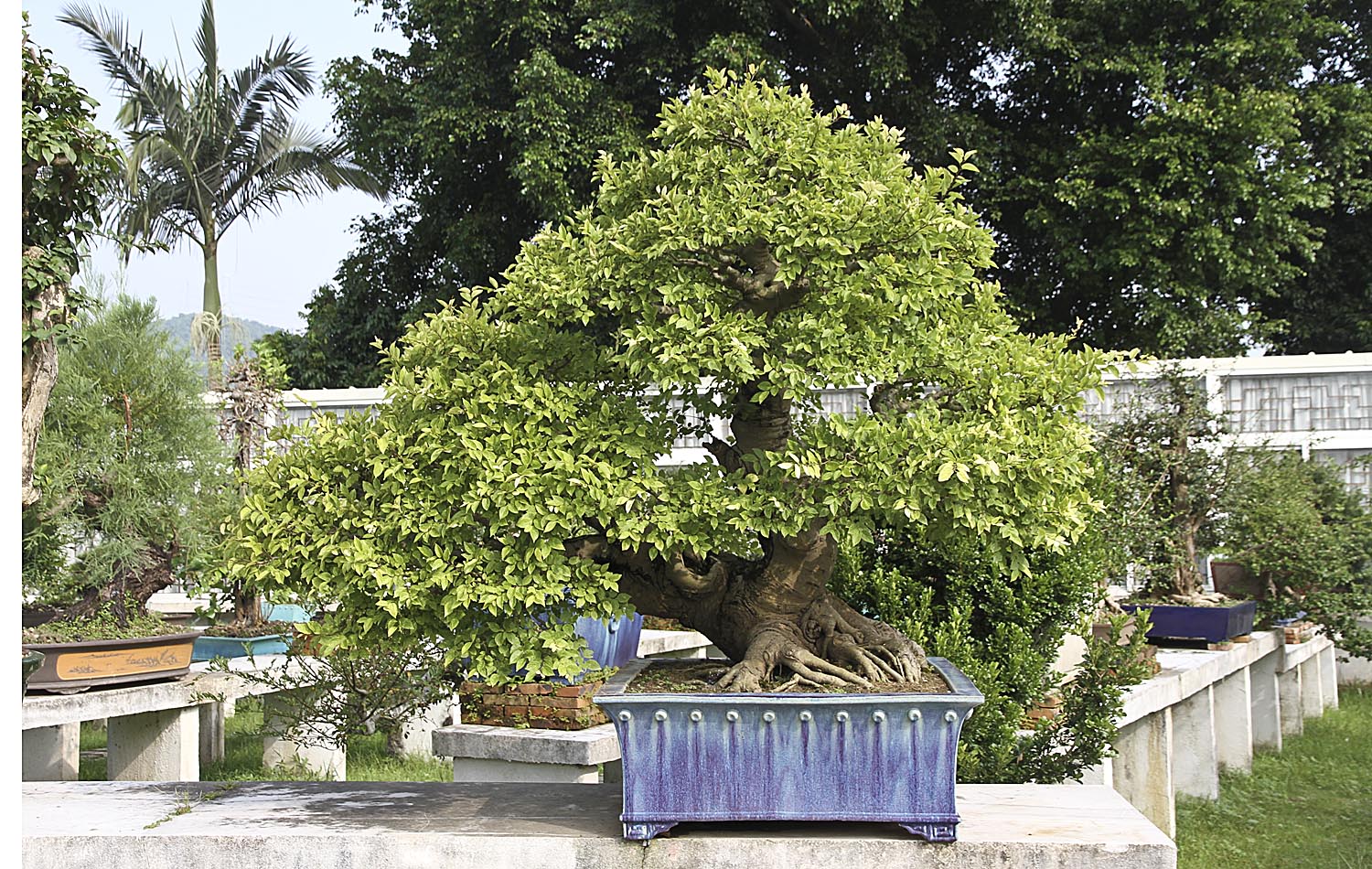
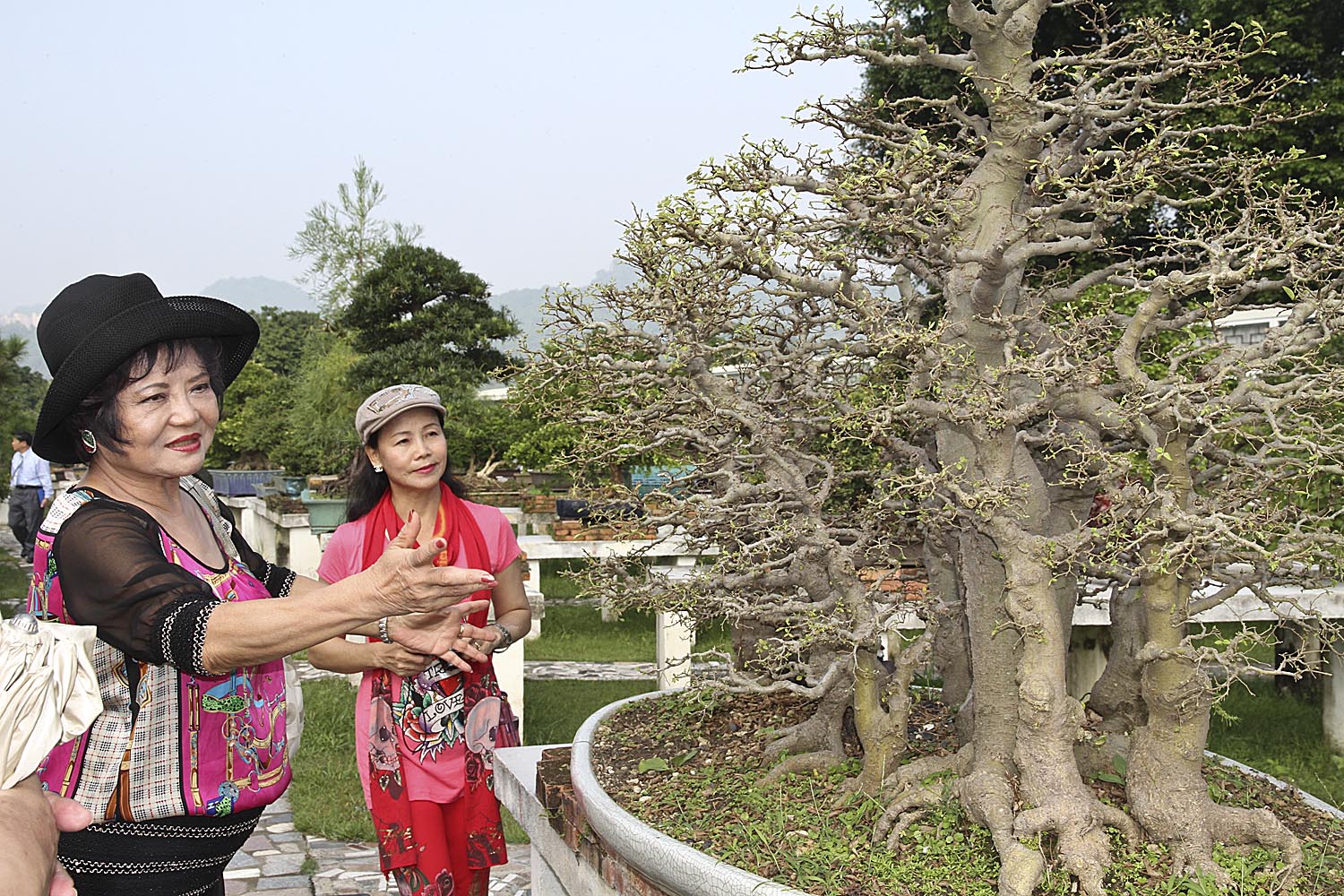
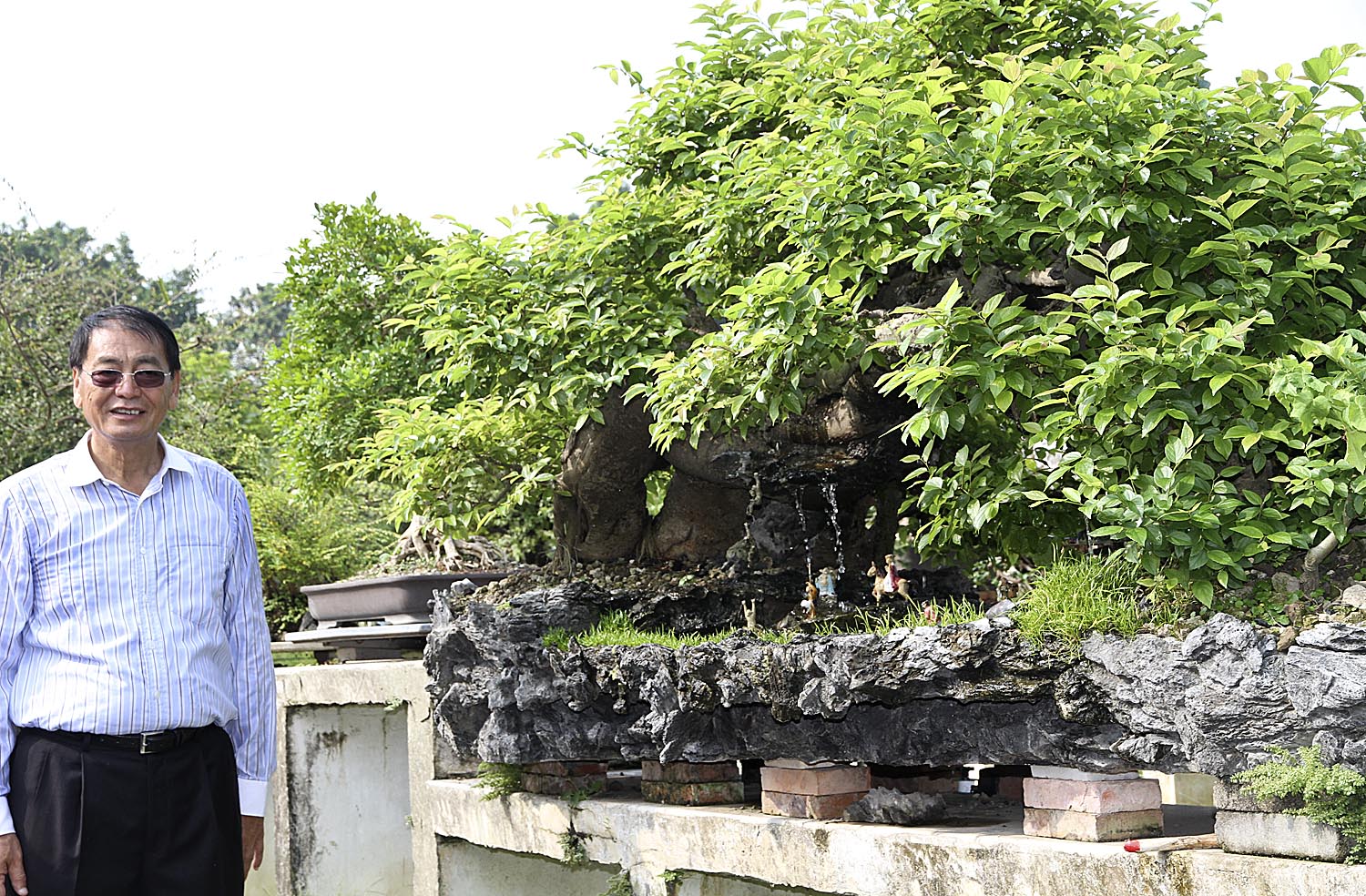
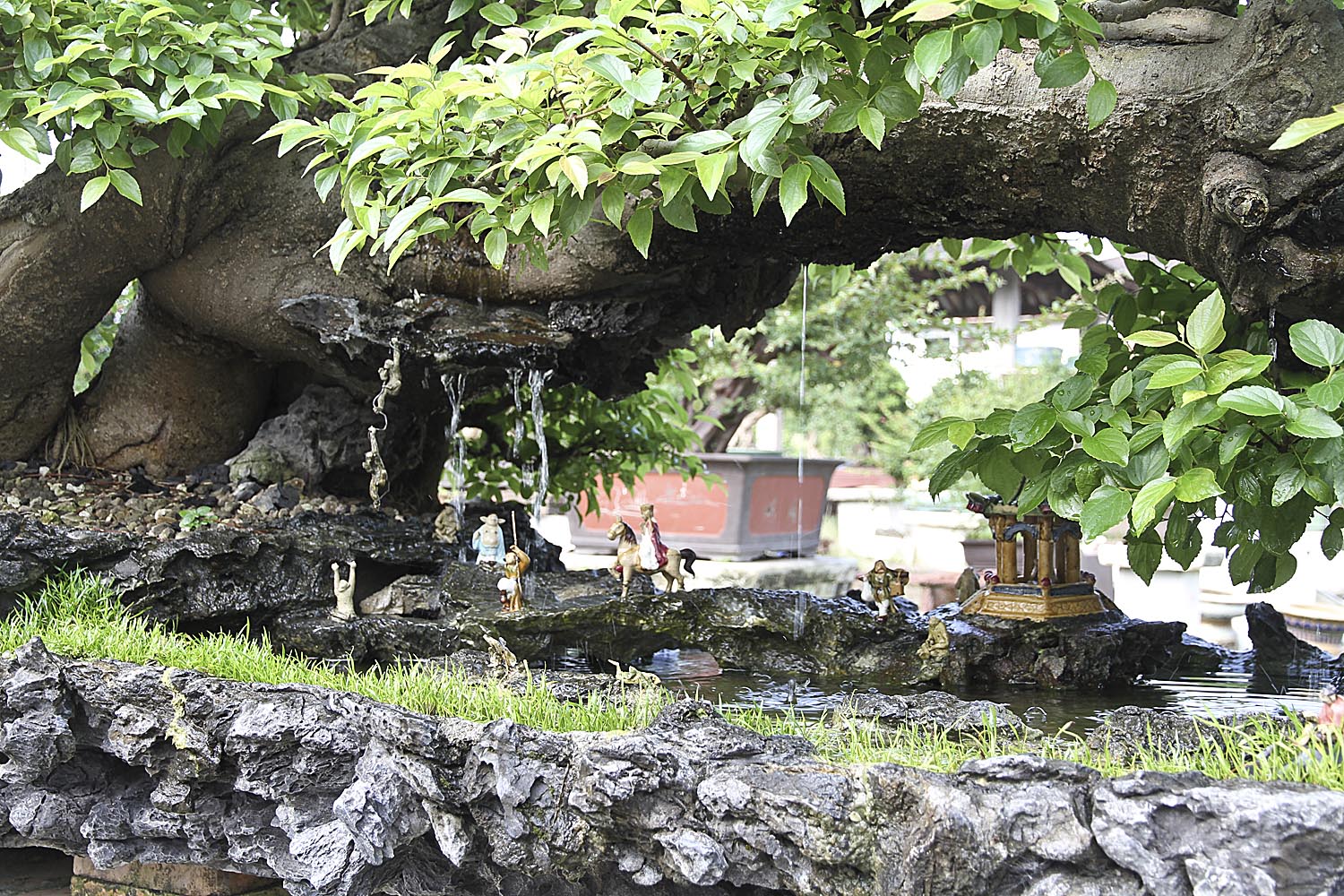
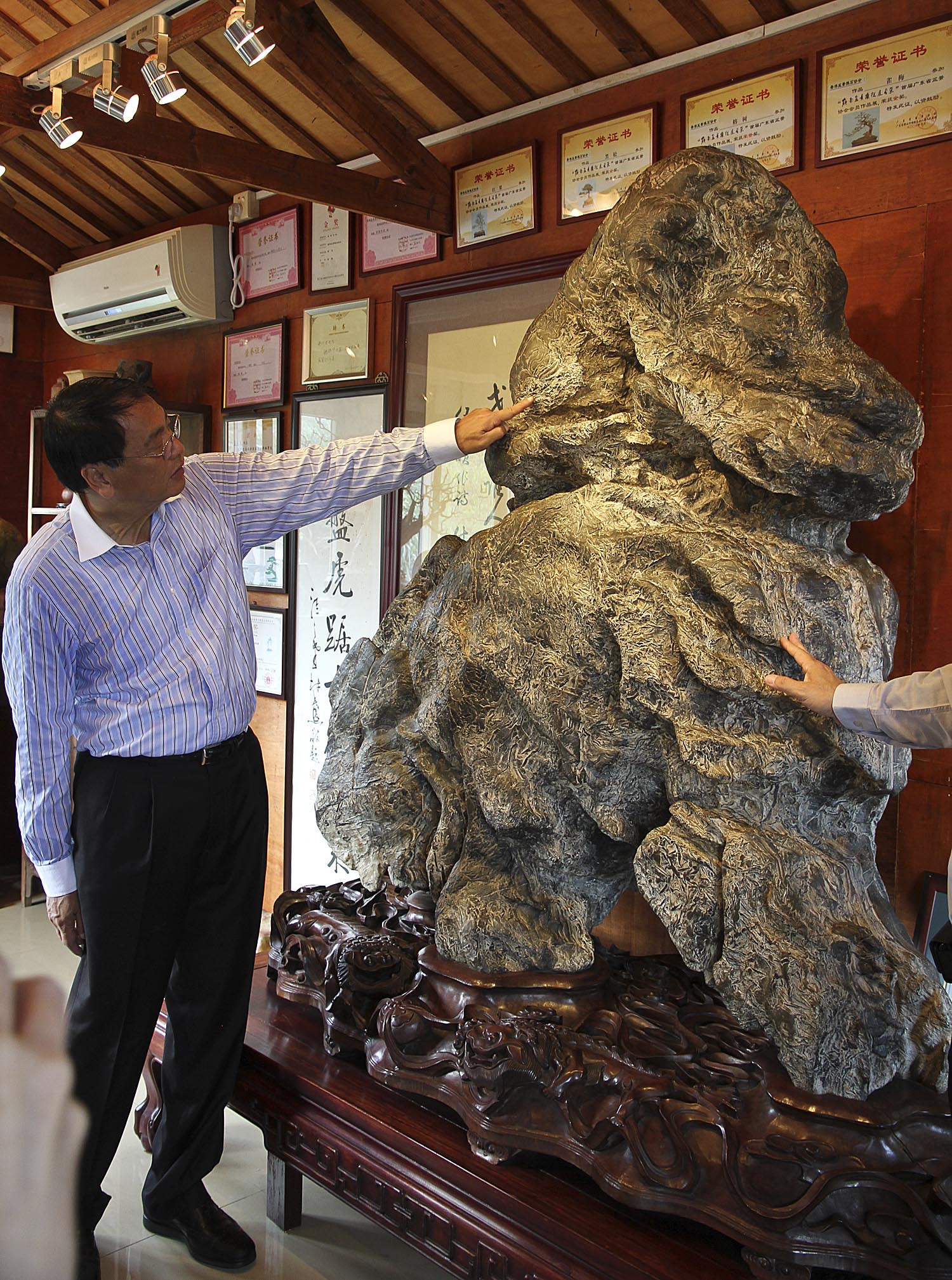
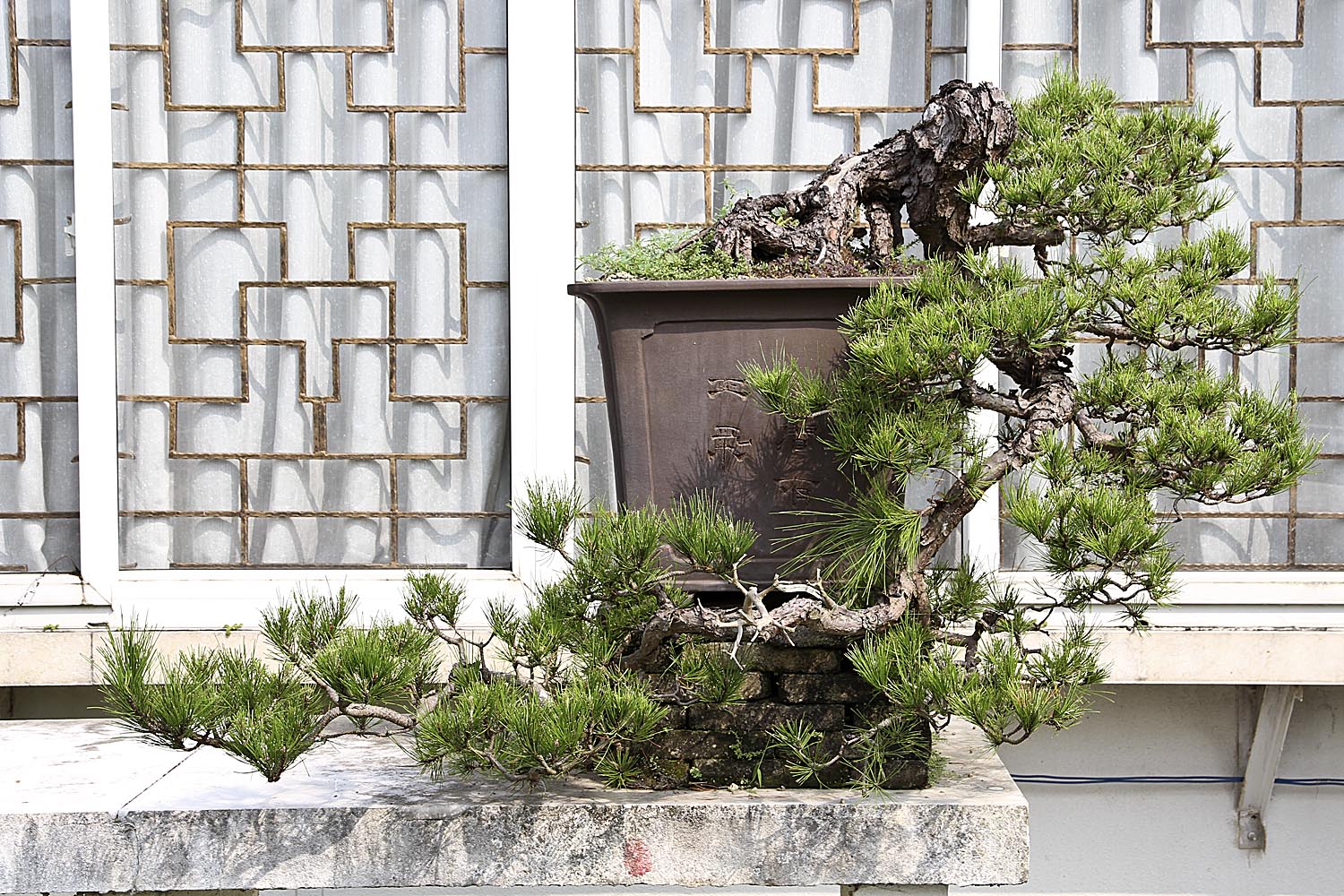
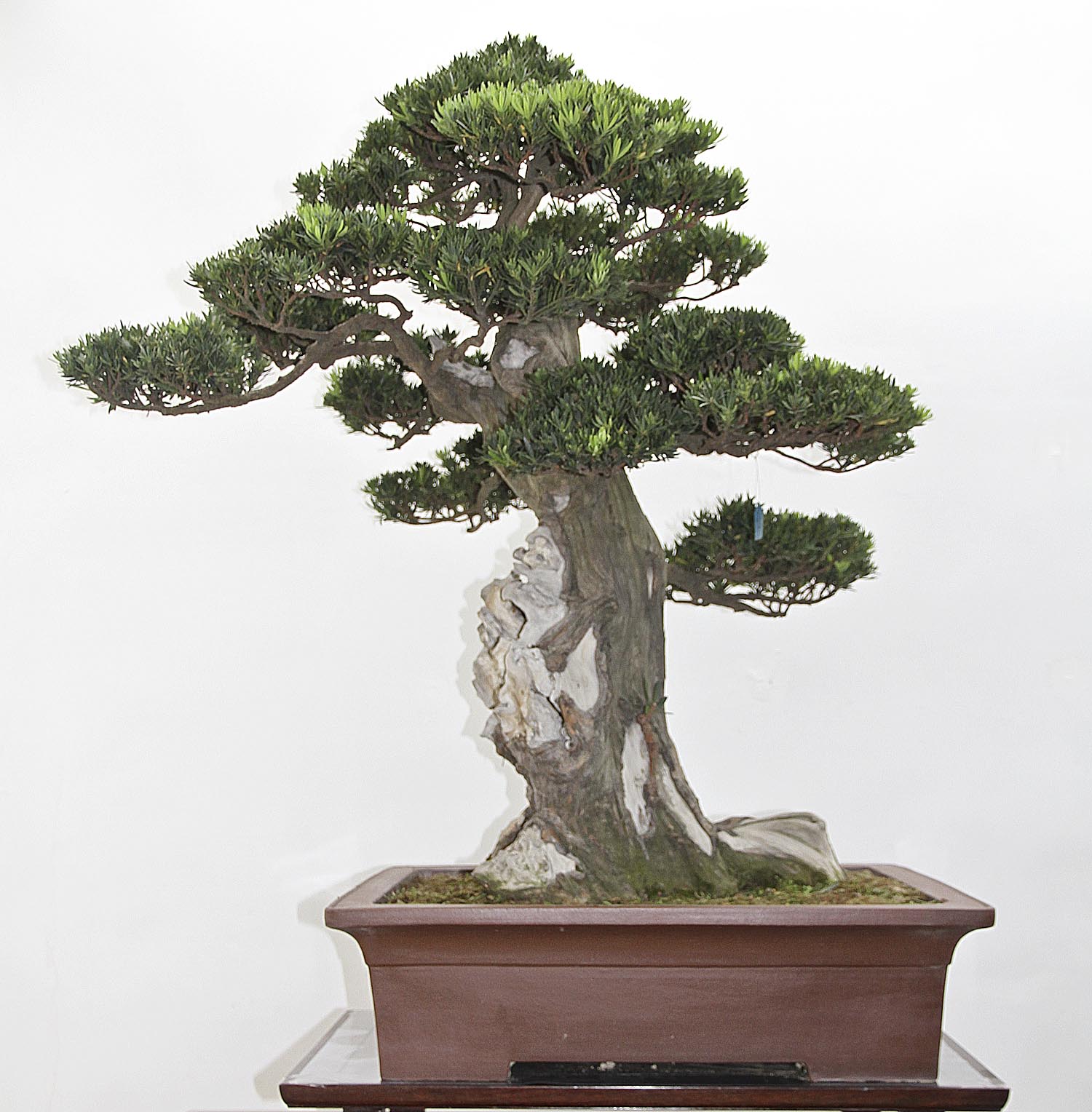
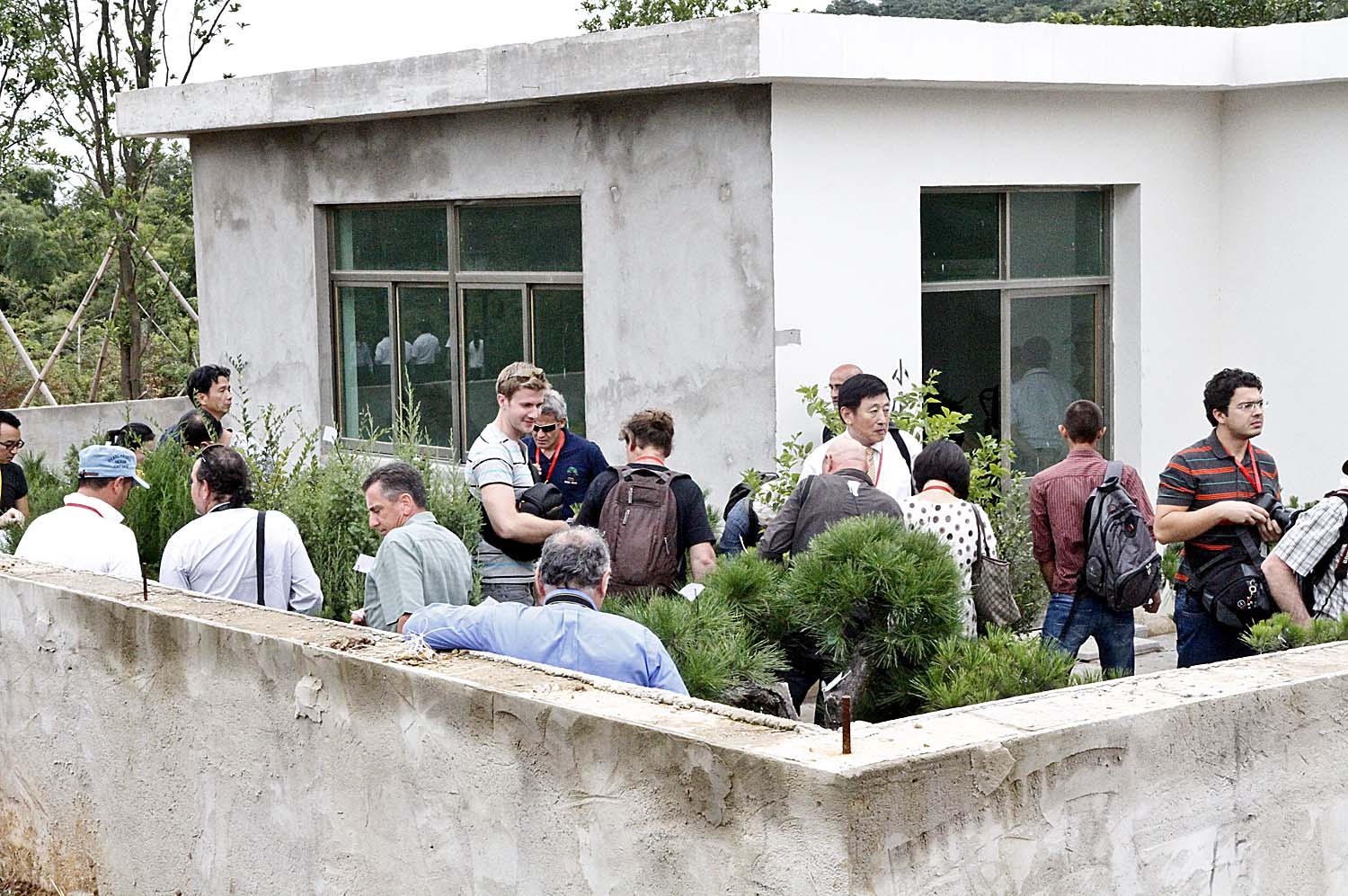
In the afternoon we were invited to visit Zhenque Garden, owned by Mr. Li. Again, there were large bonsai and even larger larger garden stones. The garden surrounded a pond. As we looked at the trees I suddenly realized that most of the trees are Podocarpus, or Buddhist pines which are quite expensive in China. Six years ago the Chinese government invited me, a Greek American to travel to China to teach Japanese bonsai. I asked for a Podocarpus or Pomegranate to work on but was told they did not grow there. Well, when I got there Podocarpus were all over the place and was then told they were too expensive for demonstrations.

Image

Image

Image

Image

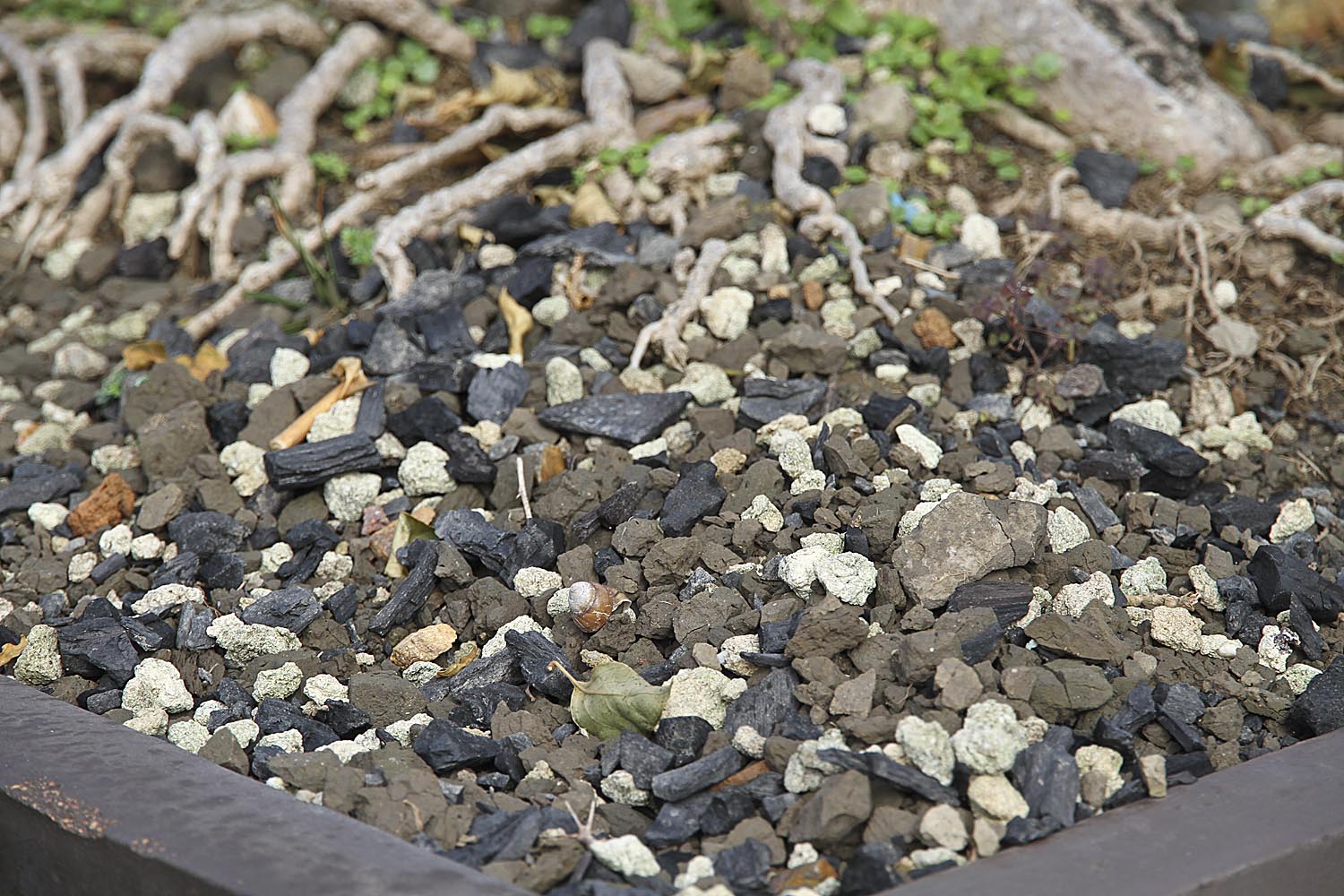
Unusual soil treatment

Image

Very large granules of soil

Image

Reddish new growth, much brighter during other seasons

There were Podocarpus in all sizes, except small, in every style imaginable and other interesting forms as well. Mr. Li specializes in Podocarpus and has selected two new varieties which have bright red foliage when opening, and they are colorful four times a year. Unfortunately, we were not there at the height of the colorful season, but did find a few reddish new growth on some specimens. One of the other visitors there took me inside to show me the actual registration certificates for the two new cultivars.

We were offered bananas and more bananas and even more during our visit. Dusk arrived quickly and Mr. Li hosted a dinner party for us which included many government and penjing officials. There were many long speeches in Chinese and one brief speech by me in English representing the foreign guests. Soon there was singing and dancing and everyone had a wonderful evening. The humidity was quite high and I checked the temperature which was 97F!! Sweat was dripping from most peoples heads and we were refreshed in the air conditioned bus.

The next morning we were flown to Xi’an a northern Chinese city where the forum was to be held and also to visit the famous 3,000 year old terra cotta soldiers.

Image

2013 DIALOGUE OF THE PENJING WORLD FORUM– Part 1

INTRODUCTION

Image

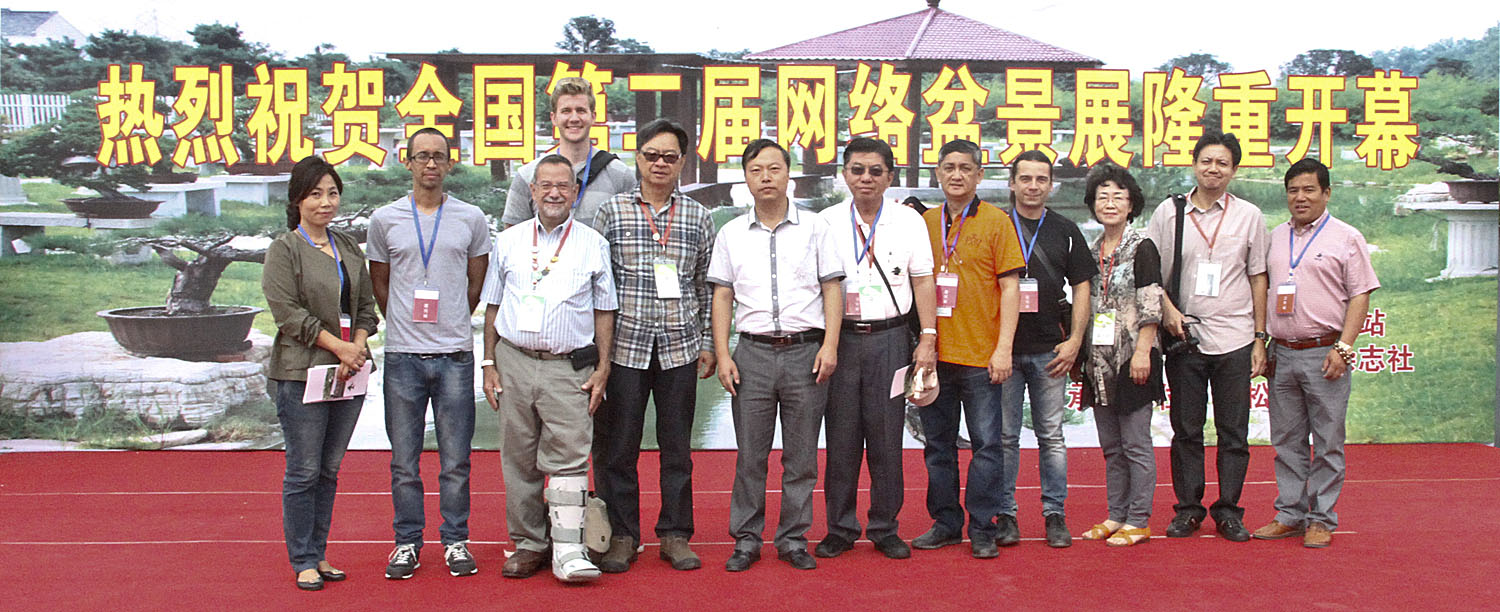
I was invited to represent the United States in the 2013 “2013 Dialogue of the Penjing Word Forum” which is sponsored by the Chinese Penjing Artists Association and the World Bonsai Stone Culture Association, who were my hosts for an exciting and busy week.

There are about 20 foreign guests in our group for the forum from 18 countries and we have been moved around, fed lots of good (and interesting) Chinese food and shown superb examples of Chinese penjing, the quality which I’ve NEVER seen before. This has been a real eye opener for me personally. There are several translators from Chinese into English and a special translator for Mr. Sudo, Kobayashi and his apprentice Mr. Suzuki. Mr. Kobayashi also brought his personal translator.

My trip began with my hosts flying me from the World Bonsai Friendship Federation Convention from Jintan to Guangdong for the First 2013 China (Guzhen) National Penjing Exhibition which I have reported on earlier in this blog.

Image

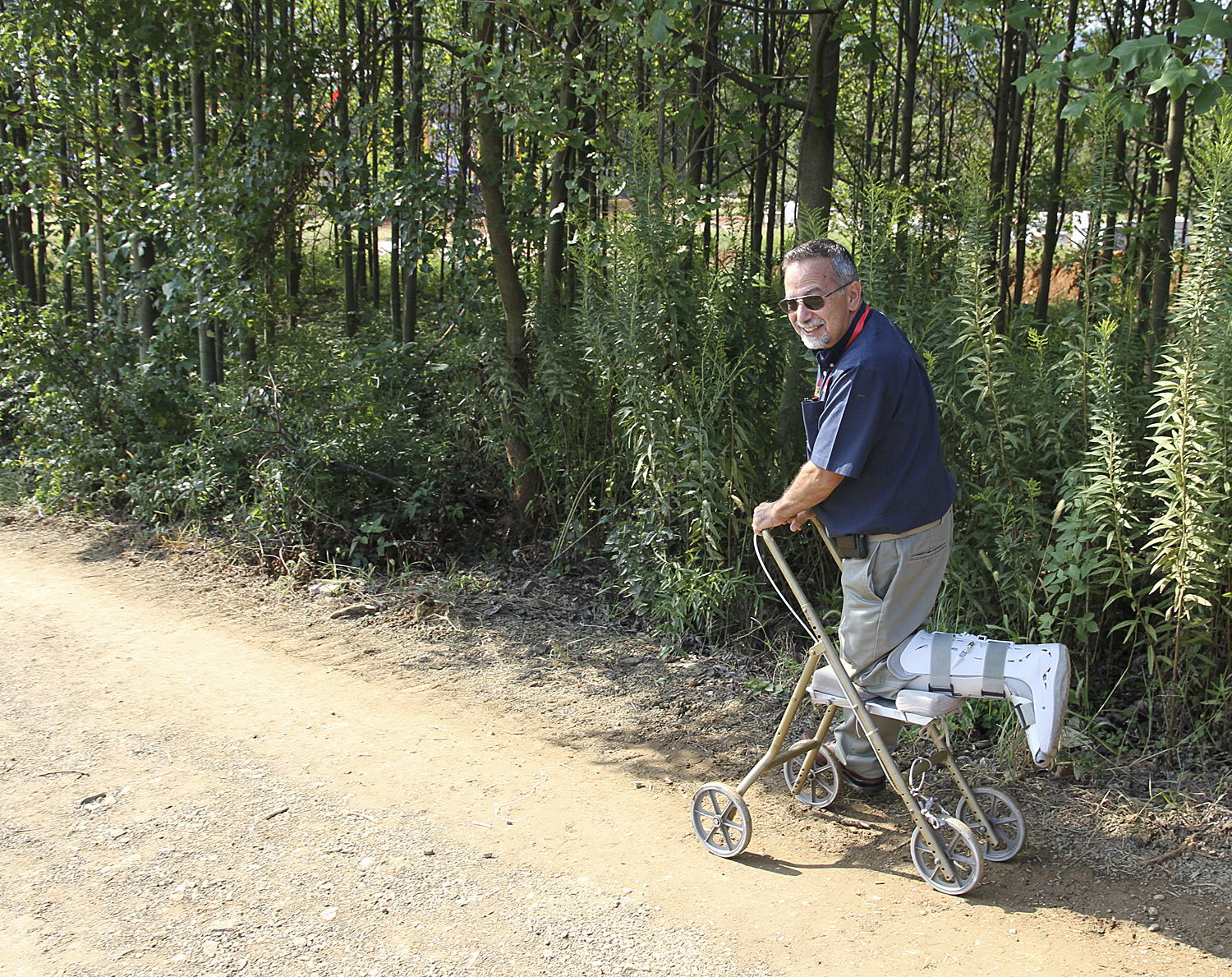
There I met about 20 foreign guests, the other members of the forum, from 18 countries and we have been flown, bussed, moved around, fed lots of good (and interesting) Chinese food and shown superb examples of Chinese penjing, the quality which I’ve NEVER seen before. This has been a real eye opener for me personally. The hospitality has been wonderful and there was someone near me to help with my broken foot and scooter, there are lots of steps in China.

In Guangdong area we were taken to see two gardens before flying us to Xi’an for the forum. We left by bus, but by the time we got to Shenzhen where the first garden was located it was 6pm so we were taken to a hotel. My single room had two bathrooms, a bedroom, sitting room and three TV sets. The bathroom alone is larger than many of the Japanese hotels I’ve stayed at. Early the next morning we left for Tracy Garden

TRACY GARDEN

Image

Image

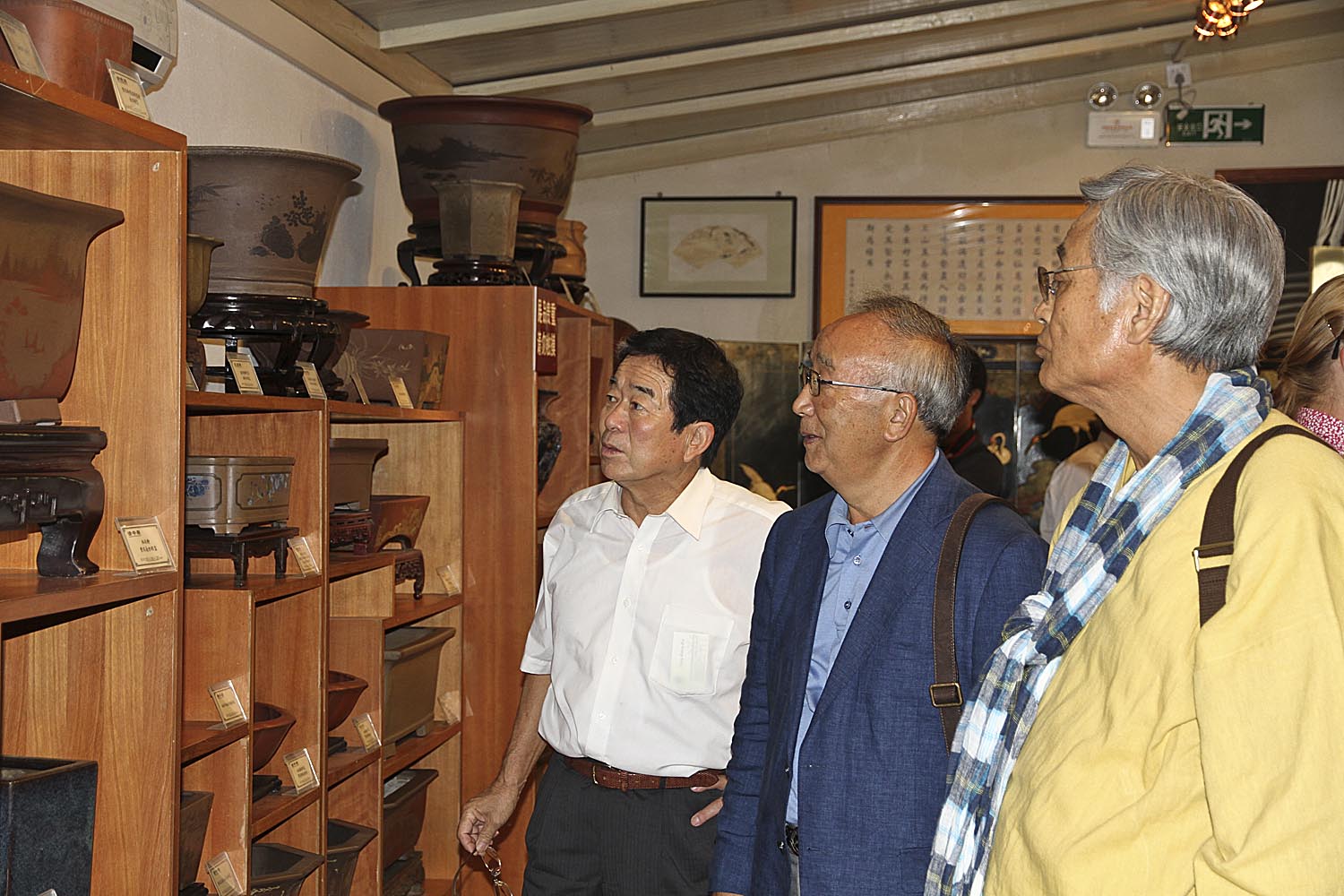
Kunio Kobayashi, Tomio Yamada and Uhaku Sudo

Image

Image

Image

Image

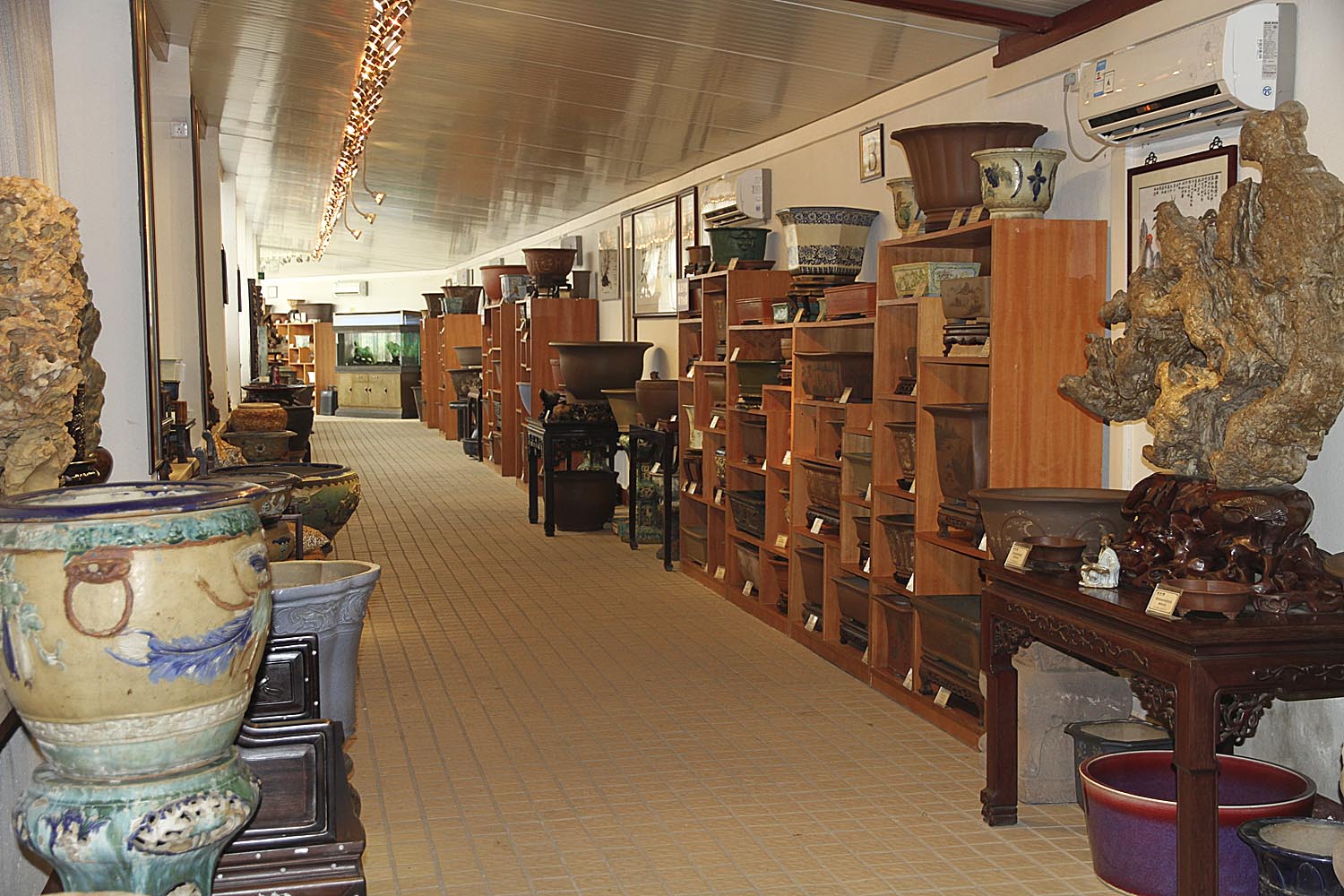
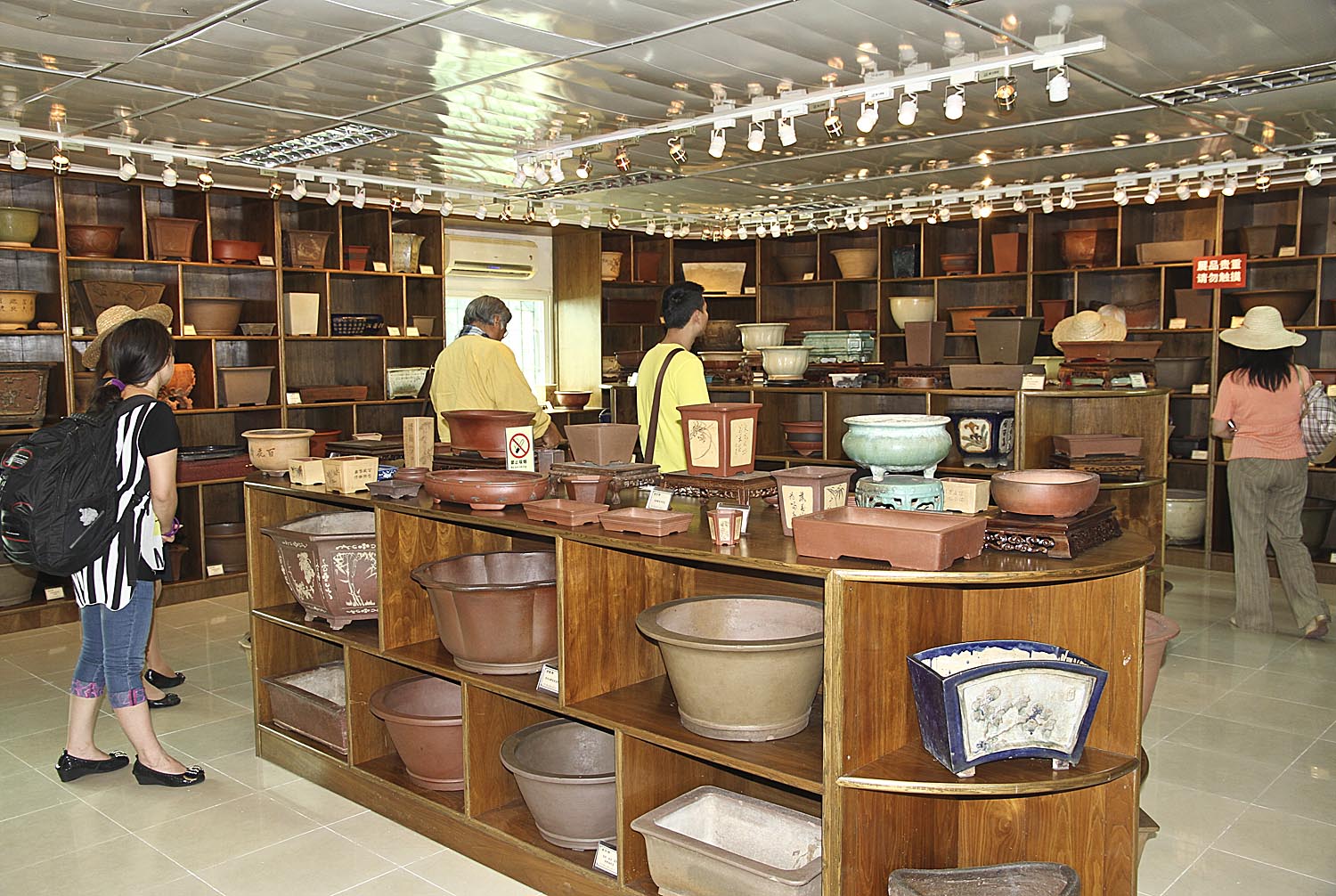
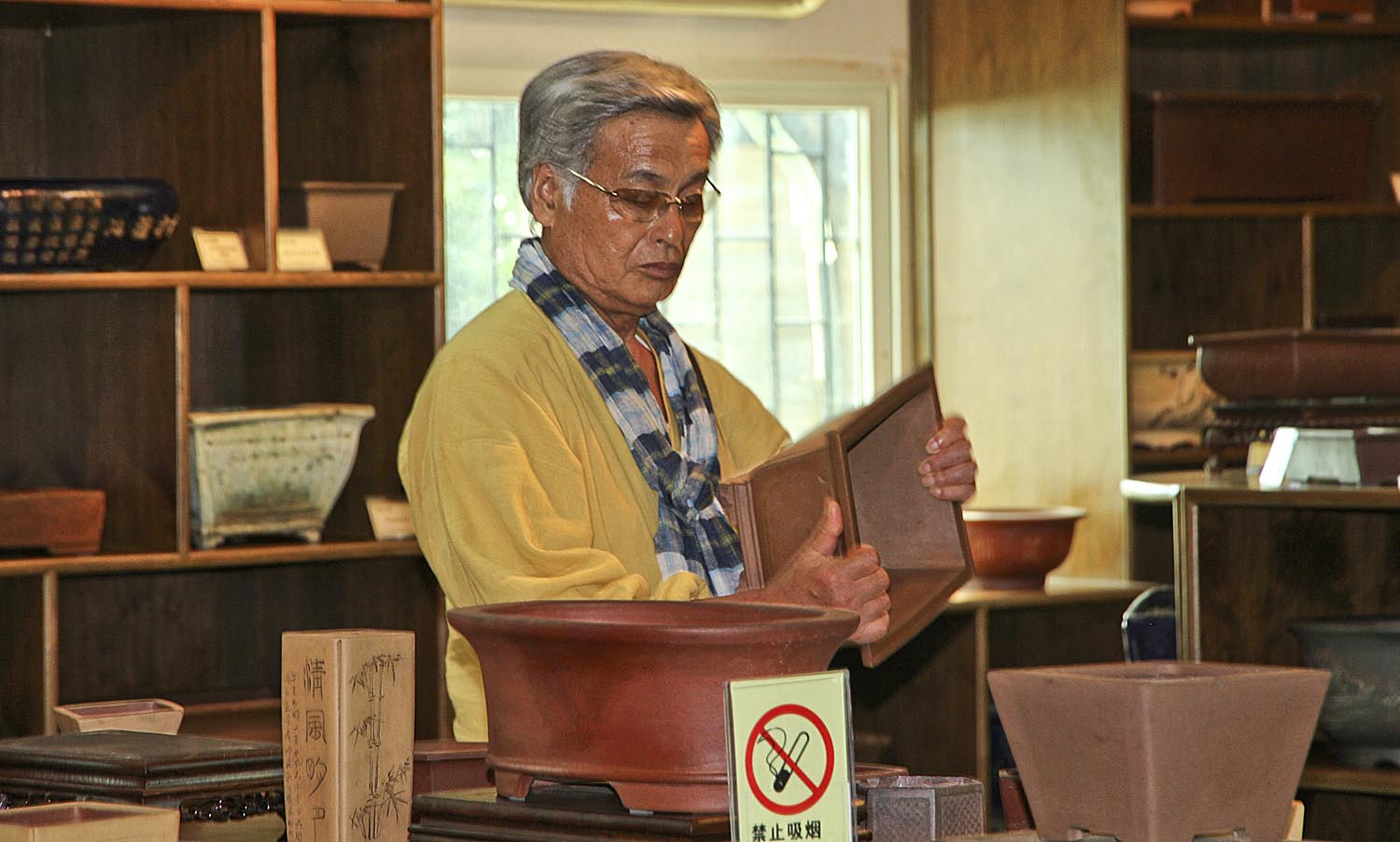
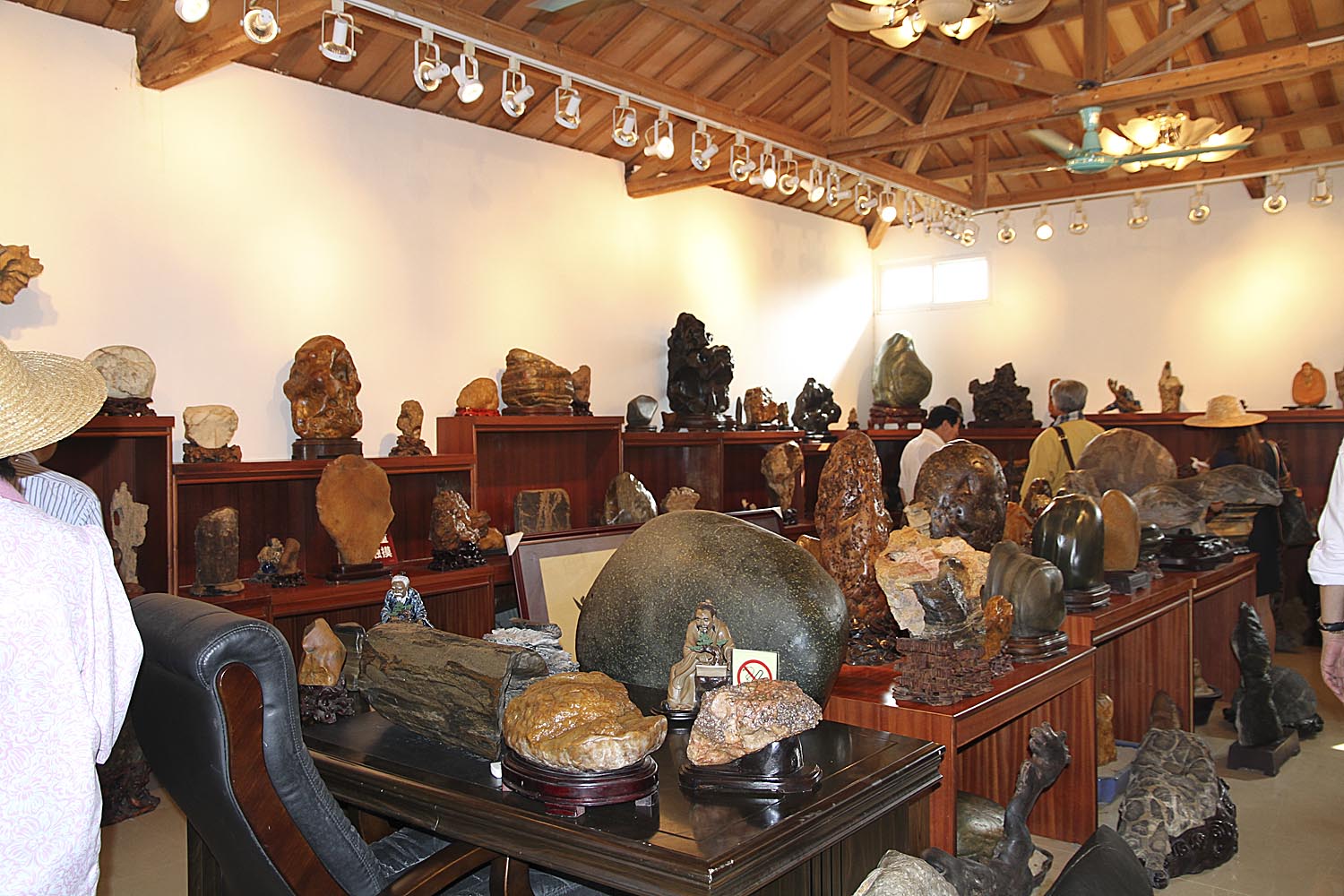
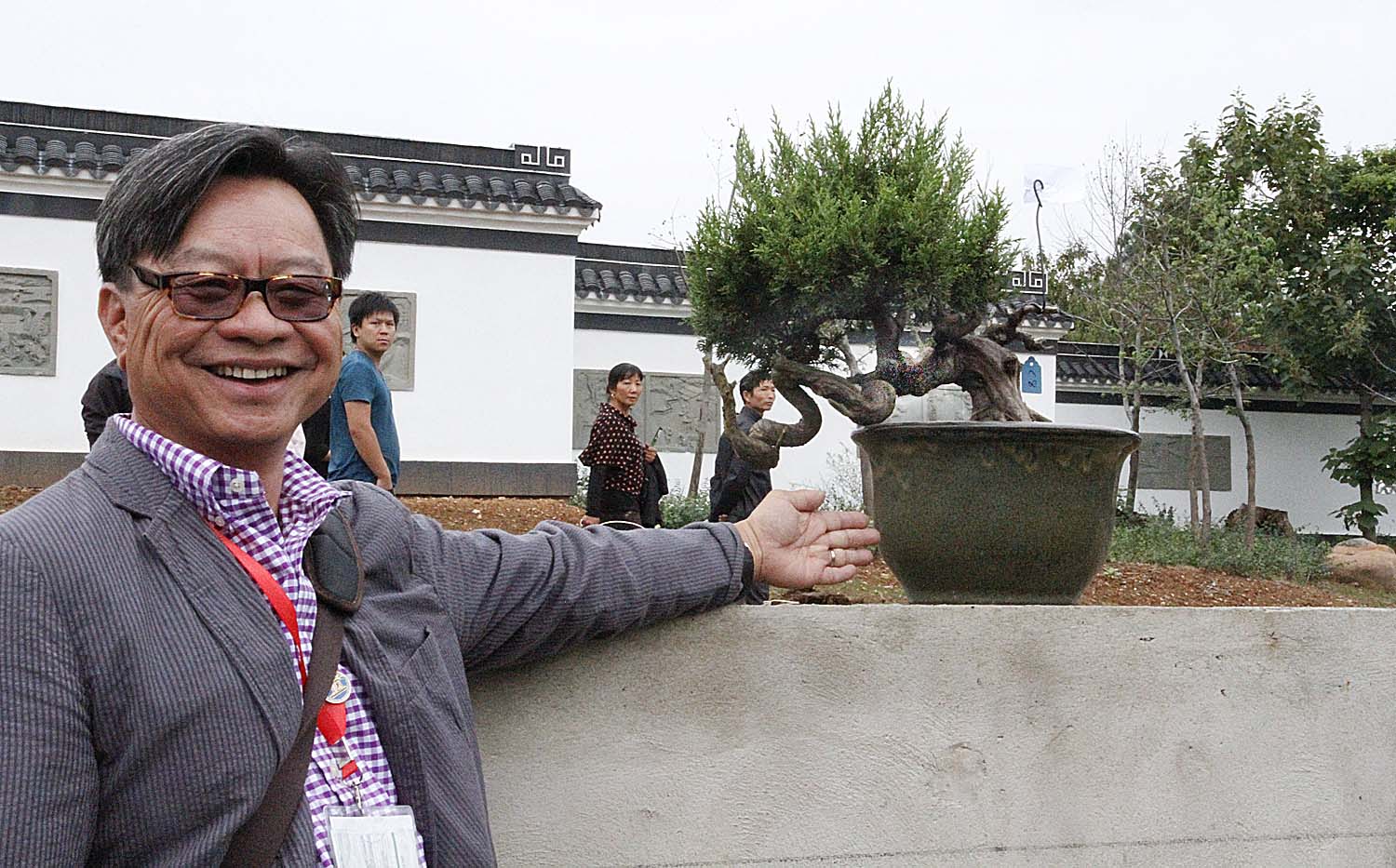
The first garden visit was to Tracy Garden, the personal collection of Mr. Rick Ng. He has an antique Chinese container collection of well over 200 pieces. Many have been purchased from Mr. Kobayashi in Japan. I followed Mr. Sudo, Kobayashi, Yamada and Suzuki as they carefully inspected the most unusual collection of containers in a long building. Each container was displayed in a boxed shelf unit, many labeled, in Chinese of course. Mr. Kobayashi and Suzuki pointed out interesting aspects of certain containers for my background. There were large containers, but not as huge as the contemporary style of Chinese bonsai.

Image

Image

Image

Amy Liang pointing out good points in a forest

Image

Mr. Rick with landscape which took him three years to create

Image

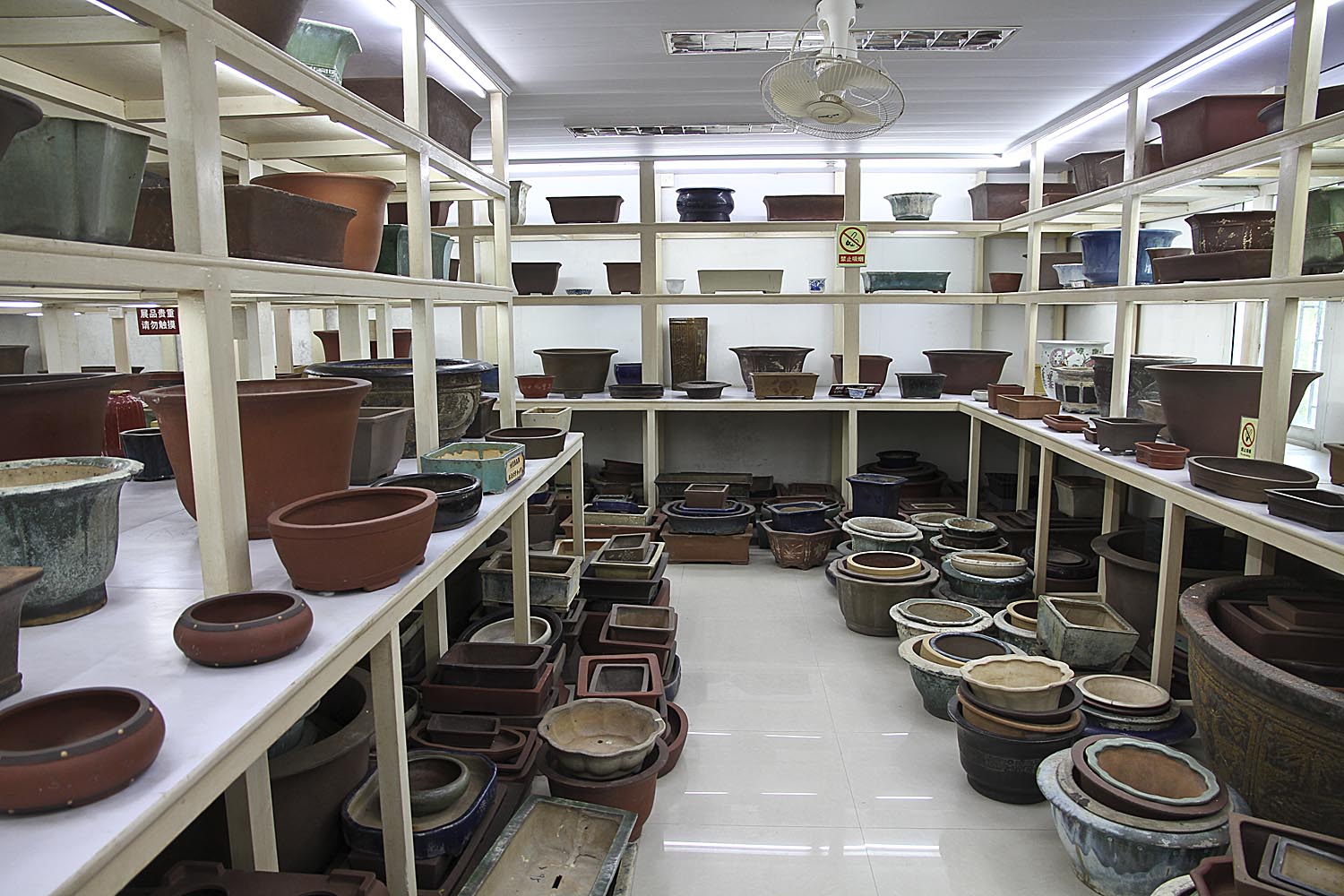
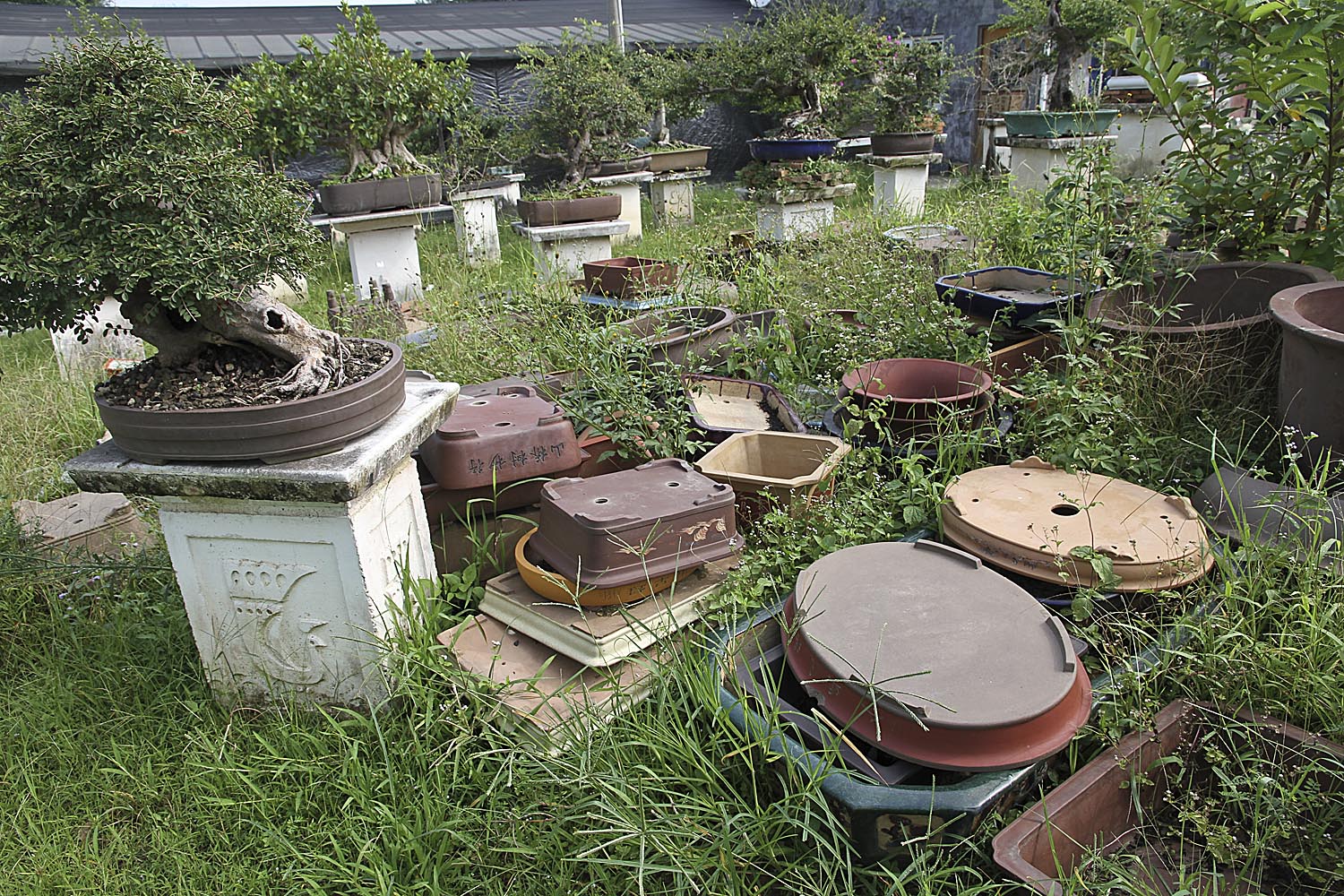
Outside there were several different display areas, and as I hobbled around, (OK, I left my scooter at the entrance,) I came upon three additional buildings also full of containers. One room also had interesting collections of Chinese viewing stones. One of the buildings had two floors, and of course I had to go upstairs to see what was there, another collection of antique Chinese containers. The Japanese were most interested in several of the containers and spent considerable time there. The buildings were air conditioned and it was quite warm.Image

Image

Image

Image

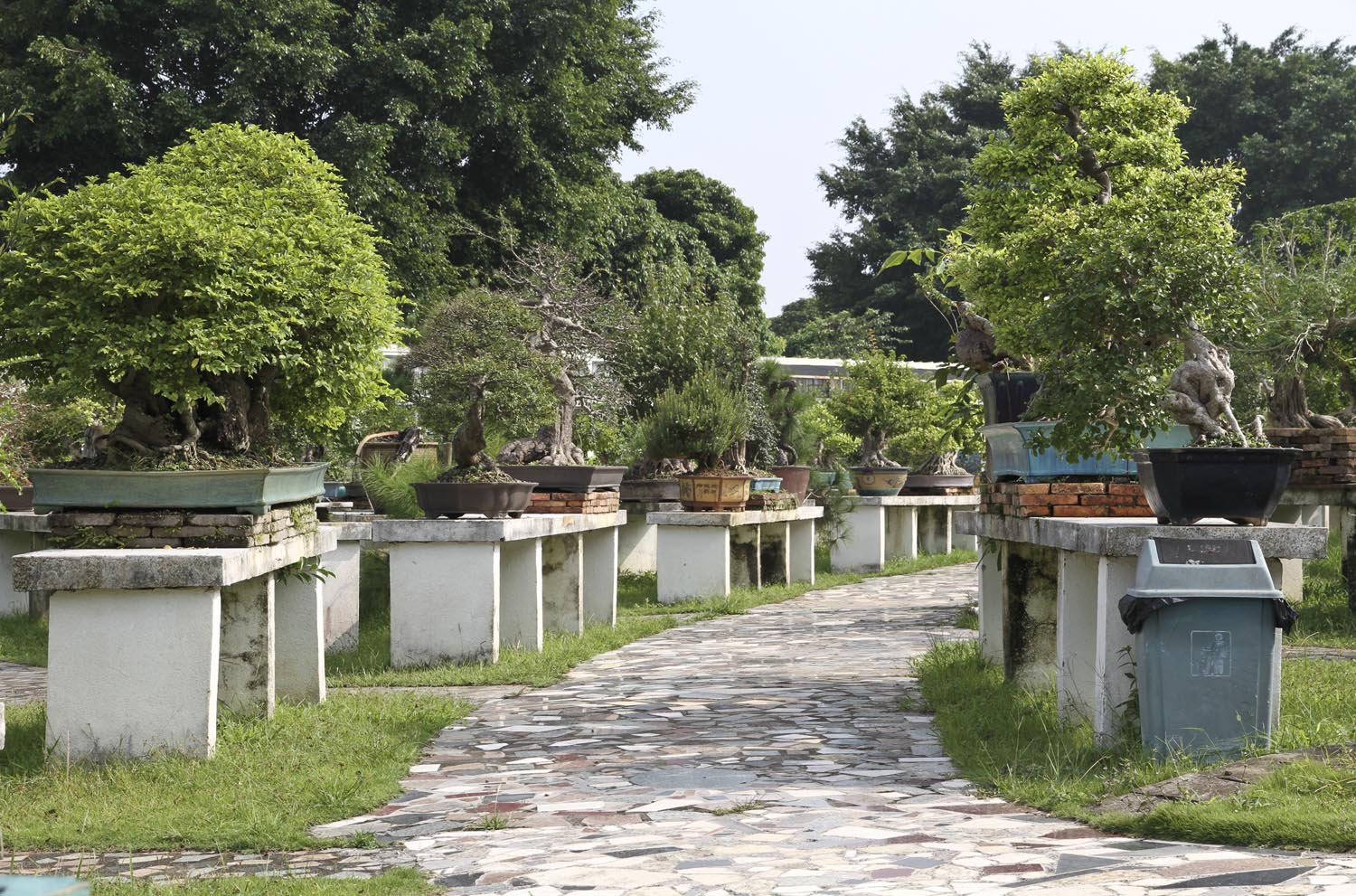
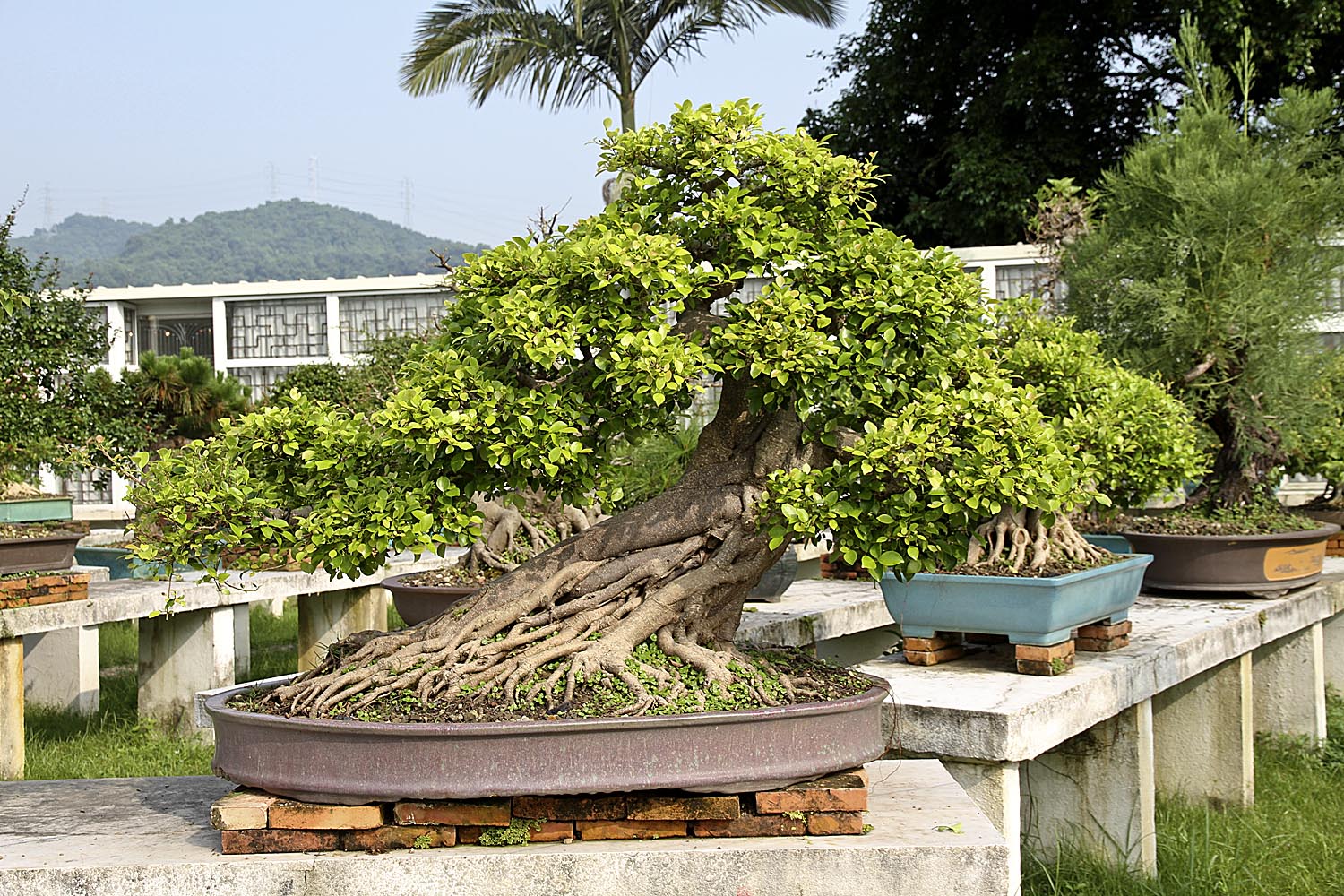
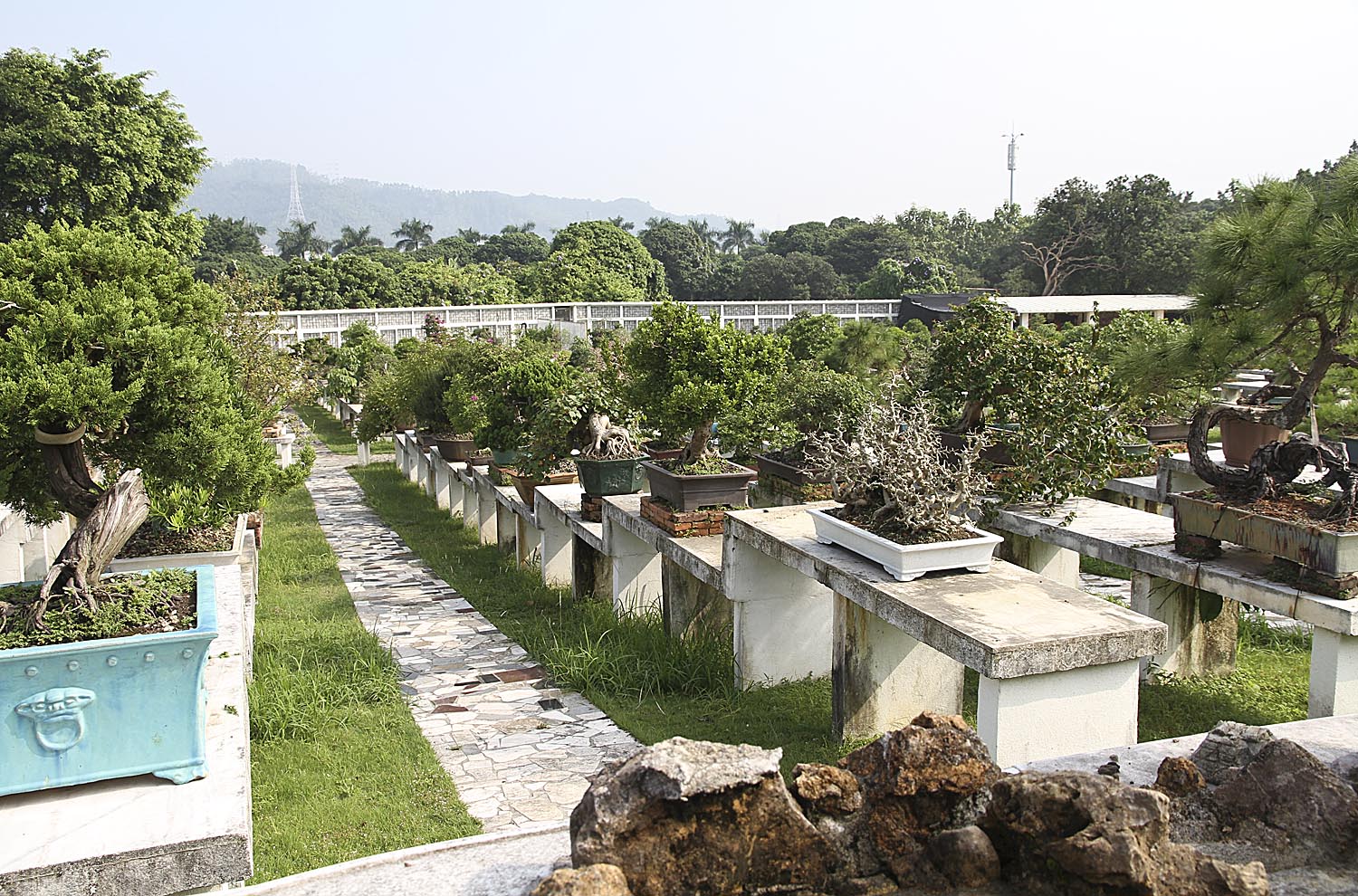
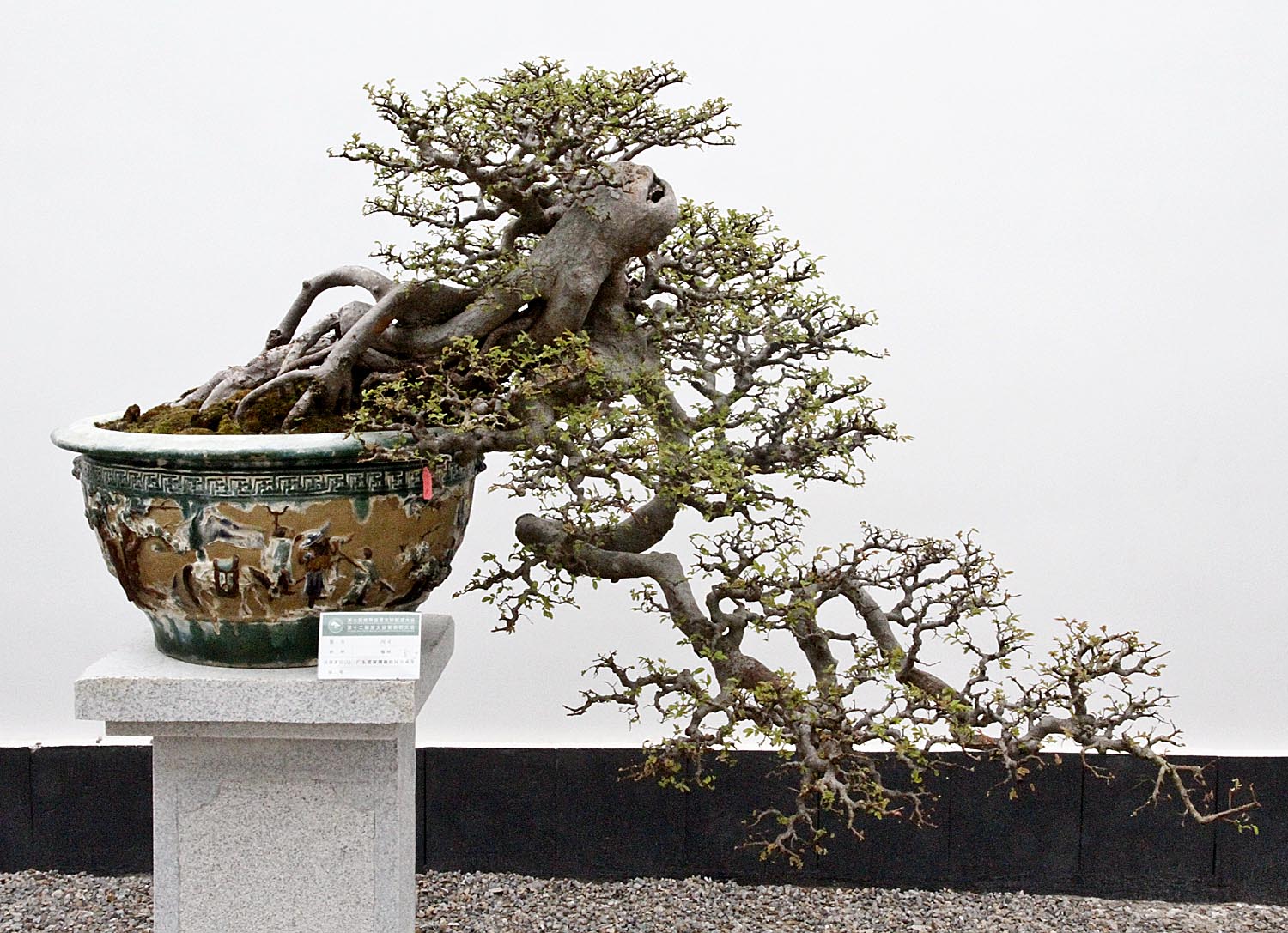
The bonsai were all displayed on stone tables and there was neatly mowed grass below, which I’m sure takes considerable time to trim, even with a weed wacker. There were a great number of Chinese hackberry and Chinese elm bonsai among other deciduous and broadleaf species. I was wondering why he did not have any evergreens in his collection. But, as I went up the hill to see more bonsai I looked below and saw another large section full of pines being trained. The garden is up high on a hill and overlooks a small lake, quite picturesque.

Image

Charcoal added to the soil

Mr. Rick took us all to lunch and gave each of us a set of two (heavy) books on his bonsai collection, perhaps there are also containers included, but have not had the time to check and thoroughly study the book. In my post from the National Penjing Collection I showed a beautiful Bougainillea trained in the feeling of a Weeping willow, which I was now told belonged to Mr. Rick.

There was also a group from China and Taiwan who traveled with us for a couple of days so we needed to large buses to get around. We were then bussed to Dongguan to see the Zhenque Garden. Our private visit was in the late afternoon so we checked into another nice hotel, but I only had one bathroom and one TV.

2013 CHINA (GUZHEN) NATIONAL PENJING EXHIBITION

Image

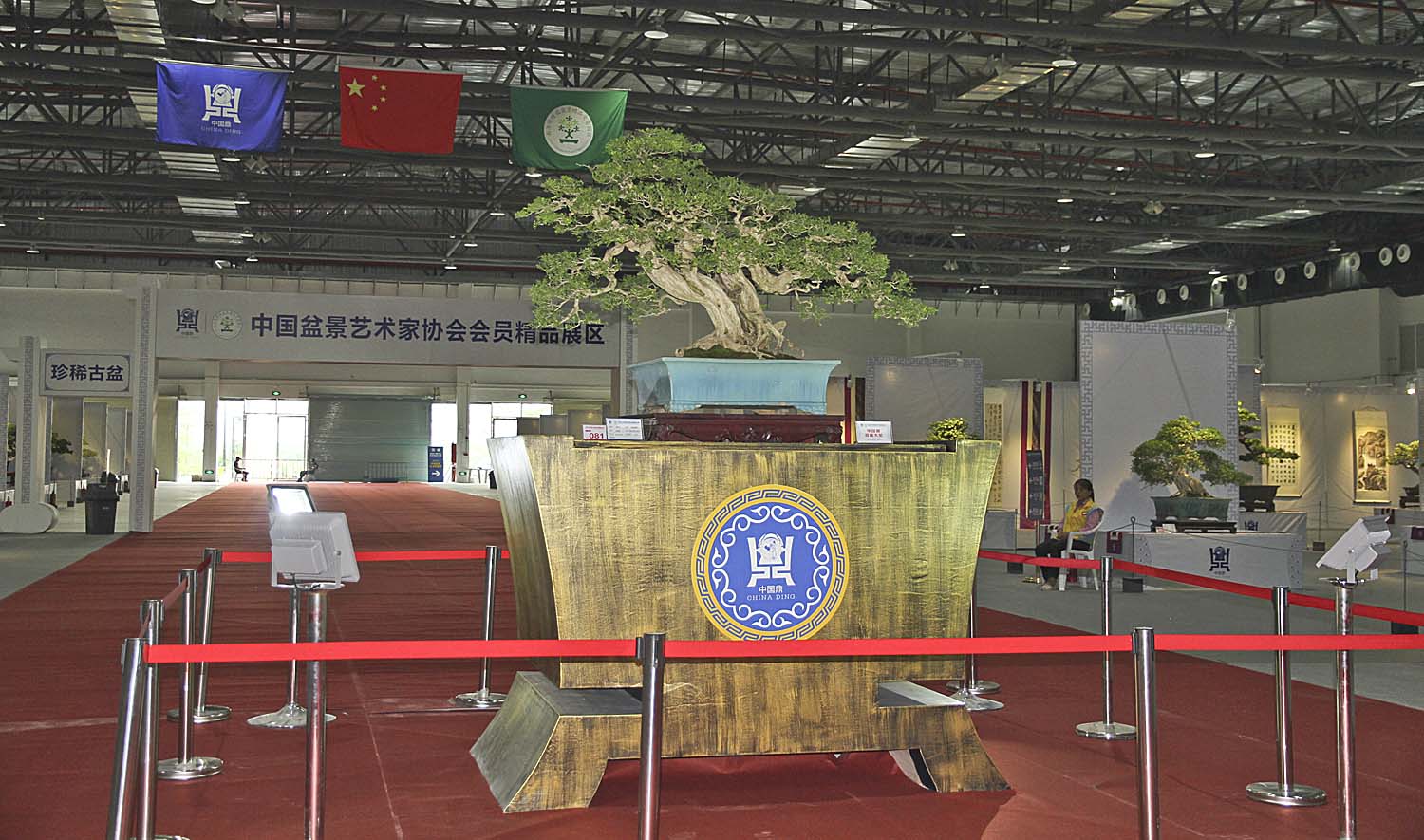
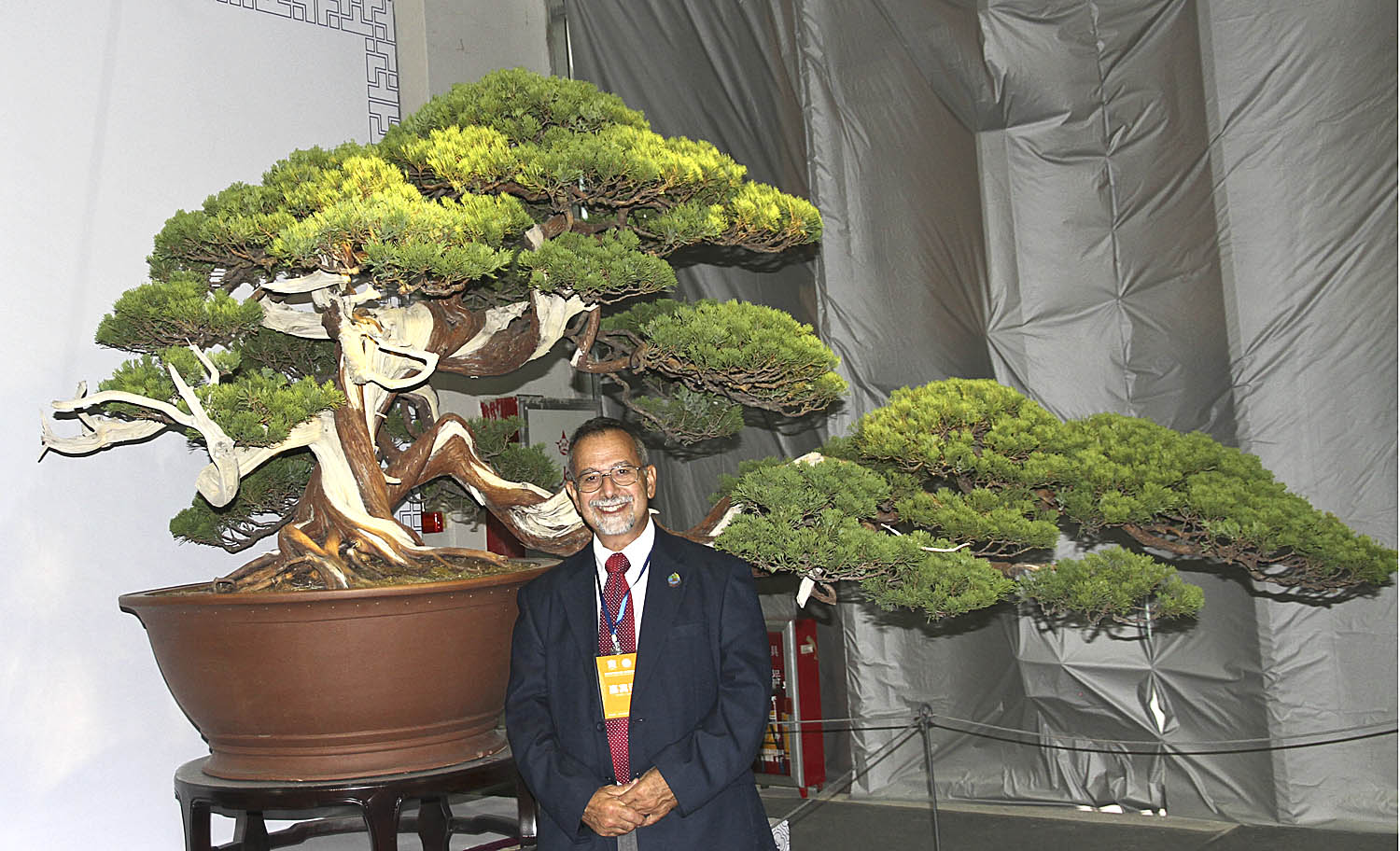
How large do you think this penjing is? Scroll to bottom to find out!

Image

Image

Image

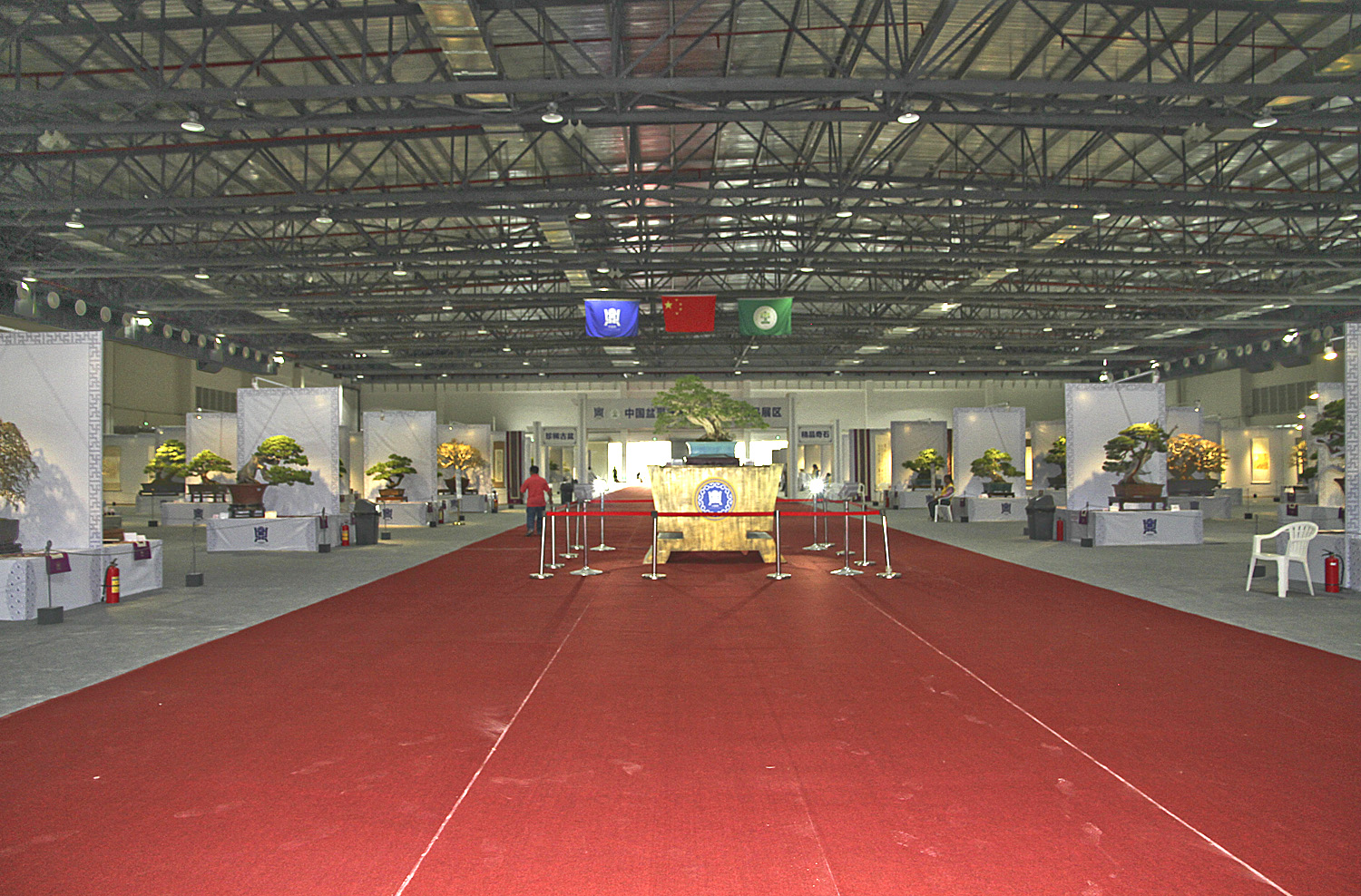
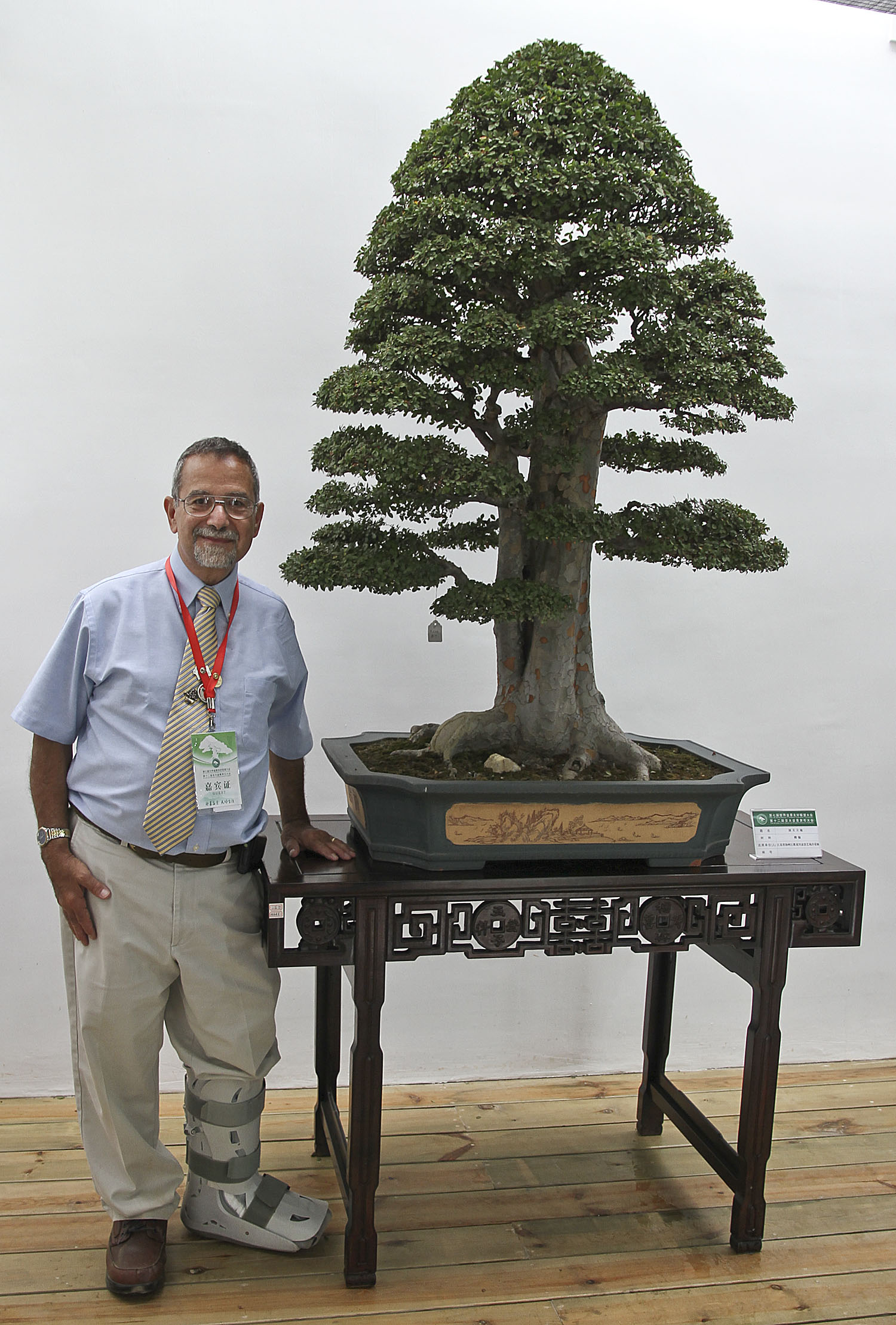
The day after the successful WBFF World Convention I was flown to Guangdong and then took another two hour car ride to Zhongshan City for the First 2013 China (Guzhen) National Penjing Exhibition. It is quite warm here and the airport roads were lined with stately Royal palm trees with colorful red poinsettias used as bedding plants. Penjing from the entire country were gathered for this premier exhibition which was held in a huge new exhibition building. It needed to be large because of the great size of nearly every penjing.

Image

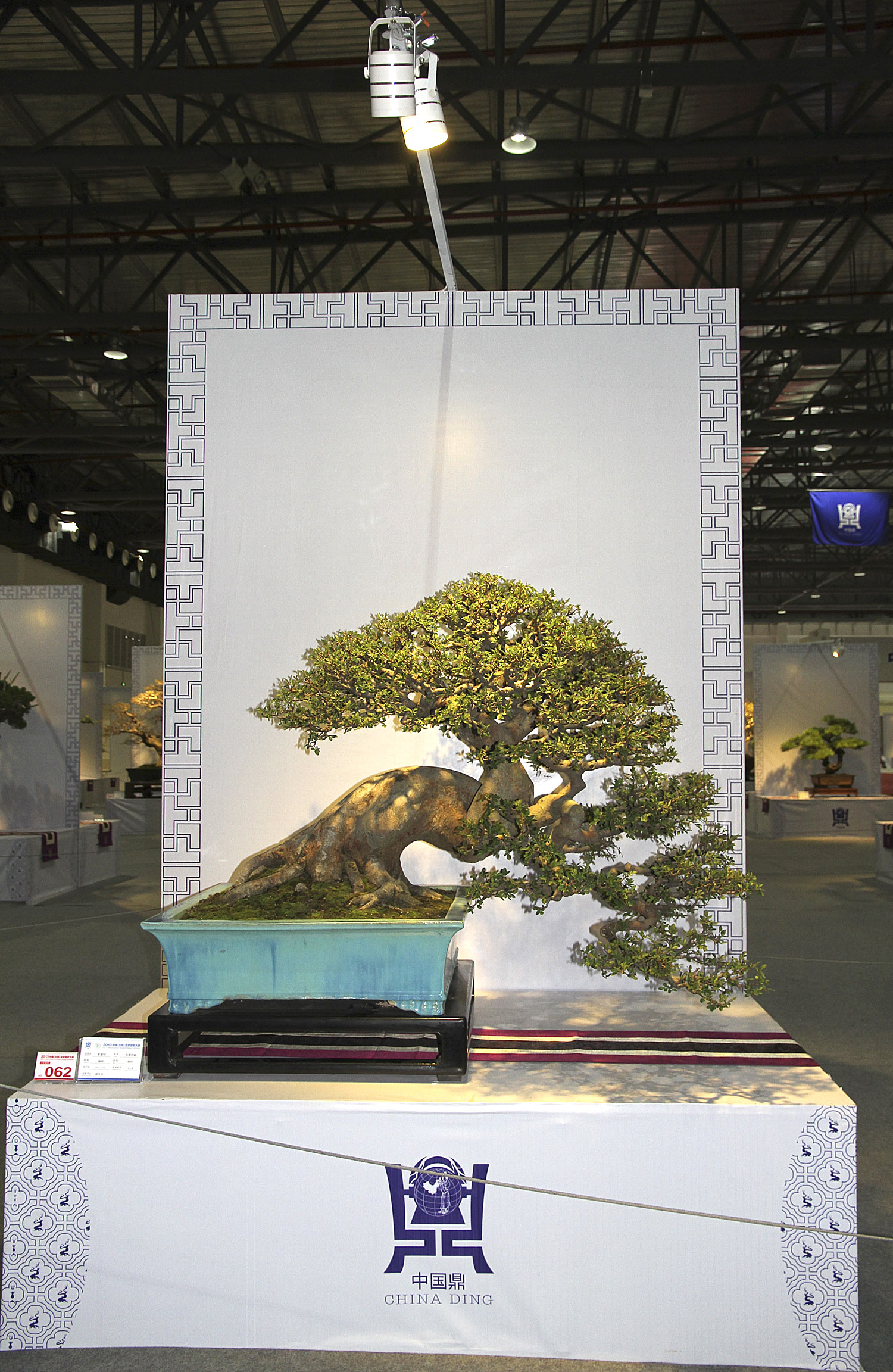
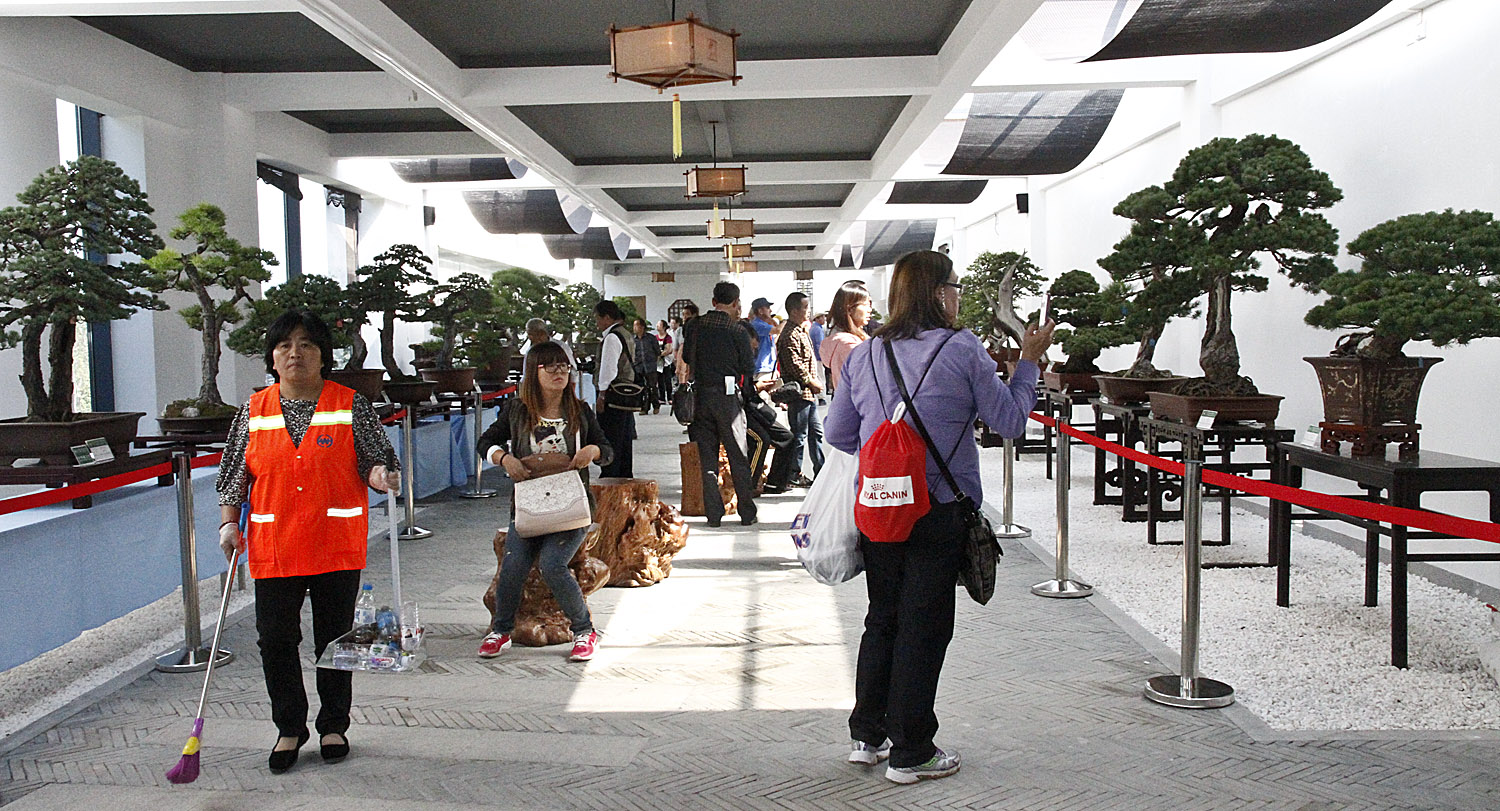
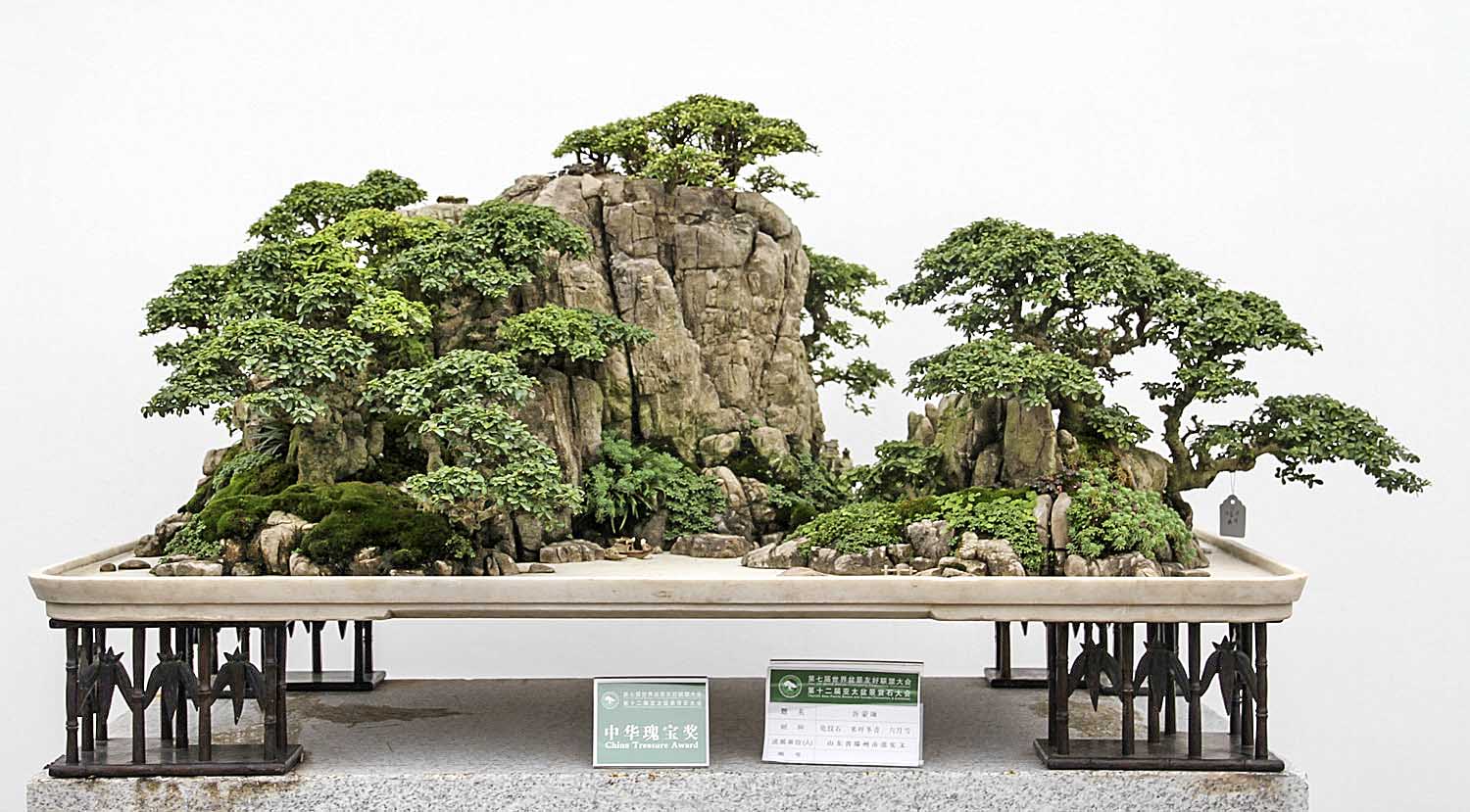
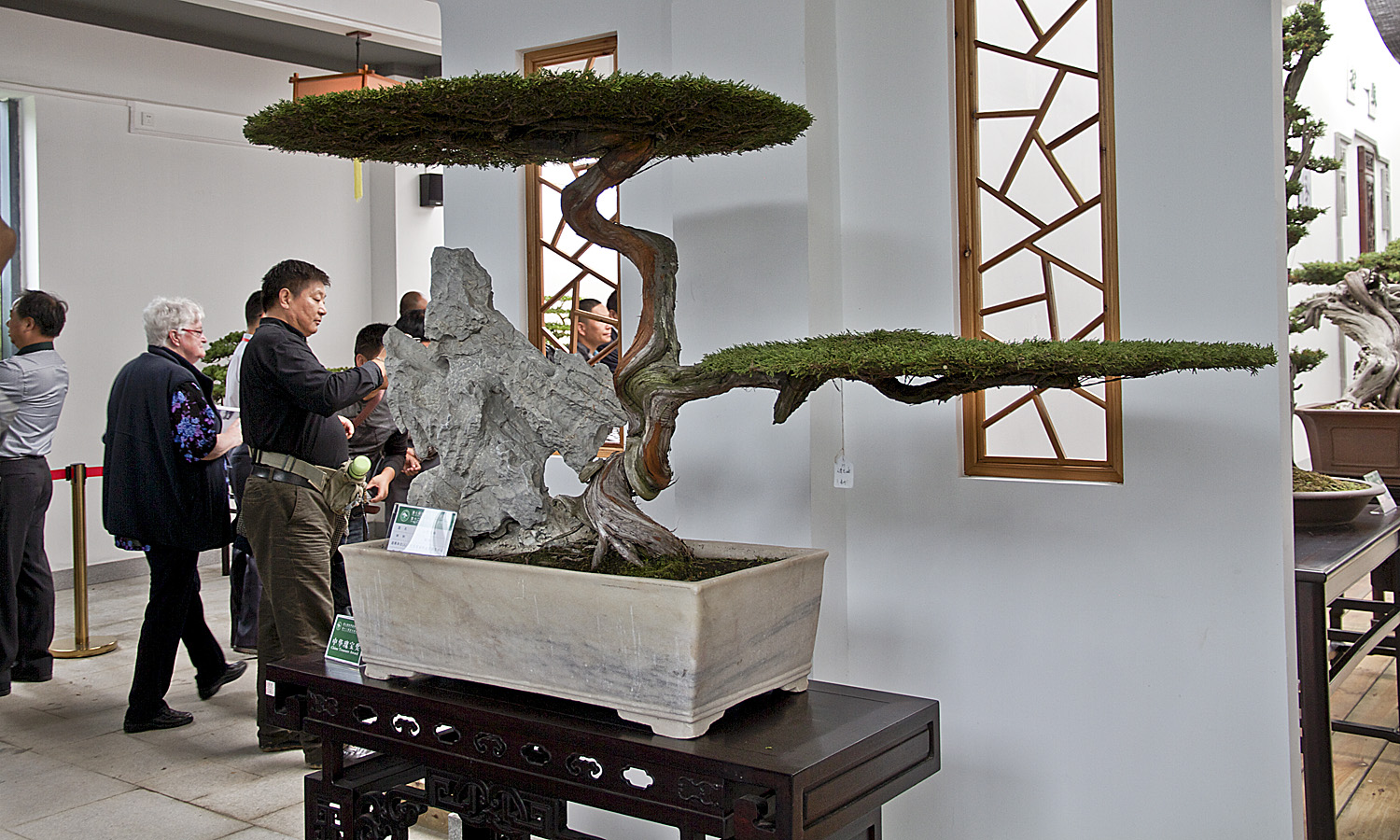
Just over 100 large penjing, and you can’t appreciate their size unless you see them in person. I had to stand in several of the trees for proportion. The layout was unique and each tree was displayed in a special area with spotlights aimed to present dramatic effects. The trees looked like living sculptures, but were quite difficult to photograph with the lighting. The trees were not crowded, and in fact, there was plenty of space so you can fully appreciate their beauty. There was even enough room to drive a trunk into the exhibit area, and after thinking about it a while, a forklift is necessary to move nearly every tree. There is no way even four men could move most of the penjing. There was only one lonely shohin penjing displayed in box stand, all Junipers. A couple of “regular” size penjing were scattered throughout the exhibition.

Image

Image

Bougainvillea!!

Additionally there was a display of viewing stones and antique containers. Many were displayed in clear plastic boxes. Each stone and container also had individual lighting. Across from this display area was another good size display of penjing from the Chinese Artists Penjing Association. These trees varied in size, but most were much smaller than those in the China National Penjing Exhibition, but probably in greater number. They were simply displayed on long tables, similar to Japan and were not crowded, nor did they include companion plantings. A great number of exotic species, at least for me, were displayed in nearly every style, except shohin bonsai.

Image

Image

Natal plum

I was thinking why the Chinese favor such large sizes of trees and perhaps it’s because the country of China is so large. Also, Chinese history does not include sitting on the floor on tatami mats viewing trees in a tokonoma alcoves, as is traditionally practiced in Japan. But rather, Chinese penjing are displayed outdoors in large gardens or indoors in large rooms so big trees are proportionally necessary.

Image

Image

Image

Image

Image

Image


Image

Dwarf kumquat

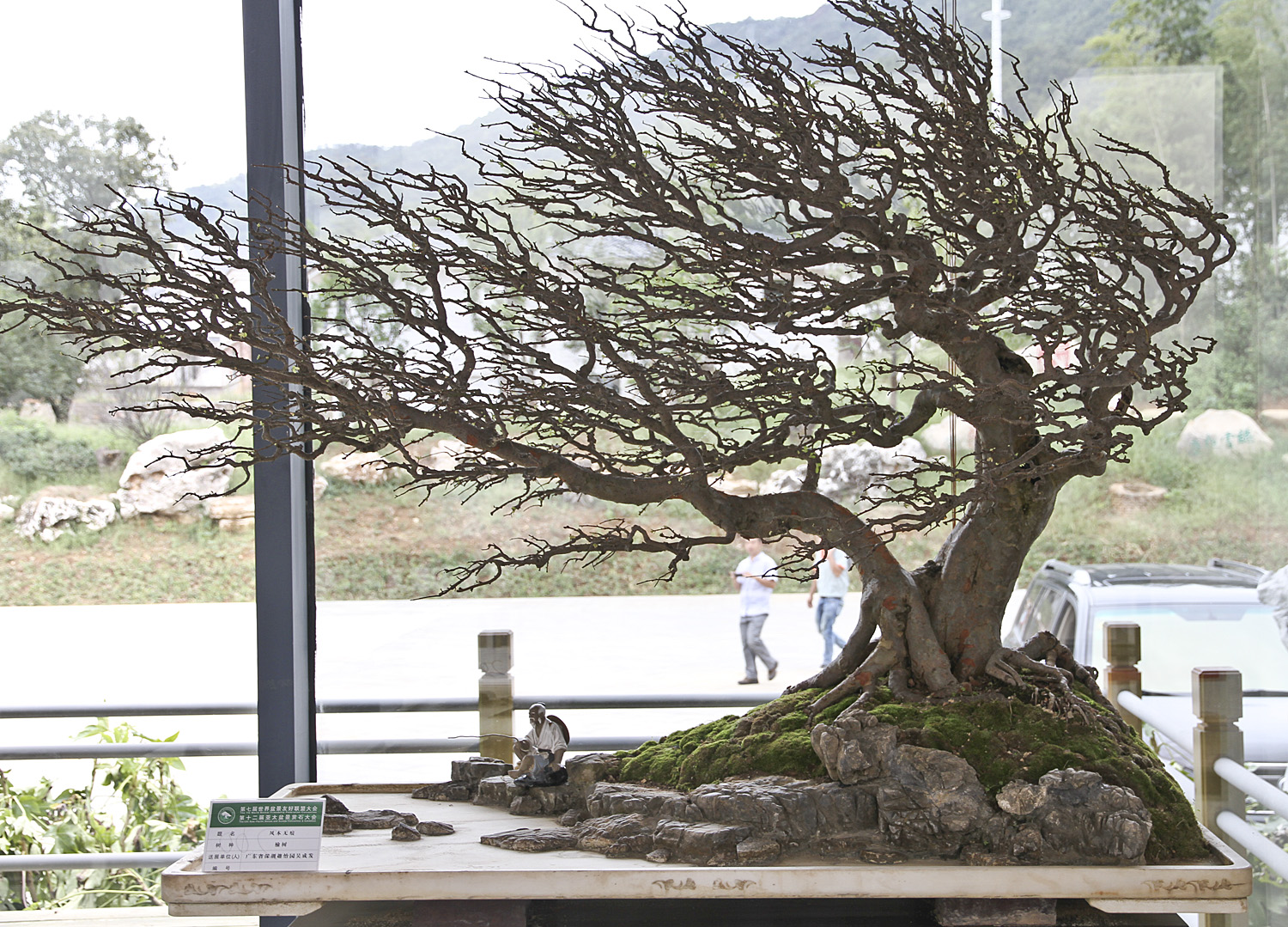
Although all beautiful and well refined, most of the penjing displayed have been trained for shorter time than Japanese bonsai. Many of the species are tropical and sub tropical and can grow all year, which means penjing can be more quickly developed and refined. It is much easier to develop fine twigging on larger trees rather than those of smaller sizes. Although I have seen large Ficus defoliated for display in China and Taiwan before, I’ve never seen all the foliage and fine twigs removed from Dwarf Kumquat literati bonsai before and other species as well. Several of the deciduous species had new growth extending which was attractive.

Near the exit of the exhibition a small sales area was arranged and offered trees and containers, mostly large of course. Many people attended the opening ceremony and visited the exhibition afterwards, but there were several guards checking to make certain each visitor had an entrance ticket, even Mr. Sudo, Mr. Kobayashi and Mr. Morimae were first detained because they were not wearing their entrance tags. After entering and being overwhelmed with the size of each penjing one could appreciate their beauty. Photographs were allowed and I noticed several people moving the name cards to get better shots. Perhaps they did not replace the name cards with the right penjing, because many were mislabeled. But this not distract from appreciating the trees, it only bothered plant nerds who want to know the name of each species.

On the evening of the opening day a rather elaborate “China Penjing Night” banquet was held at the hotel we stayed at where they presented many awards and announced the name of the winner who received over US$13,000 for his penjing. Afterwards there was singing, dancing, a laser light show with music, beautiful women holding penjing and magazines parading around and more. Kunio Kobayashi loves to dance. To me the event was similar to a Vegas Show, rather than a bonsai award banquet, and I’ve been to quite a few.

The following morning we returned to the exhibit to see the trees again, as one walk through was not enough to properly study their beauty and see their training techniques. Later in the morning two demonstrations, on the same stage, both using large, of course, Japanese black pines by two teams of artists. One of the artists, Mr. Fan is a third generation penjing artist who is regarded a the “Chinese Kimura.” He quickly worked and trimmed the tree while others wired and then returned to shape the branches. The trunk was well over ten inches in diameter and would be too difficult to reshape on stage.

Image

Image

Image

I was told this was the highest class exhibition of penjing, ever held in China. The trees displayed here were nothing similar to the mass produced imported trees from China sold in grocery stores in the United States. I now have a new appreciation for Chinese penjing, and feel fortunate to have been invited to the event. If this is the first China Penjing Exhibition, I can’t wait to see future shows and watch the quick development of penjing in China. Another well done event in China.

Additional photos and information will be in a future issue of International BONSAI magazine.

And finally:

Image

WORLD BONSAI FRIENDSHIP FEDERATION CONVENTION– Part 3

Image

At dinner yesterday Hwa Jin Lee showed camera photos of beautiful bonsai. She made arrangements for us to visit the bonsai nursery rather than go with the group to see temples and other interesting sights- not bonsai related. A few other hard-core bonsai artists who were also demonstrators join us for this unexpected surprise. This kind of thing also often happens to me when I lead my tours to Japan.

Image

Our small group included Hwa Jin Lee, her bonsai teacher from Korea, Suthin, Bjorn and friends from Malaysia, The Philippines, Indonesia and Germany, truly an international group. All of us spoke English and enjoyed the visit to the new bonsai nursery. The van arrived and the nursery was a short ride from our hotel.

Image

Image

Dwarf podocarpus, not Japanese yew

Image

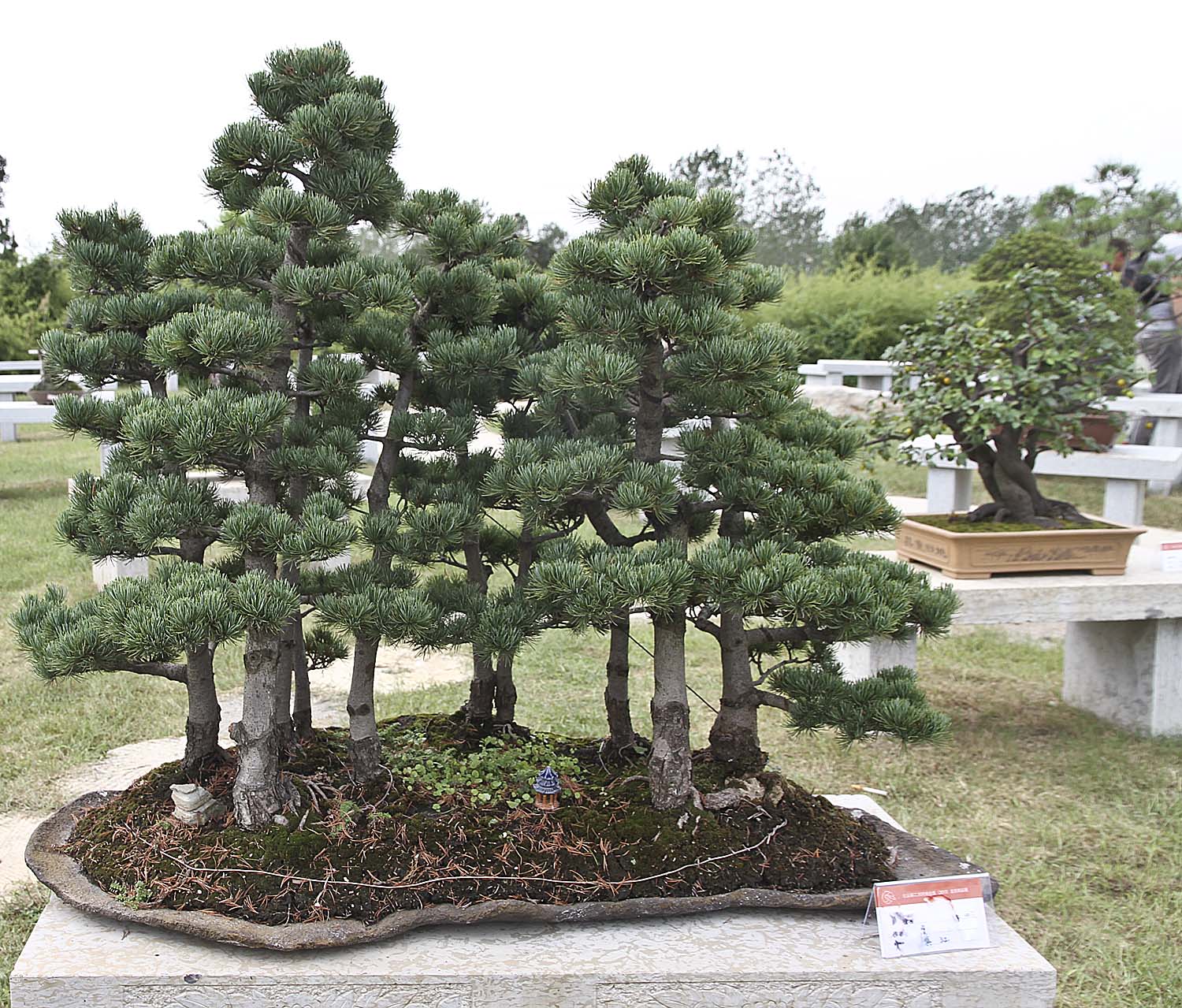
Japanese five-needle pine

Image

Mr. Wu and Bjorn with the Japanese maple bonsai that Bjorn worked on in Japan

Image

Front view of Japanese maple bonsai

Image

Chinese elm

Image

Japanese black pine

I did not expect to find a 19 acre beautiful new nursery! The opening ceremony for the Ju Song An Bonsai Nursery is owned by Mr. Wu and his partner who warmly welcomed us gave us a private tour. He told us his plans with us for his new business and I shared the secrete of making one million dollars in the bonsai business- start with two million dollars. He agreed!

In the front garden there was a large stroll garden full of beautiful bonsai, some from Japan. In fact, Bjorn discovered a beautiful exposed root Japanese maple which he worked on at the bonsai garden in Osaka where he studied and is now working. It was still beautiful and quite unusual and Bjorn considered purchasing it in Japan.

Image

Image

Image

Image

Image

Image

ImageImage

Image

Image

Hanging penjing displayed in a frame on a wall

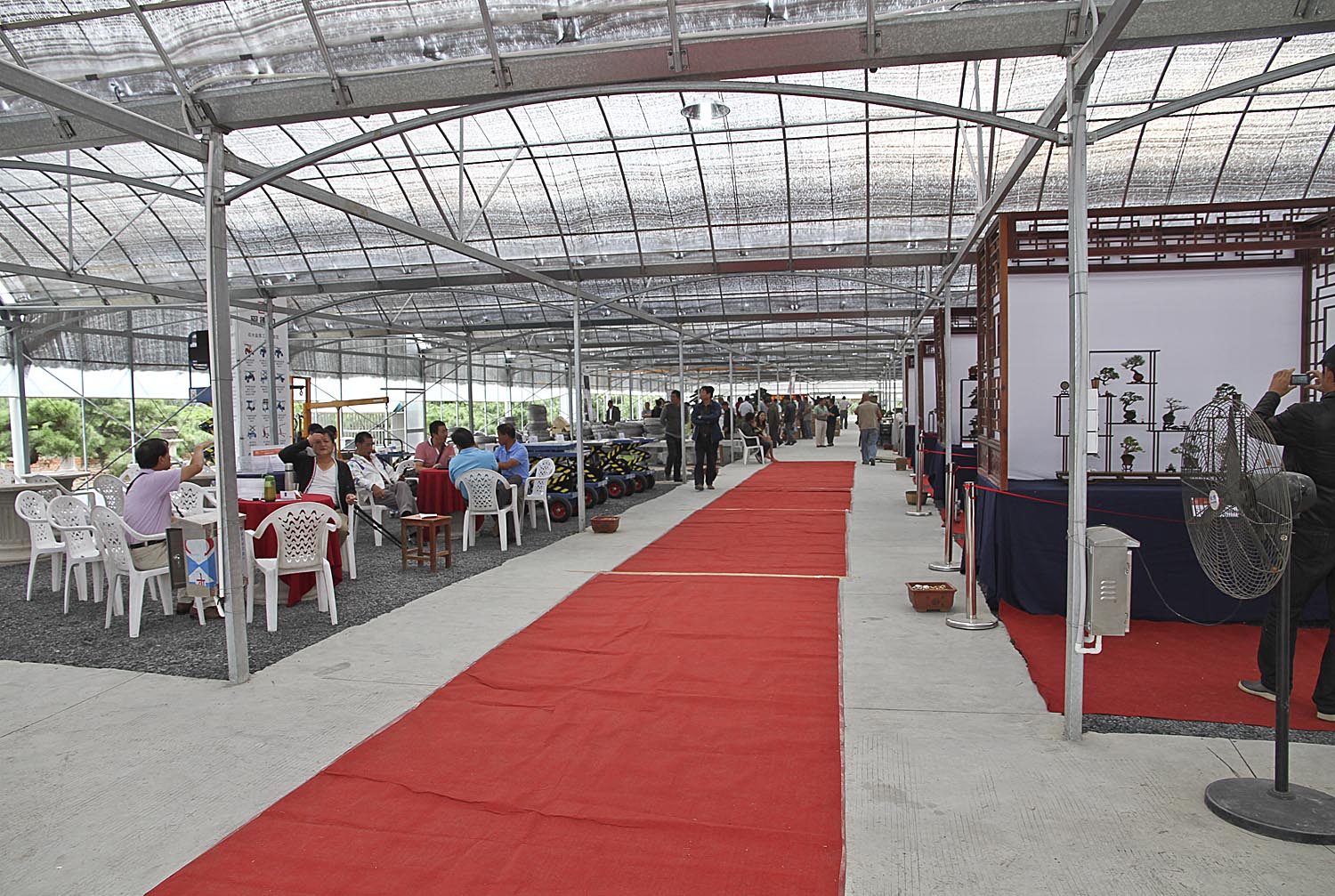
On the left area of the nursery there was a large greenhouse complex which housed a special bonsai exhibit for the opening of the new nursery. All the bonsai were shohin and several small sections were constructed to display shohin bonsai compositions. Although there were a great number of Chinese Elm bonsai we saw several unusual species, all well done.

In the back area of the greenhouse complex there was a sales area featuring books, shohin display box stands, tools, bonsai, pre bonsai and a few finished bonsai as well. Shinny aluminum was for sale and I’ve never seen it so heavy before. An area featured scissor carts, some with built in turntables which I’m certain are necessary for so many large size trees in this garden.

Image

Looking way back, see the small red tent in the far distance?

Image

Half way back

ImageImage

Chinese artists shaping bonsai on rather unique, at least to me work tables

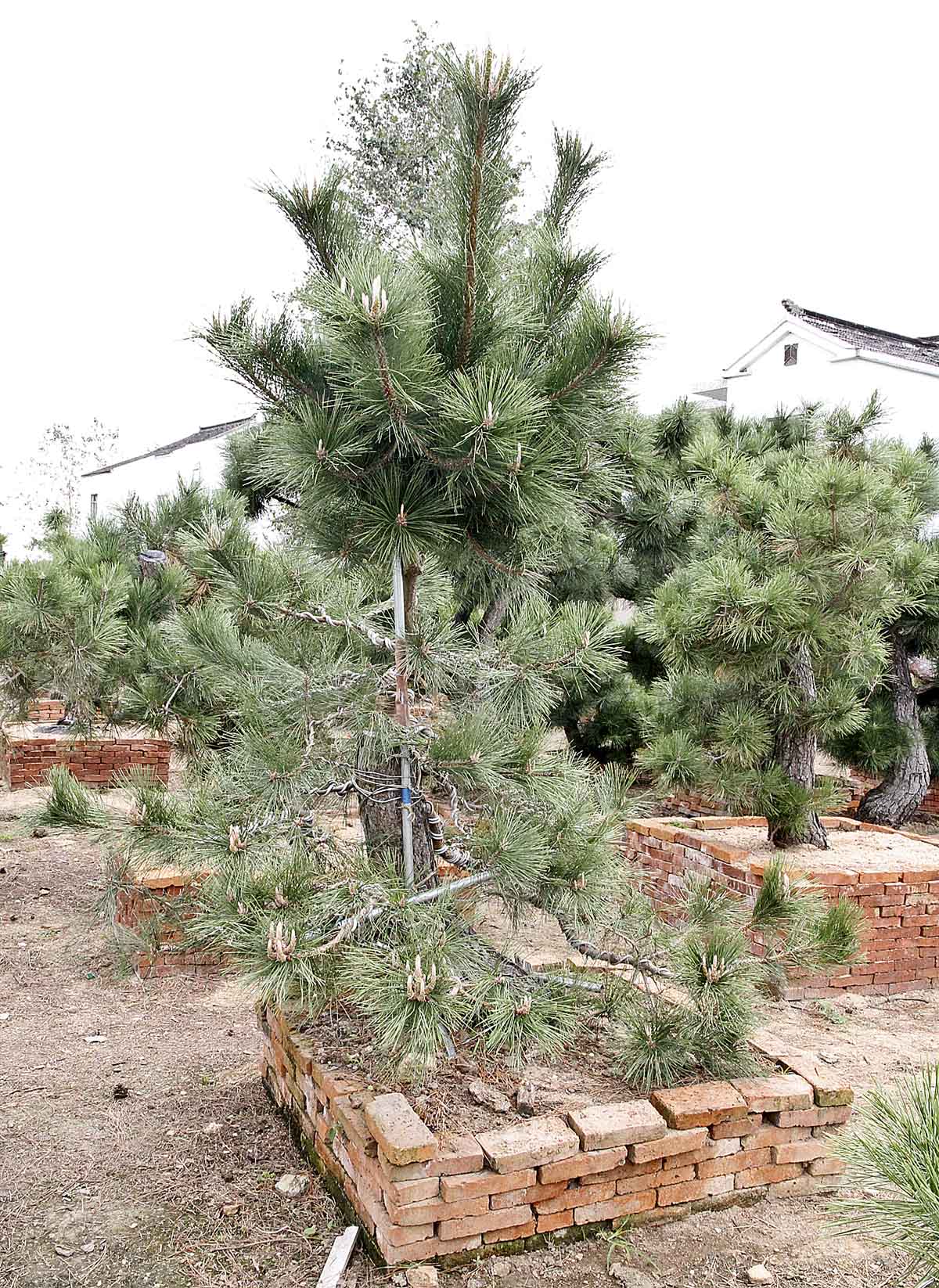
Behind this area was a huge production area of mostly pines, all growing in pots and others were “heeled in” in the Chinese style using bricks. The main road through this area, and the entire nursery was newly laid concrete, so I had no problems strolling along, no stray stones to suddenly flip me over. In the back section, in the middle of the road I found a pop up tent with a few people working on shaping smaller size junipers. Nothing unusual, except for their work stands which looked like antique Chinese display tables for cascade bonsai.

Image

Side road to another area

Image

Another side road leading to another growing area

Image

Golden shimpaku junipers

Image

Image

Image

Image

Large size Oriental arborvitae recently collected which will be used for under stock, branches of other species will be grafted to create bonsai

There were thousands of large size pines being allowed to grow and many were being inarch grafted as well. It was staggering for me to see so many pine bonsai in one area, that it almost looked like the famous Takamatsu area of Japan. All of these pines were still in training and there were not too many finished or refined bonsai in this area.

Image

A “One Bonsai” size truck

After a wonderful surprise visit we join the other group in a temple where we had lunch and watched a Taoist prayer service. We discover that we were lucky because in the morning the group visited a temple with 495 steps.

In the evening we had our Farwell Banquet & Party where over 400 people listened to speeches in both Chinese and English. It went pretty well because we were free to get up and help ourselves to the buffet dinner. Finally at the end it was announced that the next 8th World Bonsai Friendship Federation Convention will be held in Saitama City (Omiya), Japan in late April 2017. This will be the weekend before the semi annual Omiya Bonsai Festival. The following week BCI will have their annual convention in Taiwan. Also announced was that the 13th Asia Pacific Bonsai & Suiseki Convention and Exhibition will be held in southern China, a bit north of Hong Kong.

Mr. Hu, Chairman of the convention did an excellent job coordinating all the activities, with class, too. He announced that over 400 people attended the event from over 30 countries in six continents. New friends were made as well as long time friendships renewed. The activities throughout the three days involved the art, creation and appreciation of bonsai along with the fellowship which is what a good convention should accomplish. Having run over 30 bonsai gatherings myself I know what is involved in the organization of events like this and Mr. Hu and the entire board of directors along with Mr. Xin need to be thanked and congratulated for a wonderful event. I look forward to the next convention in Japan, but hope to meet my new friends sooner.

When everyone was checkout of the hotels we were surprised with complimentary issues of a full color, 16 page tabloid size commemorative newspaper featuring 148 (yes, I counted) photos of the past three day activities. Included was an entire page from the Farwell Banquet & Party held just a couple of hours ago. Well done!

Additional photographs from the World Bonsai Friendship Federation Convention will be in a forthcoming issue of International BONSAI magazine:

http://www.internationalbonsai.com

Image

WORLD BONSAI FRIENDSHIP FEDERATION CONVENTION– Part 2

Image

My first report from this trip is only being made possible through the considerable effort of my wife Diane, who took time from her busy schedule of caring for my bonsai and 94 year old mother to help. These reports are being written by me and e-mailed to her first. Then the individual photos are sent to her placed at the correct positions all while iChating on my MacBook pro laptop. The first post required over one hour with her in Rochester and me in China talking with both computers open. I think there is a remote way of taking over other computers because I’ve done it before with Joe Noga in North Carolina and me in Kyoto while he meticulously adjusted images from Japanese bonsai exhibitions. But, this is China and the connections are not that good and often fail in mid conversation and transfer. Although I’ve not yet mastered the line spacing of this Word Press blog program, adding caption comments would be too much work. That’s why the text here is a bit longer to compensate and you don’t see image captions. So, we all have Diane to thank for being able to share my travel, discoveries and study in China with you.

Image

Image

On Thursday morning, Brussel, Suthin and I first were taken by a private car to the “Parking Lot Sales Area” which is only accessible by walking (?) though a rather muddy path up a hill. I avoided this important part of any bonsai gathering because of the difficult, for me, accessibility. But, the organizers quickly arranged for the private car. But, we needed to wait for another special entry pass. There are security guards everywhere. It was a steep short trip, but we knew there must be a road access because of the large size bonsai for sale. We went though gravel areas to a large clearing. The gravel and steep areas will be paved in the quick future as the garden is not finished yet. There were many trucks lined up on the side before entering a rather large, but dark and cigarette smoky area. Suthin could not stand being there for long periods, so had to leave and re enter several times.

The tent was nearly filled mostly with pot vendors from Yixing, which is only about one hour from here. Most of the pots were kind of large and crude. There were many vendors selling bonsai and pre bonsai, some quite interesting. The Chinese species of Princess Persimmon were filled with small colorful fruit, but they are evergreen, rather than the deciduous species which are most common in Japan. There were quite large, of course, Trident Maples, some which are larger in round than me, and that’s saying a lot. They were quite nice and one finished sample bonsai looked like it was trained in Japan, rather than in China. Lots of small size Japanese Black Pines too. But all the plants were not in the pristine condition which we are familiar with in Japan and soil lacked a lot of everything except water drainage. I don’t know how they can grow, and they were not Bald Cypress. But, if you look through the messy and dirty presentation there were some quite nice bonsai.

Image

A couple of tool vendors were there offering inexpensive (OK, cheap) Chinese tools which we call “disposable” in the United States, but the new Chinese brand of Ryuga Tools distributed in the US by Joshua Roth was represented in a bright, but small sales area. They had a large selection of tools, and in fact I purchased two rather unusual, for me, bonsai tools- GOLD PLATED. They are gorgeous and nice to fondle. They even came in leather (?) cases with gold colored zippers. Friends warned me that the gold might rub off before I got home to show friends, so I did not use them for my demonstration.

Image

After my “large” purchase we headed on down to the demonstration area, but there was no shuttle bus and the private car was gone. Since the way back was all downhill, we tried that way. There were gravel areas and one large stretch of heavily packed soil which was straight and not too bad. Of course I had to “roll on down”, while Brussel video taped me, just in case the clip would be good entry for America’s Funniest Home Video, but fortunately for me I survived the trip in one piece with me going down the path in my scooter, which in which I’ve been know to go kind of fast. Then came the muddy area, but got through it.  I now need a wheel alignment, retread and brake job for my scooter. I wonder if that’s possible? Hopefully, I’ll be able to retire the scooter when I get home before I leave for Australia. Even the Japanese visitors, and there were numerous, were dressed formally in suits, but had muddy shoes and lower trouser cuffs. The viewing area for the demonstrations was also kind of muddy as well.

Image

Image

Image

Isao Omachi demonstration

The sale area was located behind the demonstration area, so after my “road trip” we ended up there to watch the Chinese and foreign demonstrators, or “Performers” as we are called here. All the bonsai looked good, but then we had great material to begin with. Although good material can be messed up during a demo, the bonsai produced after the demos were beautiful, or had a great future. I wish there was an area where the finished bonsai could be displayed with a plain background, but none was provided and the trees are so large, and heavy, they probably will not be brought to the farewell banquet. Don’t forget the venue is over one and a half hours from the hotel. Several trucks and crane lifts would be necessary for this herculean task. So, we could not take good after photos.

Image

Then we went back to find the buildings we missed the day before. Good thing we did, because we saw so many more bonsai I even imaged! I have NEVER seen such a massive display of bonsai anywhere, in one place at one time, really. It was too much to really appreciate the beauty of each bonsai. Again, each bonsai was pretty clean and on an appropriate display table. In fact, in most cases the bonsai tables were on top of table height tables, which look like bonsai display tables as well.

Image

Image

Image

Image

Image

Suthin was particularly pleased to see two small rooms filled with shoo-in bonsai, several with unusual shaped display box stands. All multi leveled, busy with every opening filled with not only one (sometimes two) shohin bonsai, but with accessories like mud men. They were quite attractive and interesting, however, not in the quiet taste of the contemporary simple Japanese display I’ve been accustomed to. Although I personally have been trained and teach in the simple Japanese classic form, this was quite interesting and an eye opener for me. There is more than one way to effectively display bonsai, especially shohin bonsai. This is one of the main reasons I’m here, to expand my horizons and appreciation of the art. But saying this, the Chinese contemporary display style still has taste and dignity, not like what I’ve seen in most club and regional bonsai shows in the United States when displaying too many items in small areas. Even the small accessories were fine quality, even for mud men, they look good. Perhaps I should purchase a few mud men for my collection if I find any.

While “strolling” though the garden, downhill much easier than uphill, I like to notice things, in addition to pebbles on the paths. I noticed that all the colorful annual flowers, placed in flower beds were not actually planted, but rather still in the small flexible plastic pots. Perhaps this was because of last minute decoration, but was told this is the common way to plant flower beds in many Asian countries, not in Japan however. Individually “heeled in” provides the ability to easily replace the plants. But the roots are still contained and do not have the room to grow into the surrounding soil for moisture. Therefore, they must be watered more often.

After lunch, we got there early to get a good selection, we were driven to the demonstration area which is up on a hill, but with still two sets of multiple steps away. Everyone helped carry my tools and stroller while I went up the stairs. Did I mention there were several sets of steps?

Image


Image

Image

All of the US team were on one side except for Bjorn who was on the other side of the courtyard. Each performer had an individual pop up tent, new scissor cart and was provided aluminum wire. But I brought my own annealed copper wire which was shared with Suthin and Jack. The areas were about three feet above grade level. Most of demo areas were in front of newly laid sod, which by this time was a bit muddy. But my area was in front of a paved area. After getting up “on stage” I did not get down until the end to check the branch positioning of my tree to save extra stress on my broken foot.

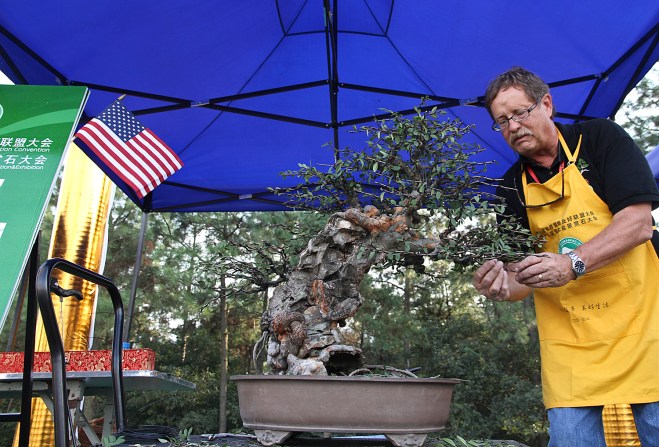
I asked my friend Diane Boekhout, President of the Bonsai Society of Western Australia from Perth to assist me. She helped me two years while I was teaching in Perth and I’ll be with here in another two weeks teaching. She is skilled and quick and we had a lovely conversation during the demonstration. There were NO questions from the audience, which was mostly Chinese. There were not that many other foreign spectators as well because of the hot sunny weather. Most of us were in the sun. I tried to explain a few things, but it was not necessary, so most of the demonstrators simply worked as the limited number of people casually went from demonstrator to demonstrator watching them work. Fortunately, several friends took some photos of us working, as we did not have time to walk around and see what our fellow US team members were doing.

I worked on a large size twin trunk Chinese Sweet Plum. The trunk differences and heights were pretty good, but the tree needed some carving on the back to remove dead wood, which I did not want. The next issue of International Bonsai will be on twin trunk style so I took several photos for possible use to explain my twin trunk design principles. Unfortunately, there was no background, except for the green trees behind the tent so “final” photos of all our demo trees are not too good. But, I’m working on getting better final photos from the convention committee.

Image

Image

Randy was next to Brussel and worked on strangely shaped Oriental Arborvitae. But the tree came out well after Randy created dead wood on top.

Image

Image

Suthin worked on a smaller size Juniper, still to heavy for him to lift because of the cement-like soil which ended up in a cascade with dead wood on the bottom.

Image

Image

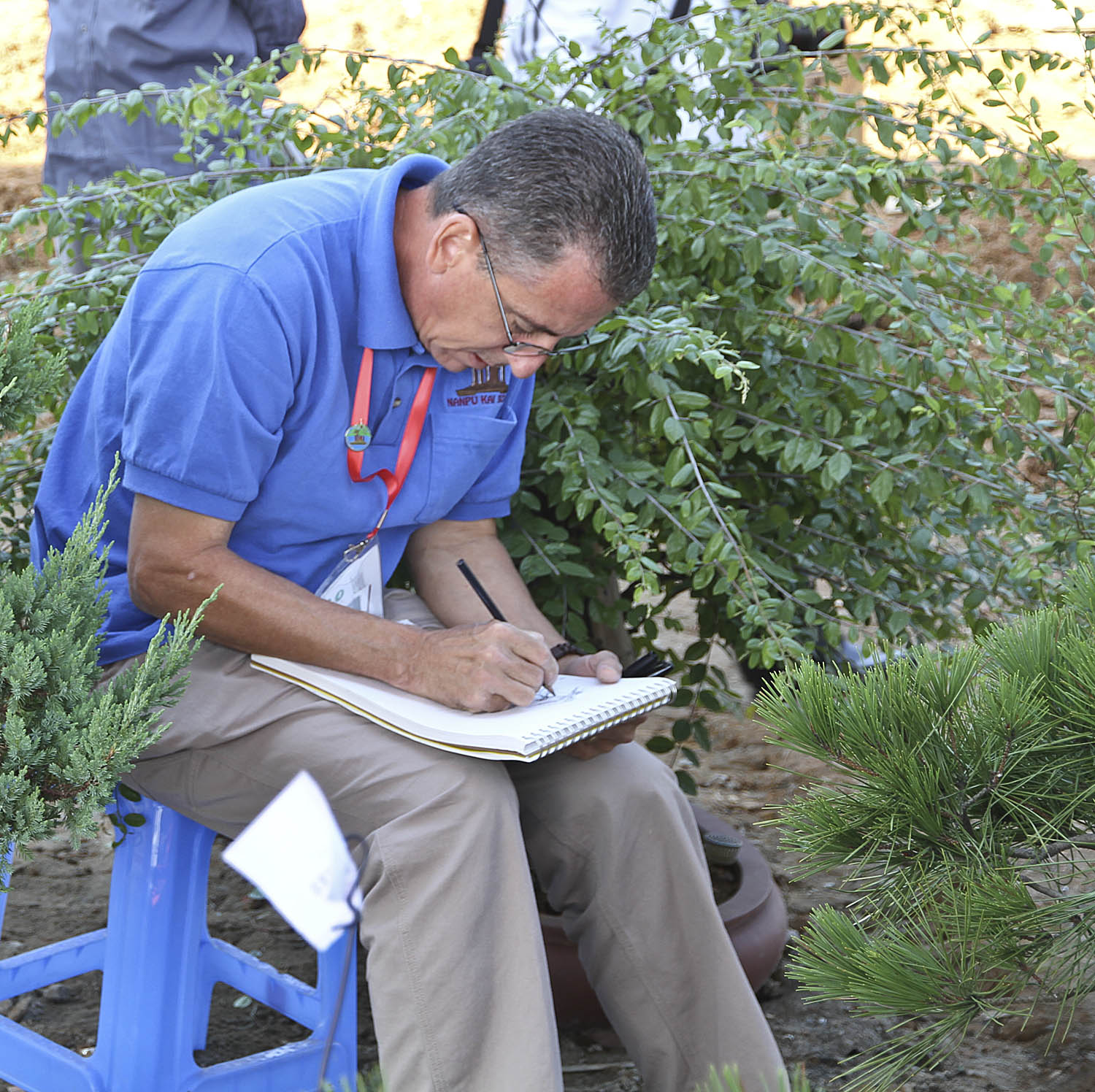
Jack worked on a lovely Japanese Red Pine. He found the tree before the demonstration and made a beautiful drawing of what he wanted to do with the tree. He accomplished his goal and created a great bonsai. His wife designed an unusual apron which holds branch trimmings then folds out to dispose them in the trash.

Image

After changing the tree they selected for his demonstration, Bjorn finally got another Japanese Red Pine. His tree too was transformed into a larger size bonsai with great movement.

Image

Image

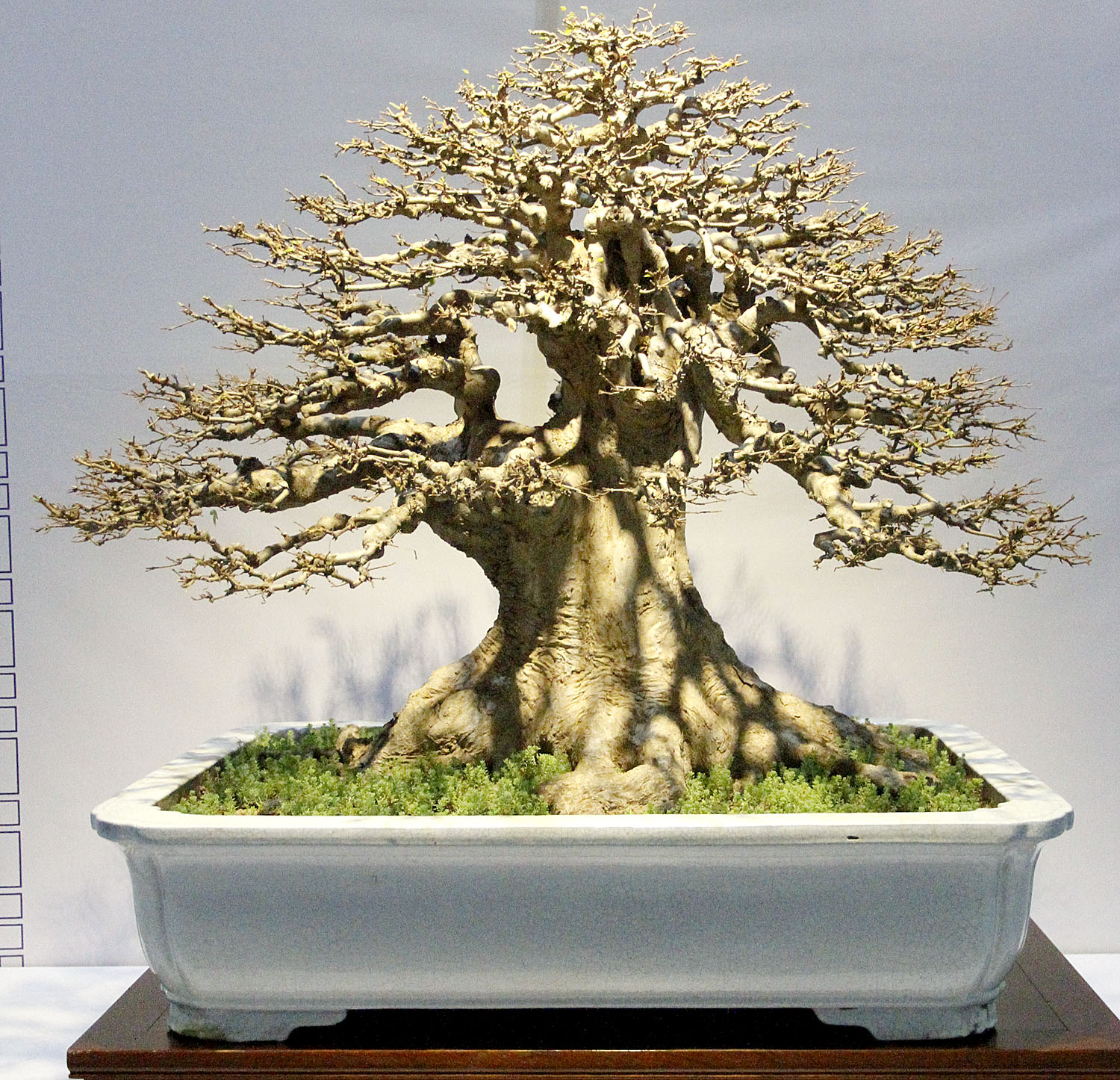
Brussel got one of the best trees available, an old collected Chinese Elm with beautiful multi-colored bark. This small, but quite heavy tree with pretty good taper had many stones imbedded into the trunk which added to the drama of the tree. He pruned and wired the branches to form an excellent bonsai with a triangular silhouette.
We were all tired from working in the hot sun and weather and enjoyed a quiet dinner at the hotel. During dinner Hwa Jin Lee, from Korea who lived in the United States showed me photos she took earlier in the day of a bonsai exhibit. The trees looked great so, of course, I had to see them. She quickly made a phone call and a van was arranged to pick a few us up to visit the bonsai nursery with the exhibit the next morning.

WORLD BONSAI FRIENDSHIP FEDERATION CONVENTION – PART 1

Image

The 7th World Bonsai Friendship Federation Convention has been combined with the 12th Asia Pacific Bonsai And Suiseki Convention this year in Jin Tan, China and will take place on September 24-28, 2013. I’m part of a six man team from the United States and am joined by fellow bonsai artists and friends, Bjorn Bjorholm, Randy Clark, Brussel Martin and Suthin Sukosolvisit.

Yesterday I arrived in China after a long 15 hour direct flight from Newark, originating in Rochester. The convention committee met us and led us to an air conditioned bus where we had to wait for THREE hours for other foreigners to arrive. Then they told us the bus trip would be another FOUR hours to the hotel. That’s like me flying into Rochester, NY and driving to Pittsburgh, PA for a hotel!

Image

Image


Image

Image

Image


Today we are boarding buses to the convention venue, which is another hour and a half dive. Boy, China is a huge country! We had a police escort to the venue and passed the unfinished hotel were everyone was to stay in the garden. We are distributed in four hotels and using 12 buses to go back and forth to the garden. The demonstrations are at the Baosheng Bonsai Museum, a brand new, yet unfinished beautiful park which is over 16 acres in size. It personally belongs to Mr. Changbo Xin, the WBFF China Chairman and great benefactor of bonsai. He was building a huge hotel for us, but did not complete it in time. In fact, the entire museum complex is not finished yet and they only “put it together” for our visit. It will close in a few days until it is complete. I was told nothing was there four years ago.

Image


Image


Image


Image


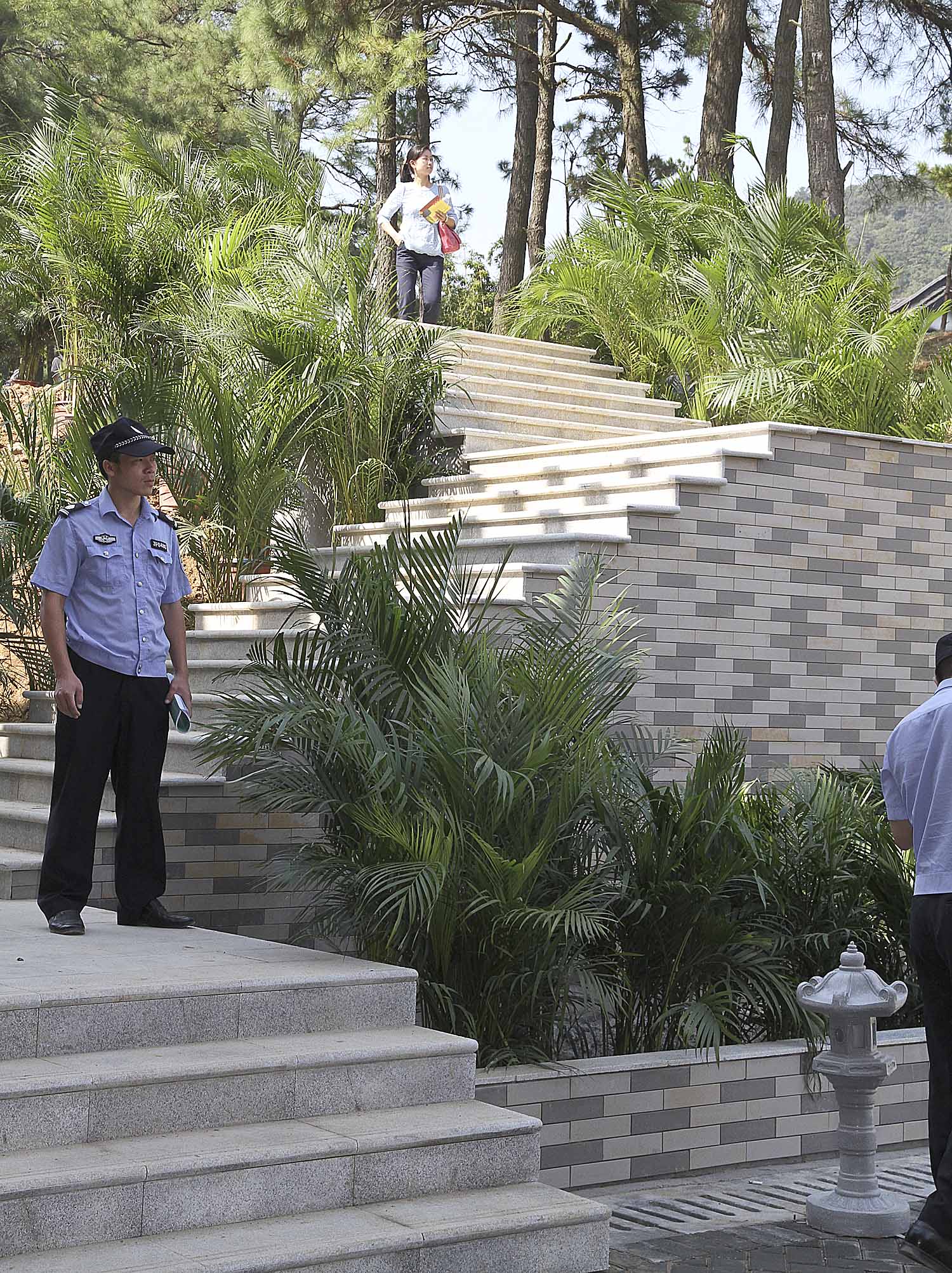
There are several museums and buildings, but I did not have time, nor the energy on my scooter, to see everything, but will try again tomorrow before my demo. There are LOTS of stairs which are easier for me to go up, rather than go down. It seems as though the museum park is comprised of an entire mountain top. Lots of stairs, BUT everyone in the committee is helping me get around and brining bringing “electric cars” to move me. Even on the bus our group and driver are quite helpful. I don’t think China has heard of handicap requirements as we have in the United States.

There are over 400 registered guests and many more were at the Opening Ceremony, which was listed to begin at 9:58 (not 10:00) but did not start until after 10:15 with dragon dancers and loud music. The fireworks were on video screens. During the presentations a helicopter drone flew over the people taking photos, kind of neat. My brother has one, but this model is quite a bit larger and I’m sure will take good photos.

Image


Image


ImageImage


Image


Image


Image


Image


Image


Image


Image


Image


Museum visits concluded the morning activities and they were quite crowded. Fantastic trees! Most of them belong to Mr. Xin, but he invited other artists to display their best bonsai, which were judged, in one of the buildings. I was told I missed an important building full of Japanese bonsai, but I can see Japanese bonsai next month during my Japan tour. I want to see the Chinese penjing to get a better understanding and appreciation of the origin of what we call bonsai. I’ll still try to visit the building tomorrow. The walls were painted white which was good for photography. The size of many specimens is staggering! I guess large is best in China. I did not expect to see the fine refinement of most of the bonsai. Surely, many of the trees are more than four man trees.

We returned back to the entrance where a large restaurant was prepared for buffet lunch. Then the 47 speakers met to select their demonstration trees. Each of us was asked which species they wanted to work on. Nearly everyone said juniper or pine, but I said hackberry. There was one large hackberry in the selection area, and I was first to select, but they gave it to Budi from Indonesia, but was offered a large size Chinese sweet plum with two trunks. I can fix it. Others looked at their trees and many switched. Bjorn was given a large Hinoki with a beautiful trunk, but quite poor roots and not happy, but was allowed to select a good Japanese red pine. Then, sitting back I saw another artist grab the tree because he liked it. Isao Omachi’s tree was huge! He said it was more like a “three day tree” rather than the three hours we are allocated to work. By the time we finished this process the three Chinese demonstrations were just about finished, but saw the last part of Brook Zhao’s huge (5 man) land and water penjing.

Image


Image


Image

Image


Image


Image


All the demonstrators were sent e-mail messages to attend a meeting and they would provide each with a scissor cart (moves up and down), “metal” wires but were to bring our own tools. Since I did not understand what “metal” wire was, and prefer not to use sissy wire, brought a complete selection of annealed copper wire from No. 6 to No. 20. I don’t think I’ll need the heavy wire, so Suthin or one of the five others sfrom the United States can use it, if they want.

Tomorrow 22 (yes, twenty-two) demonstrations will take place at the same time in the same courtyard. Each artist has a pop up tent to work in, just in case it rains. Then, after lunch another 22 demonstrations will take place. I’m curious to see how this works out, each of us has an assigned tent. We just returned back to our hotel from the Welcoming Banquet, which FINISHED at 8:30 pm. Now, I’ve been to a lot of banquets, in fact 10 conventions this year alone, and that time is closer to the beginning rather the end. The room could not fit everyone, so an extra room was opened in the back (cheap seats or kid’s tables?). Even the Japanese were in the back room and we could not (luckily?) watch all the speeches, but had a great delicious meal and saw loads of friends from all around the globe. Bonsai fellowship is quite important in the art as there is more to bonsai than just shaping trees. To be continued……

WINTER SILHOUETTE BONSAI EXHIBITION

Image

Chinese elm bonsai, which I might display.

If you want to see something different, on the east coast at least, join me in Kannapolis, North Carolina on December 7-8th for a Winter Silhouette Bonsai Exhibition. In cold areas it is not common to enjoy the beauty of bonsai during the dormant season without foliage. The true beauty and training techniques for deciduous species can be seen and appreciated when the bonsai are without foliage.

Everyone is invited to display their bonsai, contact Steve Zeisel for additional information.

I’ll be displaying and demonstrating at the event in addition to conducting a critique and items for sale. Other vendors will also be selling and this will be an excellent opportunity to pick up rare items, especially Christmas presents!

I hope to see many fine bonsai as well as friends at the Winter Silhouette Exhibition.

Image

Chinese quince bonsai trained from seed might be displayed.

Image

Korean hornbeam in brilliant autumn coloring. The bonsai will not look like this in December.

Image

This Korean hornbeam bonsai might be displayed, however in a different container.

Image


Image

PREPARING FOR BONSAI WINTER PROTECTION

Image

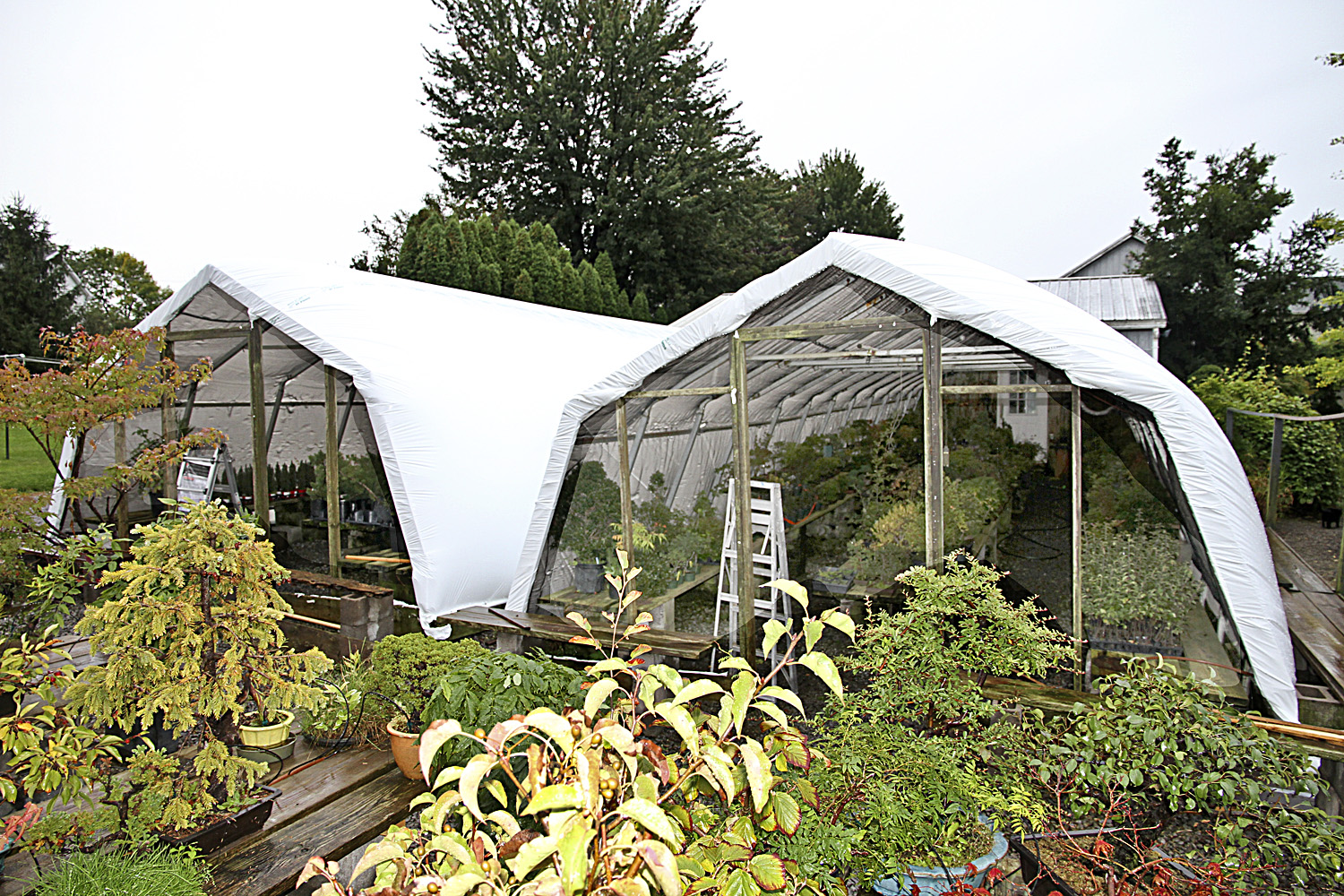
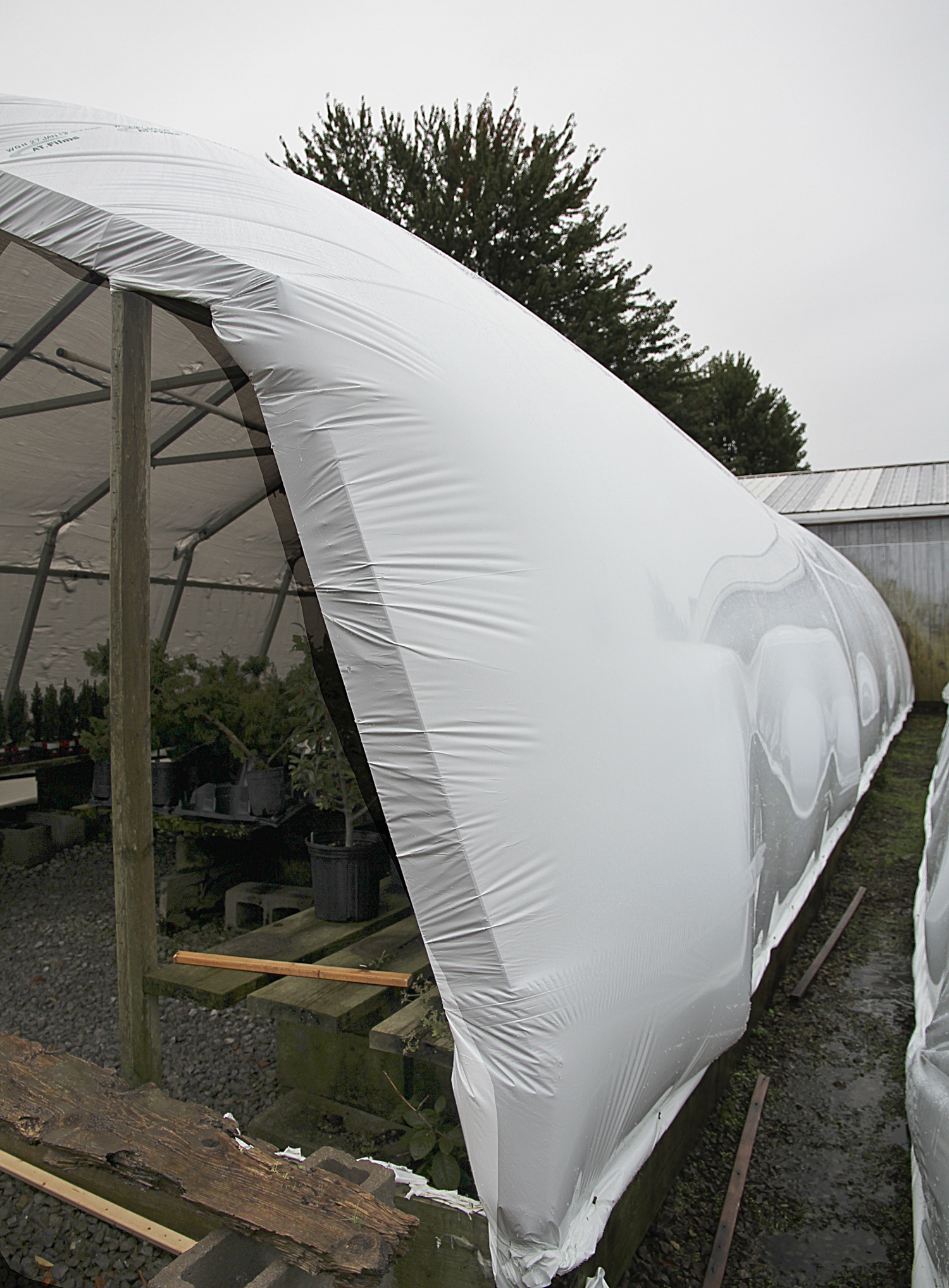
This morning my Senior and Saturday Crew came to cover the five poly houses. Yes, it’s a bit early, however, I hate to work in the cold and the ends of the houses are not covered until late November or early December. I leave for China on Monday for twelve days and since I will also be gone nearly the entire month of October teaching throughout Australia then leading a tour to Japan returning home a couple of days before Thanksgiving, preparations must be made early.

Image

The poly house side is inflated for insulation

Image

This house is not inflated as much

The best bonsai specimens are not in the houses now, they are outside in a full sun exposure and will remain in mid to late November. It’s good if the bonsai experience considerable cold, perhaps 25F, plus a nice dusting of snow. As the snow melts over the trees, it tends to “clean” the bark since the snow is actually a bit gritty. Putting the bonsai in the poly houses too early is not good.  Much of the nursery stock is already in some of the poly houses, but the ends are still open and will be fine.

Image

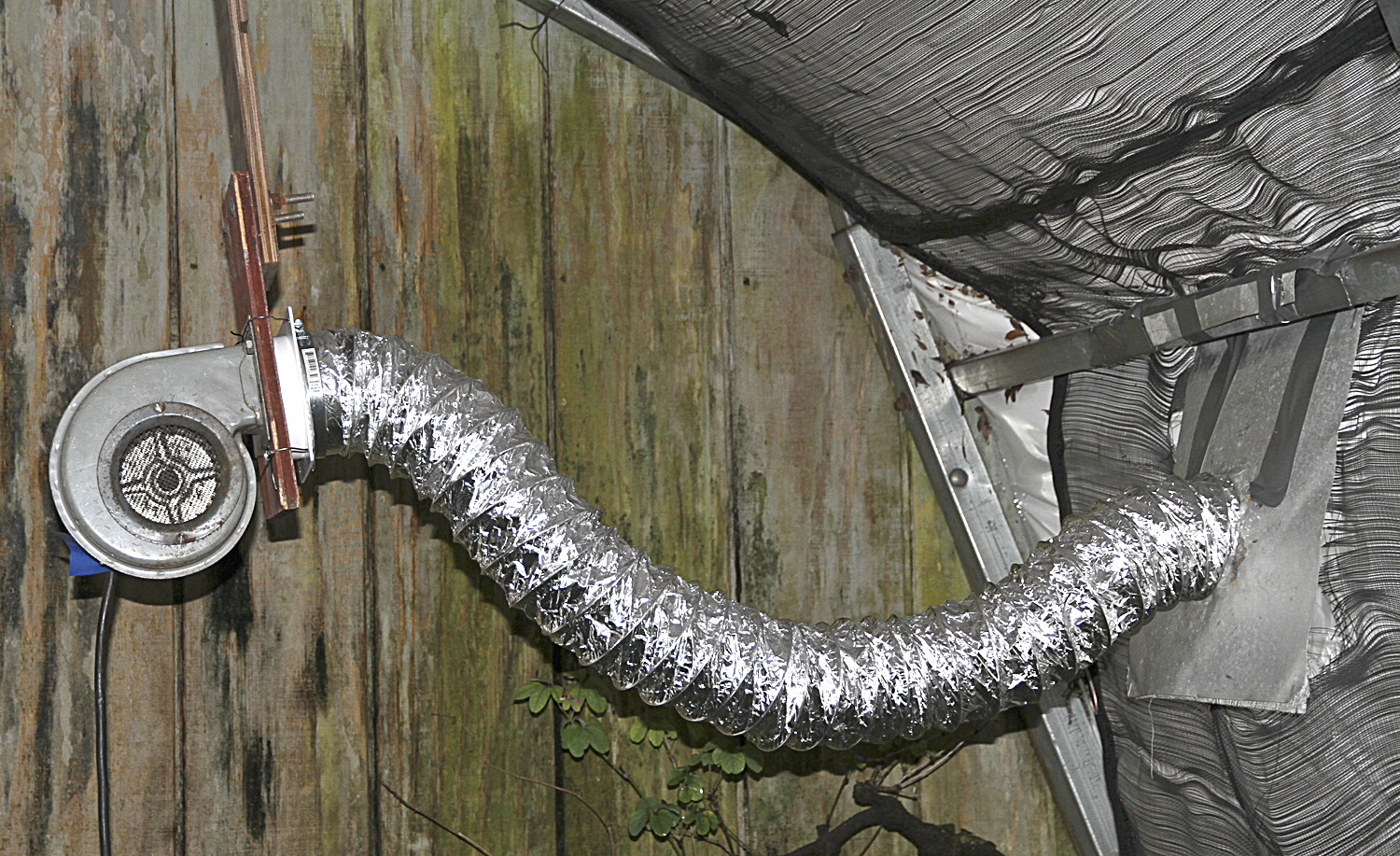
The fan on the left blows air through the tubing between the two layers of poly for insulation

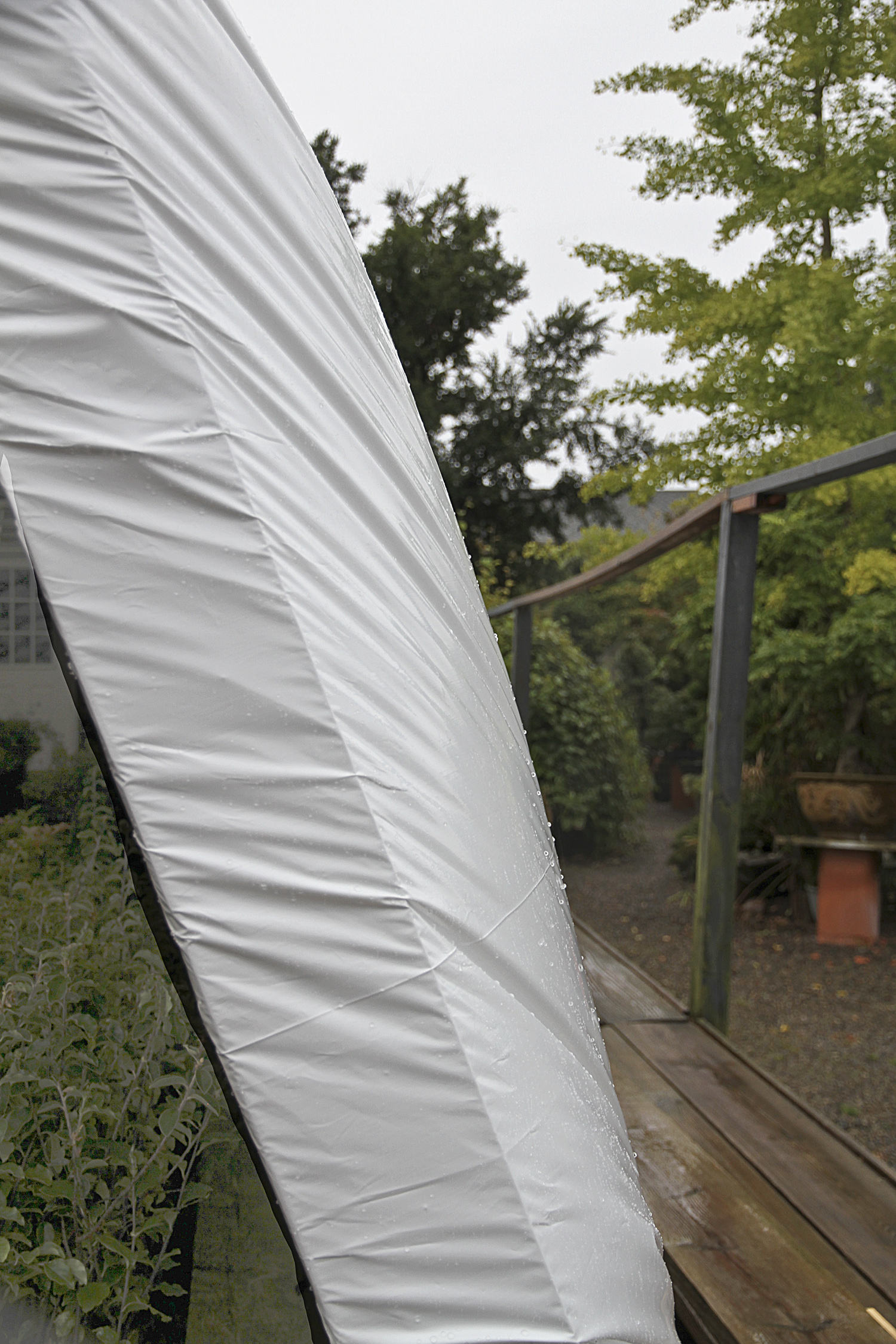
Rain was imminent this morning, however with the help of Diane and Chris the crews were able to cover the two large houses which have a double layer of white overwintering poly. Two layers are used and a small fan is used to “blow” up the space between the layers of poly which adds insulation. This also keeps the poly tight so it will not flap in the wind.

Working quickly they were able to cover both large houses before the rainy downpour which lasted most of the day. I don’t need to water today! The Senior Crew can easily handle the three smaller houses (45 x 16’) next week while I’m in China if the weather cooperates. They only get a single layer of poly and are easier to cover.

While they were covering the poly houses I was teaching my Introductory Bonsai Course in the studio and was unable to help. But each one of these friends has covered the poly houses before, some for 20 years. They finished just before noontime, as my Introductory Bonsai Course was finishing so we had the traditional pizza lunch together before the afternoon workshop.

During the afternoon Open Workshop we were talking about preparing the trees for overwintering and I remembered seeing a technique in Japan I wanted to share with them. The laptop was handy from my morning class, but has over 36,000 images and could not quickly find the photos I was looking for but found them this evening when it was quieter.

Image

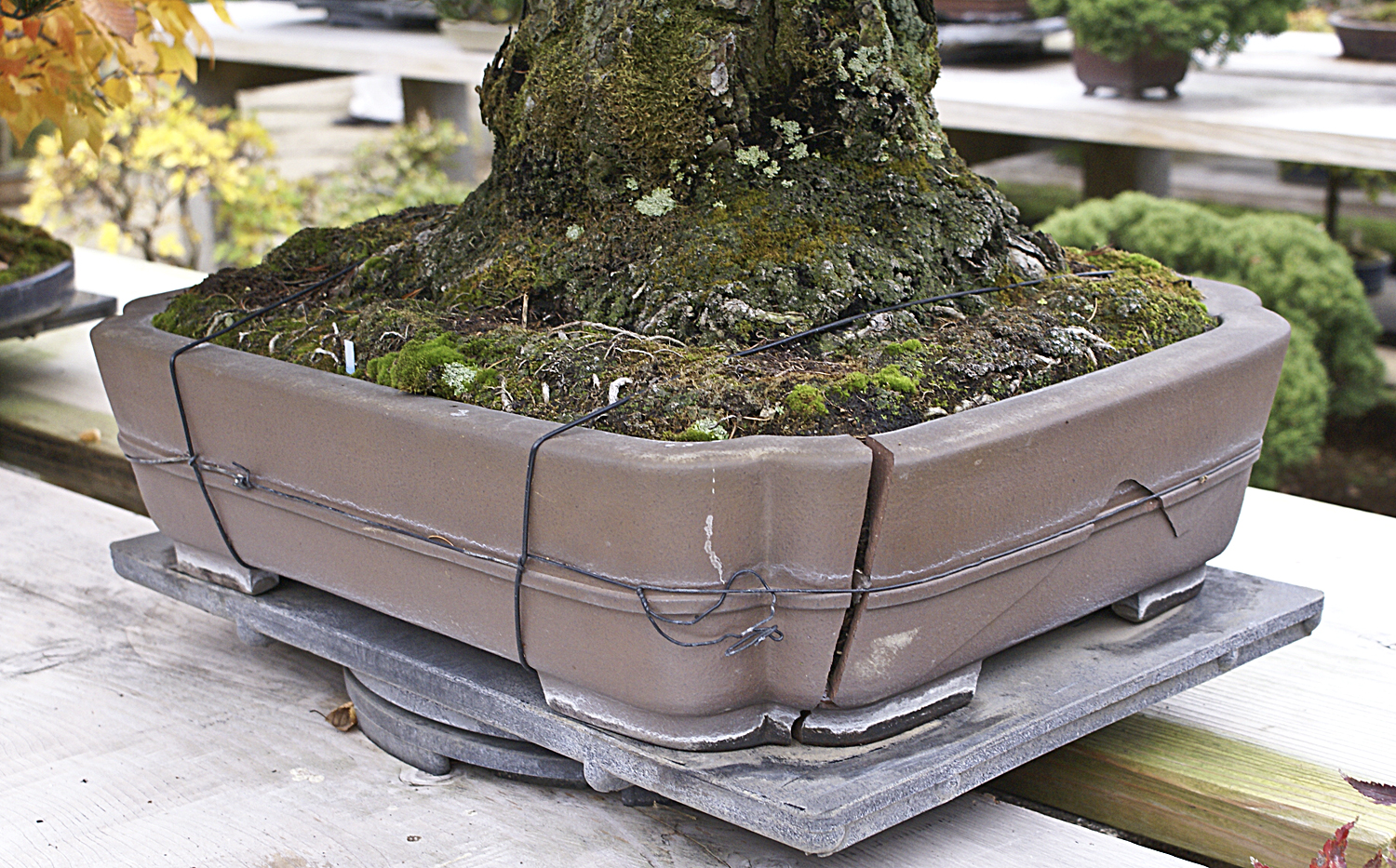
Root pressure from a potbound bonsai has broken the container of this large size bonsai. It has been wired to contain the root ball until a new container can be found or until the correct season– I often use duck tape….

Image

Bonsai with thick fleshy roots, like this Magnolia, are especially vigorous and can easily break containers when potbound.

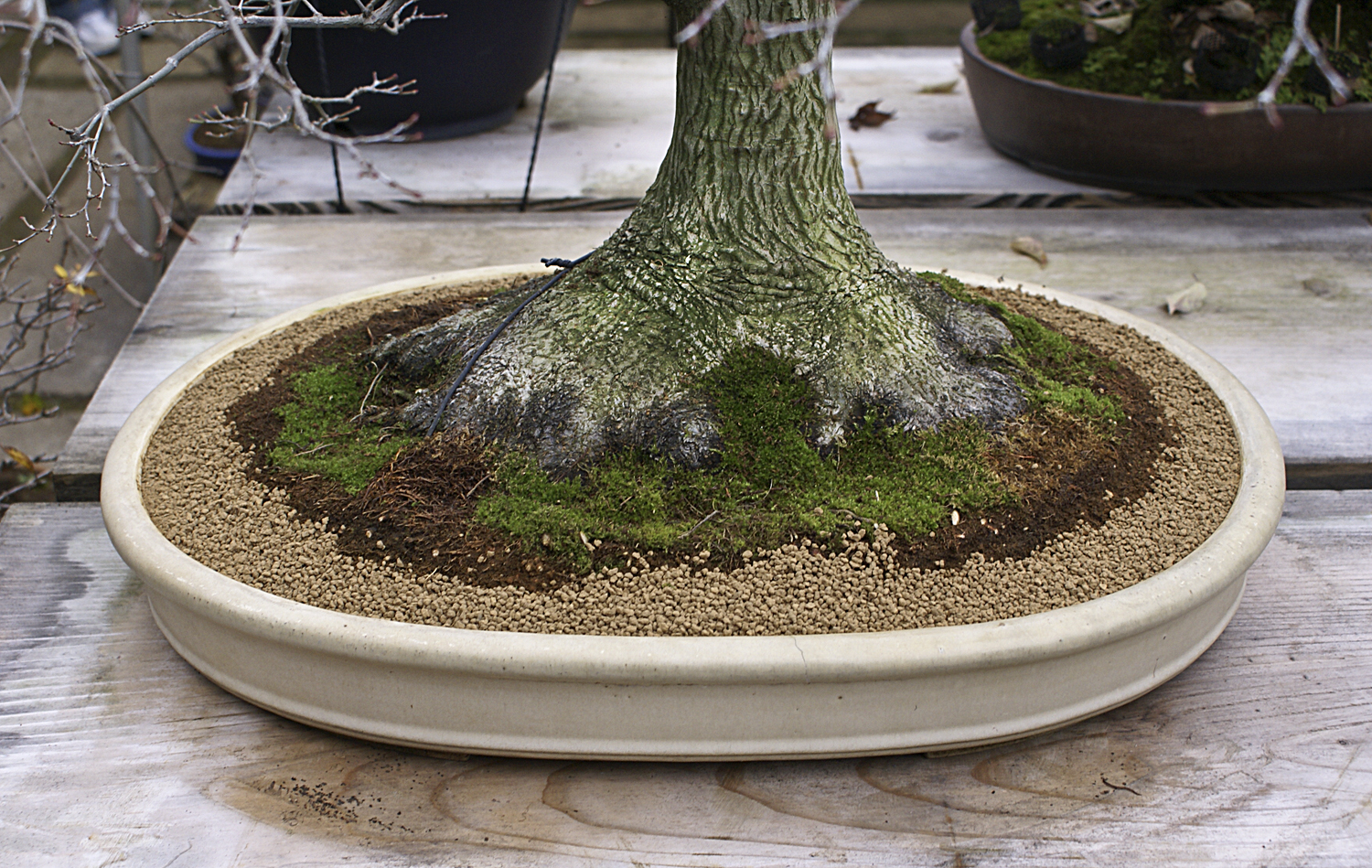
In November a few years ago, after most of the bonsai tours left Omiya Bonsai Village, I saw Hiroshi Takeyama, Fuyo-en Bonsai Garden, transplanting some bonsai. Since it’s not the common season for transplanting I asked him why he was repotting. He mentioned that it was not a “complete” transplanting, only the outer layer of soil was being removed and replaced with fresh soil to avoid breaking containers during the winter when the soil freezes and expands. Broken pots because of root bound trees is quite common. I have had a few experiences, especially with containers with inner rims. Mr. Takeyama was only relieving the root pressure around the perimeter of the containers because root pressure can be quite powerful, especially for species with fleshy roots like Magnolias. In spring these bonsai will be transplanted.

Image

Hiroshi Takeyama instructing an apprentice on the technique of “temporary repotting.” Notice that the moss has been carefully removed and saved. A repotting tool (sycle or knife) in the left hand will be used to remove a ring of soil around the perimeter of the container.

Image

Fresh soil is being added to the container.

Image

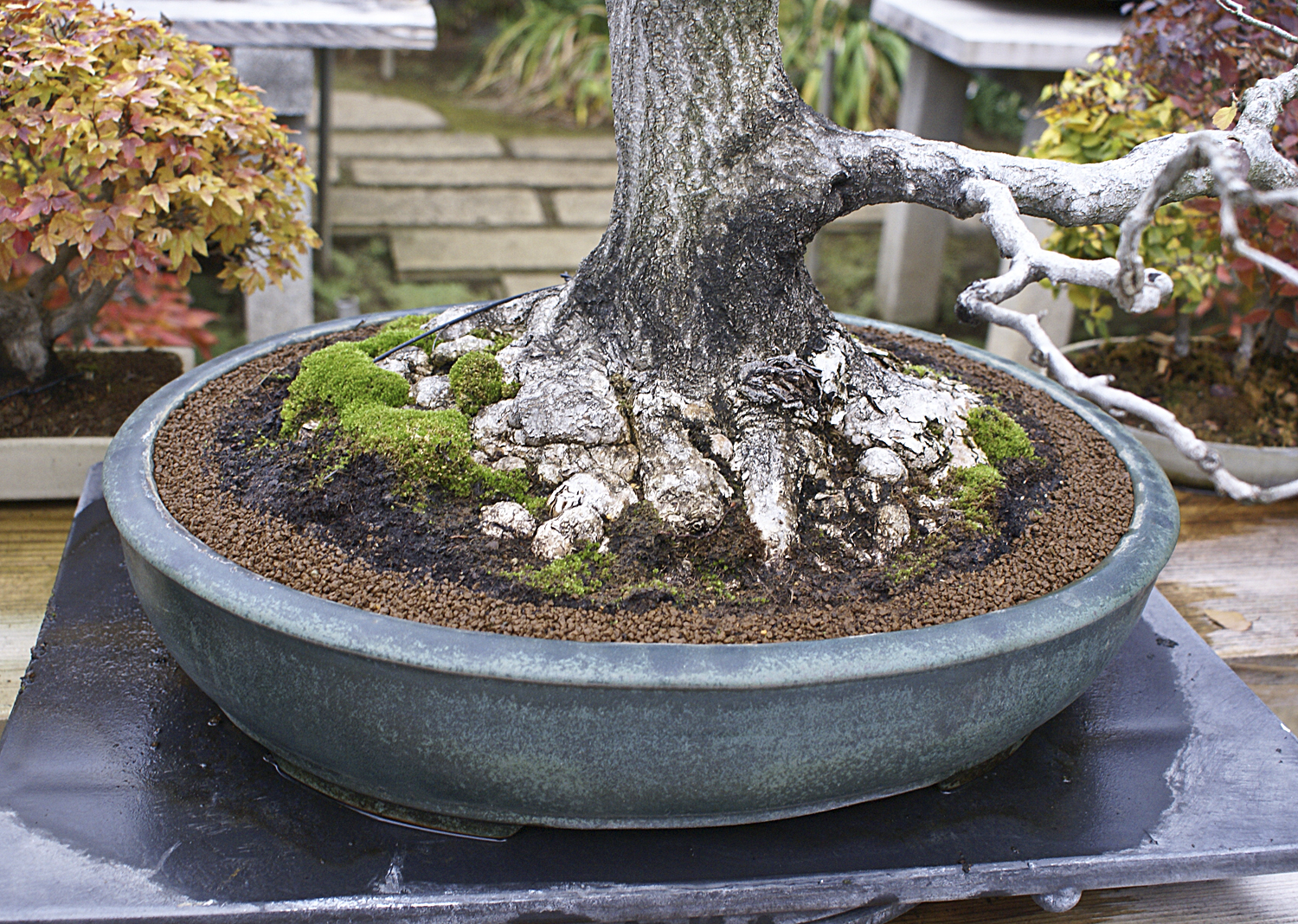
This Japanese maple bonsai has been prepared for the winter by removing soil around the perimeter of the container and replaced with fresh soil. This is NOT how a correctly transplanted bonsai would look. The original central root ball would be irregular in shape with triangular sections of roots and soil removed.

Image

Another potbound bonsai prepared for winter so the root pressure does not break the fine-quality container.

This might be a good technique to use for potbound bonsai to avoid broken containers in spring.

LAST FERTILIZING FOR THE 2013 SEASON

Image

Yesterday, September 19, 2013 I fertilized my outdoor winter-hardy bonsai for the last time of the year. They were given a full strength dose of:

Miracle-Gro (24-8-16)

Super Bloom (12-55-6)

Liquid Iron

HB 101

The last application of Mean Green organic fertilizer cakes was put on the bonsai in August and now all cakes will be removed for the winter season. They have worked and are now messy, but not smelly. As the Mean Green organic fertilizer cakes are removed they will be gathered and placed in the garden where stock plants of maples, Chojubai dwarf quince, Yakushima rose and more are cultivated for cuttings.

 A few bonsai are beginning to show their bright autumn colors, and perhaps we will have an other glorious show in late October to early November. The maples and other deciduous species which I think will be showy are turned 180 degrees to make certain the color is uniform throughout the tree. Several of the fruiting species are beginning to change color.

Image

Image

Although the weather has been bright and a bit cool during the past few days, yesterday and today are much warmer. Watering is not required every day, but the bonsai are checked daily. Some specimens especially the dwarf maples which are potbound and have a dense canopy still dry out on a regular basis. These will be among the first to be transplanted in March. Some of the fruit are quite interesting and colorful.

Image


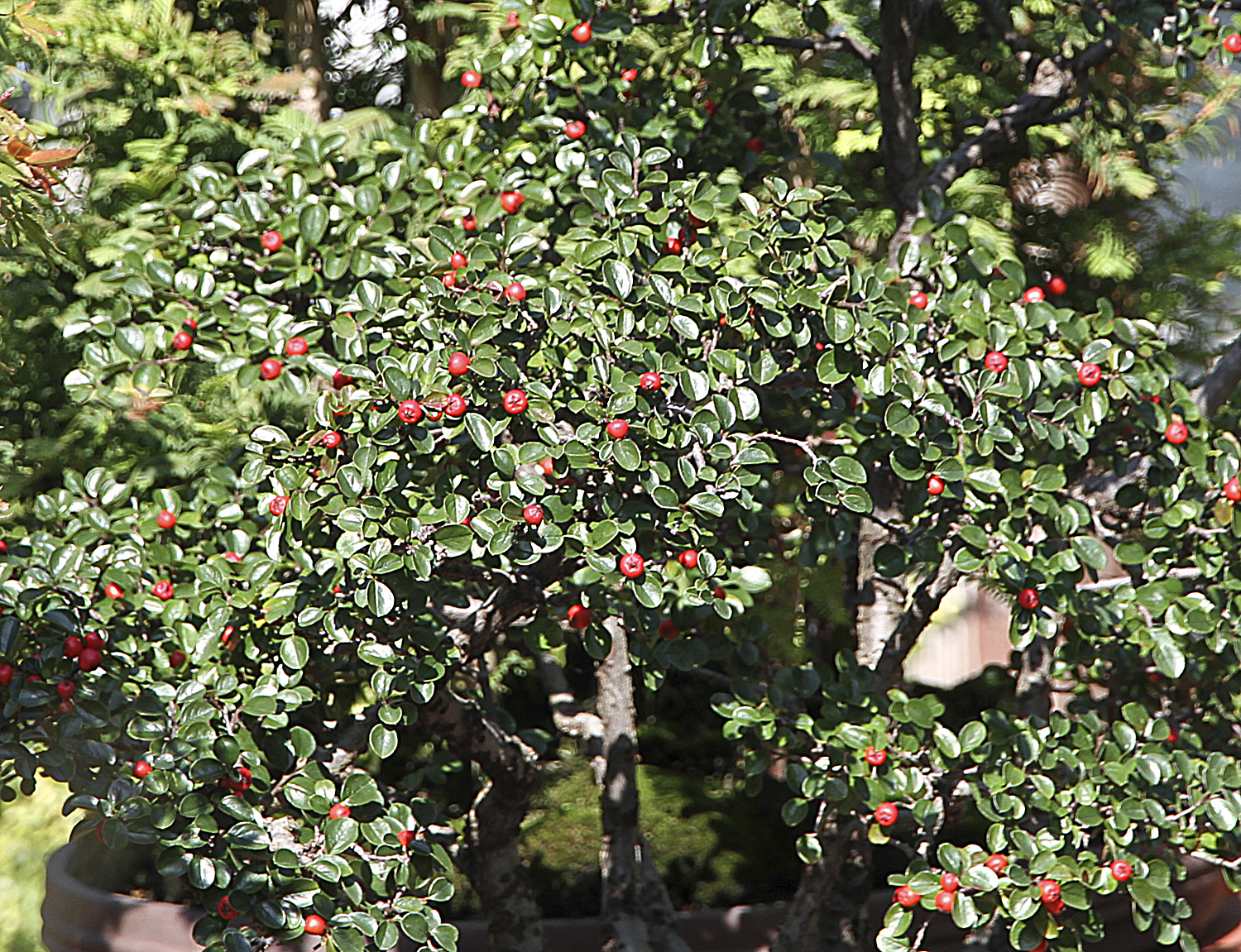
Rock Cotoneaster

Image

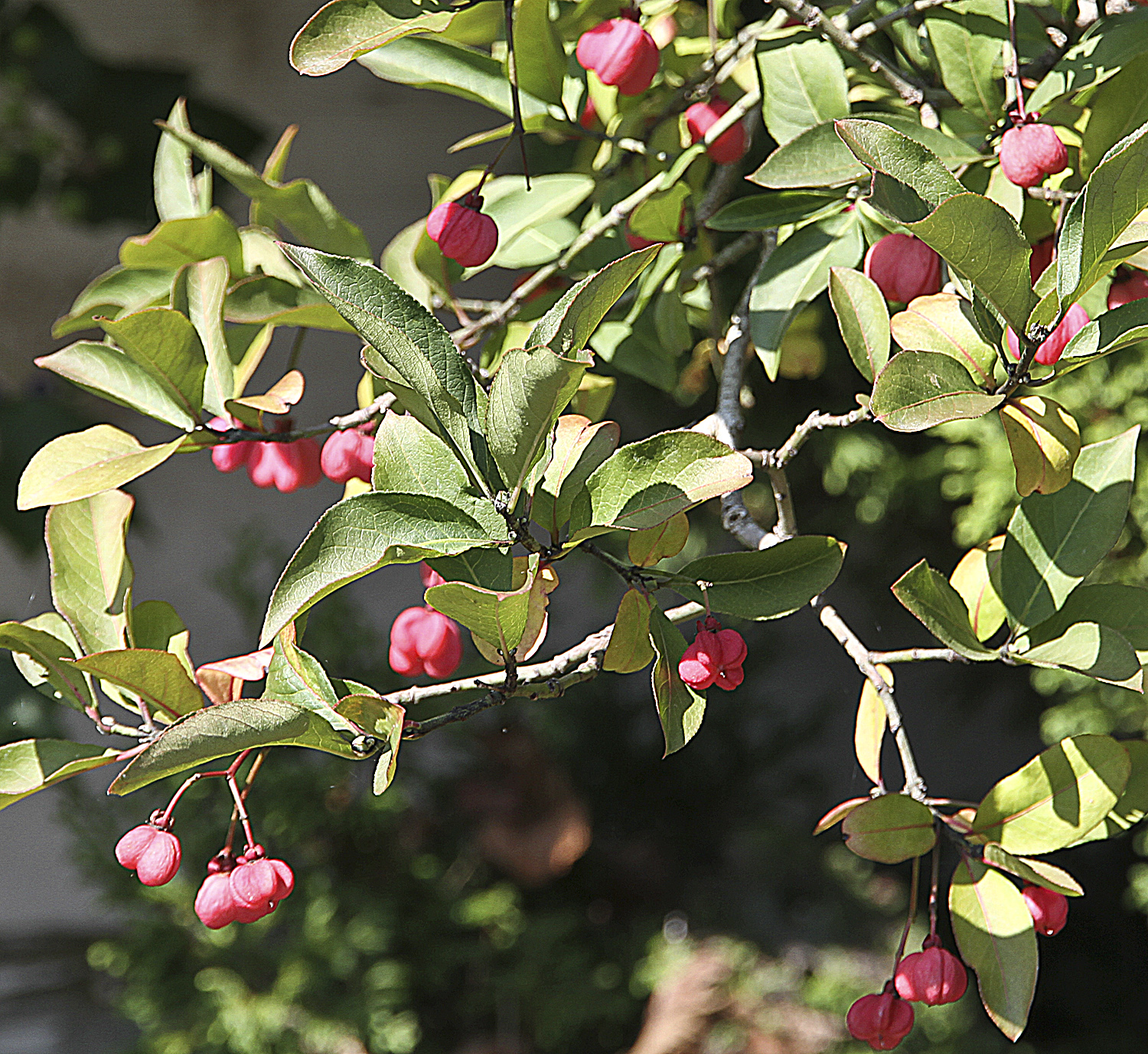
Winged Spindle Tree (Euonymus sieboldiana)

Image


Japanese Flowering Quince

Image

Japanese Yew

Image

Washington Hawthorn

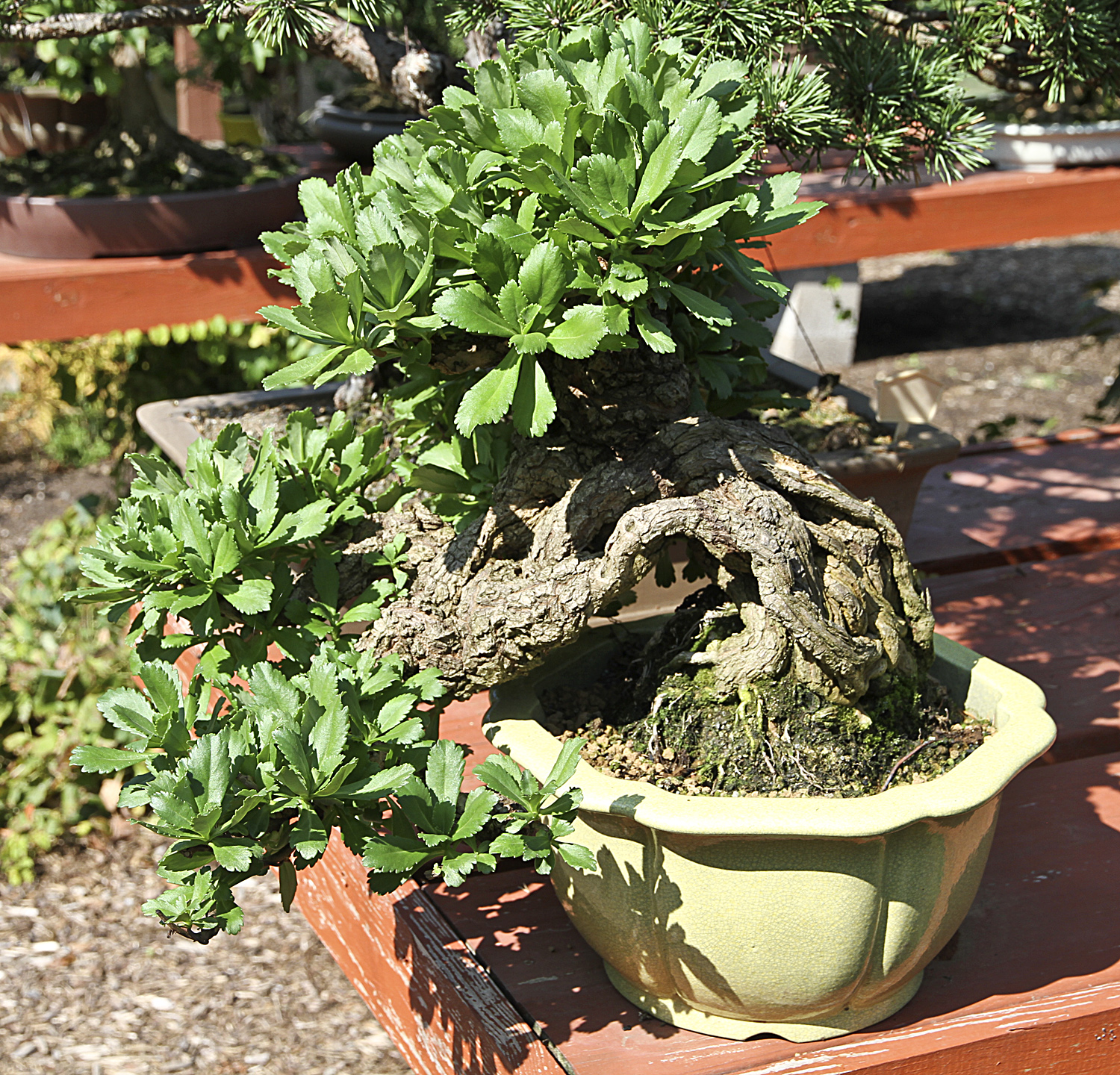
In July the Nippon Daisy Chrysanthemum bonsai were drastically pruned to create a compact shape. Photos of the pruning can be seen in my August 7th, blog on “Park Avenue Art Festival.” They have leafed out quite nicely and are compact, but I don’t see any flower buds… yet. They still may blossom this year however.

Image