BILL JUMPS A BROAD- Part 6 Final

Bonsai Society Of Western Australia


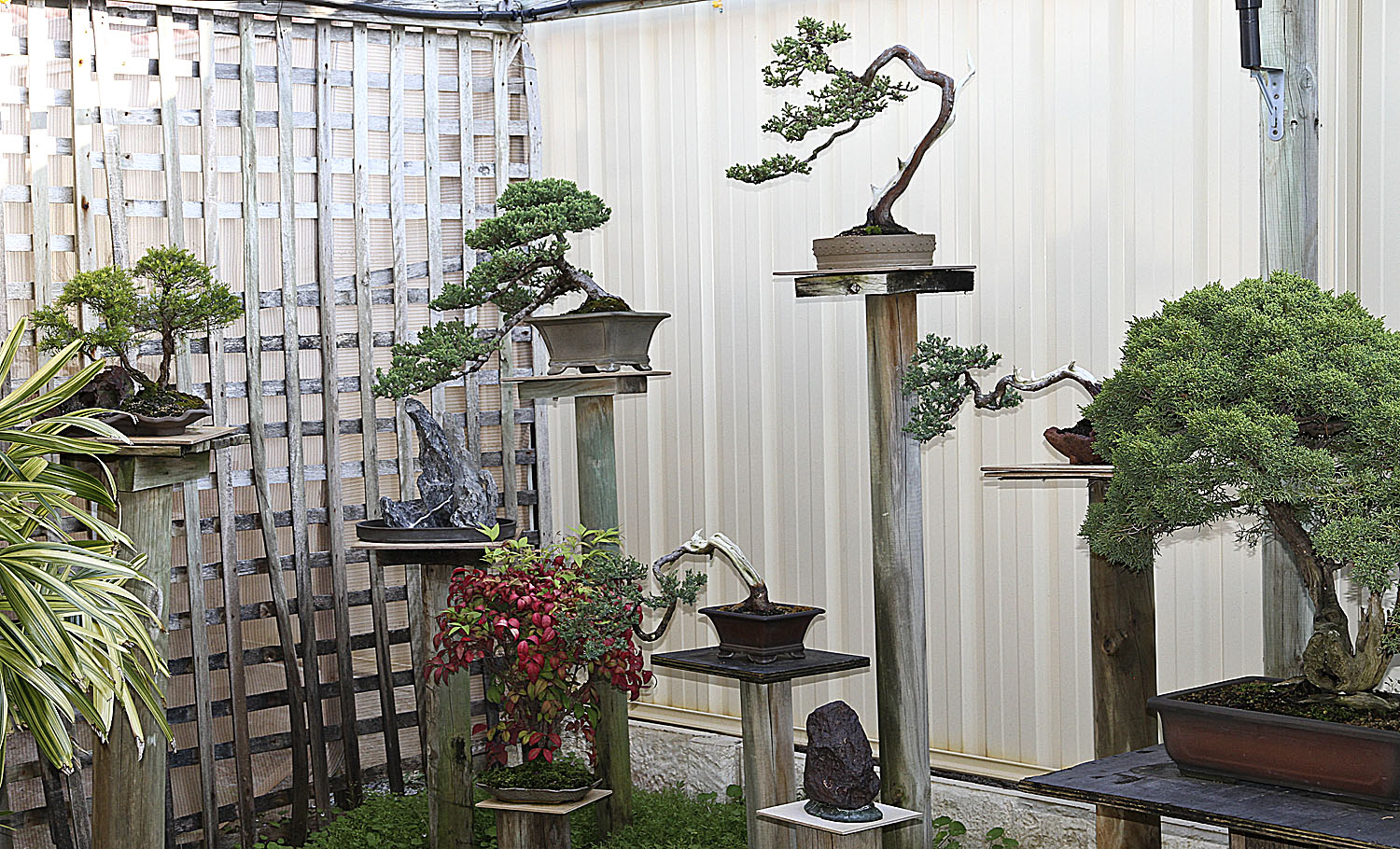
Two years ago I was invited to the Bonsai Society of Western Australia on my return trip home from the South African Bonsai Convention where I was teaching. The club had some excellent trees in Perth and the people were friendly. The dynamic, energetic and well organized Dianne Boekhout is president and did an excellent job planning my teaching tour this year, just as she did two years ago where I went completely around the world in 21 days.

The Bonsai Society of Western Australia again invited me back and I’ve just finished presenting six programs: two critiques, two lecture demos and two workshops. Additionally another program was presented for another local club The Bonsai Workshop. That’s quite a lot of information to absorb in a couple of days and tiring for me as well. Well, this group is up to it and are serious about learning bonsai. Their bonsai and understanding is increasing and it was a pleasure to see the same working core of people still involved promoting bonsai and making information available to new comers to our art.

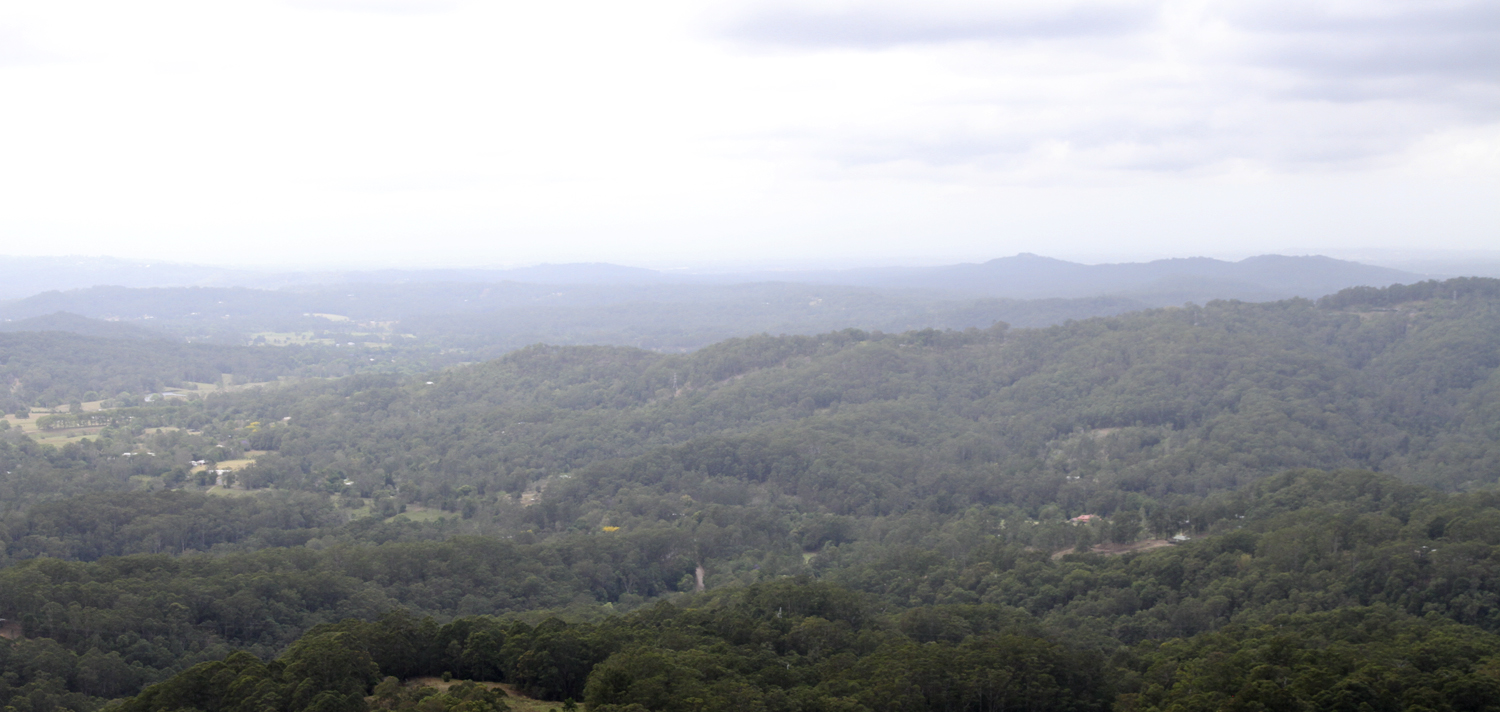
The first critique had some interesting bonsai, mostly foreign to me because they primarily are using native Australian plant material. As I’ve mentioned before, this area of the world reminds me of Florida with mountains. The plants are similar, but of tremendous diversity. We went to a nursery and I hardy recognized any plants. At the critique all the plants were well shaped and well shaped. A few of them were displayed on proper stands. I briefly spoke about display tables and how some kind of table or even a covered box raises the bonsai off the table to elevate the tree and shows respect for greater appreciation. That’s all I said. Two days later at my literati bonsai seminar nearly ALL the bonsai were displayed on stands and a few even had companion plantings. These people are serious about learning, improving and listened to what I trying to share with them.

The next day after the critique we had my Cascade Bonsai Seminar beginning with a lecture/demonstration and continuing in the afternoon with a workshop. Two years ago, during my last teaching trip here, I presented a unique demonstration taking a 45 inch tree and removing 17 inches from the bottom creating a 28 inch tall tree. Only the top section and root system was kept, 17” of the straight trunk was eliminated. The new shortened tree had power. Well, this year they had some interesting material and I again did something different, well for me at least.

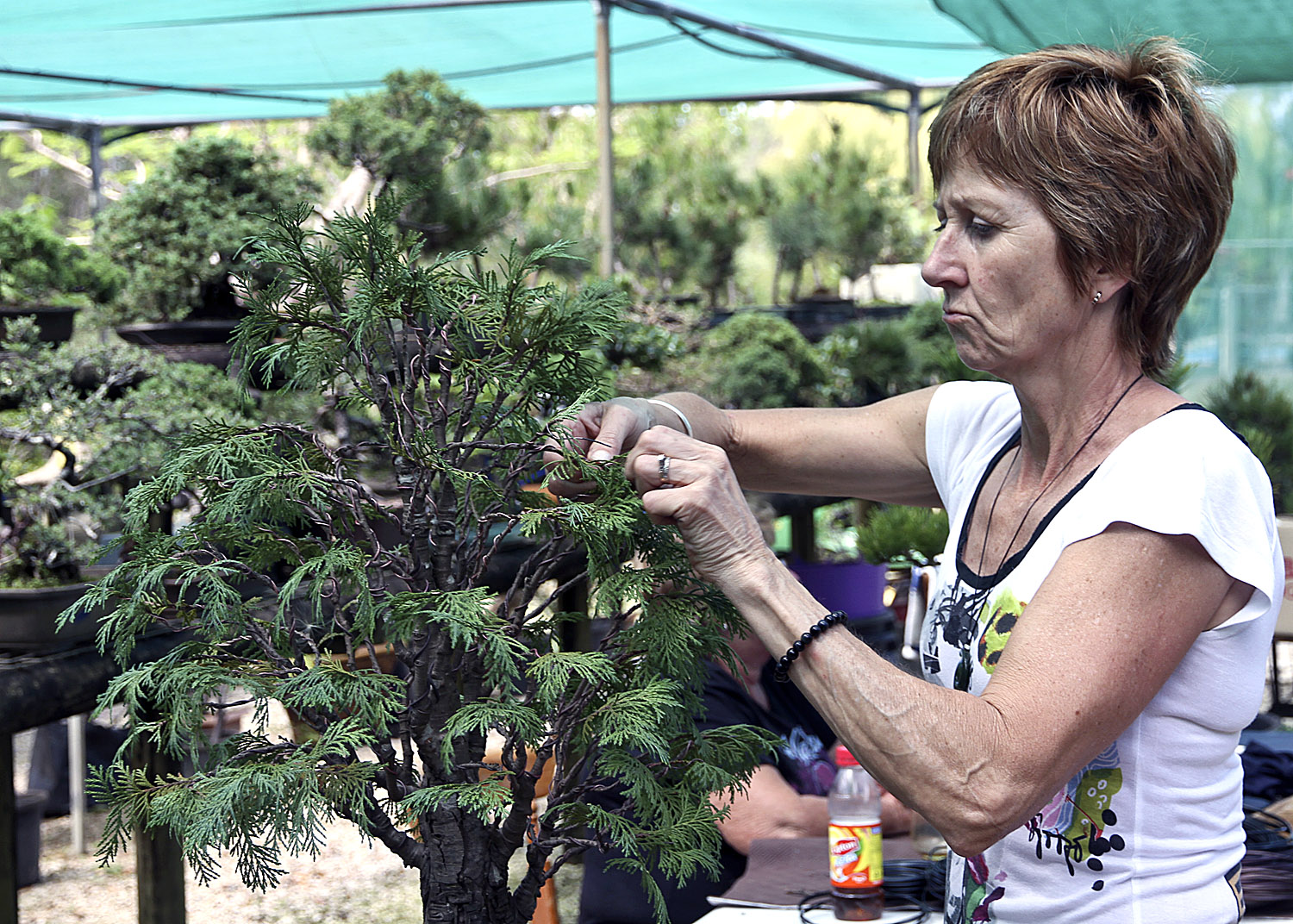
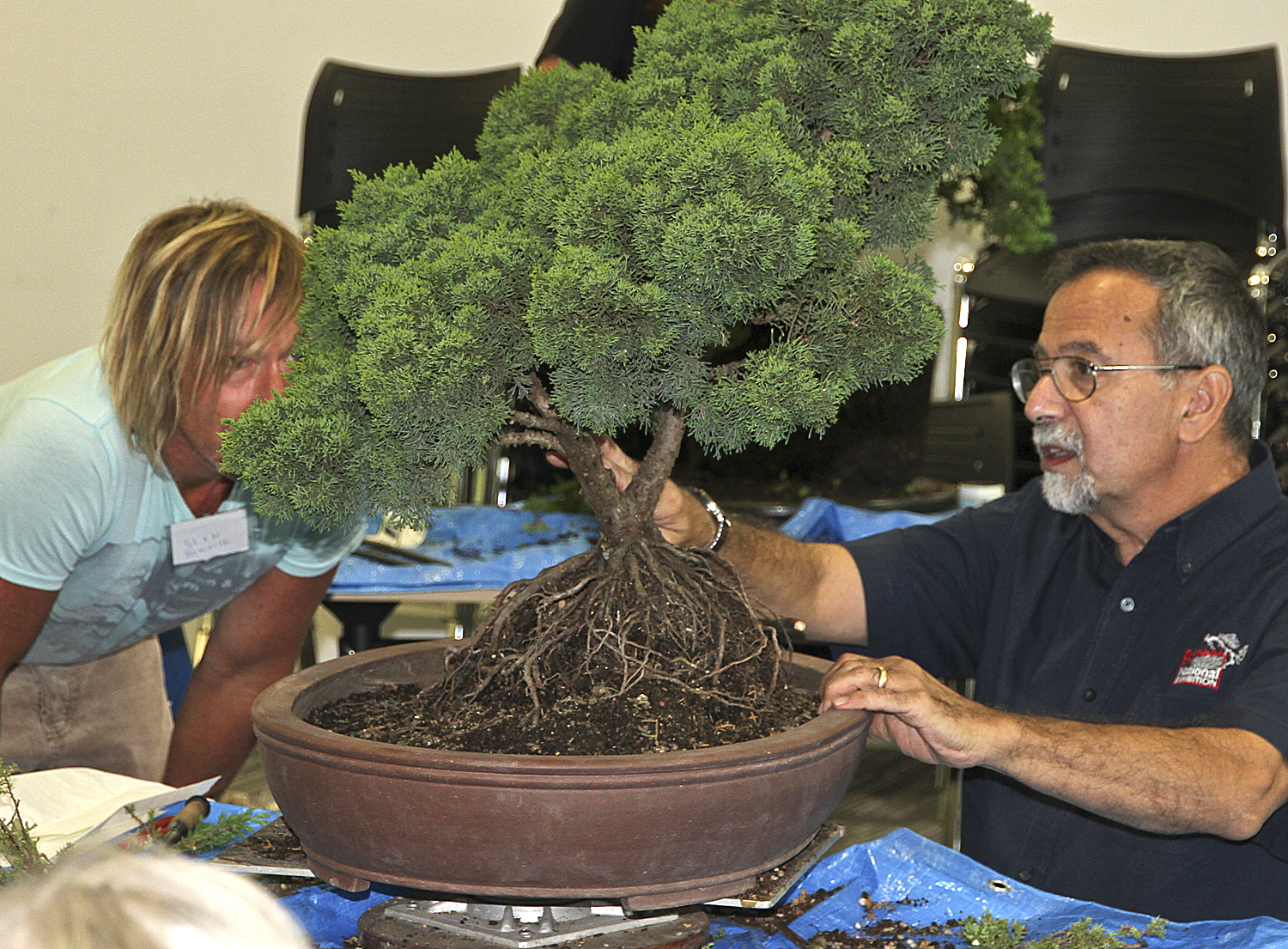
My demo tree, a large Dwarf Japanese garden juniper, was being trained in the root-over-rock style in a clay training pot. The pot was heavy and I was not allowed to move it, but was able to turn the tree while working on it. The trunk had potential for a good cascade style bonsai, but I was not particularly interested in the rock. In fact, I had planned on removing the tree from the rock. Upon closer study, the combination was quite good and we decided to create a root-over-rock cascade style bonsai. The “right” container was not available, but Dianne, my host for my visit, went home and returned with a couple of suitable pots. She assisted me in the wiring and potting and the tree came out better than anticipated. A workshop on cascade style bonsai followed where nearly everyone created this style.

The next day we had the identical schedule, but only with my Literati Style Bonsai Seminar. As mentioned there were an abundant number of excellent literati style bonsai, all on display tables and we used many of them to illustrate design elements and offered suggestions for refinement. The demonstration tree was again not the normal 5 gallon size juniper which is common in many areas. Diane had a well trained informal upright style Dwarf Japanese garden juniper which was developed and looked good, just as it is. Since she has other similarly styled bonsai this specimen was not special and was boring in her collection. So I removed most of the branches with her approval that of the members. Remember I mentioned the members have an excellent understanding of bonsai. The result was a literati style bonsai.

Two containers were available for the tree, one was the perfect design, color and quality, but slightly too large. The other container was about the right size, but everyone, including me liked the color and shape of the larger pot. So, we had a discussion on container selection and what is the most important element for deciding which pot to use: color, size, design or quality. That’s not an easy answer especially for good trees and with a learned audience there were many valid opinions. I potted the tree in the smaller container but wish I had a “pot shrinker” for the larger one. We continued on with showing proper transplanting techniques for the beginners in the group. All my programs in Perth were free, including the workshops, and open to the public. The club is trying to expand the art in the state as well as get new members.

Again after lunch we had a workshop where everyone created a literati style or forest bonsai. Most of the students were the same serious members from yesterday, I guess they were not tired of me yet.

Since my next program was in the evening, Dianne took me on a whale watch trip on a boat in the Indian Ocean. It was quite fun and I enjoyed seeing these huge mammals migrate from the north to Antarctica in the south for the hot summer months. The whales are beautiful and large too, the tongue weighs two tons and their heart weighs another ton. Since they were moving rapidly the whales did not do any tricks, but I was able to get a few photos of them diving into the deep, blue water below. I had a “whale” of a good time…

In the evening we had a special critique where members brought in the tray landscapes they created in my workshop two years ago. Just by chance I had photographed them after the workshop and they were among the 40,000 images on my Mac laptop. After searching and formatting them a new Powerpoint presentation was created and shown with the critique. I was amazed at how well the members trained and refined their tray landscapes. Looking back at the original images some were just stick forests, but developed into pleasing tray landscapes.

The following evening I presented my Aspects of Bonsai Design program which included a critique for The Bonsai Workshop group. Many interesting bonsai, mostly of native Australian plants, were discussed.

During the past 12 days I have presented 16 educational programs for five bonsai societies and a study group. As my teaching tour throughout Australia concludes I’d like to thank the society members who participated in my educational events, my friendly hosts who made me feel welcome and especially Dianne who spent considerable time to organize the event. Additionally, my wife Diane and Senior Crew who cared for my bonsai during the trip need to be thanked, because without them, the trip would not be possible.

But, I’m not home yet, the Golden State Bonsai Convention in California is my next stop.
BILL JUMPS A BROAD- Part 5

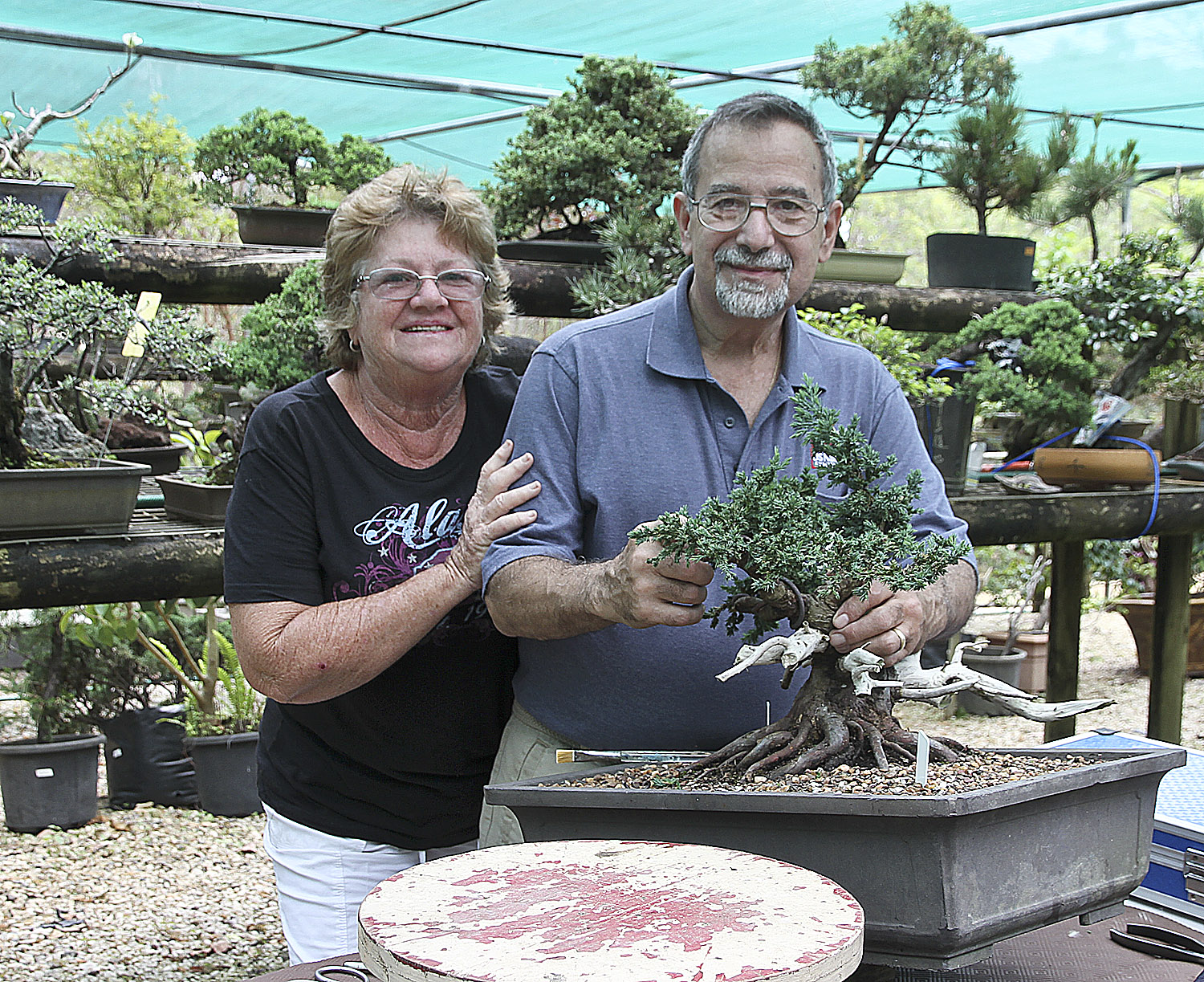
Two Bonsai Hobbyists

Image

Image

Image

Image

The Australian native plants are a wide and diverse group of which are quite different than what I’m familiar with. Many are also native in South Africa because of similar climates. A few of these plants are common landscape plants or invasive in Florida. Since there is a great diversity of plant material here the botanical names are important. It is quite difficult to import plants into Western Australia from the other states so the group tends to use the native plants for bonsai training, although Junipers, Chinese elm, Ficus, Olives and Japanese black pine can be found, especially in bonsai nurseries.

It’s interesting to note that most members of the Bonsai Society of Western Australia have an excellent working knowledge of both the botanical and common names of the native plant material. That’s important because there are over 700 species of Eucalyptus, over 200 species of Melaleuca (Paper bark) and over 80 species of Leptosperum (New Zealand Tea tree).

Derek W. Oakley

Image

Image

Melaleuca cuticularis

Image

Melaleuca eliptica

Image

Image

Italian Stone Pine

Image

Image

Image

Image

Image

One of the longest members and a past president of the Bonsai Society of Western Australia is Derek Oakley with his wife Sue. I met Derek in 1985 when I first gave a presentation for his society when he was beginning bonsai. He has developed his skills and artistic design quite well and is now one of the most prominent bonsai artists in Western Australia.

Derek has an encyclopedic knowledge of Australian native plant material. He knows all the botanical and common names as well as how suitable they are for bonsai training. Some species can be drastically pruned back to old wood, while most others must have some green foliage remaining after trimming.

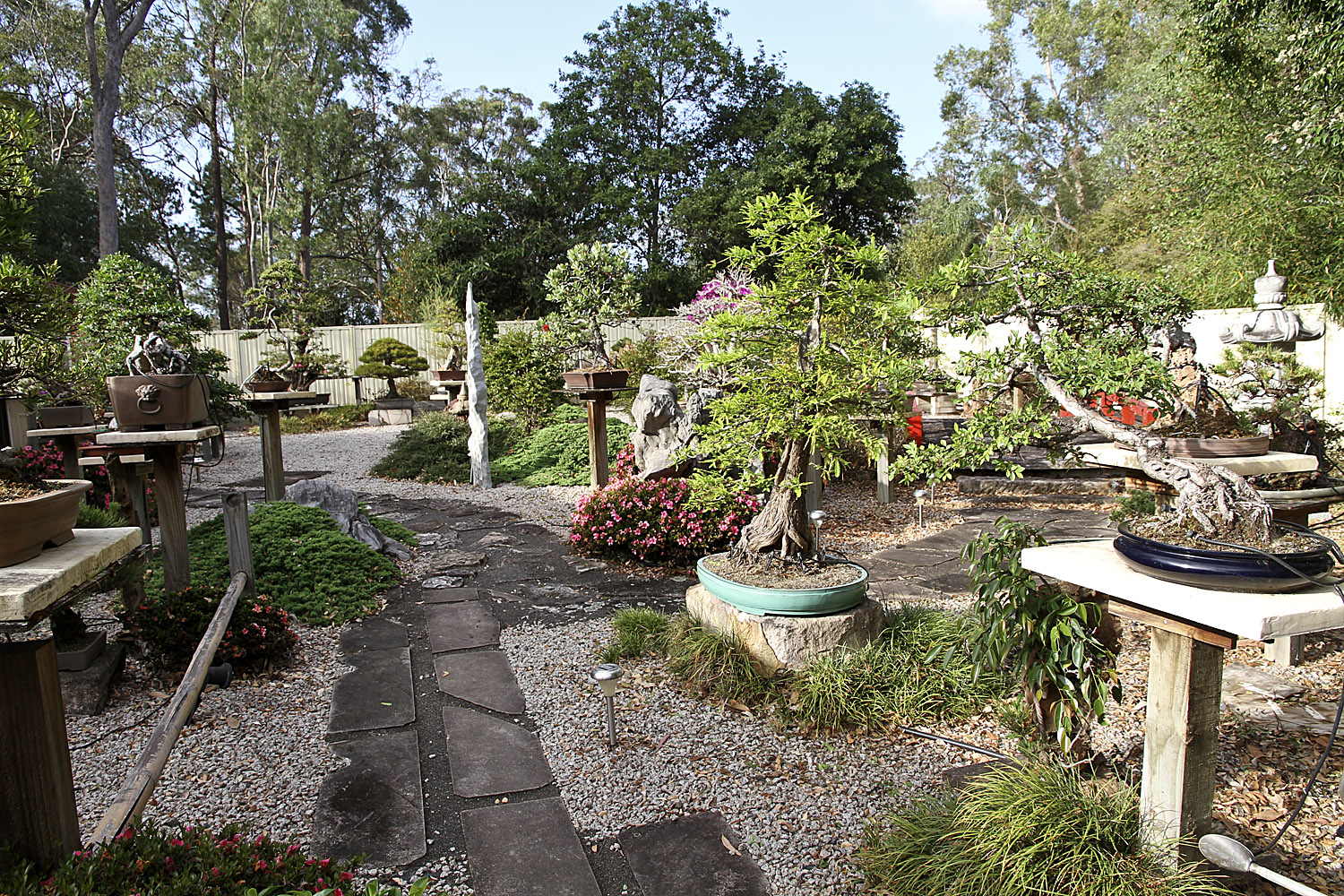
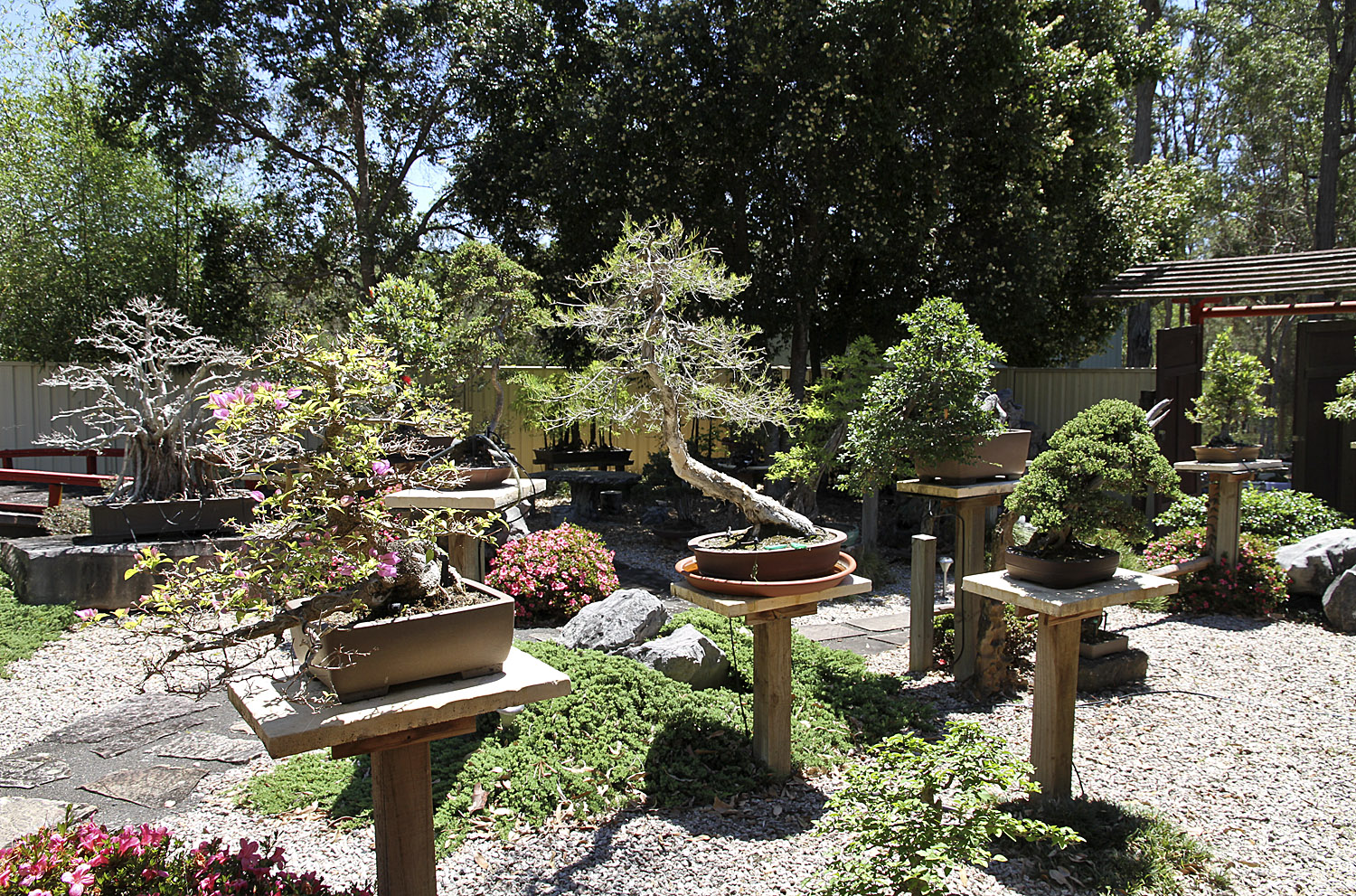
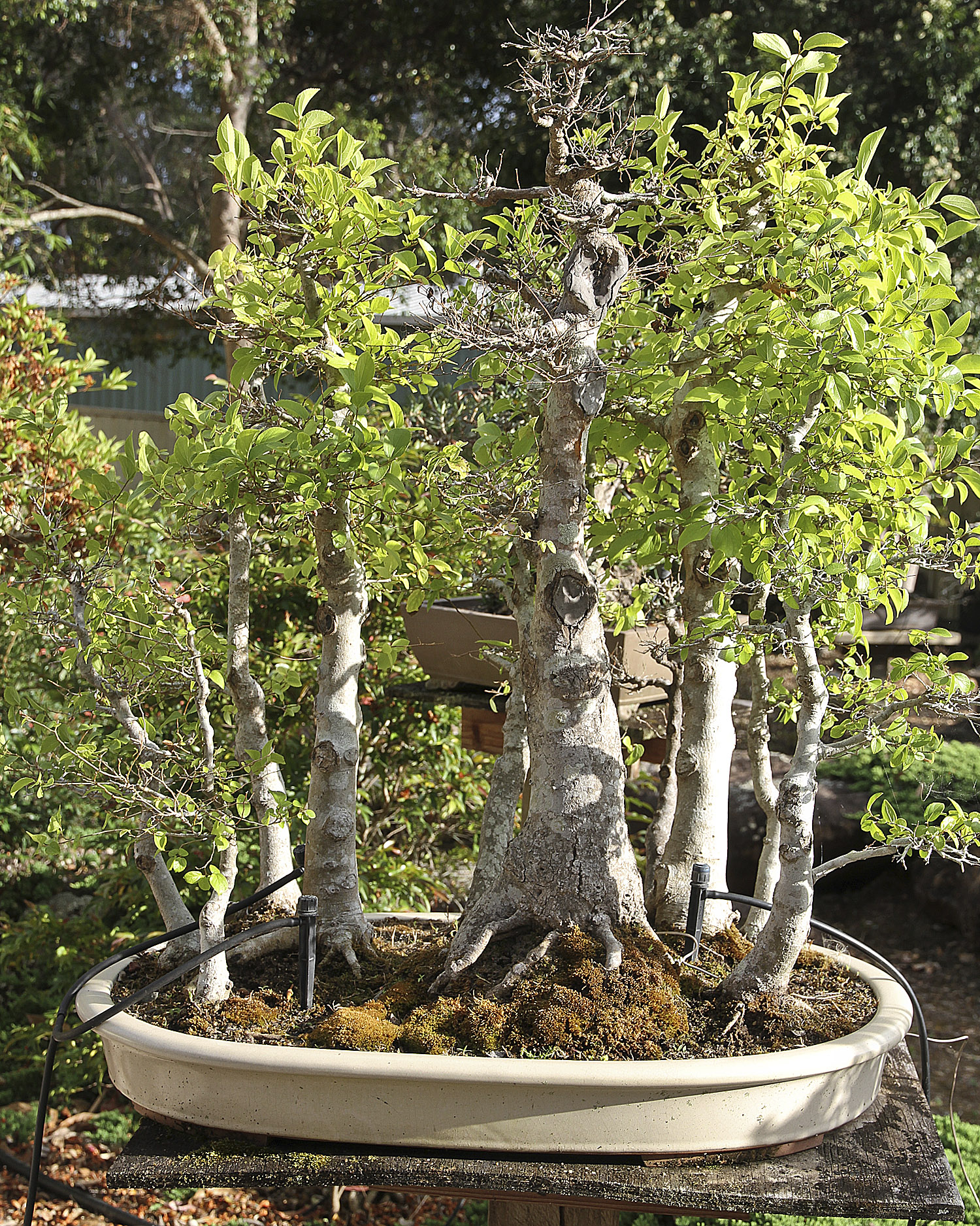
His garden is small, but completely packed with beautiful bonsai of all shapes and a multitude of plants native to Western Australia. Many of the original plants were collected in the bush as well as Chinese elms. Since Derek has an understanding of the peculiar growth habit of Australian native plants he applies it to his bonsai training as well as sharing the information with club members.

I was particularly impressed with his shohin bonsai, especially his Chinese elms. Some have been propagated from root cuttings as well as stem cuttings. They are maintained in shallow pans of moist gravel because the dry out quickly. Currently summer is beginning and the forecast for today is 95F. It gets windy here in addition to the scorching sun so he has a frame for shade cloth which will then be pulled over his bonsai soon.

Image

Image

Image

Casuarina

Image

Image

Sue Oakley also has her own bonsai collection which she grows and trains herself. There are several tray landscapes which are particularly distinctive. She also loves small pots and suiseki and has the walls of two rooms completely filled with her small treasures.

Both Derek and Sue are still active members of the Bonsai Society of Western Australia and display their trees often as well as share their knowledge so others can train Australian native plants.

C. J. Leo

Image

Image

Originally from Singapore, C.J. has been training bonsai for over 30 years. He retired to Perth about 20 years ago and started a new bonsai collection in his new home. He travels extensively in Asia studying the landscape as well as plant material. His collection of over 700 trees is packed into a small suburban yard and could easily fill his five acre lot in another location. Rather than move the bonsai C.J. has decided to reduce his collection by 300 pieces. I wish I lived closer to him. He has a few Junipers, Chinese elms, Plums, Pines as well as common species he is training for bonsai.

Image

Image

Baekia

Image

Japanese black pine air layer, note roots on lower left

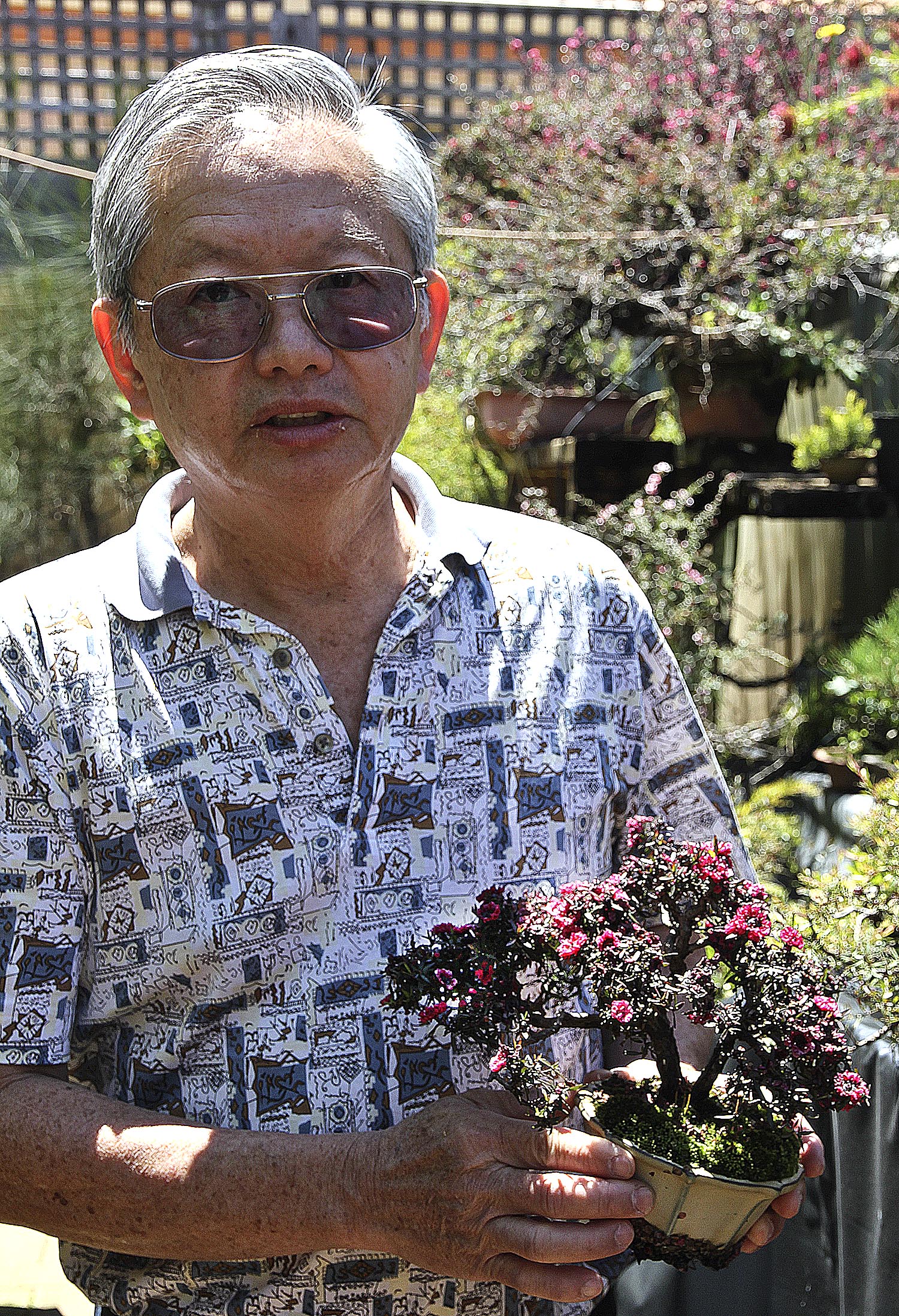
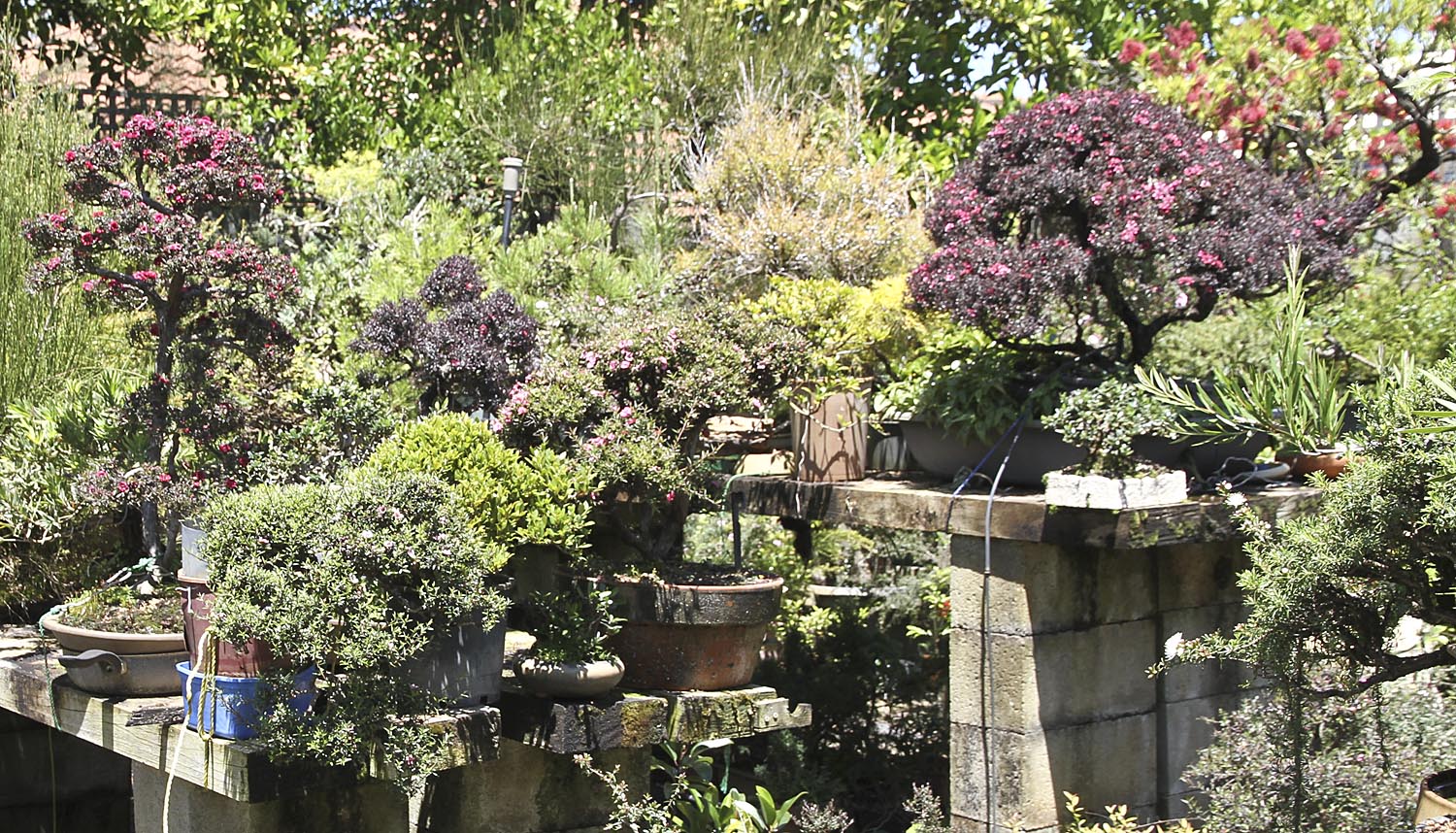
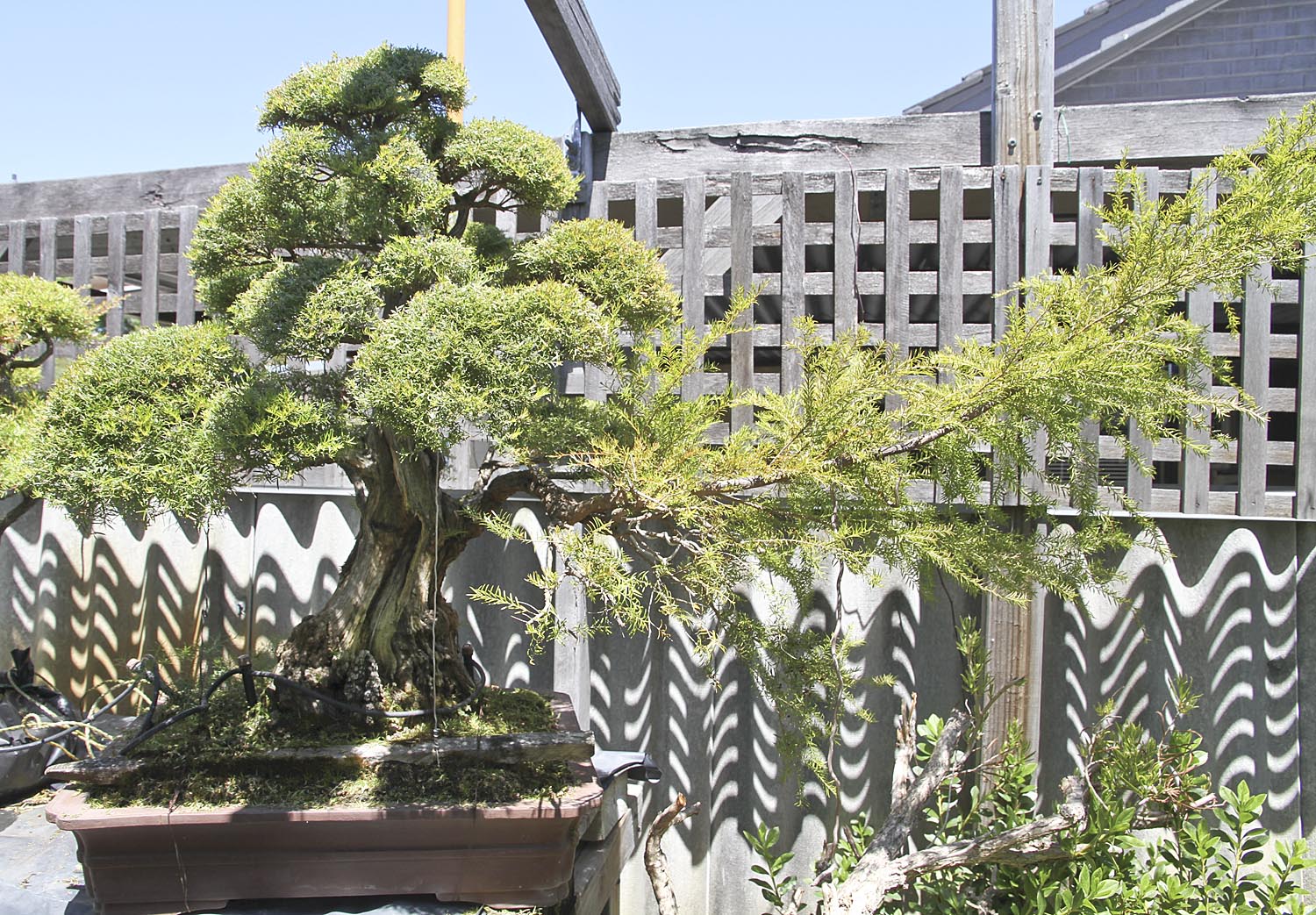
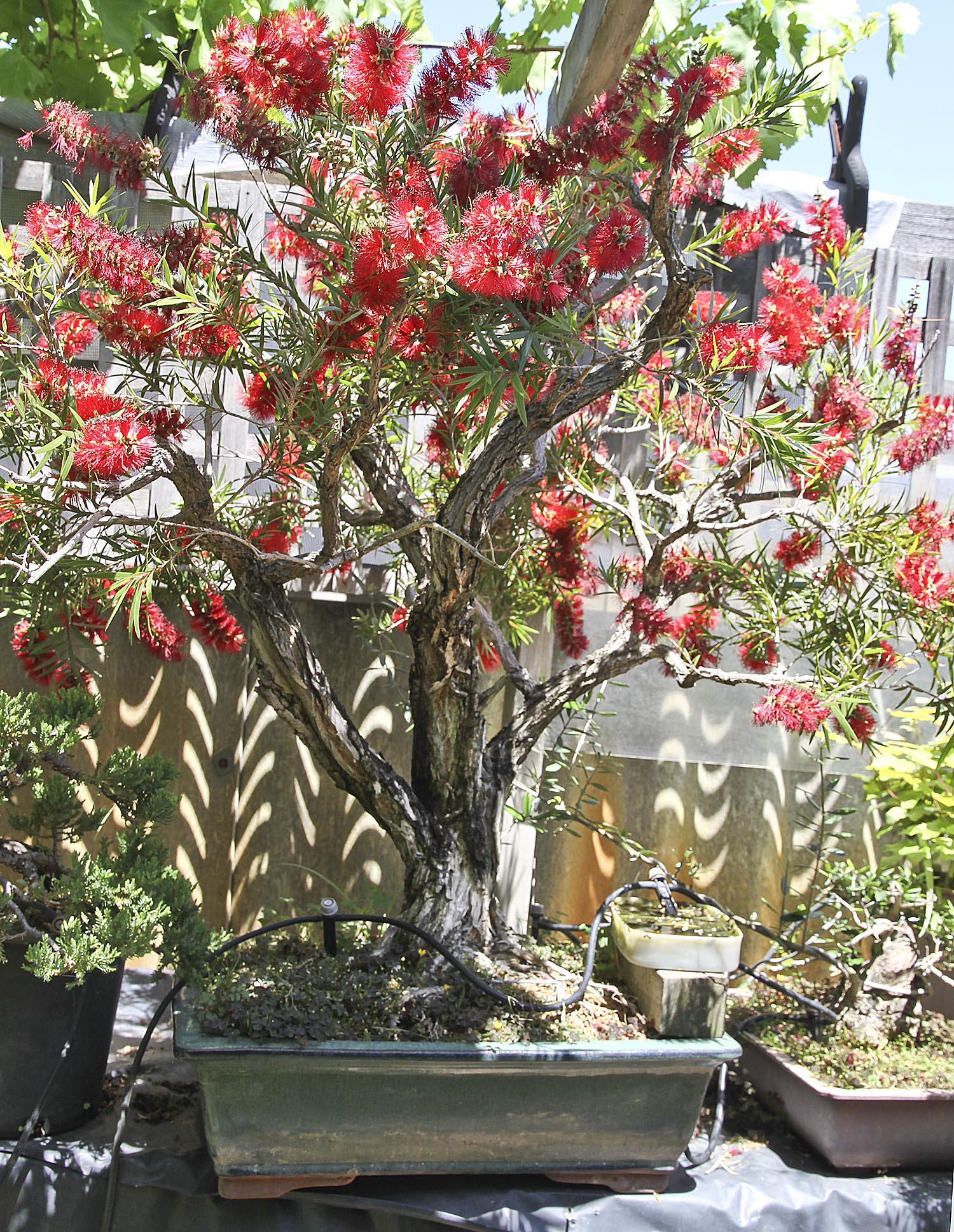
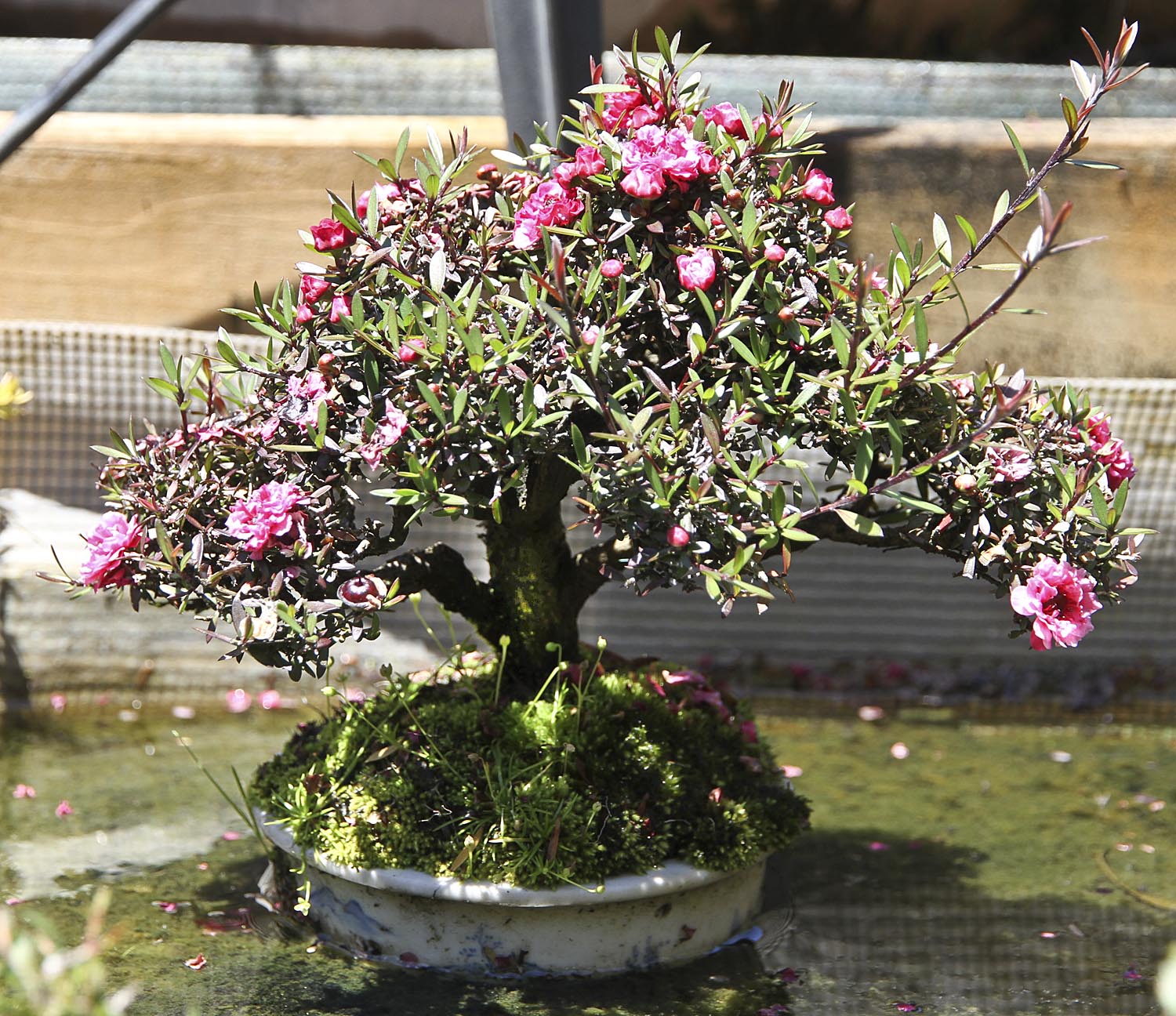
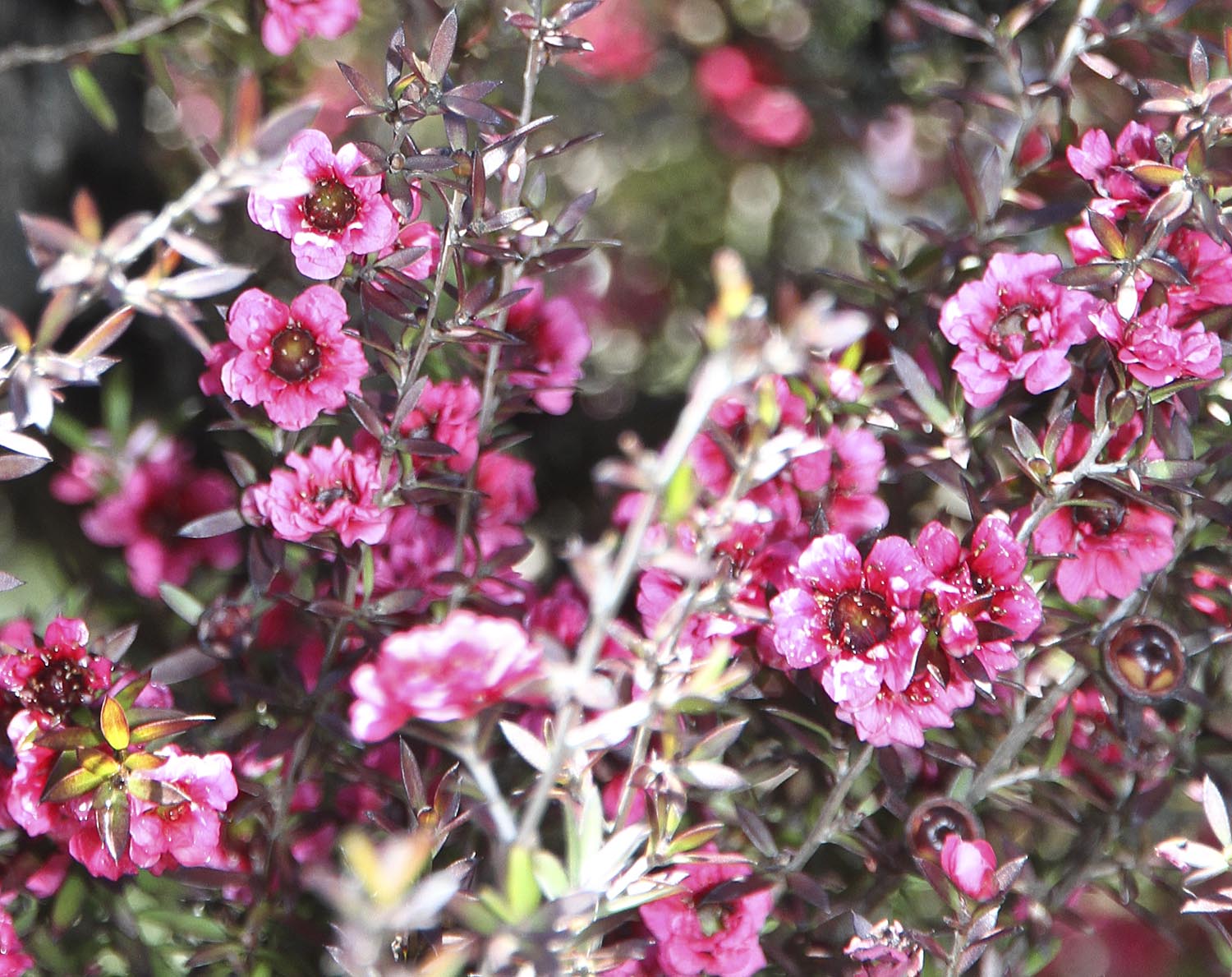
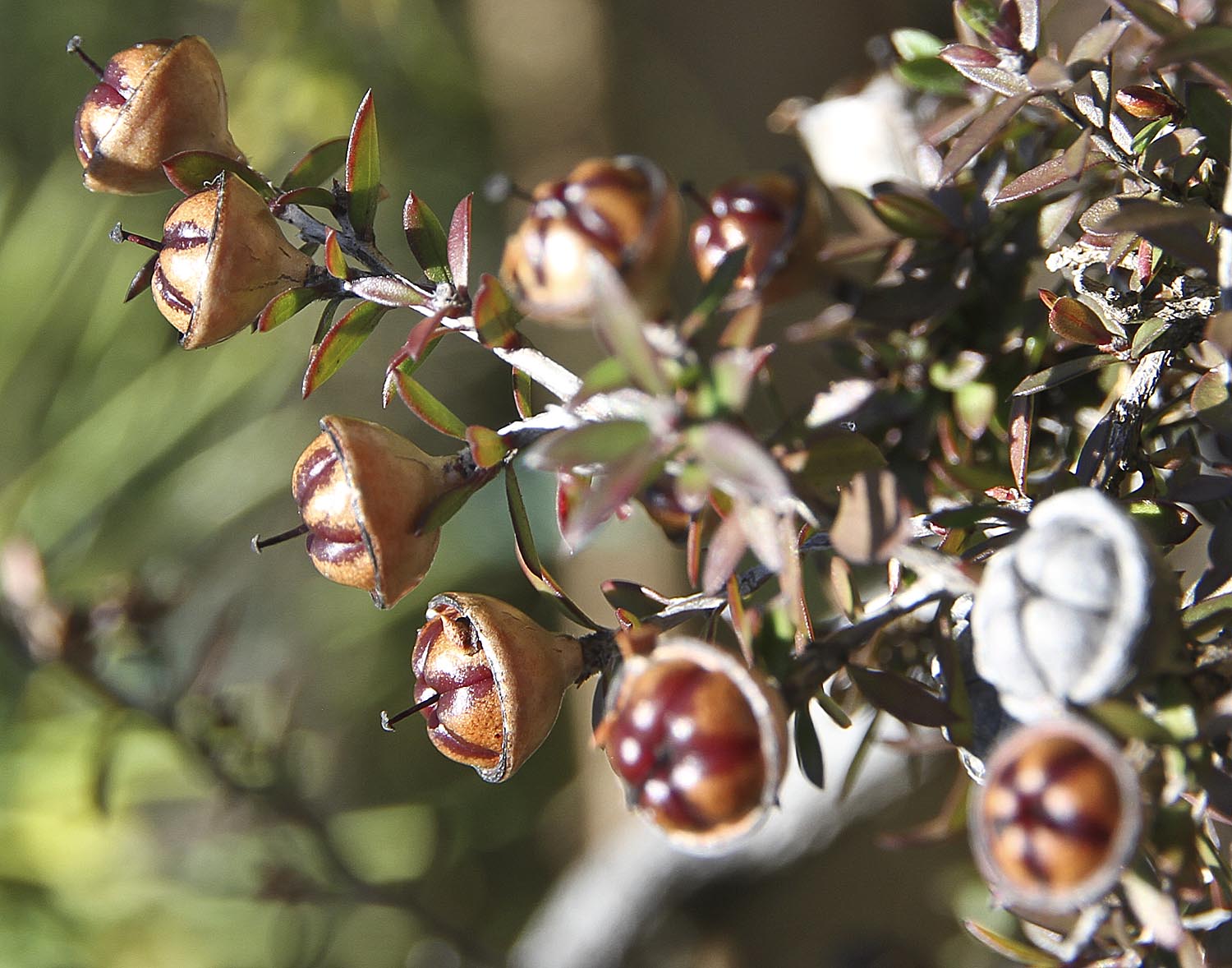
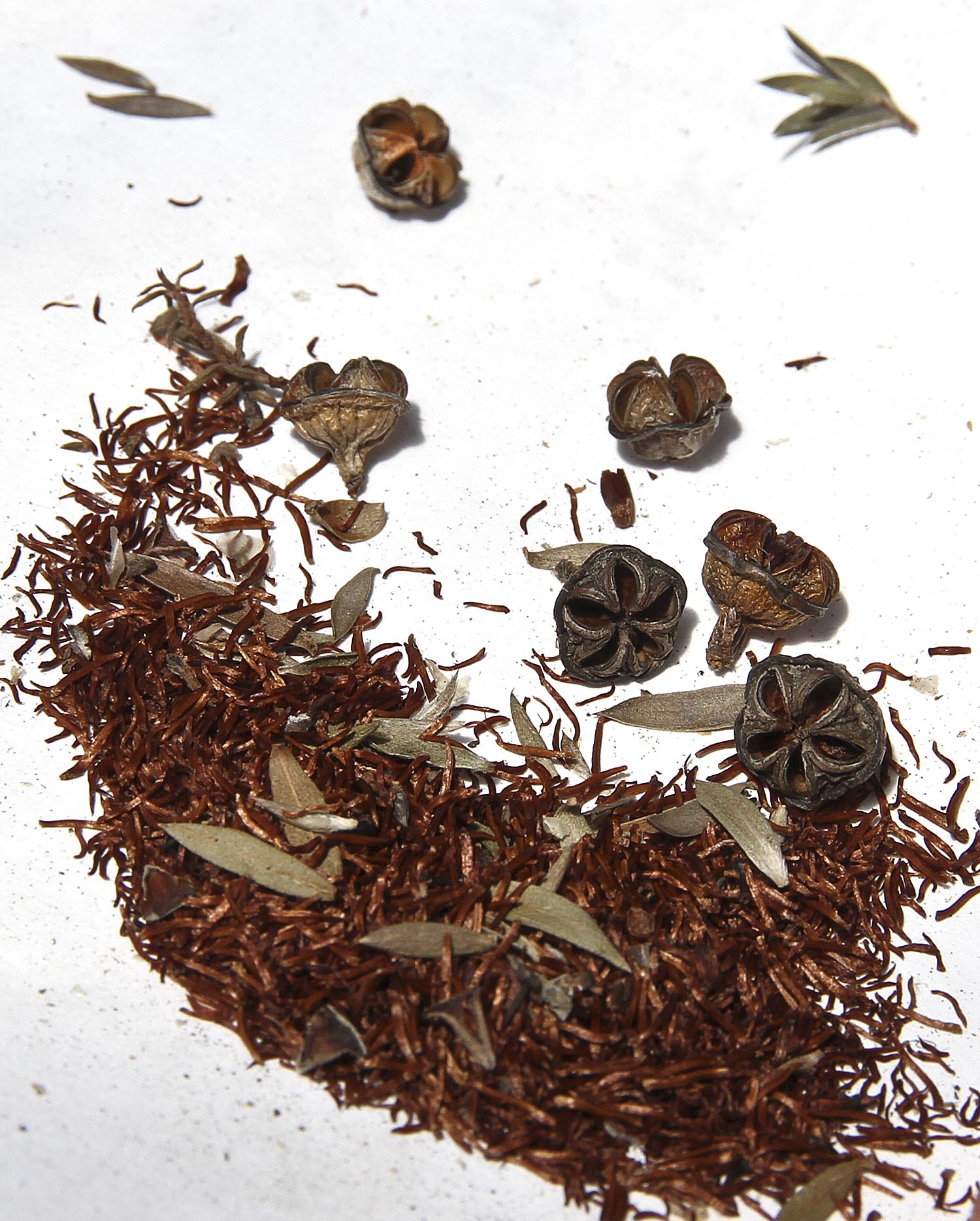
Although C.J. has some collected Australian native plants, as well as those dug from gardens, his specialty is the New Zealand tea tree, Leptosperum scoparium which he originally obtained from nurseries. Now he starts them from seed and air layers as well. I’ve tried for years to grow the New Zealand tea but kill them when transplanting. Even for others this species is extremely difficult to grow, as well as training for bonsai. Well, C.J. is THE authority for cultivating and training the species, but is quick to point out that he occasionally loses a well developed bonsai he has had for over ten years for no apparent reason.

Image

Image

Image

Image

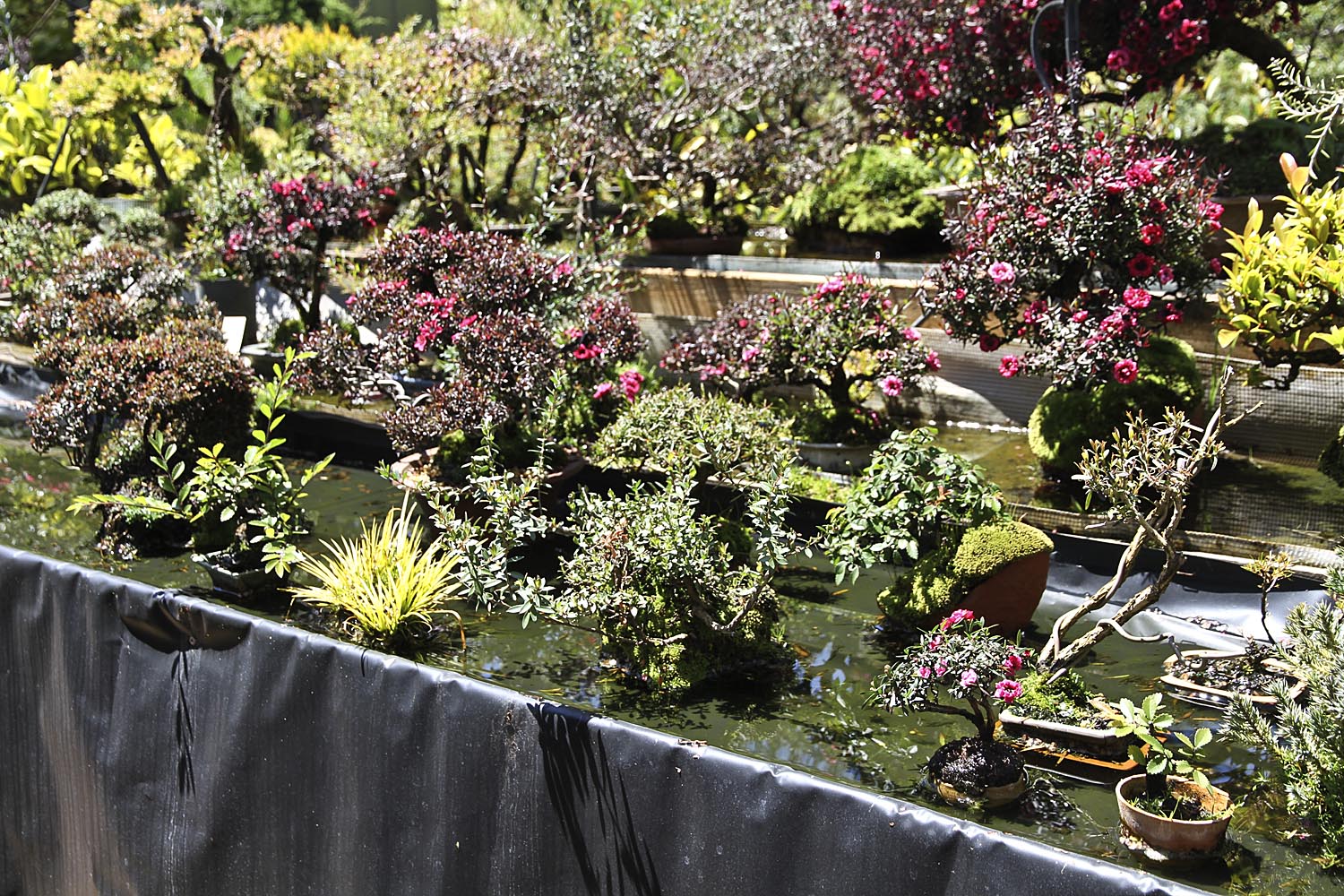
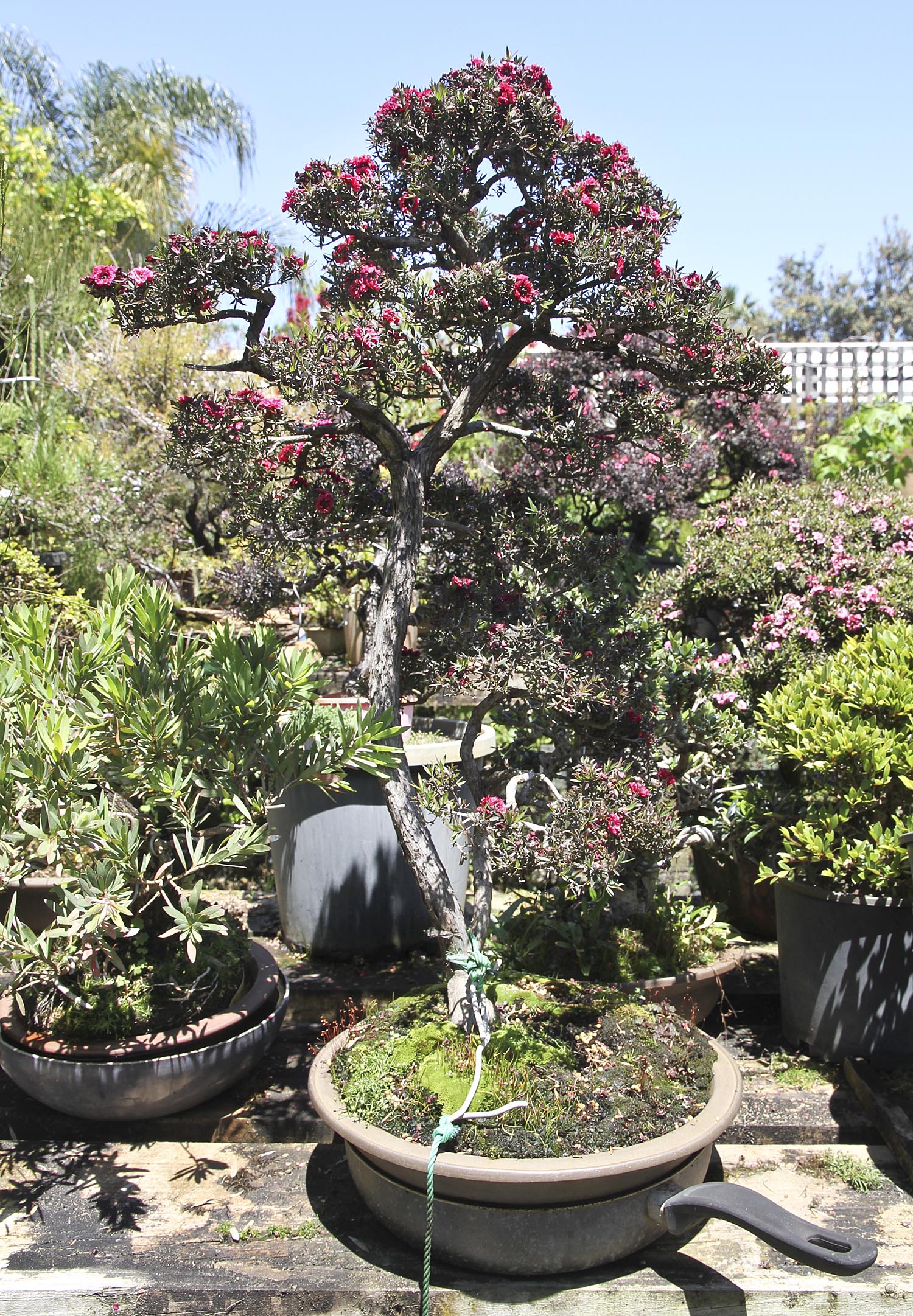
C.J. keeps all of his New Zealand tea trees sitting in water, not in moist sand. The roots like to grow into the water and he has his shohin bonsai in a large water tray. Some of his larger specimens are in old frying pans and others have their pots wrapped in heavy water holding plastic. He rarely transplants but sometimes air layers the plants to put them into new containers. They like to be pot bound, at least in his garden.

Image

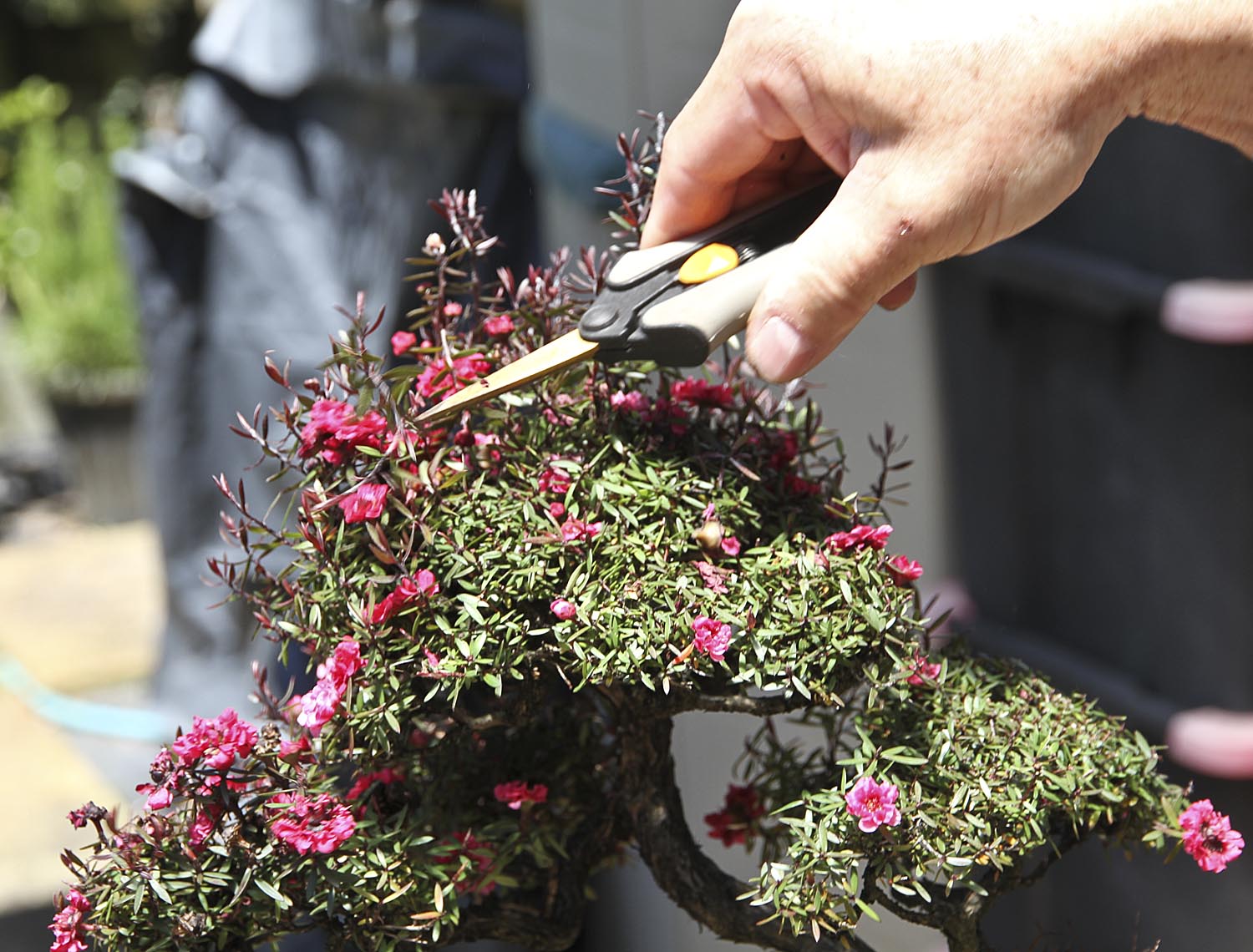
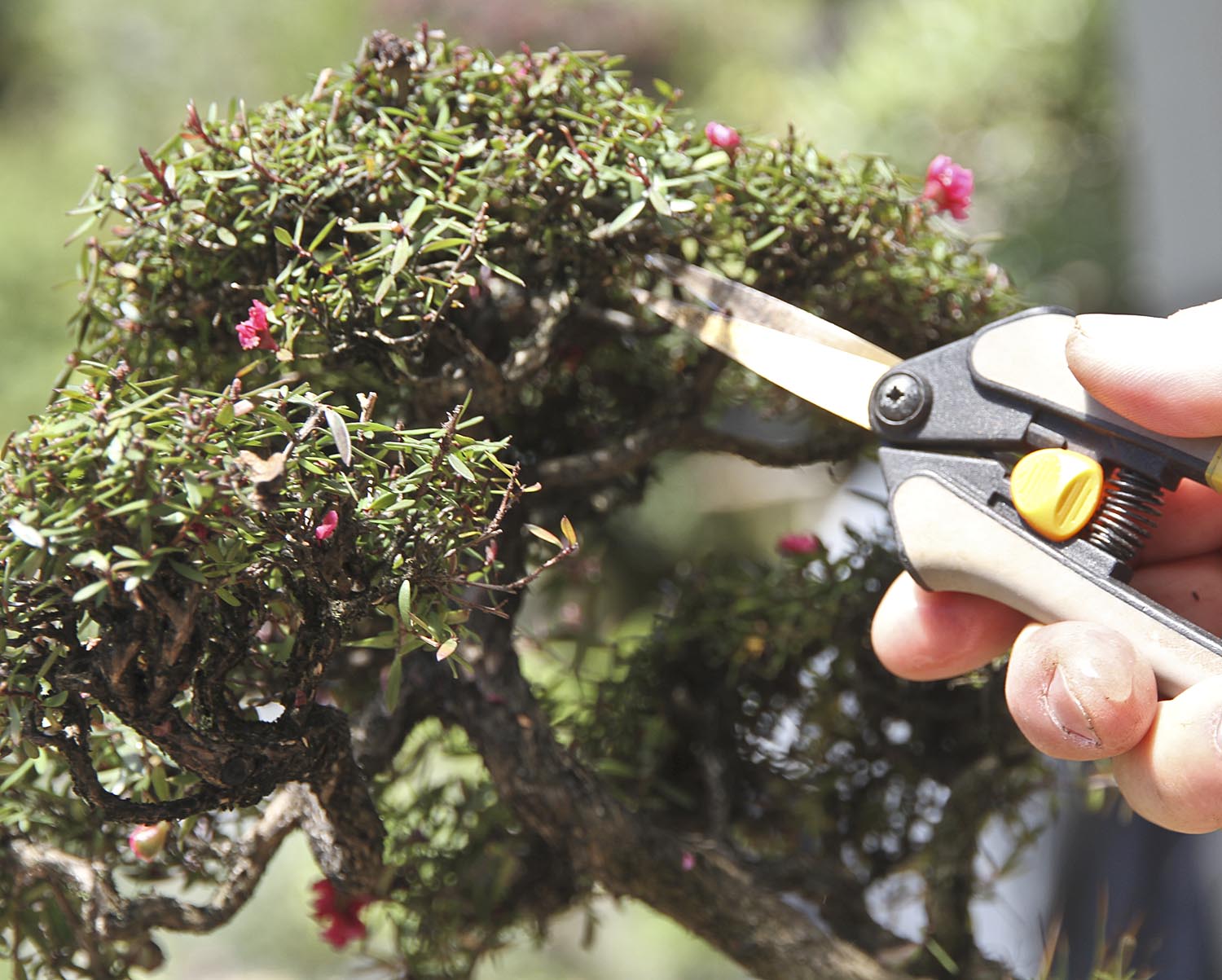
Trim first to silhouette

Image

Thin out after establishing silhouette to allow fresh air and sunlight

Image

Image

Image

Seed pods of New Zealand tea tree

Image

Seeds of New Zealand tea tree

His garden is filled with New Zealand tea trees of many different colors and forms which he has grown from seed. He is searching for a yellow flowering cultivar, and may just develop one from his seedlings. There are many species of Leptospernum, and like other members of the Bonsai Society of Western Australia is familiar with the botanical and common names as well as their growth characteristics for bonsai training. And, he displays his bonsai and shares his knowledge and experiences with other members of his club.

Image

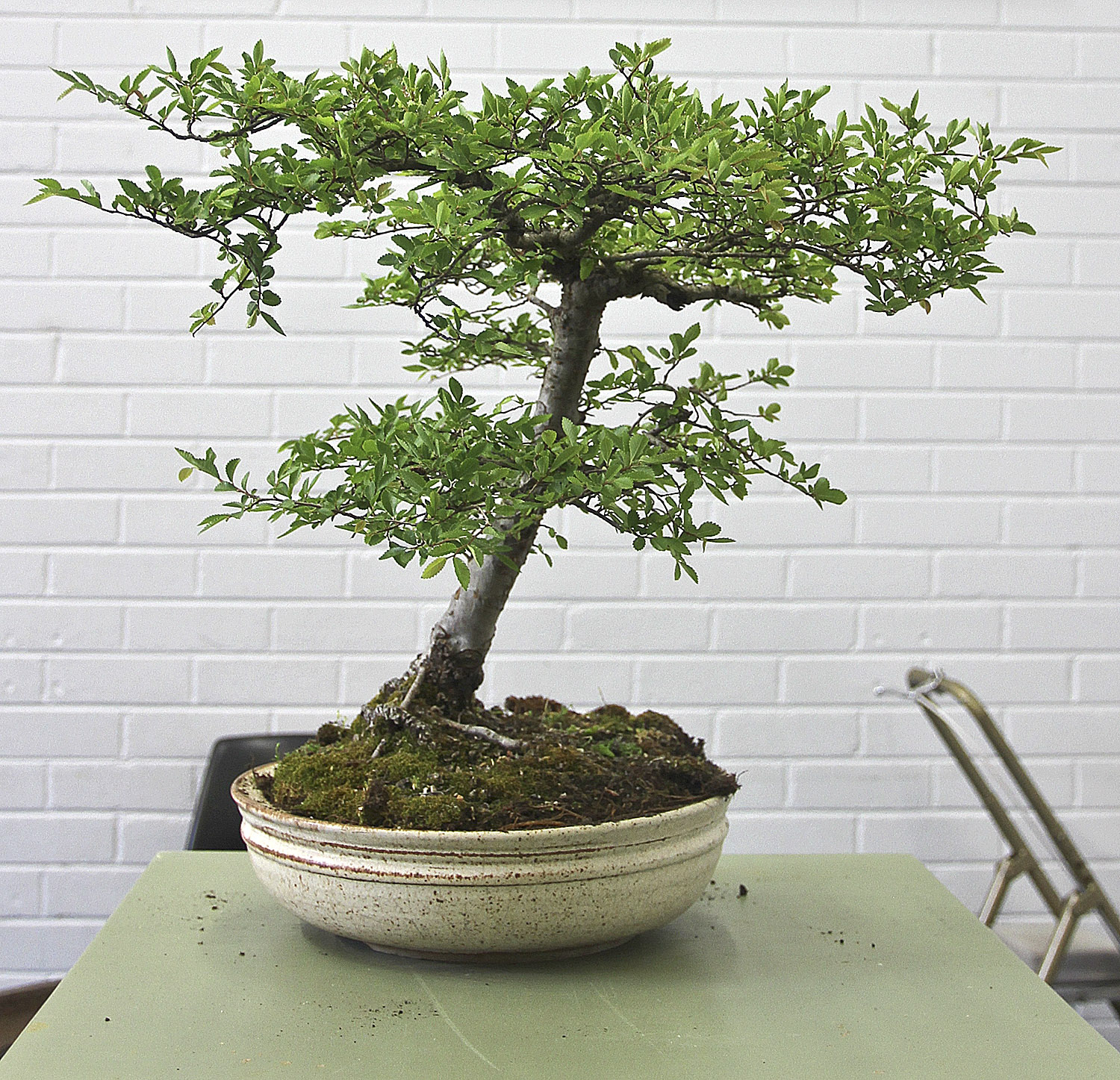
Chinese elm

BILL JUMPS A BROAD- Part 4

National Bonsai & Penjing Collection Of Australia

Image

Image

Image

Image

Image

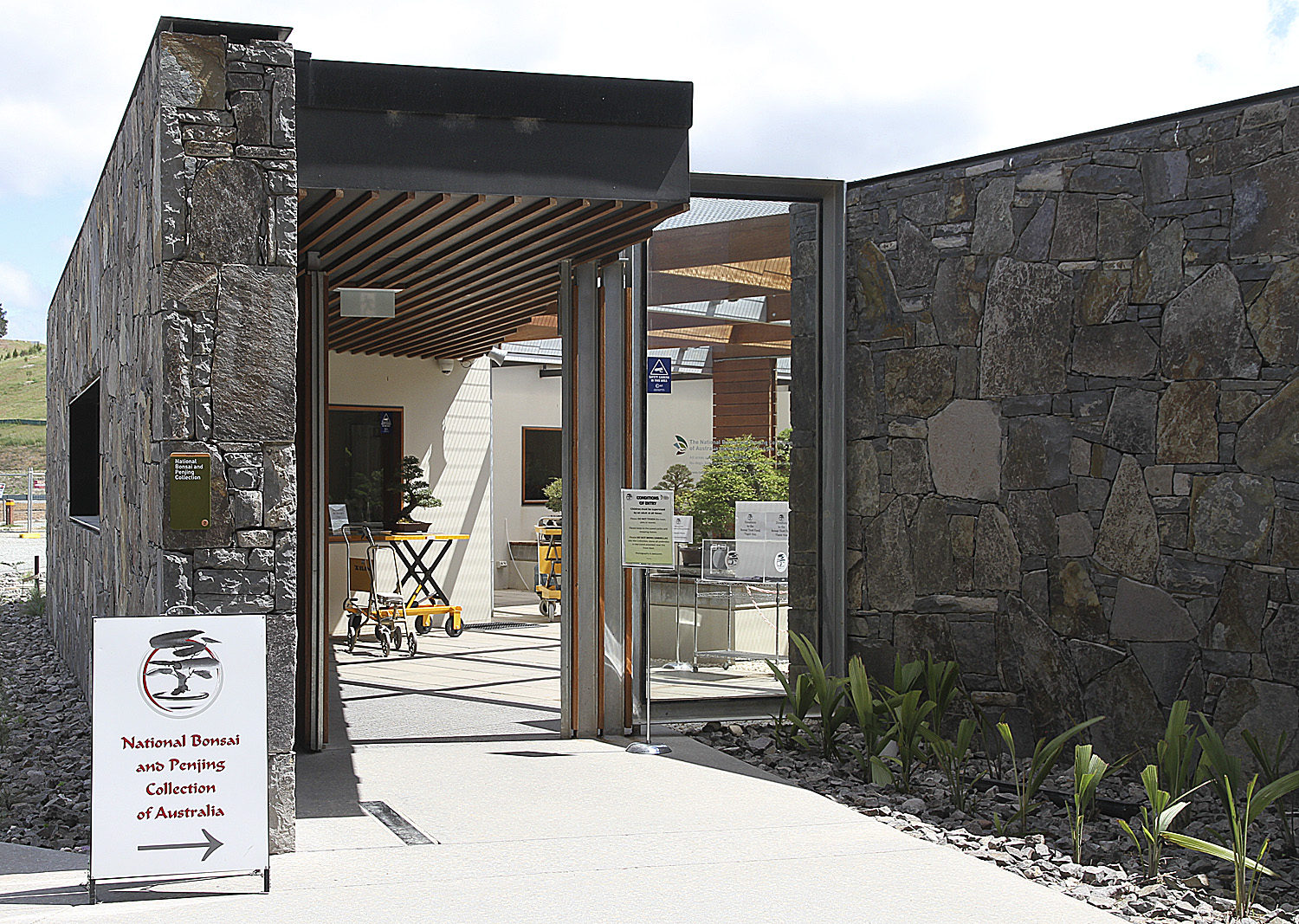
My next stop on my teaching tour throughout the Australia continent was Canberra, the capital city. At the National Arboretum Canberra the local club and Australian Associated Bonsai Clubs (National Federation) helped to establish and support the newly opened “National Bonsai & Penning Collection of Australia,” often called the National Bonsai Collection.

Image

The use of words interests me and I always try to be as accurate and correct as possible. That’s one part of my unusual characteristic which was influenced by my teacher Yuji Yoshimura. At home in the United States we have the “National Bonsai & Penjng Museum” at the United States National Arboretum, often called the “National Bonsai Collection.” Now Australia has a National Bonsai Collection too which is quite good. Perhaps it’s just me, but when someone refers to the “National Bonsai Collection” I wonder which one they are talking about, the one in the United States or Australia. OK, if you are in the US, it’s the one in Washington, DC, and if in Australia the collection in Canberra. However, for some people who are working and promoting bonsai around the world it’s often confusing. That’s why I usually call the collection in Washington, DC, the “US National Bonsai & Penjing Collection” and the one in Canberra the “National Bonsai & Penjing Collection of Australia.” Ok, now that I’ve got that off mind, back to my bonsai journey.

Image

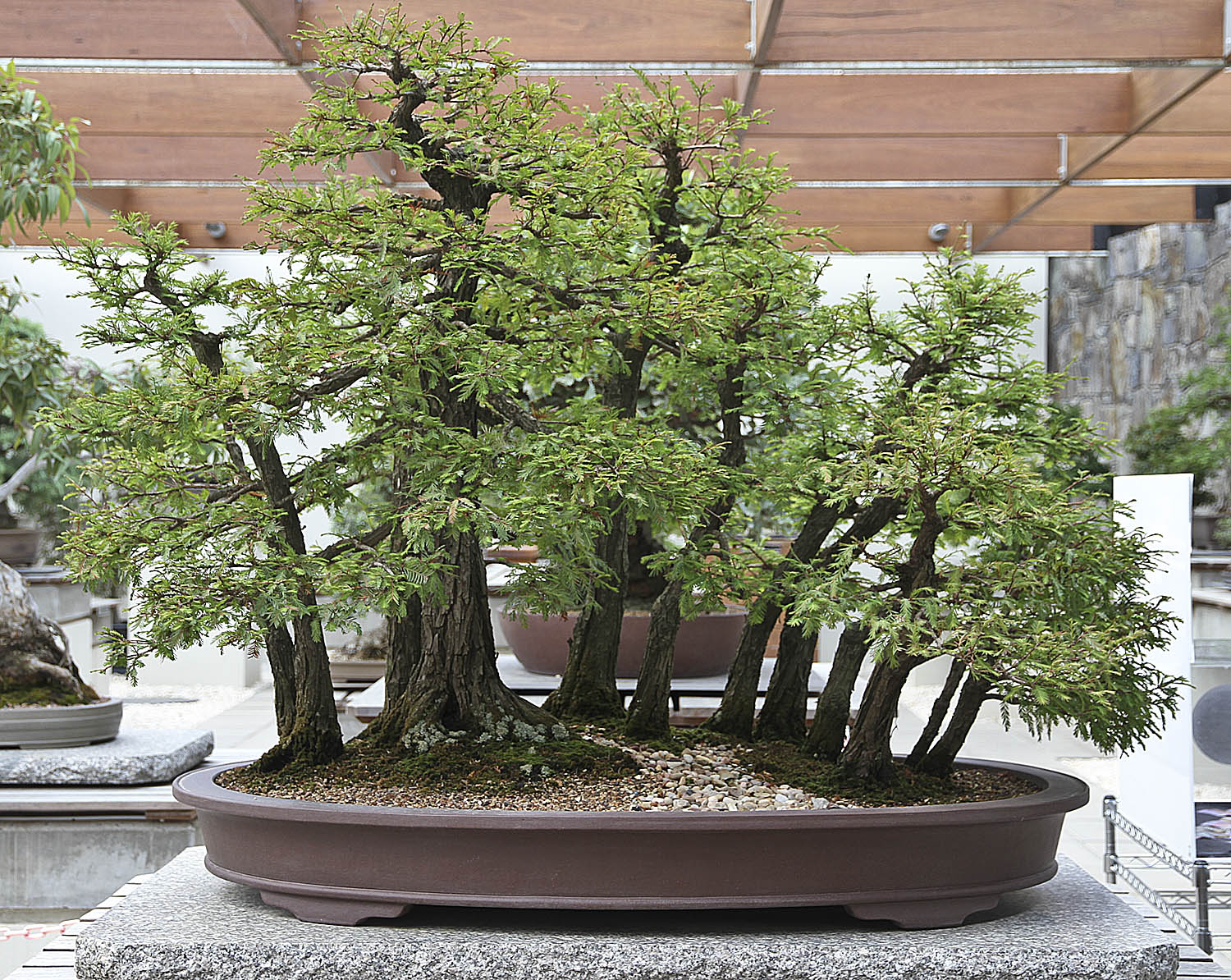
Montezuma cypress or Swamp cypress or Bald cypress

Image

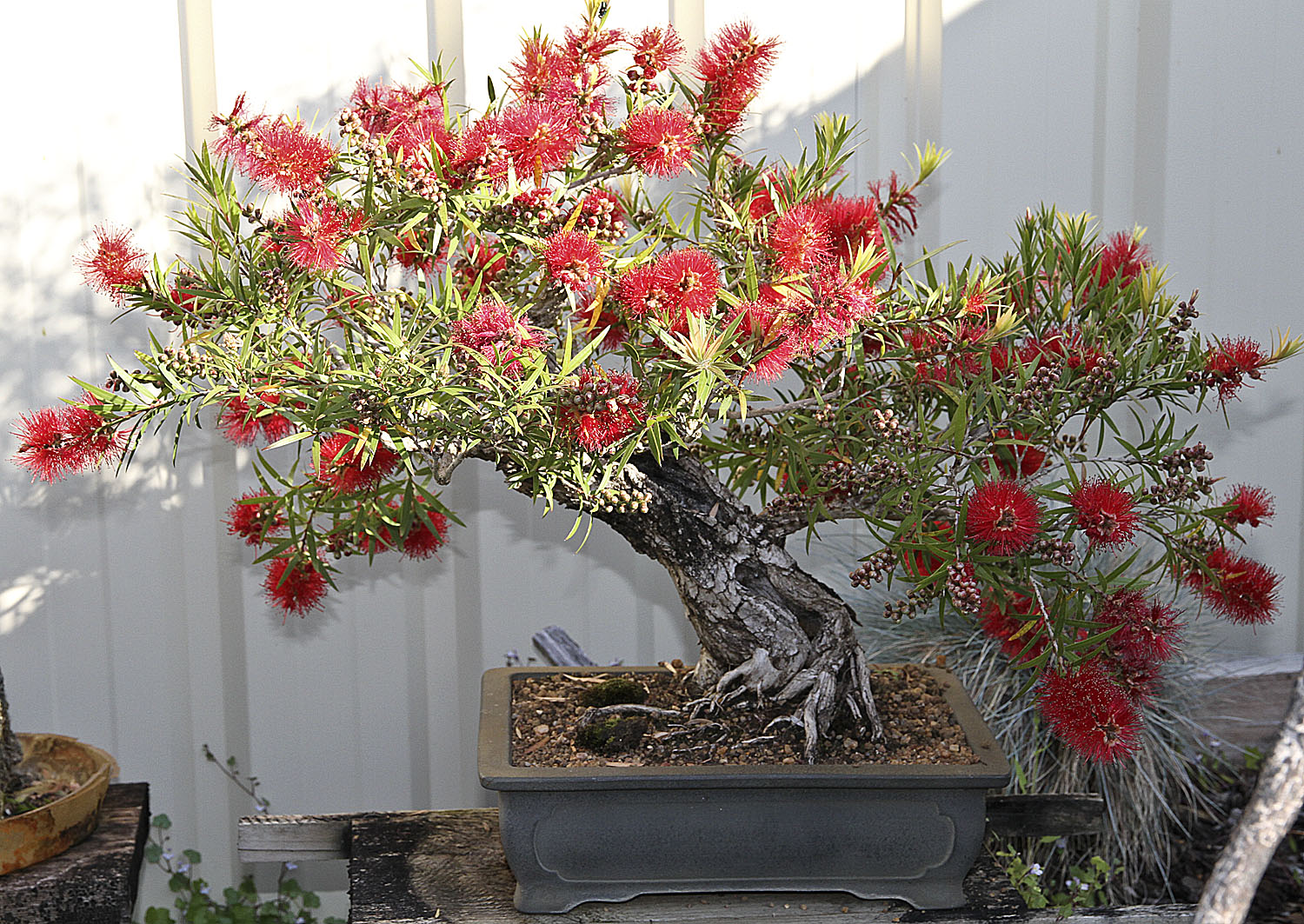
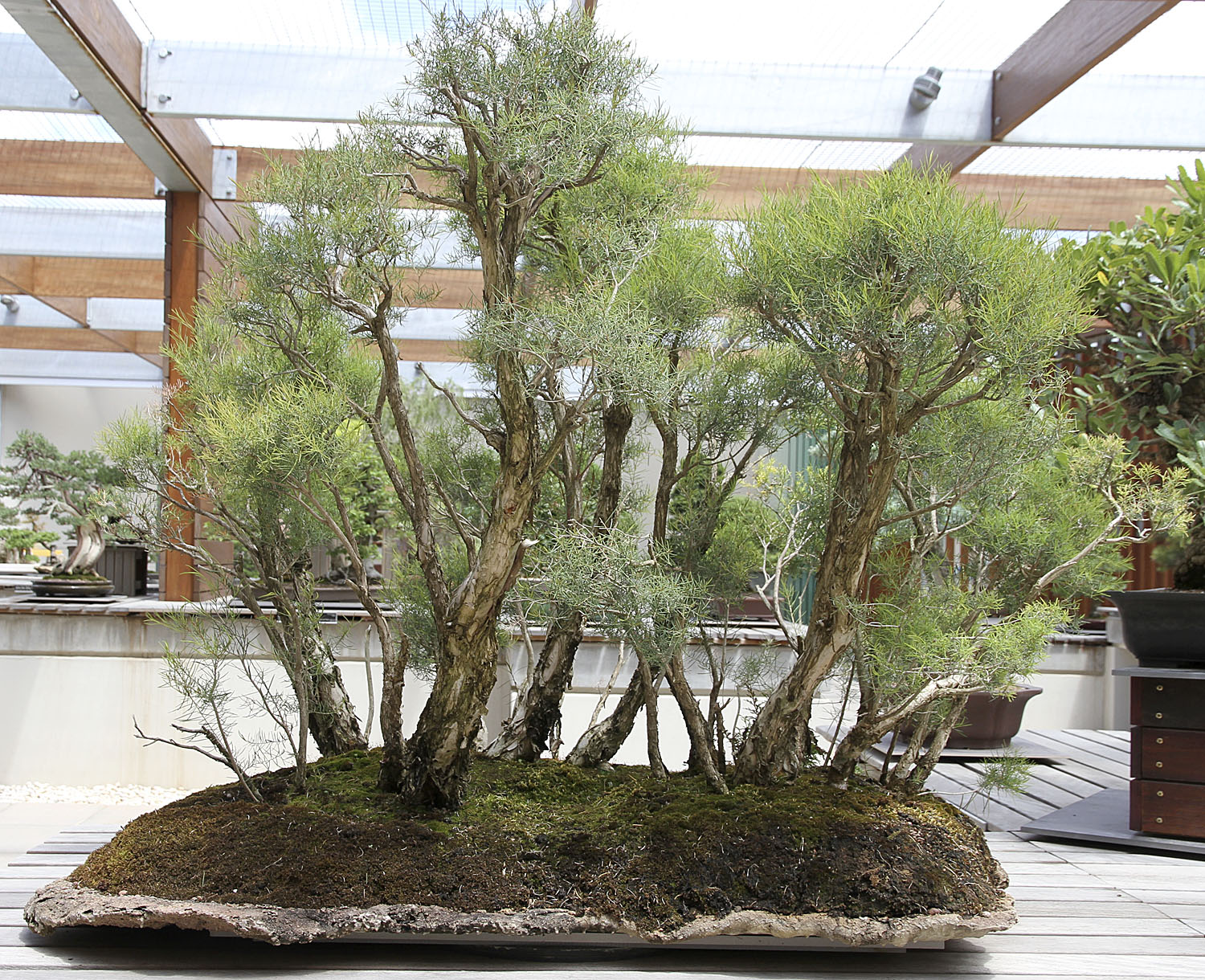
Melaleuca

Image

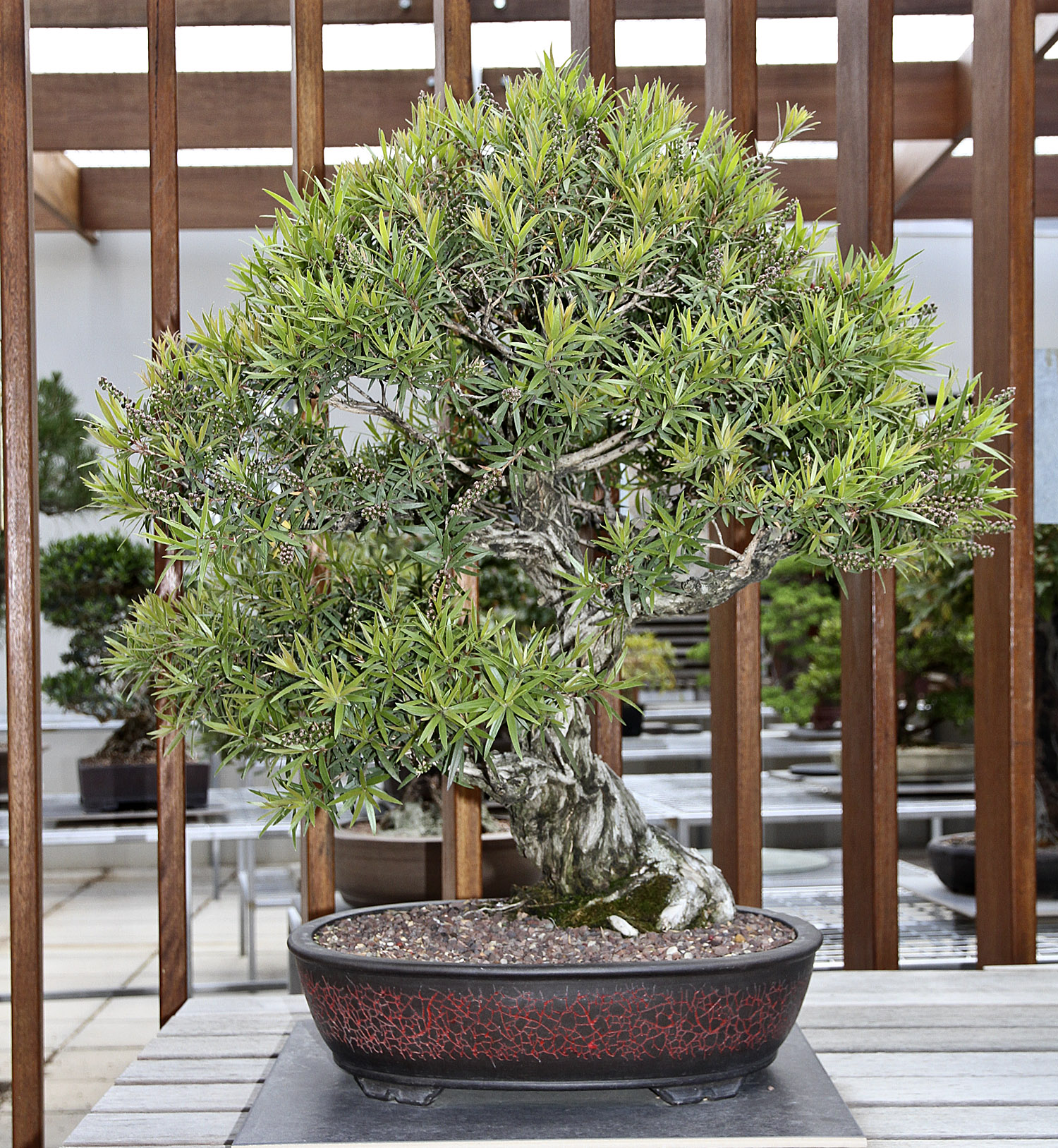
Bottle brush

Image

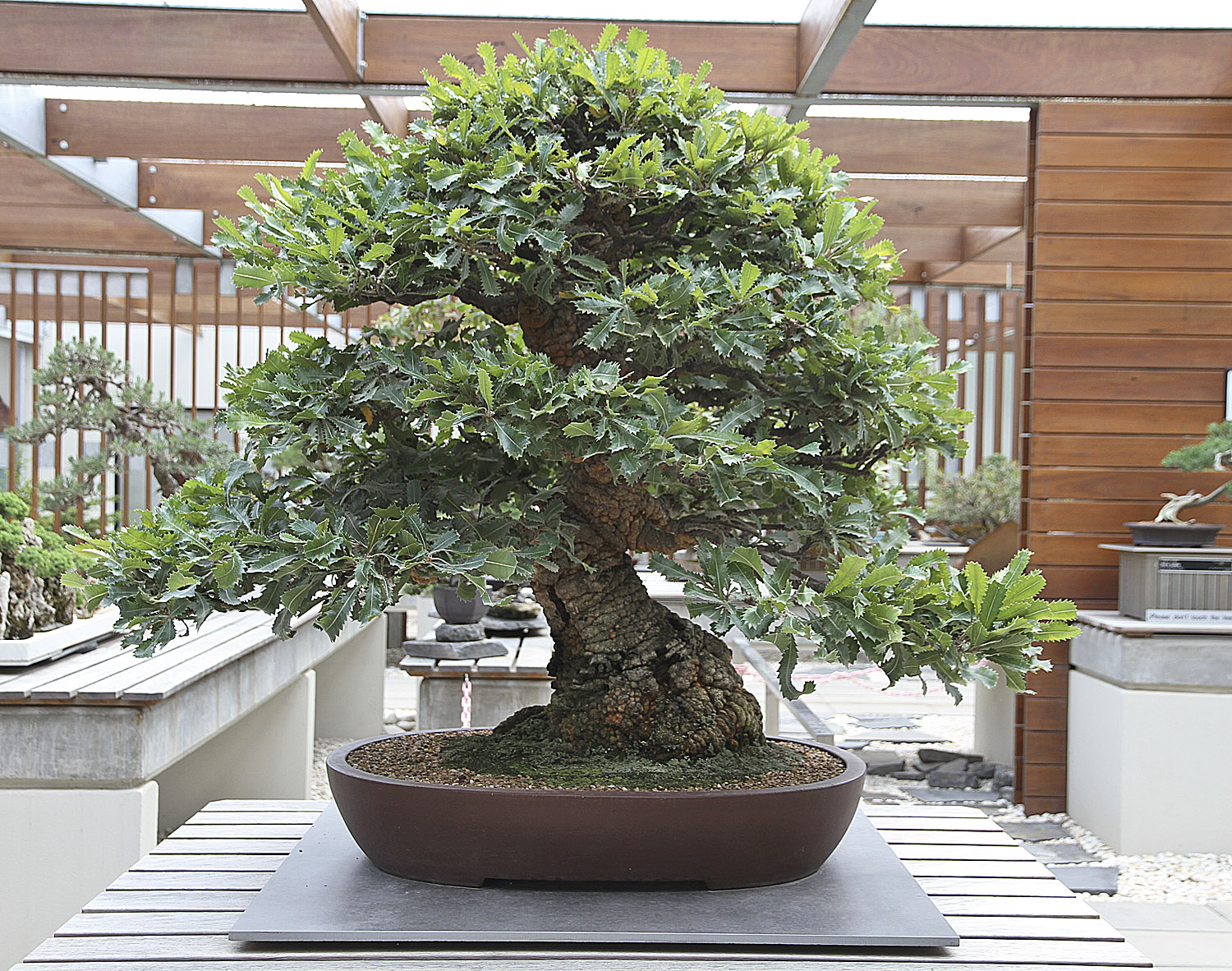
Saw Banksia

Image

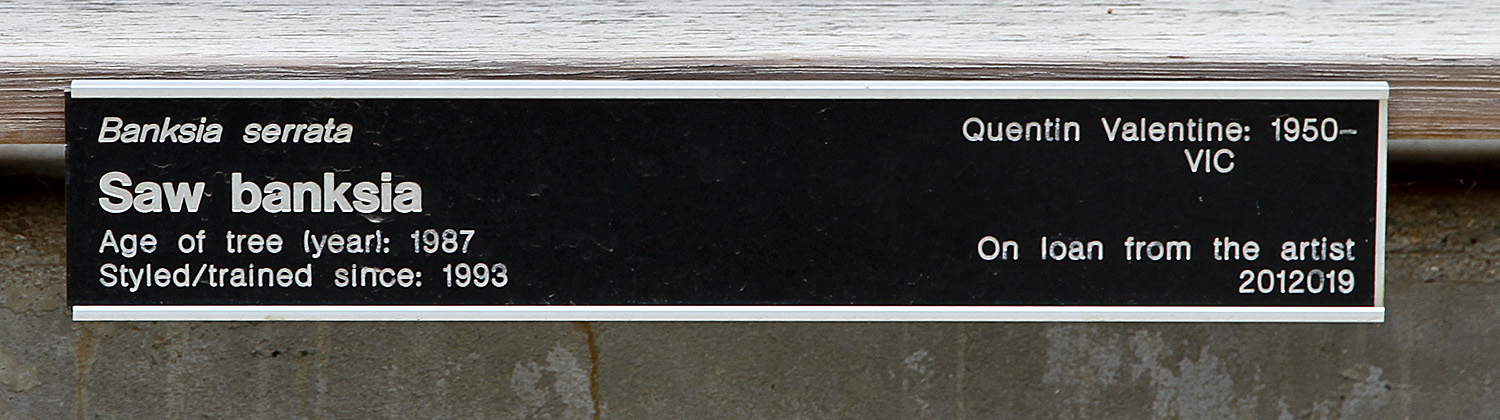
Sample label

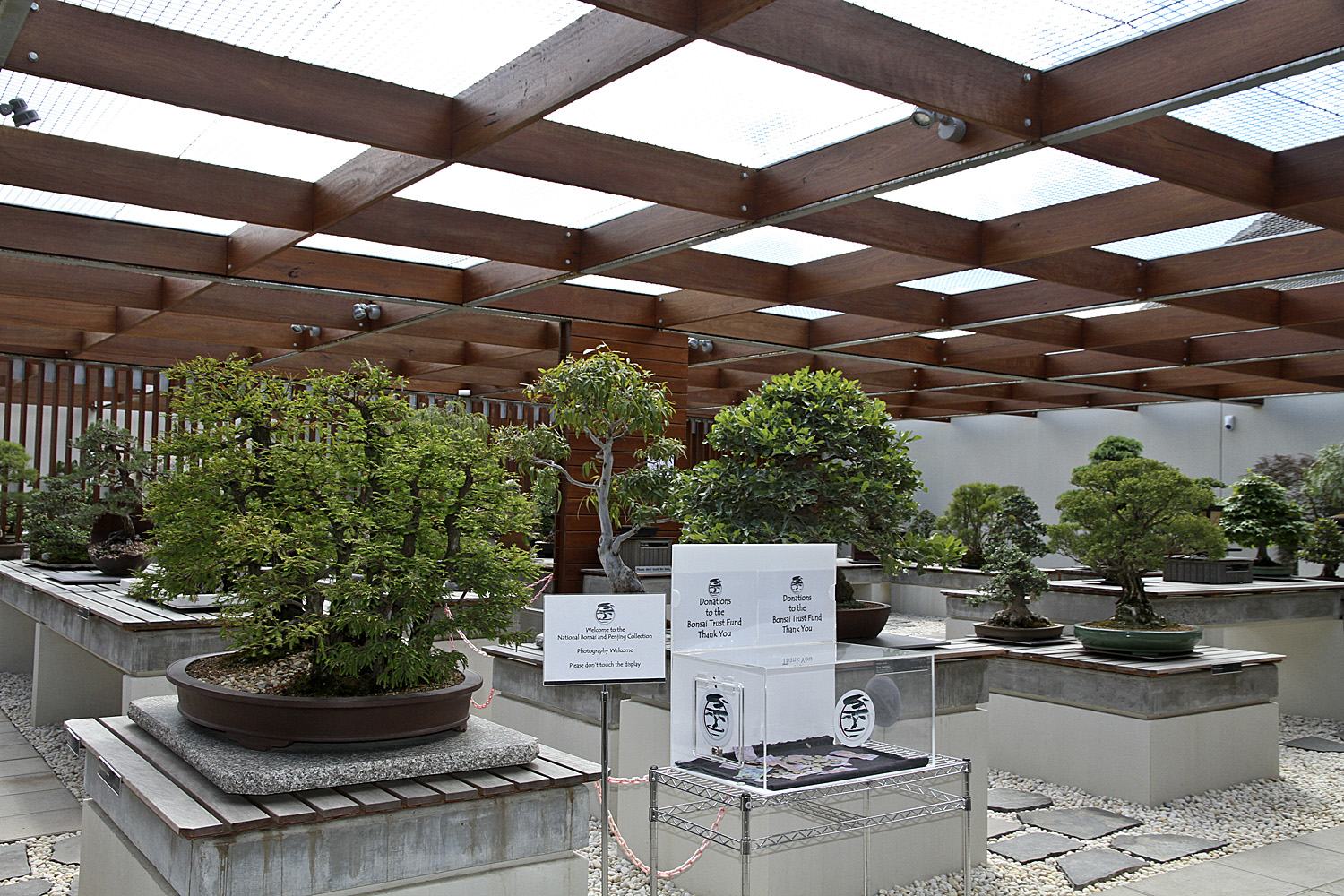
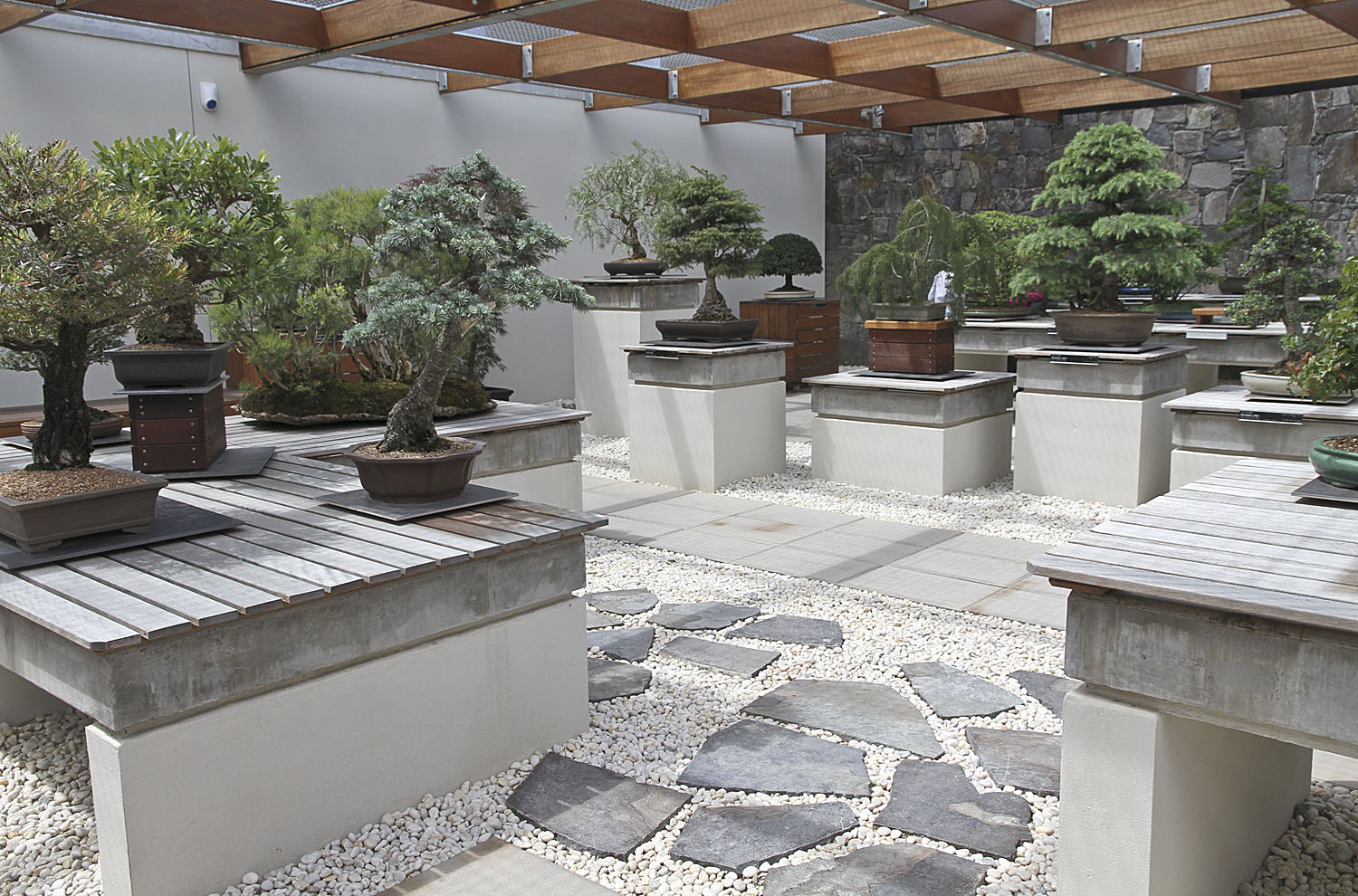
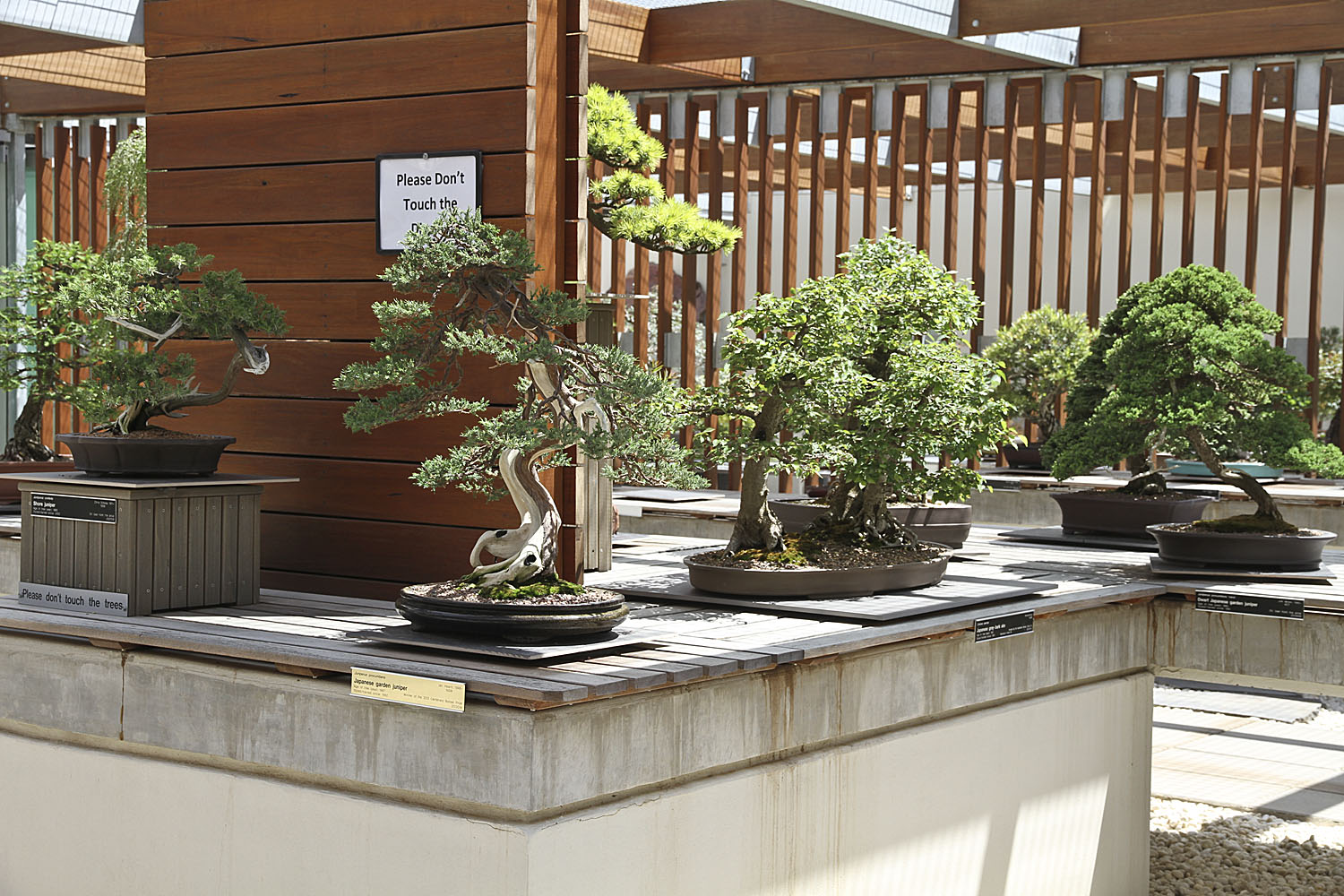
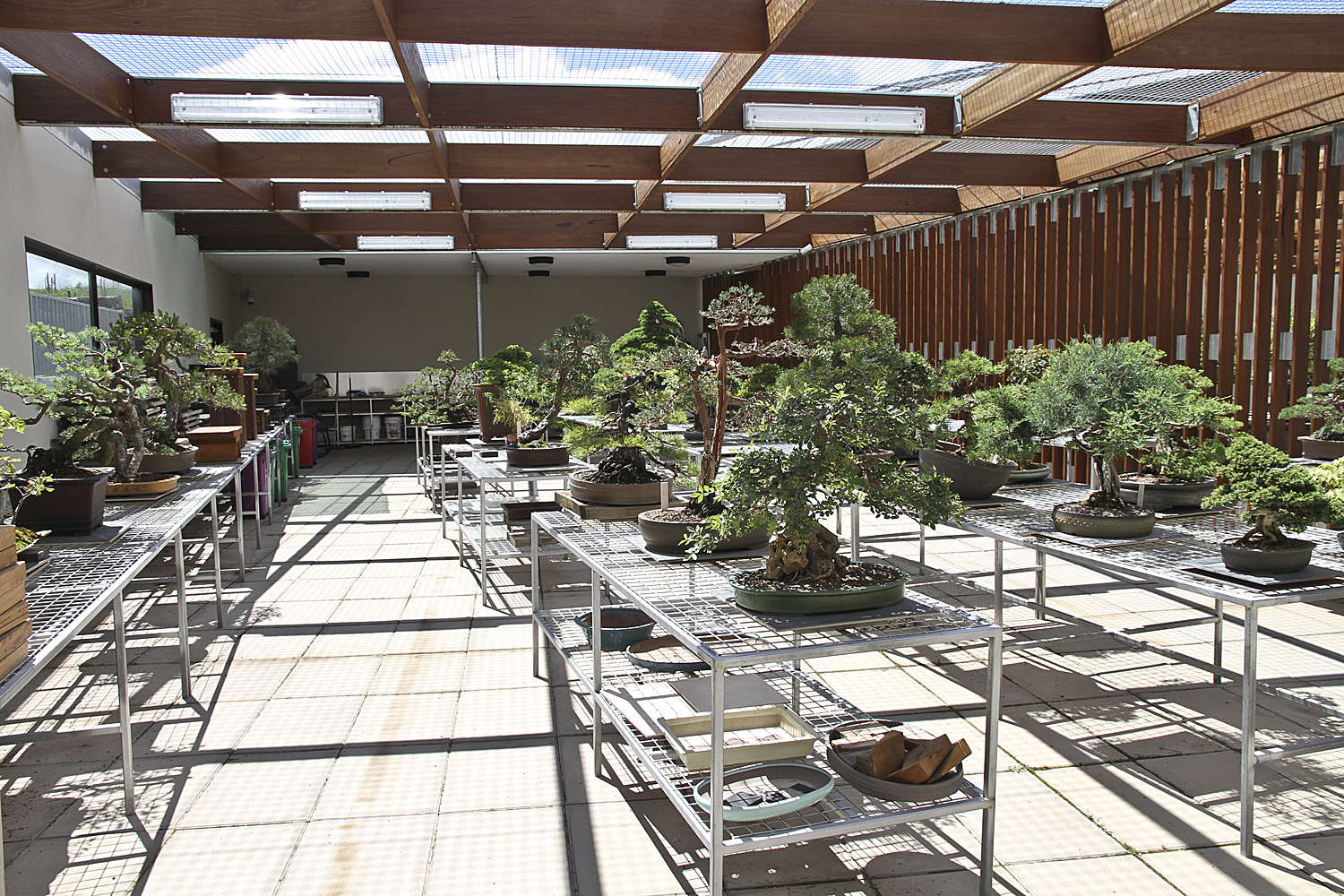
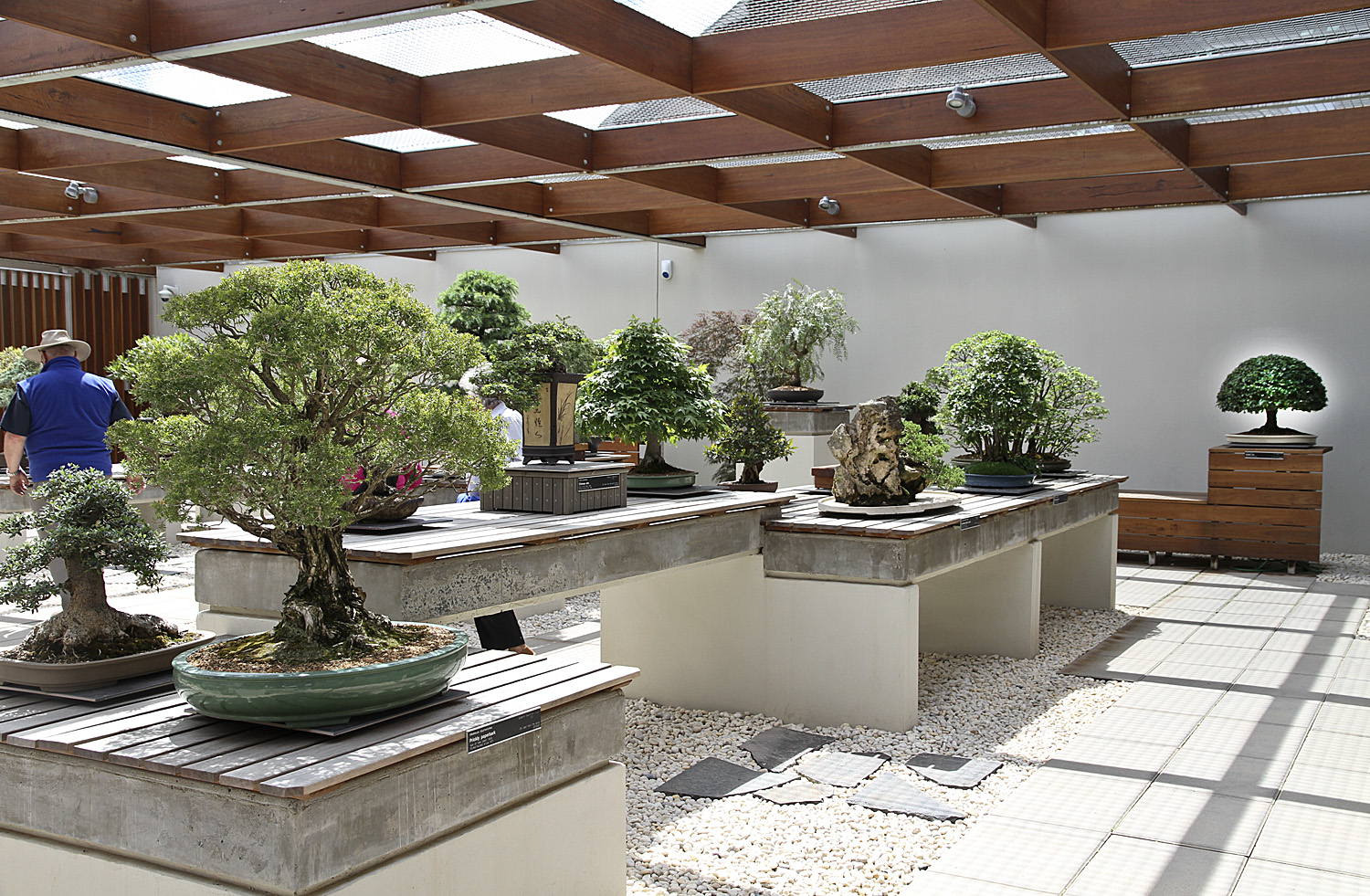
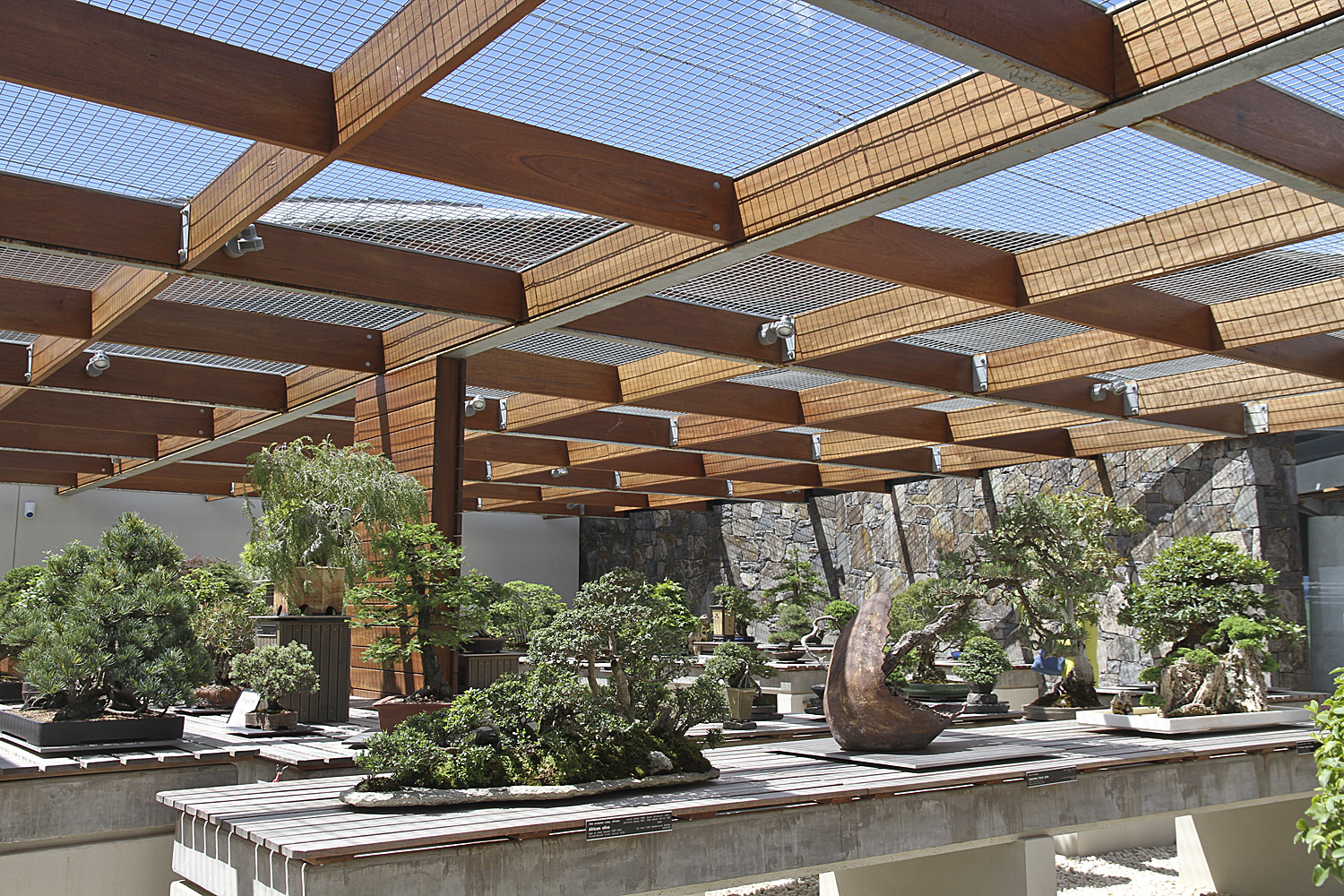
The National Bonsai Collection of Australia was opened in 2008 but had the formal grand opening in February 2013. The site is quite picturesque, high on a hill right next to the new visitors center of the National Arboretum Canberra. The entire bonsai display area is bright and open with plenty of room to enjoy the beauty of the collection. The bench supports are concrete, but covered in wood to prevent excessive heat build up which might dry out the bonsai quickly. Each bonsai has plenty of room around it so the beauty of each specimen can be enjoyed and studied. The entire area is clean and weed free too. Quite a number of the bonsai had a plain light colored background which was excellent for photographing.

Image

Shohin bonsai table

There are approximately 80 bonsai in this world-class collection created by leading Australian bonsai artists. The bonsai are all donated by artists or their families and friends, while many are on loan from artists throughout the country. Each tree is labeled and also includes the name and birth date of the artist. I found the birth and death dates interesting and inquired about it and was told that is how art galleries label their art. I wonder if some individuals are sensitive about their age.

Many of the trees are Australian natives and are strange and unique. Some of them are styled to express their natural growth habit in Australia, but all well designed. The curator Leigh Taafe is doing an excellent job maintaining the bonsai in the artist’s original design as well as in good health. Members of the local Canberra Bonsai Club volunteer to help and have three shifts daily to help Leigh. That’s quite a commitment from a local club.

Image

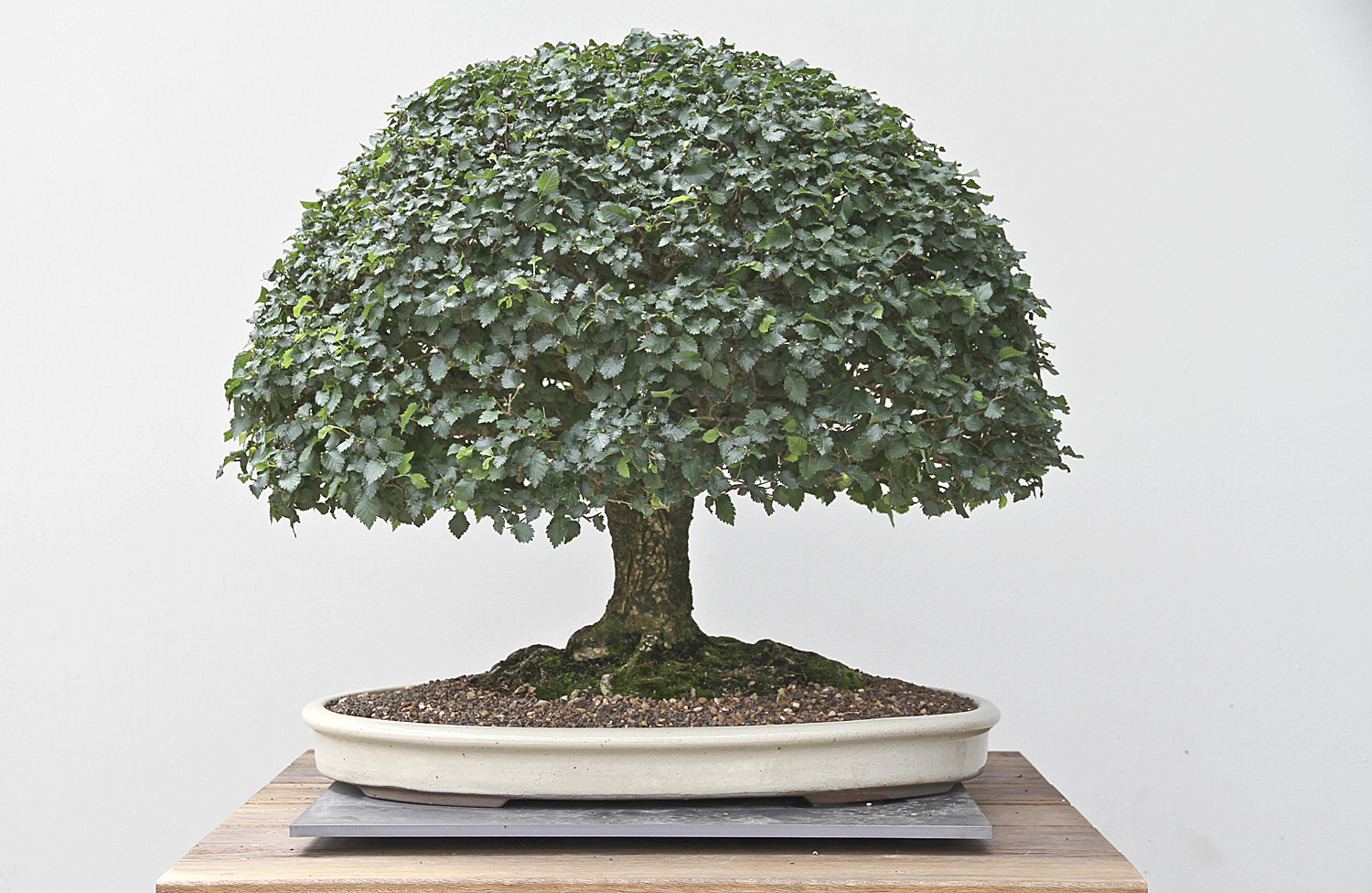
Chinese em

Image

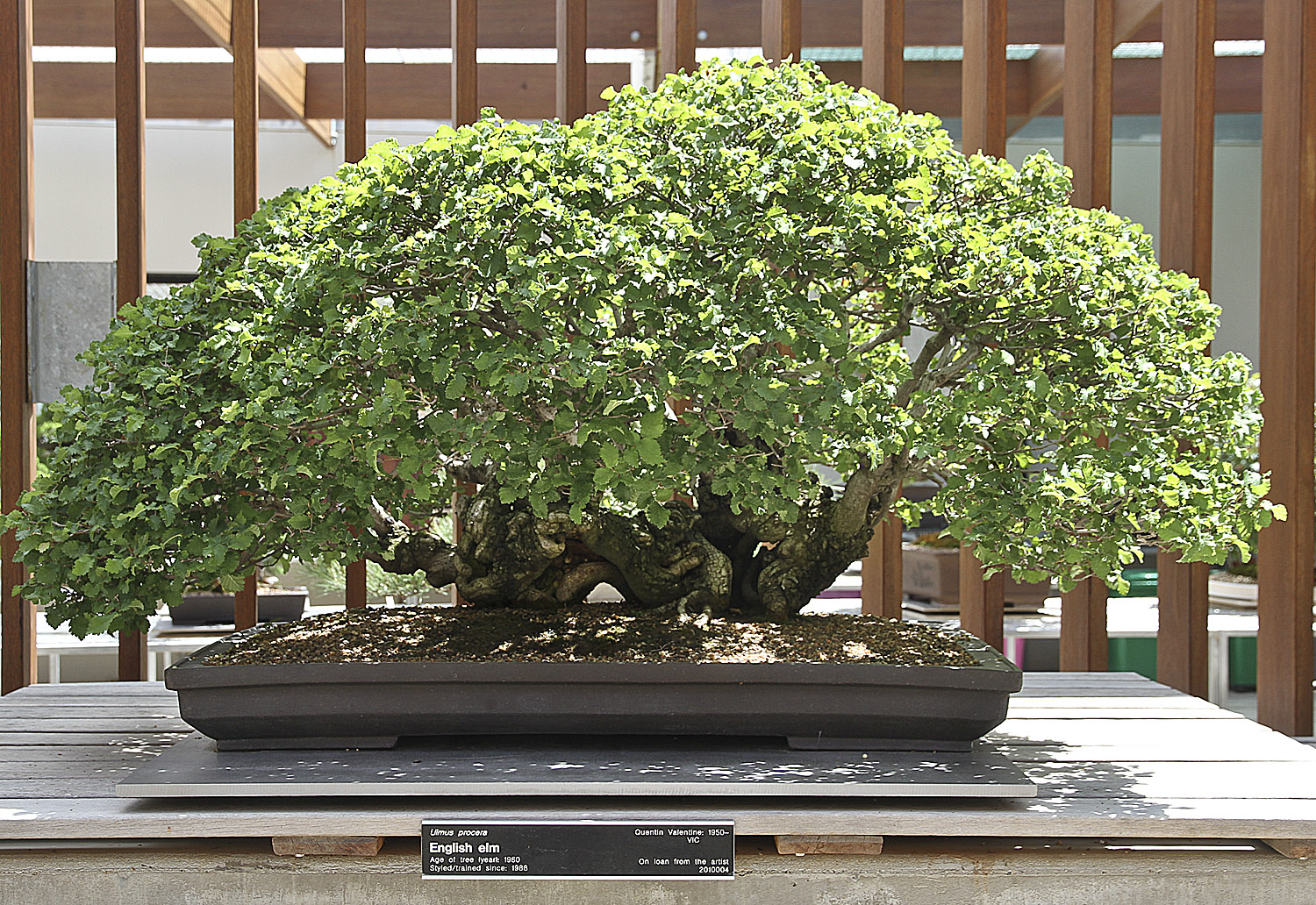
English elm

Image

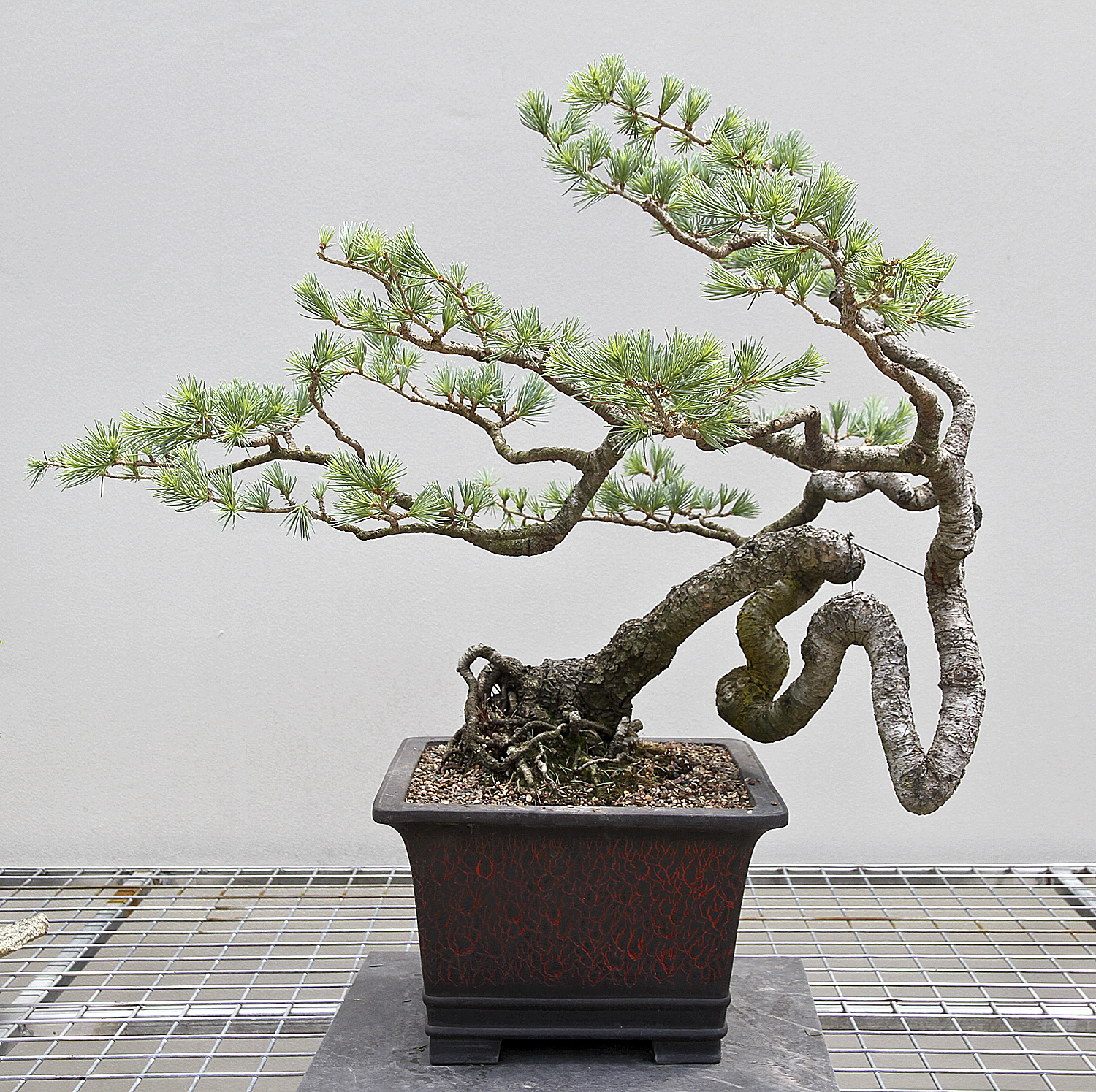
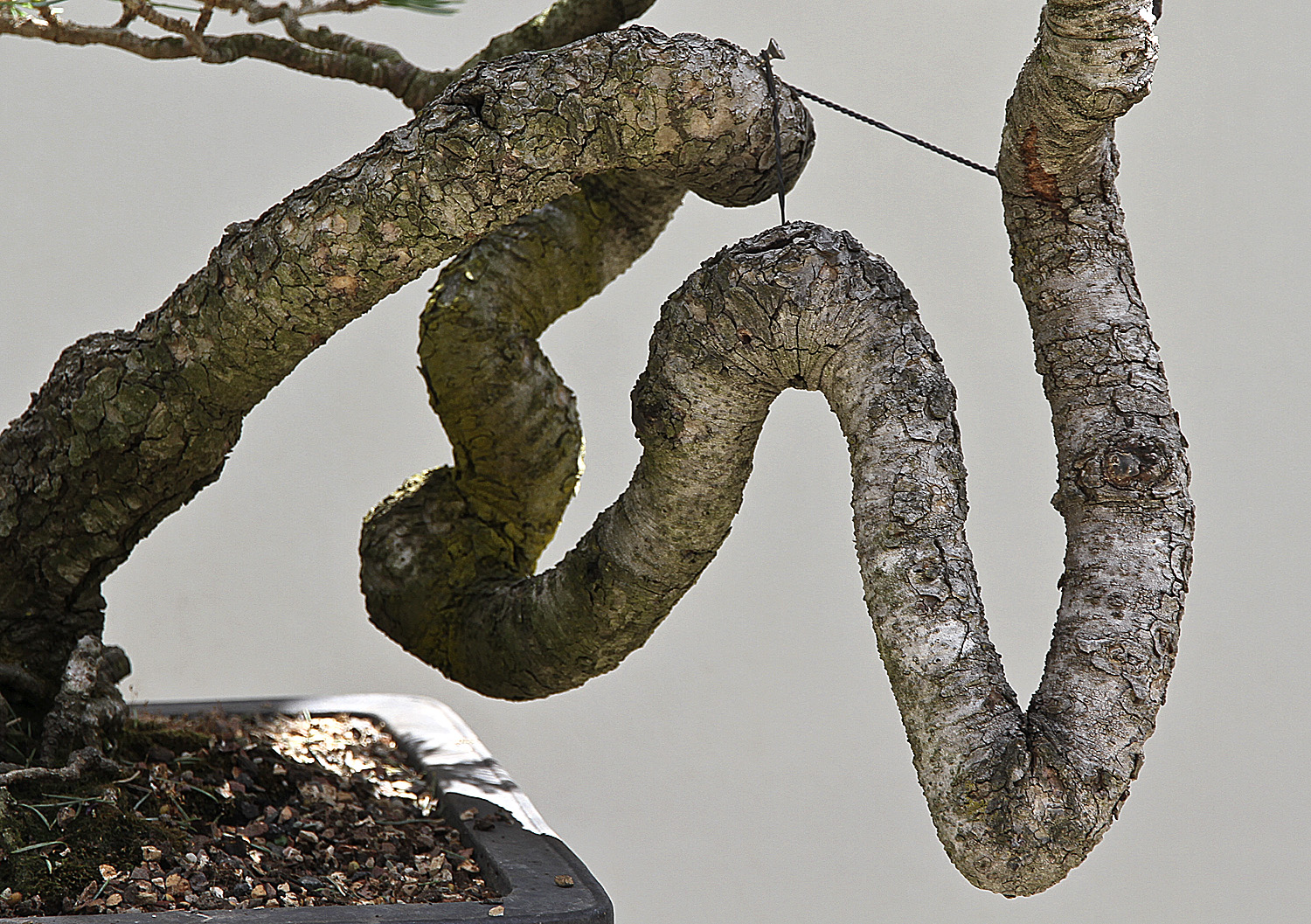
Blue Atlas cedar with an interesting focal point trunk

Image

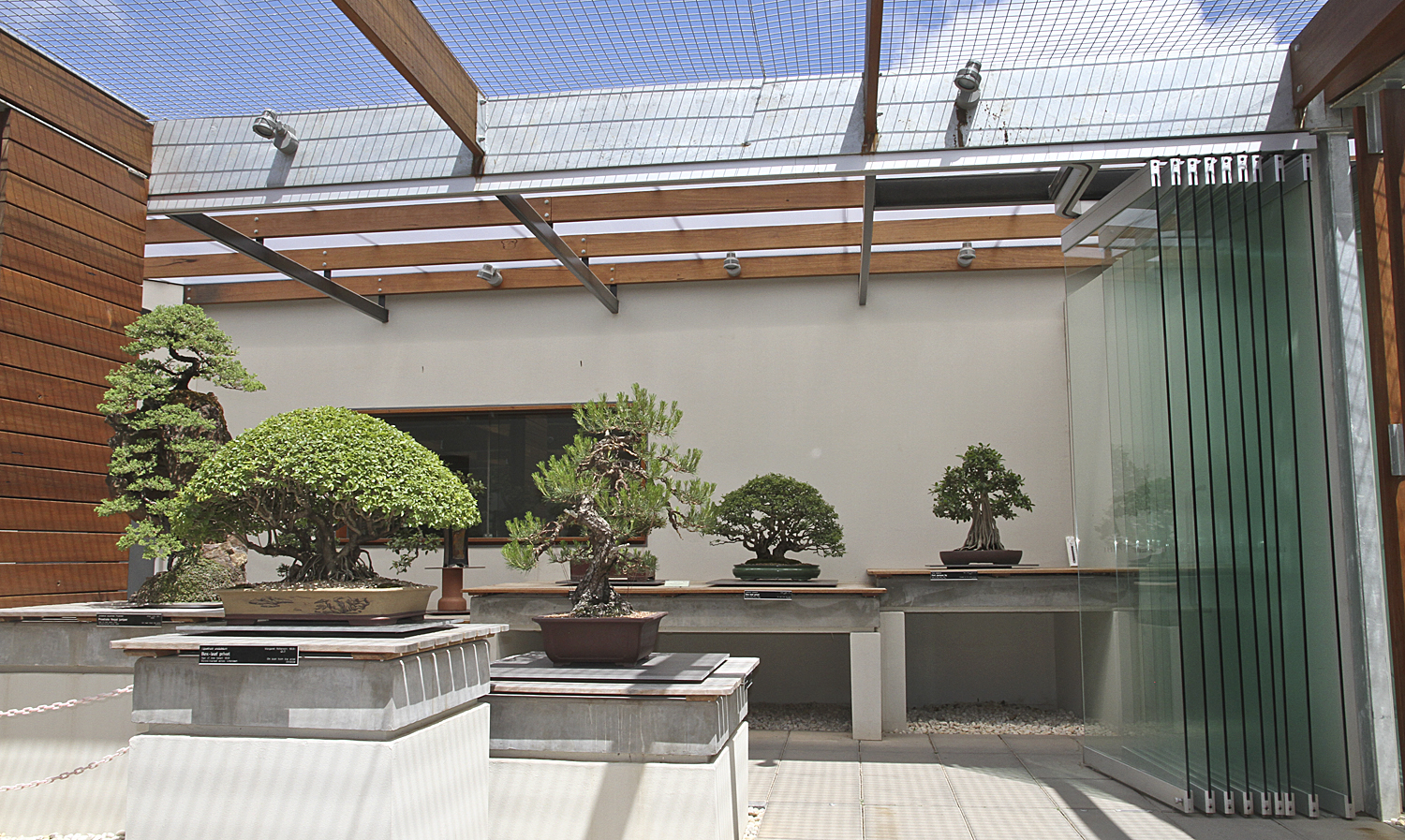
In Canberra the weather can get cold in winter so there is a well designed area with a solid clear roof with folding glass doors which are closed during cold weather. Figs and other sub-tropical species are maintained in that section during the winter.

Image

Protected area with solid clear roof and folding glass doors on the right

Image

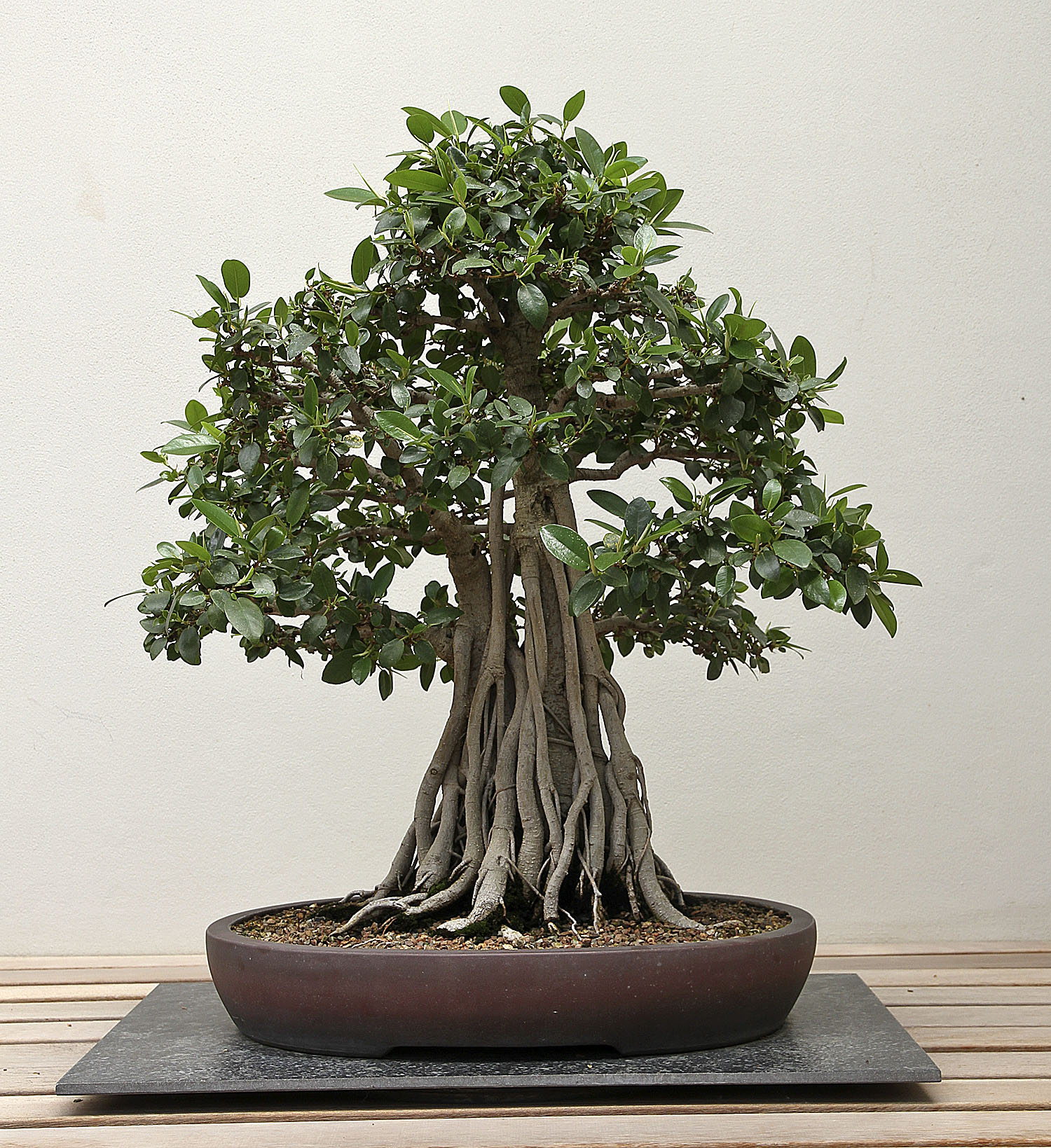
Ficus which must be protected in winter

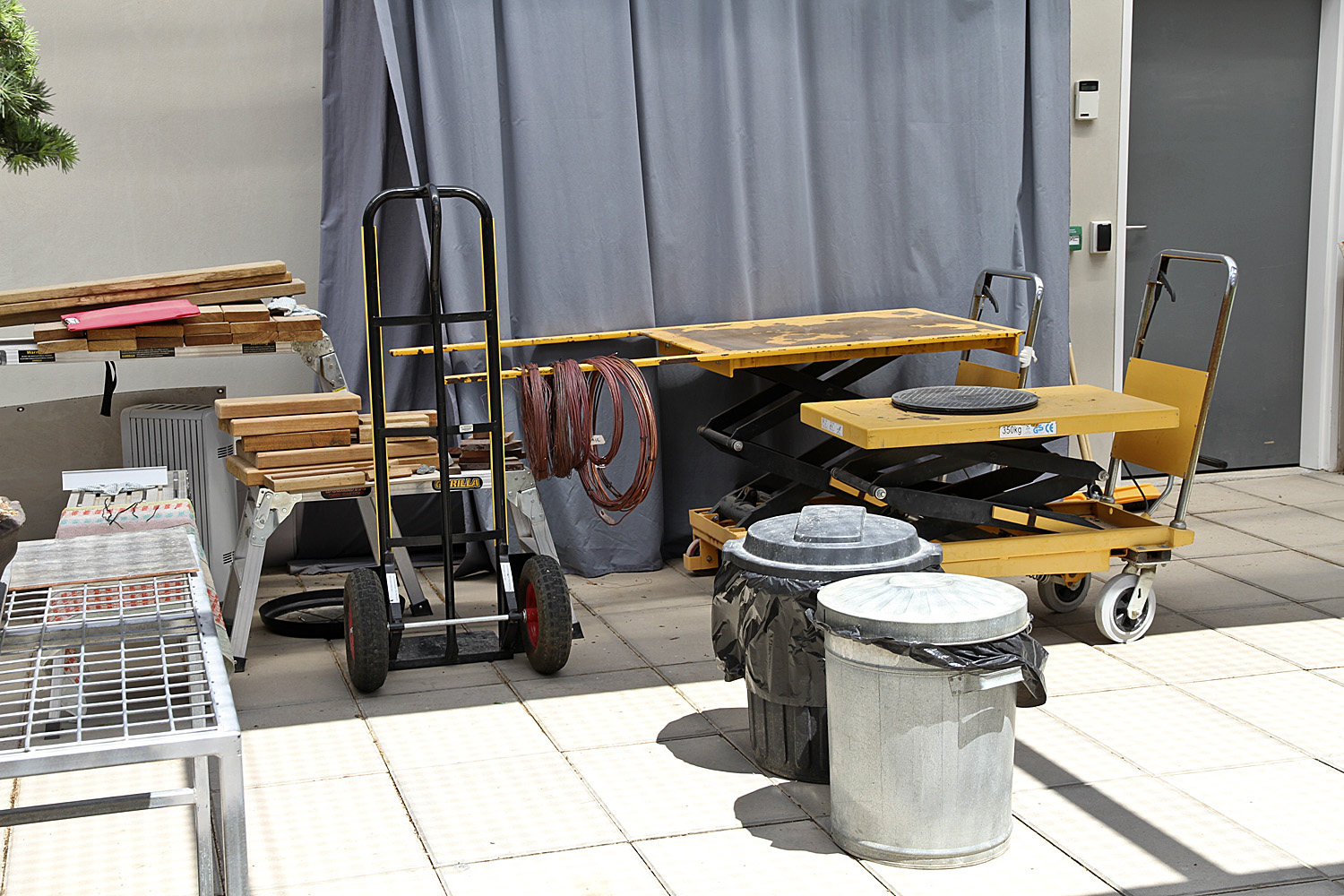
In the rear, but clearly visible from the public area, is the workroom. The bonsai in that area are also clean, neat and weed free. Recently redesigned bonsai and those not at their peak of beauty are maintained in this area.

Image

Work area

Image

Work area

The National Bonsai & Penjing Collection of Australia is open daily, except Christmas and has free admission. I highly recommend a visit to see beautiful Australian bonsai and look forward to a future visit to see how well the collection improves in the future.

Image

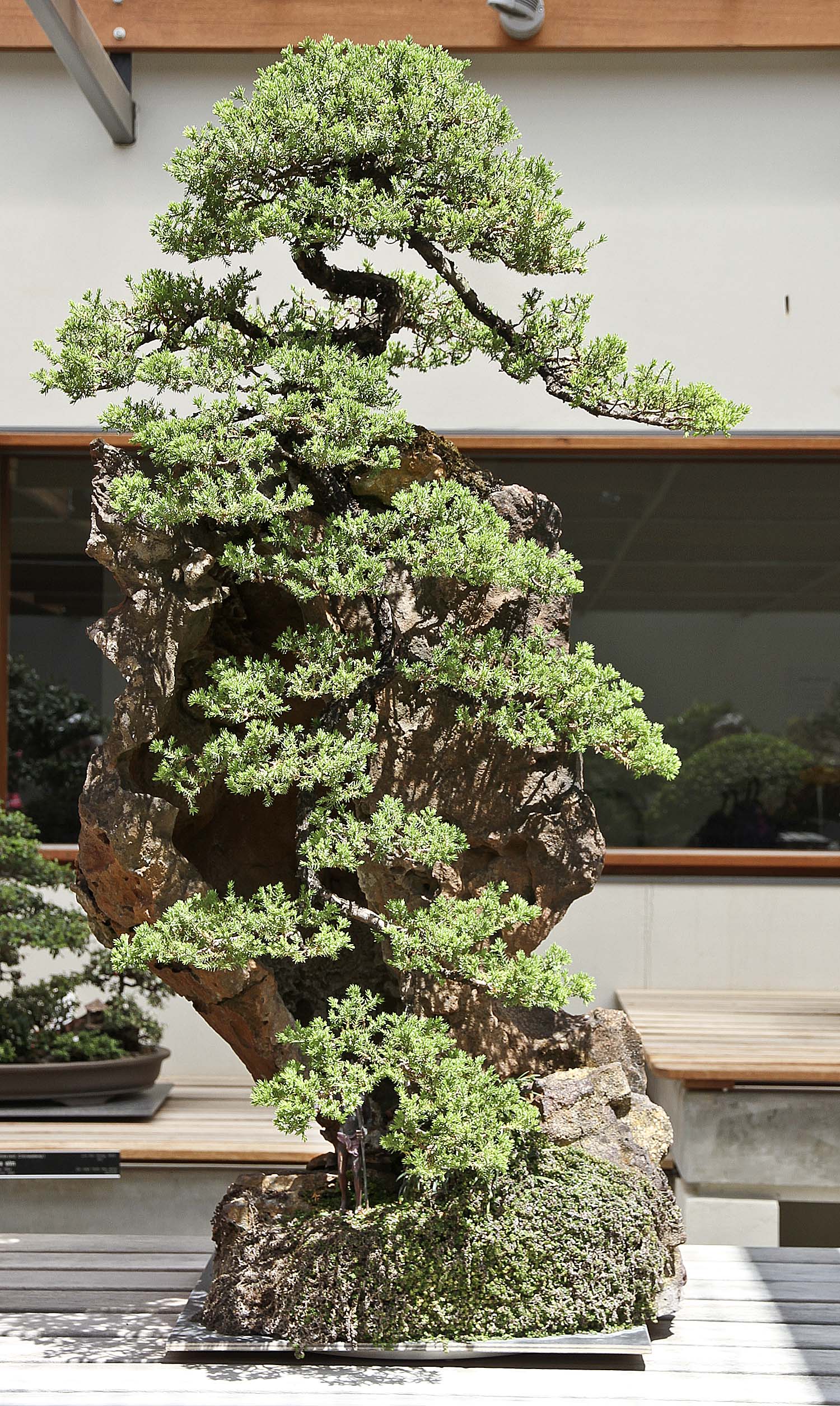
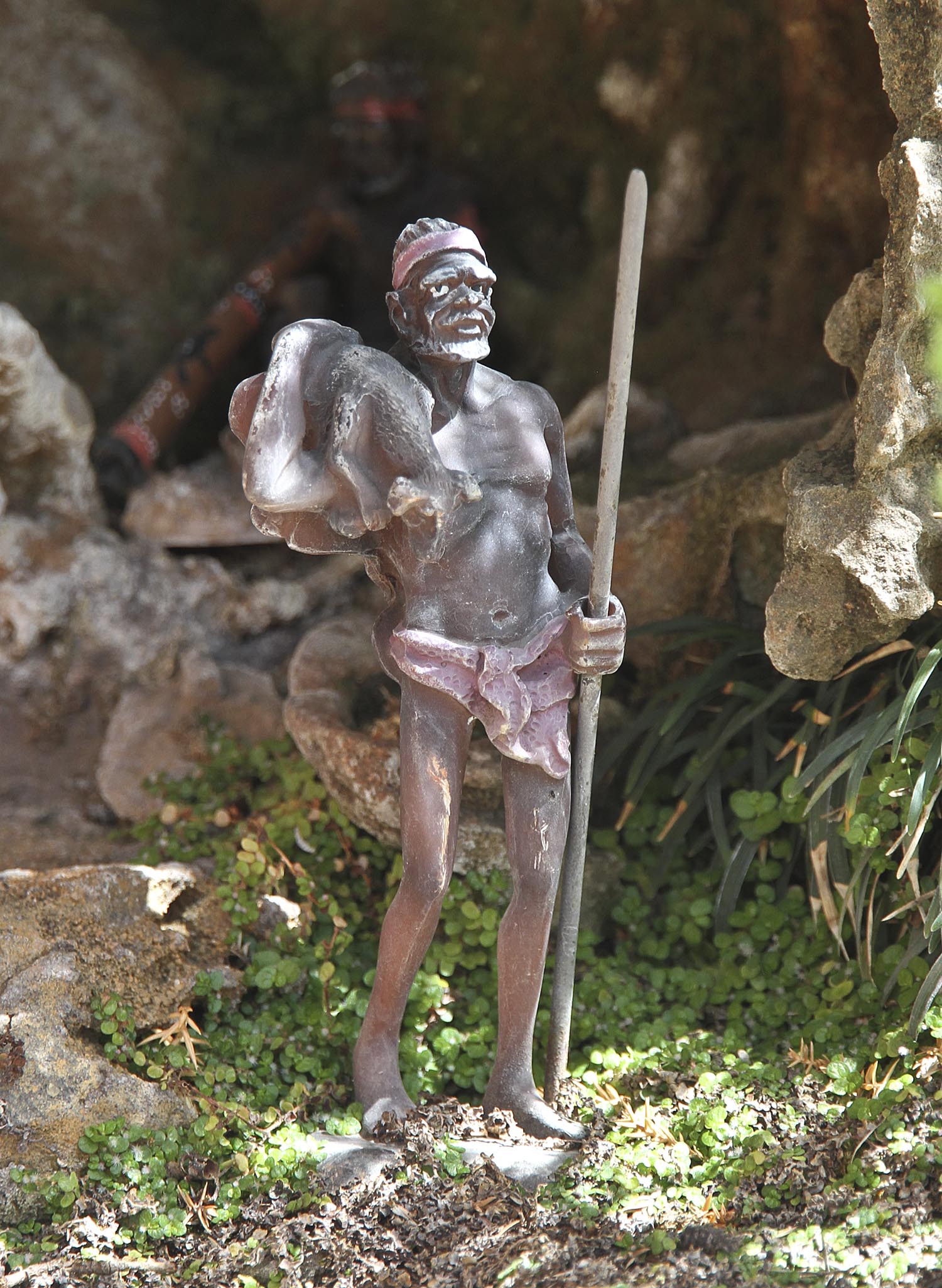
A few years ago the Australian Prime Minister made a formal apology to the Aborignal people (original custodians of the land) for taking the land. One person created a rock planting bonsai to commemorate the event. On the bottom left he discretely put a statue of an Aborigine.

Image

Canberra Bonsai Society

Two lectures and a critique were presented to member of the Canberra Bonsai Society where my new book quickly sold out, but orders were collected to be shipped to the club in bulk to save on the expensive shipping charges. There were some interesting questions during my lectures, critique and workshops as well which indicated a deep understanding and appreciation of bonsai by many members.

Image

Image

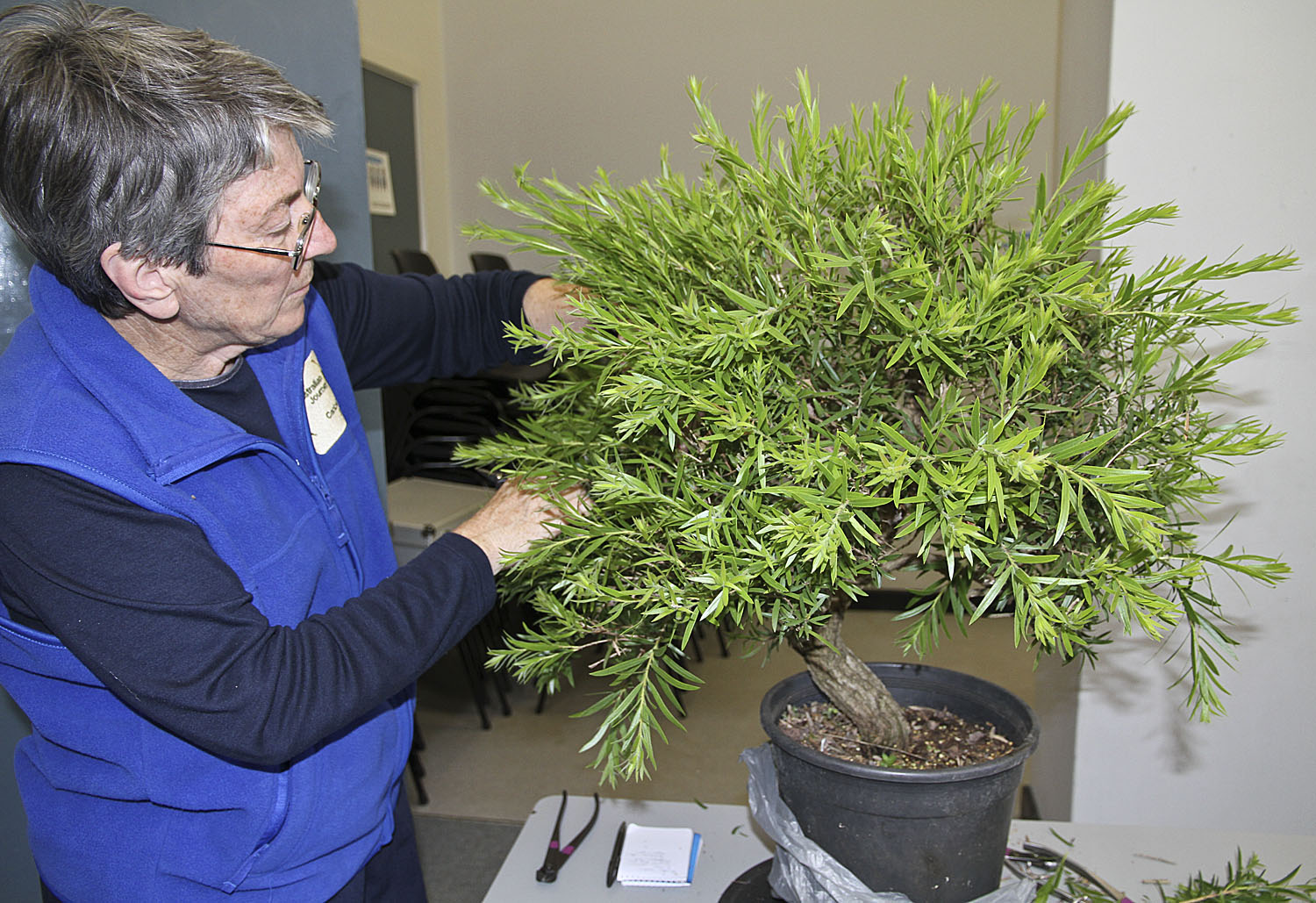
Ruth working on a Bottlebrush

Image

After improvement

Image

Chinese elm before improvement

Image

Chinese elm after working

Image

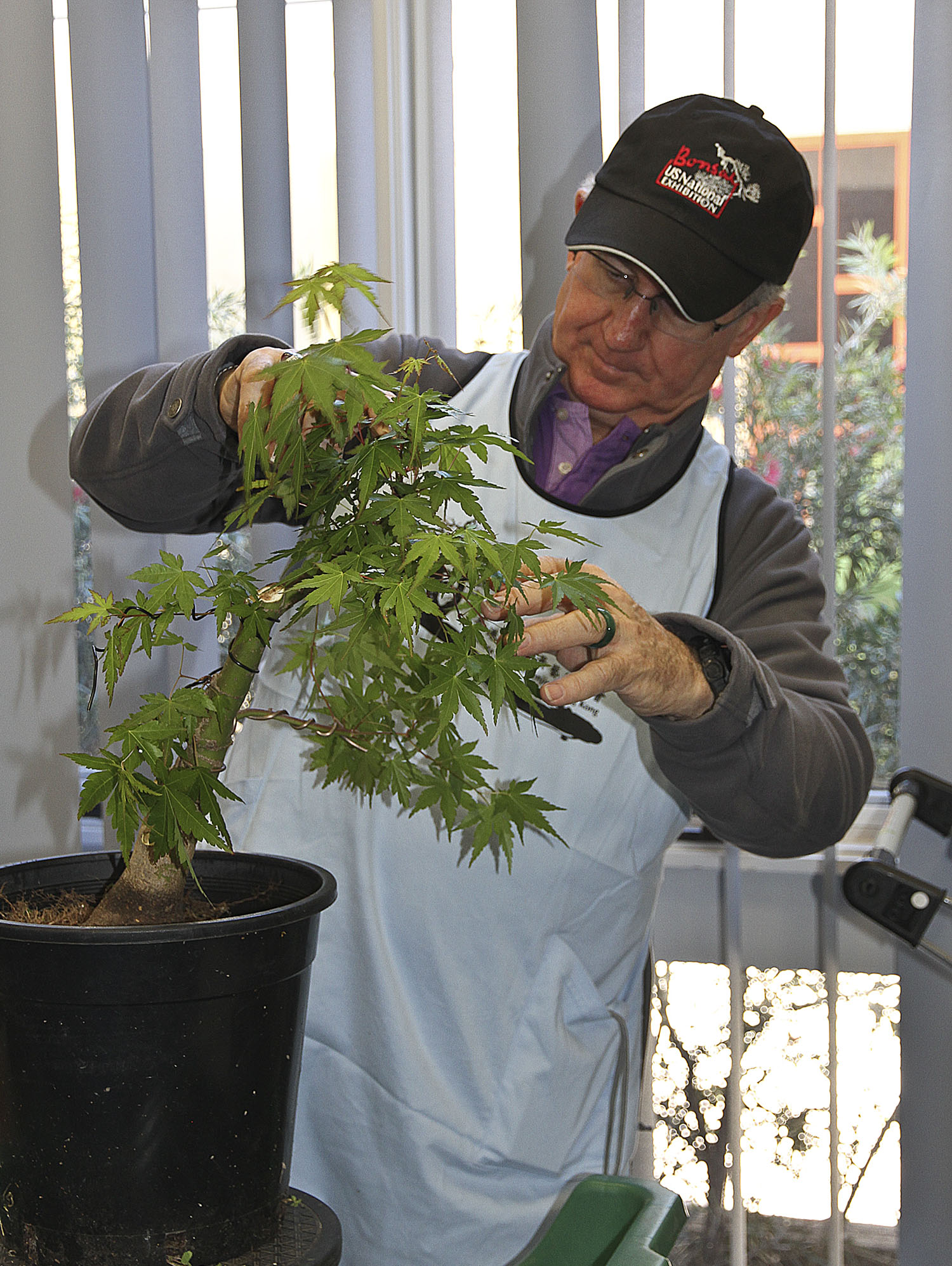
Peter working on a Japanese maple

Image

Glenda redesigned a Chinese elm forest

Image

After redesigning the Chinese elm forestThe next day was spent on two workshops where people brought interesting plant material for advice and improvement. Several forests were created and redesigned. A short program was presented on repotting since the question came up on removing wedges from the root ball to improve air circulation in the soil and renew old roots. After my two workshops I flew across the continent to Perth for my educational programs.

BILL JUMPS A BROAD- Down Under Part 3

Image

Although I like teaching workshops with approximately ten students, considerably more attention and instruction can be individually provided if fewer are present. Private study groups with limited members or, even better, one-on-on workshops are the best way of teaching bonsai because additional time can be spent instructing each student and questions are more easily answered. This situation is best however, if everyone is on the same level of bonsai understanding and skill techniques. Of course, having no “trouble makers” make it even better.

Image

I had the rare opportunity to have such a private workshop for only four friendly students, on the same level in a relaxing environment for everyone. We had the all day learning session in a shade house of a bonsai nursery which had closed to the public a few years earlier. Everything which could be desired was present. When discussing container selection there were a large number available for examples as were bonsai to illustrate design and techniques.

Image

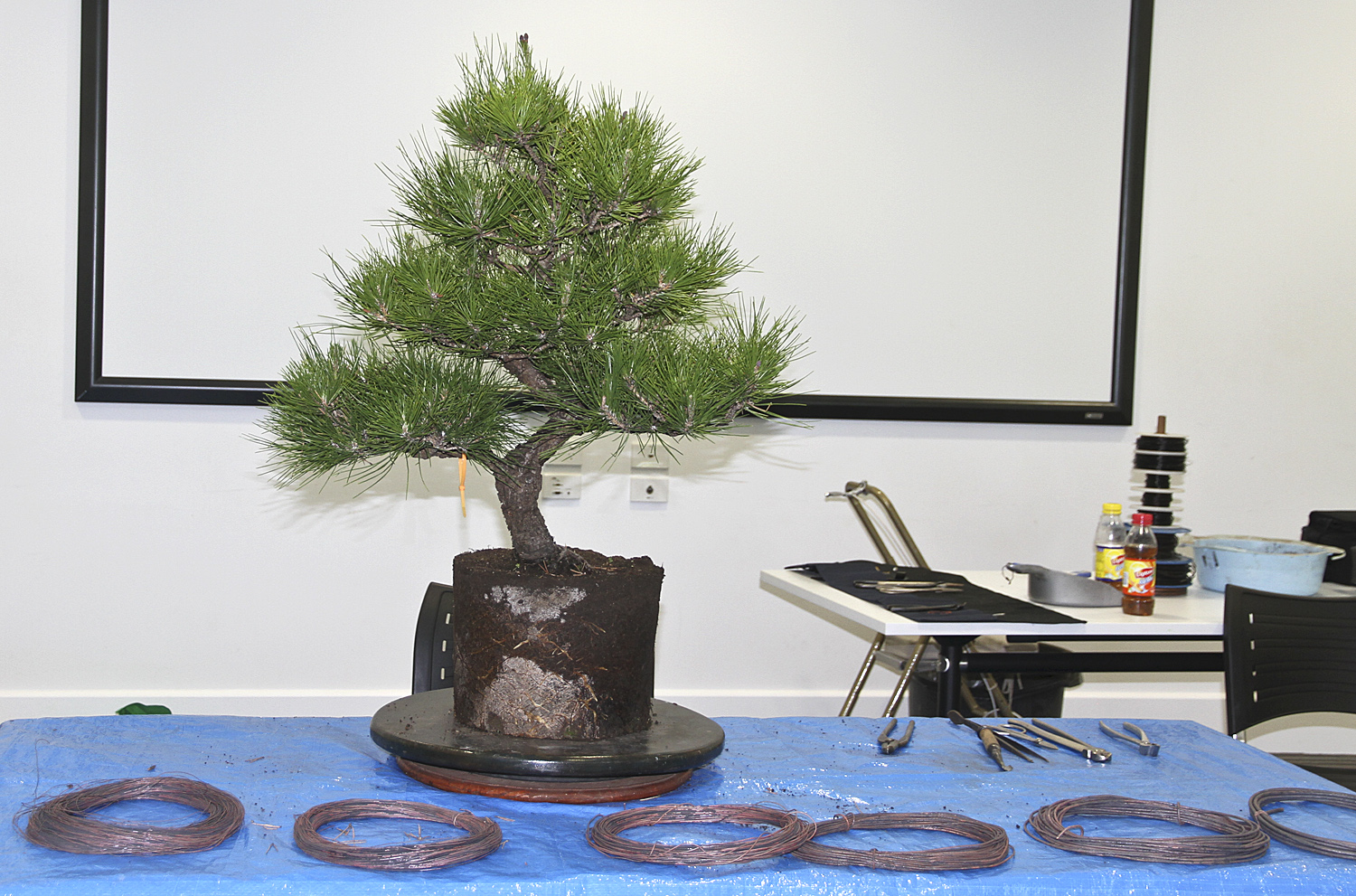
Although each student was experienced and proficient with wiring, several specifically wanted to improve their techniques for wiring effectively as well as be aesthetically pleasing. As most people know I do not prefer to use “sissy wire” and only use copper. Three of the students have never used copper before and wanted to try their hand with the best wire available for training bonsai. After showing why copper is best, and demonstrating on a branch of each bonsai they were let go to completely wire their own trees. I reminded them of the sign my dentist had hanging in his office “you only have to brush the teeth you want to keep”, and in keeping with that theme, they knew if they wanted to keep a branch, it better have wire correctly and beautifully applied. We did not concentrate on training wiring, but wiring to refine bonsai for exhibitions.

Everyone finished more than one tree, which was NOT the goal, but rather to learn new techniques which could be applied to other specimens, as well as answering difficult questions on bonsai training, aesthetics and personalities honestly.

Image

Image

Display area on top of a buried round water holding tank

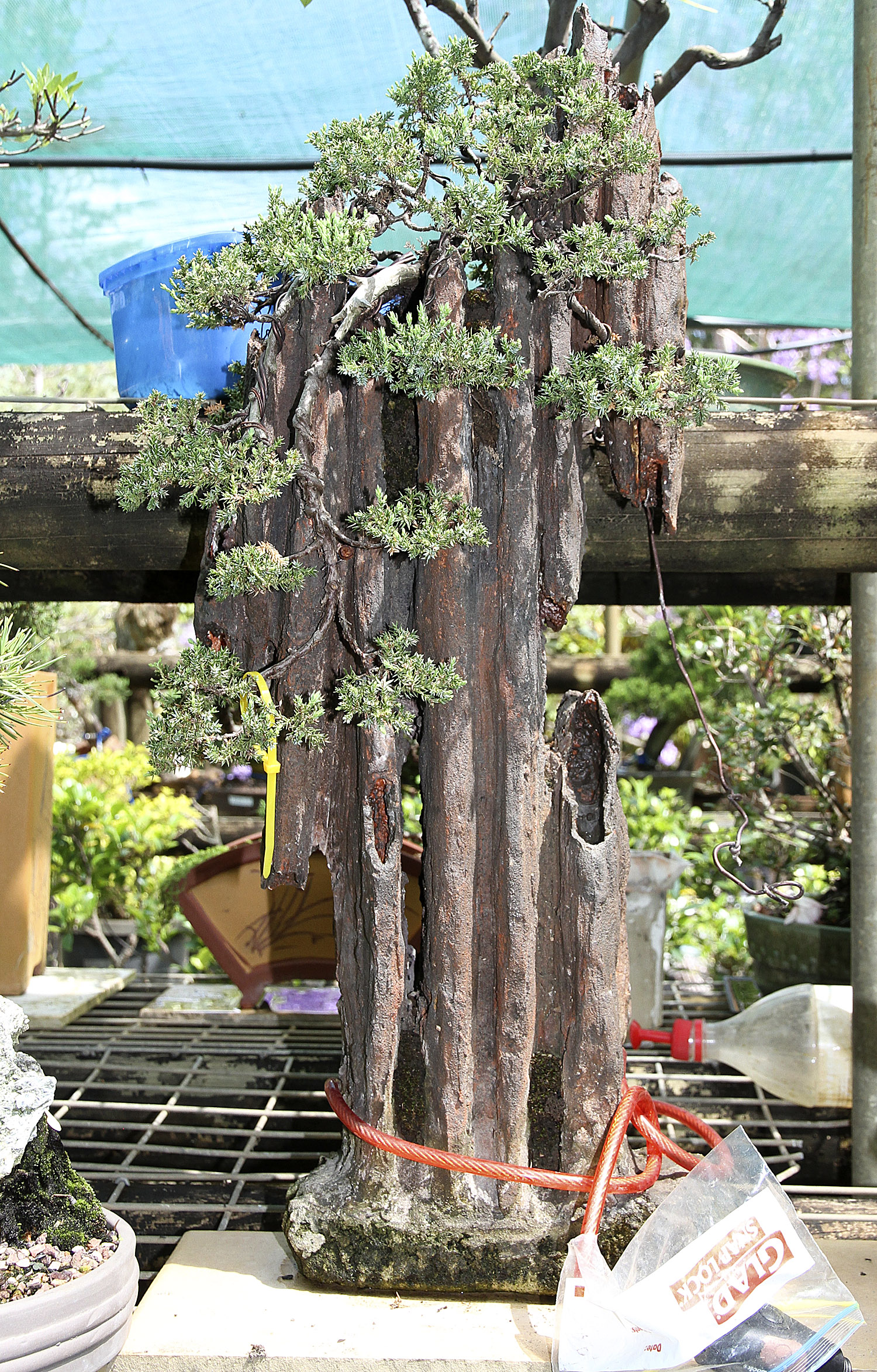
The private study group was organized by Carole Waller who established and recently closed her Bonsai World Nursery. Her private collection was beautiful, and as everyone, had many bonsai in training and some just being allowed to grow to see how they developed. It was most interesting for me to see that she had large reservoirs of buried water tanks for watering her bonsai. Many have this situation in aired and dry areas. This creative lady has created some beautiful artificial rocks for bonsai planted in the clinging-to-a-rock style. Several of the bonsai were also planted in interesting pieces of wood.

Image

Image

Image

Image

Image

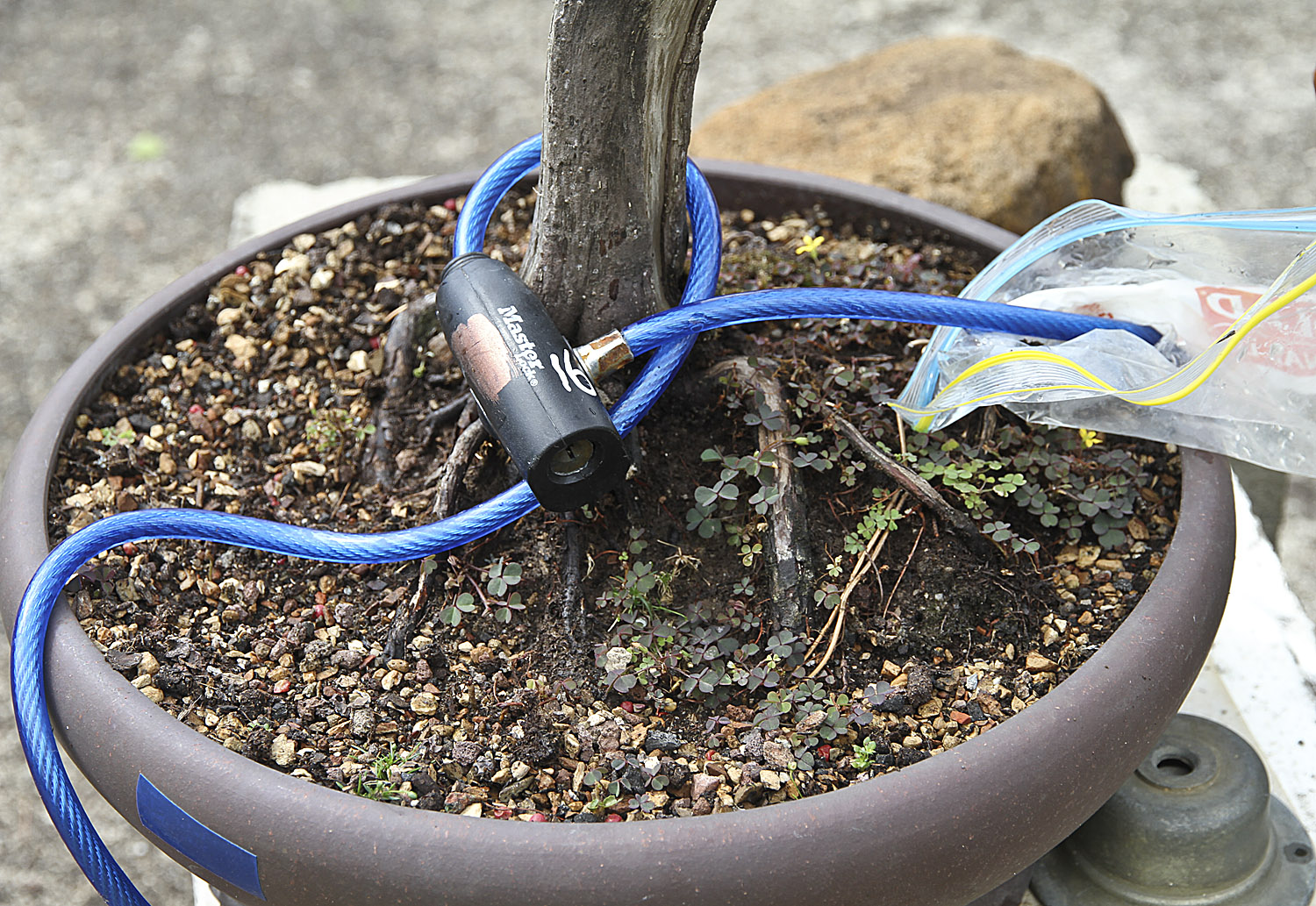
Theft is a problem with bonsai growers around the world. Carole has minimized the problem by wiring each bonsai to the stand using a bicycle or motorcycle cable. Each cable has its own individual keyed lock, which must be protected from water by wrapping in a plastic bag. Yes, individual keys are necessary for each bonsai which can be a problem if the identification numbers wash off.

Image

Image

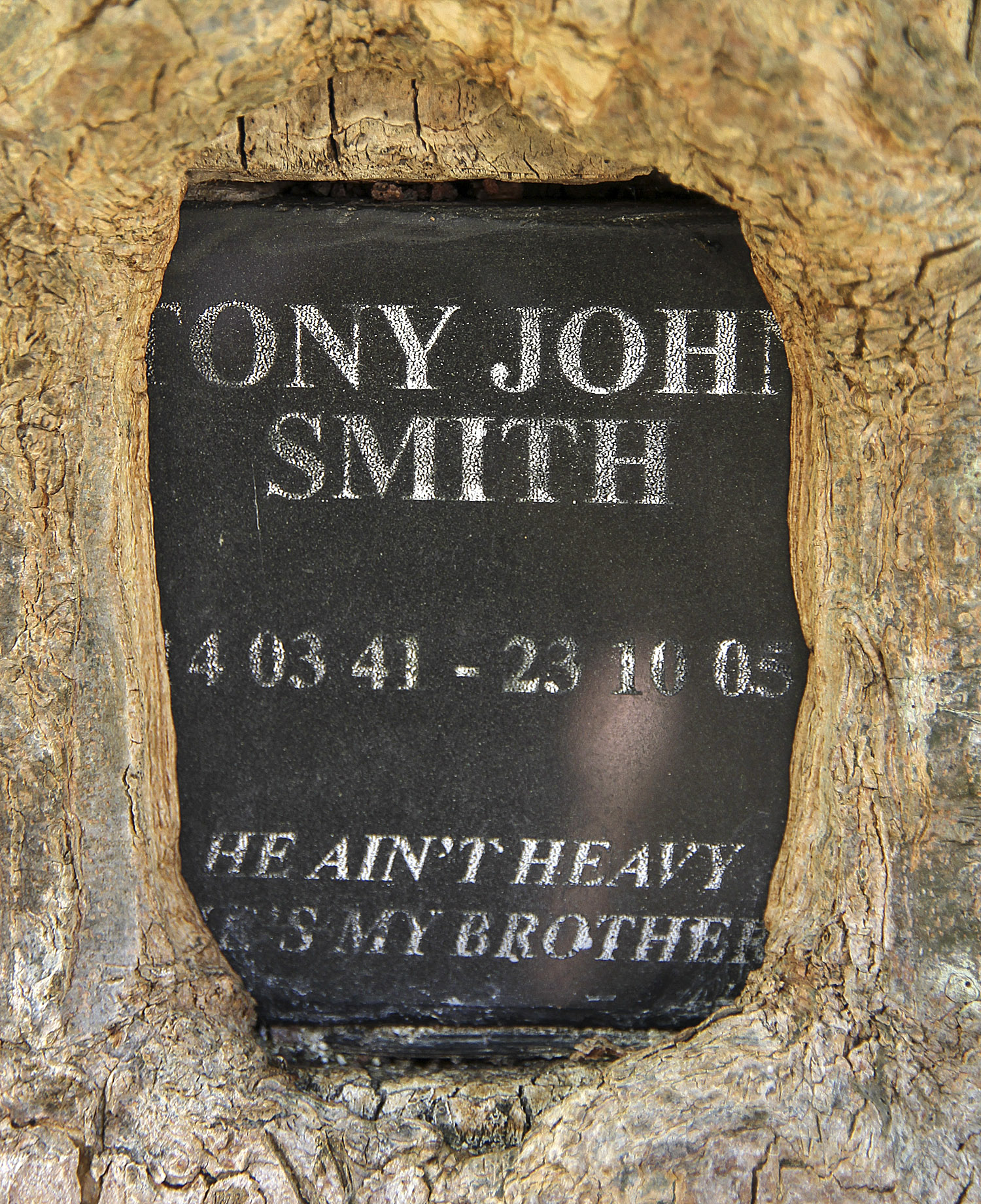
She had a “memorial bonsai” Trident maple for her brother who passed away a few years prior. Carole took a large heavy trunk Trident maple and bored a good size hole in the front of the trunk. Then she buried his ashes in a container which as imbedded into the trunk.

Bonsai are to be enjoyed and appreciated and that’s the most important reason to be in this hobby. Many people simply want to enjoy the form they create with the plant material, others want to “show off” prize specimens or compete with others. I find it rare that some people are sensitive to life, the plant material, and while respecting life, want to memorialize close friends and family. I’m certain Carole would not want to publically display her Trident maple in a club show, but that was not the reason for creating this bonsai. She wanted to remember her brother in a special private way. I’m sure others have similar trees. One of my friends wants to be cremated and have his ashes mixed in with organic fertilizer cakes. Others want their ashes spread on the surface of their bonsai when they pass. But, personally, that’s not an option for me because as a Greek Orthodox Christian we are not allowed to be cremated. But, I would not object to having a rare dwarf Japanese maple planted near my grave as a small garden tree.

Image

A small mattress placed on the floor of a garden wagon to protect bonsai containers, and a bottle of ice tea

Image

Image

Goshu Bonsai

Image

Image

Image

Long time friends, Lindsay and Glenis Bebb were my next hosts in their comfortable home. I have never taken a shower before and looked out the window to enjoy a beautiful bonsai garden view. Recently retired from a successful bonsai nursery in Brisbane they are now concentrating on their own personal bonsai collection, as well as limited teaching. They are also, more importantly, giving back to the bonsai world by becoming leaders in world wide bonsai organizations sharing their many decades of bonsai experiences so others can improve the art as well as improve the bonsai community.

Image

Image

Lindsay Bebb will be one of the three international judges at the 4th U.S. National Bonsai Exhibition on September 13-14, 2014 in Rochester, New York. Additionally, he will be joined by his wife Glenis, another skilled bonsai artist, in presenting an educational lecture demonstration at the highest level exhibition in the United States. In addition to showcasing some of the finest bonsai in the country for others to enjoy this exhibition is important for many bonsai businesses who depend on exhibitors for handmade containers, display tables, supplies as well as instruction for displaying their finest trees in this world class event.

Image

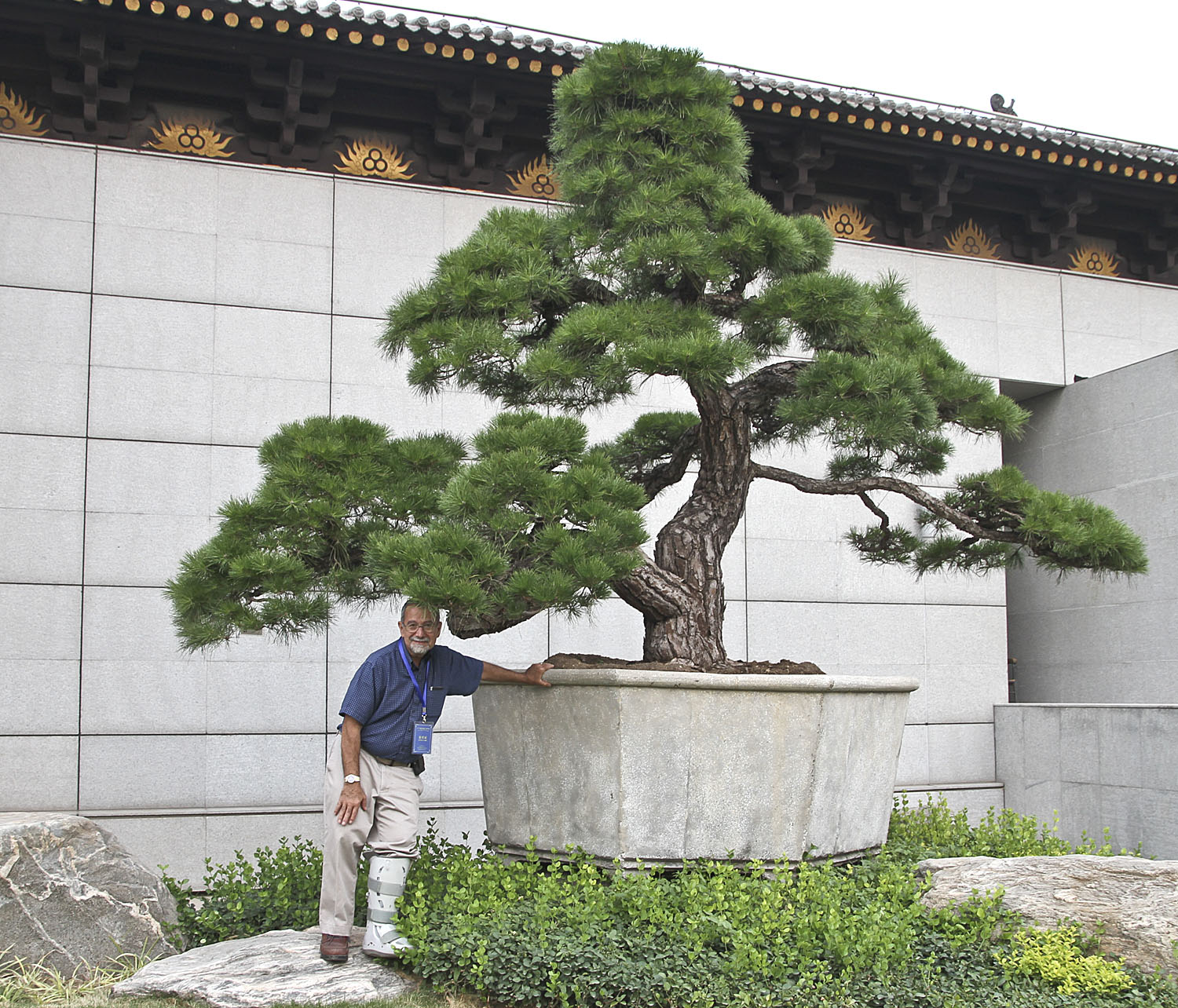
Many of the bonsai in their garden are on the large size, but not as huge as those I recently studied in China. But they do have one large Bougainvillea which is over six feet tall in a six foot wide container which has never been moved since placed in their garden seven years ago. Photos do not do justice to the beauty of many bonsai, and this specimen is one of those. In China I had my photo taken with many trees only to illustrate their size (plus I’m short and make the trees appear larger,) in spite of not being in the habit of putting my face in bonsai photos for publicity.

Image

Image

Image

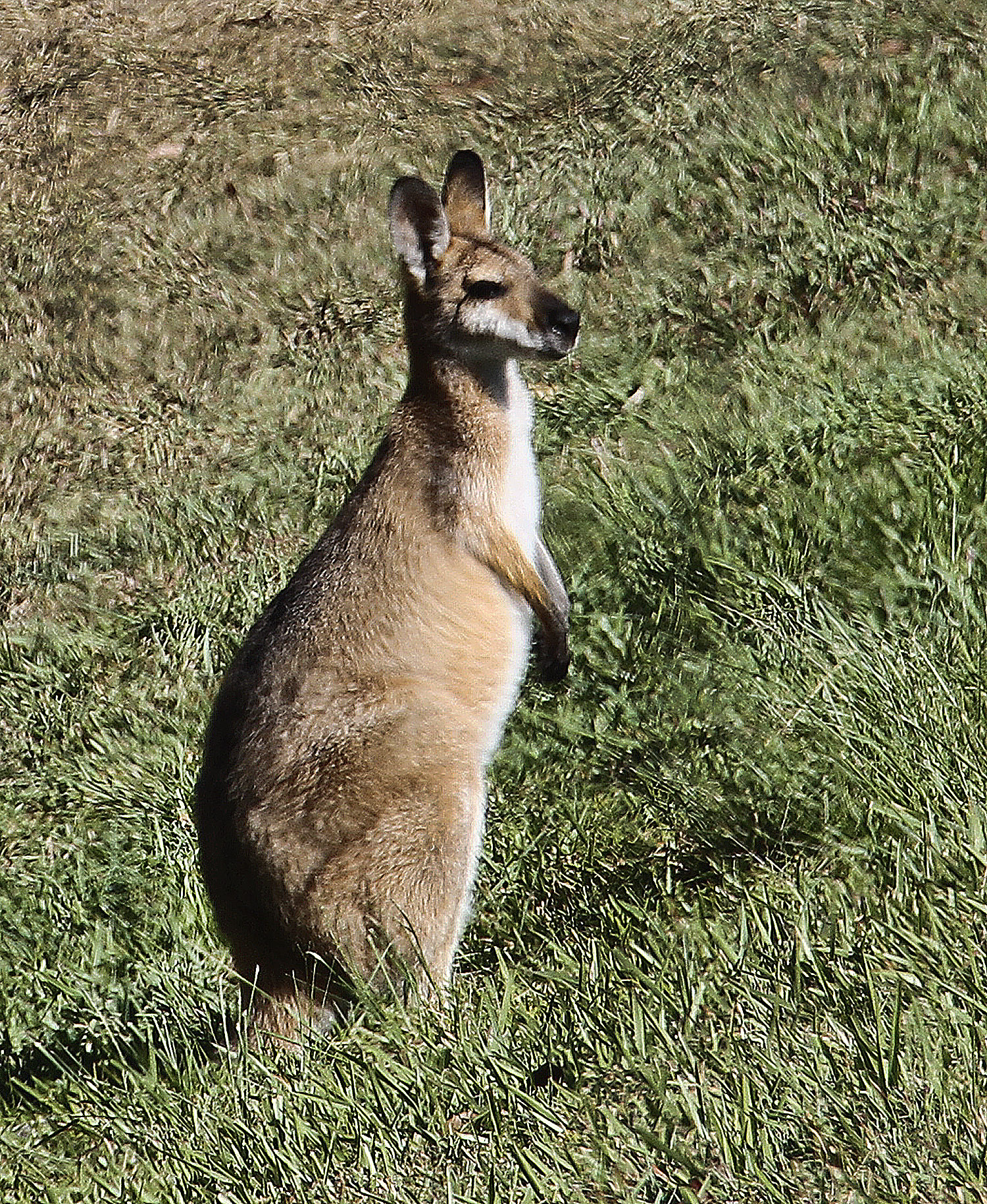
My teaching in the Brisbane area, including the Sunshine Coast and Gold Coast has been rewarding and enjoyable for me as well as helping me to understand sub-tropical plant material. All of the club activities were well organized, meetings conducted efficiently and on time with friendly people. My long time hosts were hospitable and me feel welcome to their country. Lindsay and Glenis took me to see some kangaroos, so it looks like I’ll be returning to the land down under in another two years time.

Image

My teaching trip throughout Australia is not over yet, I’m just flying away to another city to share my love, passion and techniques of classical bonsai art with others.

Image

BILL JUMPS A BROAD- Down Under Part 2

Image

My next visit was to the Gold Coast Tweeds Bonsai Club in the Gold Coast of Australia where the next BCI and Australian Associated Bonsai Clubs will have their joint convention next August. We began with a workshop for ten members. A wide variety of species were brought from a collected African olive, Seiju elm, Trident maple, well trained Japanese black and red pines and, of course Dwarf Japanese garden junipers.

Image

Image

Image

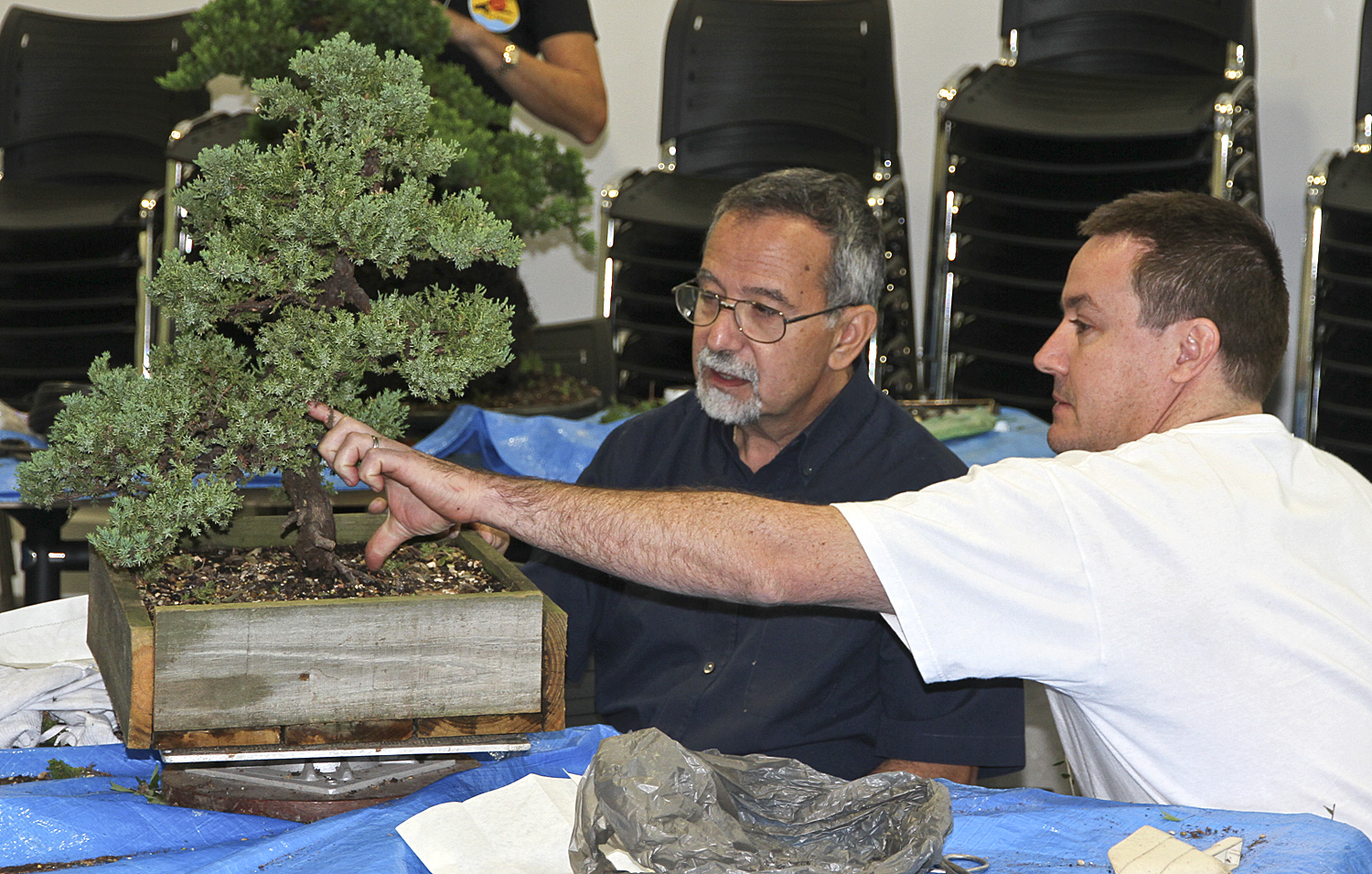
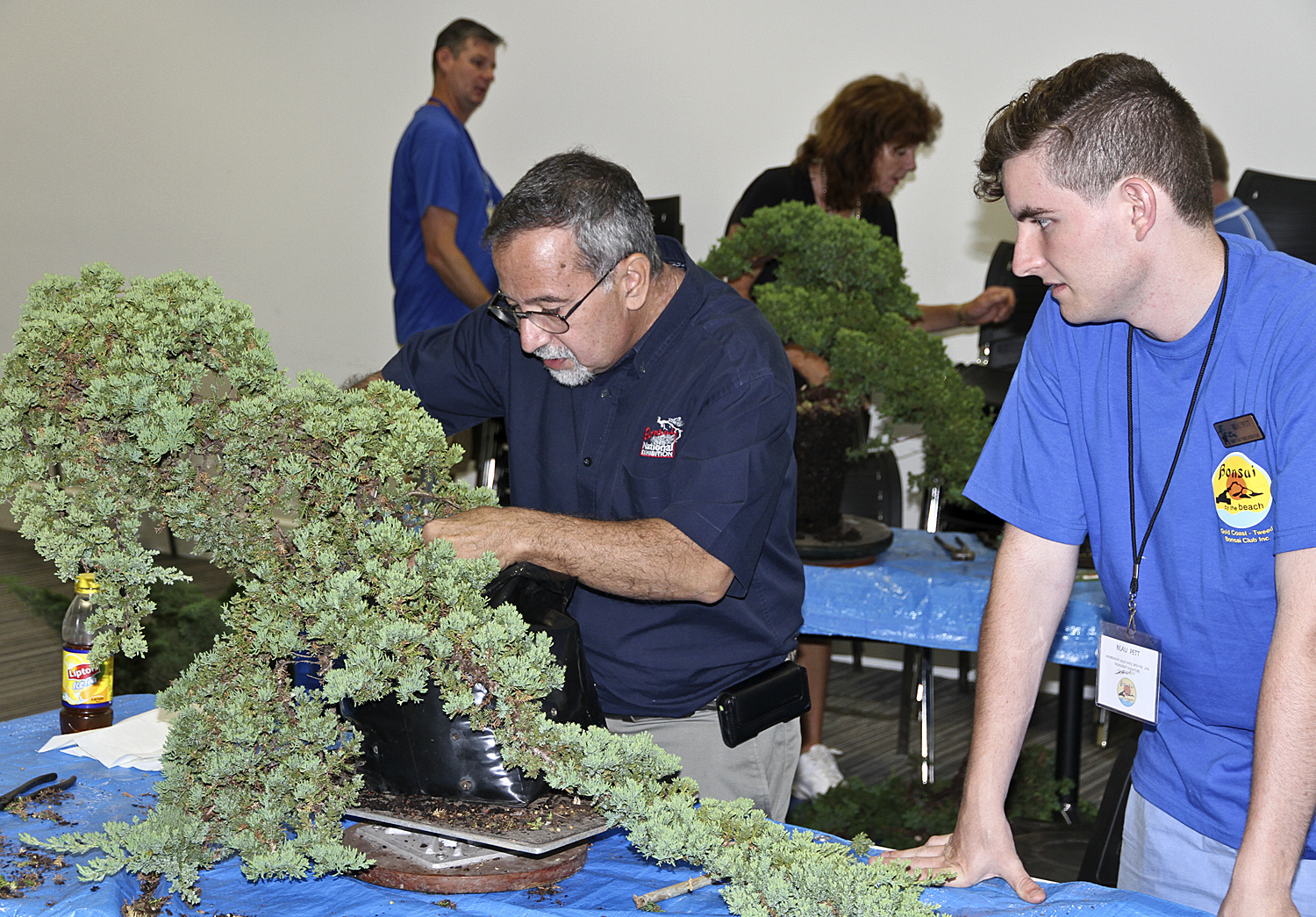
Since there were many observers, I like to set up a table in the front of the room where I worked. Each student, one by one, brought their workshop bonsai and we discussed the source, previous training, health, design and what the student wanted to do. Then I presented my suggestions for improvement and usually made a few basic cuts to start the training process. Then each student went back to their individual tables and worked on their bonsai. After all ten trees were discussed I went around and helped each student. Finally, just before the end of the session everyone took their seats and the plants were brought up front again for comments and to show everyone the students’ fine work.

Image

I like this method of conducting workshops because the observers, as well as each student can see all the plants brought in and listened and participated in the initial evaluation. Even though the plant discussed did not belong to a student, they usually learn something from the others.

Image

Image

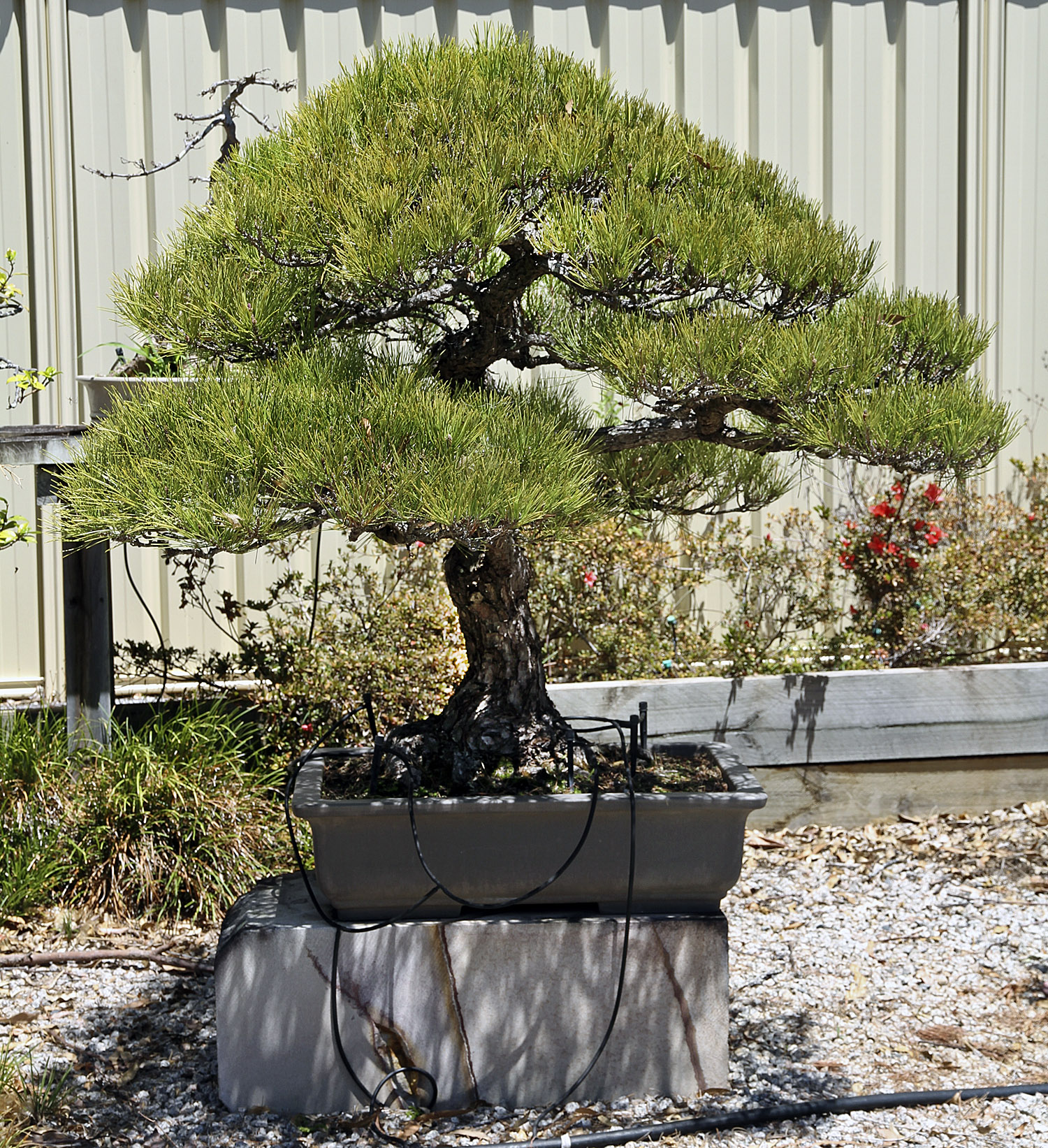
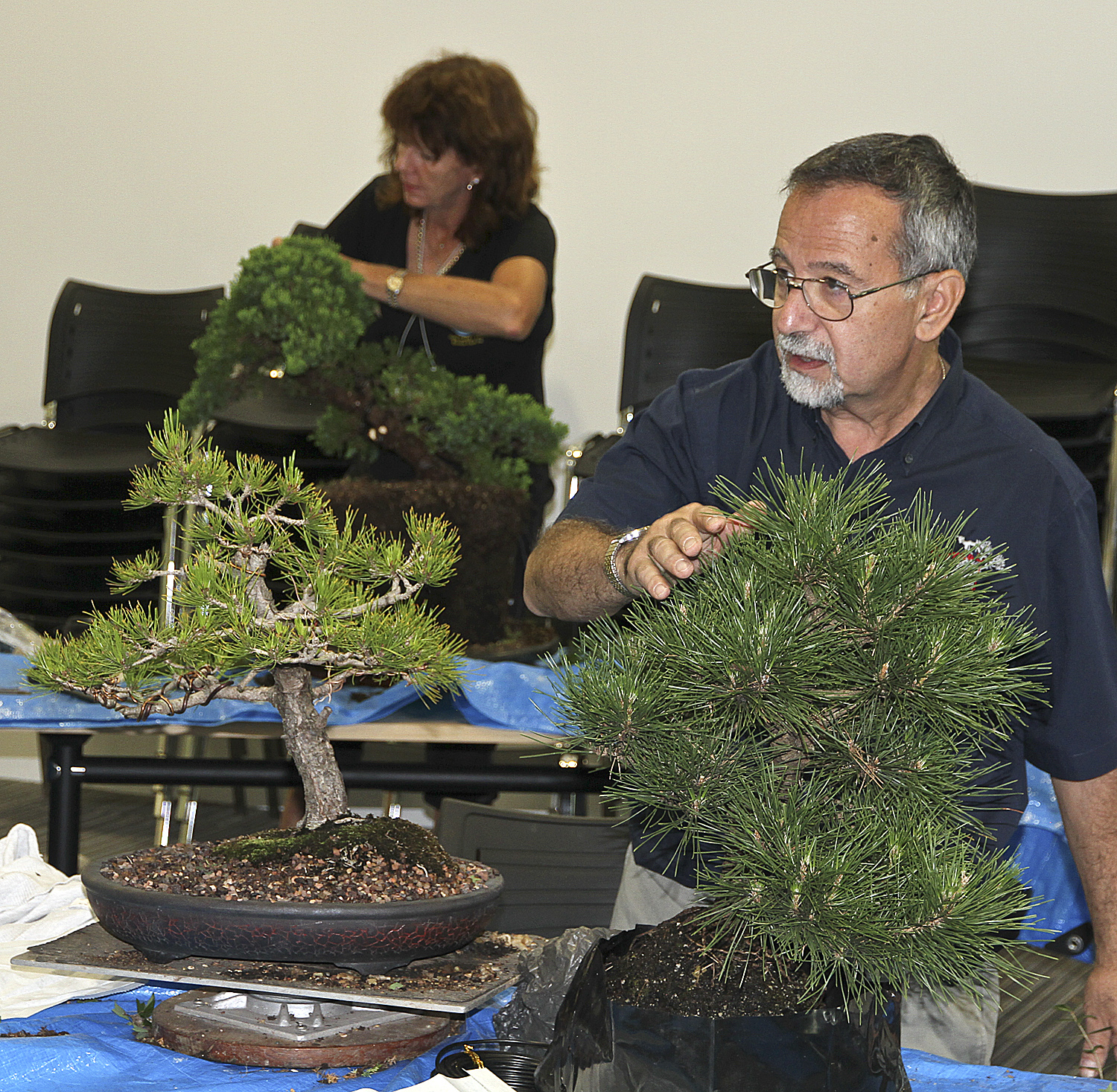
I had an excellent selection of demonstration trees, perhaps one of the best ever in my career. There was an excellent Japanese black pine which had been trained for perhaps twenty years which interested me and I felt could improve and provide information and techniques which students could use on their own bonsai in the future. When I saw the tree in the morning, before the workshop began, I immediately organized my Powerpoinot program on Japanese Black Pine Bonsai.” A slight refinement of the program was quickly made to customize the information for the club to provide images which would illustrate the background, sources, training, styles as well as design of pine bonsai.

Image

Image

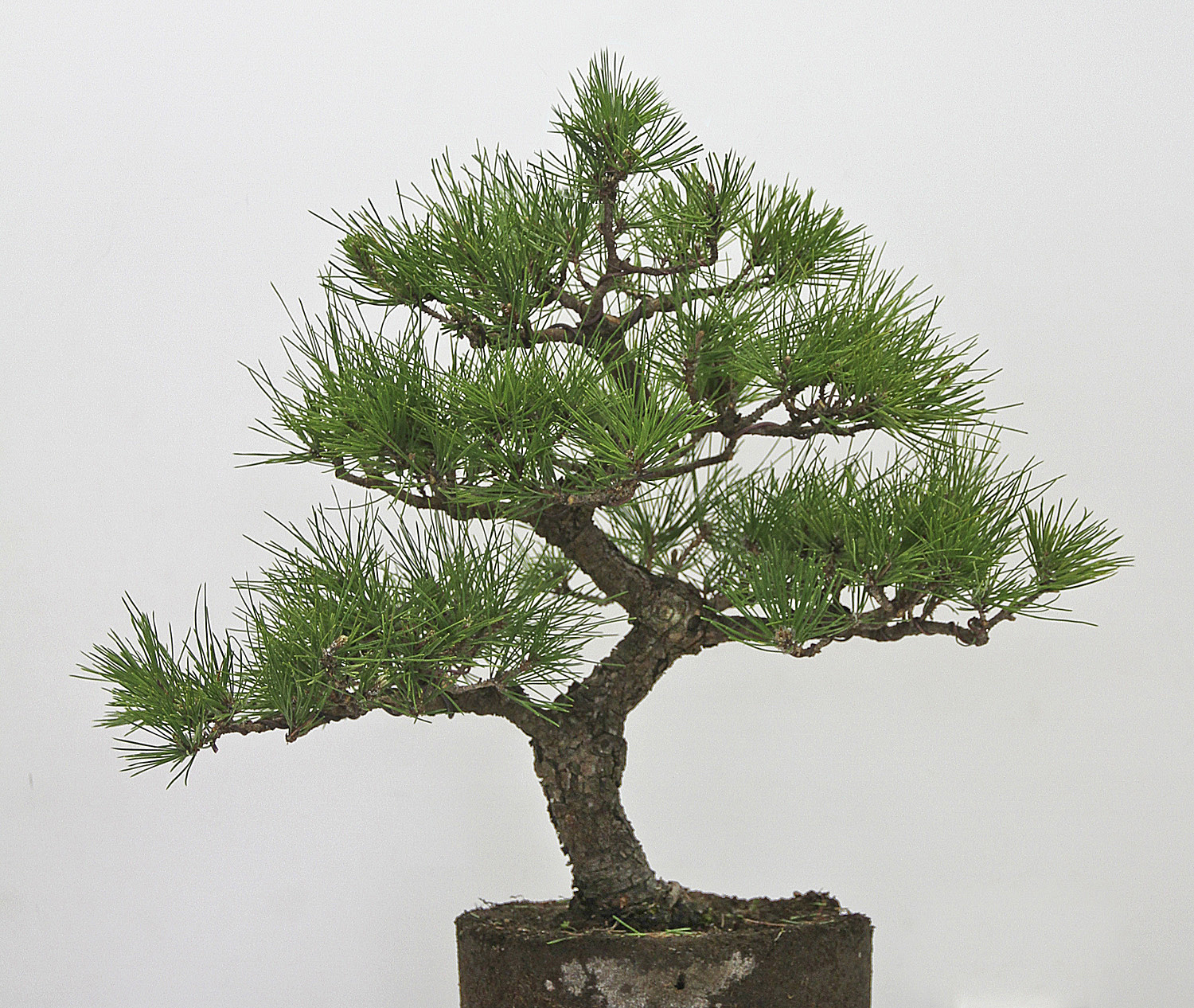
The lecture demonstration followed and many interesting questions were answered so everyone could learn. The tree did not need much work, but needed some help in the crown because a few heavy branches were vigorously growing. In fact, several of the top branches had female pine cones developing. Information was presented throughout the presentation as I thinned out the needles, trimmed a few branches and wired. There was not sufficient time to completely wire the bonsai, however a few branches were finished to show how to correctly set the branches and provide a guide and perhaps, inspiration for the owner of the bonsai.

BILL JUMPS A BROAD– Down Under

Image

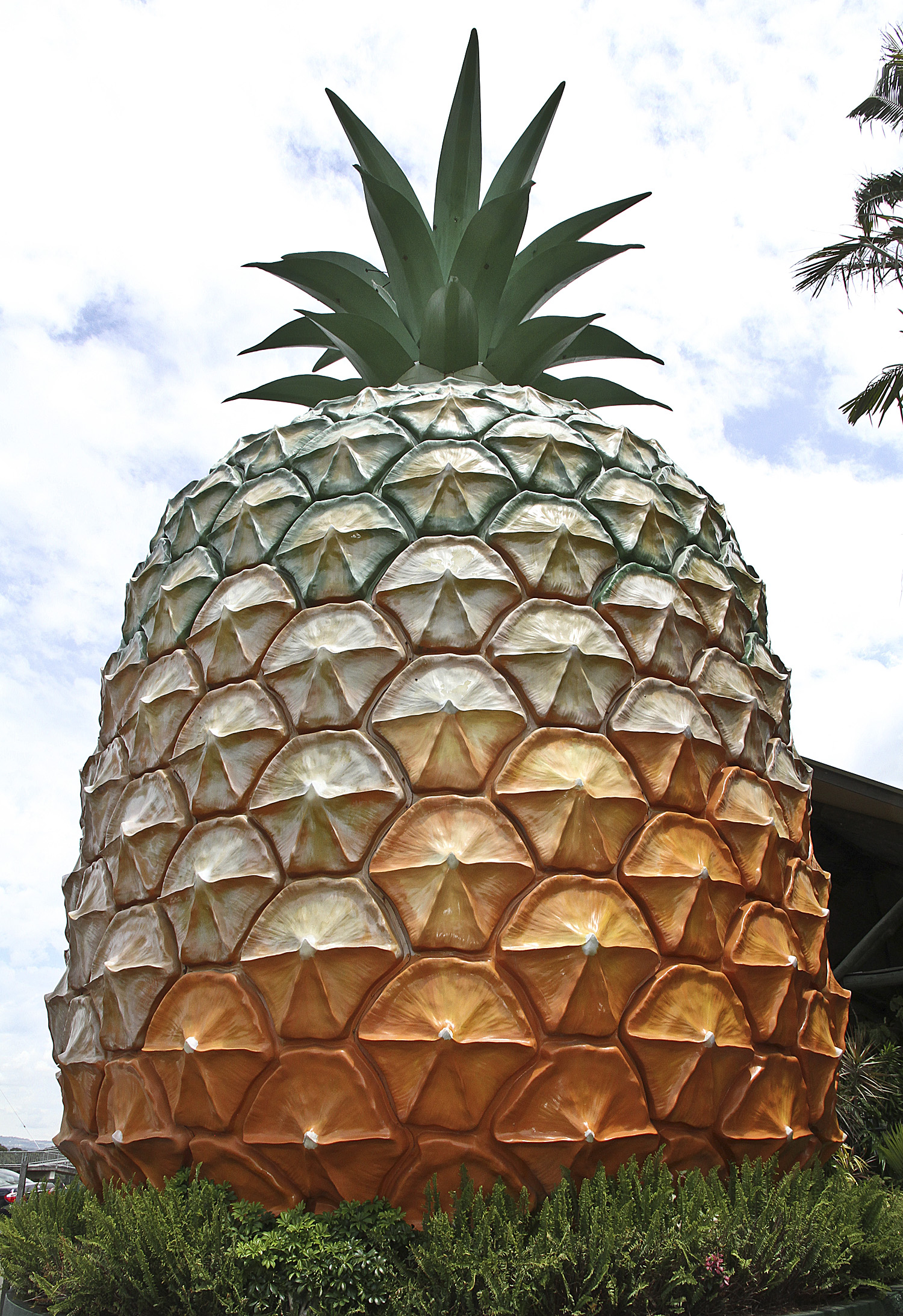
This is my fifth trip to Australia to teach classical bonsai art. I arrived on Thursday and my friends and hosts in the Brisbane area, Ian and Shelia Glew picked me up and took me to their new beautiful home. This time Ian took me around before my formal programs to show me the local interesting sights. We took a drive into the mountains where we went past the famous Crocodile Hunter’s Australia Zoo.

Image

Giant pineapple landmark near the growing fields

Image

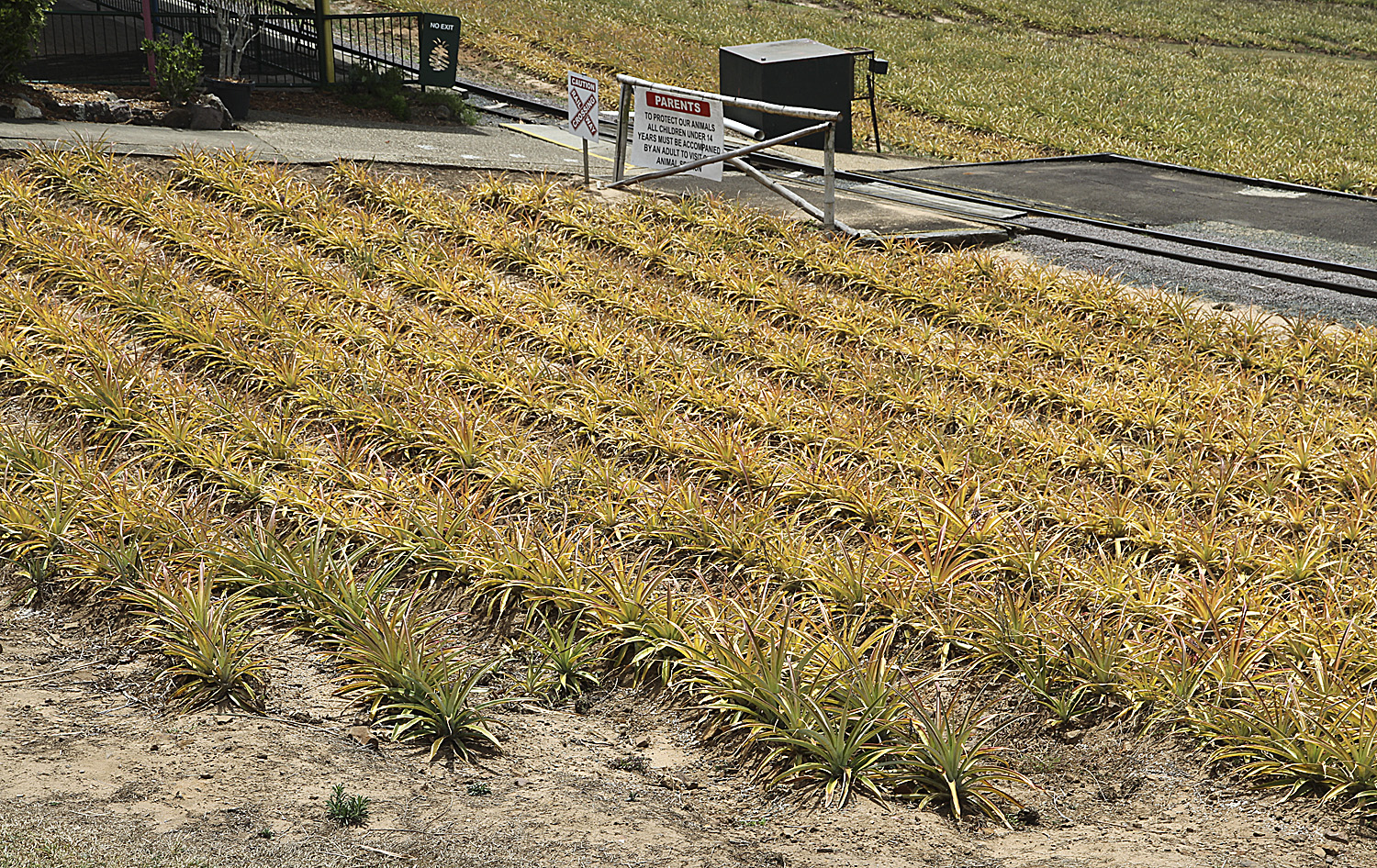
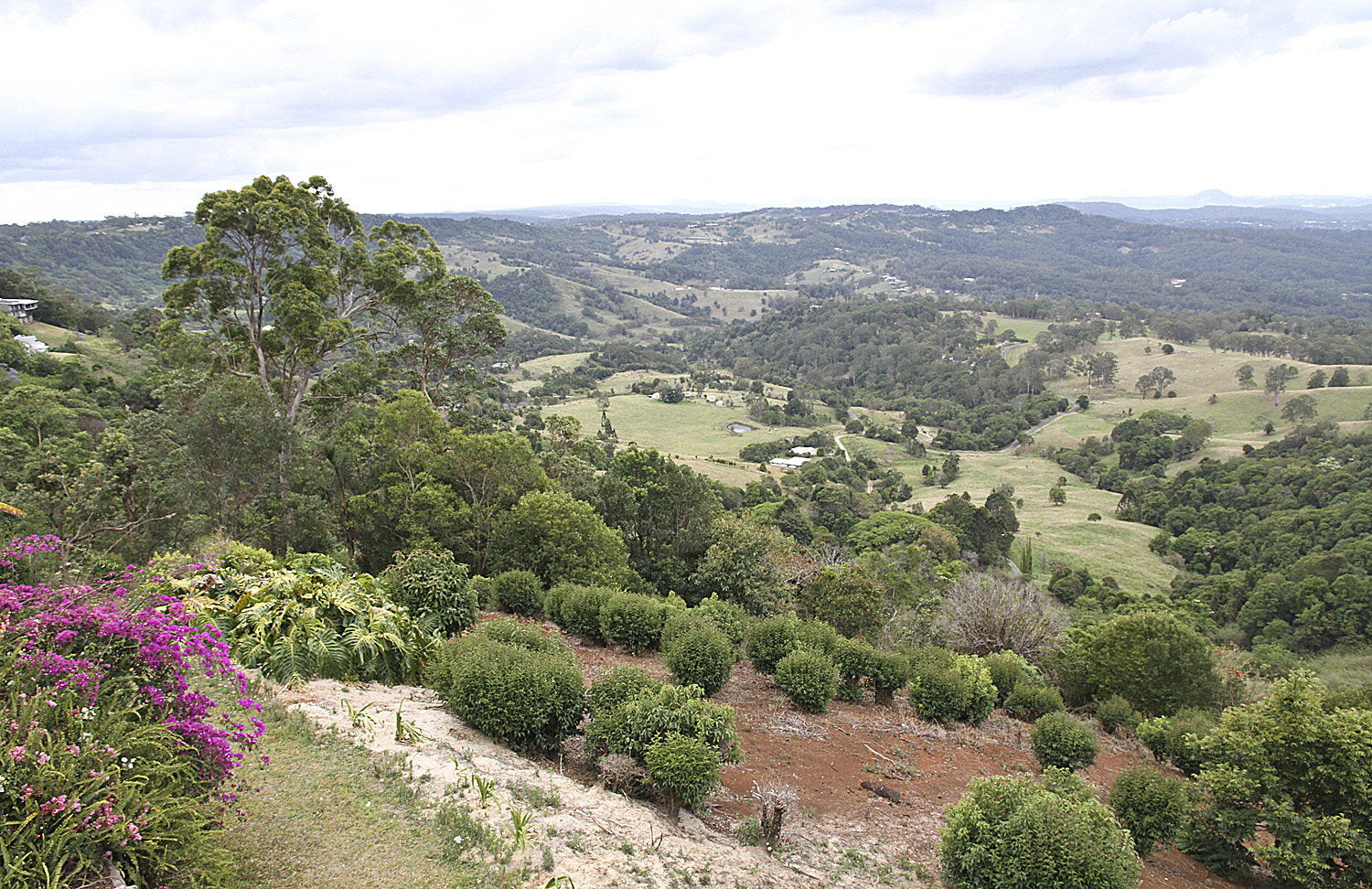
Nearby was a pineapple plantation which was interesting, in spite of no fruit during this time of the year. Magnificent mountain top views of the Pacific Ocean and the rolling hillside reminded me of parts of California. But, most of the landscape was similar to Florida with the sand, palm trees and other sub tropical plant material, mostly unknown to me, but quite interesting.

Image

Image

Image

Ian Glew and Tess Simpson with a Bougainvillea bonsai beginning to blossom

Image

Image

Image

Tiger bark fig

Image

Bald cypress grown from seed

Image

Image

We took a visit to Northside Bonsai an excellent and clean bonsai nursery run by Tess and Shelby Simpson with a wide variety of plants and pots too. I’ve visited the nursery before and selected the great Seiju elms used for the 2009 convention where they were used for my demonstration. Their nursery continues to shine and has loads of good bonsai for bonsai enthusiasts as well as a large assortment of trees for the general public to start them off on the wonderful world of bonsai. One of their large bougainvilleas, small for Chinese standards, was just beginning to come in blossom. Tess showed me some interesting new plants she is propagating for future introductions.

Image

Outdoor teaching area for workshops

ImageImage

Image

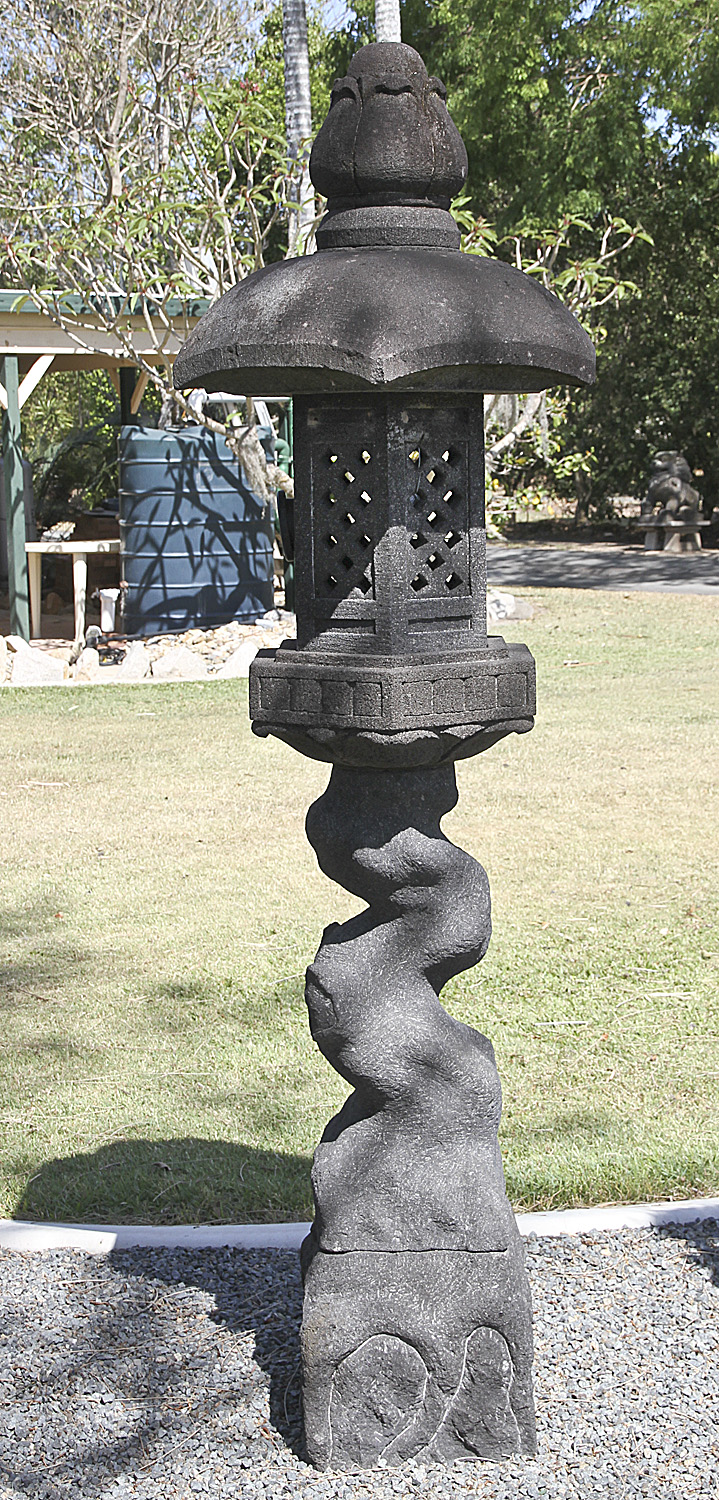
Interesting stone lantern base

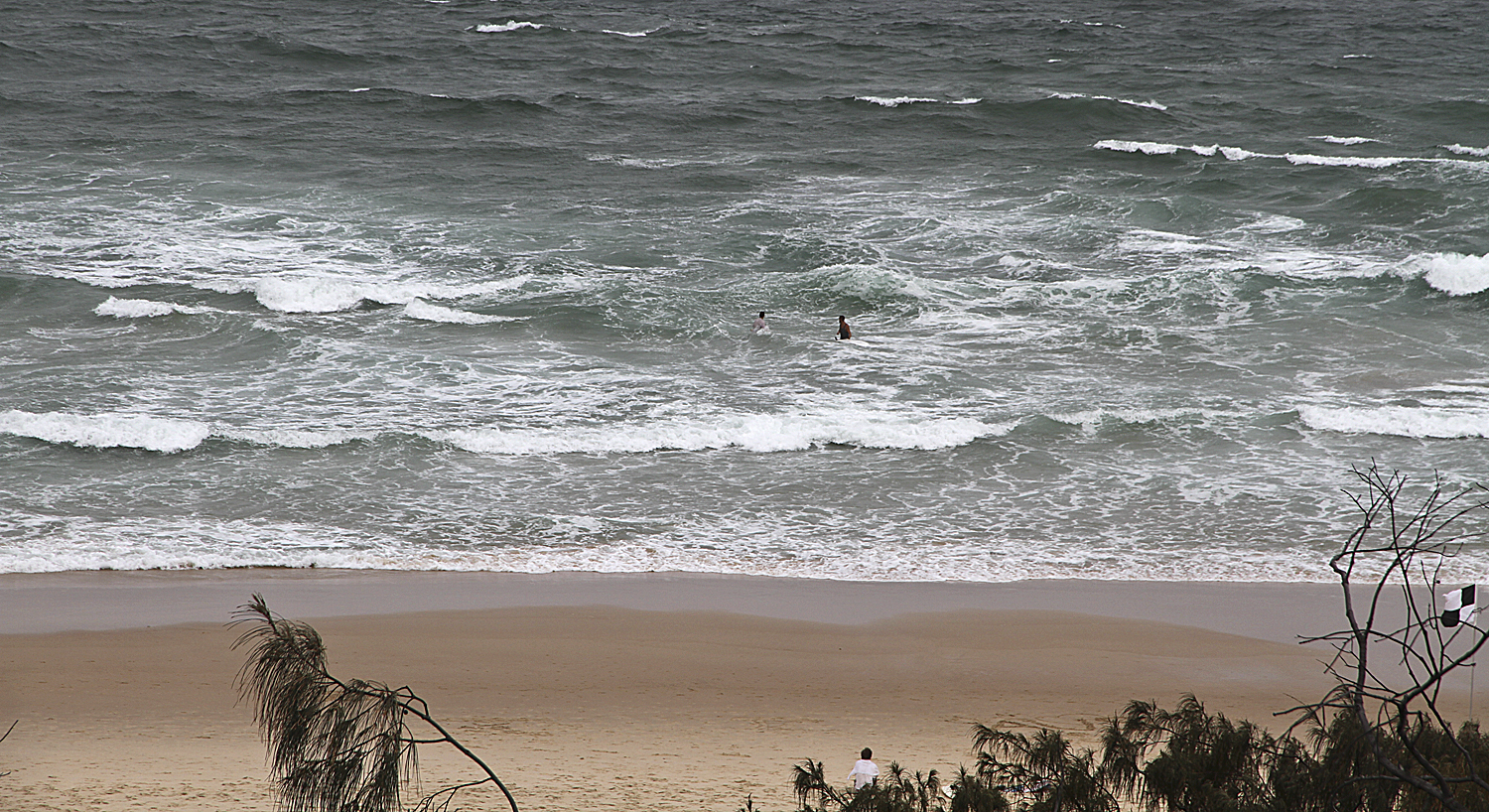
Ian took me to the lookout where the whales were spotted a few days ago migrating to the southern areas where the water is cooler for the hot summer. Next to that area, but around small-secluded woods was the famous nude beach of the Australian Sun Coast… Too bad my cast and stroller do not like sandy beaches or rocky areas.

Image

Image

Image

Saturday was spent with the Sunshine Coast Bonsai Society beginning with an open workshop with about ten students. The plant material was quite good and I was particularly impressed with the size of a Lavender Star Flower or Grewia which had quite a large, but curved trunk. Another old Japanese black pine had been trained for over thirty years was unwired and trimmed and will be rewired this summer. It had already been candle pruned for the year and the second crop of smaller needles were opening.

Image

Bald cypress forest four years old from pencil size cuttings

Image

Bald cypress

Image

Queensland small leaf fig

Image

Benjamin fig from seed

Image

Japanese black pine

Image

Dwarf fig

Image

Juniper

When I arrived at the venue the society had a small display of fine bonsai for me to enjoy, and I really did. I was particularly impressed with the work of Shannon Young one of the younger members of the society. He showed me a small leaf fig which I saw at the 2009 Australian Associated Bonsai Club convention where I taught and presented him with an award of encouragement for the same tree. I guess it worked, because the tree has developed quite nicely. He also had a Benjamin fig trained in a slanting style shohin bonsai from SEED which was impressive.

Although Bald cypress is not native to Australia is it commonly used for bonsai, and they must really like this climate. I saw old looking trees, with rough bark and well developed branching where were under ten years old, from seed! Quite impressive! Shannon had a large forest set up in a corner display which was a two man bonsai. The trunks were magnificent as was the group planting composition. I found it difficult to believe he started the forest only four years ago from pencil size cuttings. He had another larger thicker specimen with quite a bit of dead wood as well.

However during the workshop there was a large Trident maple which was recently drastically pruned and had long new shoots, just right for initial wiring. So, before my demonstration after lunch I showed a section of my Maple Bonsai Program on how to drastically prune and subsequent care and training. Having my laptop with me containing over one hundred PowerPoint programs comes in handy when trying to present a comprehensive educational seminar. Its easy to quickly pull out an appropriate program to illustrate an important point.

Image

Selecting and explaining the Trident maples for the demonstration

Image

Basic composition

Image

Adding more trees

Image

Ian Glew assisting

Image

Crystal bowls used for cleaning moss, a high class organization. I should have brought my gold plated tools, they would have been appropriate

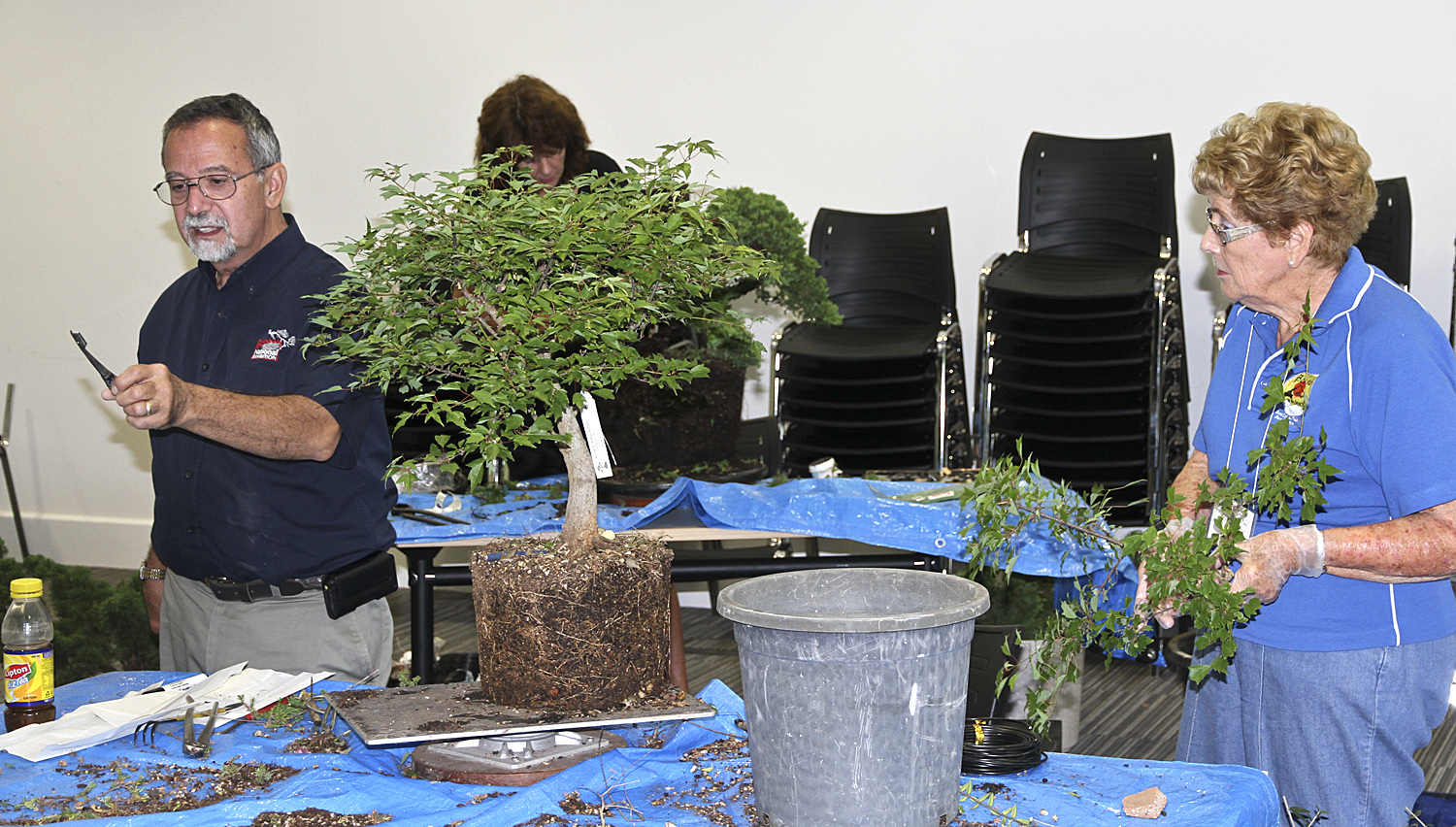
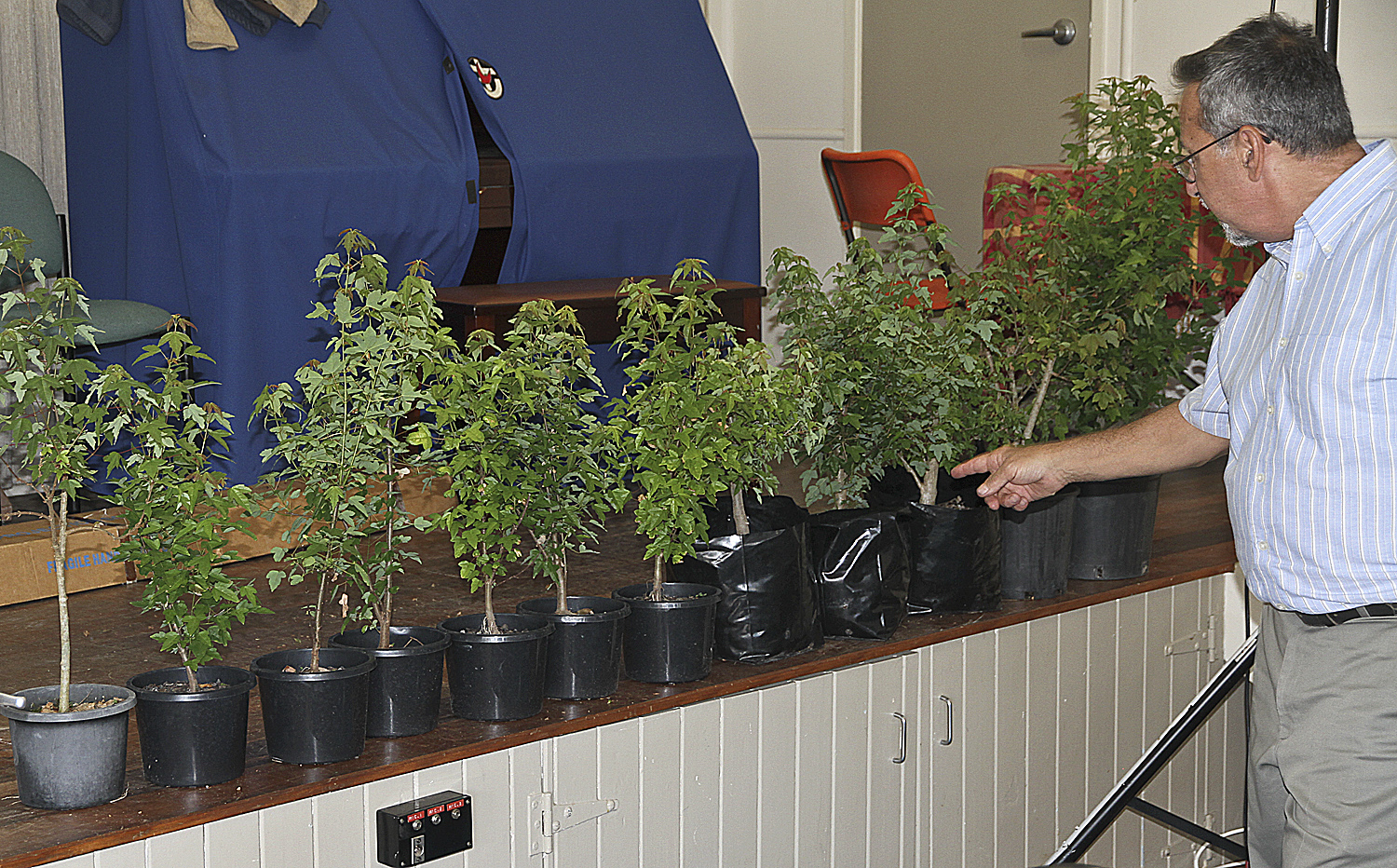
After the workshop I presented my Power point presentation on Forest Bonsai which was followed by a demonstration of creating a Trident maple forest. The society had selected an excellent assortment of trees to select from. One had a strange trunk with two heavy branches opposite each other so it was not used, as was another tree with excellent roots and branching, which I considered too good for a forest. Everything was prepared ahead of time including a beautiful new container hand made by the president Tony. It was exactly my design, I wonder how he knew? The unglazed oval pot had short wide flat feet with an outer lip. Tony has some South African relatives including a great great grandfather who first discovered and introduced the Gerbera daisies.

Image

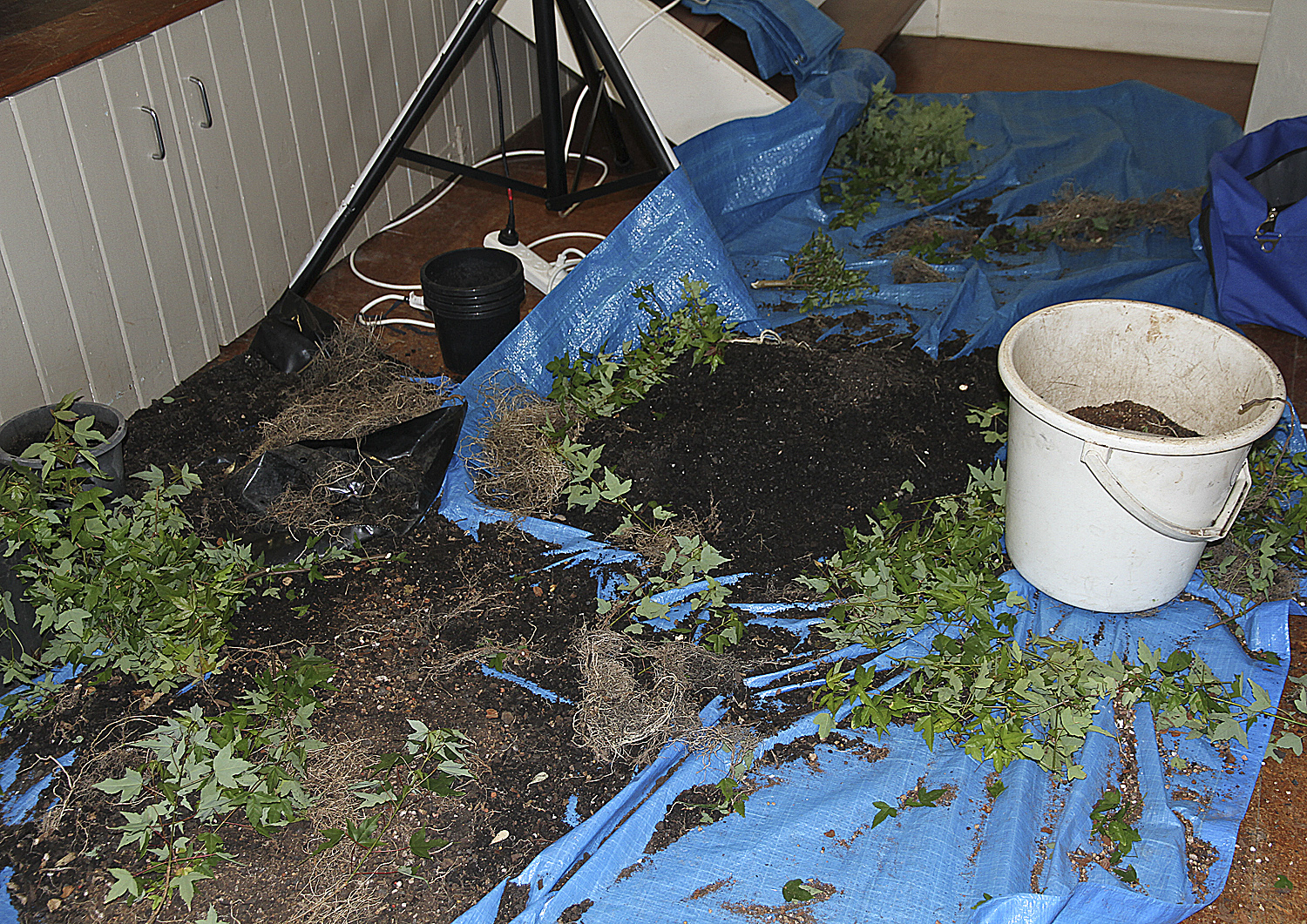
Messy floor after cleaning roots, but the forest came out great

Ian Glew presents bonsai demonstrations throughout Australia and is well known. I’ve known him for years and he always helps me with my demonstrations when he is around. He assisted me in China in 2006 and in Puerto Rico as well as in the United States and Australia. He knows how I work and does great wiring too, but there was no wiring today. After discussing the assortment of trees he began to bare root them. We could not find a suitable trash container or box, but did have a couple of blue tarps so we simply opened them up and worked on them, dropping the excess soil and branches on the floor. Now, I’ve never worked like this before, nor made such a mess, anywhere, but I went along and got through the uncomfortable situation. As trees were added to the composition the positioning was explained. After planting the trees, I never counted the number as it was not important because more than eight trunks were used, soil was added and moss was applied to the surface. The society had great moss and they even “borrowed” some additional moss from the bonsai on display. After mussing came the interesting part where each tree was trimmed to height then thinned out to allow light and air to reach the inner branching. My design was then explained where asymmetrical balance is important. The copies of my newest book “Classical Bonsai Art- A half Century of Bonsai Study”  quickly sold out and Ian began to take orders for shipping.

Image

Completed demonstration Trident maple forest

Tomorrow I move on to the Gold Coast Bonsai Society then on to Canberra before ending up in Perth next week. I have not yet seen a kangaroo, but hope to. In Japan there is a saying that if you happen to view Mt. Fuji you will return. I’ve applied that saying to kangaroos in Australia and every time I’ve visited, I’ve had the good fortune to see a kangaroo and then return.

2014 SATSUKI BONSAI TOUR

Image

2014 SATSUKI BONSAI TOUR

May 25-June 1, 2014

Satsuki azaleas are becoming more popular because of their colorful long lasting blossoms, easy growing and adaptability for bonsai training. Although many grow satsuki for their flowers, the shape and form are important for bonsai design.

Image

Image

The word satsuki means “fifth month” in the Japanese lunar calendar which denotes the season when the azaleas flower. And, some cultivars are showy for over one month. Throughout Japan there are many satsuki festivals, however the Kanuma Satsuki Festvial is among the largest and best. The satsuki flower is the symbol for the city of Kanuma, nort of Tokyo where the famous kanuma soil is mined and processed. Ideally suited for satsuki cultivation numerous nurseries have established themselves in the region because of the kanuma soil availability and climate.

Image

The entire city of Kanuma is aglow with colorful satsuki blossoms, from specimens being trained in the fields and gardens to established masterpiece bonsai specimens. The Satsuki Kaboku Center is the hub for the Kanuma Satsuki Festival. Established some 40 years ago it features satsuki, flowers, trees, landscaping and gardening material. They even offer an export service as well.

Image

Ueno Park in Tokyo is the home of the famous annual Kokufu Bonsai Exhibition in February. However, in late May Ueno Park is the site for the Nippon Satsuki Exhibition, held in interesting outdoor display areas surrounding the lotus pond. Prize satsuki of new cultivars as well as masterpiece specimens can be seen and studied.

Kunio Kobayashi’s Shunka-en Bonsai Museum in Tokyo will also be visited and has over ten formal display alcoves. Well known for his masterpiece satsuki bonsai, they will be featured displays among other superb masterpiece bonsai.

Image

For over ten years Kora Dalager, a California bonsai teacher and travel agent, and I have been leading two value priced bonsai tours to Japan. In addition to hundreds of people from the United States and Canada, members of our Japan bonsai tours have joined from Australia, England, Italy, Puerto Rico, South Africa, Switzerland, Mexico and Russia. The tours are limited in number so we can easily travel in Japan, see bonsai up close and provide individual attention to our members.

This year, for the first time we are leading a special tour to visit the Kanuma Satsuki Festival and Nippon Satsuki Exhibition. In addition to visiting the major bonsai exhibitions we have private visits to many of the world’s leading bonsai artists and gardens, many of which are not open to the public.

For additional information on the Winter 2014 Japan International Bonsai Exploration Tour which will visit both parts of the Kokufu Bonsai Exhibition and Suiseki of Japan.

For additional information on this exciting Satsuki Bonsai Tour check out our website at:

http://www.internationalbonsai.com/page/1449251

Or simply e-mail Kora or me at:

Kora@ca.astound.net

WNV@internationalbonsai.com

Image

Image

Image

ANNOUNCING THE 2O14 88TH KOKUFU TEN BONSAI EXHIBITION

The 2014 88th KOKUFU BONSAI EXHIBITION

Tokyo Metropolitan Art Gallery, Ueno Park, Tokyo, Japan

 Part 1: February 4-7, 2014

Part 2: February 9-12, 2014

Image

Image

Image

The Kokufu Bonsai Exhibition, now sponsored by the Nippon Bonsai Association, is the premier bonsai exhibition in Japan, and the world. Hobbyists try quite hard, often for years to have their trees accepted for this judged event where only bonsai of the highest quality are displayed eligible for the coveted Kokufu Sho Prizes.

Image

Japanese back pine

Image

Japanese maple

Image

Camellia, Kokufu sho Prize

Image

Sargent juniper, displayed by American Doug Paul

An annual book is published after the exhibition featuring every bonsai in the show which make for excellent study of form, species and more importantly the current trends of the Japanese bonsai world.

ImageImage

No. 1 Kokufu Bonsai Exhibition, March 1934

Image

No. 1 Kokufu Bonsai Exhibition, March 1934

The first Kokufu Bonsai Exhibition was held in March 1934 sponsored by the private Kokufu Bonsai Society, headed up by Norio Kobayashi (a prolific bonsai promoter, author and publisher of over 500 issues of Bonsai magazine) and Count Yorinaga Matsudaira (President of the House of Peers and one of the first shohin bonsai enthusiasts). The semi annual exhibition continued up until 1949 when it became an annual event. When the Nippon Bonsai Association was established in 1965 they took over the sponsorship.

Bonsai in the Kokufu Bonsai Exhibitions are displayed by the owner’s name, not the artist who created them which are usually different people. Professional bonsai artists have the annual Sakufu Bonsai Exhibition, now held annually in December where their new and finest creations are shown and judged. It is common to see the same bonsai in both exhibitions displayed under different names.

For a complete history and information on the Kokufu Bonsai Exhibition see Robert Baron’s excellent website at:

http://phoenixbonsai.com/Days/Kokufuten.html

Beginning with the 60th Kokufu Bonsai Exhibition in 1986 the Nippon Bonsai Association has commemorated every tenth anniversary year by holding the exhibition in two parts. Approximately 250 bonsai are displayed for four days then during a one day break, all the trees are changed. Therefore if one plans their trip to Japan carefully, over 500 trees can be appreciated and studied during three days. But, it takes me much longer to study that great number of bonsai, I must be a slow learner because several days are necessary for me.

During the past two years the Kokufu Bonsai Exhibition was held in a nearby venue because the Tokyo Metropolitan Are Museum was being remodeled to make it handicap accessible. In 2013 the event returned to the museum, however the exhibit area was not quite as large as in the past and slightly fewer bonsai could be displayed. Although 2104 is not a tenth year anniversary year, the Nippon Bonsai Association will be holding their Kokufu Bonsai Exhibition in two parts.

Image

Ueno Green Club sales area for the exhibition

During the same time of the Kokufu Bonsai Exhibition the Nippon Bonsai Growers Cooperative have a large sales area in the Ueno Green Club. Here a three story building is filled with bonsai, pre-bonsai, containers, tools, display tables and anything else related to bonsai and suiseki. Around the building on three sides is an outdoor sales area, also filled with bonsai material. The Ueno Green Club is down the hill from the Metropolitan Art Museum, a short ten minute ride which is free on a continuous scheduled mini-bus provided by the sponsors.

Image

SUISEKI OF JAPAN EXHIBITION

February  9-12, 2014

Tokyo Metropolitan Art Gallery

Image

The Nippon Suiseki Association was established in 1961 by the head priest of the Meiji Shrine in Tokyo, Japan. The organization holds two main yearly exhibitions which are now supported by the Japanese Ministry of Cultural Affairs.

Image

In June 2014 the Nippon Suiseki Association was reorganized with Kunio Kobayashi as Chairman and Seiji Morimae as the Secretary General. In February the organization will be staging an exhibition of over 100 fine-quality Japanese suiseki during the second part of the Kokufu Bonsai Exhibition. Many historic and famous stones, rarely seen outside temples and shrines will be on display including a stone from the Tokugawa Shognate Collection.

Winter 2014 Japan International Bonsai Exploration Tour

February 3-10, 2014

For over ten years Kora Dalager, a California bonsai teacher and travel agent, and I have been leading two value priced bonsai tours to Japan. In addition to hundreds of people from the United States and Canada, members of our Japan bonsai tours have joined from Australia, England, Italy, Puerto Rico, South Africa, Switzerland, Mexico and Russia. The tours are limited in number so we can easily travel in Japan, see bonsai up close and provide individual attention to our members.

Image

In addition to visiting the major bonsai exhibitions we have private visits to many of the world’s leading bonsai artists and gardens, many of which are not open to the public. For additional information on the Winter 2014 Japan International Bonsai Exploration Tour which will visit both parts of the Kokufu Bonsai Exhibition and Suiseki of Japan

Exhibition please check out our website at:

http://www.internationalbonsai.com/page/1449251

Or simply e-mail Kora or me at:

Kora@ca.astound.net

WNV@internationalbonsai.com

Image

Image

Image

2013 DIALOGUE OF THE PENJING WORLD FORUM– Part 4

Image

Image

Mr. Yang Guisheng explained why Chinese penjing are so large

Image

Chiara Padrini from Italy

Image

Mr. Su Fang organizer of the event

Image

Uhaku Sudo from Japan

Image

Kunio Kobayashi from Japan

Image

Amy Liang from Taiwan

Image

Tony Peyeras from Spain

Image

Maria Arborelius Rosberg from Sweden

Image

Mr. Kestutis Ptakauskas from Lithuania

SPEECH


William N. Valavanis from the United States.

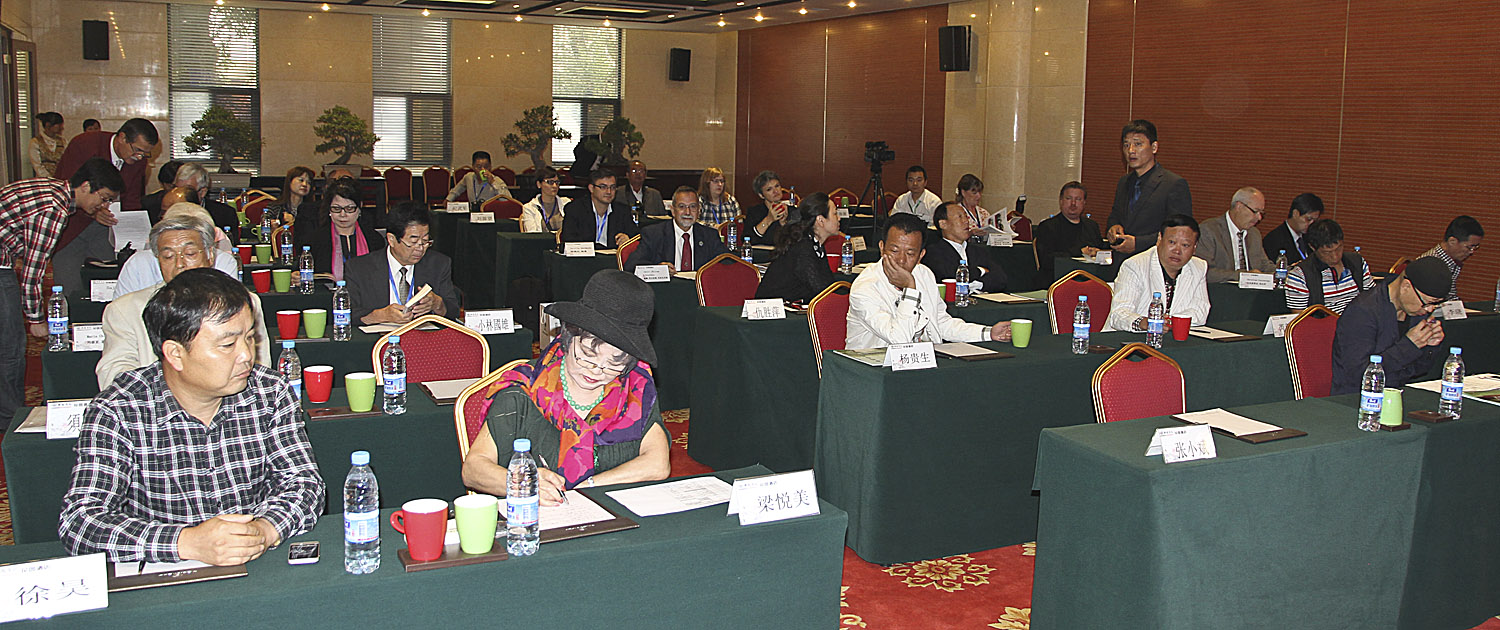
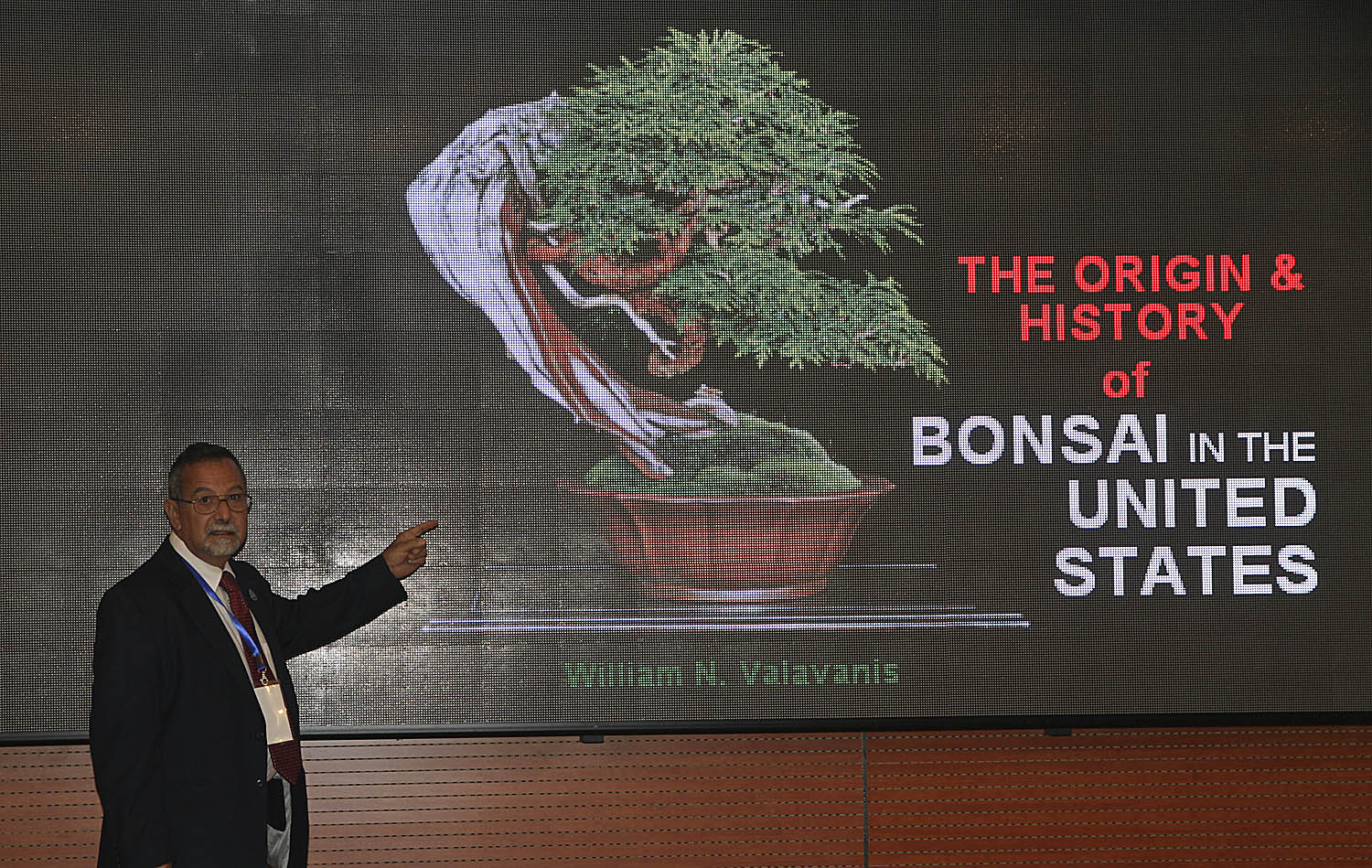
Thursday morning began the first part of the Dialog of the Penjing World Forum which was held in a meeting room of the garden hotel. Chinese elm penjing were used as decorations. The room had a rather unusual LED projection screen. The LED screen, NOT projector (but it too was probably LED), was composed of thousands small bulbs which were quite bright. Even in a sunny room one could easily see the projected images. Since the projector had several cords for the screen, it was not possible for me to plug in my MacBook Pro laptop. But no problems, I simply made a copy of the PowerPoint Program and ran it off their laptop. The transitions came through great, but my fonts were changed.
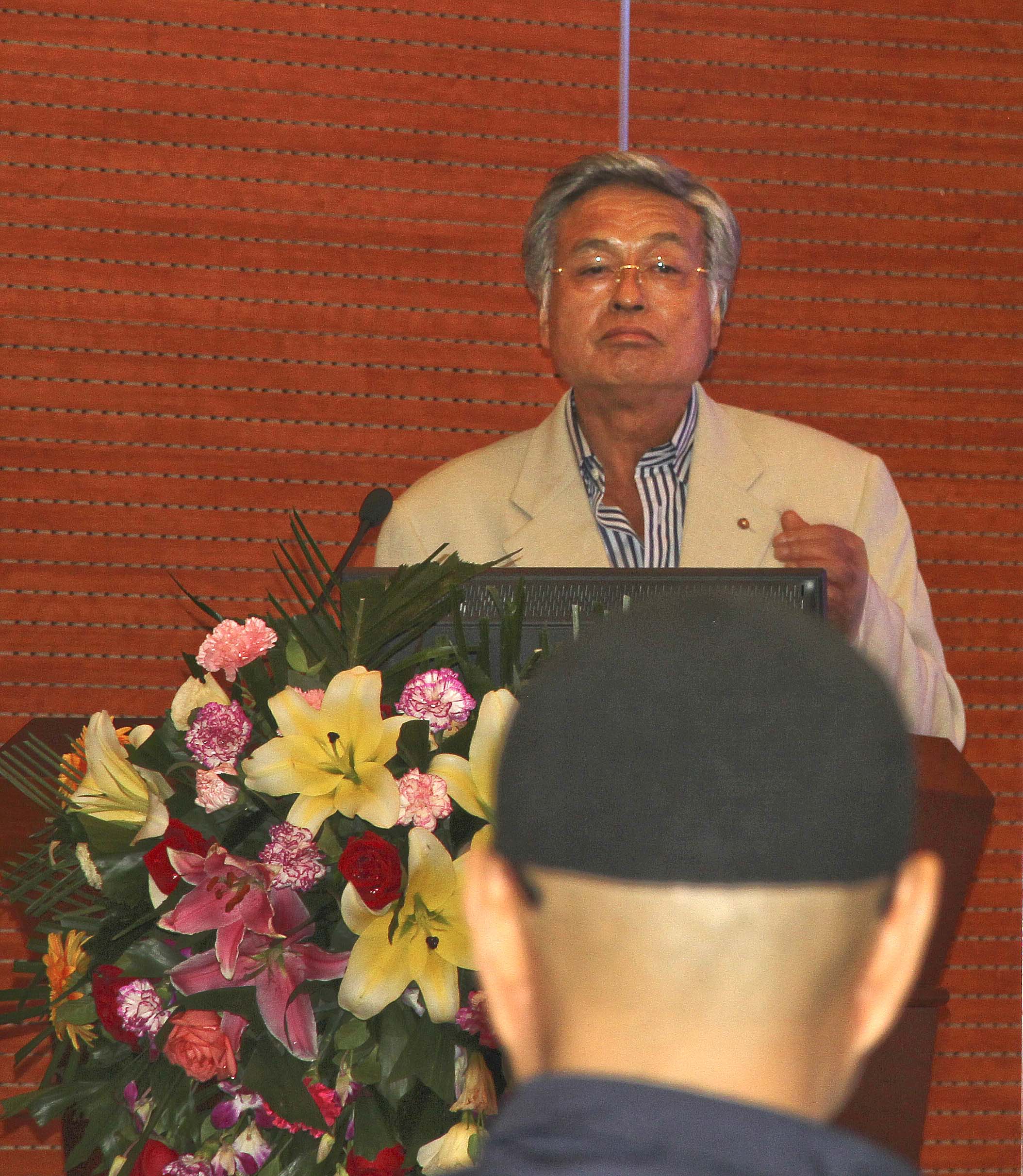
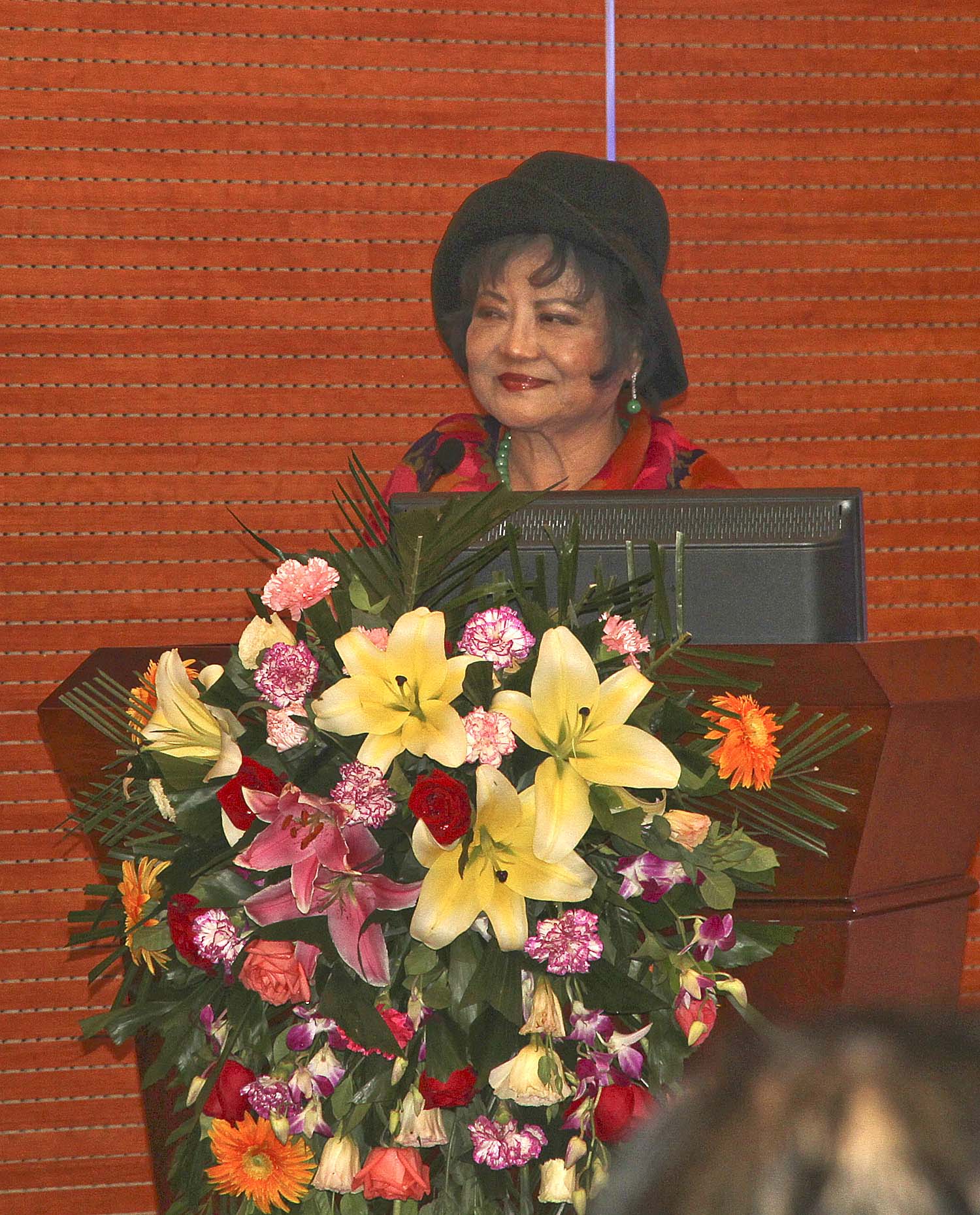
Mr. Xu Huo from China began with a talk on the history of penjing. Then it was my turn to talk about the Origin & History of Bonsai in the United States. The other members of the forum also presented papers and images of bonsai in their respective countries:  China, Italy, Spain, Denmark, Hungary, Lithuania, Poland, Sweden, Taiwan, Malyasia, France, Japan, Vietnam, Singapore, Check Republic and the United States. Mr. Yang Cuisheng presented an informative speech on why Chinese penjing are so large.
The programs were well delivered and interesting, especially with the images of their bonsai and club activities. One half of the speeches were presented on Thursday morning and the other half concluded on Friday.

Terra Cotta Soldiers

After part 1 of the forum we had another Chinese luncheon and were taken by bus to see the famous Terra Cotta Soldiers. It was “supposed” to be a quick 40 minute bus ride, but ended up nearly three hours, ONE WAY. This was the second day of a week long national holiday and the toll roads were free so many were on the road. The roads were lined with people selling fruit. At first they looked like apples, but I soon discovered they were pomegranates, loads of them. Vendors went from car to car selling their fruit. The pomegranate trees nearby were loaded with fruit, mostly wrapped in clear plastic for protection. The fruit looked white and I’m used to seeing the dark red colors. Traffic continued to get bad and at one time we noticed that the four lane road (two lanes in each direction) suddenly swelled up to SEVEN lanes one way!

We finally arrived at the museum location of the ancient Terra Cotta Soldiers which were discovered only 34 years ago by a farmer digging a well, what a surprise he got! A few of the restored soldiers were on display in the large open rooms. Many of the clay soldiers are still buried because when they are uncovered the paint quickly deterorates with fresh air. They soldiers were in three large pits, and building were constructed over them. It was quite crowded and difficult to move around the perimeter of the pits with the crowds and we were told that yesterday over 80,000 people had visited. The farmer who discovered the treasurers was even in one of the three buildings signing autographs, for a fee of course.

Conclusion

On Friday we finished up with part 2 of the well organized forum. The speeches were translated from English to Chinese and often Japanese. Mr. Su Fang, who conceptualized the event and the World Bonsai Stone Culture Association and Chinese Penjing Artists Association are to be congratulated for organizing and hosting such an important international event which brought people from around the globe to a single remote quiet and beautiful location to present information on their bonsai passion. The several translators, hosts, hotel staff, bus drivers, cooks and of course all the people who helped the one person with his broken foot were really appreciated by everyone. I look forward to another interesting and stimulating event and feel fortunate to have been included to represent the United States.

2013 DIALOGUE OF THE PENJING WORLD FORUM– Part 3

Image

TANG YUAN CHINESE GARDEN

We were split into two groups because there were not enough seats on one plane from Guangzhou to Xi’an. We were joined again and bussed again (only one and a half hours this time) to the next hotel for three nights.

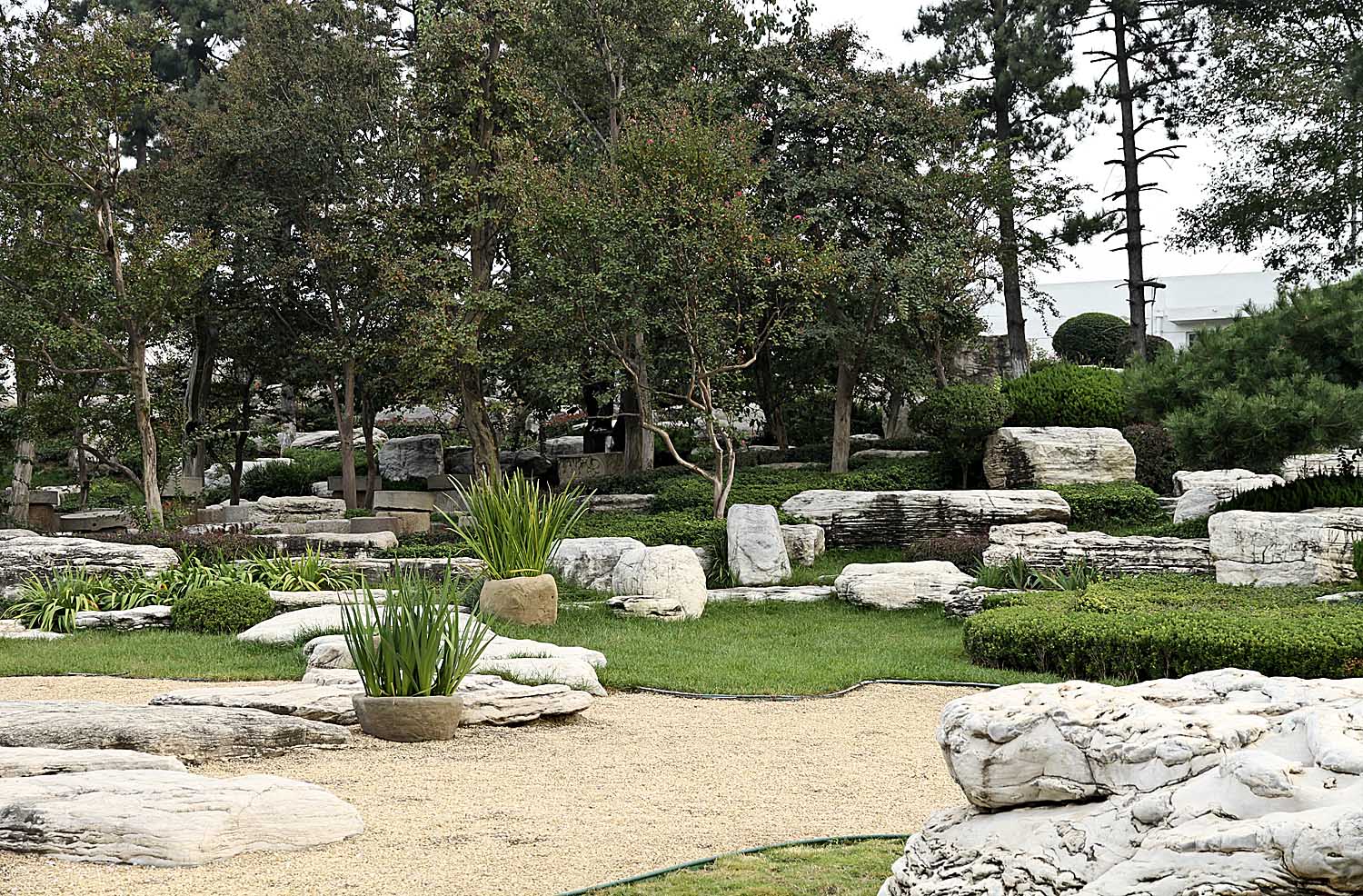
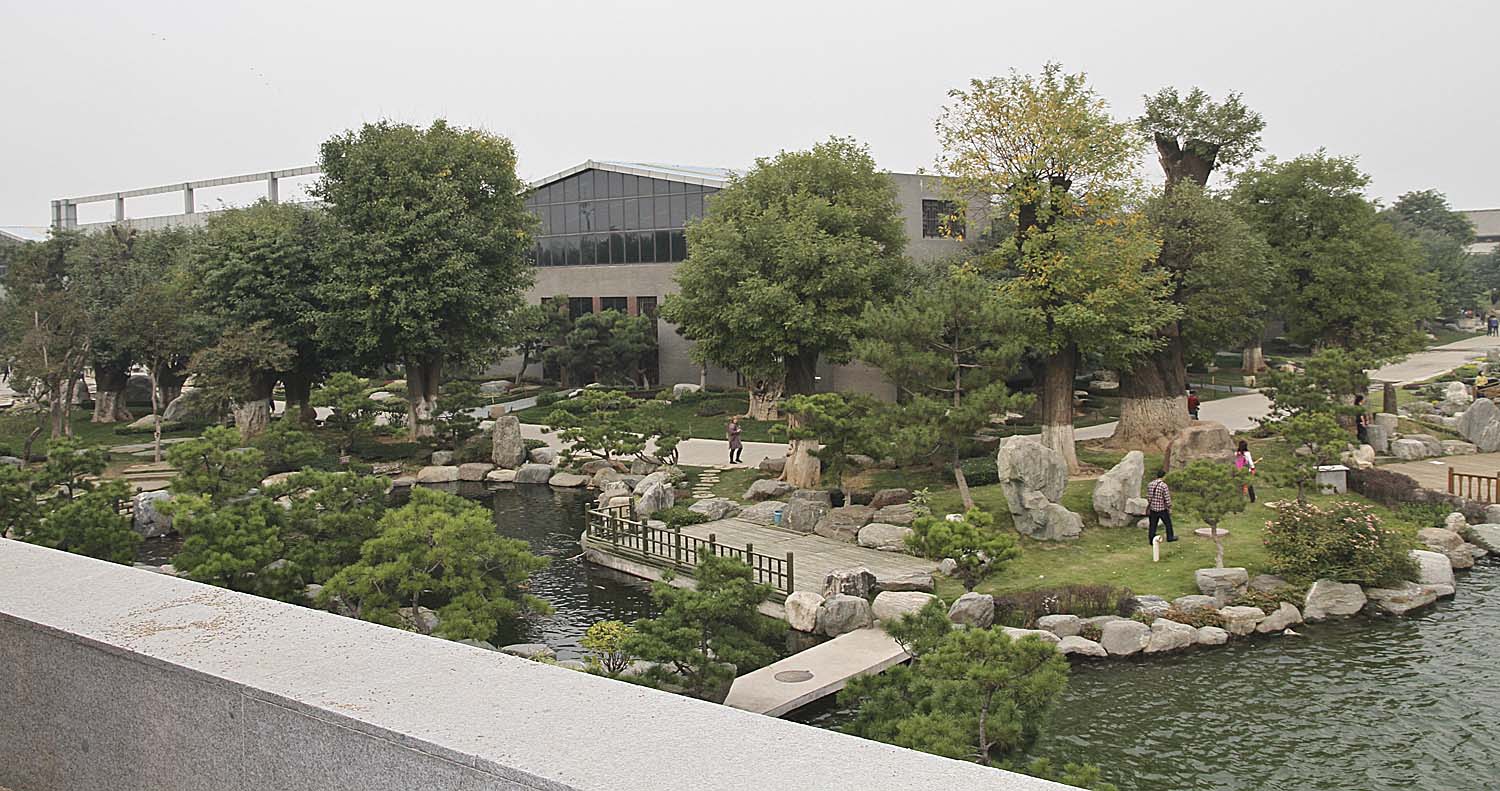
We drove and drove and drove, made many turns down narrow roads in the middle of nowhere. There were landscape trees in nurseries and rocks in quarries. The area looked like an industrial park. Suddenly the area opened to a beautifully landscape hotel spread out throughout beautiful gardens named China Tang Yuan Garden Hotel.

Image

Image

Image

Image

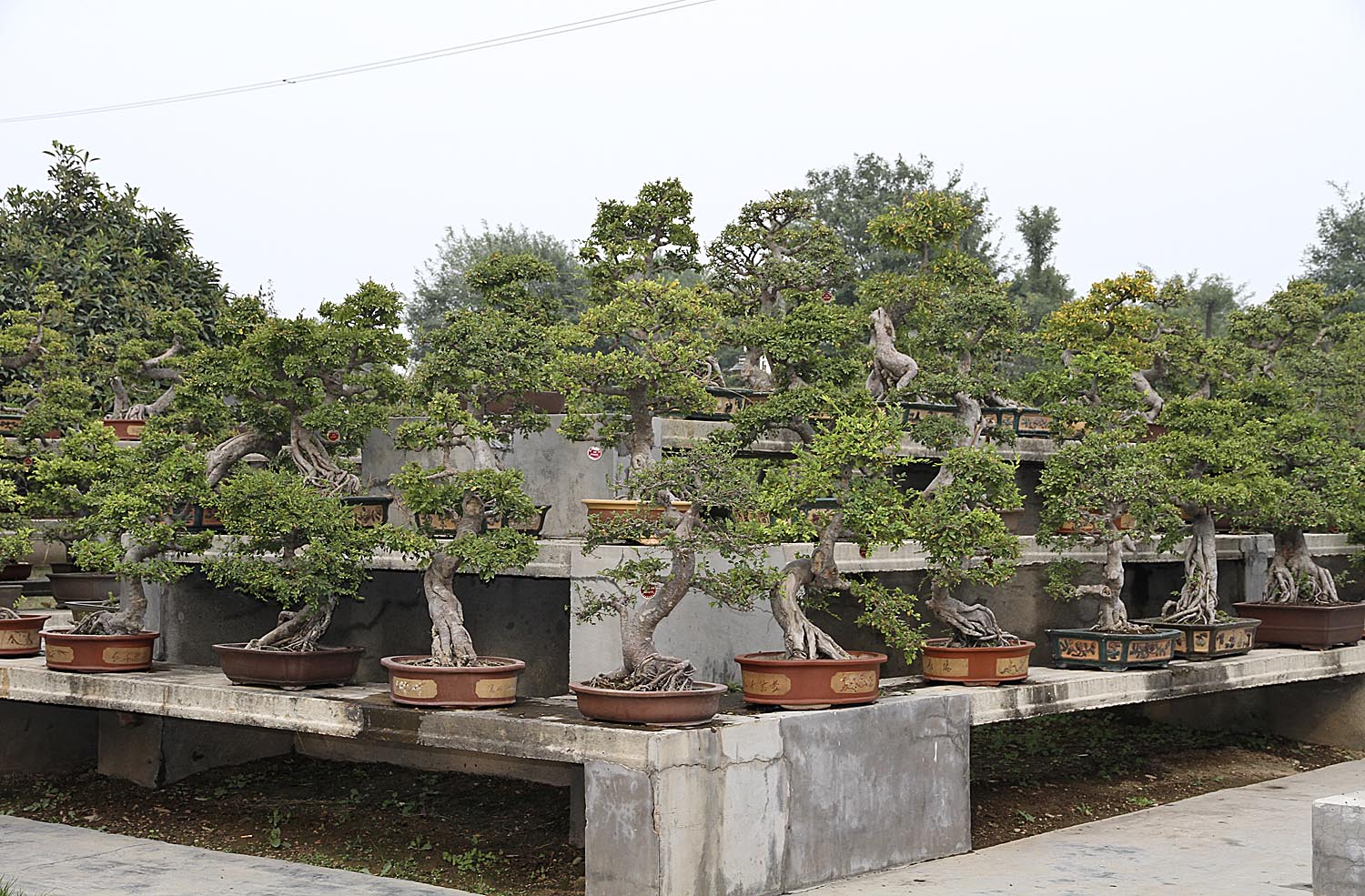
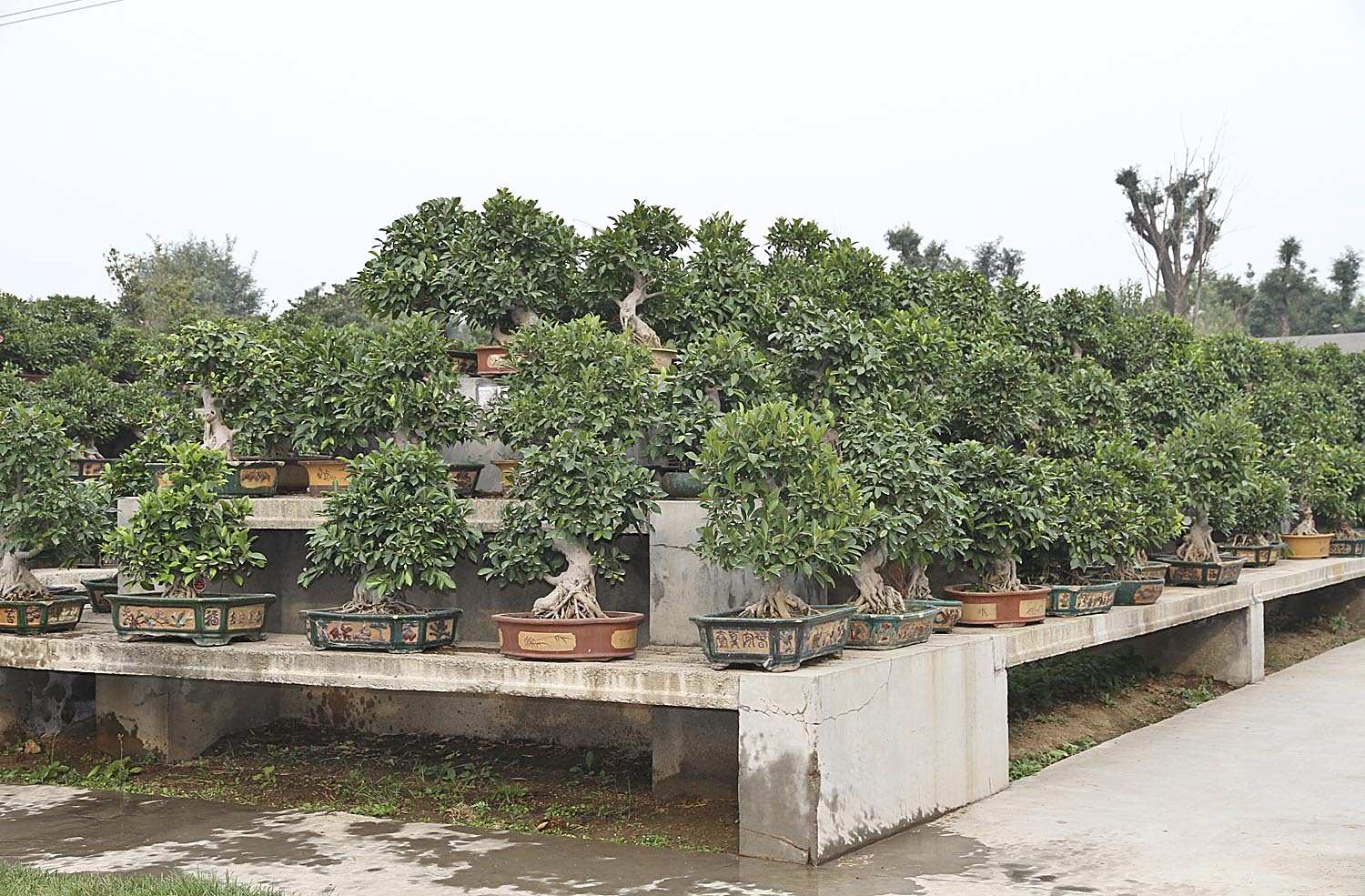
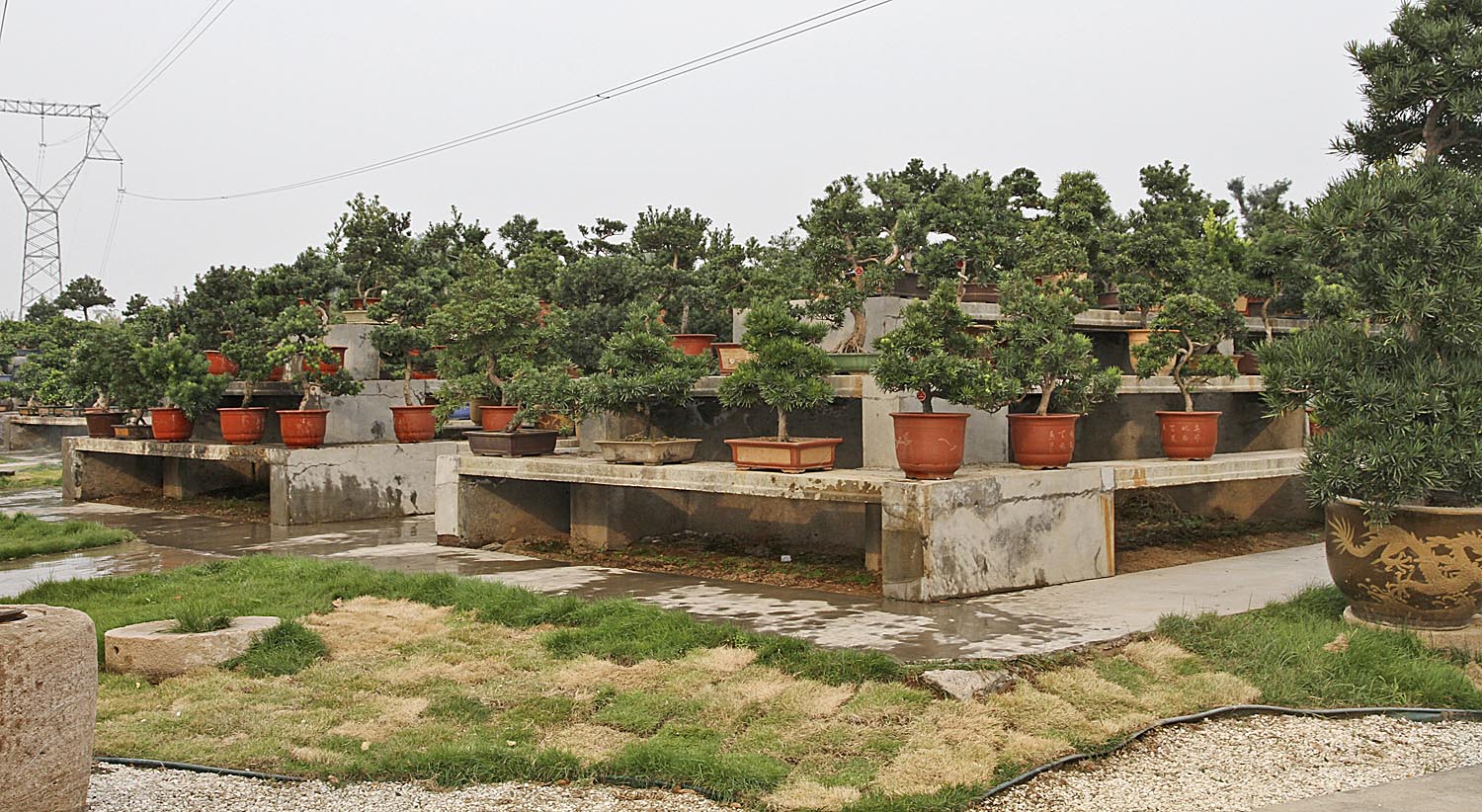
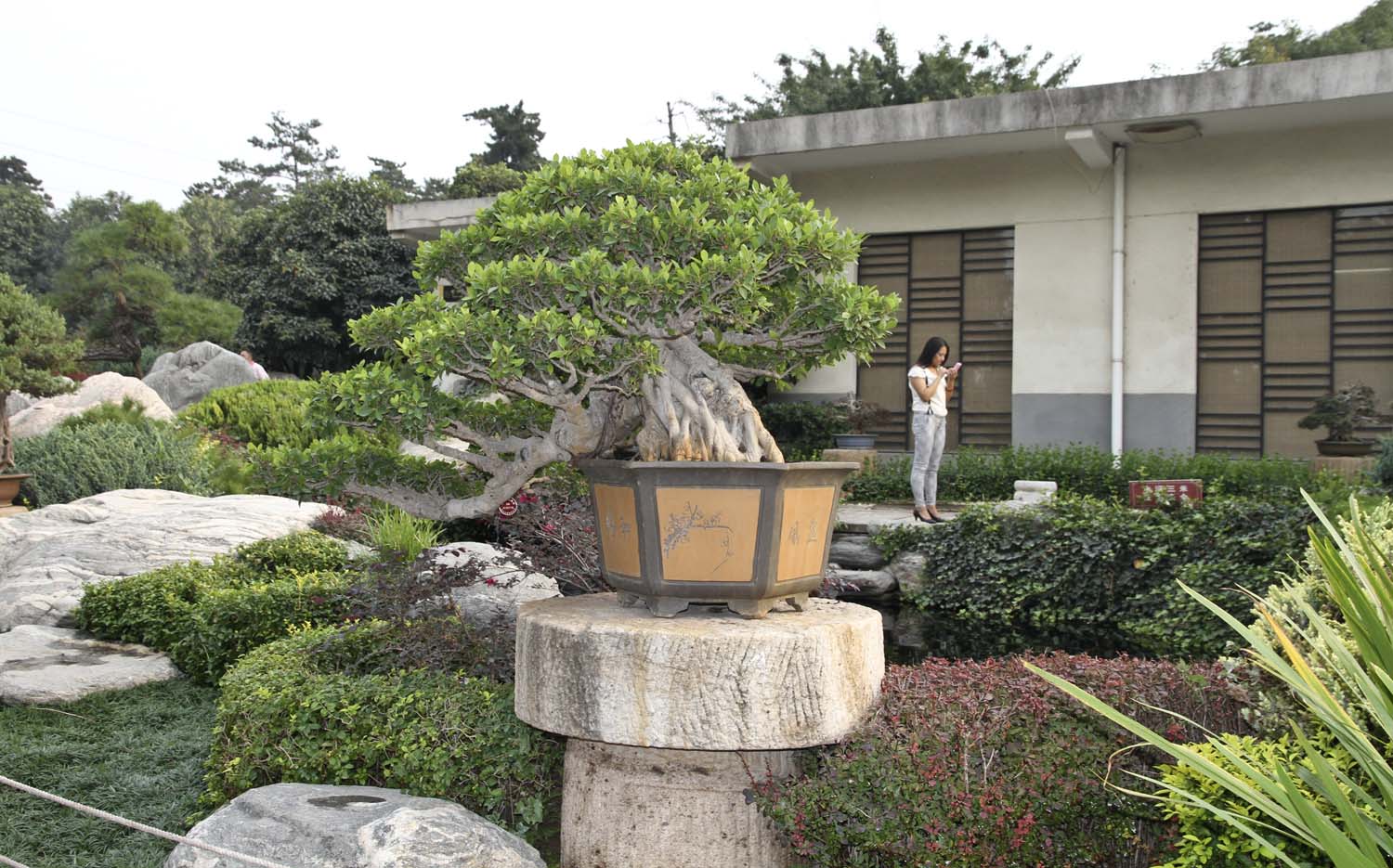
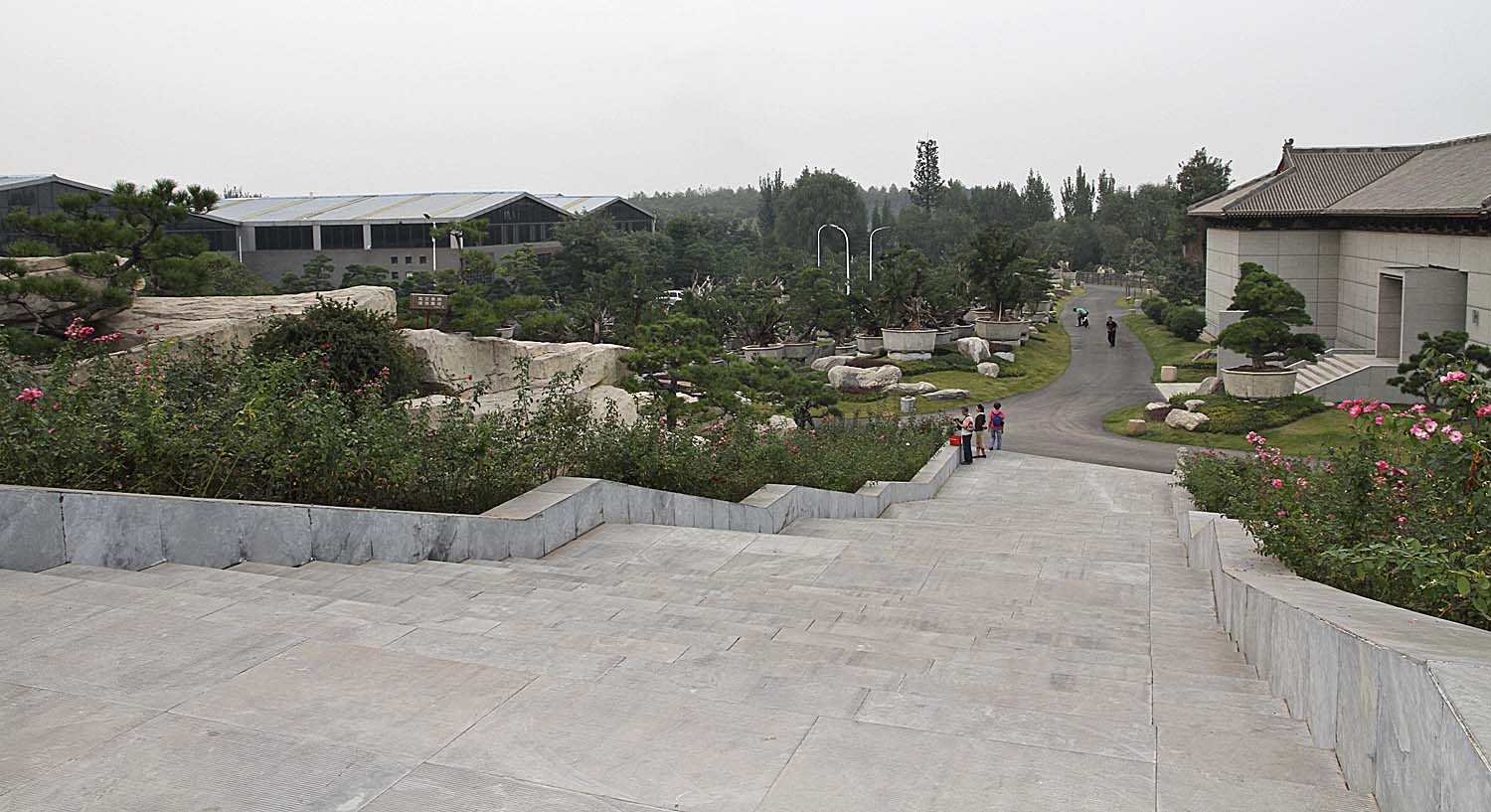
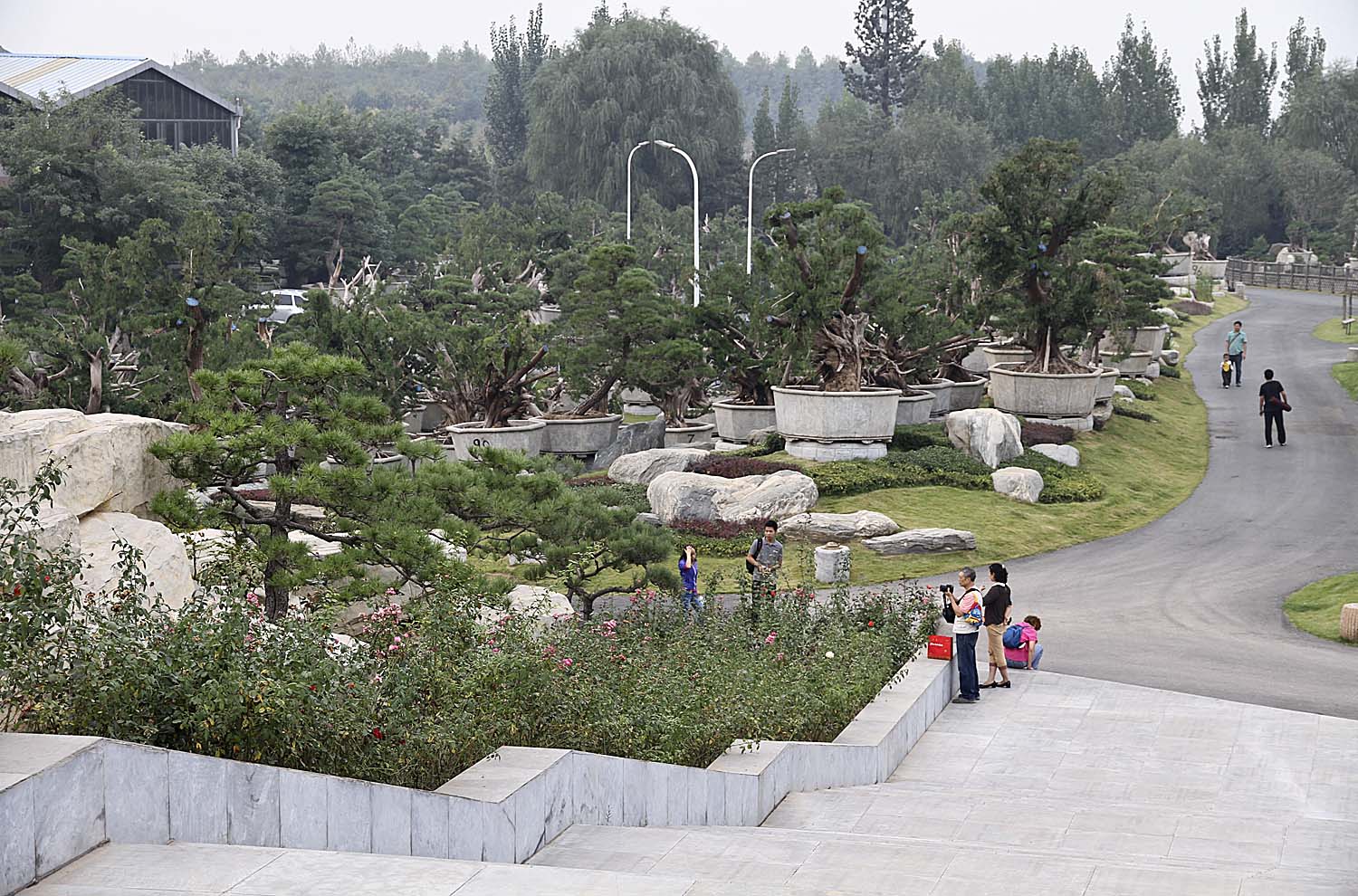
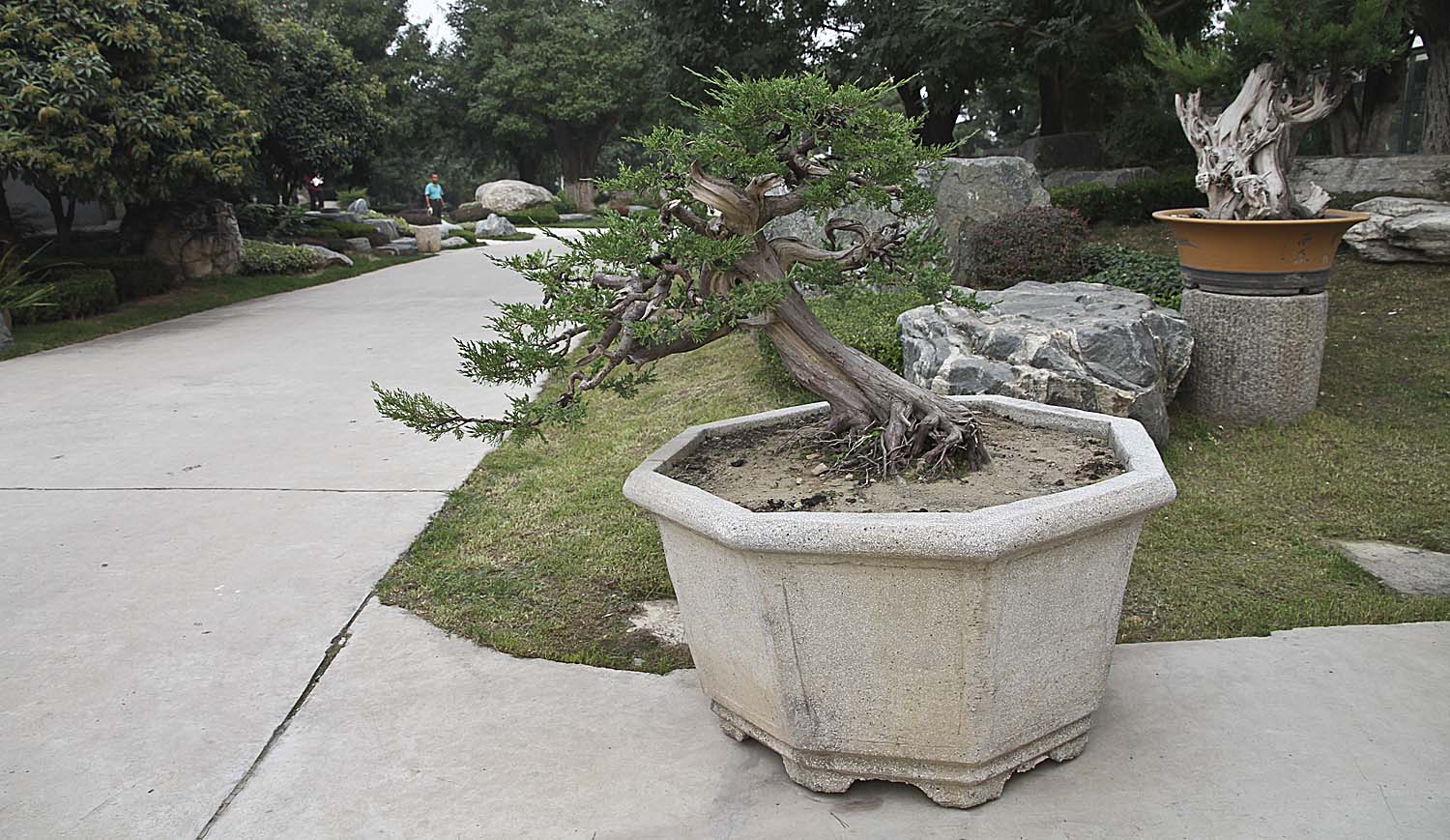
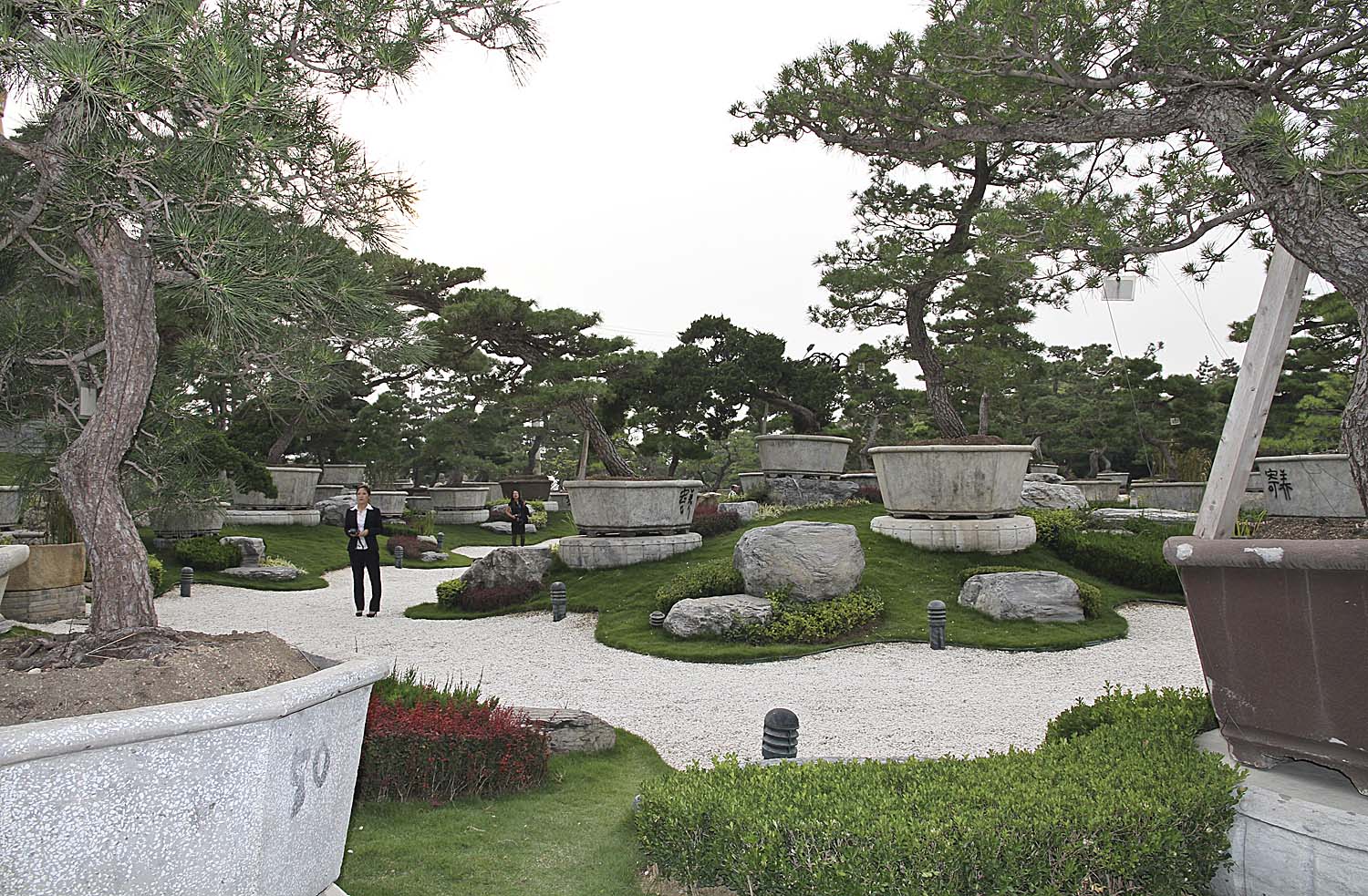
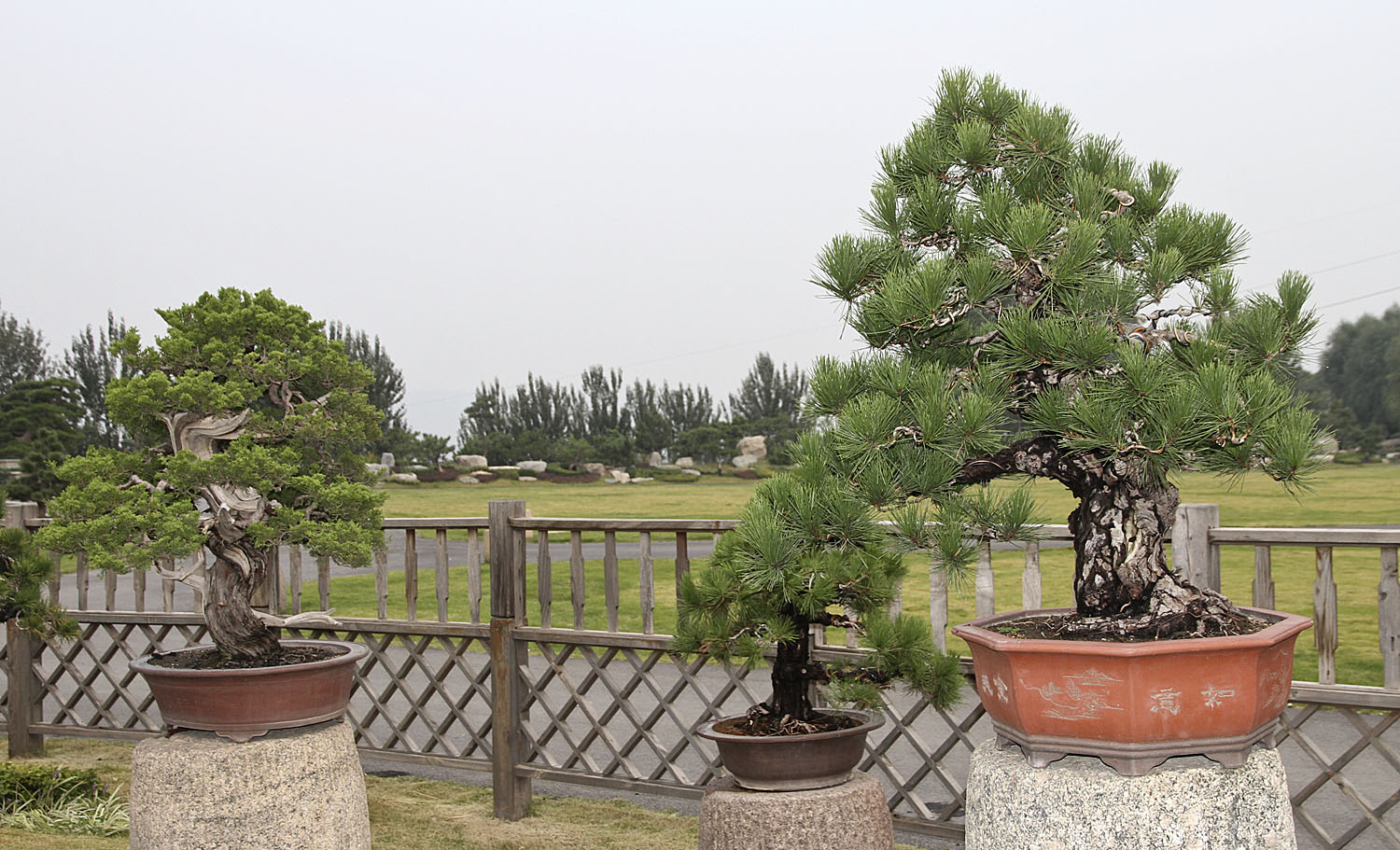
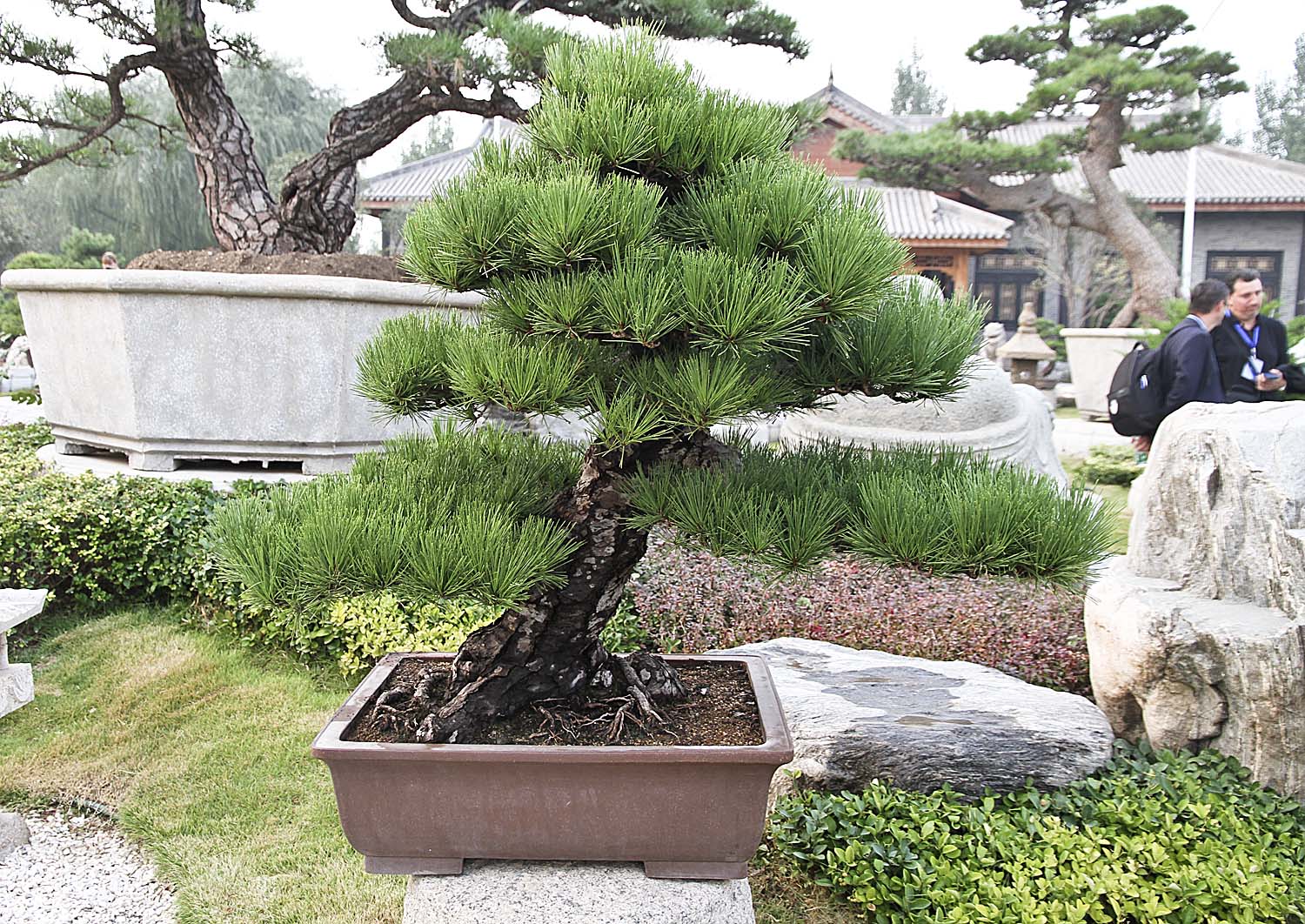
We then took a long walk as I scooted around and helped in hilly areas and up and down the many stairs. We passed a large area of bonsai, one section was filled with pines, another with cycads, another with podocarpus and even more species. There were hundreds of trees being grown for displaying throughout the hotel and for rental.

Image

Image

Image

Image

Image

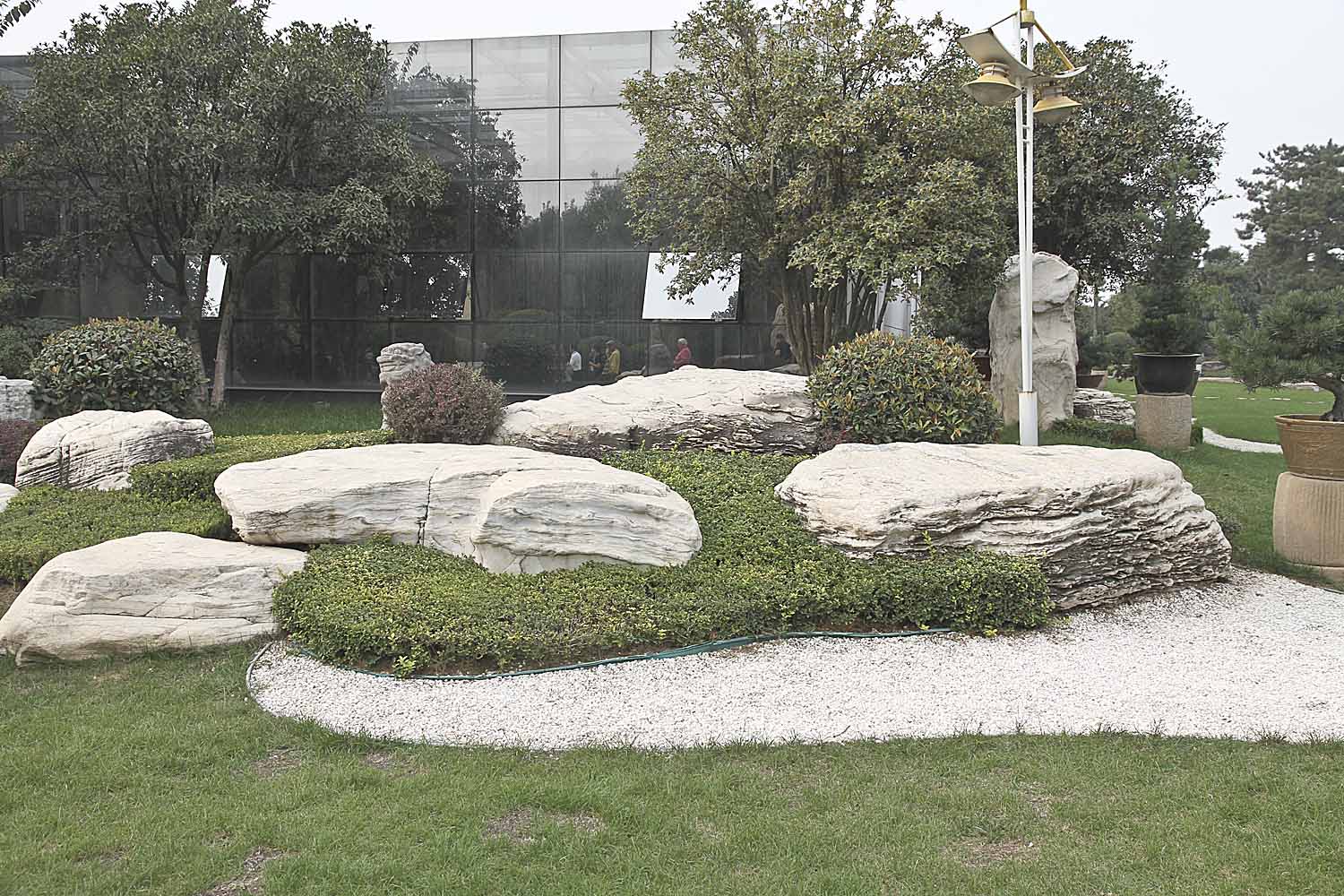
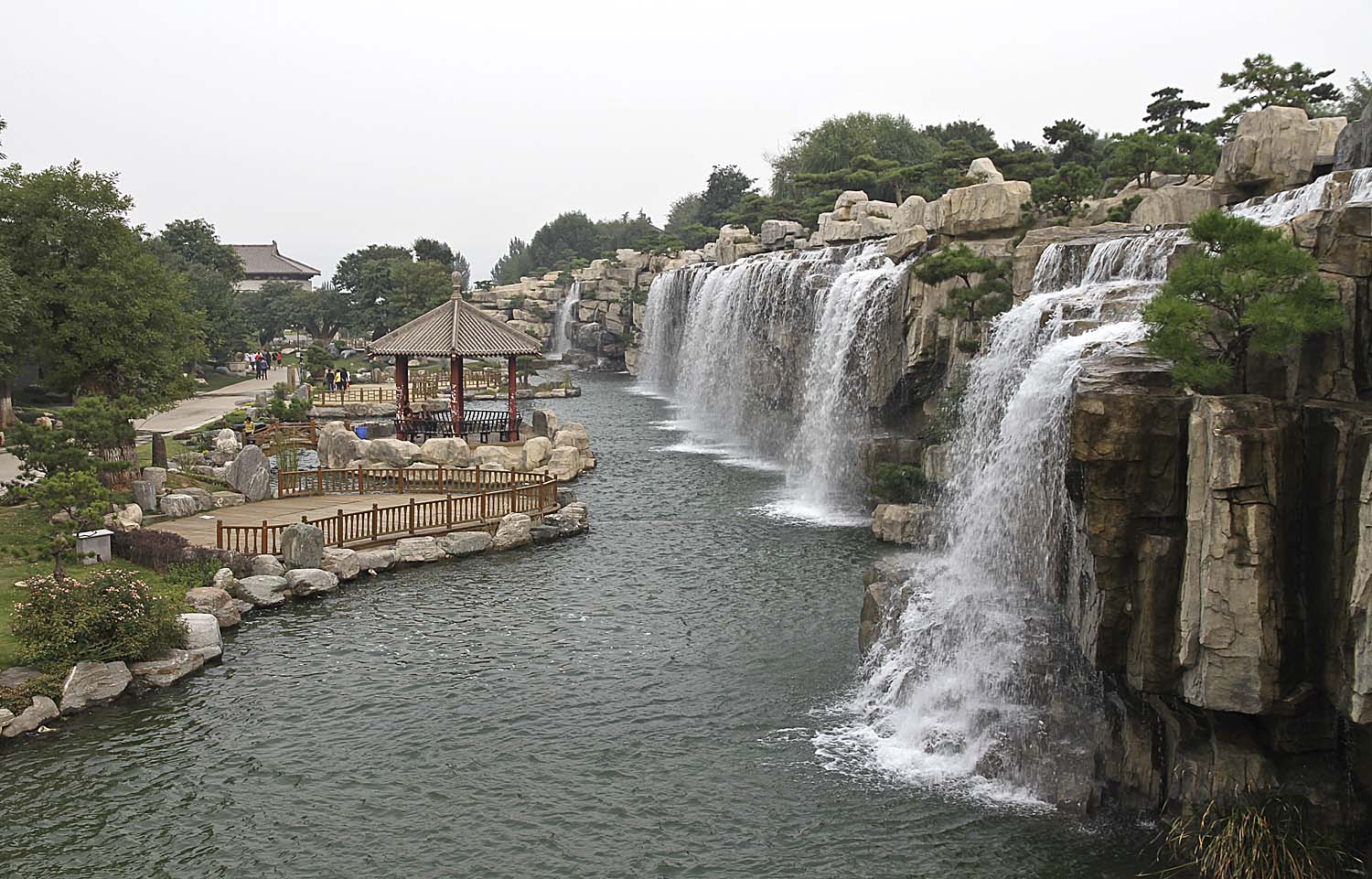
Our tour through the garden continued through beautiful stroll gardens full of large size bonsai and stones. Suddenly we came upon a series of waterfalls, all in a row which looked quite natural. We passed a large building and saw many stones inside, Chiara Padrini from Italy really wanted to visit, but we were not allowed. The building was all stone and looked like a museum. As we went down another path I noticed an entire grove of Chinese quince garden trees, all upright. I asked what they were as the fruit is larger than my specimens and the translator quickly took out here iPhone (of course) and looked up the species and was told they were Papaya. I then asked to see the Chinese characters and recognized them as Chinese quince. I guess the internet translations are not always reliable.

Image

Image

Ok this place is getting to be overwhelming and I had to sit awhile, wondering what government agency owns the garden. Finally I discovered it is owned by ONE man, Mr. Zhang Xiao Pin, a very successful business man in the hotel, restaurant and more areas. Wait, the tour gets even better! He likes bonsai and fine items. After figuring out the area we discovered the entire complex is over 1,000 (that’s one thousand) acres and is THE largest private garden in all of China. The complex includes the hotel, several restaurants. We have eaten in different restaurants for ever meal, and have never been served the same food, and all the serving plates are different too. In addition to the restaurants there is a tree nursery and stone area, which we drove through upon arrival, an exhibition building and calligraphy museum. And there is a golf course, which we did not see. There were several large areas for training bonsai, and developed specimens wee displayed in scenic areas. Mr. Pin helped support this unique event and everyone was appreciative of his generosity.

Image

Image

Ok, the tour continues and we come upon a long granite stone building without windows. Looking at the overall view, a large bridge we were on earlier connecting two gardens was on the roof of the building. We were told to put on plastic shoe coverings and no photos were allowed inside. Mr. Pin likes ancient bronze wine warmers which were used 3,500 years ago by the Chinese emperors. This museum was beautiful and each treasure, we were told is finer than those in public museums. They were in glass cases and beautifully lighted. There was a large auction, outside of China of 200 antique bronze items and Mr. Pin purchased over 150 items. It was breathtaking!

Image

Image

Image

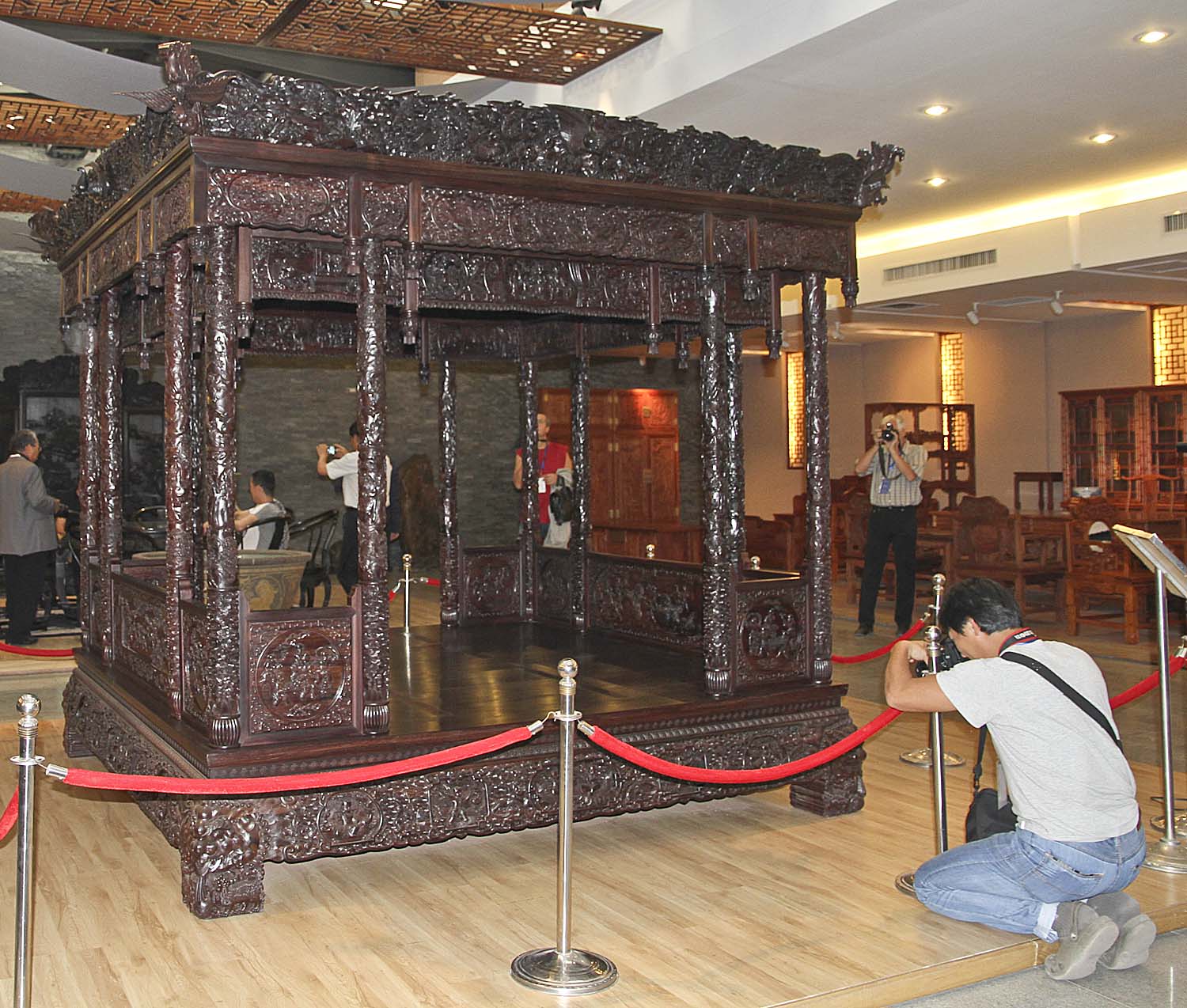
Handcarved Chinese wooden bed, US$3,000,000

Image

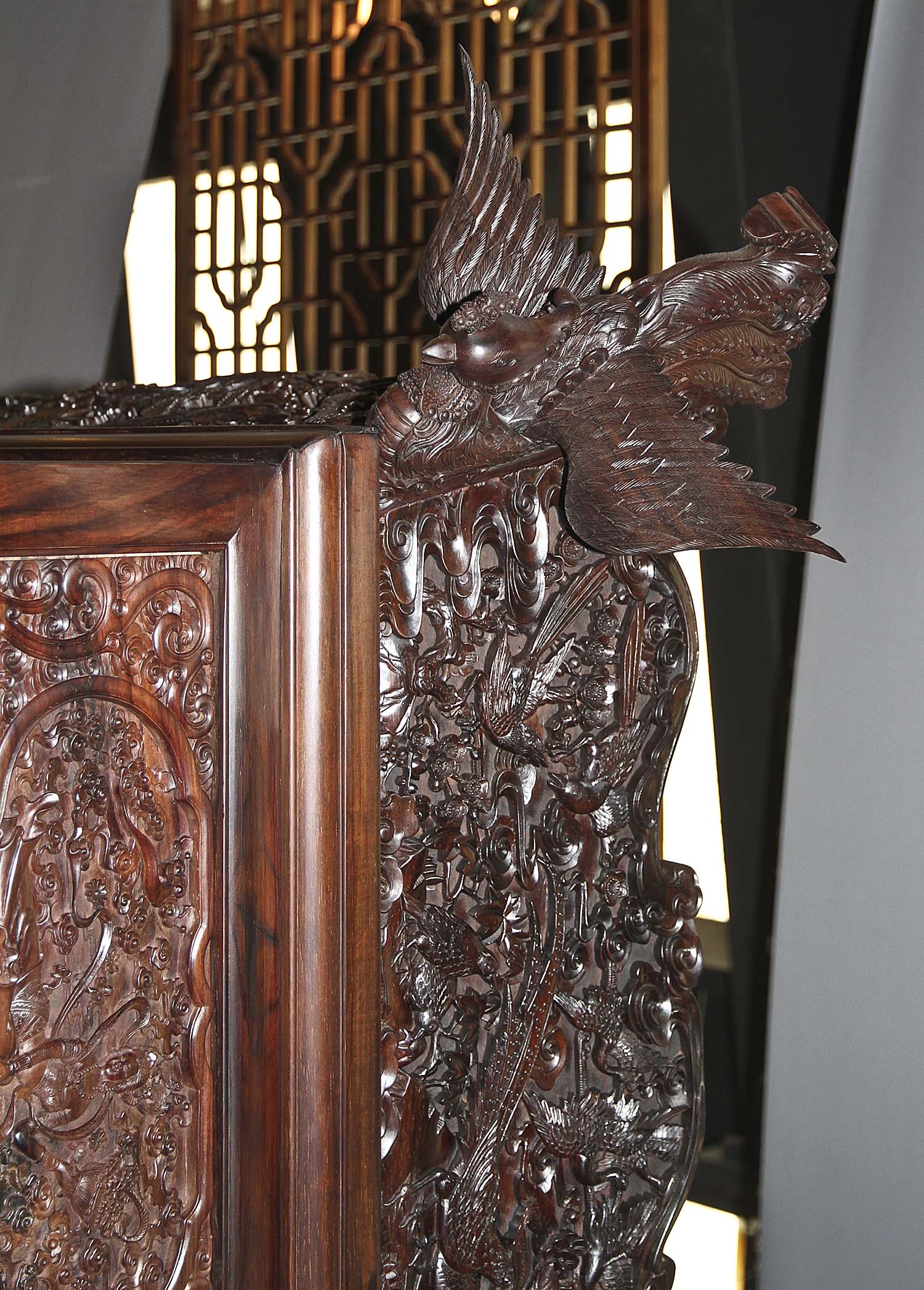
Corner detail carving

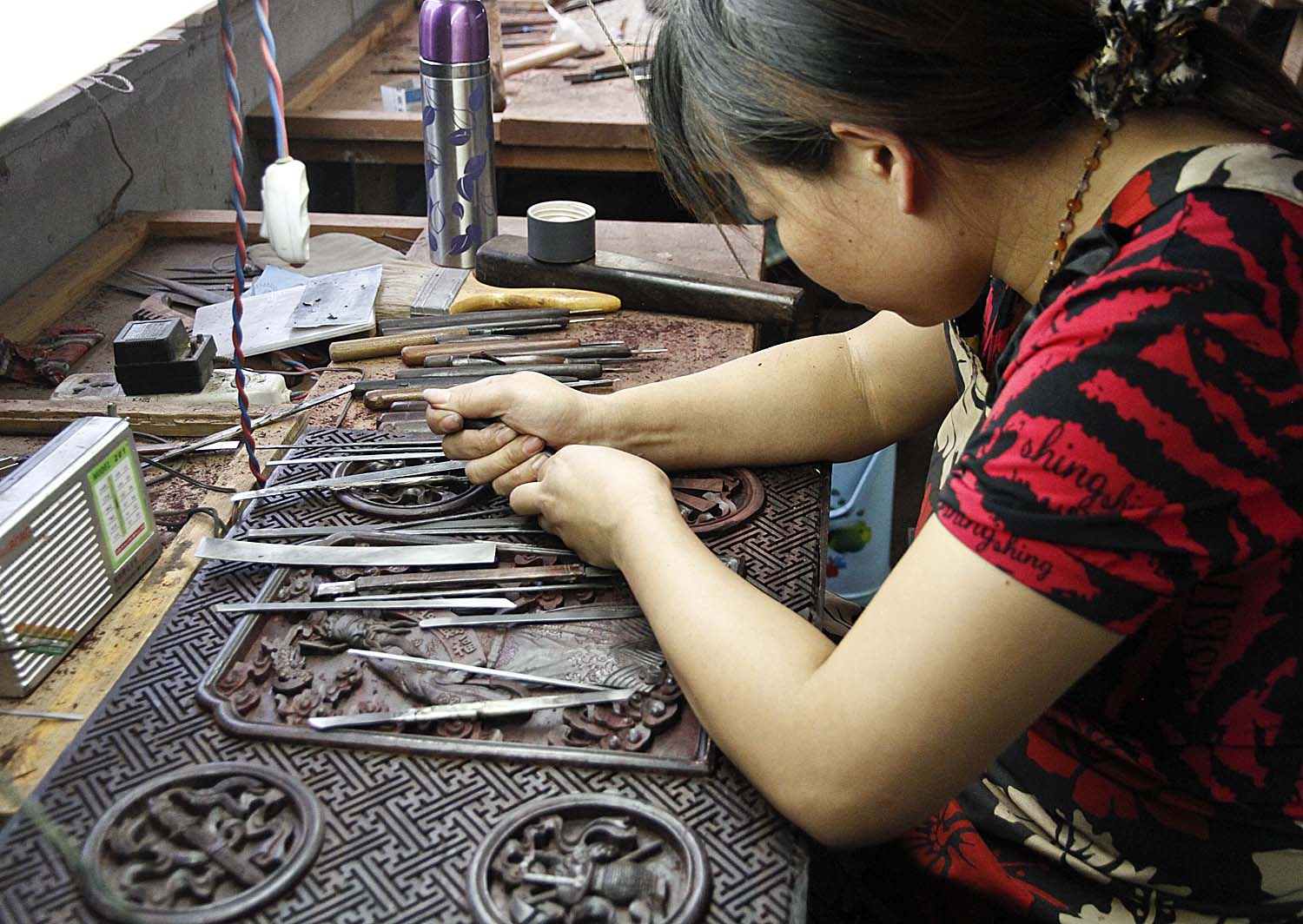
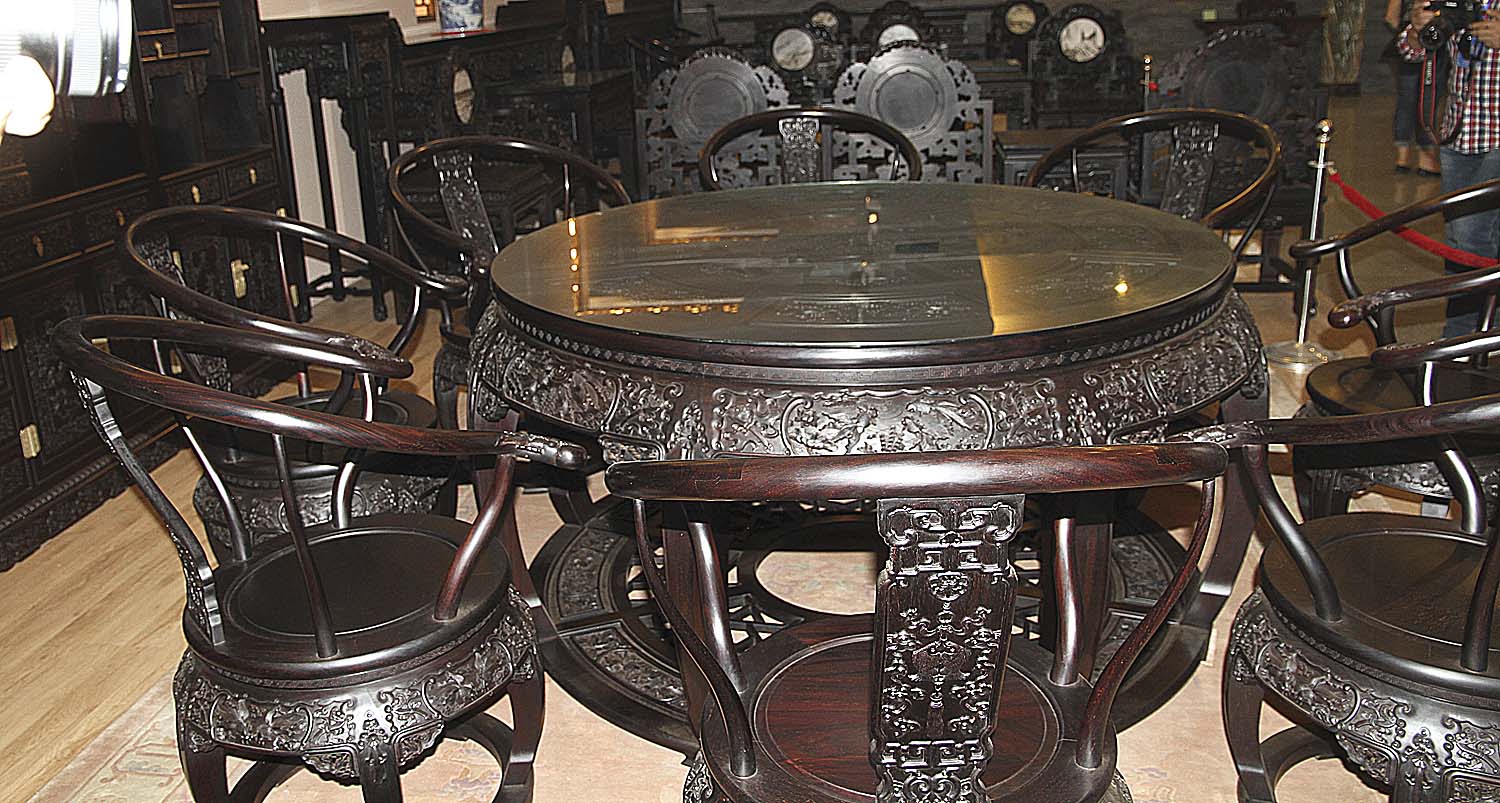
Then we continued into another huge building were artisans were hand carving intricate rosewood furniture and other items. It was interesting to see them work before we were led into a showroom with finished pieces. The central masterpiece is a hand carved rosewood Chinese bed which is valued at US$3,000,000. No, we did not have beds like that in our rooms, but my bathroom is even larger than the one previously described, but only one TV.

We are not through yet as we passed another museum but did not visit as we were going into his “bonsai display” area. I was lagging behind, with two people helping me traverse hilly and dangerous areas. There was an electric cart which took Amy Liang and me to some areas avoiding the dangerous areas. I have already broken one foot in Japan and don’t want to add China to the list.

Image

Image

Kobayashi makes a Treemendous house call!

Image

Image

Image

Image

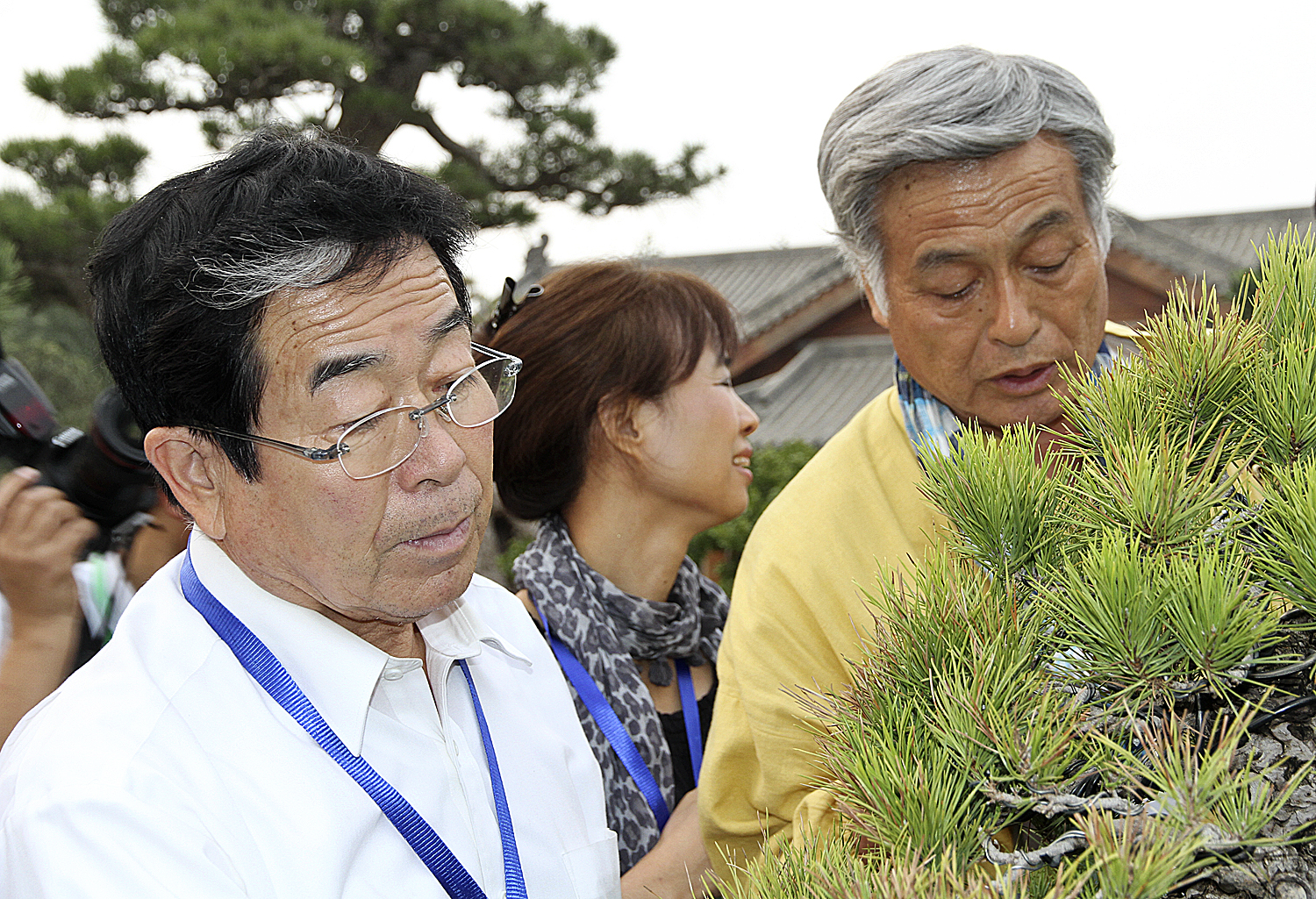
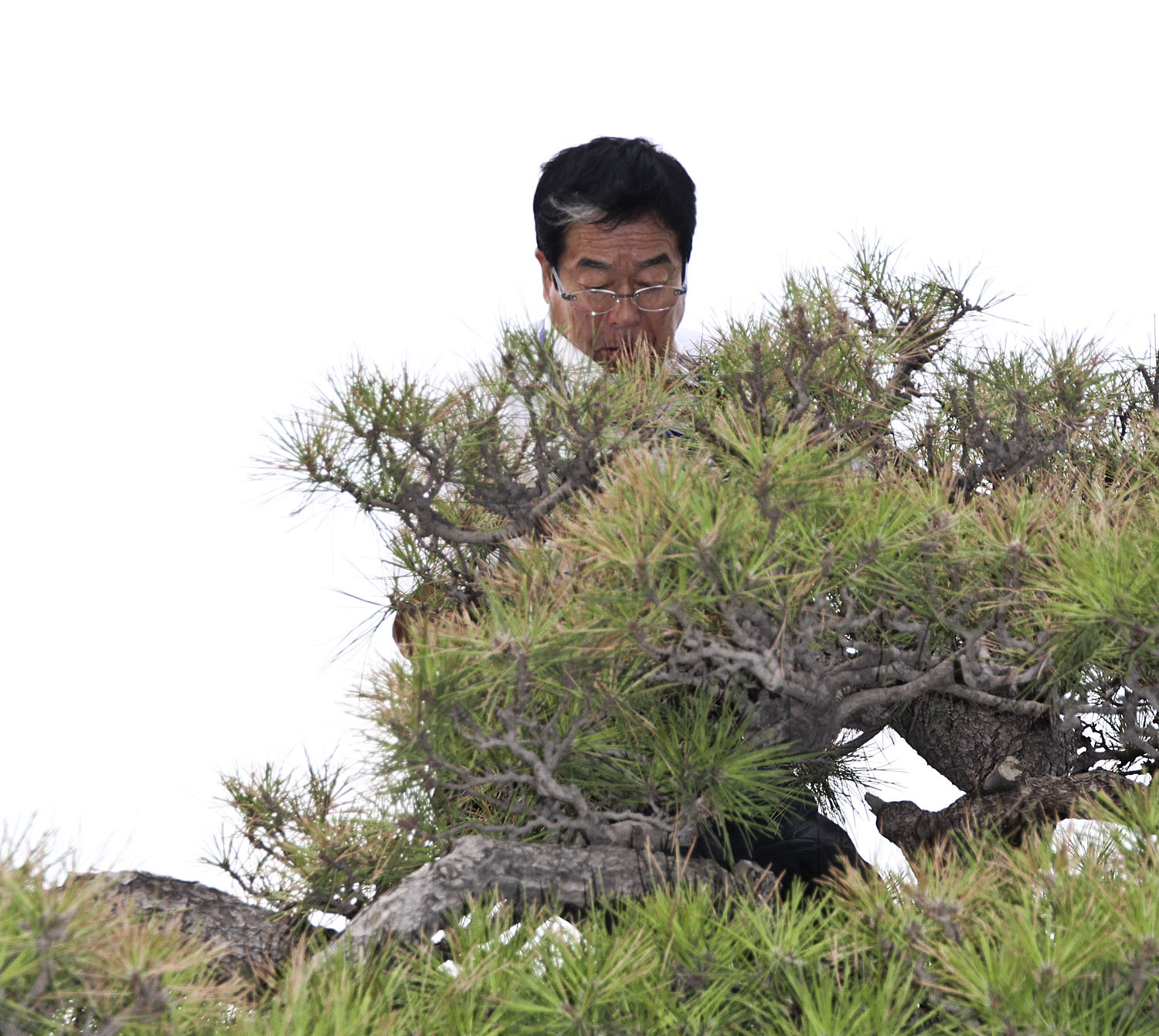
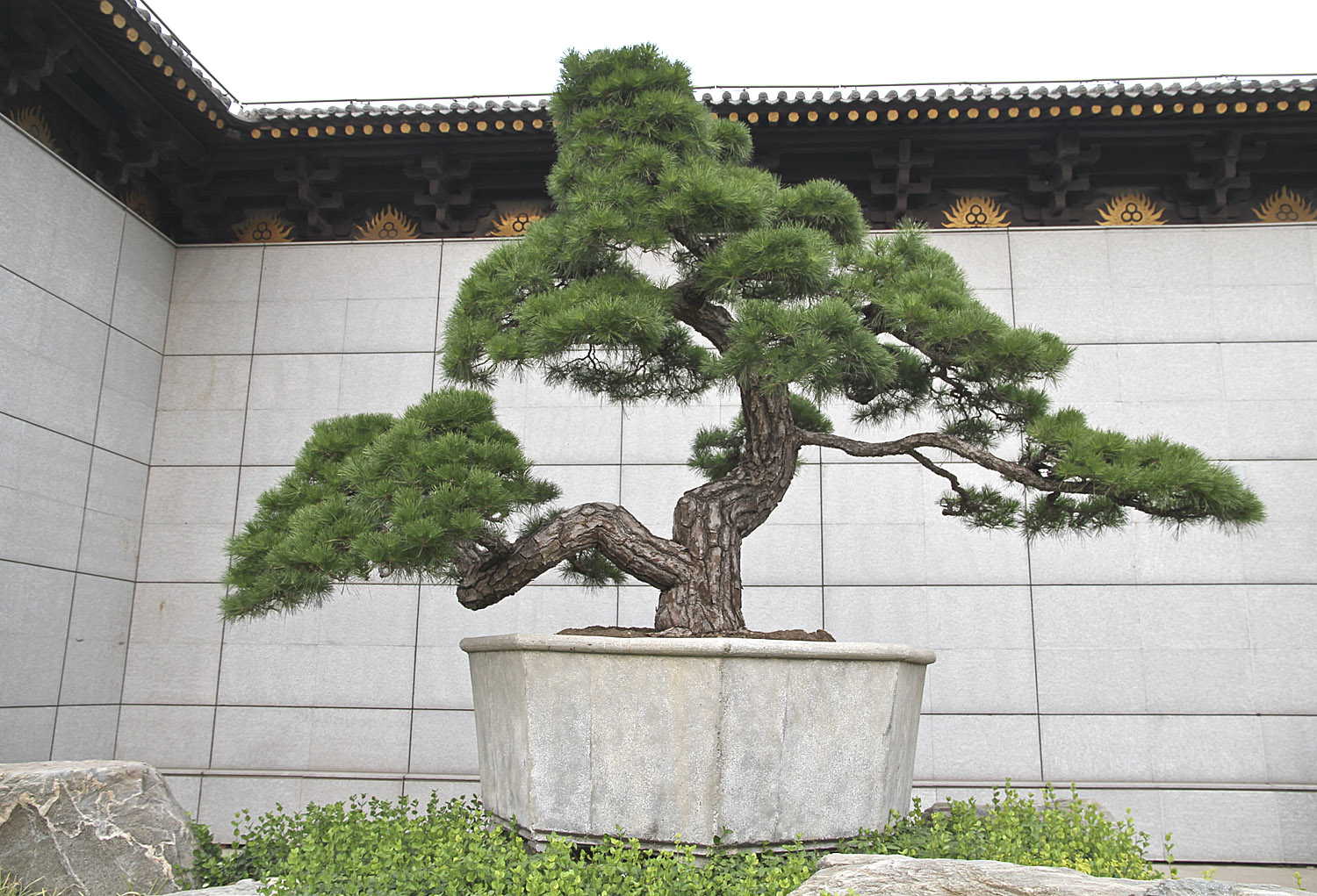
By the time I reached the garden, through a formal entrance gate I saw Mr. Kobayashi answering horticultural questions for the collection caretaker on a yellowing Japanese black pine bonsai, which was a water problem. Then, suddenly he dashed off to a large bonsai in pot and climbed to the top to inspect the yellowing and dying needles. He removed needles and consulted with Mr. Sudo on the disease problem which can be easily corrected. Around this garden were “normal” size bonsai and they were in proportion to this smaller area. The huge bonsai, which westerners thing are ridiculous are in proportion to where they are displayed. Proportion is important. China is a large country with large gardens so large bonsai are grown. While, Japan is a small country with small gardens and smaller size bonsai are grown and also displayed indoors, which is not a Chinese tradition.

Image

Image

Image

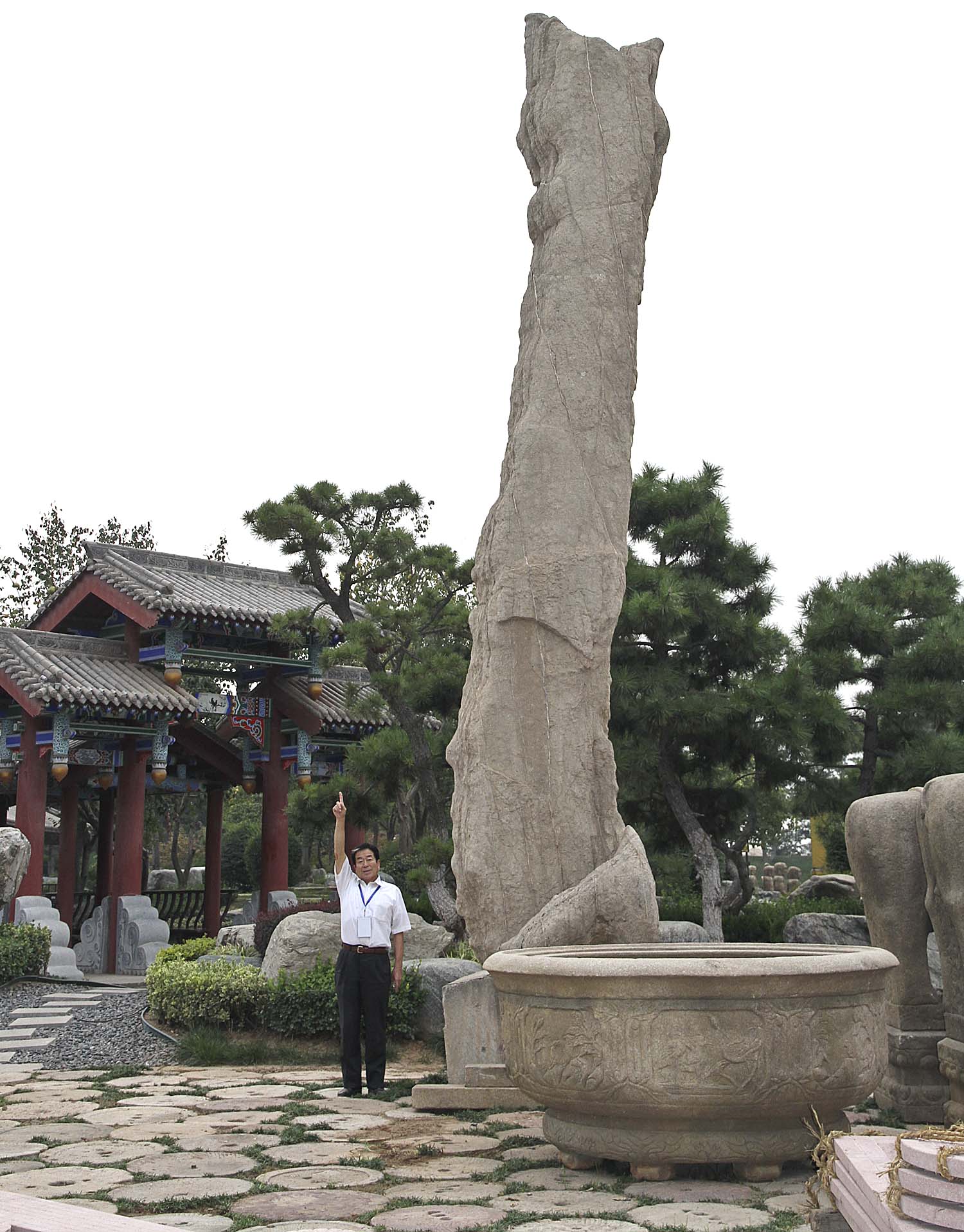
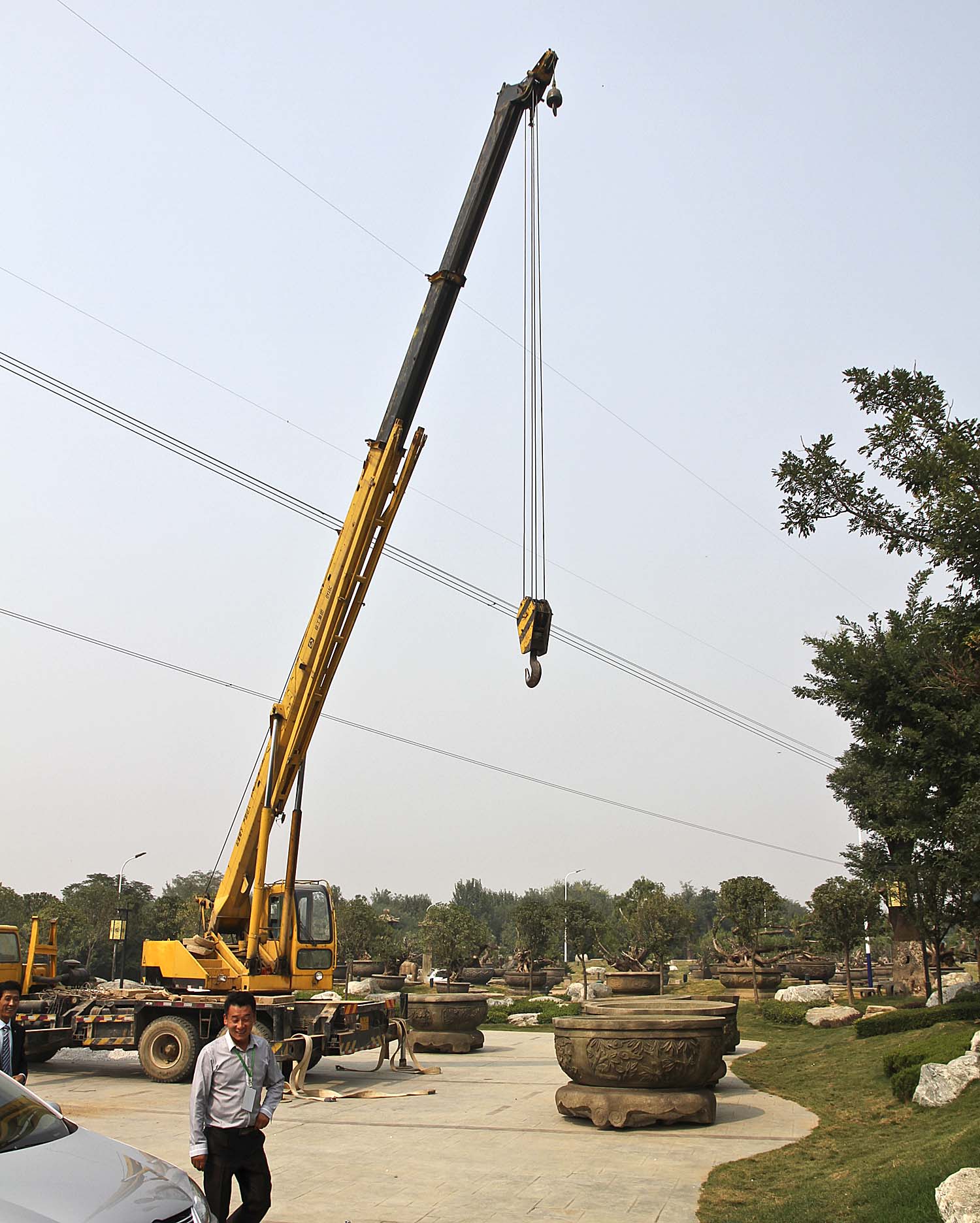
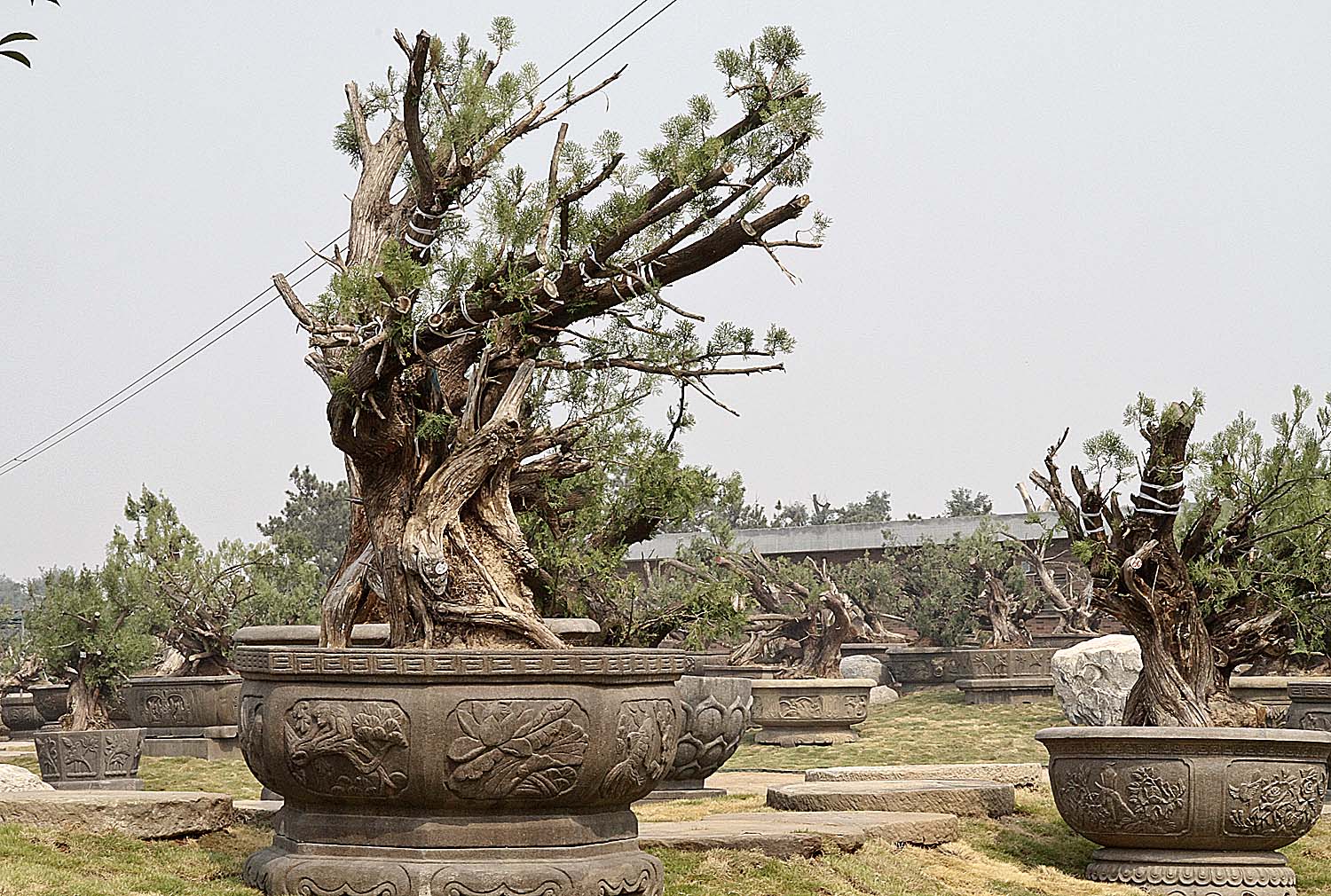
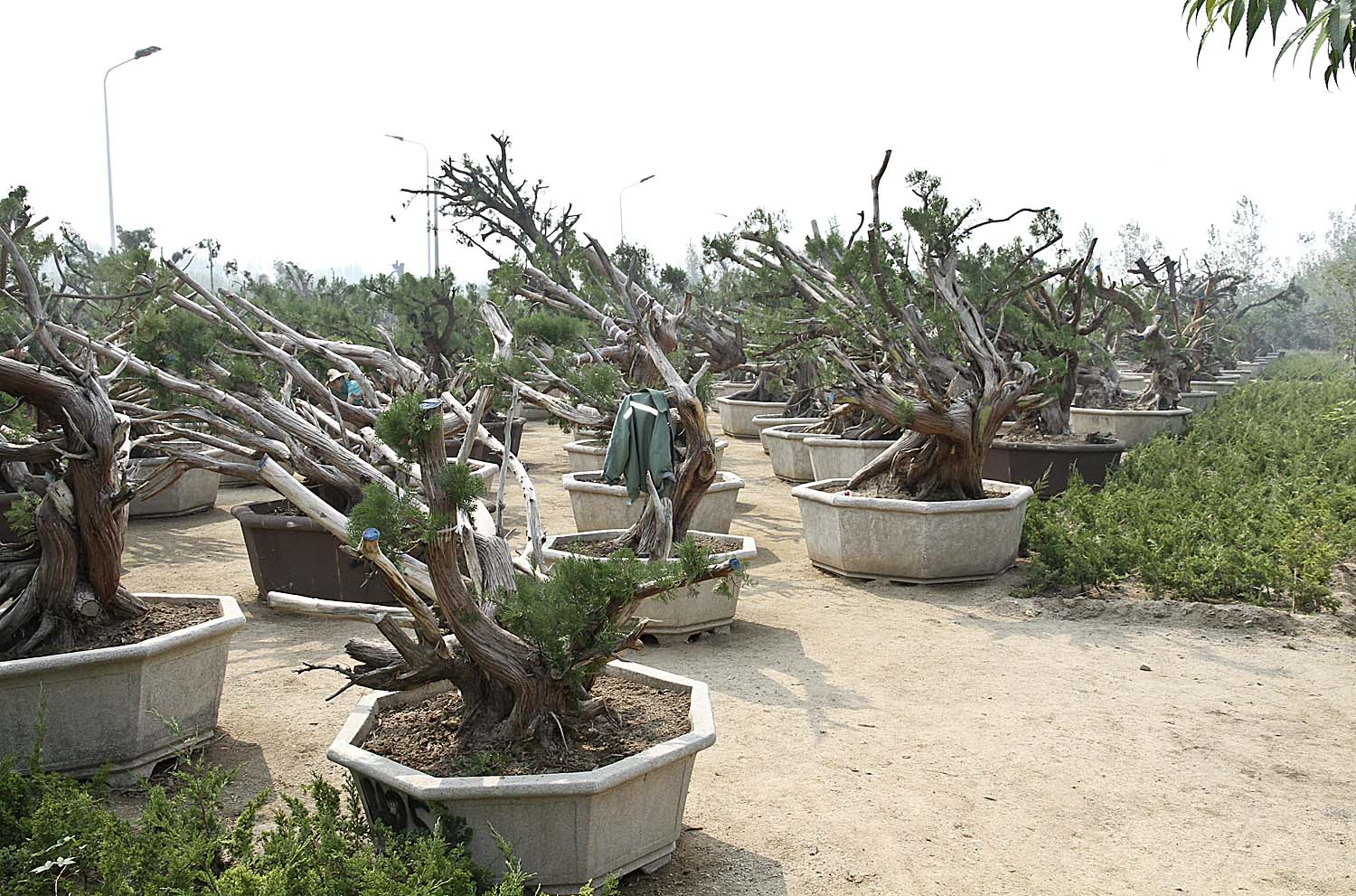
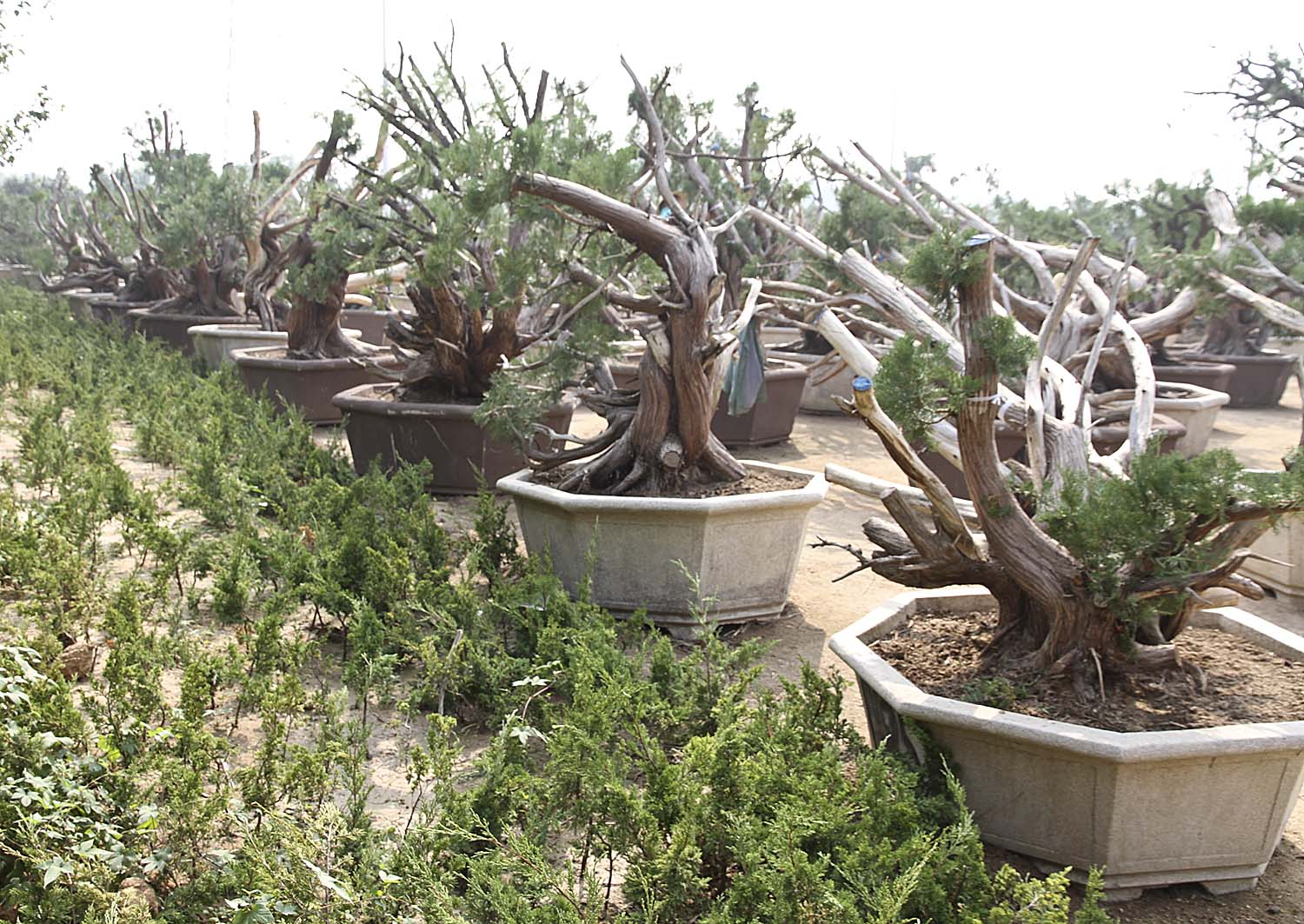
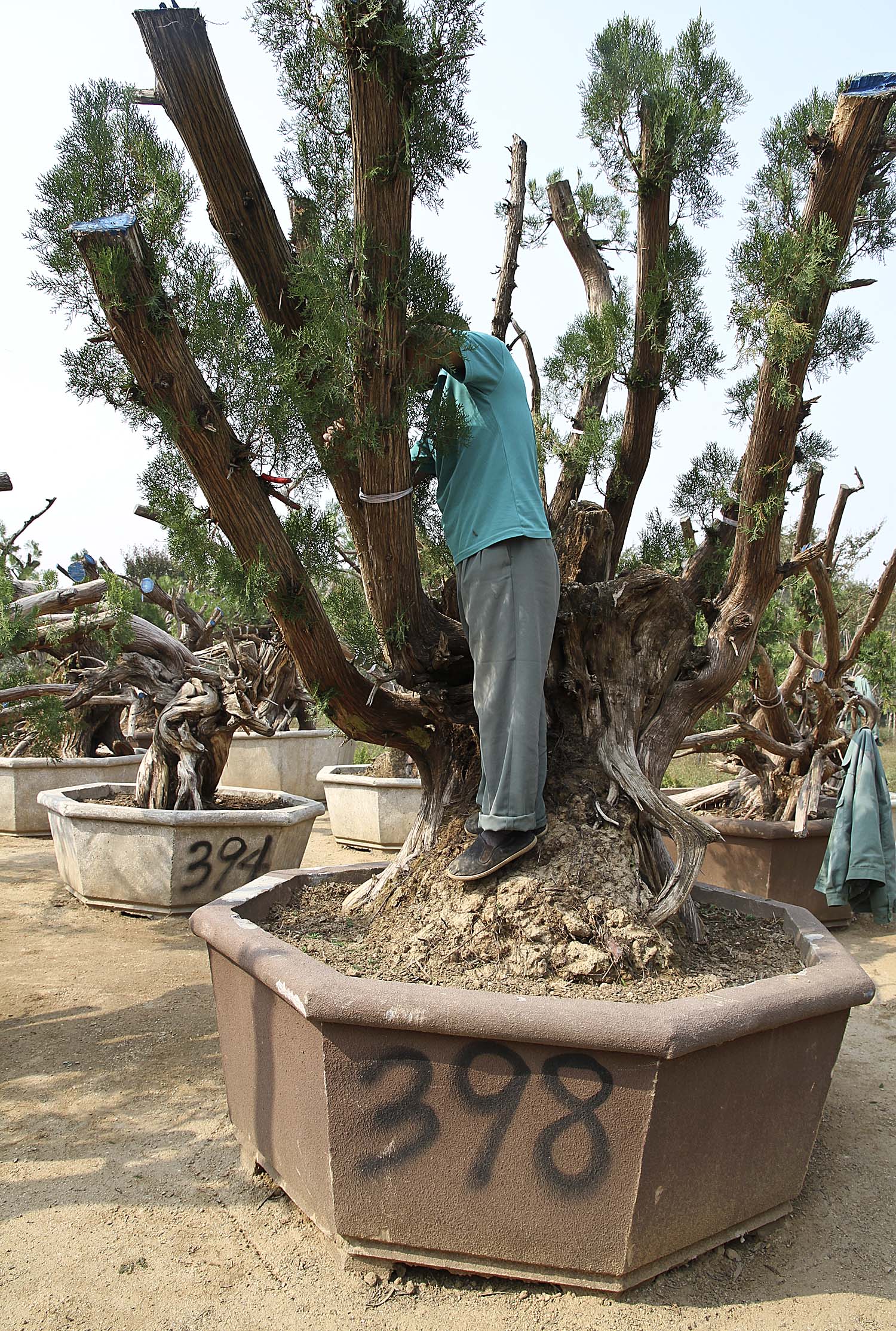
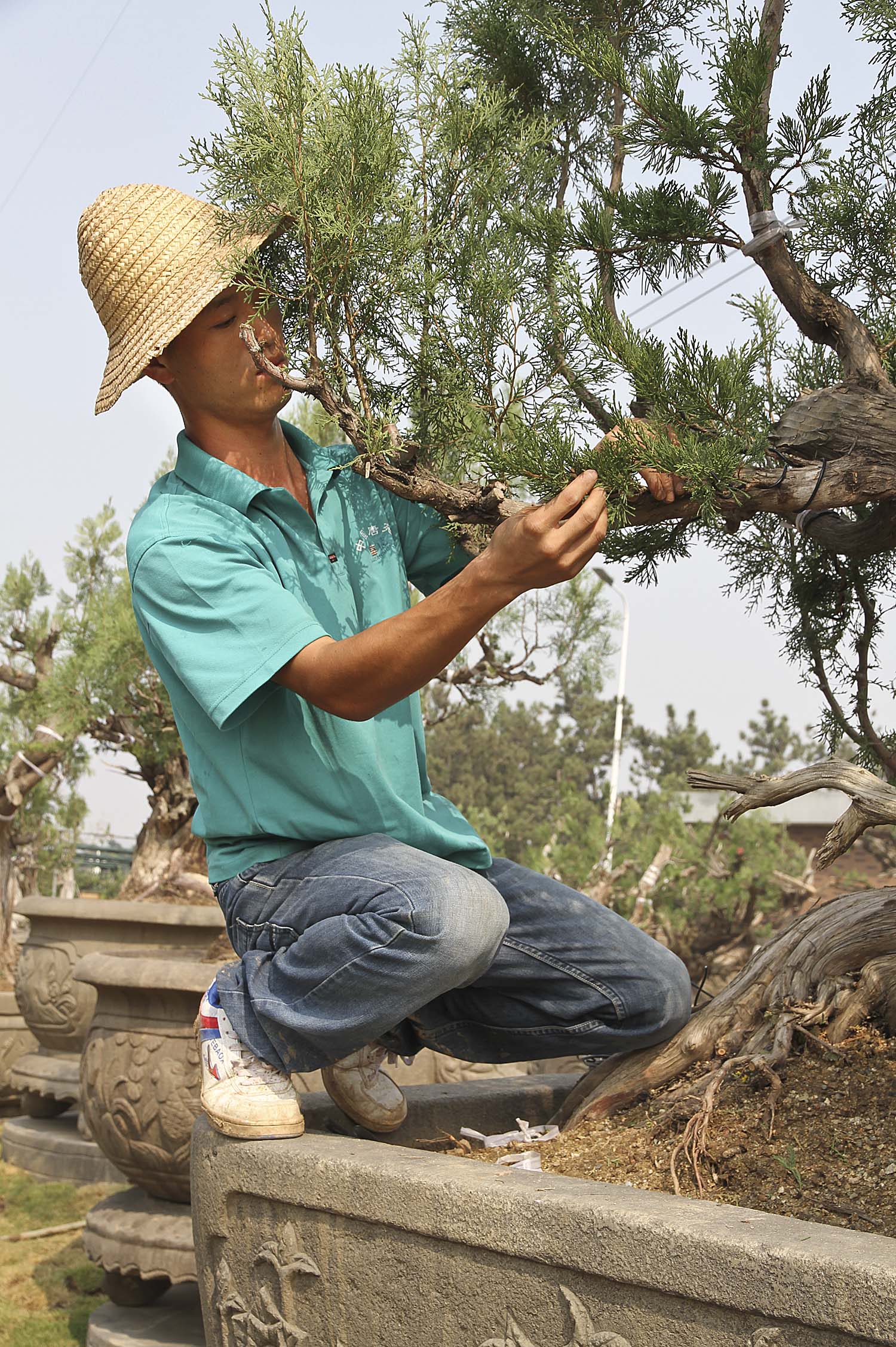
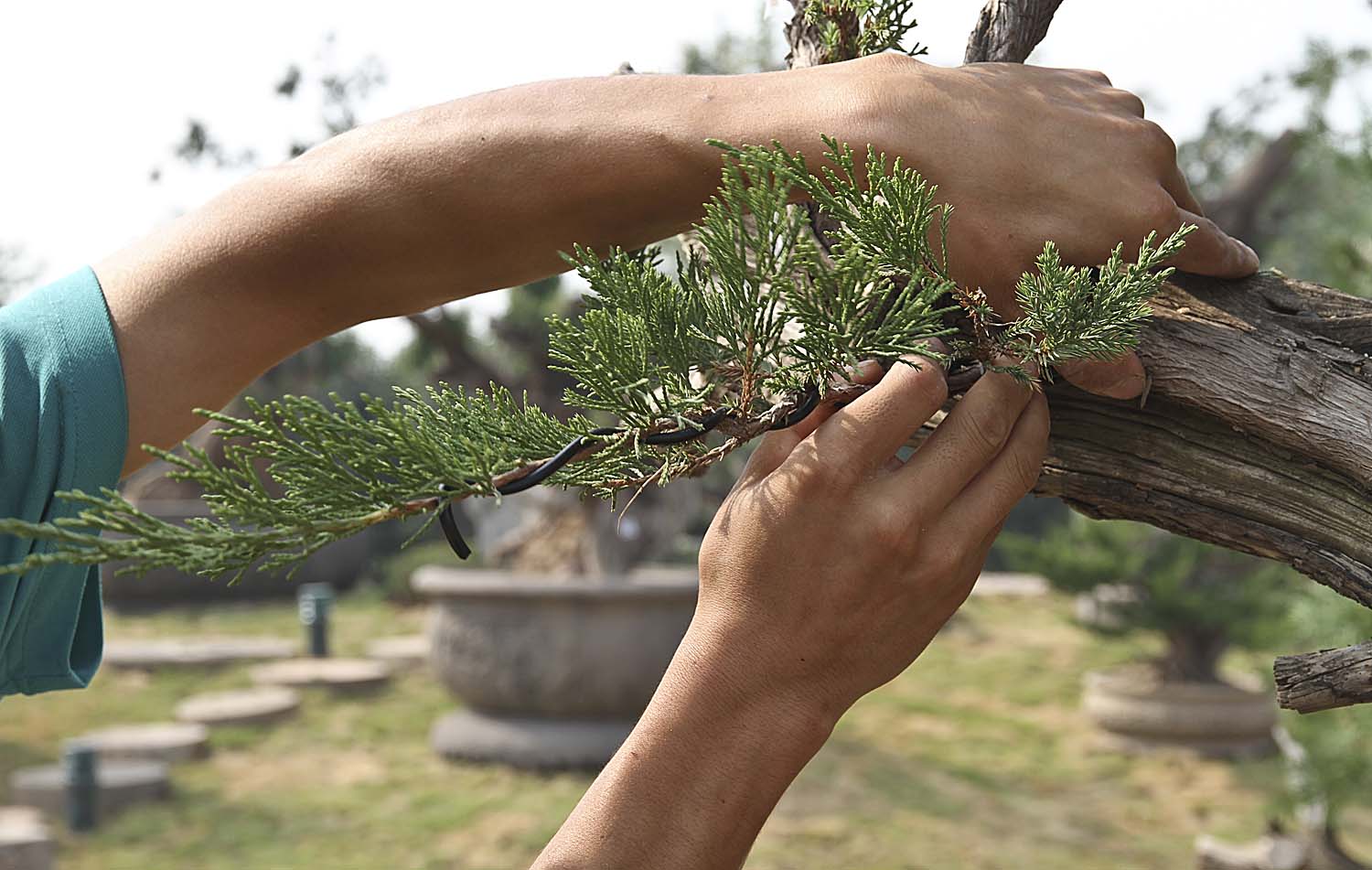
Directly outside my room as I write I can see hundreds of HUGE Arborvitae trunks which are being trained for bonsai by grafting juniper scions. The trunks must be at least three feet in diameter and each in an appropriate sized concrete pot. I was just watching a worker remove the binding tape and begin to wire the new shoots. Of course he was standing on the concrete rim of the pot in order to reach the new shoots. One worker then took me and Tonio Payeras from Spain across the road where we found another large field full of powerful huge Arborviate trunks. These trees however, were not in decorative concrete pots, just plain concrete. The trees were individually numbered and I remember seeing a tree numbered 523. I wonder if there are any of these tree still in nature or are they all here in this garden.

Image

Image

Image

Image

Image

After another dinner banquet we retired for the evening and began the forum the next morning.

Image

Image

Image