ABS BONSAI LEARNING SEMINAR

September 13-15, 2013

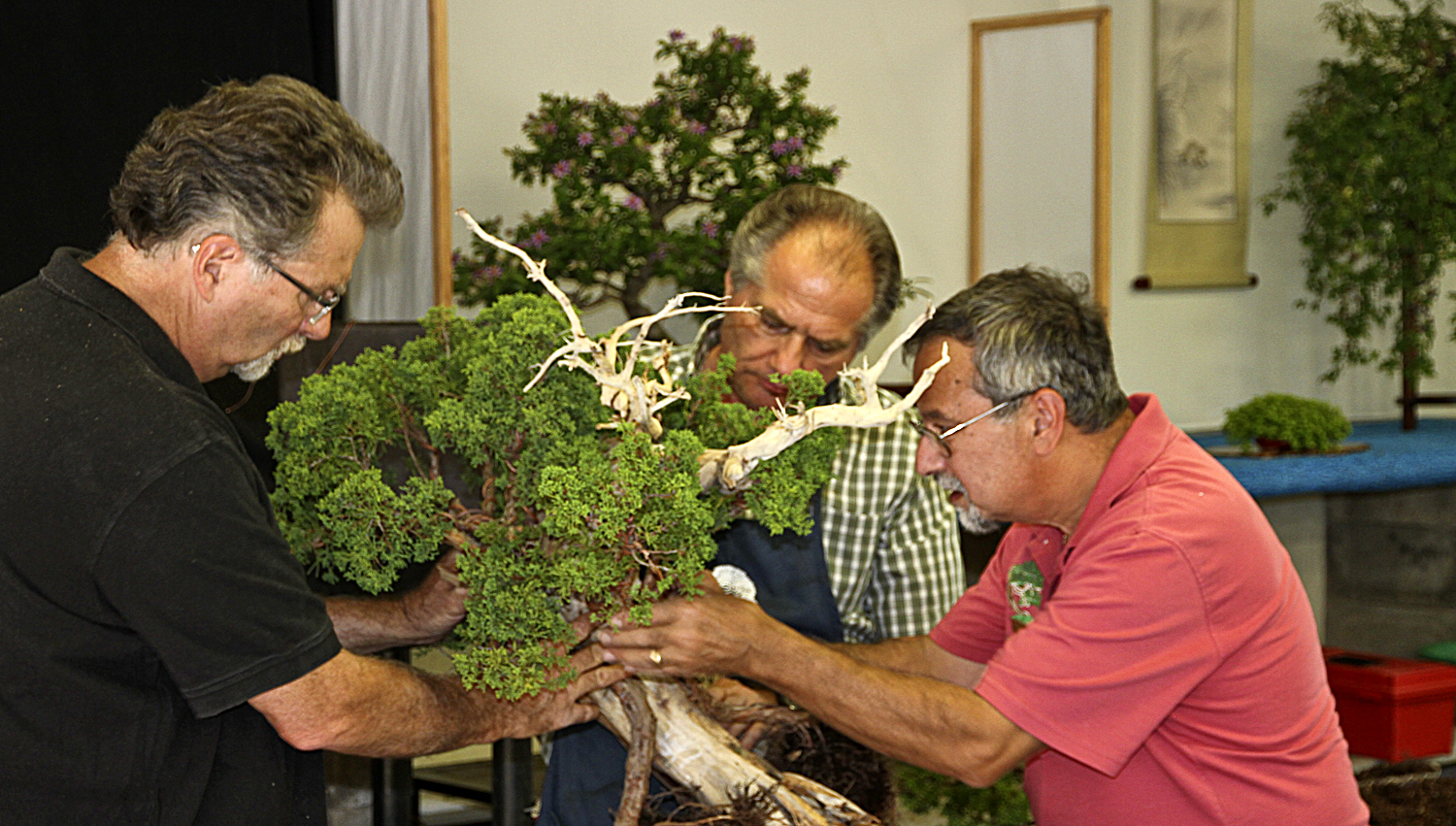
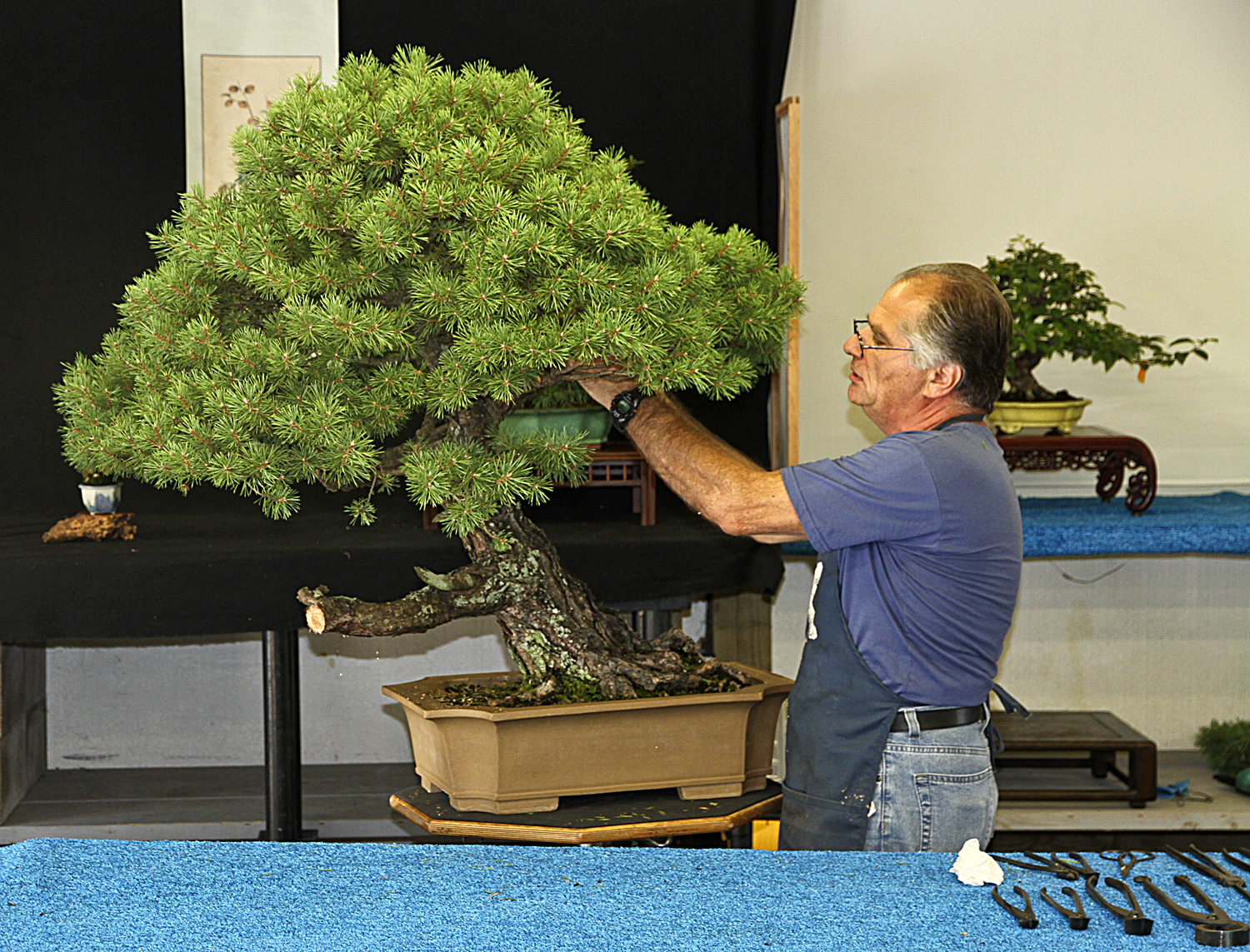
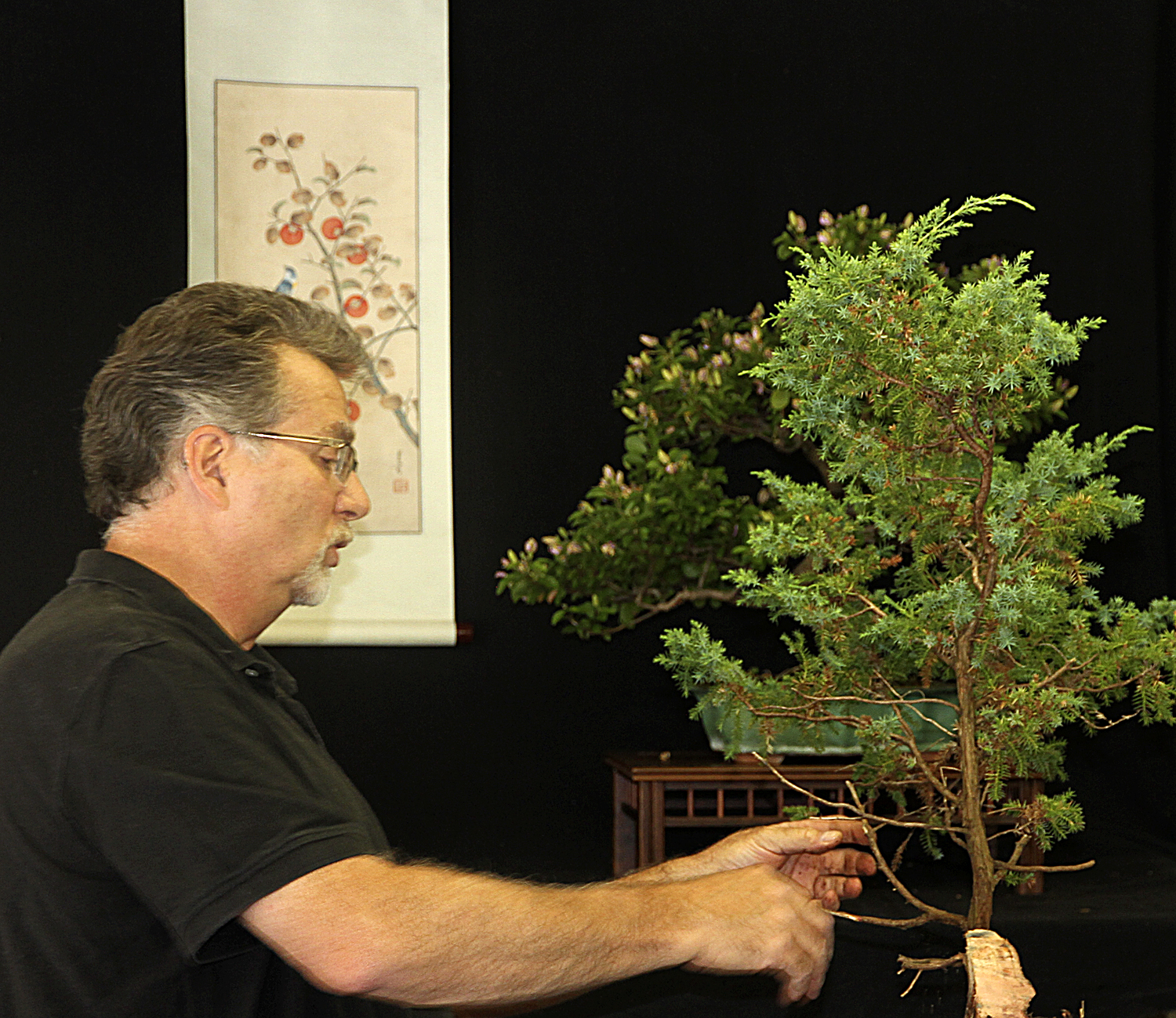
The American Bonsai Society and Mohawk Hudson Bonsai Society are hosting the ABS Bonsai Learning Seminar in Saratoga Springs, NY this weekend. There are over 40 various teaching seminars and workshops during the three day event.

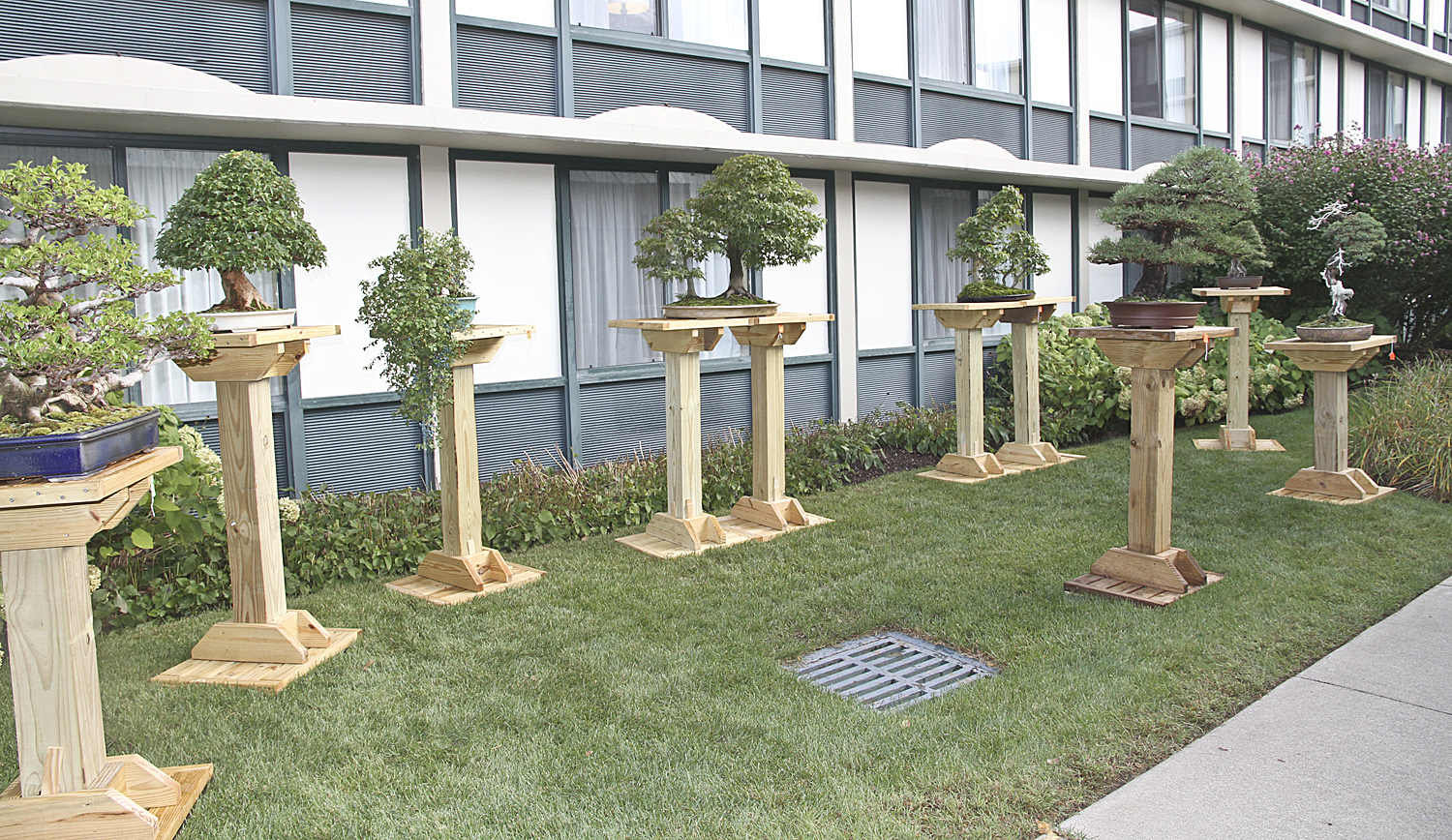
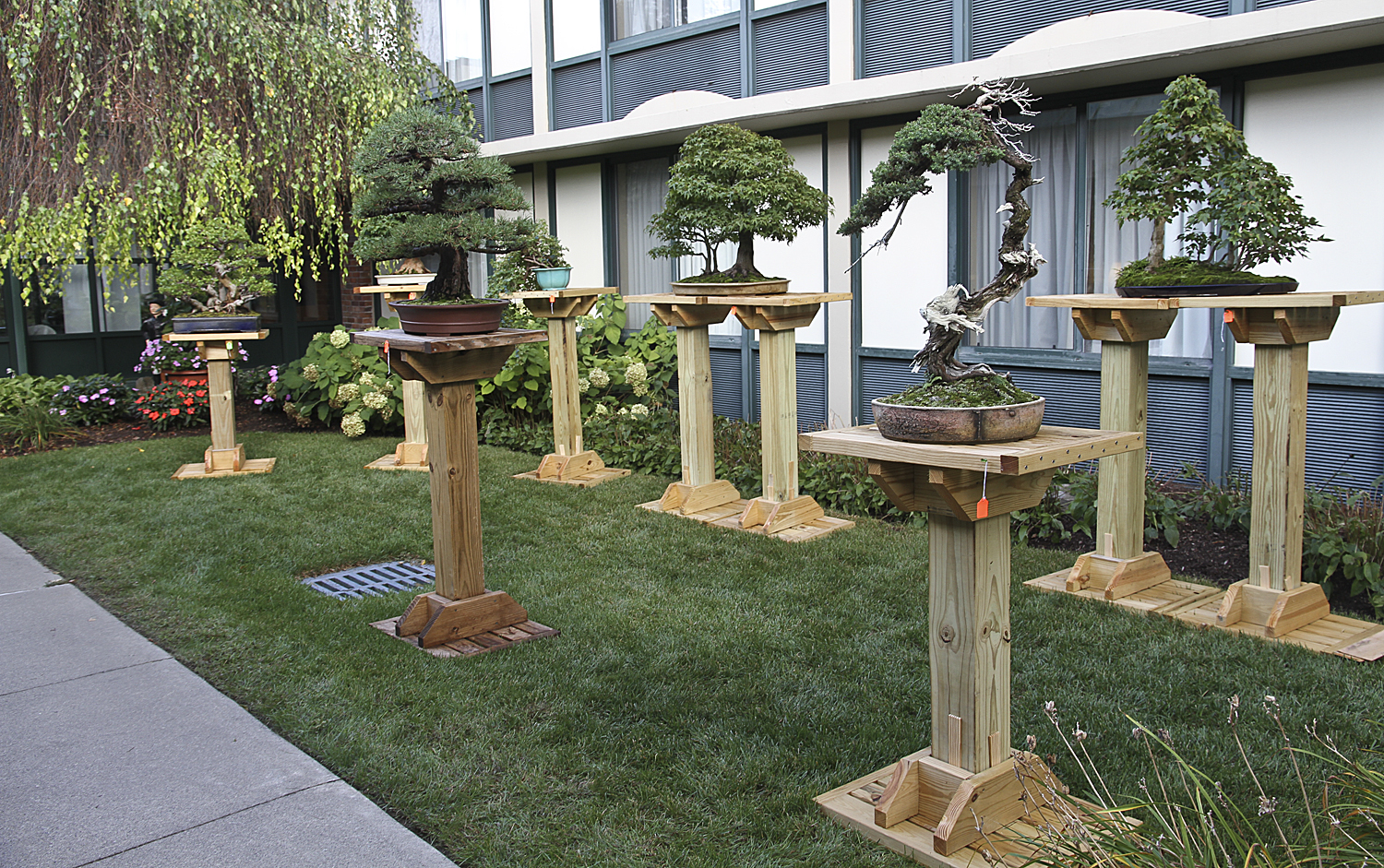
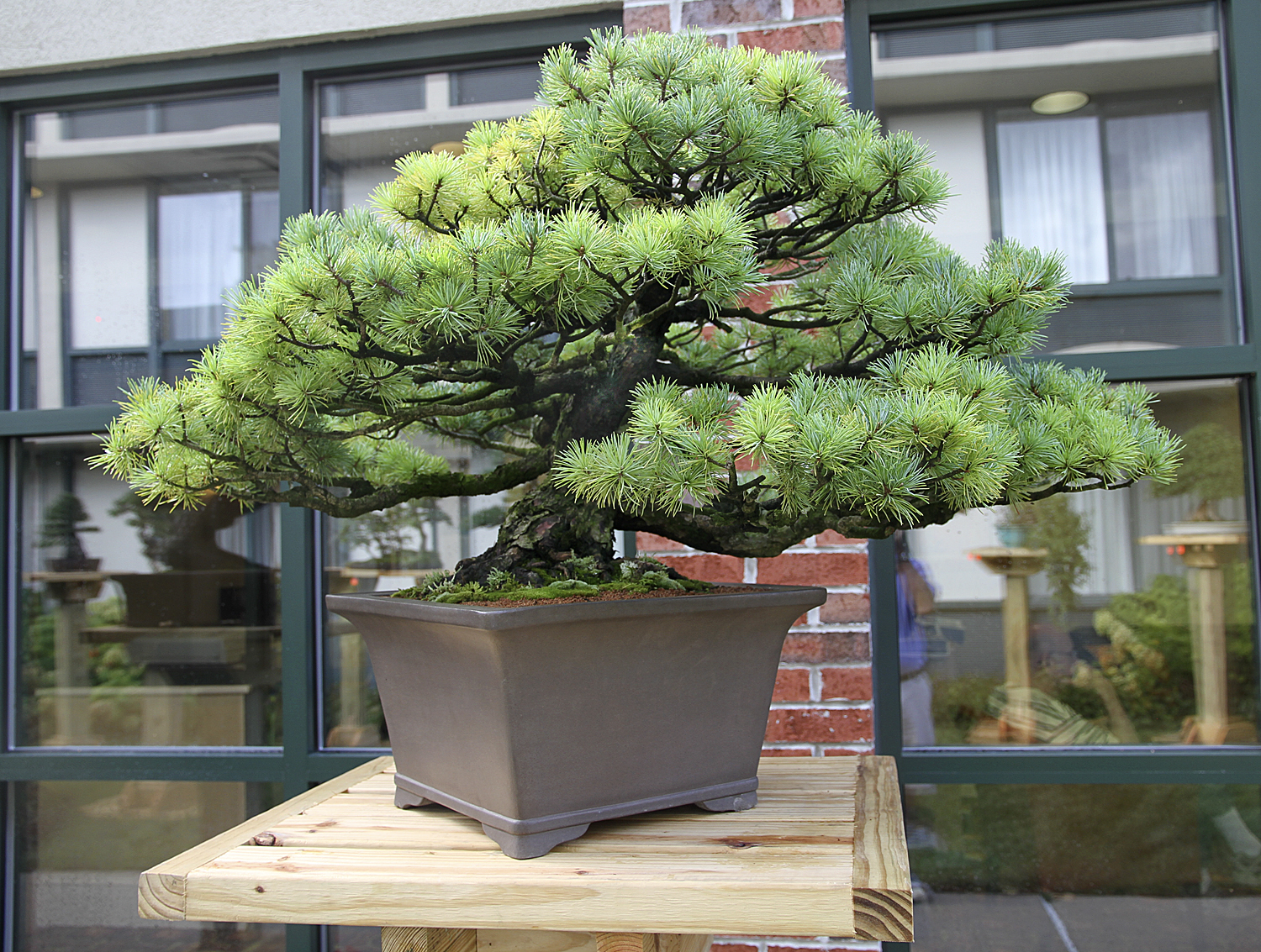
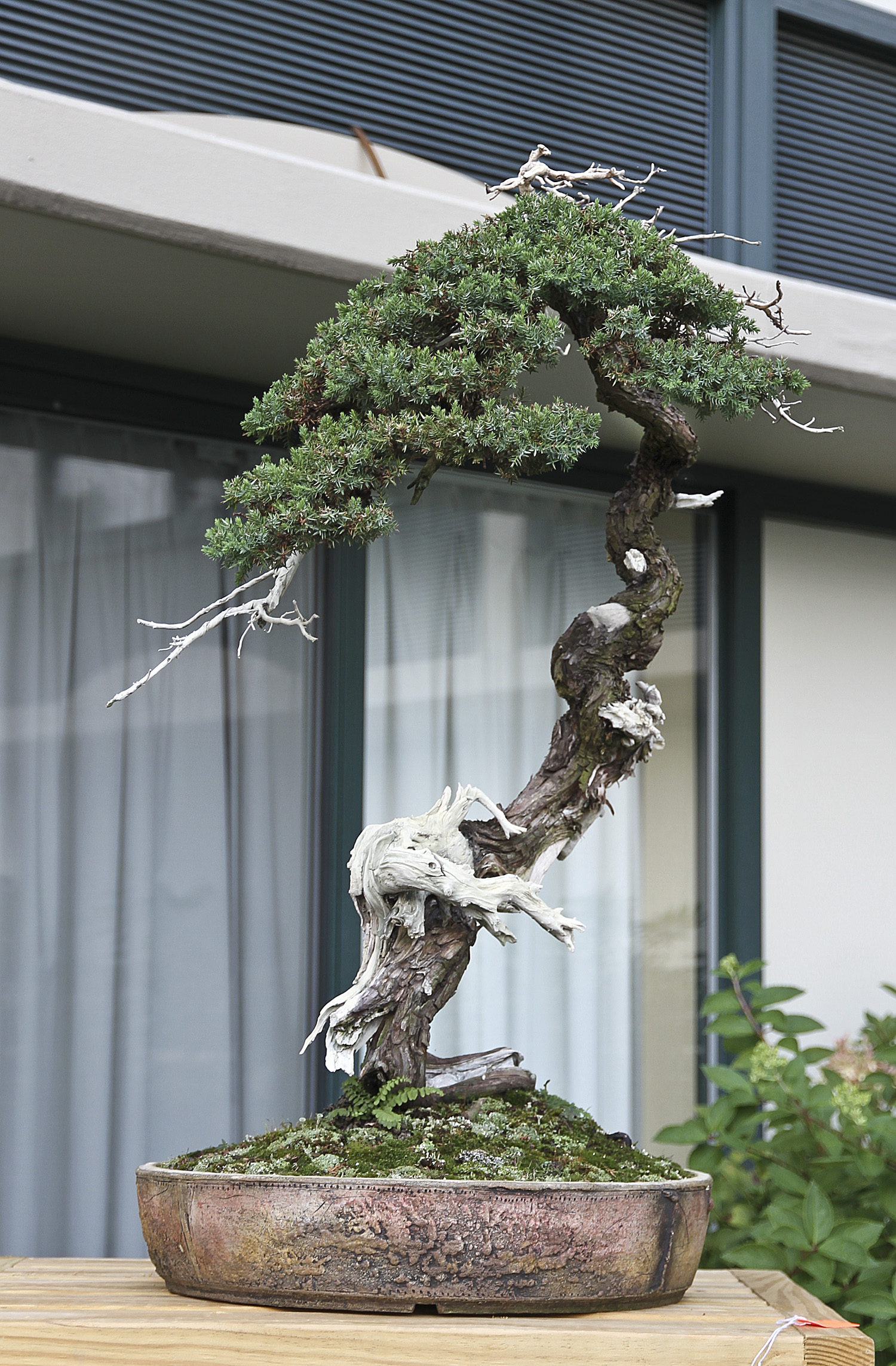
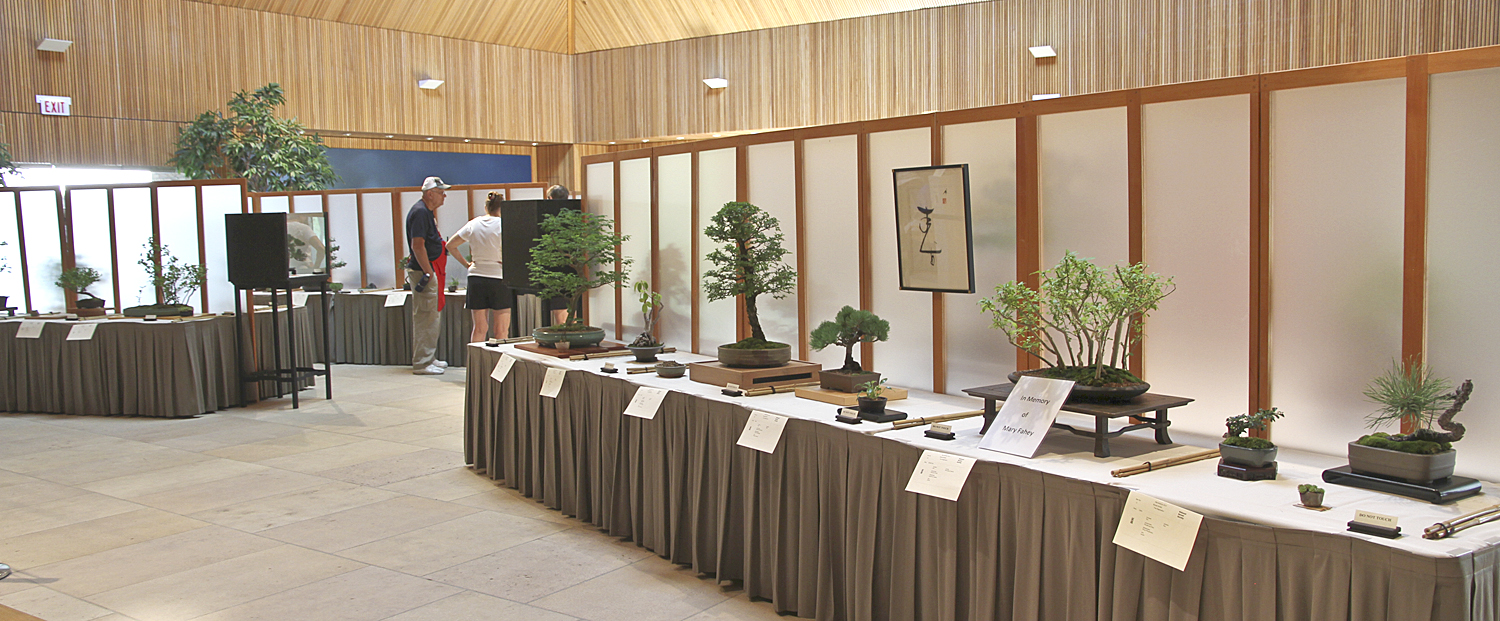
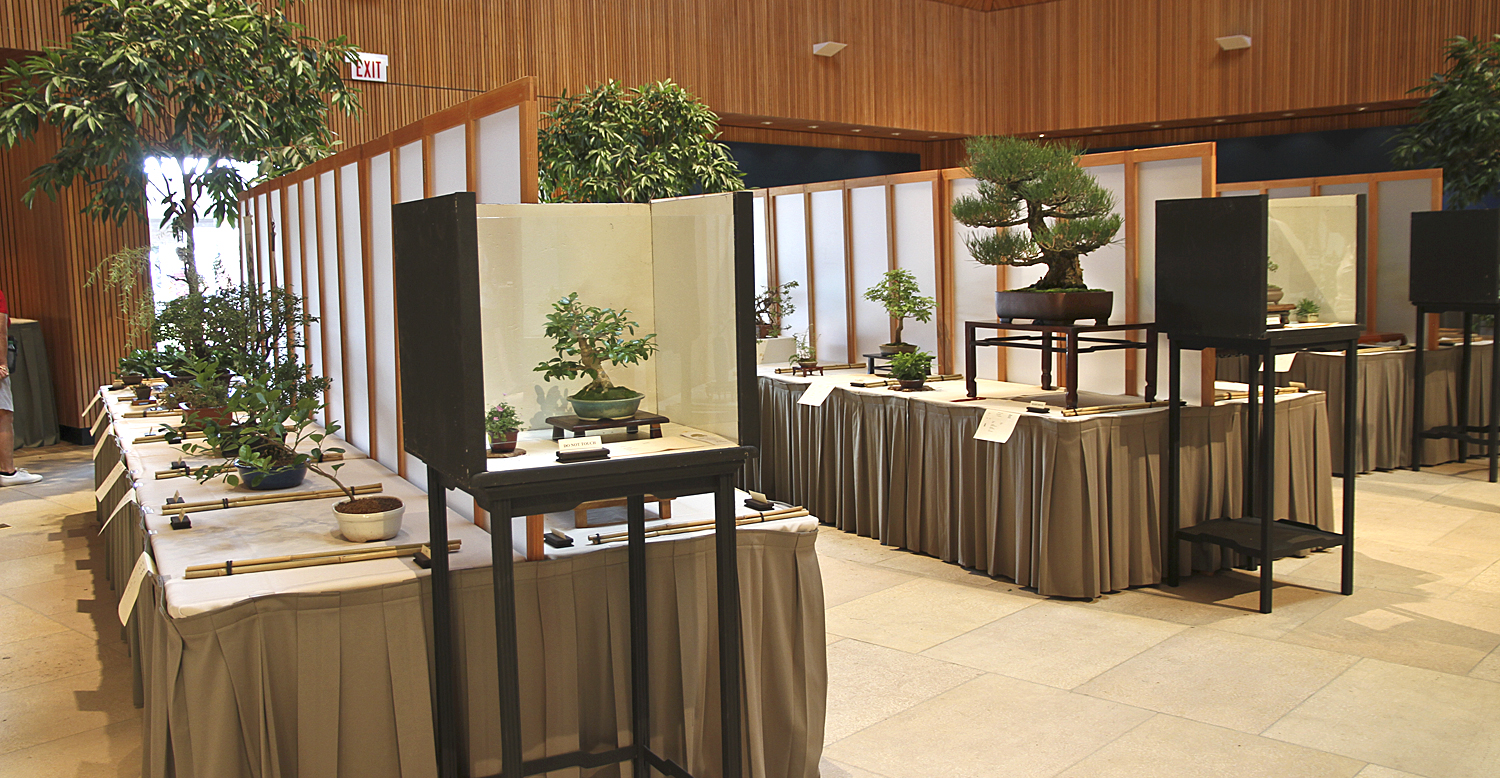
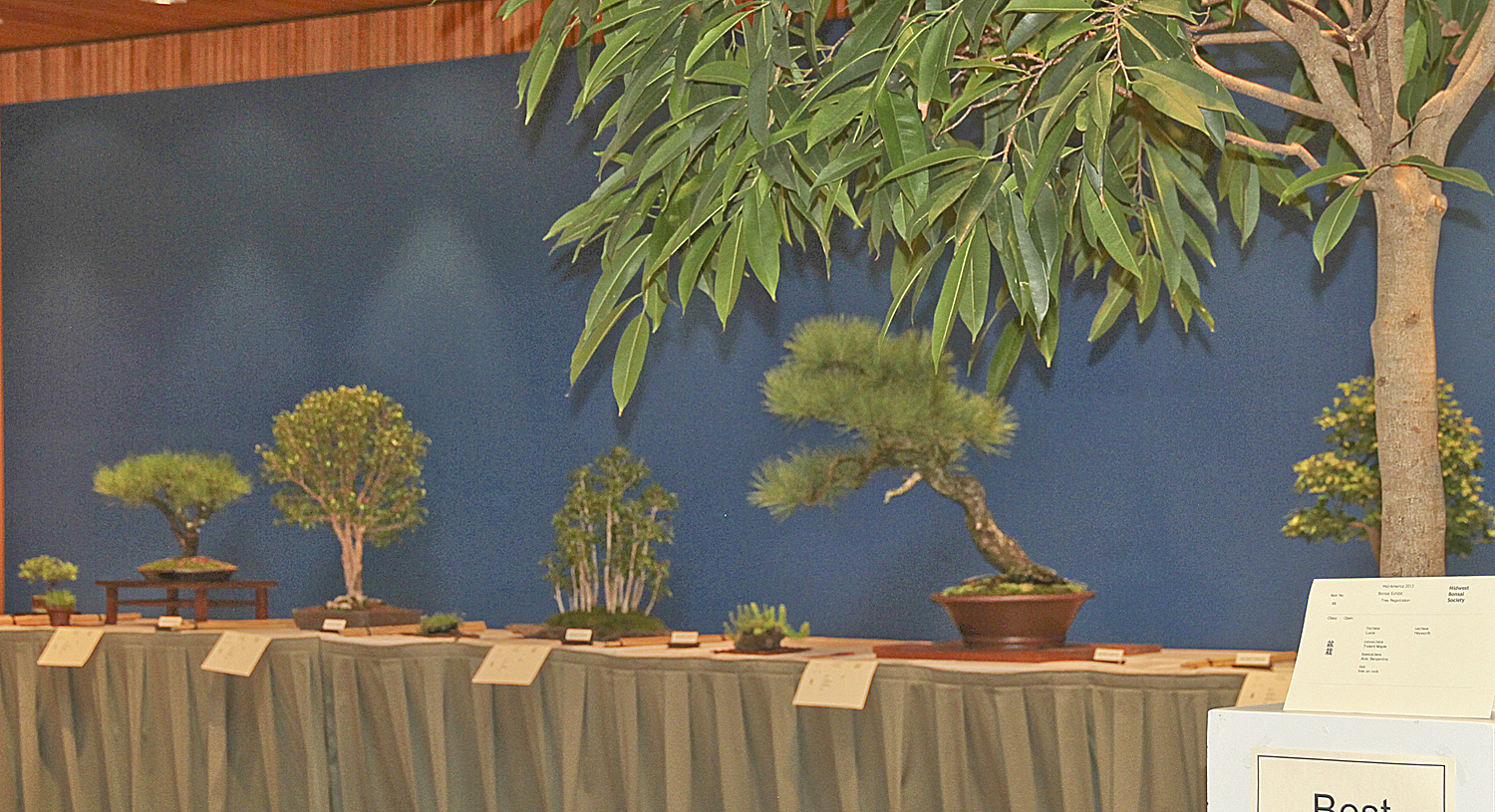
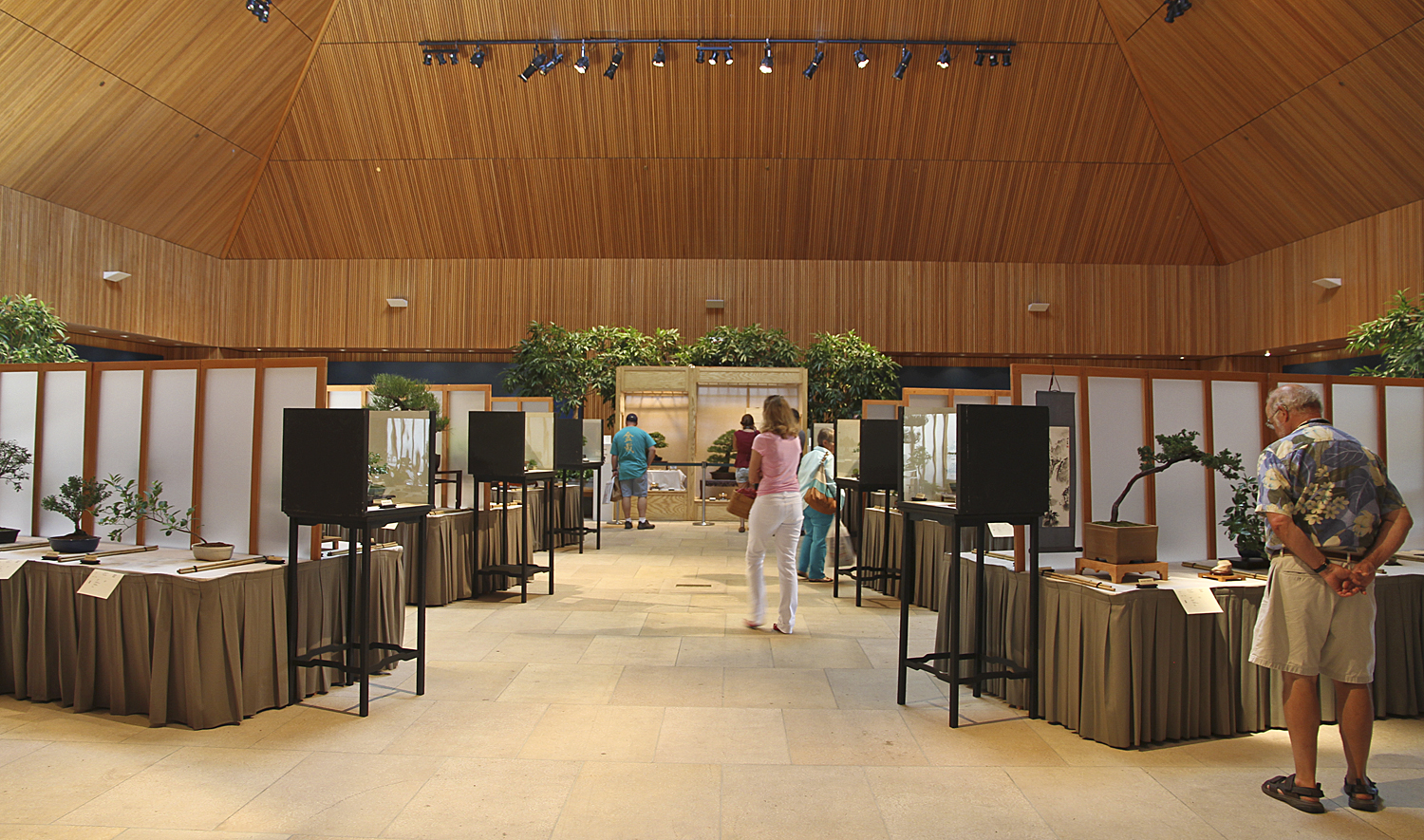
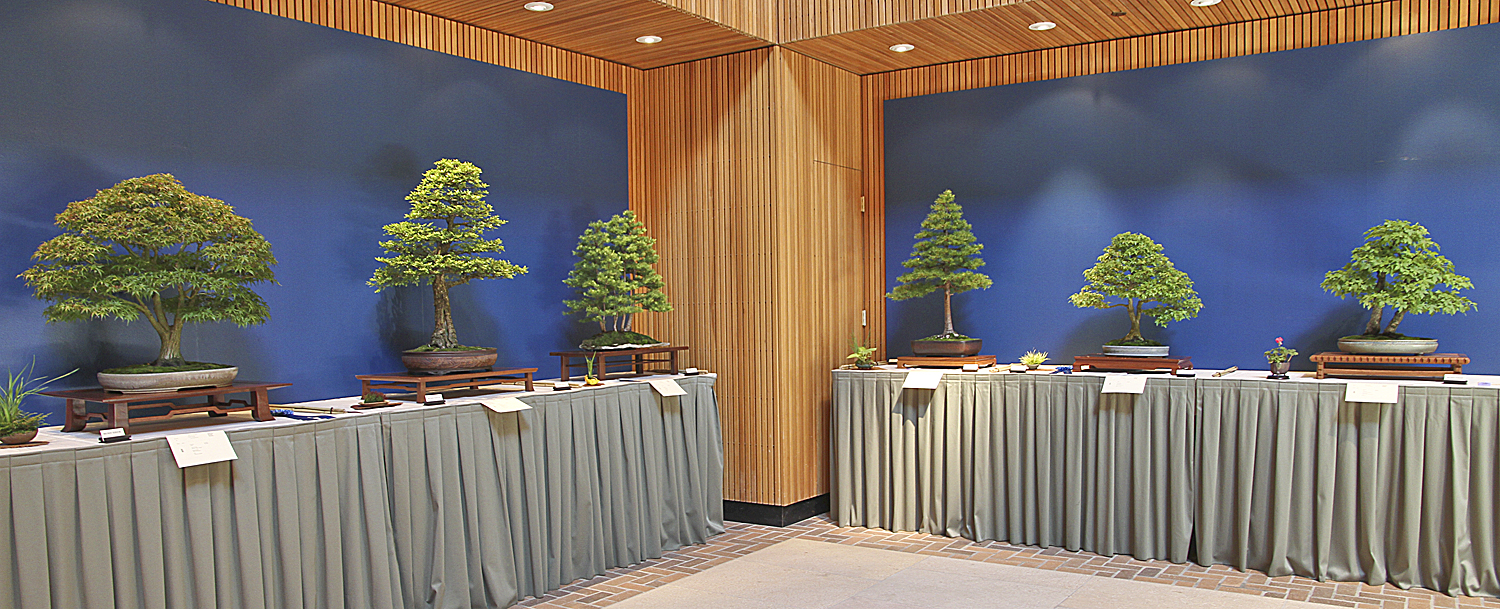
One of the favorite part of any bonsai gathering is the bonsai exhibit. The bonsai are quite outstanding, but displayed here in a rather unusual setting. All the bonsai, except for the shohin bonsai and a few other smaller specimens are displayed outside around the swimming pool and entrance pathway. Each bonsai is exhibited on newly made tall outdoor display stands. Heavy appearing pressure treated lumber was used for the display stands.

Yesterday I suddenly noticed all the ABS directors exit their board of directors meeting and proceeded in single file to the swimming pool area to move the bonsai because of an approaching thunderstorm accompanied with hail. This morning all the bonsai were back on the stands and now its pouring rain outside, so watering will not be necessary today. Trees were not labeled.

Image

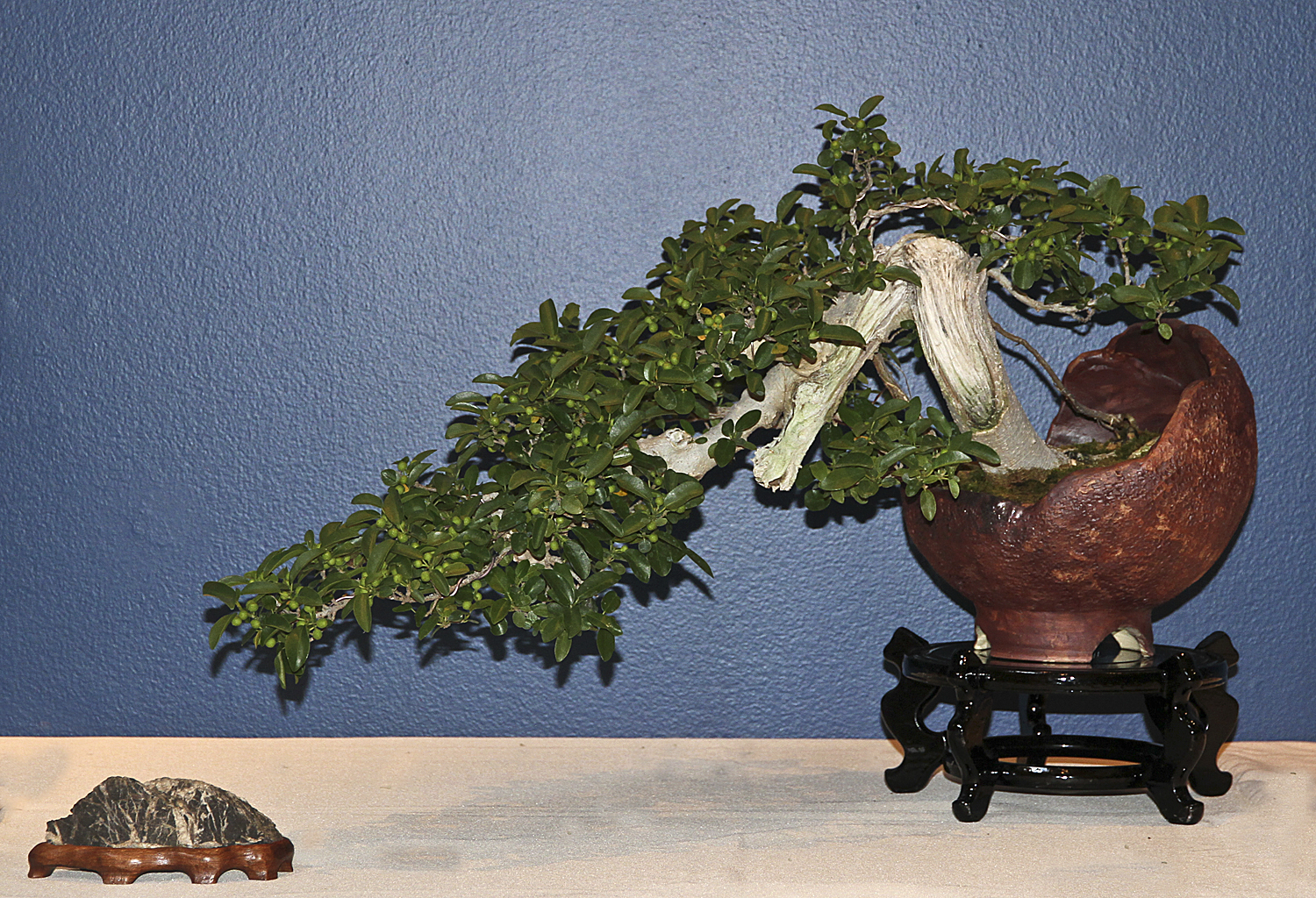
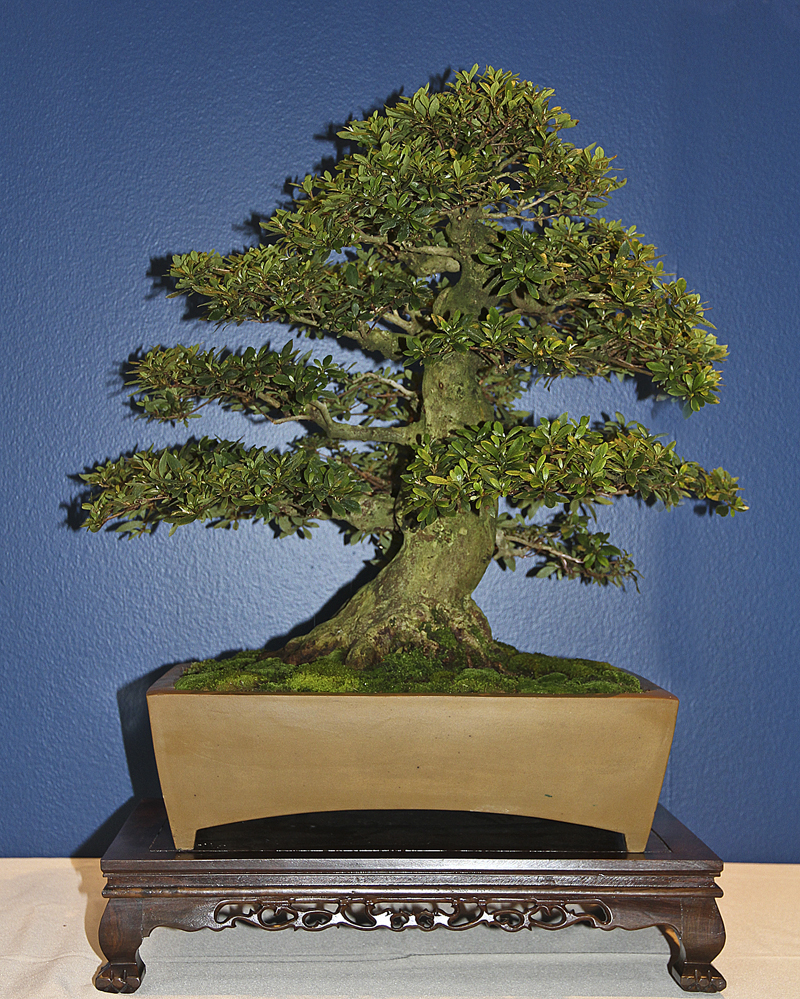
Firethorn

Image

Image

Outdoor exhibit

Image

Outdoor exhibit

Image

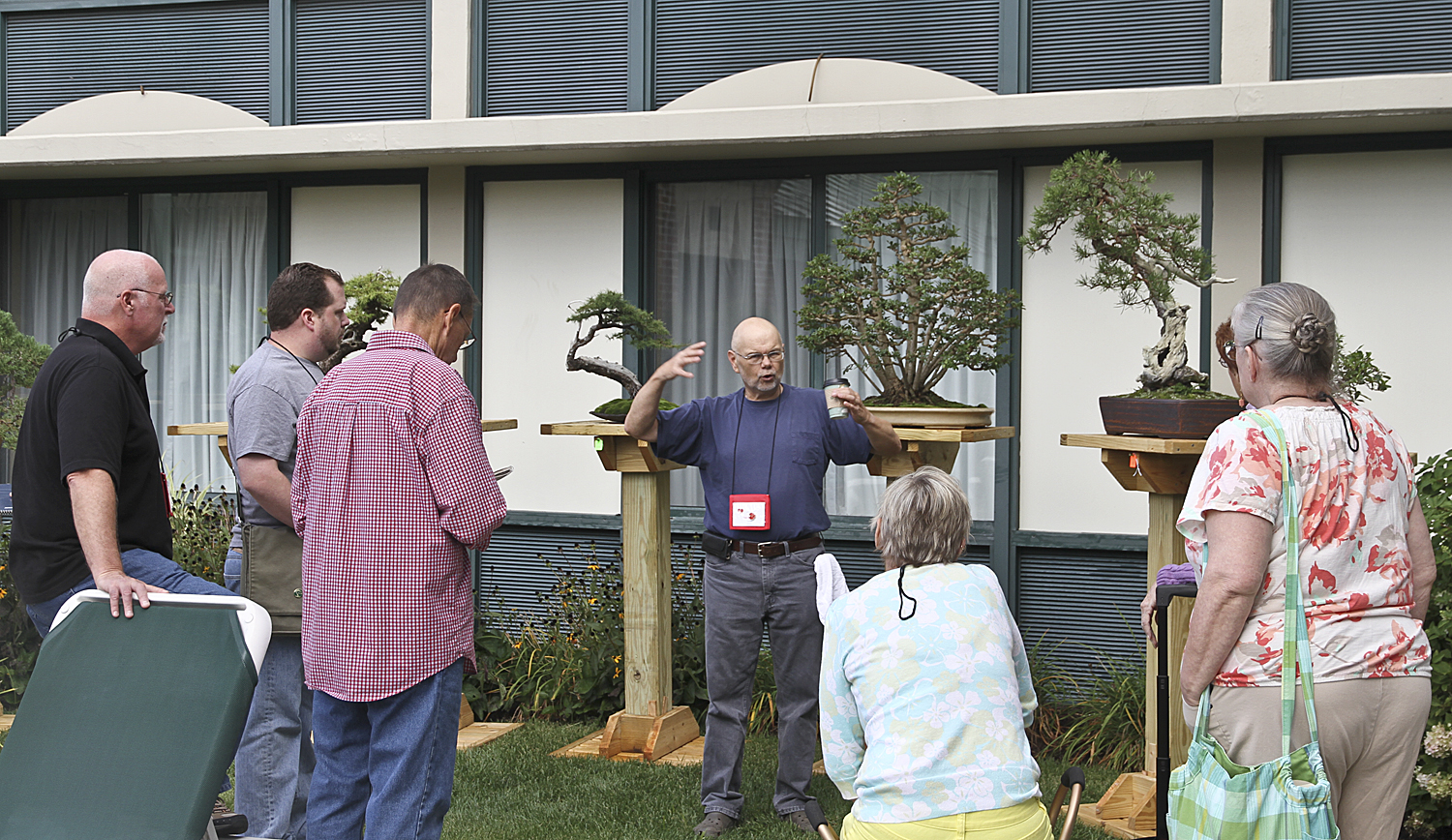
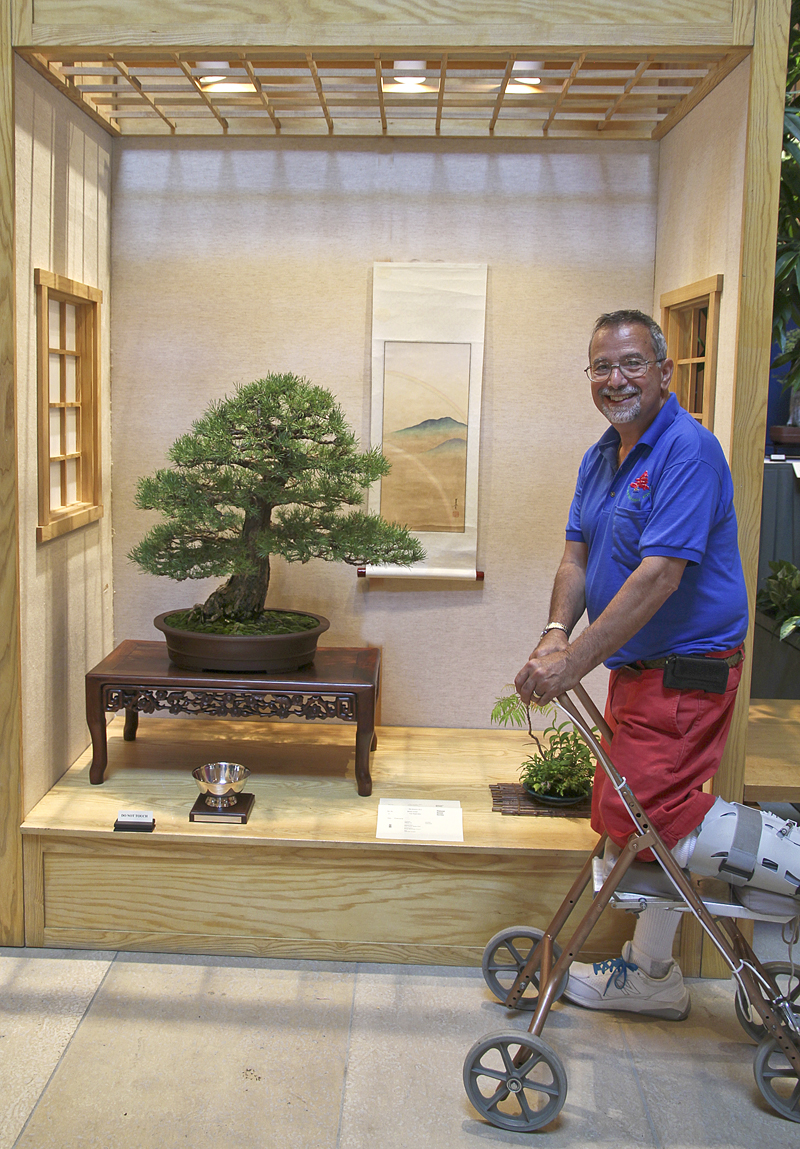
Ted Matson exhibit critique

Image

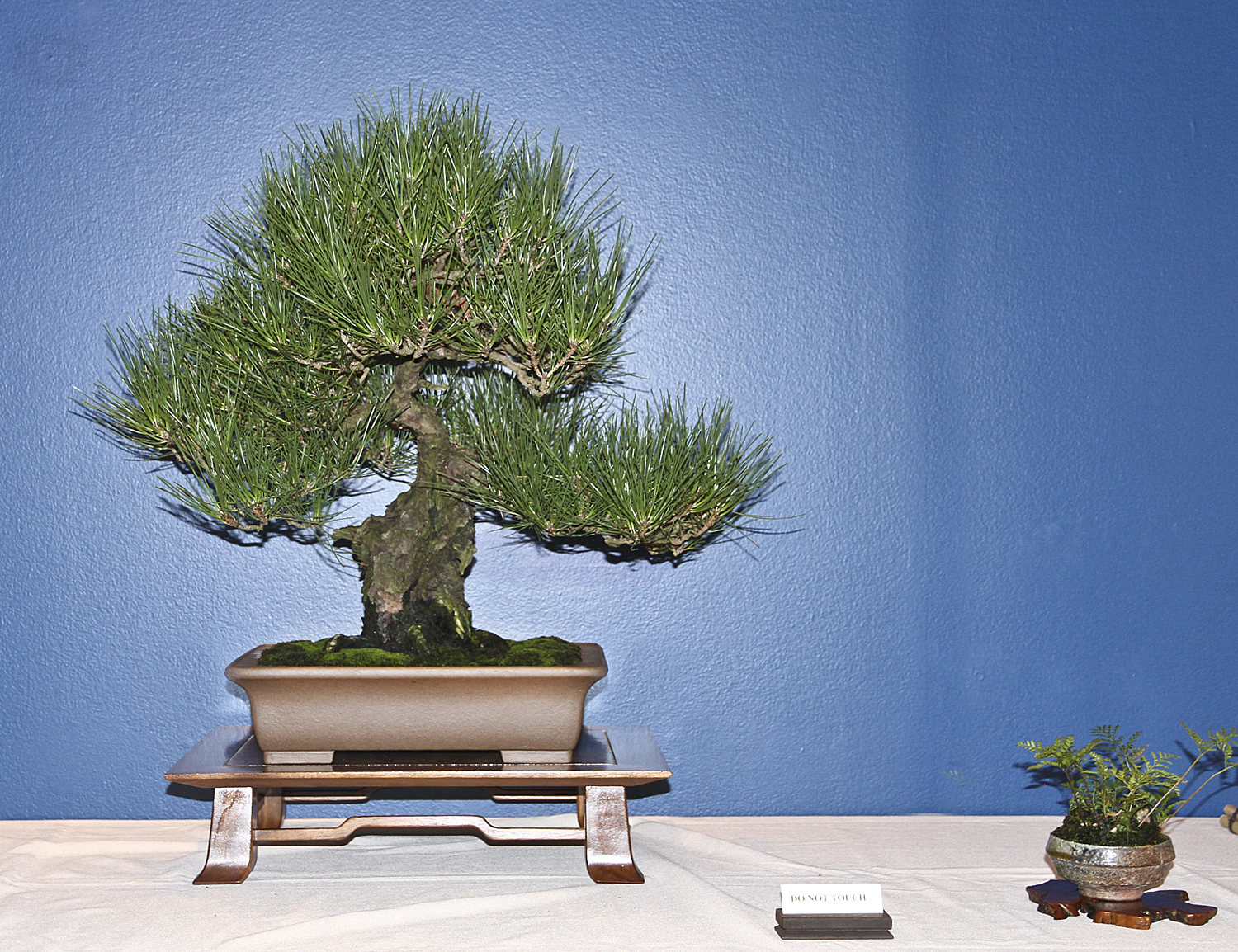
Japanese black pine

Image

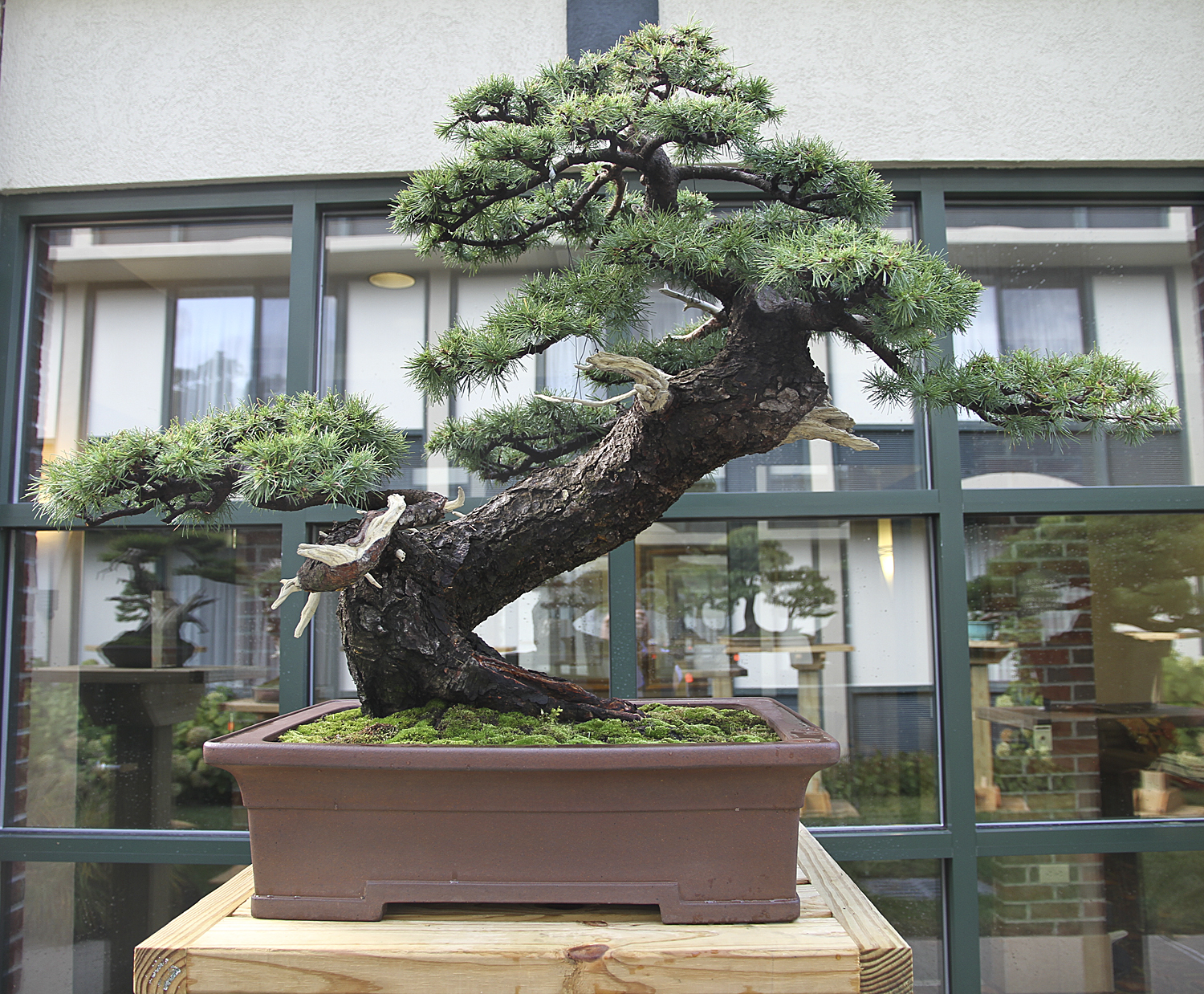
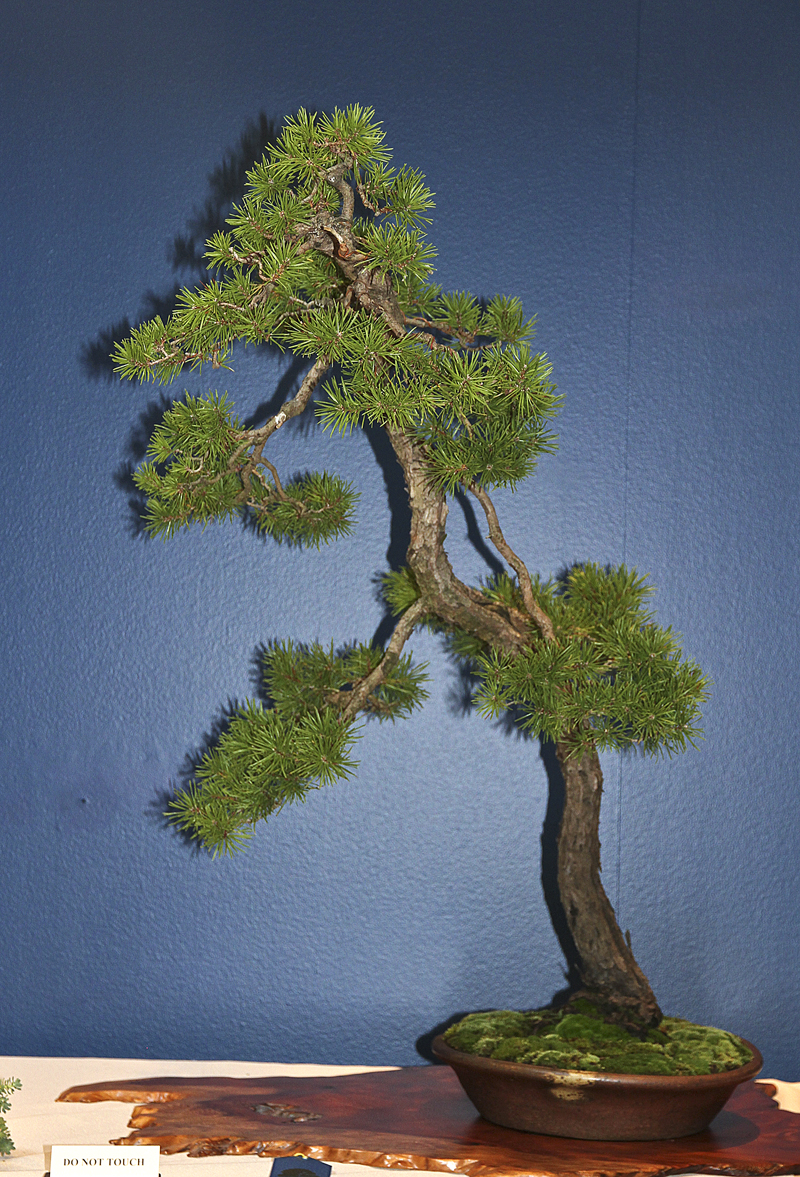
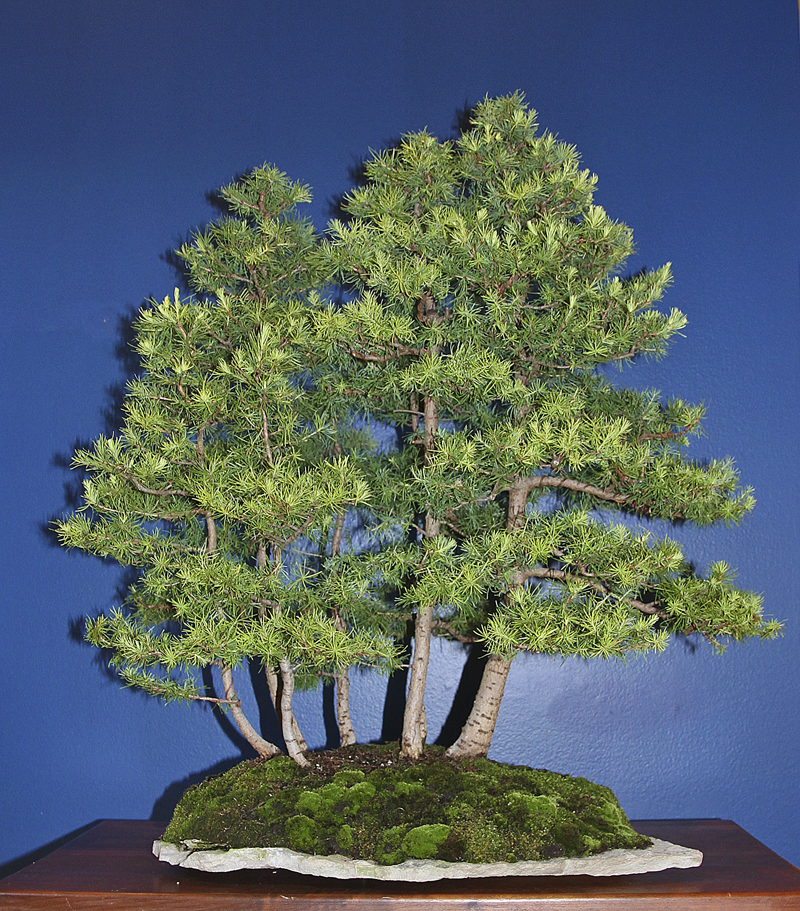
American larch

Image

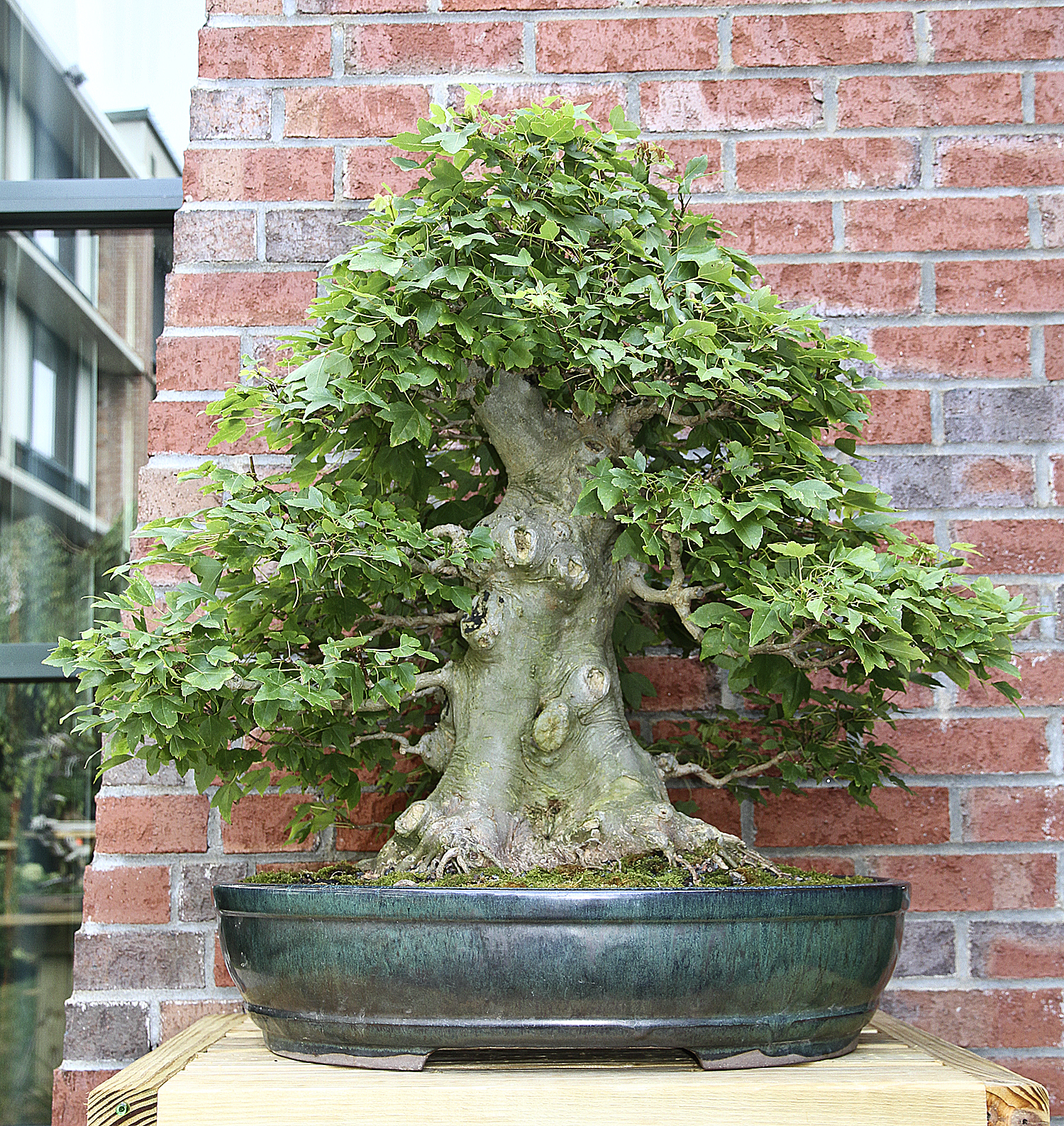
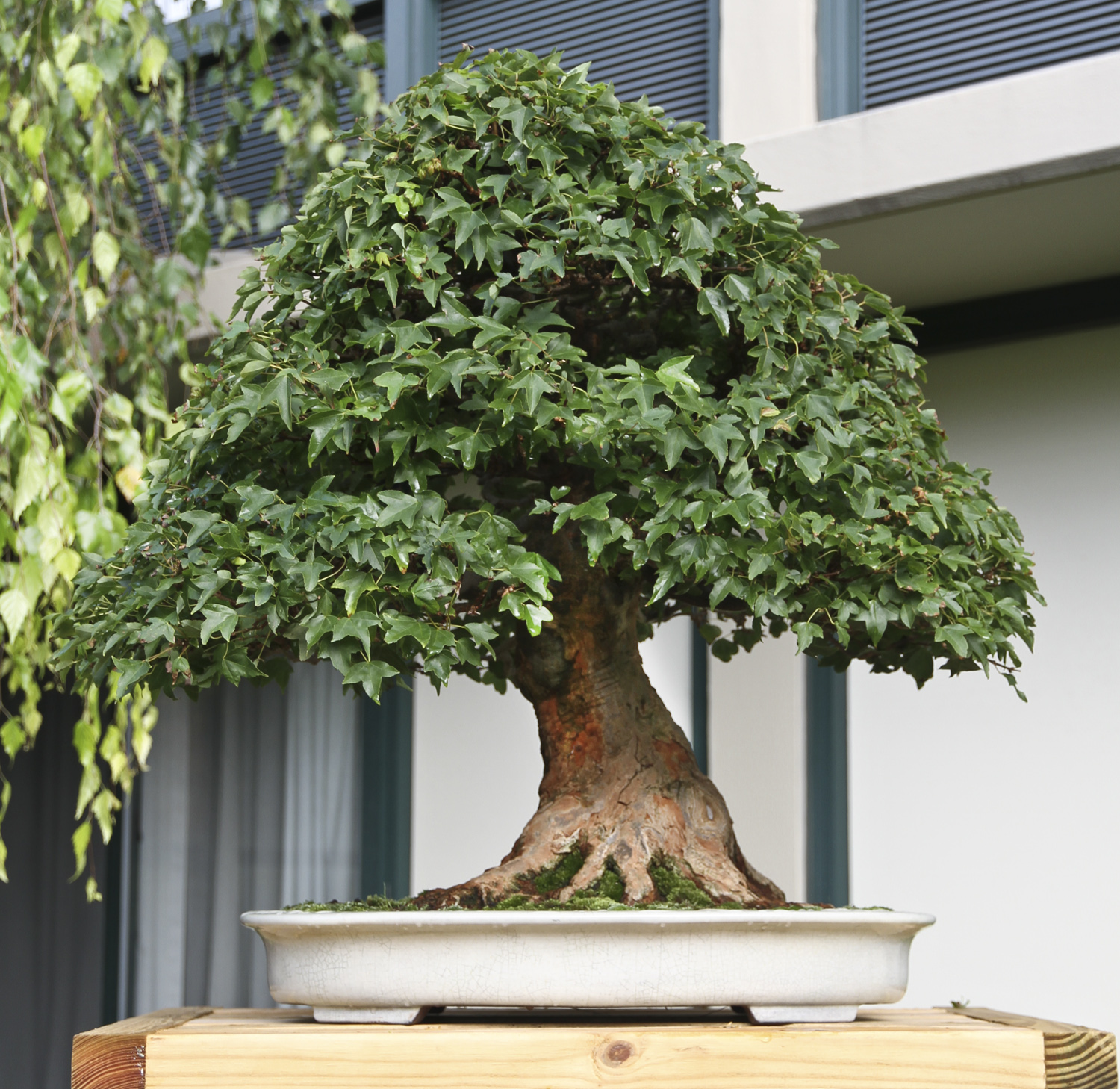
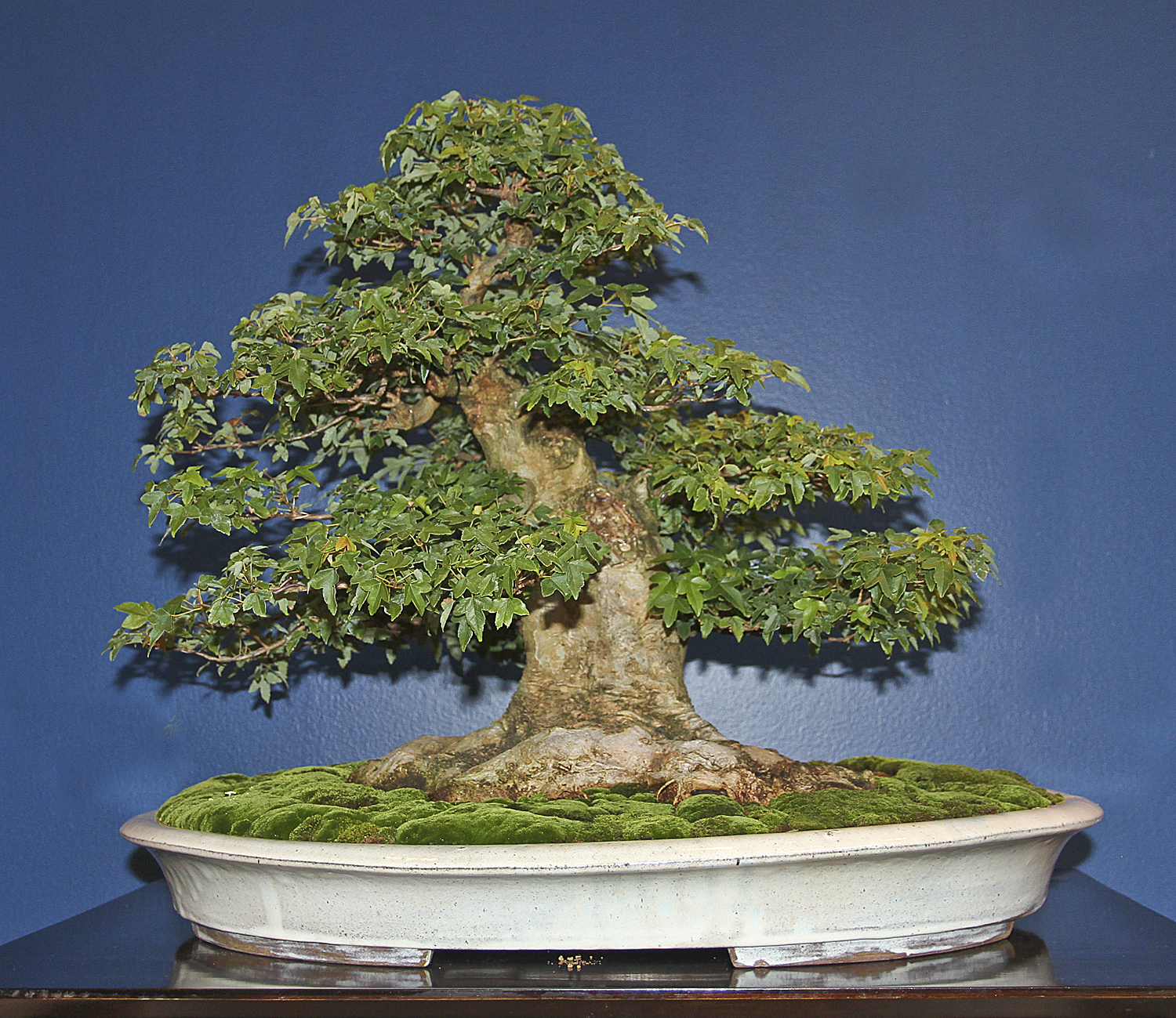
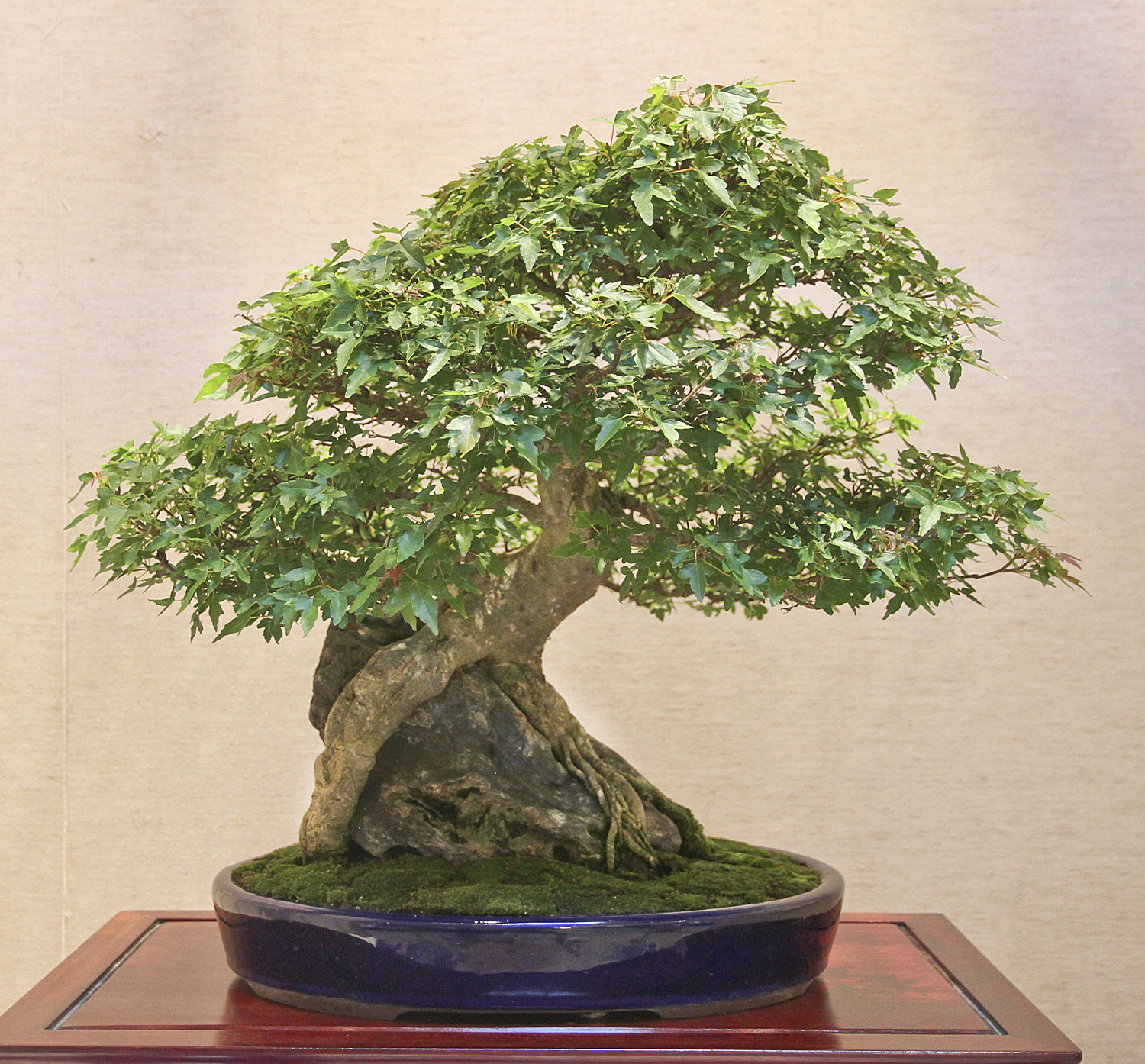
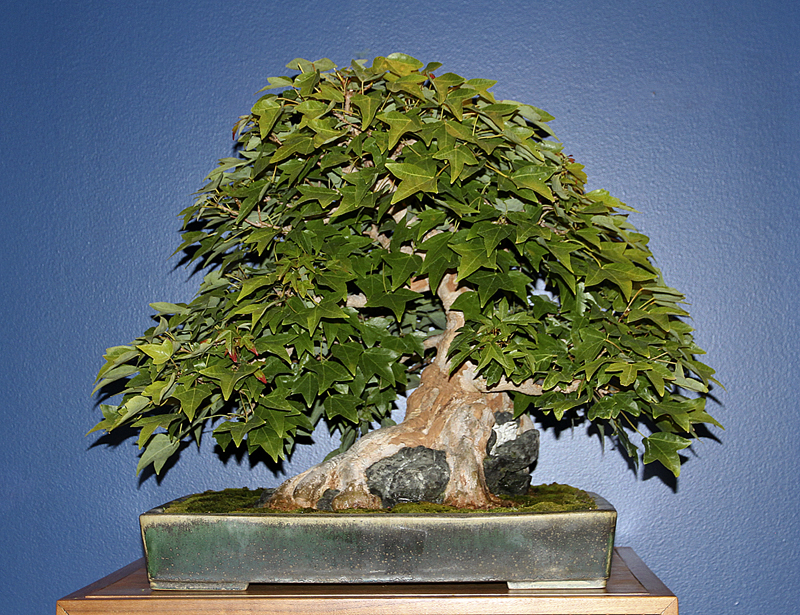
Trident maple

Image

Lavendar star flower- Grewia

Image

Dwarf Chinese elm

Image

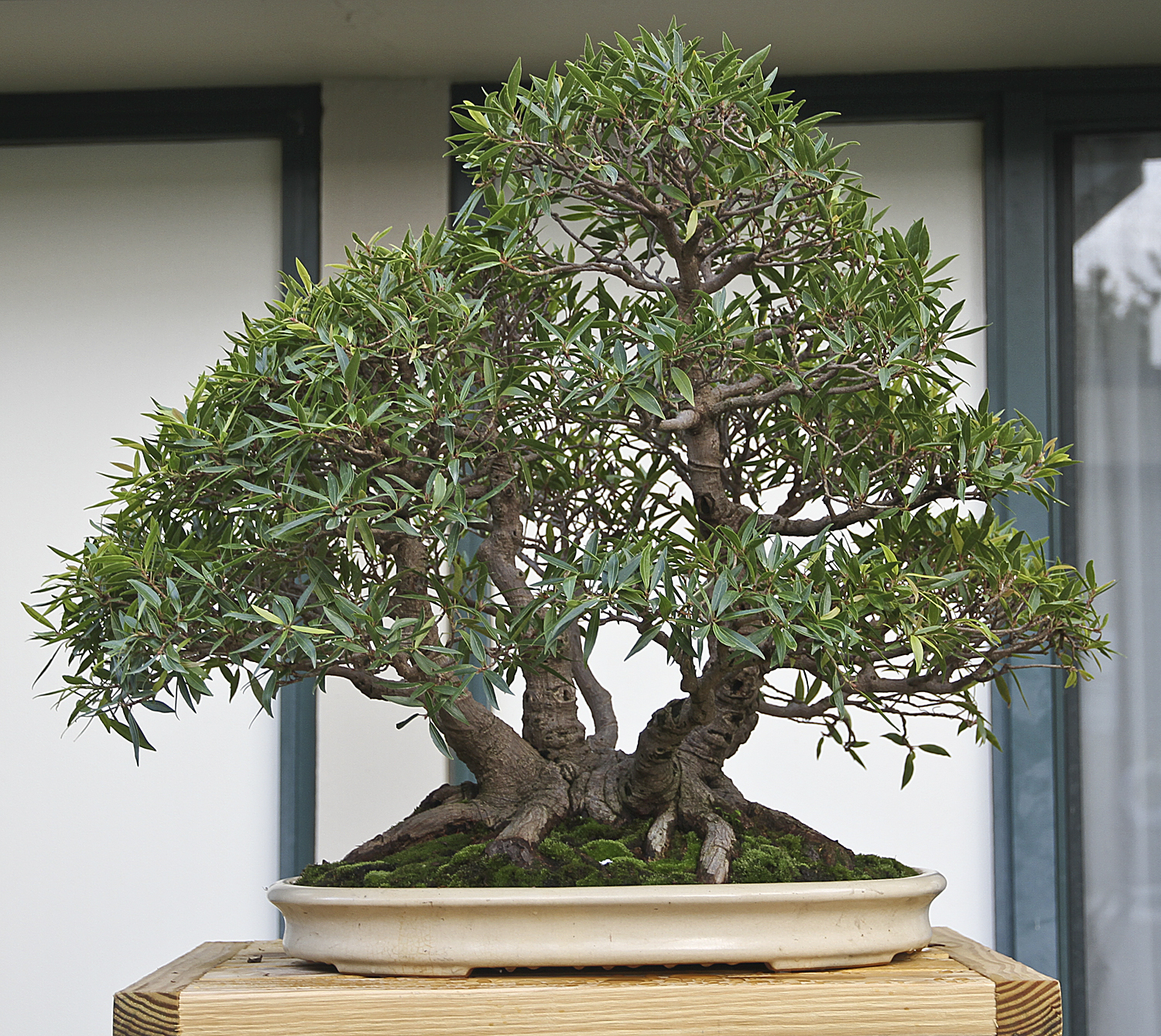
Willow-leaf fig

Image

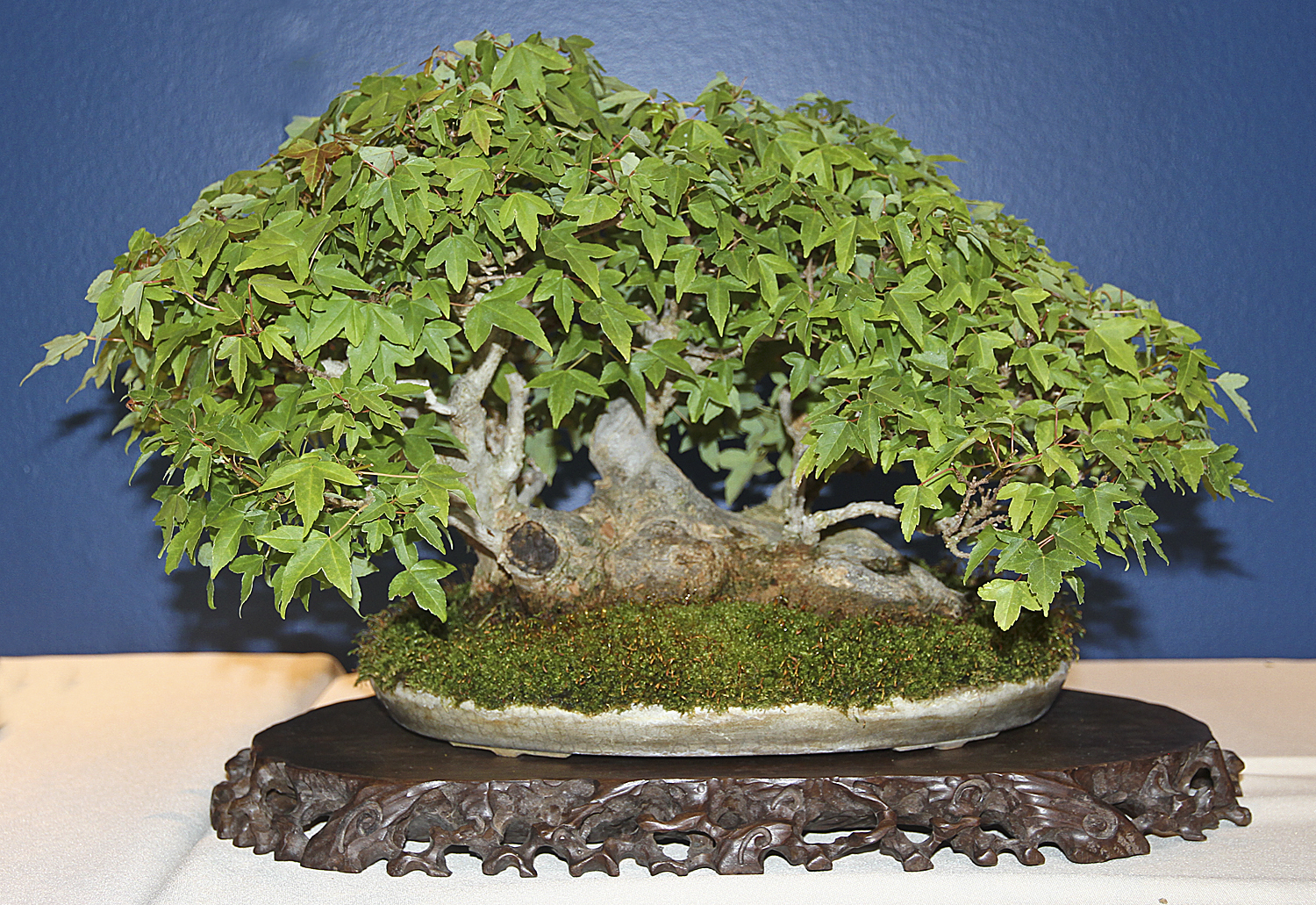
Trident maple

Image

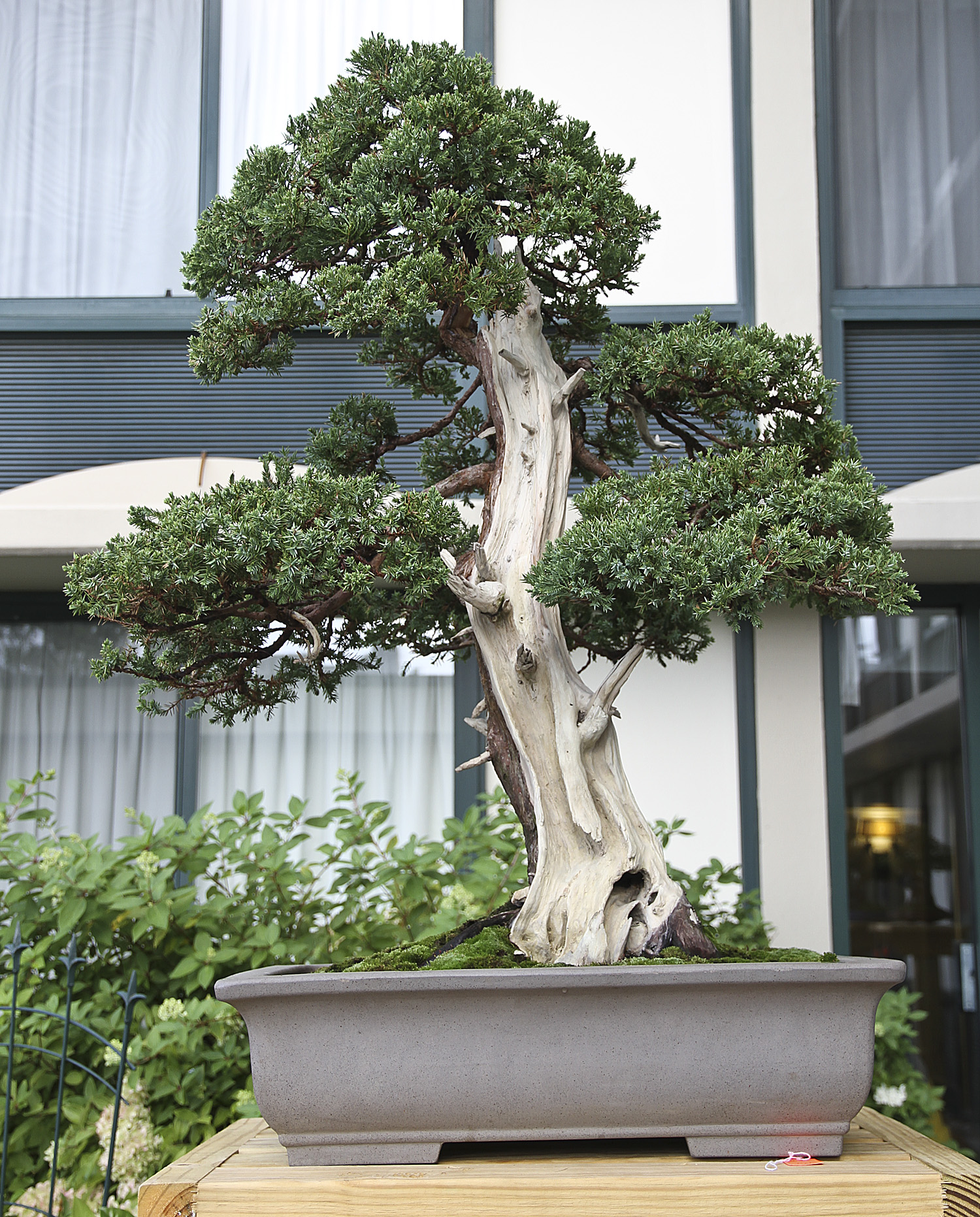
San Jose juniper

Image

Trident maple

Image

American larch

Image

Japanese five-needle pine

Image

American larch

Image

Koto Hime Japanese maple

PROCUMBENS


Dwarf Japanese garden juniper


2013 AUTUMN OPEN HOUSE– Part 2

SUNDAY
Today the weather was a bit better than the day before and even became sunny. Yesterday was chilly and most guests wore a light sweater or jacket. Today was warmer and by Tuesday the forecast is for 93F!

Image

Image

Image

Image

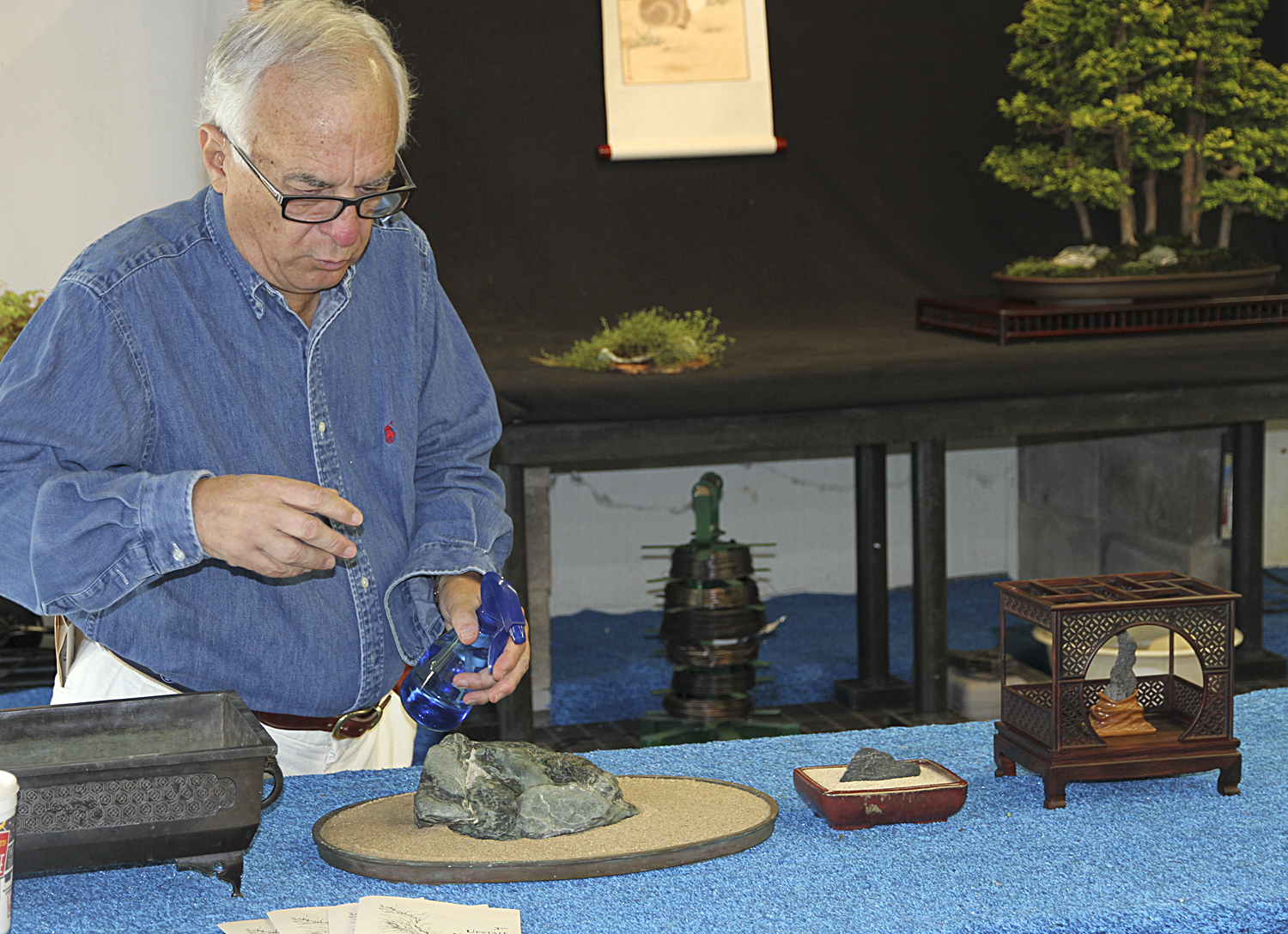
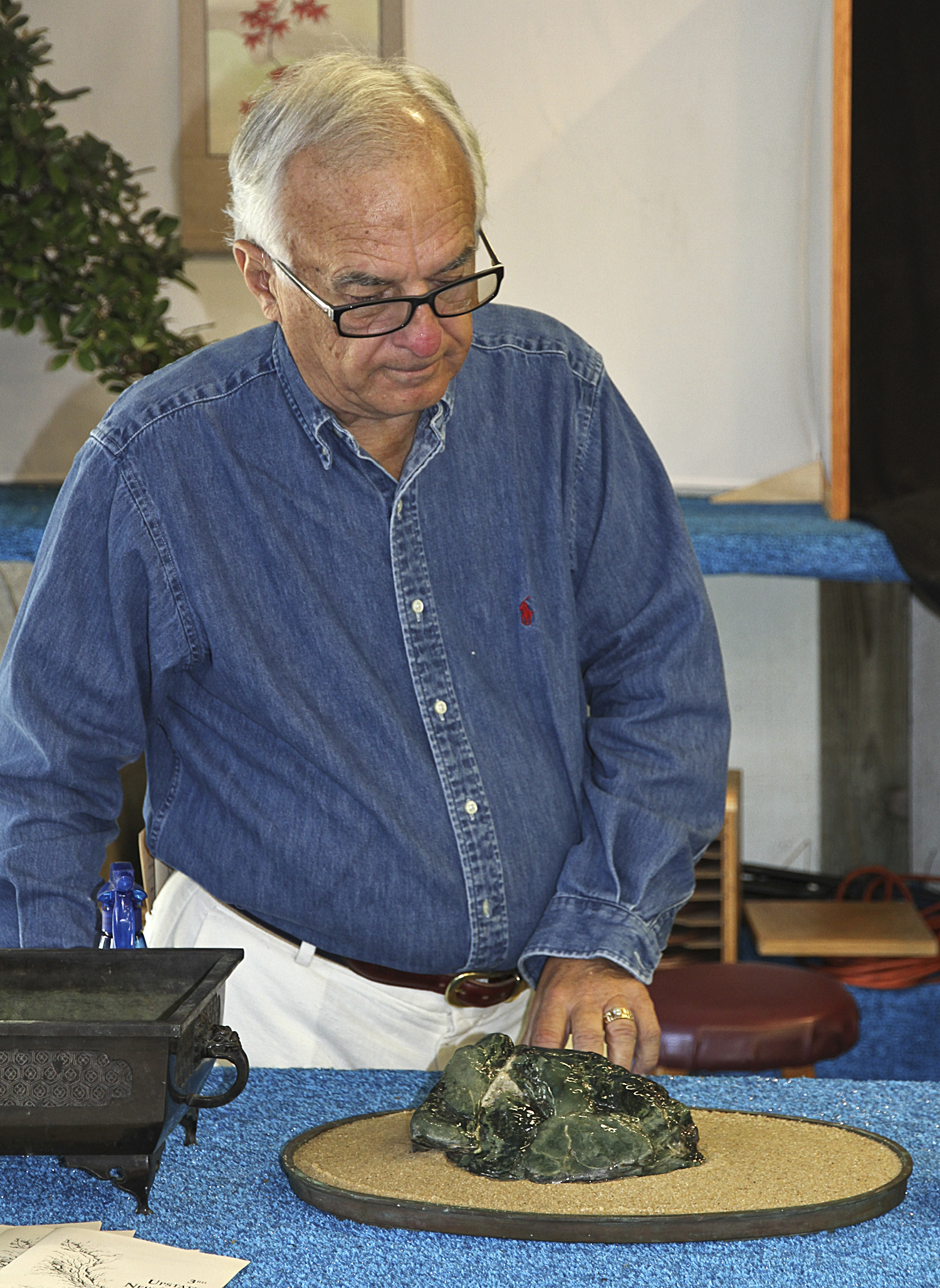
The day began with Ron Maggio giving a well organized program on suiseki. He covered different topics than Marc Arpag’s lecture yesterday and brought several fine quality suiseki from his collection to share with the audience. He spoke a bit about the history and background of individual suiseki which is important to the Japanese suiseki lovers because it shows the respect for the stones and remembers everyone who enjoyed them in the past. Each stone has its own story and some were quite interesting, humorous and educational. He showed one of his favorite stones which was a present from a retired Japanese bonsai professional in Kyoto, Japan.

Image

Image

Image

Image

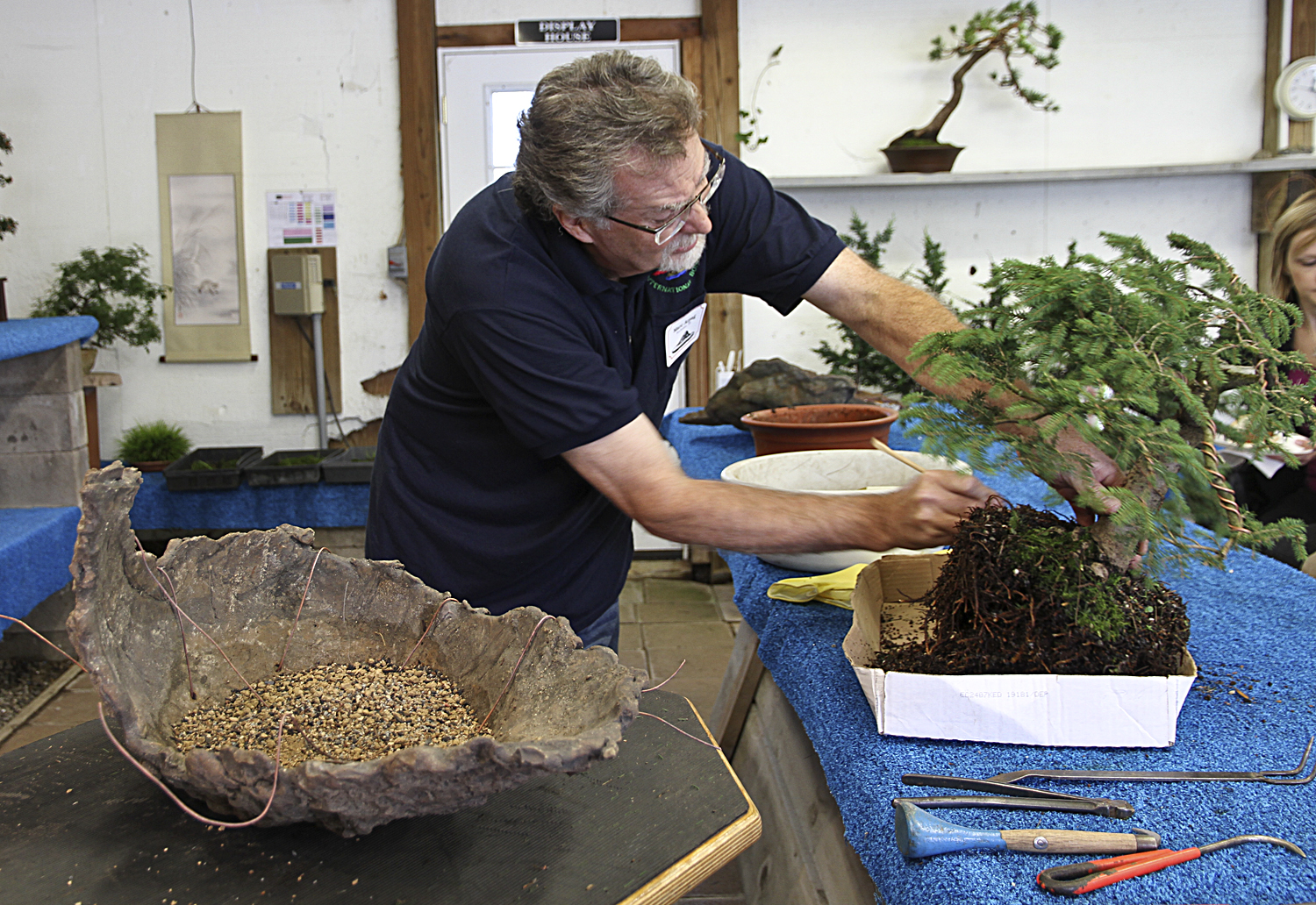
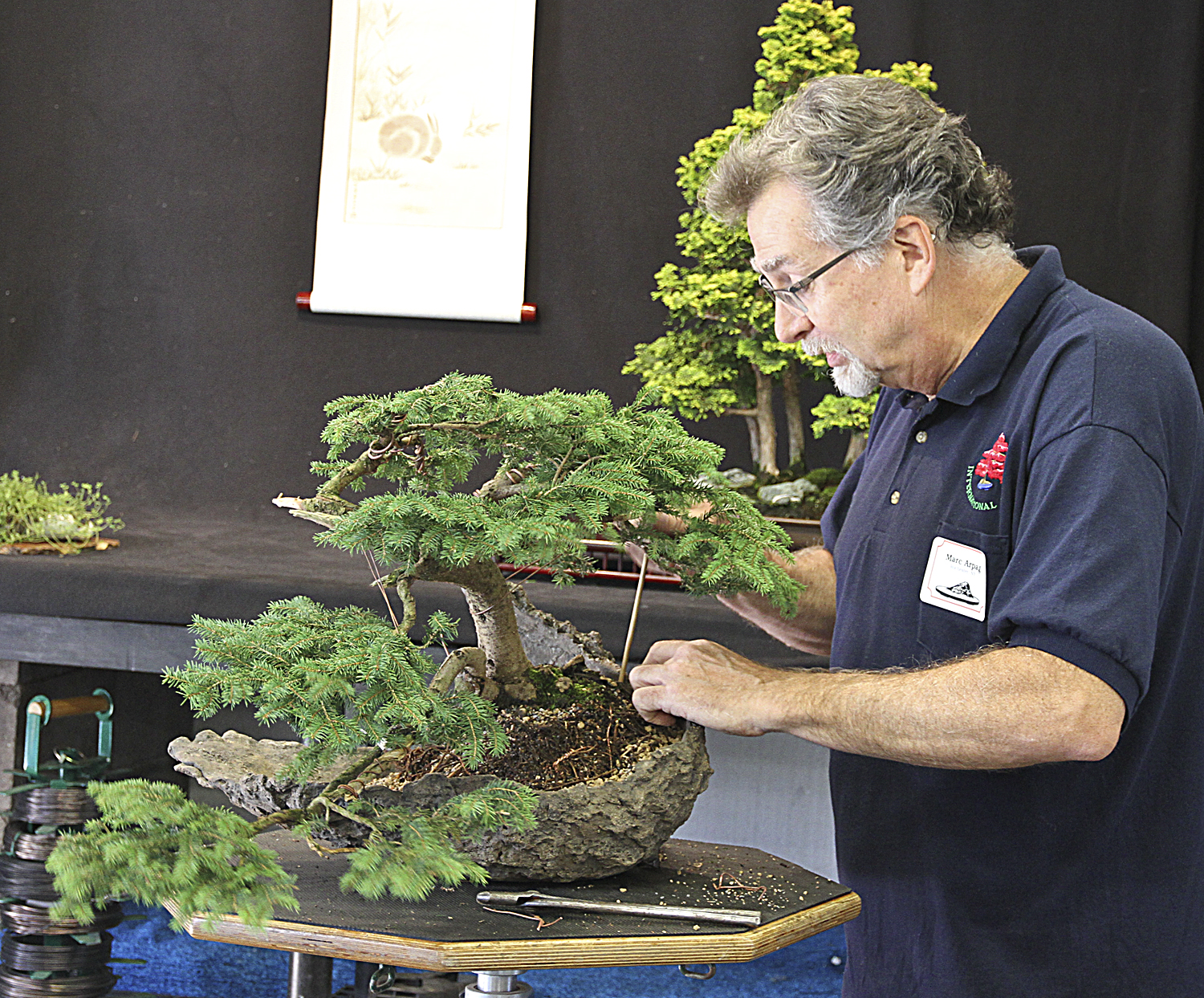
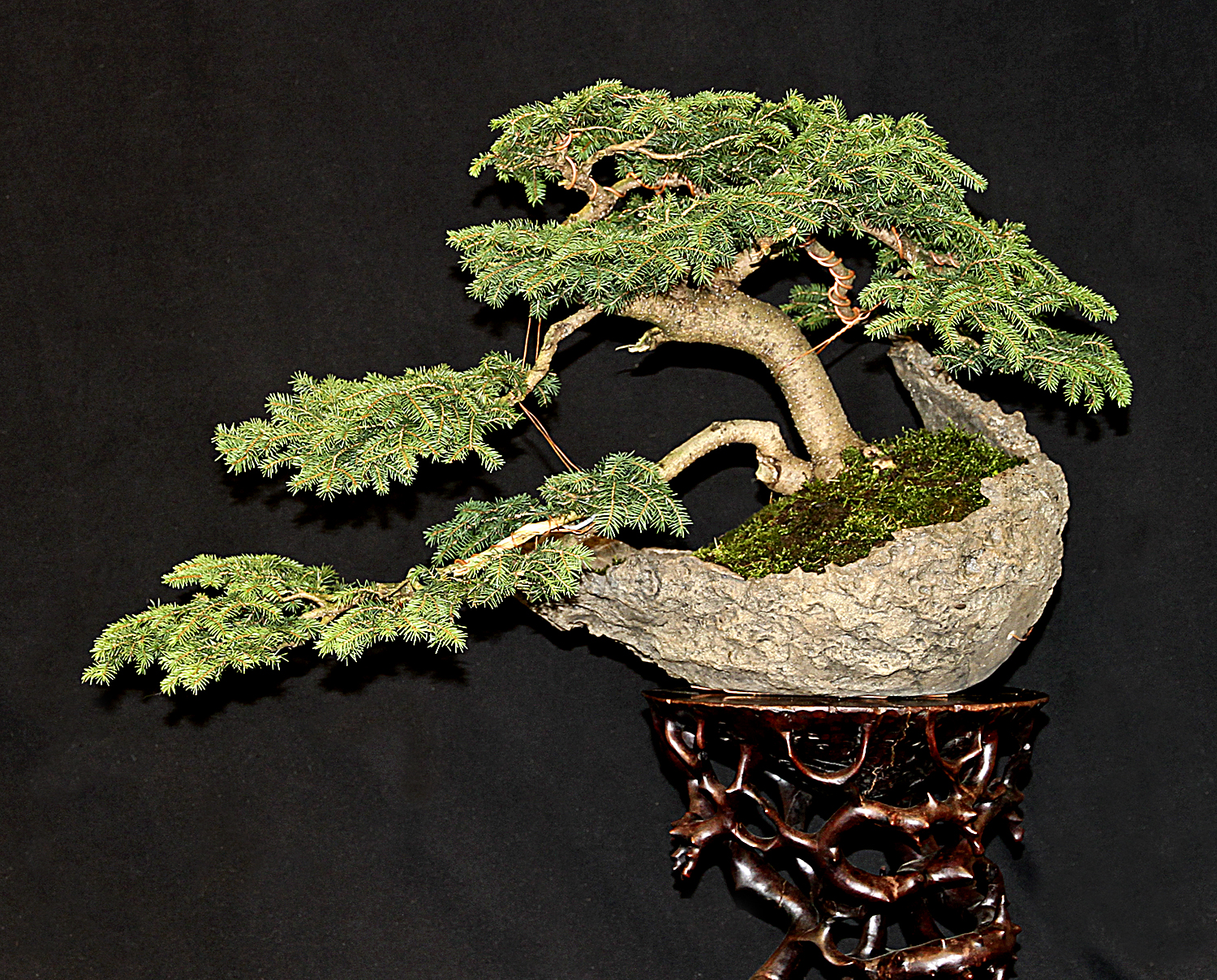
Next Marc Arpag gave a demonstration on refinement. He used a cascade style Bird Nest Spruce for his program which he has been training for about seven years. He did not like the Chinese training pot and could not wait to put it into a finer container. Before transplanting Marc spoke about training spruce bonsai and showed the beginning of fine wiring and a bit of adjustments to some of the branching. When he was finished working on the tree he prepared a “scoop pot” which was hand made by DaSu Pottery in DeMoines, Iowa. The pot was perfect for the bonsai and Marc transplanted it while the audience asked questions.

Image

Image

Image

Image

The last program for the weekend was my special demonstration. I had a large piece of bog iron stone which was collected in Alabama over 30 years ago. Last century it was over six feet long and I had a Japanese black pine planted on it. The tree died and the rock broke into two pieces so they were put out back for additional weathering. Last year Jim Dolce needed a special rock for a Juniper and the smaller section was perfect for his new planting. A few weeks I decided to use the larger section for my demonstration and began it’s preparation a couple of days ago. I used a leaf blower to remove all the dust and fine particles of stone dust from the surface so tie down wires could be securely attached. It was sitting on a tripod turntable with wheels and suddenly it decided to roll. Well, I was not lucky and my precious stone broke into three large pieces. I tried for half a day to glue it together, but could not. So, I gave up and had a back up forest pot selected to be used for a year and then to be planted on the stone in the future. Alan Adair showed up and saved the day by gluing the rock together. He used a special contractors calk which is industrial strength. We let the stone dry for two days, just to make certain it would hold. Although the large stone looks flat, it actually is on an odd angle with small pieces of stone naturally serving as legs to hold the stone at a good viewing angle. Thanks to Alan for coming to the rescue.

Image

Image

In April I found five single trunk Fernspray Hinoki Cypress at a small nursery in Pennsylvania. They were all upright growing in two gallon pots. They sat behind my studio since April waiting for me to use them for my forest. I’ve been kind of busy this year and decided to use the Open House demonstration for the forest planting. In August the trees were thinned out and the root balls were cut in half in preparation for the demonstration. I first began by explaining the difference between a forest composed of individual trees and those by a single tree (sinuous and raft style) by using the bonsai I had selected for display as examples.

Image

As I began talking Harvey Carapella and Marc Arpag began by wiring the single trunk of each of the five trees. Then they removed most of the soil in preparation for planting. Before they finished I took the opportunity to show how to attach the tie down wires to the stone. Several different methods were discussed and two were shown. The other wires were already attached beforehand. After misting the stone first a small wall of peat much was applied to the rock at the edge of the planned area for the roots.

Image

Image

Image

Image

Ron Maggio then took over as my assistant and held up each tree, by the top, not the bottom trunk while I positioned each specimen. Some bonsai soil was added to keep the trunks in the exact positions I wanted. Then Ron and I tied the wires, added a bit more soil and finally added moss over the entire soil surface. A couple of Satsuki azaleas and perennials were added to provide interest and hide a large root. Some dwarf creeping thyme which trails was planted on the one area where the crack was visible. It was hidden at the end. The trimming started, first with branches growing into adjoining trunks. As I trimmed Ron used small pieces of copper wire as “hair pins” to securely attach the moss so it would not move, especially on the slanted sides. When the trimming finished a couple of branches were wired for better positioning. When looking at the completed forest planting on the rock we discovered that the back side was also suitable for viewing. That was not an accident, but planned out weeks ahead of time. I do not suggest transplanting and creating a rock planting with winter hardy species at this time of the year, spring is best. Since September is not the best time for transplanting evergreen species in the Upstate New York area, I’ll give the new planting maximum winter protection by keeping it in my heated greenhouse which is maintained at about 50F for the winter months.

Image

Image

Image

Continue reading

2013 Autumn Open House & Sale

Saturday

 
This morning we started our semi-annual event featuring bonsai displays and the Third Upstate New York Suiseki Exhibit. Photos from the stone exhibit were posted yesterday.
 
Image
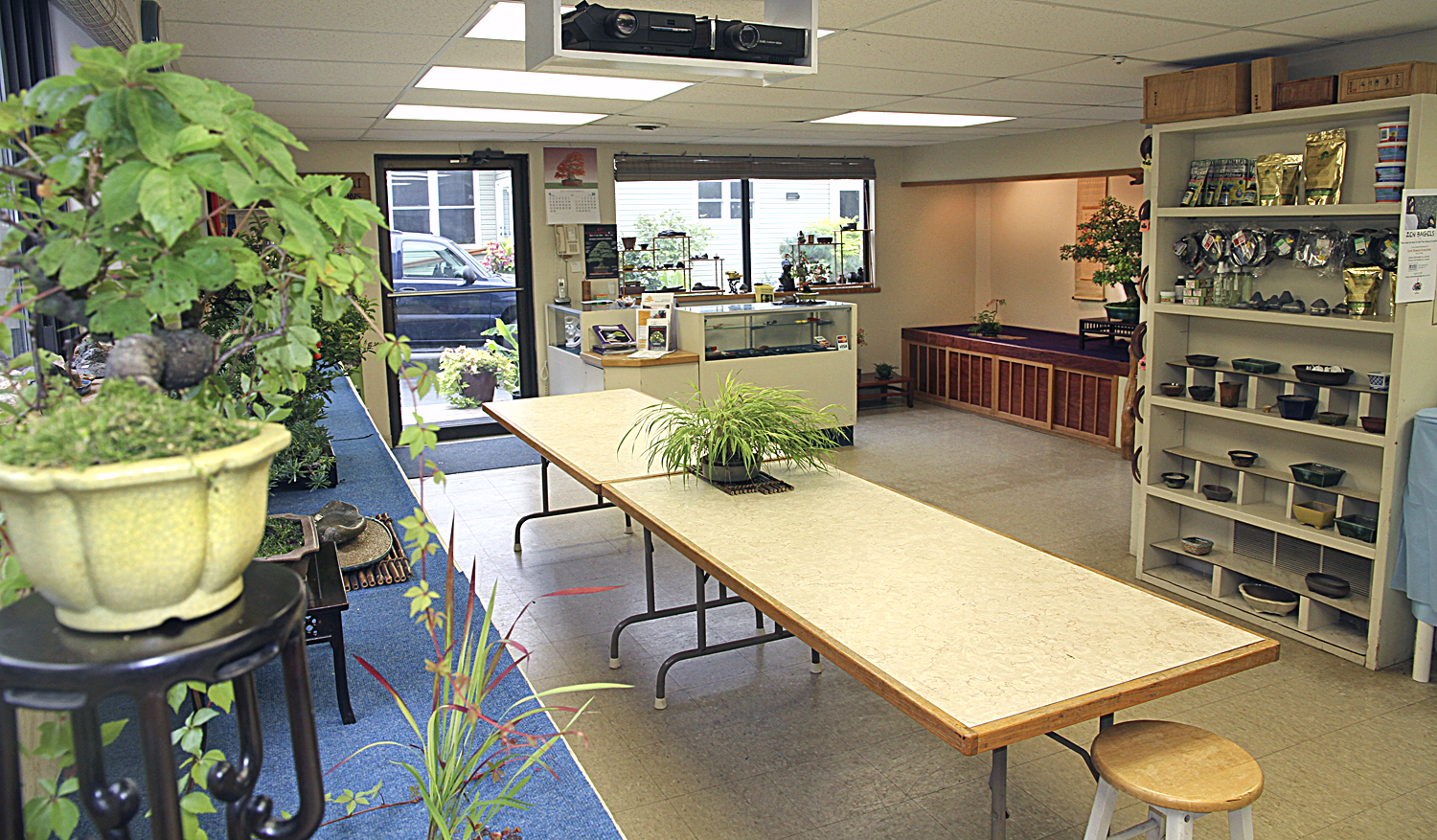
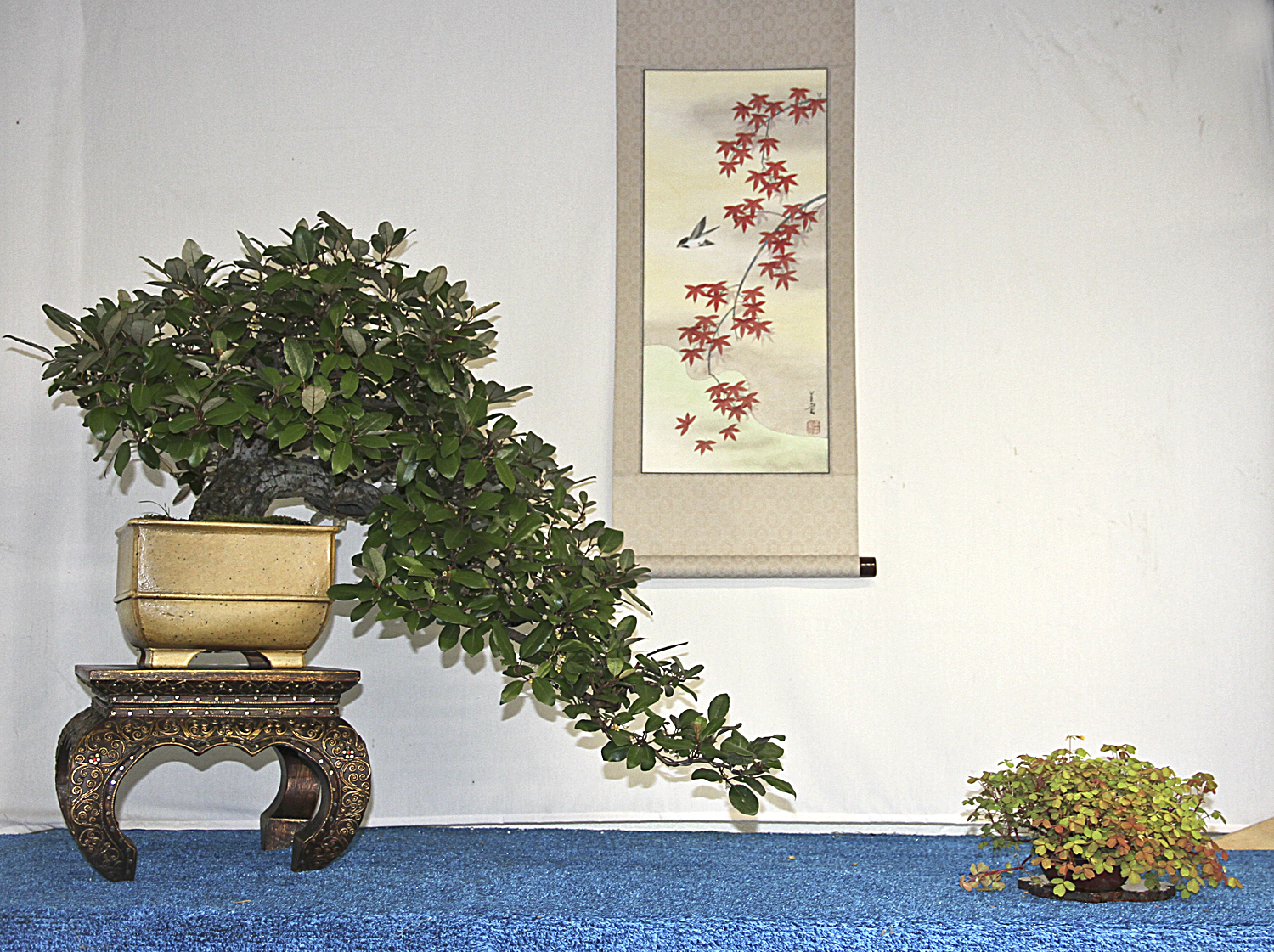
The studio is transformed from a teaching facility to a reception area after classes finish in late May. Bonsai are periodically displayed according to the season, what looks good and who is going to visit. The display for the weekend features a Washington Hawthorn with the fruit beginning to turn red. The Japanese maple leaves on the hanging scroll are also turning red. The companion plant, same that was used at the Midwest Bonsai Show, is a bit different now. The bright yellow Tiger Eyes Sumac is beginning to turn color and fall and the Toad Lily is beginning to bud since it blossoms in autumn. After finishing the display I suddenly discovered something strange, to my taste. Both the container of the bonsai and companion planting are both glazed, and even the same color! I rarely do that and could have easily switched containers to another round unglazed pot. In fact, this planting was in a round unglazed pot, but it was switched to the blue glazed pot for display with the RAF Dwarf Scots Pine displayed in Chicago. For my taste, the containers for the main bonsai and companion should be of different shapes (asymmetrical/symmetrical) and unglazed/glazed. In other words, a round or square container is used with an oval or rectangular container.
 
Image
 
 
Image
 
Image
 
Image
 
Image


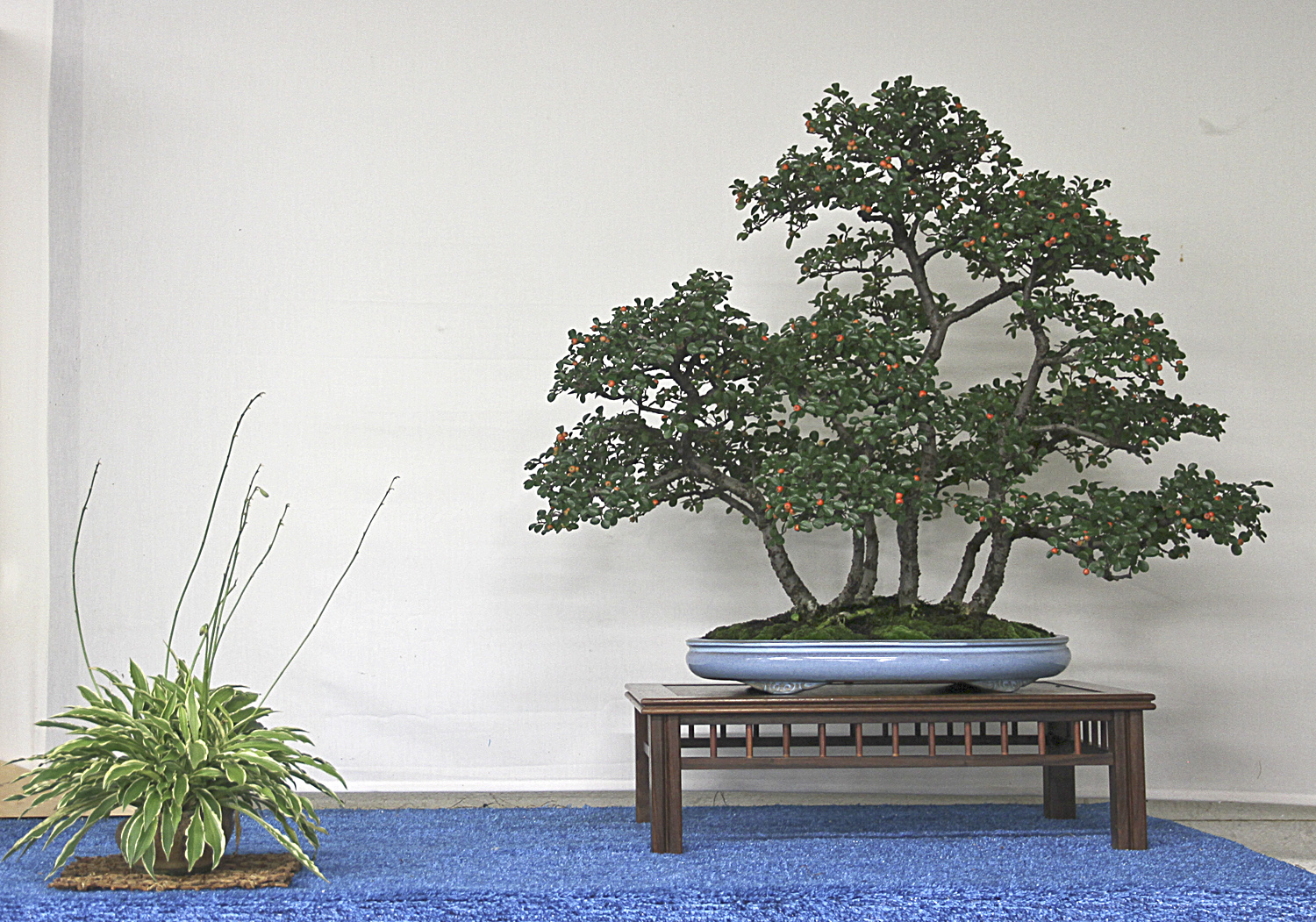
In the garage four different bonsai displays were set up as backgrounds for the suiseki lectures and bonsai demonstrations. They are attractive and easy for the speakers to comment on or used for teaching purposes. For example a Golden Hinoki Cypress forest of individual trees was displayed as well as a forest of Rock Cotoneaster, however, it was created by only one plant in the sinuous style, often misnamed “raft” style in the west. This was displayed for my original demonstration.
Image
 
Silverberry
 
Image
Golden Hinoki Cypress
 
Image
Valavanis Dwarf Cypress
 
Image
Rock Cotoneaster
 
 
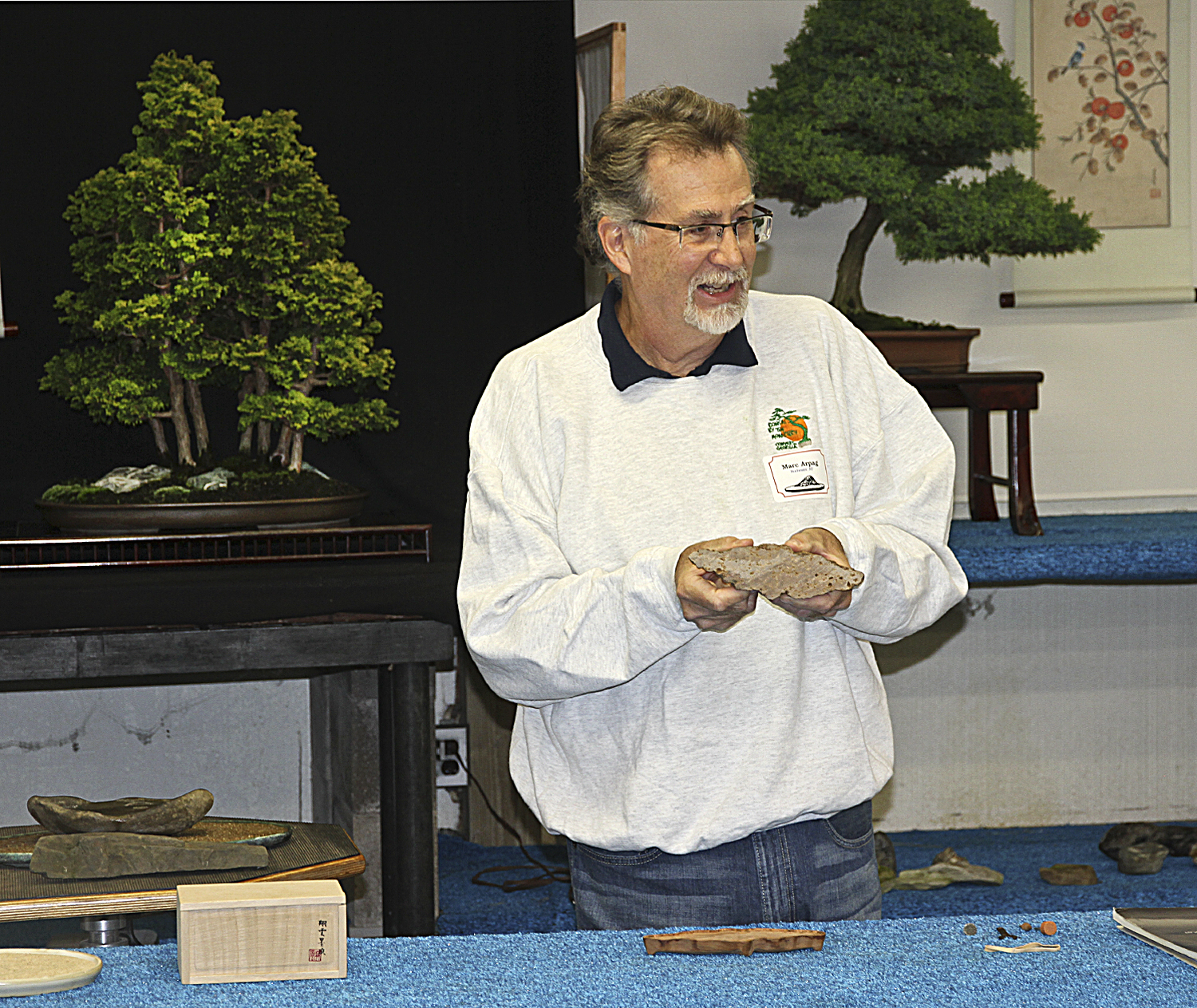
Marc Arpag began the programs for the day with an excellent introductory lecture on suiseki. He used several of his stones as examples and covered quite a bit of information in only one hour. People liked handling his suiseki as they were passed around.
 
Image
 
Marc Arpag
 
Next Harvey Carapella trimmed an ancient Eastern White Cedar which is actually an Arborvitae. In the bonsai world we use the name Eastern White Cedar because it sounds more exotic than the common old Arborvitae. Harvey’s bonsai was originally a demonstration by Arthur Skolnik from Toronto over 25 years ago for our local club. He has changed it dramatically and now it is potbound again and began to form cones. The first thing he did, with Marc’s help was to remove all the cones because the take energy away from the vegetative growth. Next Harvey trimmed all the long shoots and wired a few. The bonsai will be transplanted into the same container in spring.
 Image
Harvey Carapella
 
 
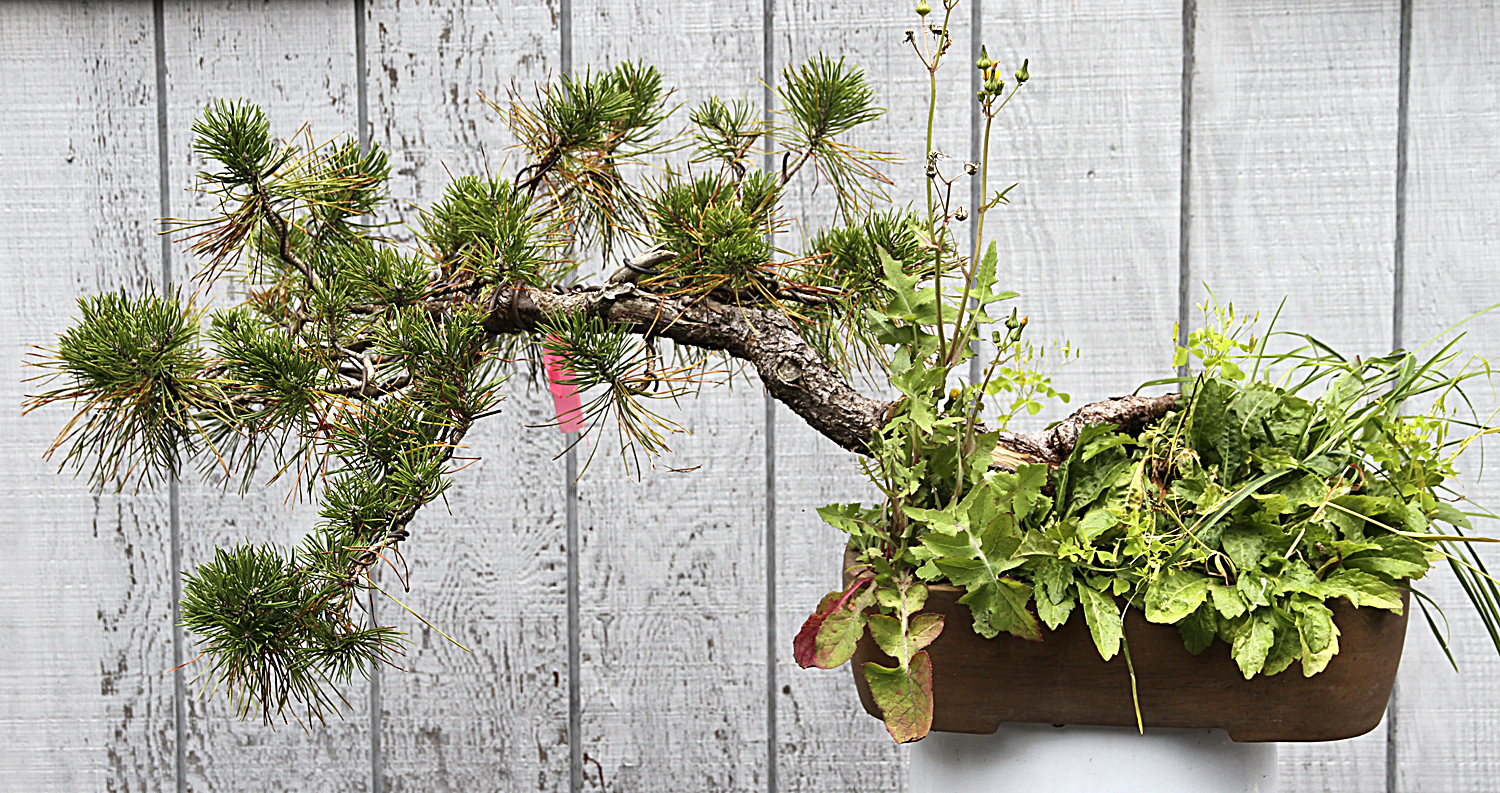
My demo began at 2pm and the topic needed to be changed at the last minute because of an accident, which I’ll explain tomorrow. Today I demonstrated with a bonsai which belonged to a long time student and good friend who recently passed away. His trees were kind of neglected during the past few years because his poor health. You can see the healthy vigorous weeds in the before photo. The tree is a Mugho Pine he has been training for over 30 years in a container. Once it was displayed on a huge flat rock. The horizontal trunk line was not of interest to me and seemed weak, so I first changed the angle, after weeding. Upright the trunk is much more powerful. 
 
Image
 
Mugho Pine before shaping 
 
Image
Image
 
Trunk angle changed
 
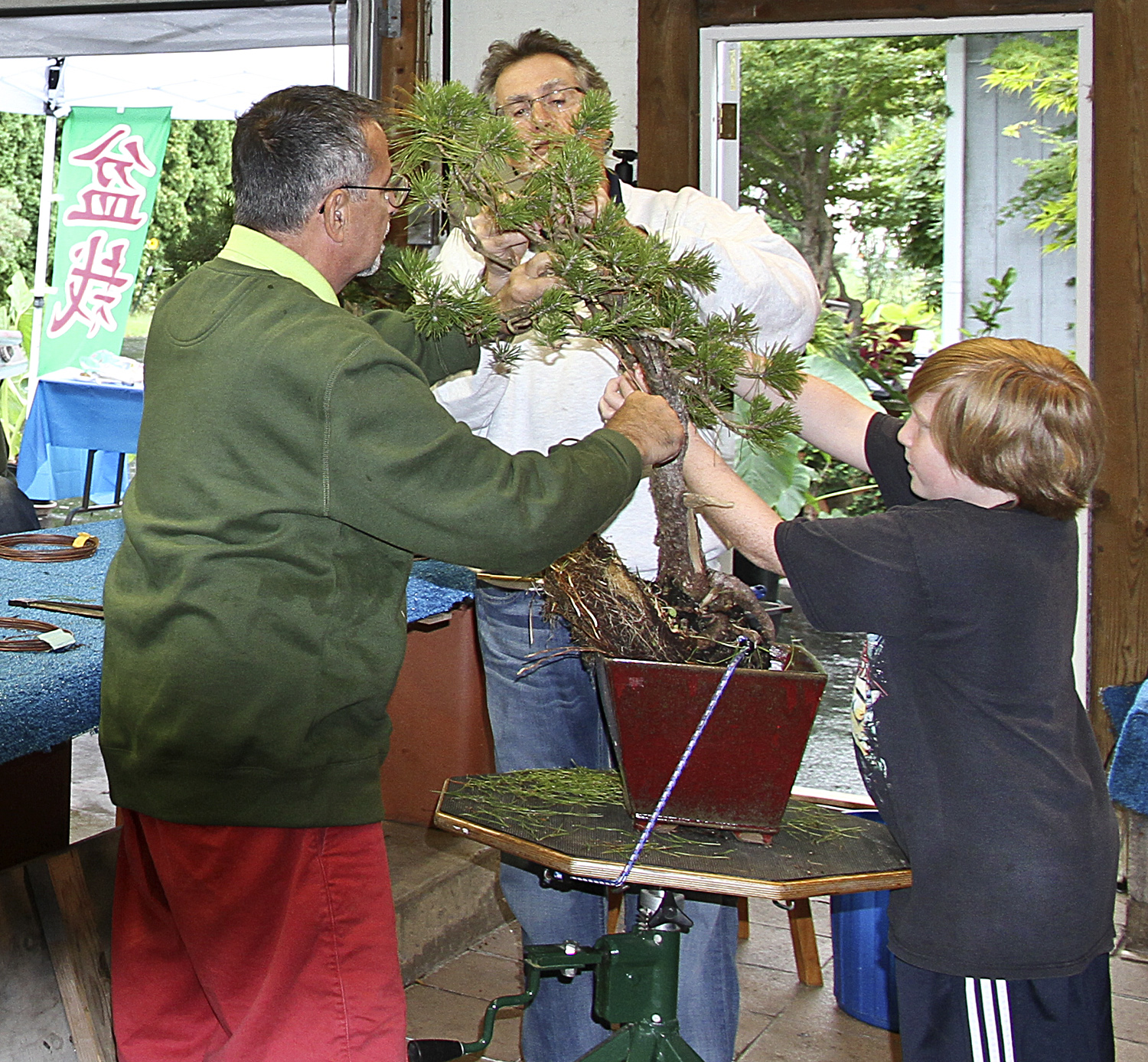
Marc assisted me in removing the old long needles and wiring. In August I sold a youngster a bonsai at the Park Avenue Art Festival. The kid took great care of it and the plant grew so the wire needed to be removed and trimmed back. So I invited him to the Open House to watch the demo, along with his younger brother and father. He seemed truly interested and watched intensely, so I invited him up to help remove the needles which I think he seemed to enjoy. I feel its important to encourage the younger people since the old timers are quickly going “dormant” so a younger generation must be prepared to take over our trees when we go dormant as well.
Image
 
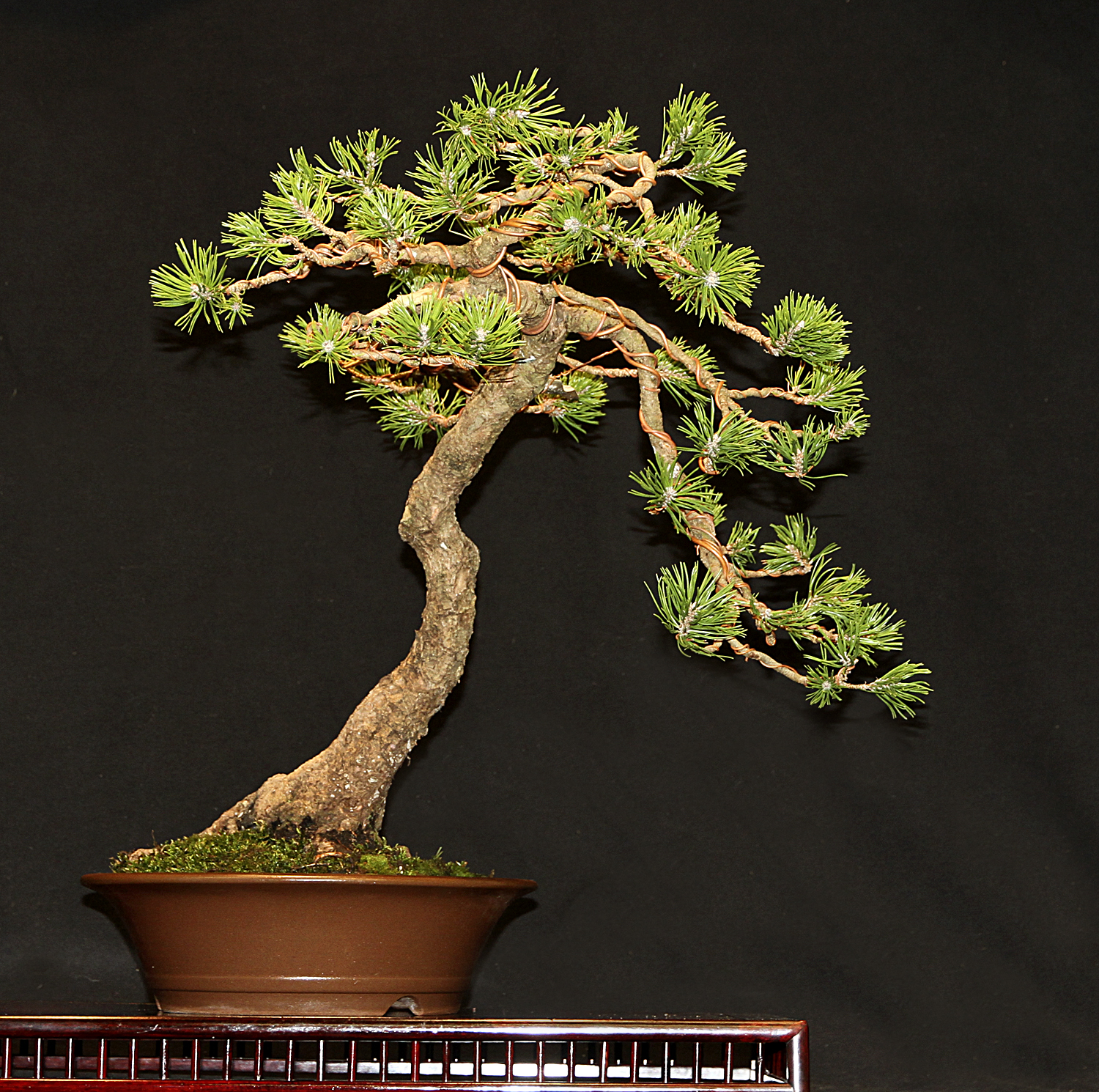
A chisel was used to split the first branch because I wanted a low hanging branch. The tree was not difficult technically, but the literati style bonsai is a bit more complicated than it appears. So, we finished the bonsai and people left. However, I was so pleased with my newly designed bonsai that I hobbled upstairs in the studio (on my hands and knees, no pressure on my broken foot, remember?) and selected four possible containers, which Marc brought downstairs. One was the right and we transplanted it. However there was a strong root on one side and the planting angle needed to be adjusted, but the bonsai still looks good, at least I think so. This is only the first re-design of the bonsai and will look better in a couple of years after it fills out and is further refined.
 
Image
 
Image
 
Image
 
Mugho Pine after re-style demonstration
 
The rain today did not stop visitors who came from Long Island and two hours north of Toronto, Canada. Other visitors came from closer distances and everyone had a good time looking at the suiseki and bonsai and went shopping as well, some even left with my new book, autographed too.
 
Tomorrow another suiseki lecture and two bonsai demonstrations, hopefully I’ll work on the tree originally planned.

2013 Third Upstate New York Suiseki Exhibit

September 7-8, 2013

International Bonsai Arboretum

Rochester, New York

Today members of the Suiseki Study Group of Upstate New York finished setting up 3rd exhibit. There are 43 displays featuring 46 stones (one shohin suiseki composition) displayed by 12 members. There are 26 suiseki displayed in hand carved daiza while 20 are exhibited in water basins, both ceramic and bronze. There are numerous different categories of suiseki of various sizes.

On Saturday morning at 10am Marc Arpag will present a lecture on suiseki and Ron Maggio will lecture on Sunday morning at 10am. Additionally, there will be bonsai demonstrations by Harvey Carapella on Saturday at 11am and Wm. N. Valavanis at 2 pm. On Sunday Marc Arpag will present a bonsai demonstration at 11am and Wm. N. Valavanis at 2pm.

The Suiseki Exhibit is part of the International Bonsai 2013 Open House & Sale. Formal bonsai displays will be set up for visitors to study and appreciate. Hours are 9am to 4pm daily and additional information can be found at:

www.internationalbonsai.com

All events are free and everyone is welcome to come enjoy the suiseki, bonsai and displays as well as the lectures and demonstrations.

MIDWEST BONSAI SHOW– Final Part

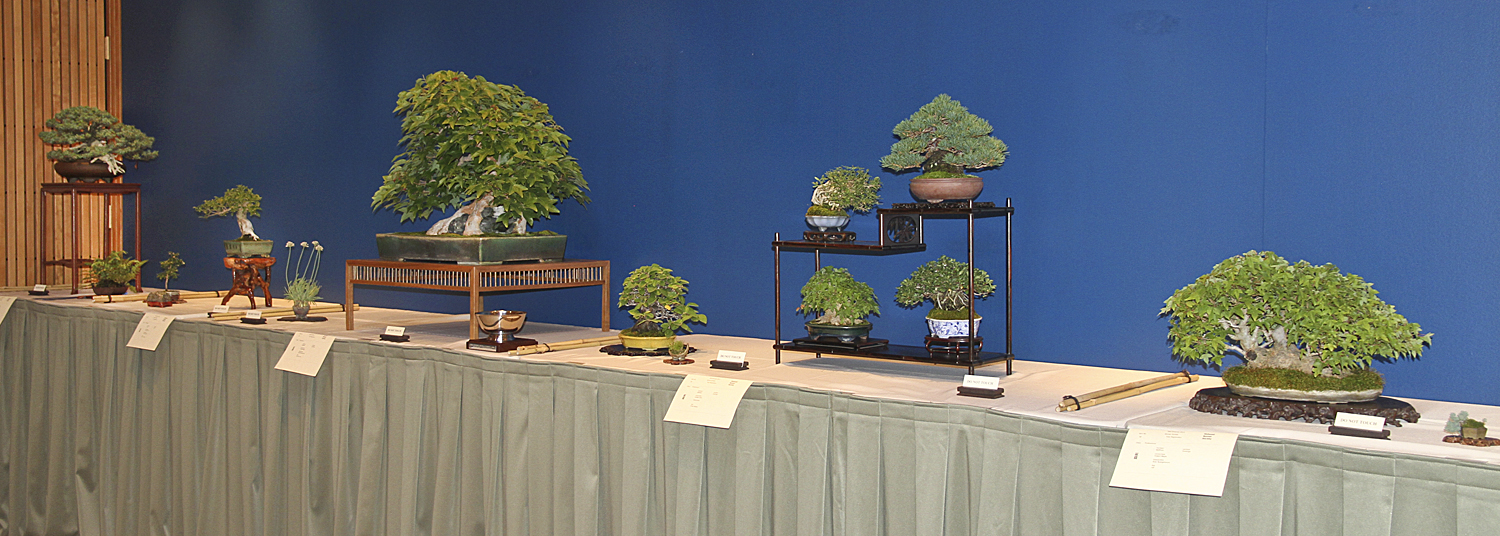
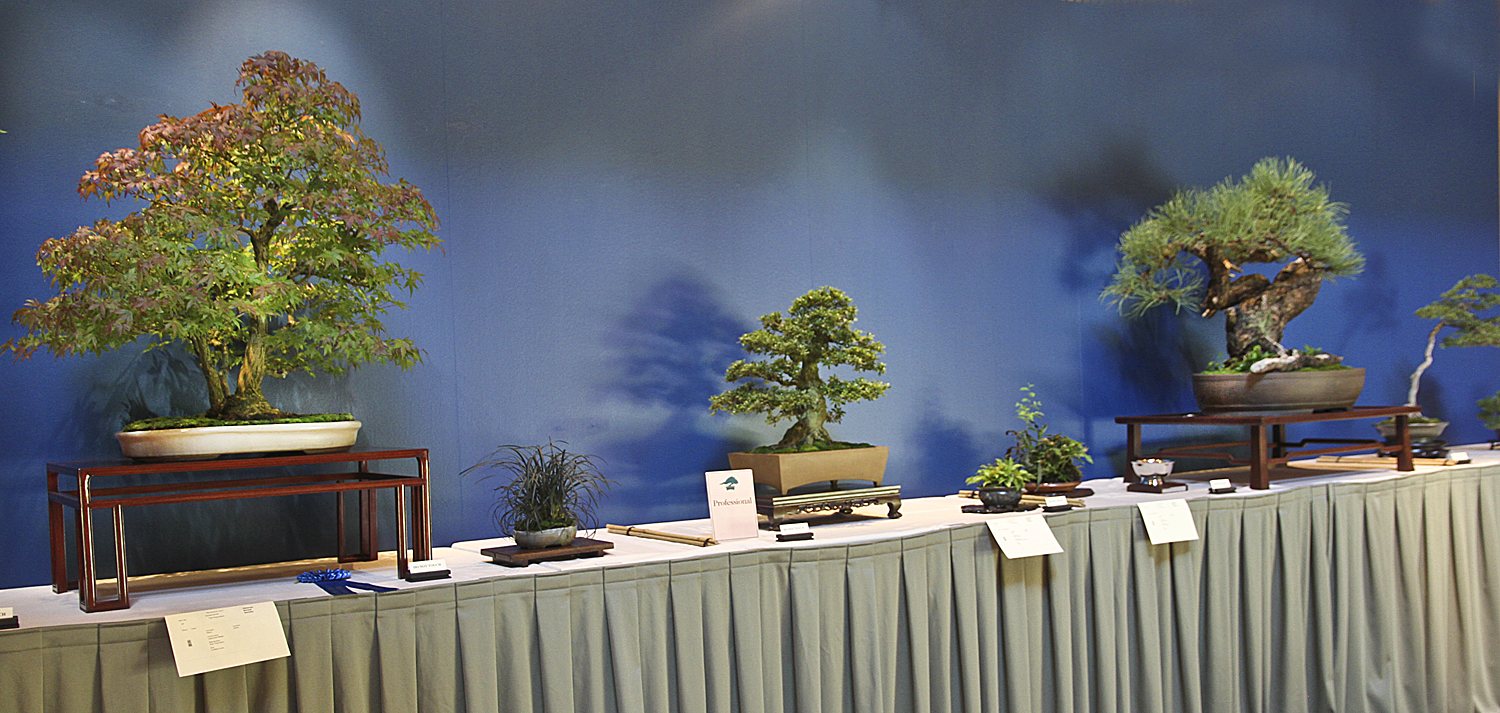
Here are a few more photos from the show which was well attended.

Image

Table displays


Image

Table displays 2


Image

Sectional display of professional division


Image

Sectional display of professional division 2


Image

Wall display


Image

Japanese black pine


Image

Japanese black pine 2

Image

Nia


Image

Trident maple


Image

Trident maple, Best of Show


Image

Ficus cascade


Image


Ficus heavy trunk


Image


Sharps pygmy Japanese maple


Image


Trident maple multiple trunk shohin bonsai


MIDWEST SHOW, PART 2?

Sorry, NO, this is not part 2. I’m new to using this program for posting blogs and suddenly my post was published before I added more photos…

Image

Chinese elm

Image


Chinese quince

Image


Cork bark Chinese elm

Image


Little house in the woods

Image


Jack pine

Image


Japanese maple

Image


American larch

Image


Ponderosa pine- huge!

Image


Satsuki azalea

Image


Trident maple

Image


Ponderosa pine

Image


Chicago Botanic Garden Bonsai Courtyard photos

Image


Image


Image


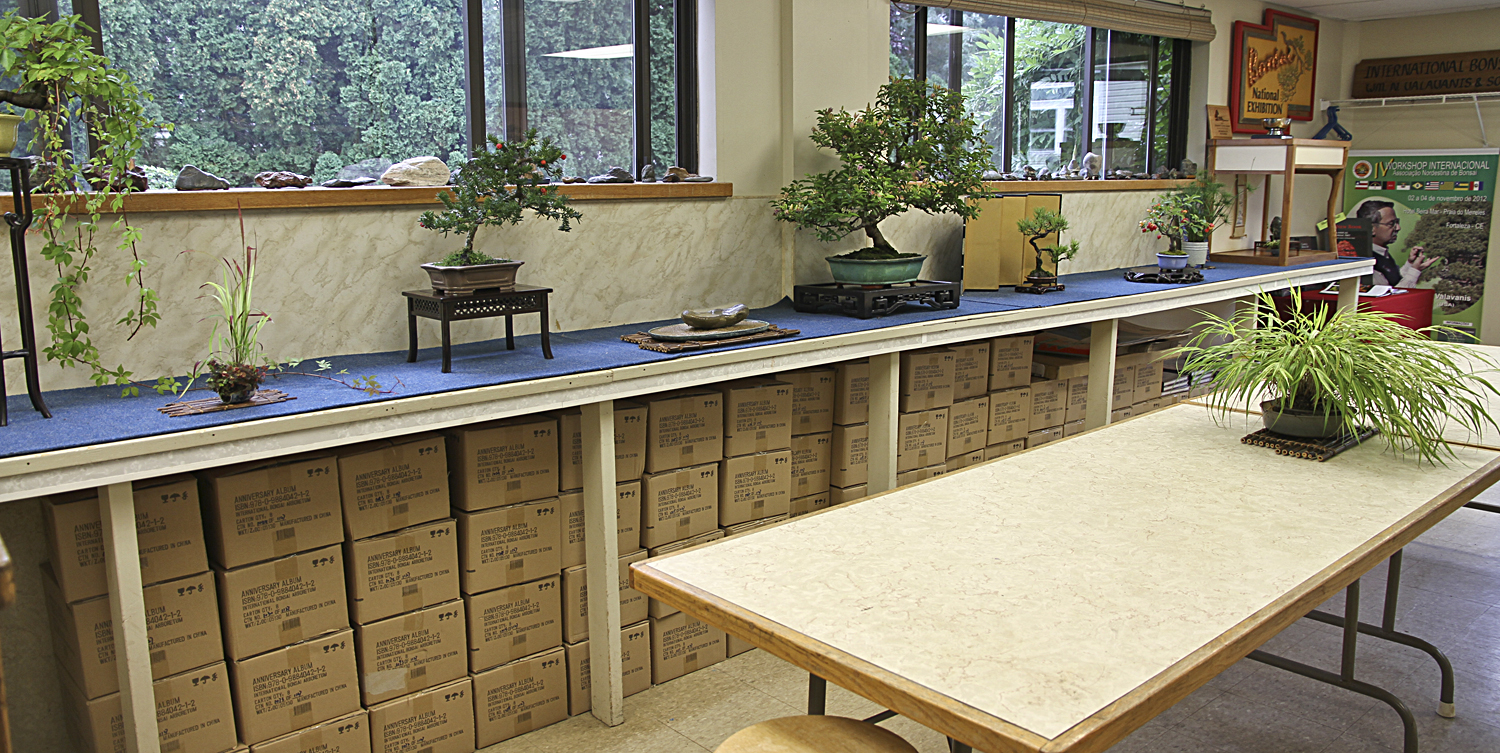
International Bonsai Arboretum sales tables. Note the chair on the right side for me to sit on with my broken foot. You can also see that it’s empty…

 Image


Image

Image


2013 MIDWEST BONSAI SHOW REPORT

Image

Image

The 2013, 36th Midwest Bonsai Show opened today at the Chicago Botanic Garden. Bjorn Bjorholm, originally from Knoxville, TN, now from the Fujikawa Koka-en Bonsai Garden in Osaka, Japan, was the judge.

Image

RAF Dwarf Scots pine- First Prize in the Professional Division

The RAF Dwarf Scots pine which has now taken five days of preparation looked pretty good. So good that Bjorn awarded it the First Place in the Professional Division. Competition was tough this year, however. This makes my 13th Professional Award since they began judging several years ago.


The quality of bonsai has risen lately and also the number of bonsai displayed in the Professional division as well. However, it seemed to me that there the bonsai were not as crowded as in the past and the beauty of each tree could be more easily enjoyed than in past shows. The crowds were pretty good today and we enjoyed excellent warm weather.

Bonsai from the famous Chicago Botanic Garden Collection were on display in two open courtyards, each on a well designed table, complete with white background, lighting and invisible sensor to prevent theft.

Below are a few bonsai, mostly from the professional division. More photos tomorrow if I have time.

2013 INTERNATIONAL BONSAI OPEN HOUSE & SALE

Saturday & Sunday, September 7-8, 2013

 Image

Image

Image

Everyone is invited to visit the Autumn Open House & Sale. Formal indoor bonsai displays as well as masterpiece bonsai in the garden will be available appreciation, study and inspiration. Come see the new bonsai which have been created this year as well as older established specimen, many of which have been refined.

Image

Image

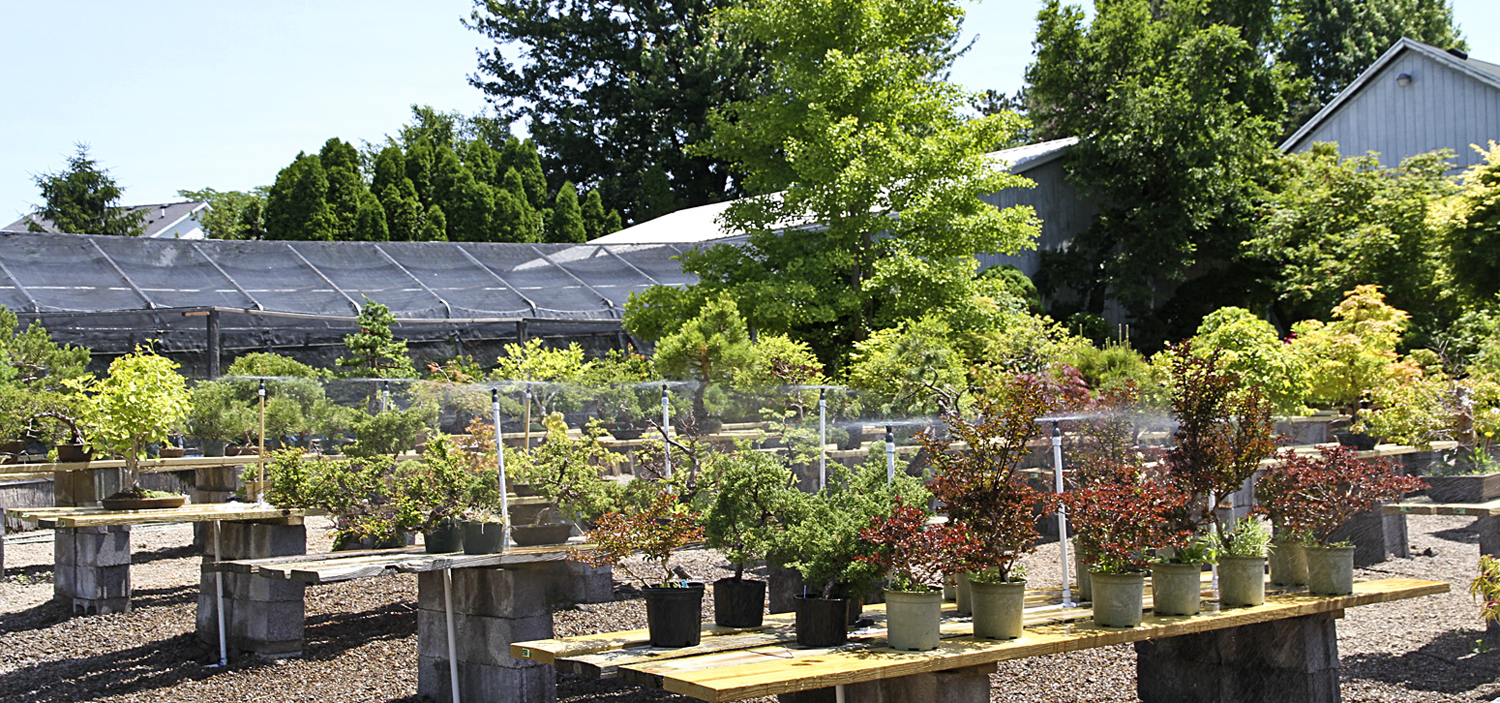
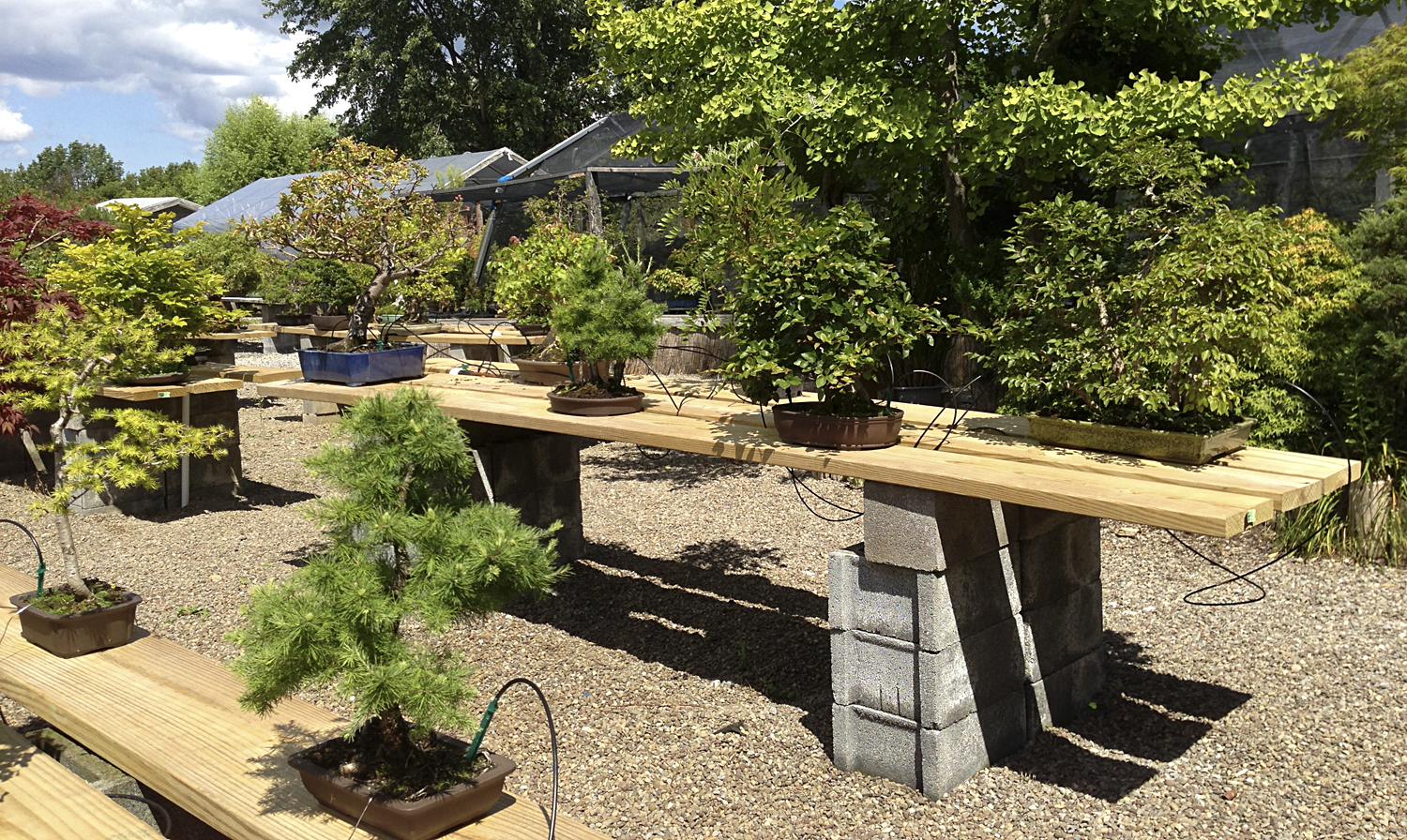
The new automatic watering system, both drip and spray, is working well for the sales area bonsai and nursery stock. Bonsai, pre-bonsai, suiseki, containers, tools, books and supplies will be on sale.

 Image


Image

ImageAward winning bonsai artists Harvey Carapella, Marc Arpag and Wm. N. Valavanis will be presenting advanced bonsai demonstrations daily at 11am and 2 pm. Each one of these skilled artists will clearly show their techniques and answer appropriate questions. One of my demonstrations will be on creating a Hinoki cypress forest, perhaps on an unusual kind of flat bog iron stone. Audience interaction is welcome for these informal programs.

Image 

Image

Image

Image

Image

Image

The Suiseki Study Group of Upstate New York will be having the 3rd exhibit during the Open House & Sale. Approximately fifty suiseki belonging to members will be on display. Suiseki in daiza as well as in suiban will be on exhibit with many unusual companion plantings.

 Image

Suiseki lectures will be presented on Saturday 10am by Marc Arpag and on Sunday 10am by Ron Maggio.


Here is the link to last year’s Upstate New York Suiseki Exhibit:

http://ibonsaiclub.forumotion.com/t11304-2012-upstate-new-york-suiseki-study-group-exhibit?highlight=upstate+new+york


Come, join us for a relaxing visit while you visit the bonsai, suiseki and perhaps find something to add to your collection.

Image


Demonstration Schedule:

Saturday, September 7, 2013

10am Marc Arpag­– Suiseki

11am Harvey Carapella– Bonsai

2pm Wm. N. Valavanis– Forest Bonsai


Sunday, September 8, 2013

10am Ron Maggio– Suiseki

11am Marc Arpag– Bonsai Refinement

2pm Wm. N. Valavanis– Surprise!


All events FREE!

Sumac Bonsai

ImageI like unusual and bizarre plants and often use them to create unique bonsai. The Common sumac is a large shrub or small tree which can be found growing native throughout North America and other regions of the world. They are often considered weed trees with large compound leaves. In late summer the large upright flowers are fuzzy and become striking fruit. Autumn brings a reliable red, orange and yellow coloring which are quite beautiful.

There are numerous species related to the Common sumac, Rhus typhina, often used for medicinal, cooking or tanning. In Asia candle fuel was made from the Japanese wax tree, (Rhus succedanea), which is often trained for bonsai. Poison sumac (Rhus vernix), as well as Poison Ivy (Rhus toxicodendron), can cause rashes to some people.

ImageJapanese wax tree, Rhus succedanea, trained by Hiroshi Takeyama, Fuyo-en Bonsai Garden, Omiya Bonsai Village, Japan.

There are several ornamental forms of sumac for planting in the garden landscape including Staghorn sumac, Cutleaf sumac, Fragrant sumac and smooth sumac.


Tiger Eyes Sumac

In 2007 a new hybrid sumac was introduced to the garden trade by Bailey’s Nursery named Tiger Eyes sumac, Rhus typhina ‘Bailtiger’. This patended cultivar received a Gold Medal from the Pennsylvania Horticultural Society. This colorful plant has bright chartreuse delicate foliage which is quite striking in the garden, especially in the sunlight which makes it glow. It suddenly becomes the focal point in the garden and again in autumn with glowing red and orange foliage. Summertime brings large upright fuzzy flowers which become colorful long lasting fruit. Tiger Eyes sumac is quite winter hardy and a bit invasive, spreading by underground rhizomes. I have found that it does not present an allergic reaction to people. The stems are like velvet and they do not branch out readily. Although described as a “dwarf” plant reaching a height of six feet, one of my garden specimens is already twelve feet tall, and still growing.

As mentioned I have discovered that Tiger Eyes sumac is invasive and have eliminated many of the new plants originating from rhizomes. Often the new shoots have a few roots and I’ve been successful in establishing them in small containers. In spring I used a small plant as the focal point in a small accessory for displaying with a bonsai.

Today my friend Marc Arpag came over to help me select the appropriate display table and companion plant for my RAF Dwarf Scots pine for the Midwest Bonsai Show next weekend. On his way over to my garden he stopped by a garden center to see what they had on sale. He was excited because they had two Tiger Eyes Sumac with interesting trunks and could possibly be used for an unusual bonsai specimen.

Off we returned to the garden center to see the two plants and one was already sold. Fortunately the plant with the beset shape was available, and with a 30% discount as well. I purchased the two gallon size specimen and Marc helped me take it to my car since my scooter could not hold that size plant. Also, on the way out we discovered a new gold banded grass which I had to have, so I pick up two pots, they were small.

Image Shopping for the Tiger Eyes Sumac, 2 pm.

Once home I proceeded to find the base of the roots, study the plant and create the basic shape for a future bonsai. This tree will be used for autumn display and will not have a refined appearance because of the coarse branching, although the foliage is delicate. I wired a few of the branches, and nearly every one of the twelve inch long leaves. Finally it was potted and I’m hoping it will develop into something different.

Image Tiger Eyes Sumac bonsai, 3:30 pm.

By the way the companion plant we selected for displaying with the RAF Dwarf Scots pine has a Tiger Eyes sumac as the focal point along with Toad Lily, Dwarf hosta and Black mondo grass.

Image Companion plant with a Tiger Eyes sumac focal point.

RAF Dwarf Scots Pine Bonsai Development

Pinus sylvestris ‘R.A.F.’

 This tree has a long history, starting from a select young, pencil size seedling in the early 1970s. Richard A. Fenicchia was the horticulturist for the Monroe County Parks Department in Rochester, New York. He was well known for his hybridization of Lilacs, Azaleas and other woody plants. He selected a group of dwarf Scots pines and named them R.A.F Dwarf Scots pines.

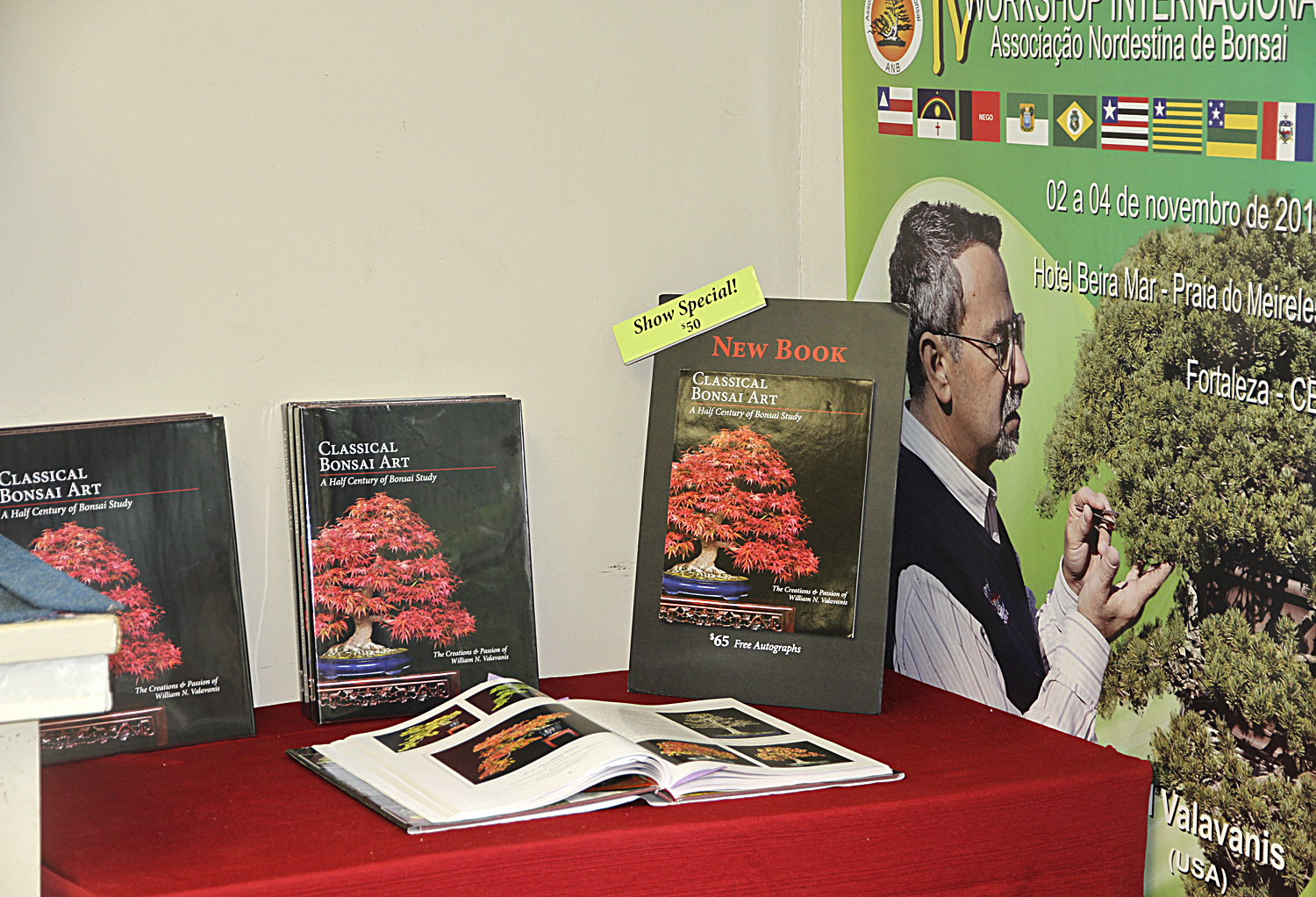
I was fortunate to purchase many of the young seedlings and they were all completely container grown. This select group of pines had short straight needles and had the characteristic to produced buds on the old wood of the inner branching. Many of these young seedling were used for workshops and sold to students. A couple of the better specimens are described in my newest book Classical Bonsai Art. This bonsai, and another finer specimen were not included in the book because of space restrictions. The largest RAF Dwarf Scots pine was also displayed in the 40th Upstate New York Bonsai Exhibit and received the “Member’s Choice Award” honoring Yuji Yoshimura.

Image

A larger RAF Dwarf Scots pine which received the 2013 Member’s Choice Award at the 40th Upstate New York Bonsai Exhibition. This is not the bonsai which will be displayed. 

The RAF Dwarf Scots pine bonsai to be displayed was purchased from Mr. Fenicchia in the early 1970s and was completely trained in a bonsai container. As the tree grew in size larger containers were used. Although this is a slow developmental process, fine bonsai can be created. Older photos cannot be located and were probably destroyed in our home/office fire in 2009.

Image


May 2006 before shaping and repotting.

Image


May 2006 after shaping and repotting.

By 2006 the bonsai suddenly began to develop a heavy trunk. In May 2006 the tree was thinned out, wired and transplanted into a rectangular container in a slanting style. It was continually pinched each spring. Like other species the entire tree cannot be pinched at one time. Growth vigor is different throughout the tree. The top is generally more vigorous than the lower inner branches. Therefore it takes about a week of dedicated pinching to complete a bonsai.

Image


December 2007.

In 2009 I changed the style of this RAF Dwarf Scots pine from slanting to informal upright style. After transplanting and repositioning the tree in the same container guy wires were used to lower the first right branch into a horizontal position. The tree was annually pinched each April and May.

In 2012 I needed the rectangular container for another bonsai so I “borrowed” it and repotted the bonsai into an oval container which was softer and better suited for the new style. The rectangular container was in better harmony with the slanting style, but a bit too rigid and formal for my taste for this informal upright style bonsai.

Image


May 2009 before transplanting.

Image

May 2009 after transplanting to change trunk angle.

Image

May 2009 after wiring and shaping.

The bonsai continued to become bushy from the multiple buds. In April 2013 I asked one of my long time skilled and talented student, Alan Adair, if he would like to wire this bonsai. He has an artistic background and professionally paints signs. Although he is well known for collecting and training larch, he is an excellent wirer.

Image


April 2013 before refinement.

Image

Alan Adair wiring bonsai.

Together we discussed the refinement of this RAF Dwarf Scots pine and several larger branches were pruned and the main right branch was lowered using a chisel and small stone to hold the opening apart. As Alan wired, we carefully positioned the branching and thinned out the foliage. Areas were left for the opening new buds. Approximately three full days were spent refining and wiring this bonsai.

Image


April 2013 after refinement.

It was first displayed in the 40th Upstate New York Bonsai Exhibition in May 2013. By June the new needles were opening nicely and the tree was shown in my 50th Anniversary Bonsai display at the International Bonsai Colloquium. The new growth was developing nicely, but by now in early August there are too many needles and the tree must be thinned out.

Image


May 2013 at the Upstate New York Bonsai Exhibition.

Image

May 2013 formal display in Upstate New York Bonsai Exhibition.

Image

June 2013 formal display at the 50th Anniversary Bonsai Display at the International Bonsai Colloquium.

Considerable time was taken to prepare an interesting soil surface of different moss species for the Upstate New York Bonsai Exhibition. I’ve been careful watering all spring and summer so the soil surface was not disturbed. As I watered daily, an occasional weed was removed and if I saw an interesting section of moss on another tree, I collected it and carefully positioned it on the soil surface. The container and display table must of course be cleaned.

Image


August 2013 before final preparation for Midwest Bonsai Show display.

Alan and I are now thinning out the excess needles in preparation for display in the professional division of the Midwest Bonsai Show as well as for the ABS Learning Symposium exhibit in September. Next the best display table, accessory and short wooden slab must be selected and cleaned for my display. I’m not certain how much area I will have for a hanging scroll, so I’ll bring one, just in case. I may even bring another display table of a different size as well.