Classical Bonsai MasterClass Session III

Image

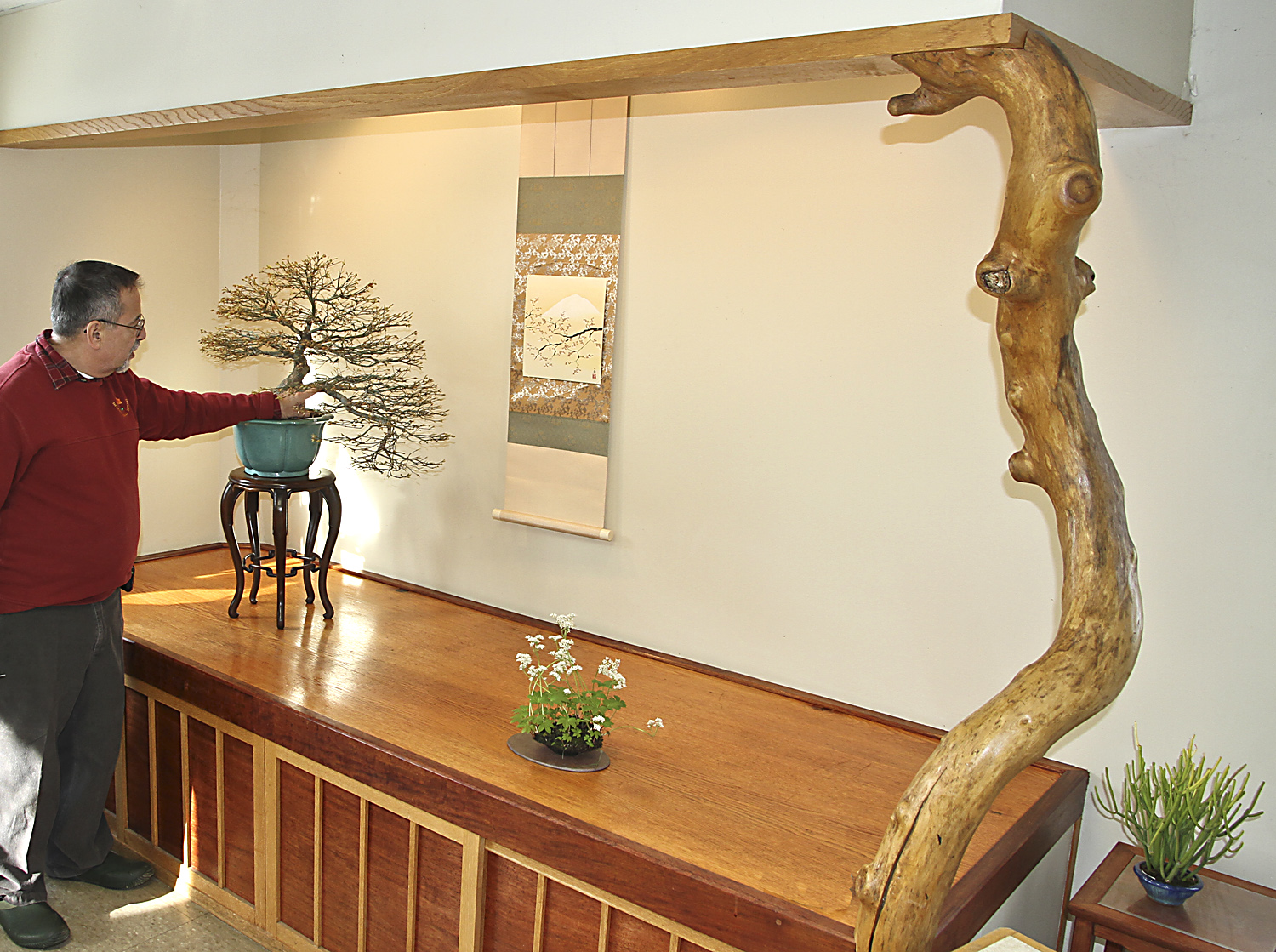
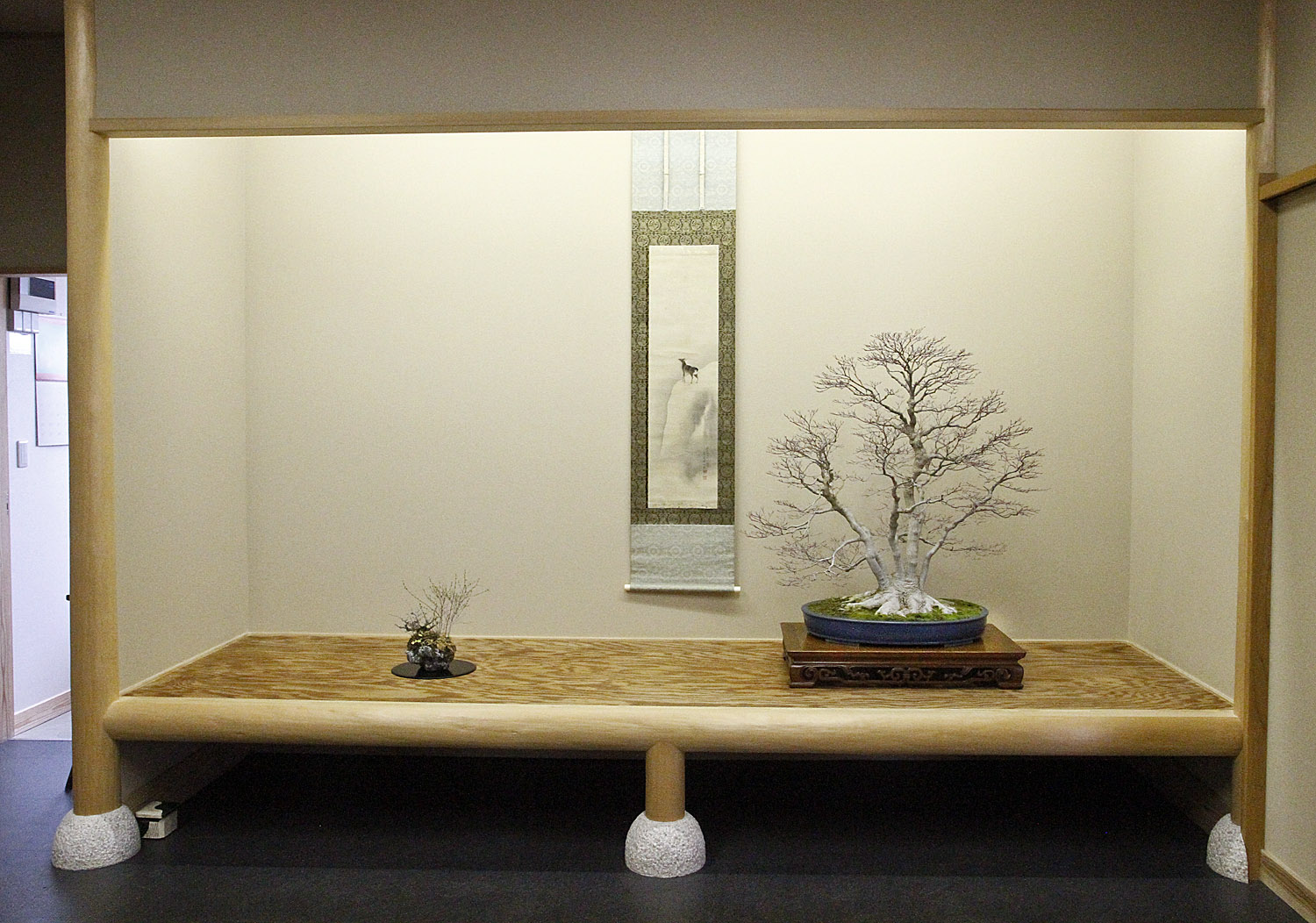
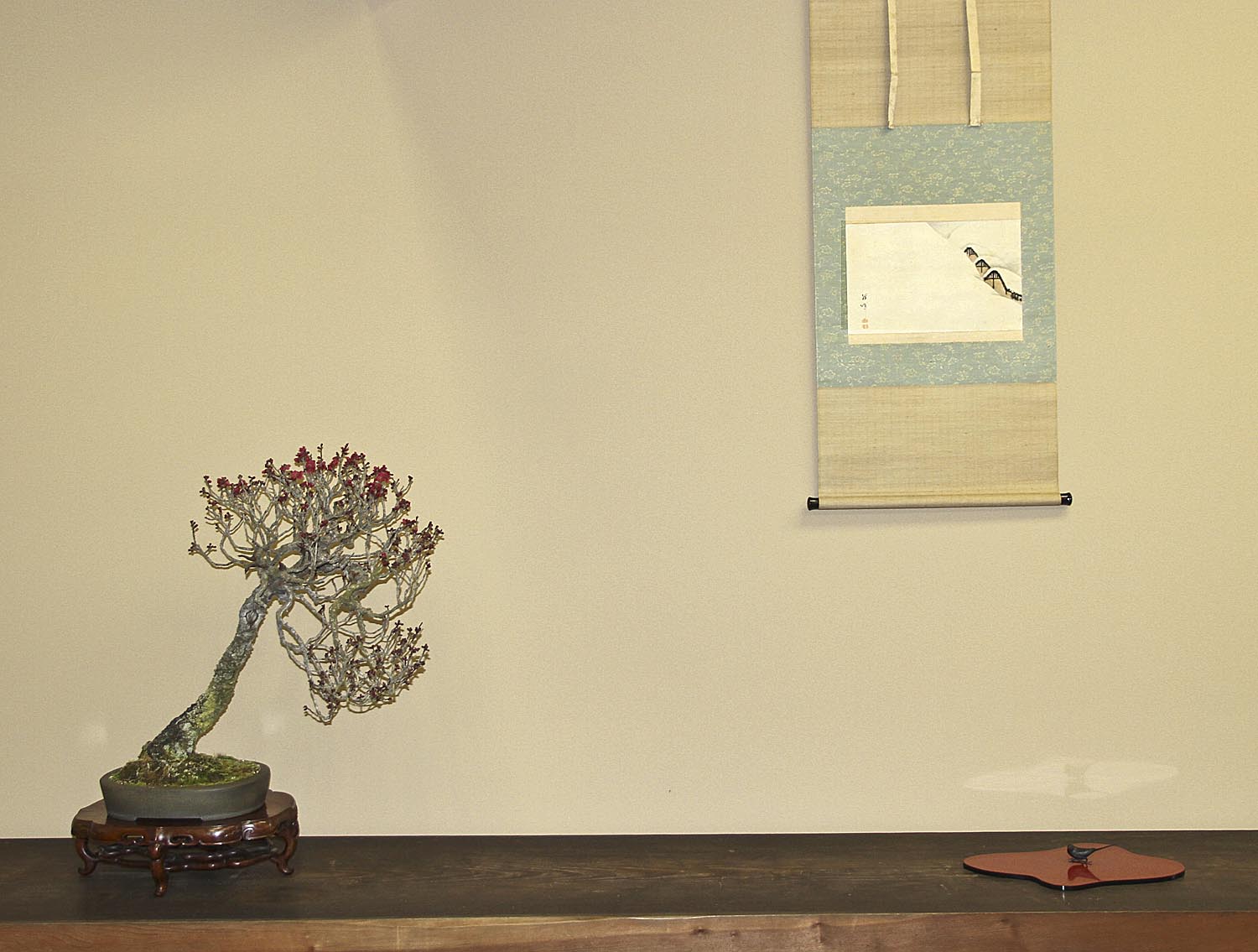
Today the final session of my Classical Bonsai MasterClass began with a discussion of the alcove display. In addition to exposing and teaching bonsai shaping techniques as well as horticultural tips to grow healthy beautiful bonsai, I feel it’s important to appreciate bonsai in a formal setting. It is not necessary to have a Japanese alcove, only an area in your home with a plain background so the tree is isolated so one can truly enjoy the beauty of the bonsai which are created and refined during workshops and grown outdoors.

As mentioned in during the previous sessions, seasonality is an important aspect of bonsai display and appreciation. The bonsai, scroll/painting or companion usually indicates the season. During the first two sessions of the Classical Bonsai MasterClass, a bonsai in flower and a deciduous tree just leafing out clearly indicated springtime, even though it was snowing outdoors. The scrolls which were displayed with the flowering and leaf emerging bonsai also featured flowers fading and cherries blossoming.

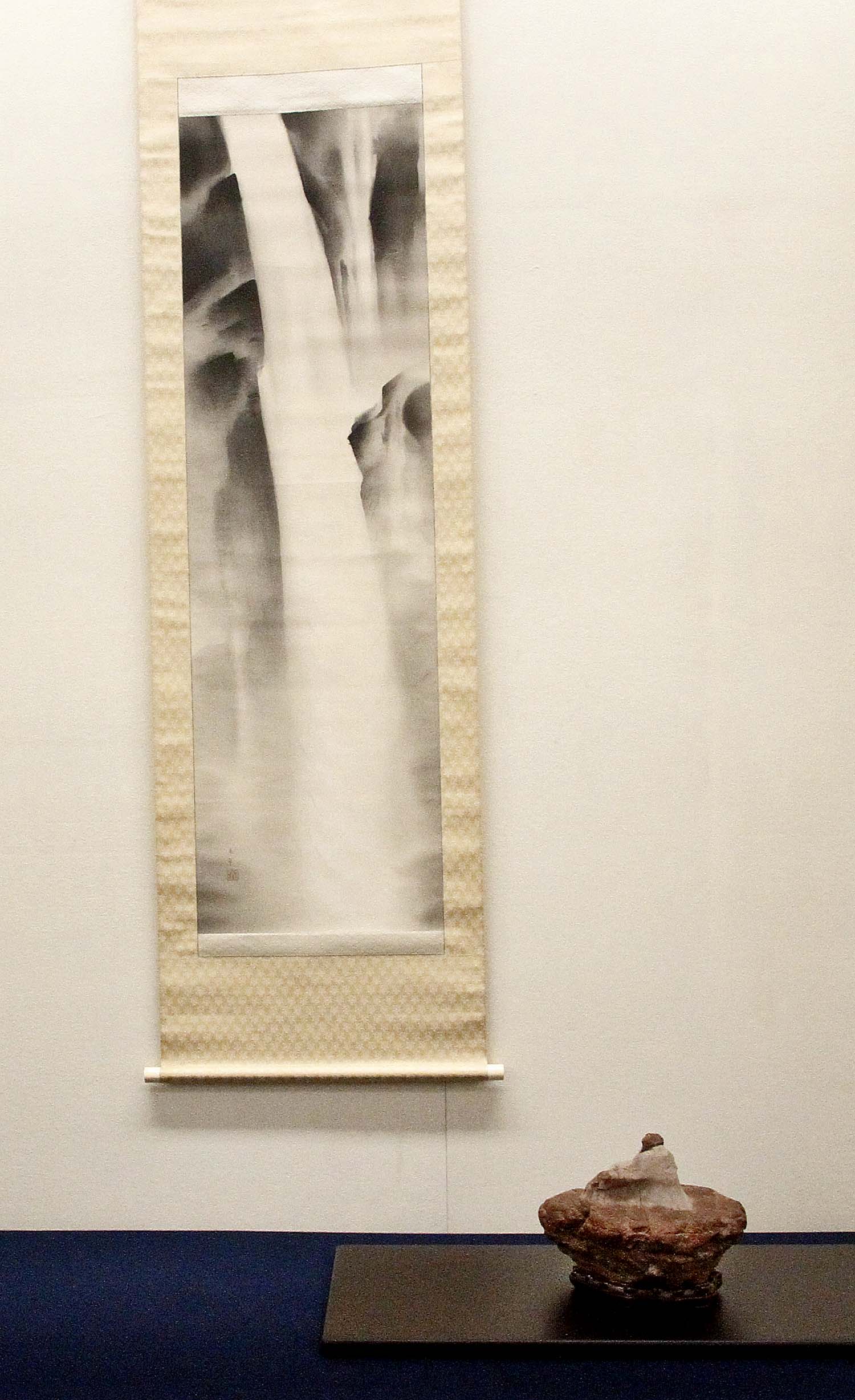
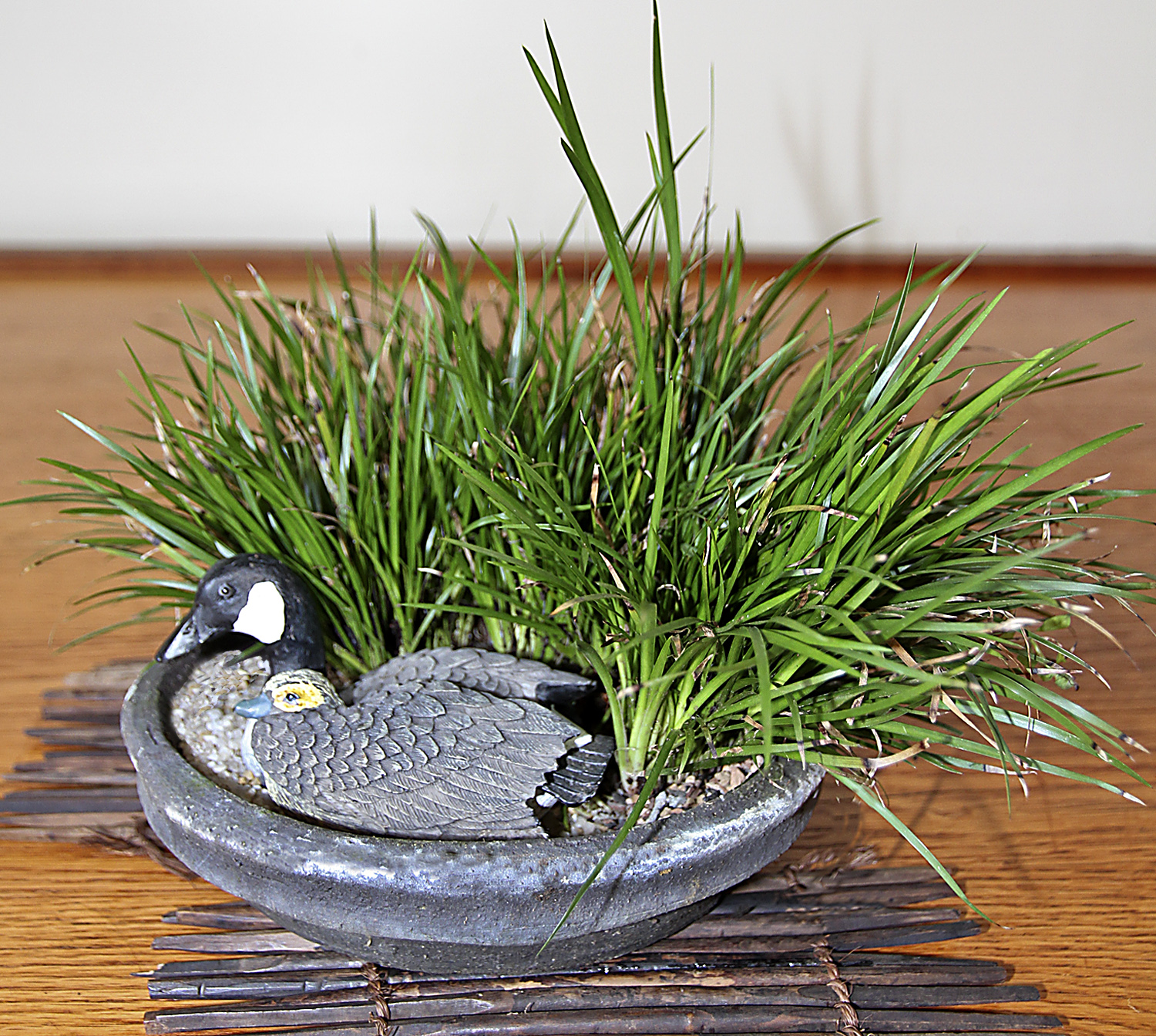
Today’s display was different however. An evergreen species bonsai was the main element on display and was combined with a scroll painting of the rising sun. Neither of these two objects indicated seasonality. So, the companion planting was used to convey the season. It was a bit difficult to first notice, but a small planting of Acorus sweet flag was combined with an overly large figurine of a Canadian goose. But, upon careful examination a young gosling was under the mother’s wing, thus suggesting spring time.
Image


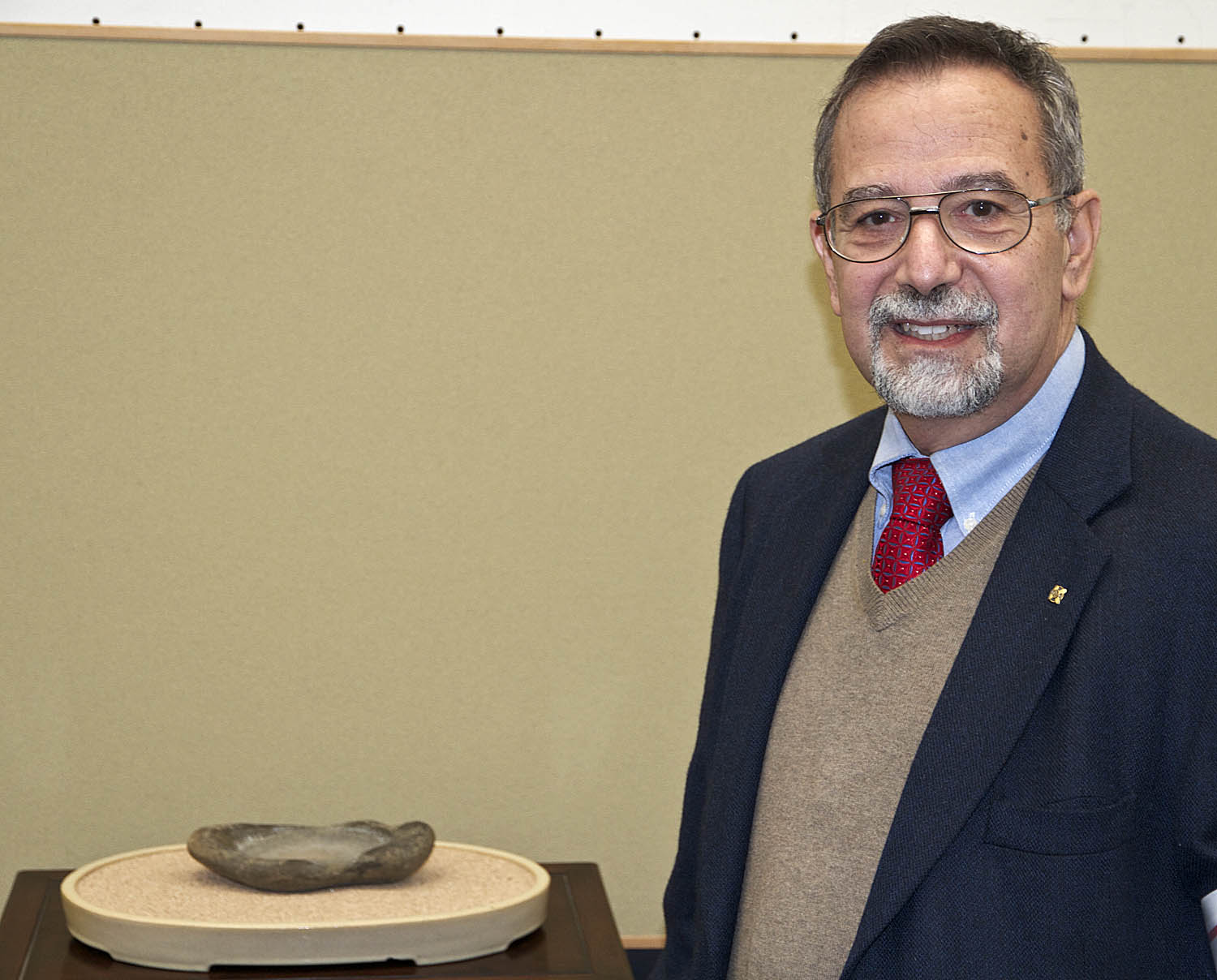
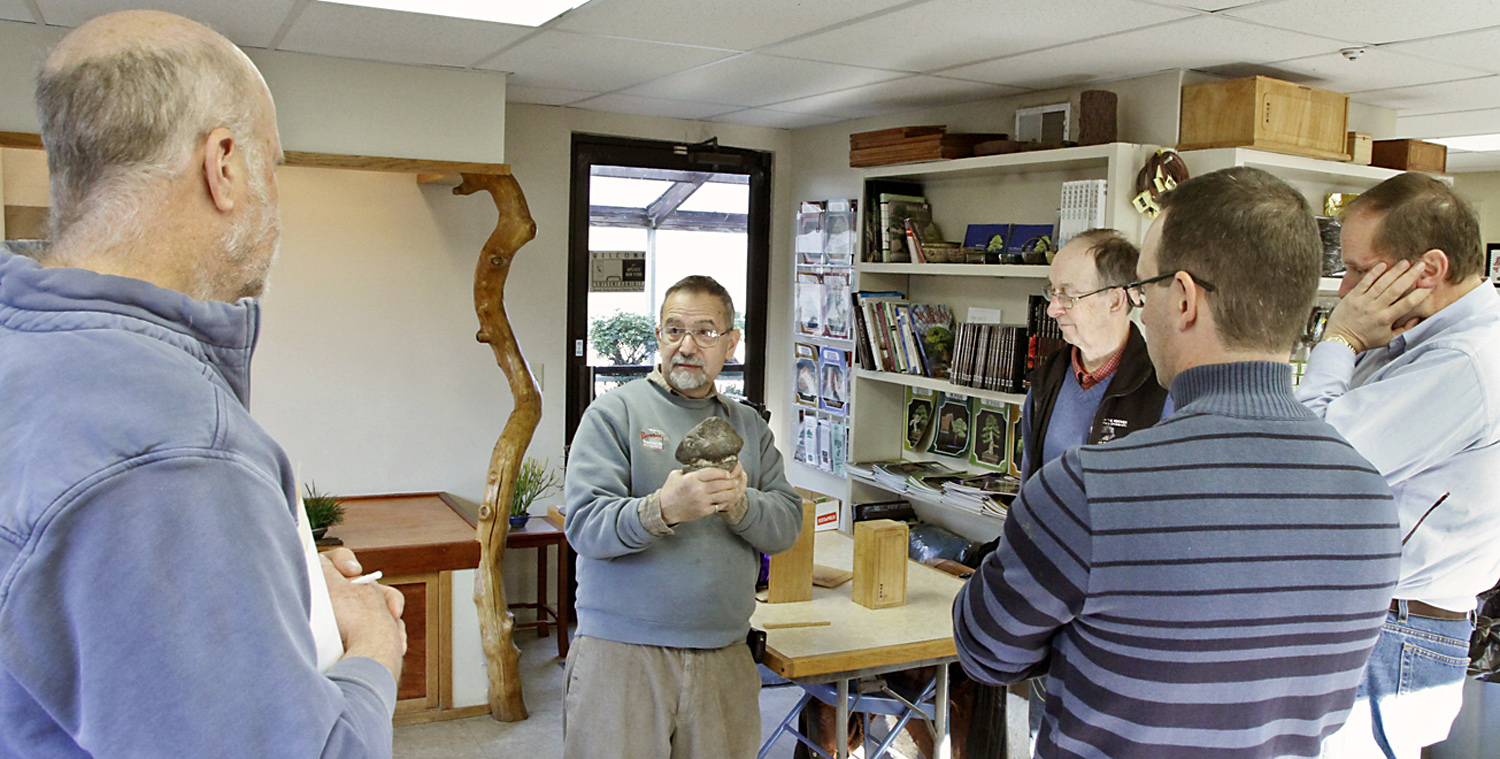
After we discussed the formally presented display we spent a few minutes on the importance of suiseki when combined with bonsai. My well-known natural double hut stone from Puerto Rico was compared to a contemporary commercially produced hut stone from Japan, which was “enhanced” to appear natural.
Image

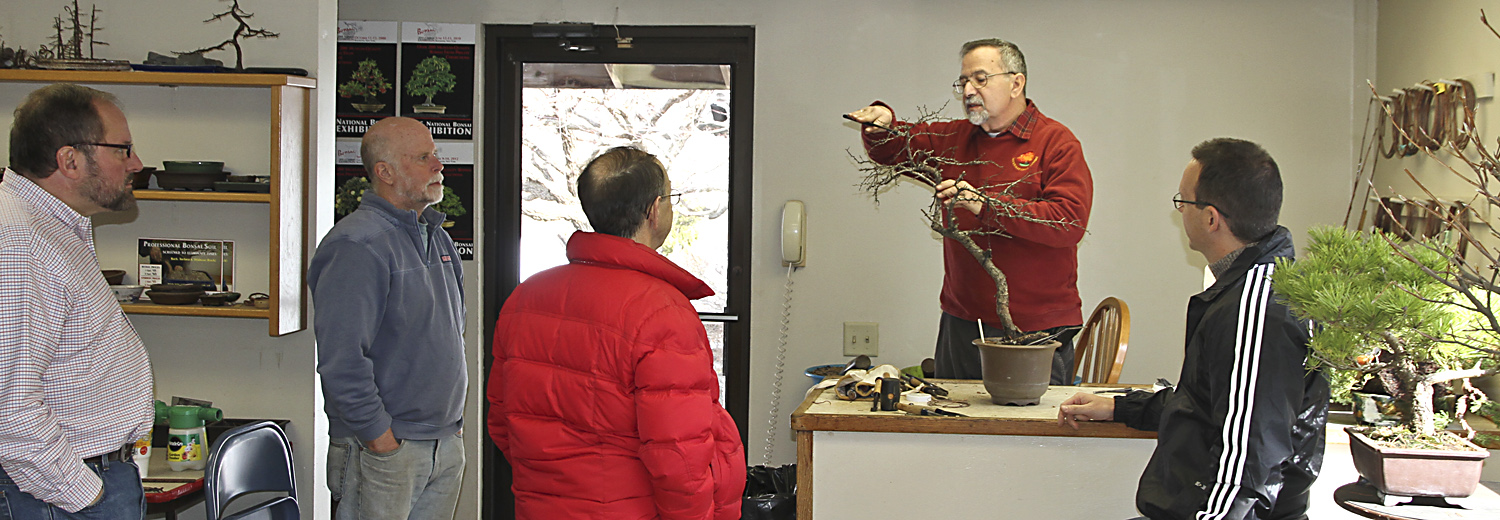
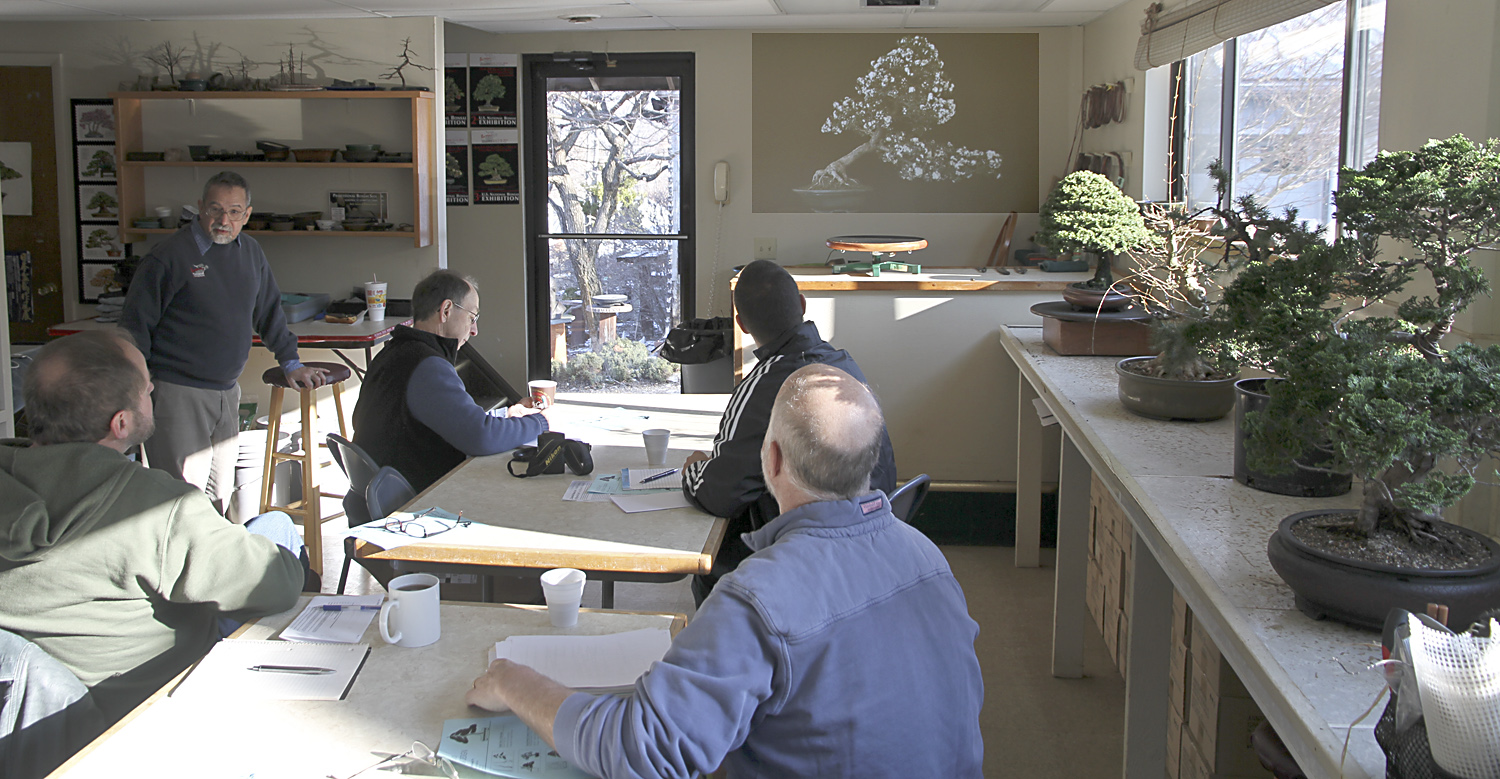
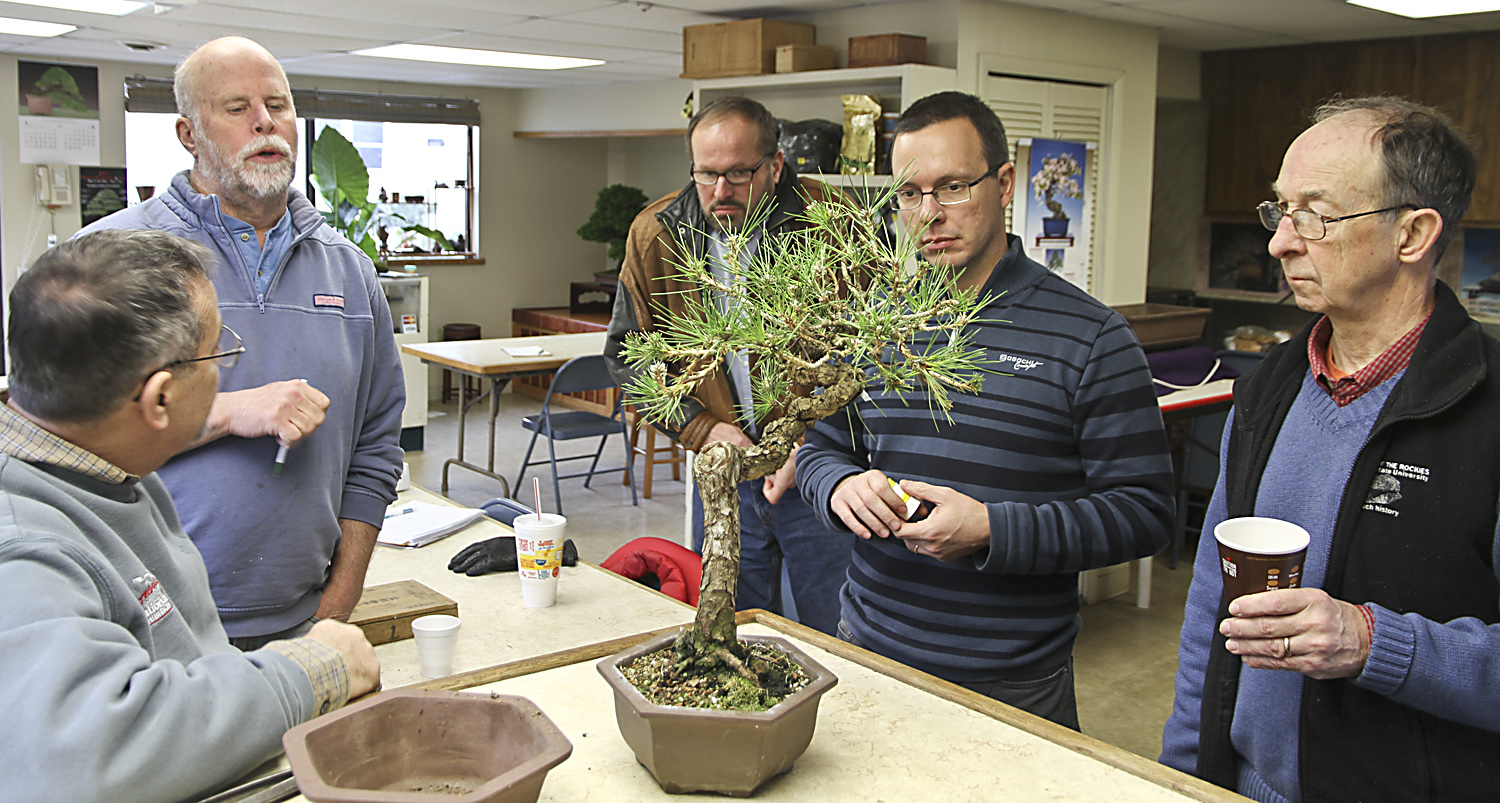
The group was offered several different options for the topic of the PowerPoint program. Everyone wanted to learn a bit more on the refinement of bonsai, so I showed my Refinement of Maple Bonsai program which covered trimming, shaping, container, soil mix and growing conditions for refining a bonsai which is the next step after developing a bonsai.
Image

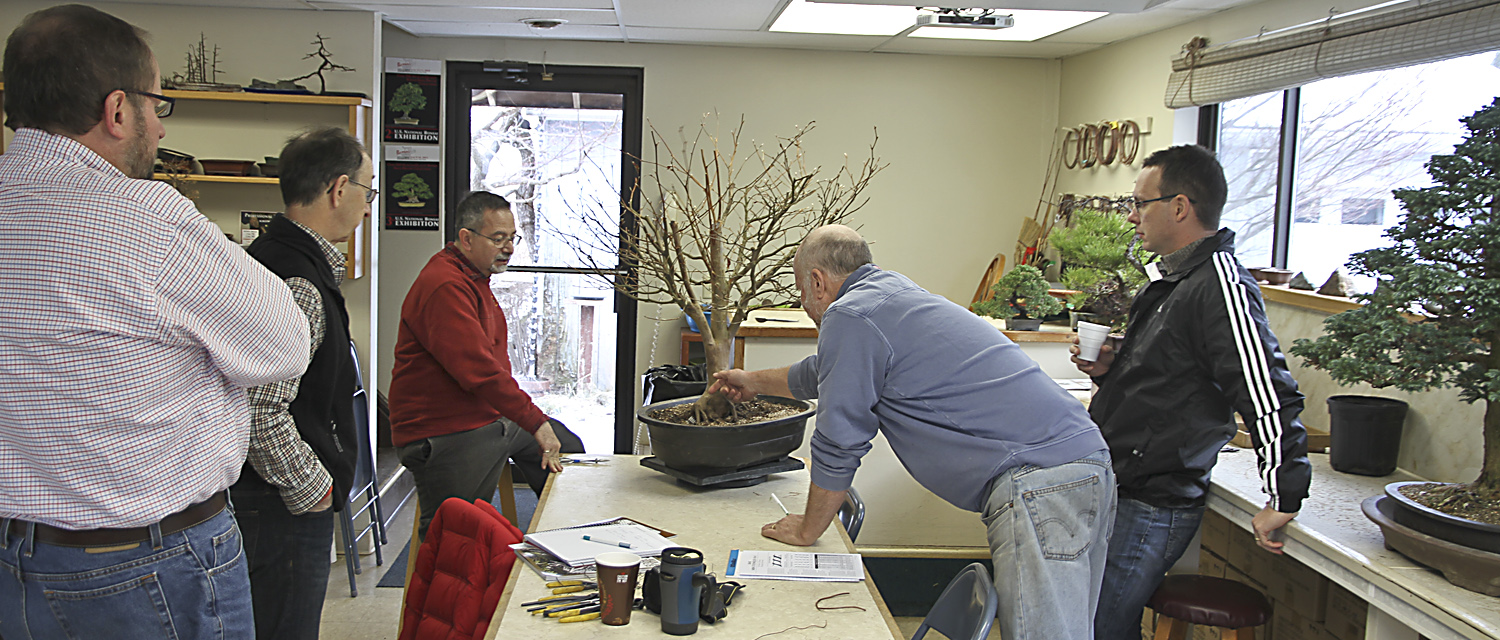
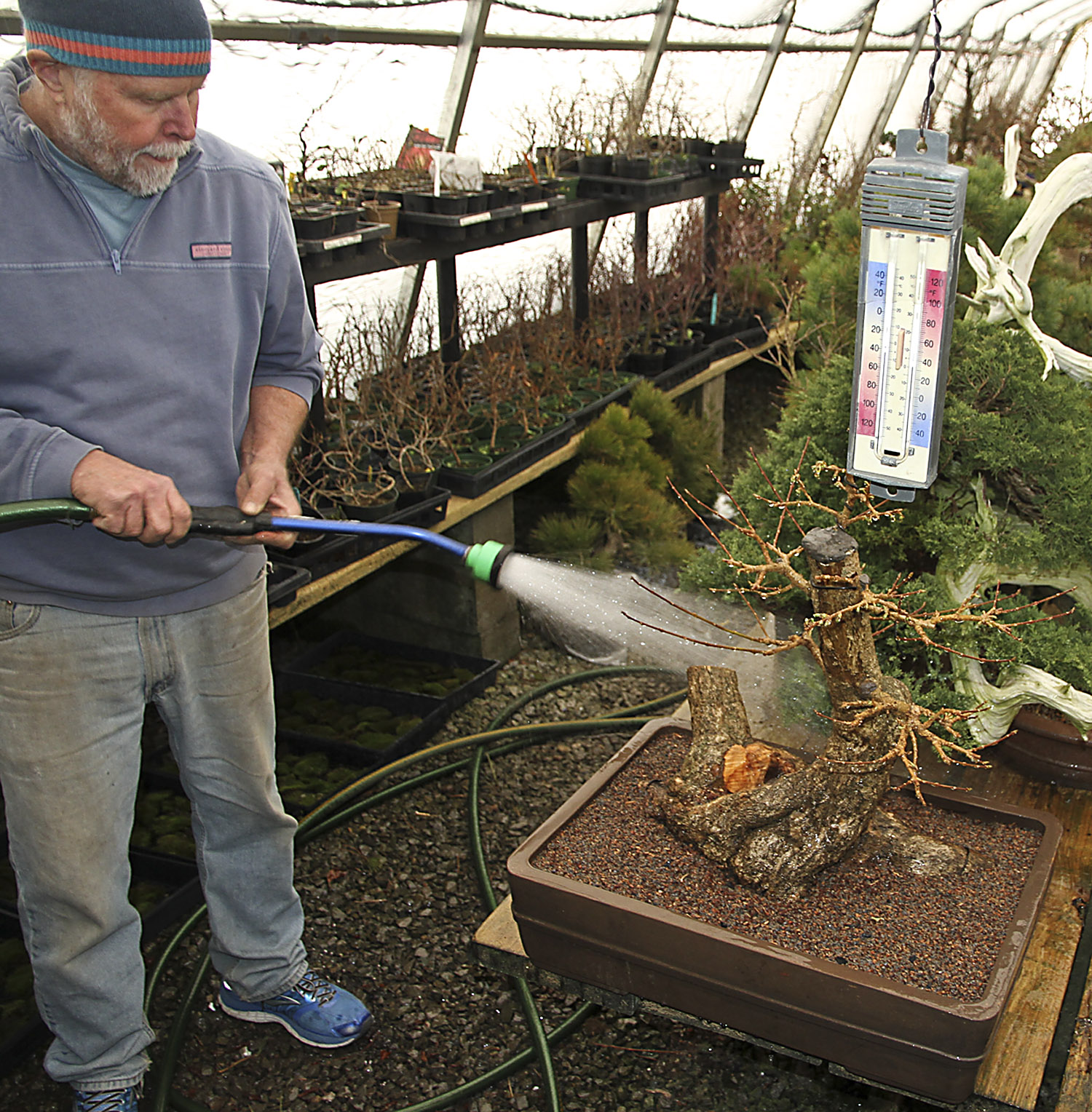
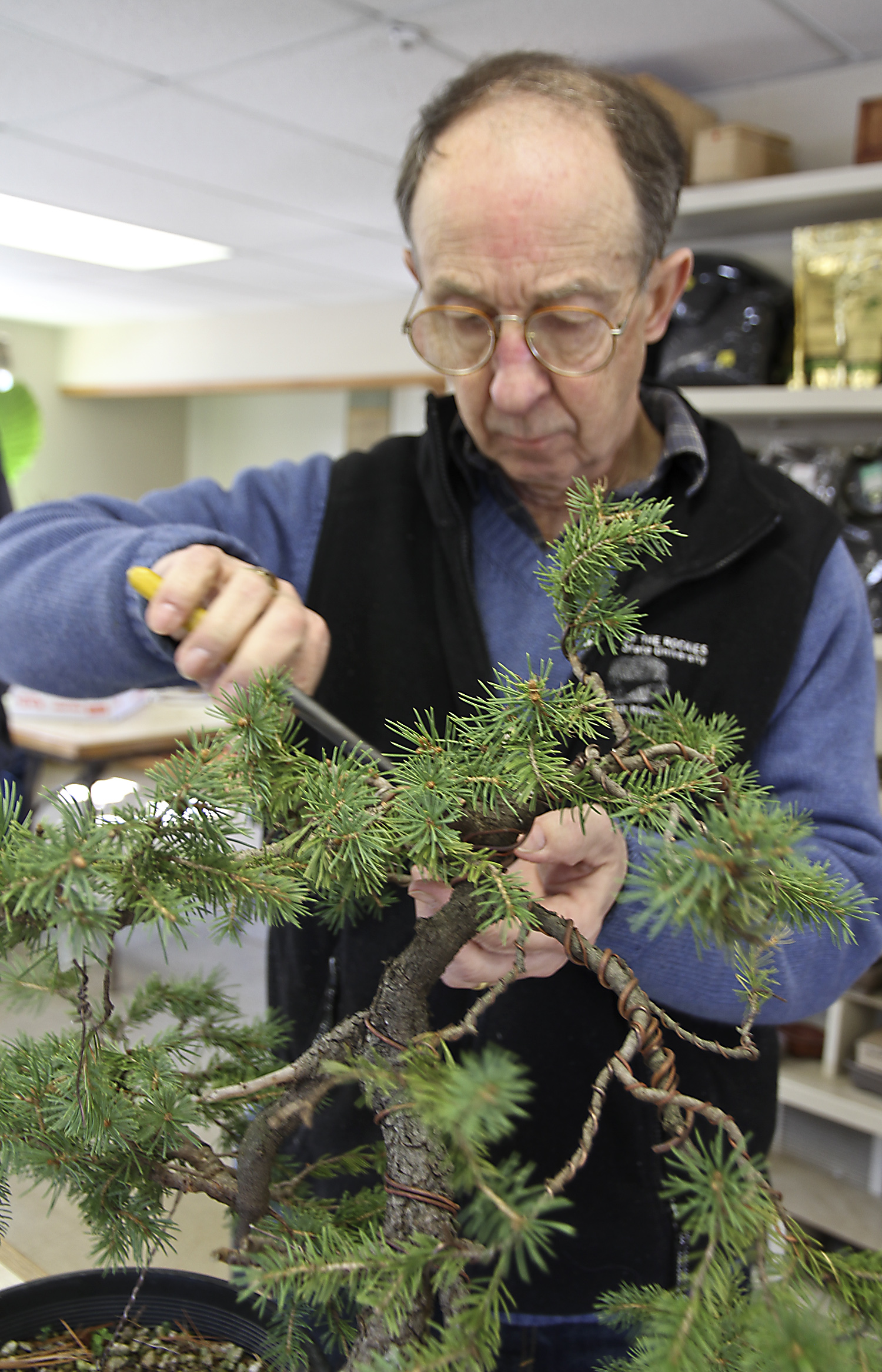
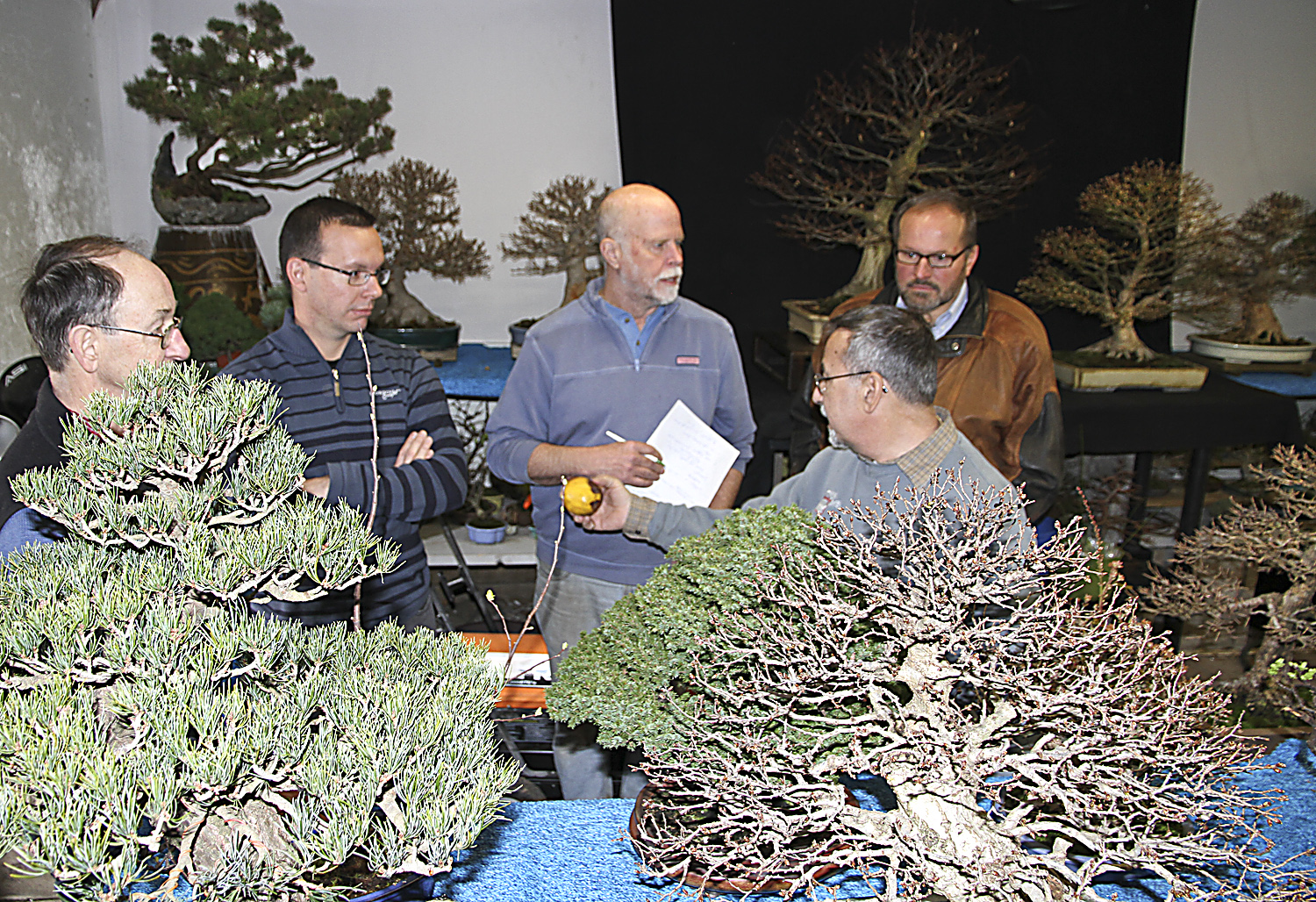
The four students spent the remaining of the last day completing the shaping of their bonsai, starting the shaping of future bonsai and critiquing established trees. As interesting shaping techniques were used everyone gathered around to learn from the other trees.
ImageImage

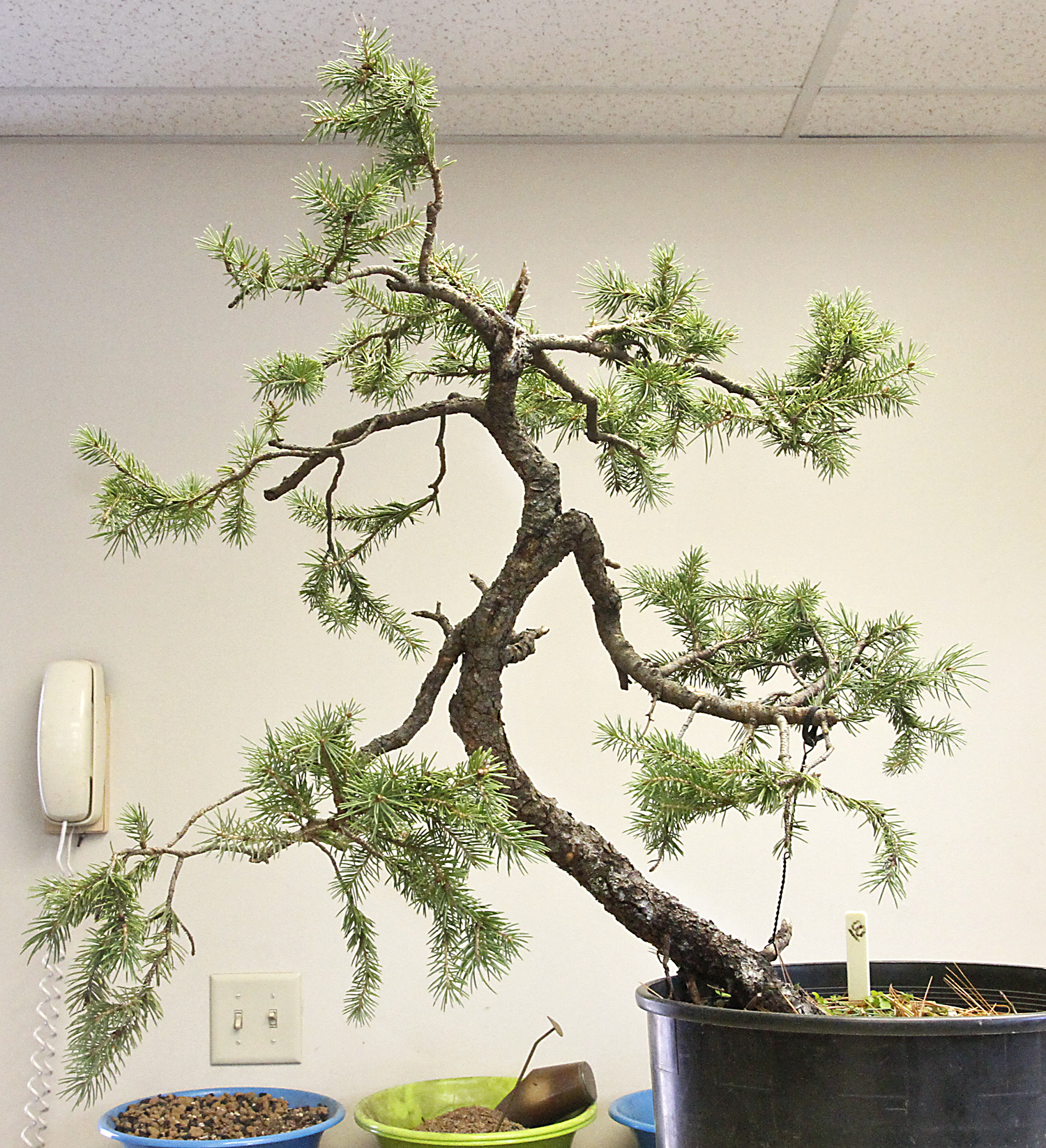
Before wiring and shaping collected Engelman spruce by John Wiessinger
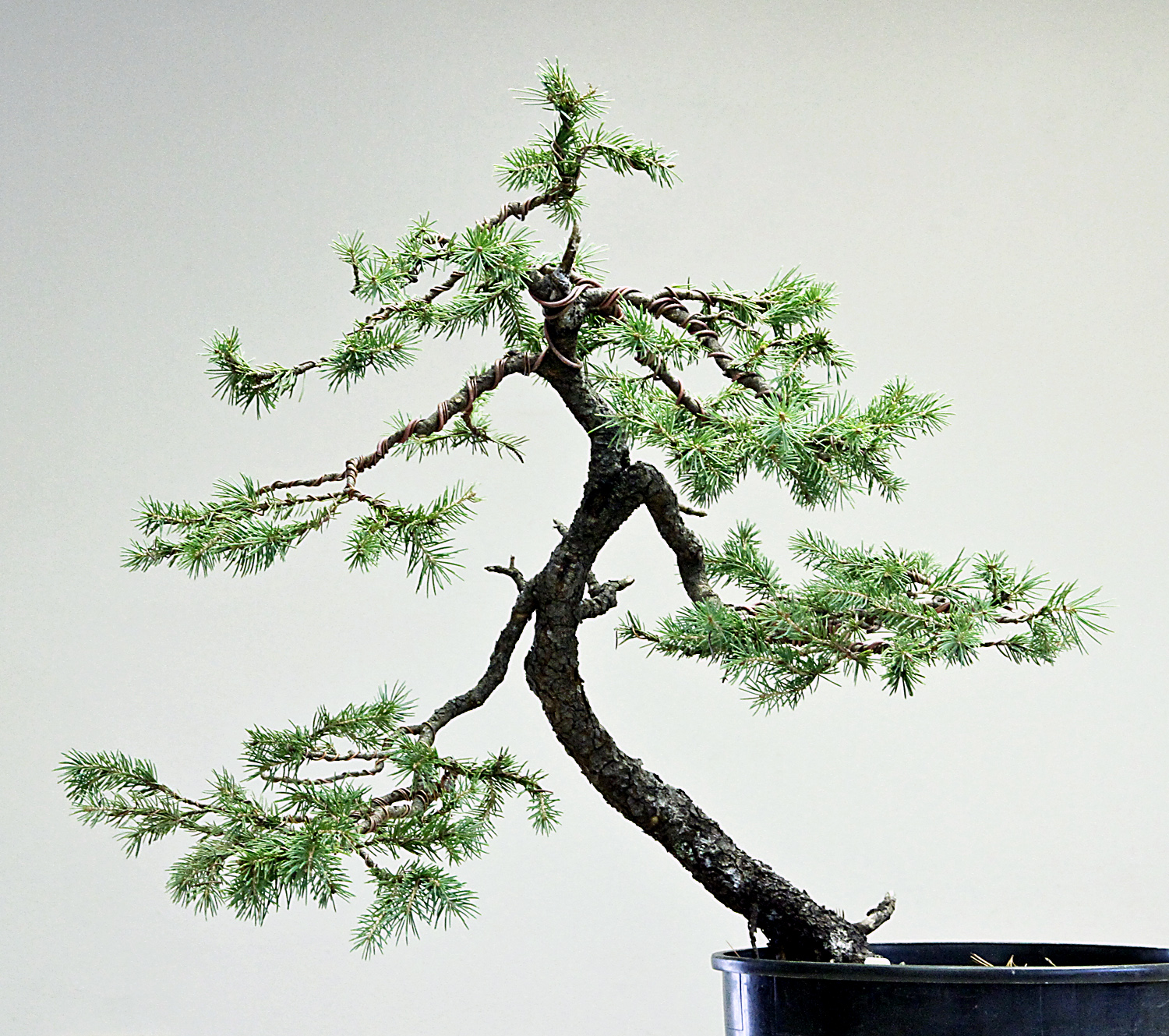
Image s

After shaping by John Wiessinger

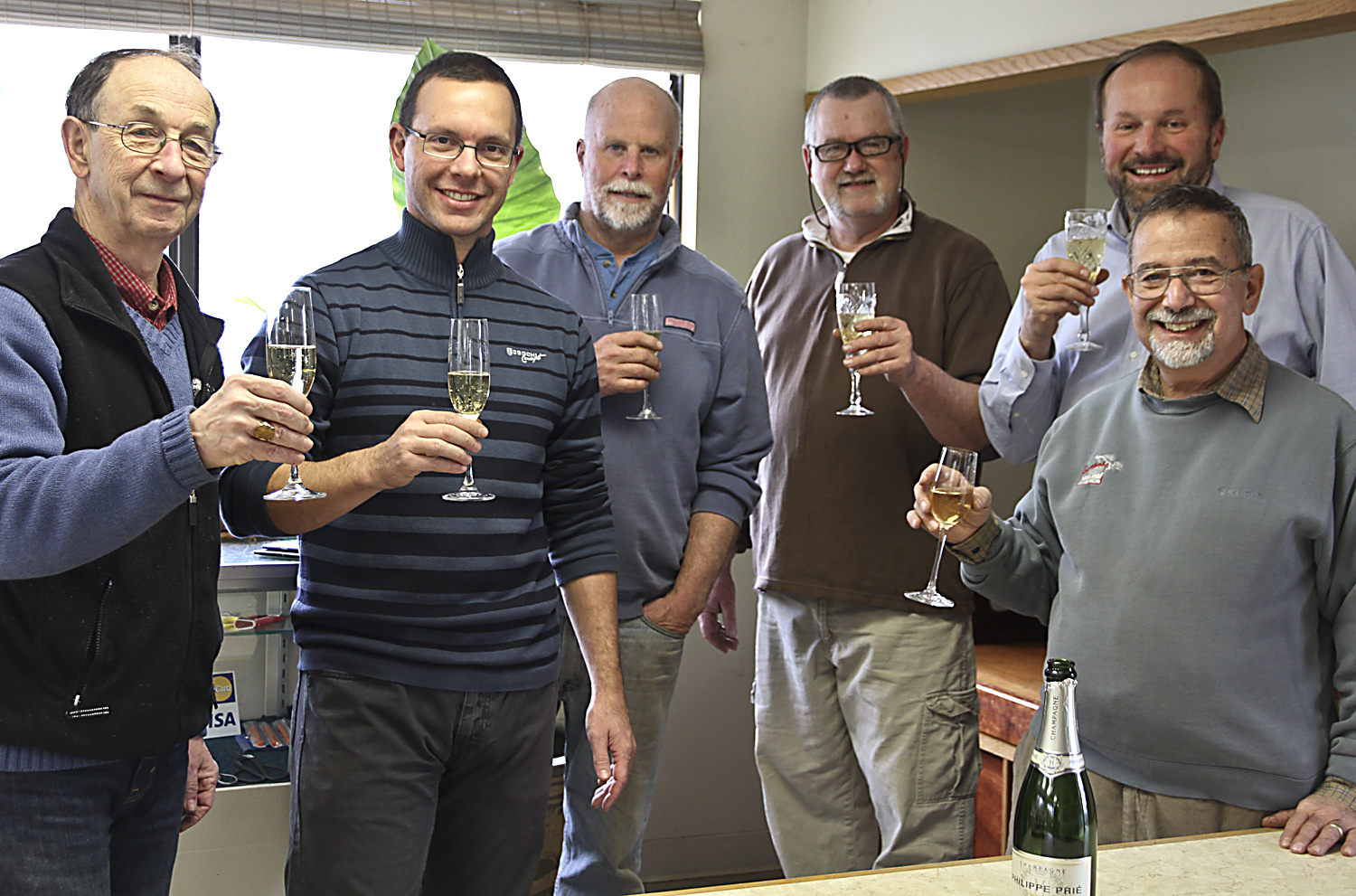
To conclude the first series of the successful Classical Bonsai MasterClass sessions wine connoisseur, Joe Moore, brought a bottle of fine French champagne, complete with crystal glasses. Everyone partook of the liquid treat, including me, although I personally thought McDonald’s sweet tea tasted better.

I look forward to a new group of students in my next Classical Bonsai MasterClass.Image
Classical Bonsai MasterClass Session II

Image

The second session of the Classical Bonsai MasterClass began with discussing a different alcove display featuring a cascade style Kiyo Hime Japanese maple, just leafing out and ready for bud pinching and trimming. After discussing the formal display tradition and principles we went over how to correctly control the new growth of both developed and undeveloped deciduous bonsai. Since this bonsai was not bud pinched last season, most of the terminal buds will be shortened to maintain a compact form, yet presenting a light elegant feeling.

 Image

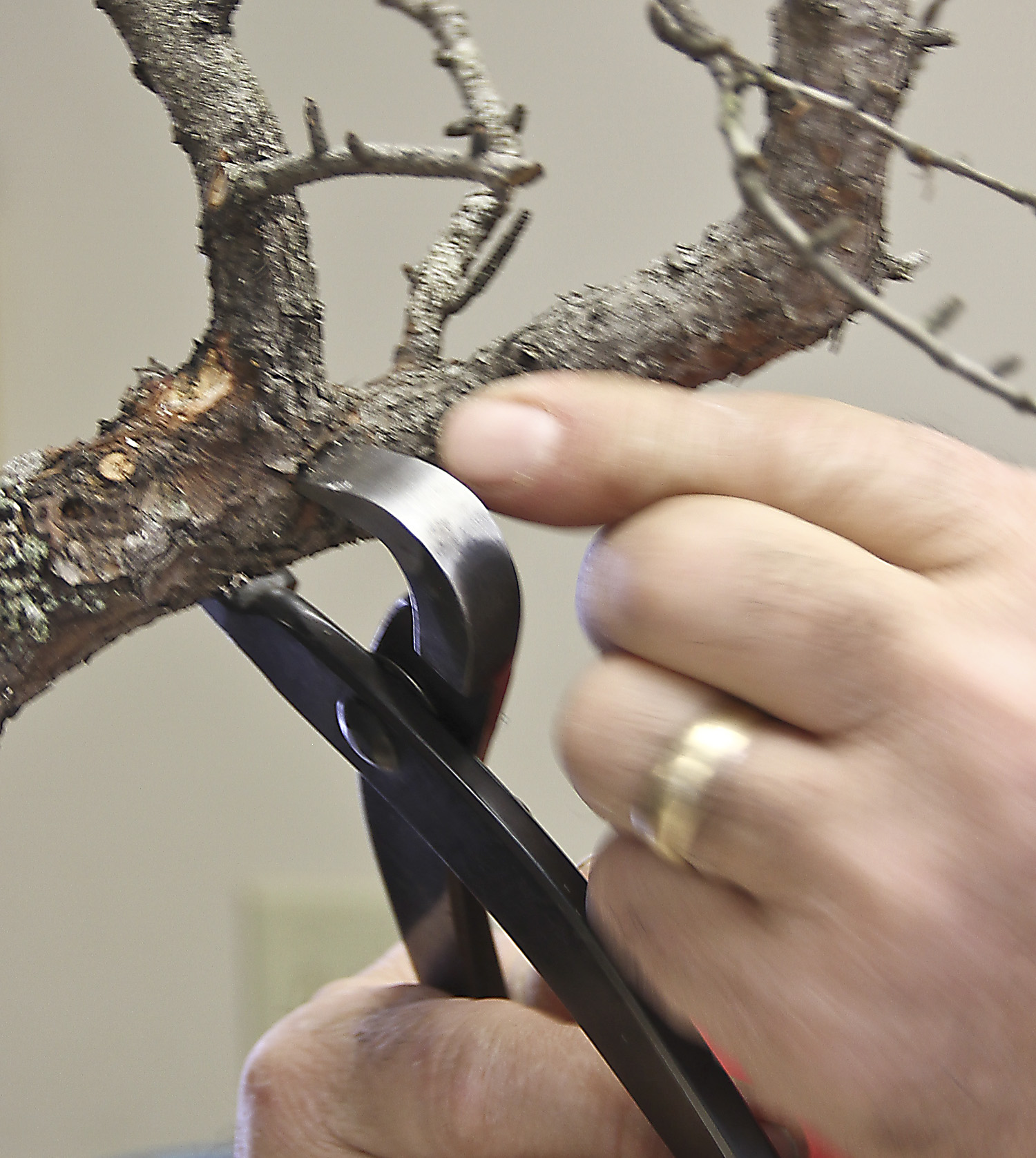
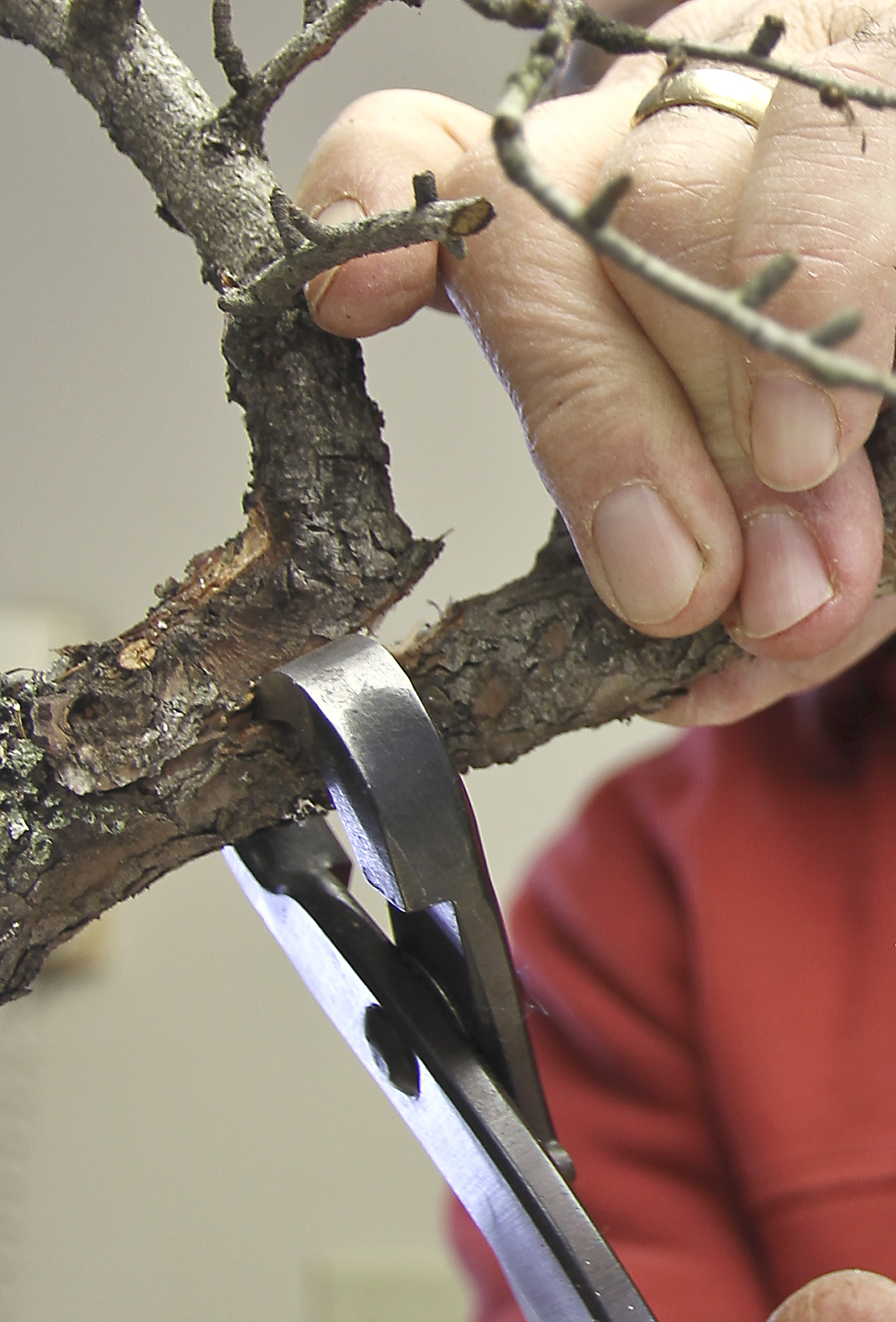
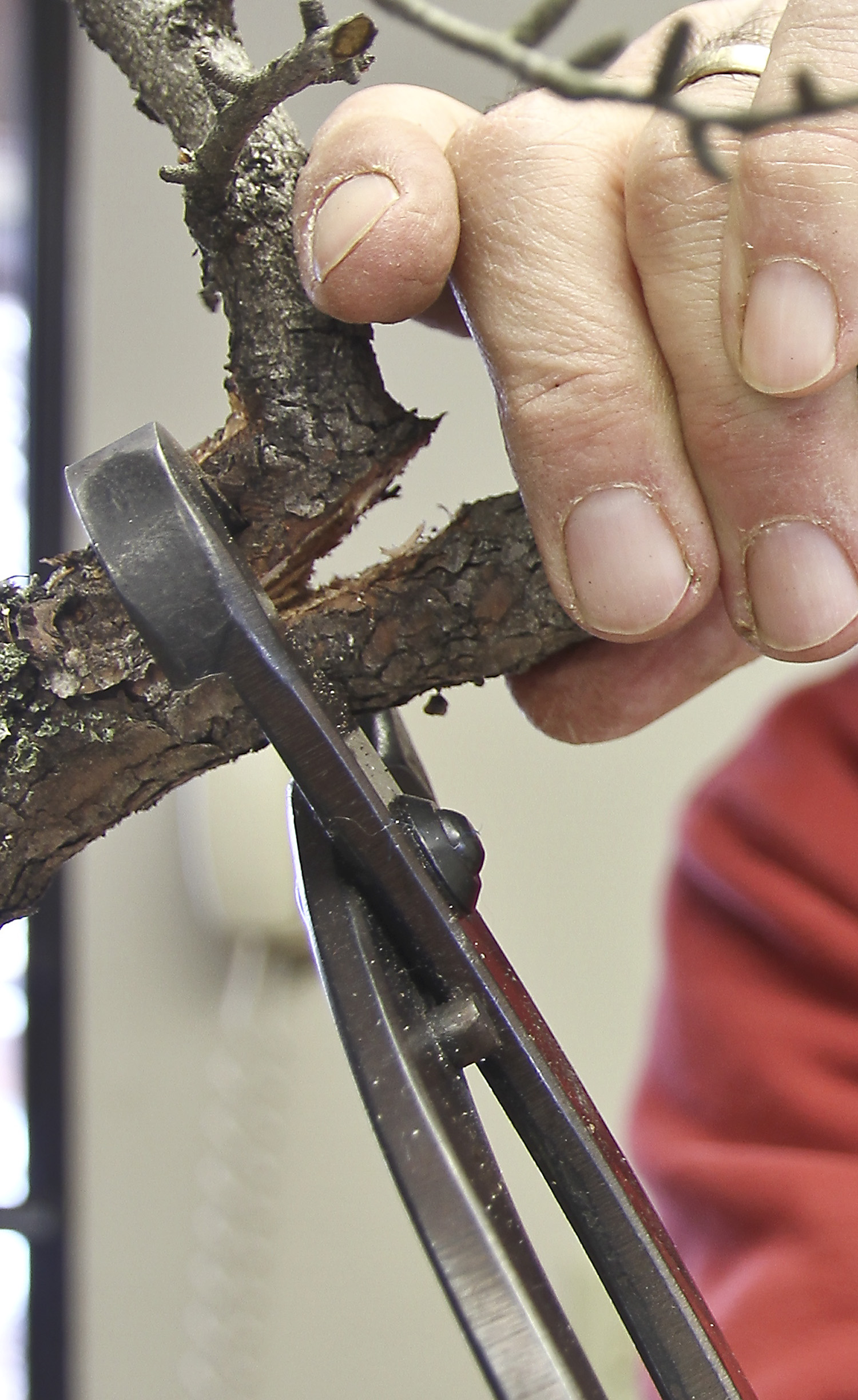
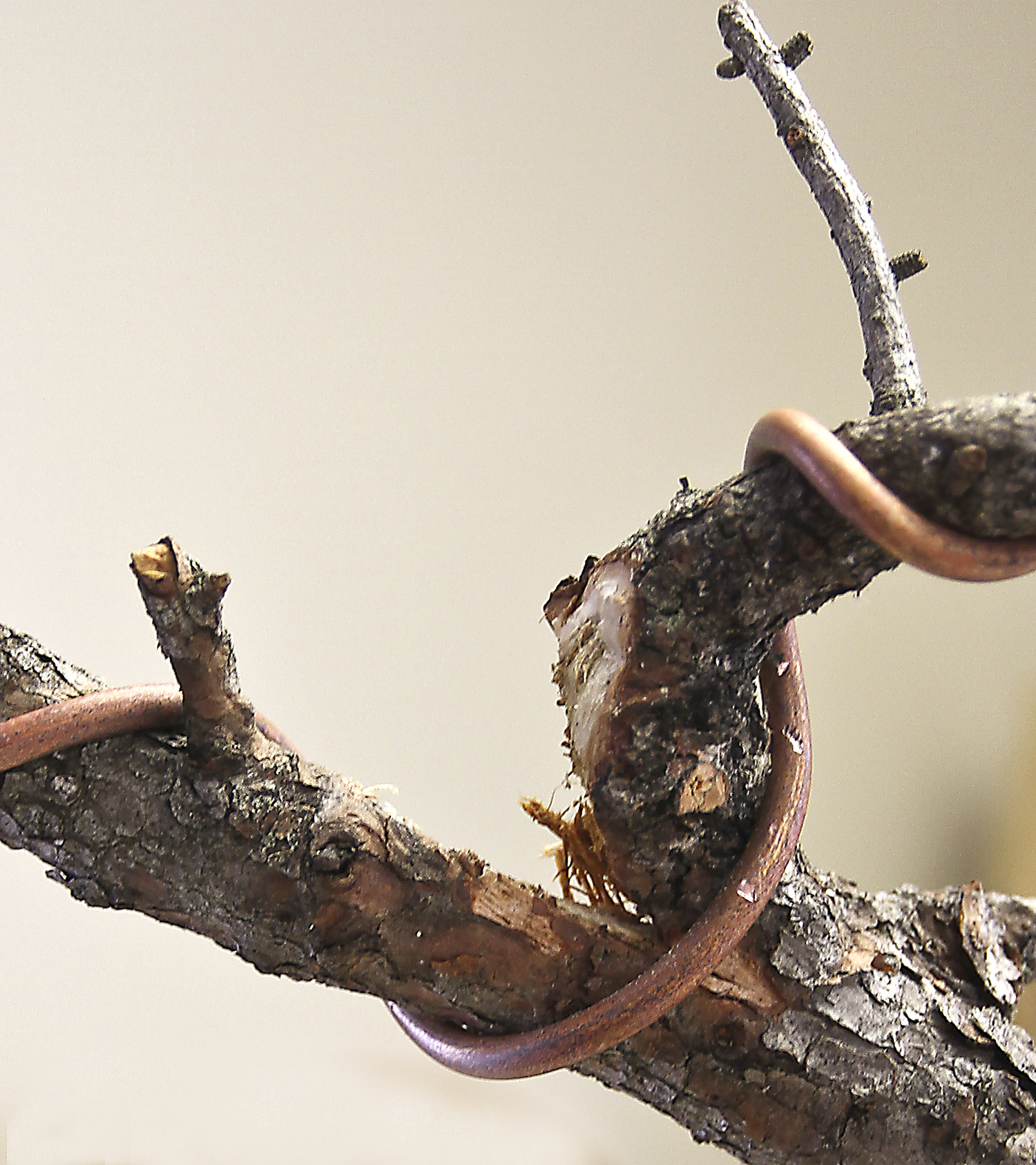
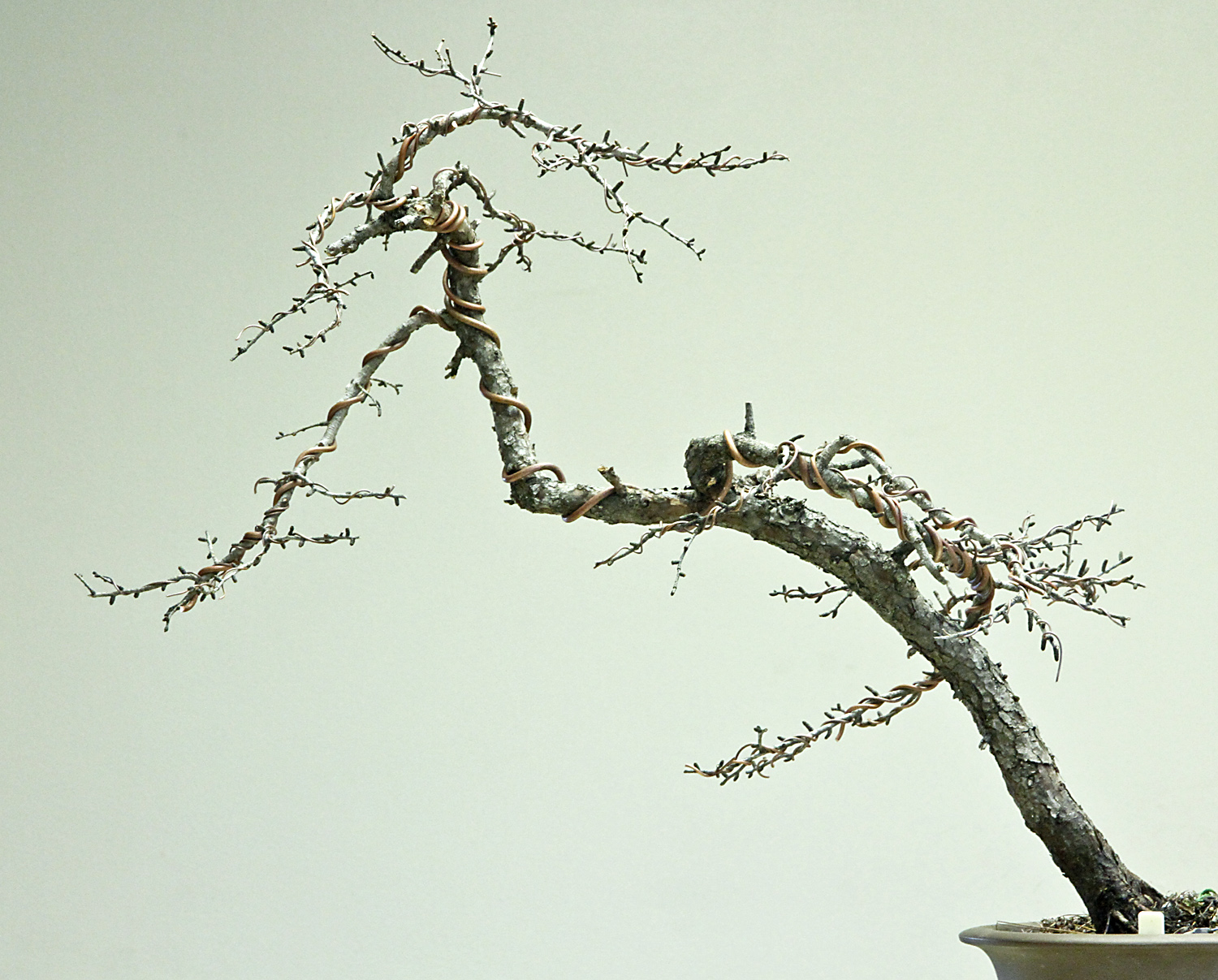
Wiring techniques were the main topic of the morning PowerPoint presentation. After a brief explanation of basic wiring, we quickly changed the topic to more specific applications for bonsai shaping and refinement. John Wiessinger brought in an old collected American larch from a bog in Maine. Relocating a lower heavy branch would improve the design. A sharp trunk splitter was first used to dislocate the desired branch from the trunk to create more branching in empty areas. John watched the process and did not cringe as the branch was popped out of the trunk, bent and relocated. The newly positioned branch was held in place with wire and a guy wire. Cut paste was used to fill in the open would to promote a quick callus covering. Small pieces of flakey American larch bark were pressed into the moist cut paste to disguise the open bark wound.

 Image


Image


Image


Image


Image


Image

Each student worked on their own bonsai, and when an interesting technique was used, everyone came to watch, discuss and learn. Kip Neal brought a huge Forsythia for additional training which he dug from a landscape a few years ago. In the first session he began to carve the massive lower trunk and completed the process during the second session.

 Image


Image


Image


Image

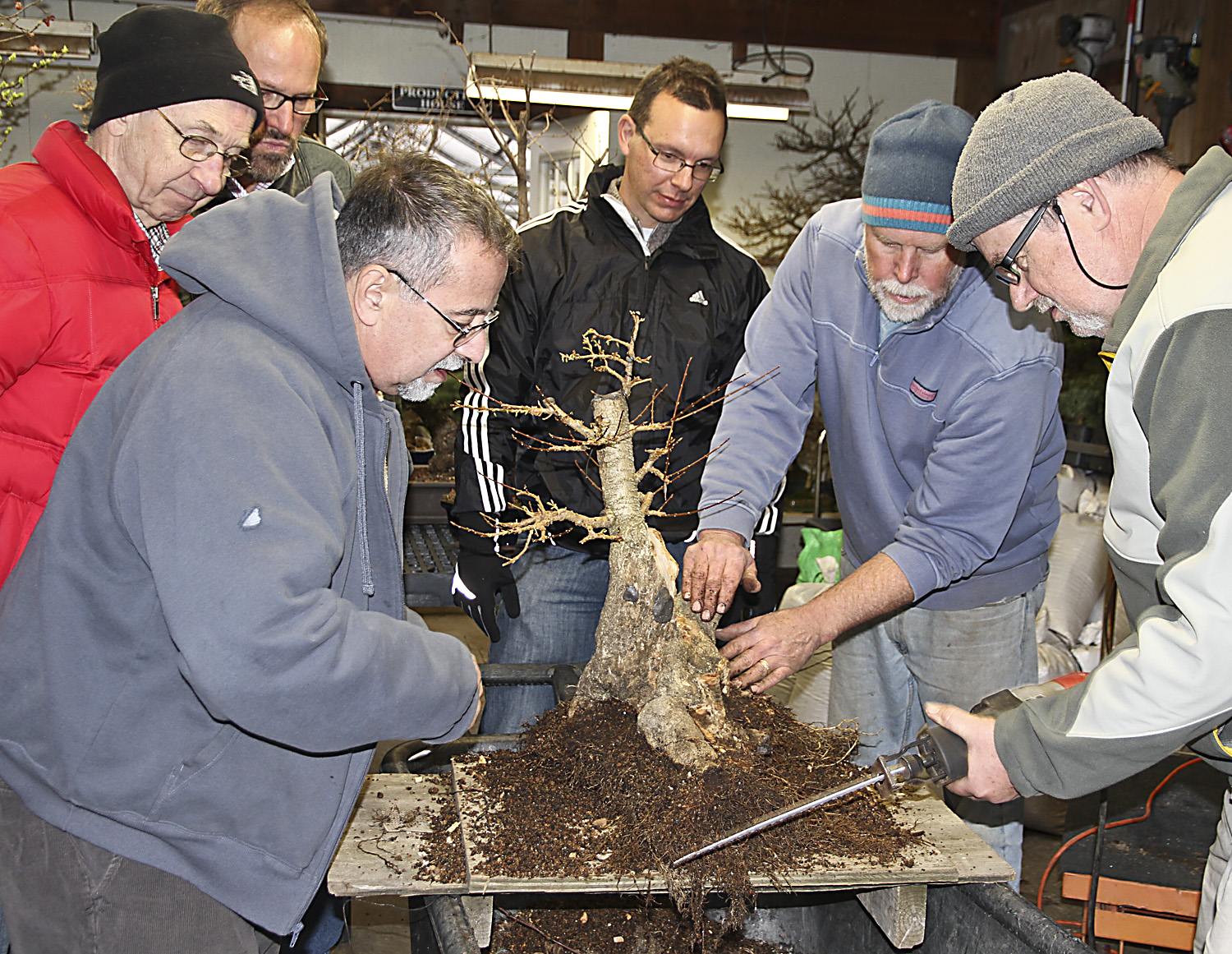
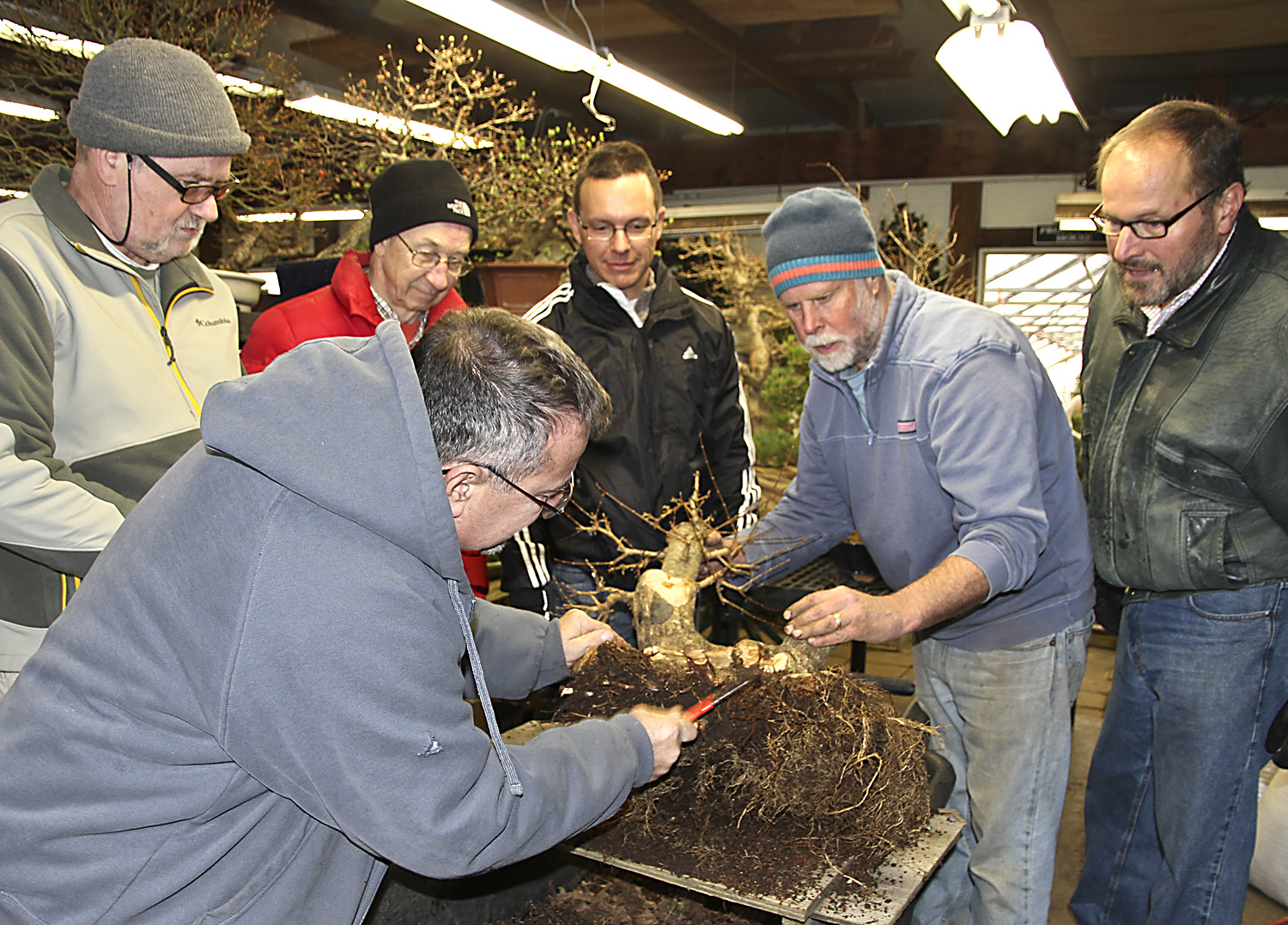
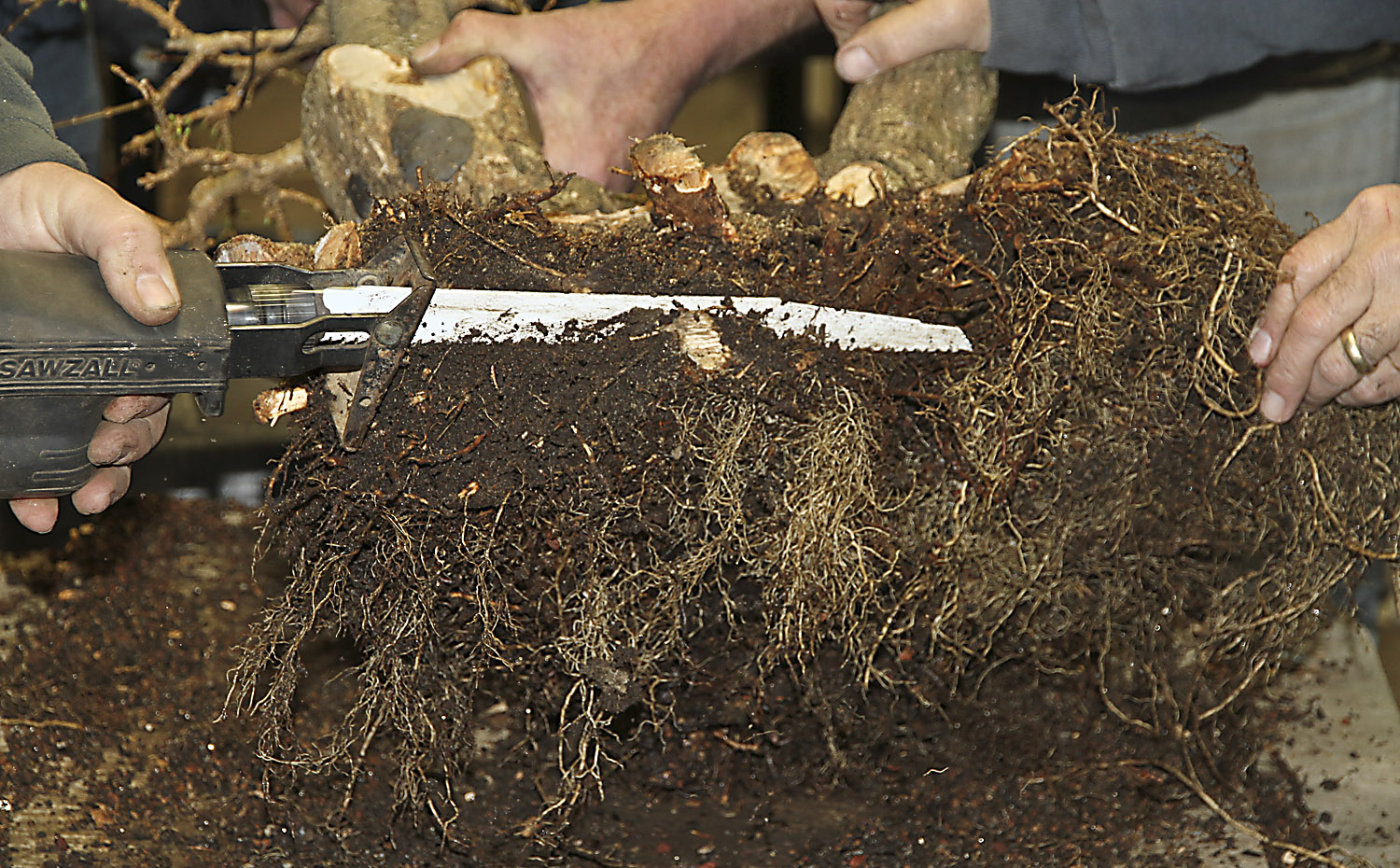
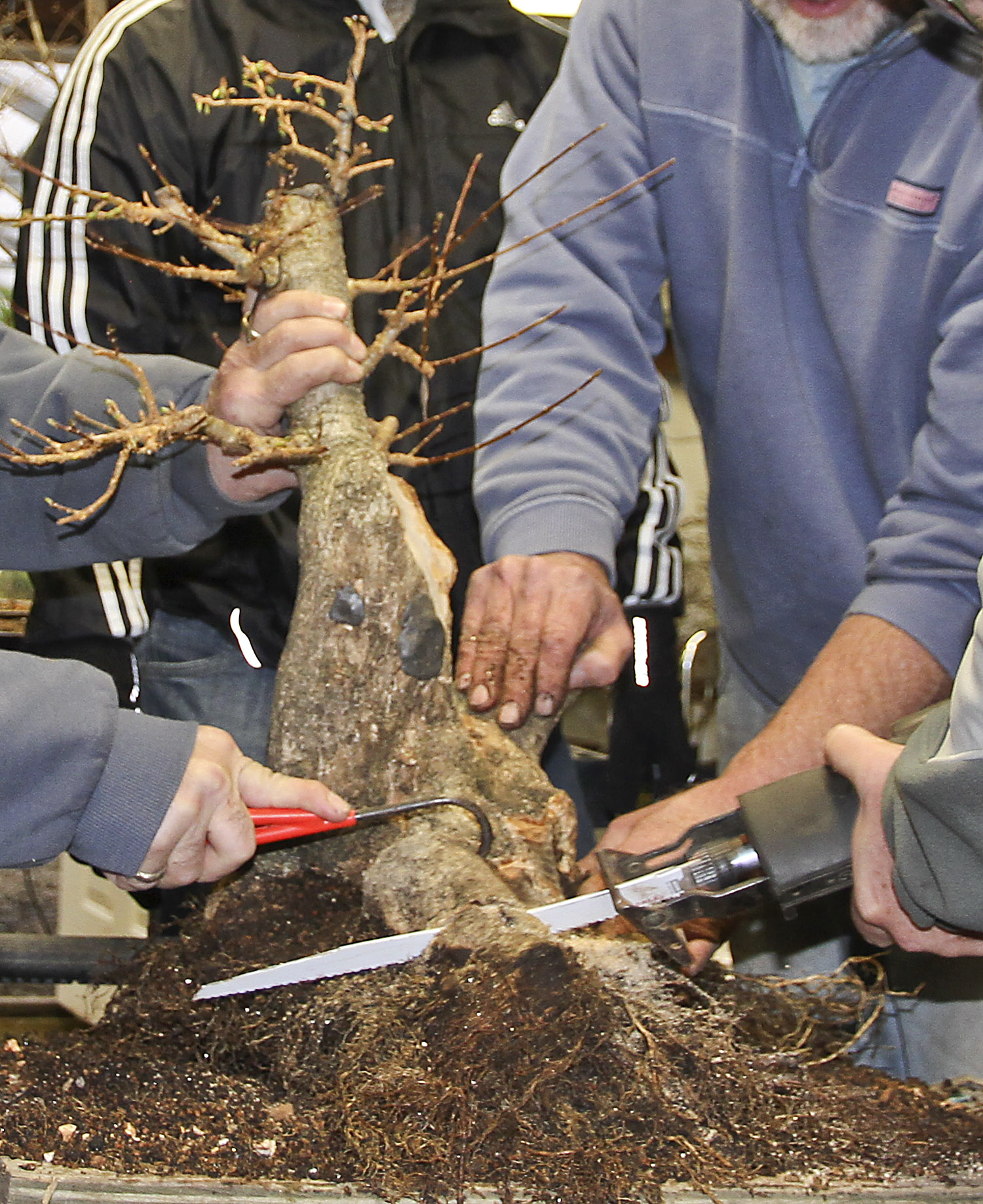
Then we all moved into the garage where there was more room to use the reciprocating saw to easily and quickly remove the old heavy roots. I guided my assistant, Alan Adair, with the cutting process while the students intensely watched as we sawed through the heavy woody root system to allow the tree to sit lower in the large training pot.

Image

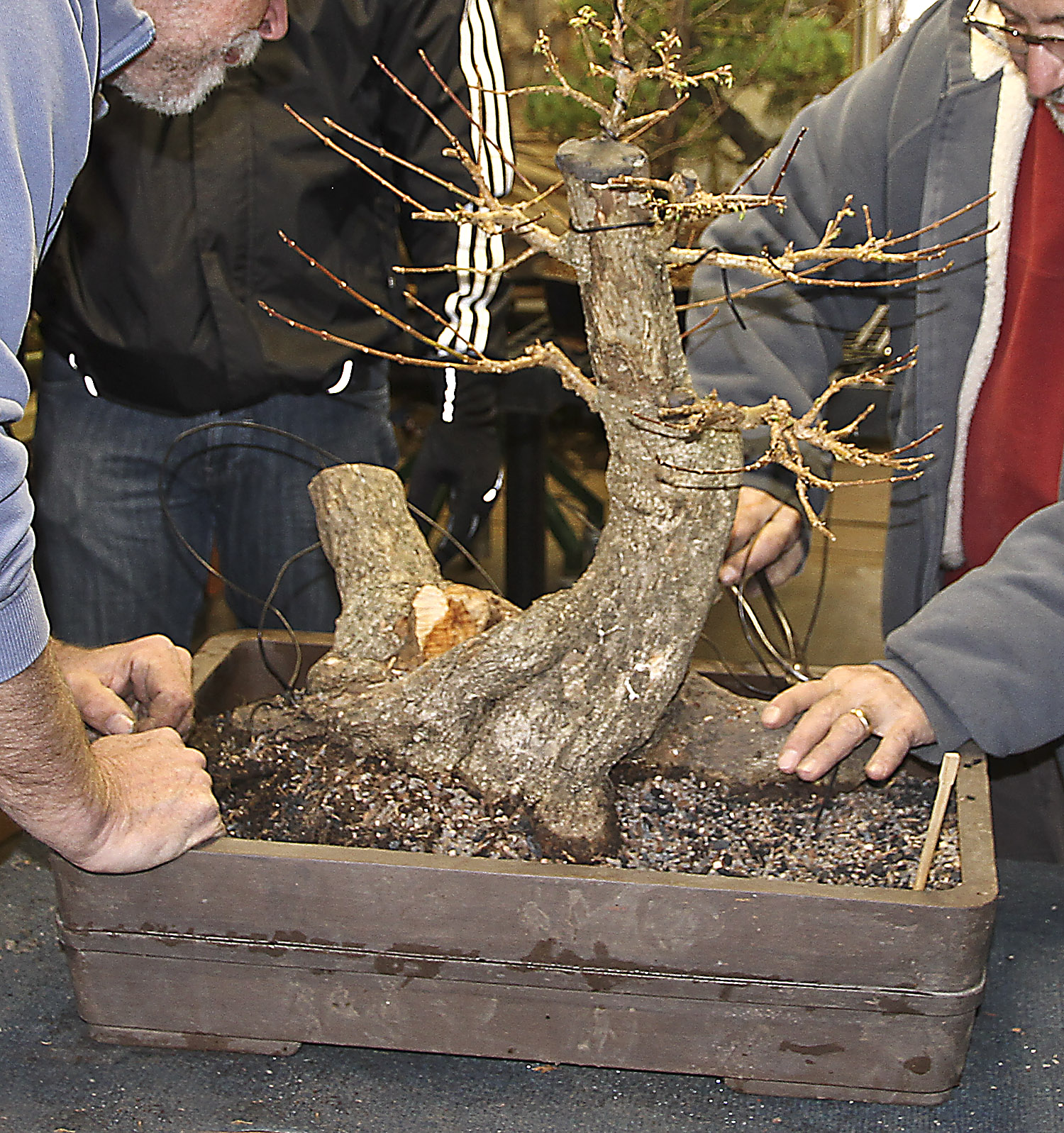
Coarse soil with horticultural charcoal was used for most of the potting mix to promote fast growth of new branches from the old trunk. As the new adventitious buds grow each new shoot will be wired into the new desired positions.

 Image

After a full day of studying classical bonsai art training techniques we went for a quick dinner then everyone retired to rest for tomorrow’s final session.

Classical Bonsai MasterClass Session 1

Image
Yesterday we had the inaugural session of my new three day Classical Bonsai MasterClass which was limited to four students. The detailed instruction and individual help with the student’s bonsai will reinforce the principles and techniques learned from the program.

Image

We begin each day with an explanation of the display alcove with the main bonsai, accessory and scroll discussing how they relate to each other and the season of the year. After questions are answered a PowerPoint program is presented on the topic to be studied. The first program discussed aspects of Classical Bonsai design.

Image

Next came a critique where each student brought a bonsai for discussion and a bit of work. Diego Denair from Brazil did not bring actual trees, however brought many photos of his bonsai for advice. The Trident maple which Kip Neal brought needed an thread graft to place a branch in a needed area. So, out came the drill, tools and we proceeded to discuss and demonstrate how to thread graft using Kip’s bonsai.

Image

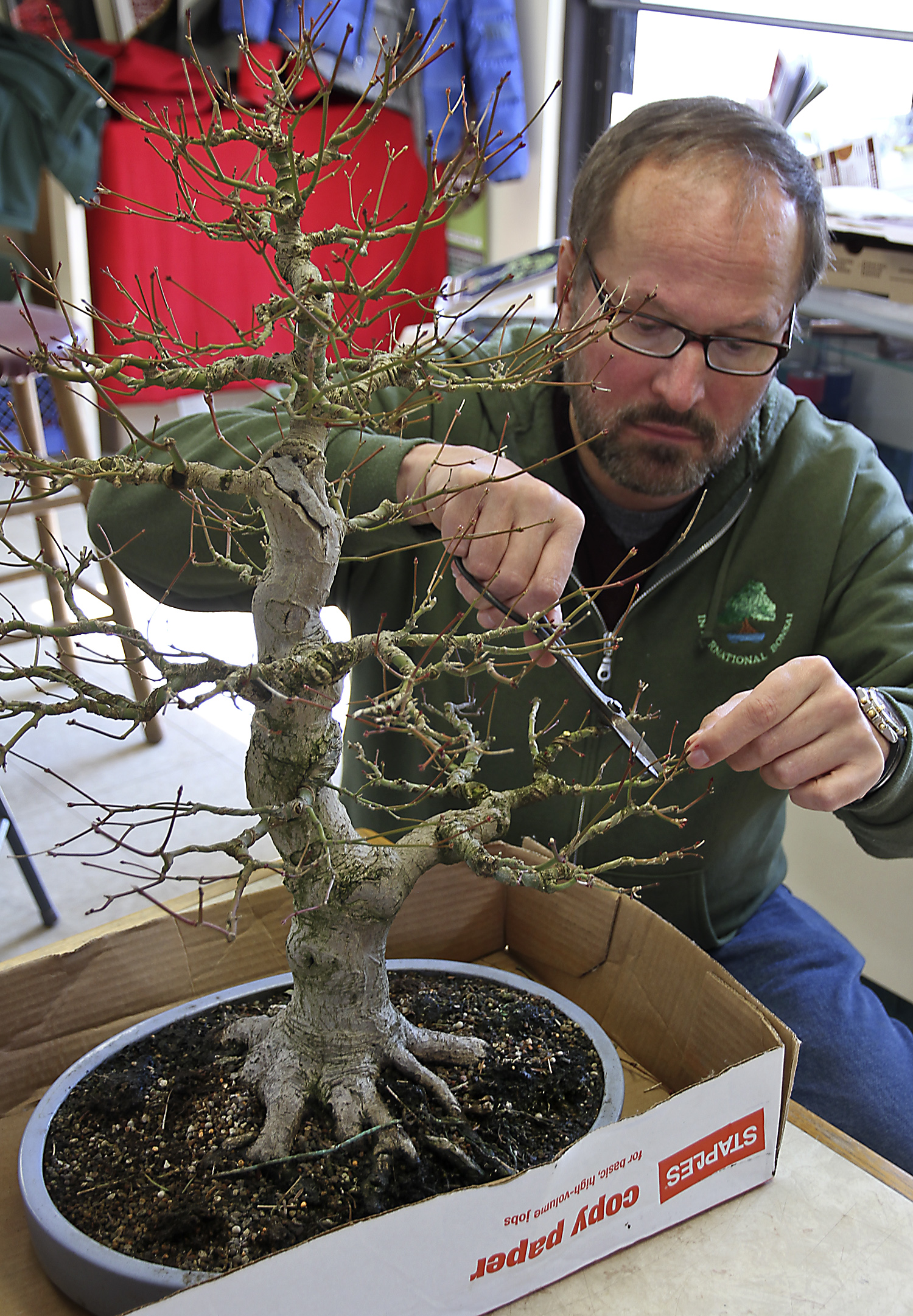
Joe Moore from Rochester, New York worked on a Japanese maple

Image

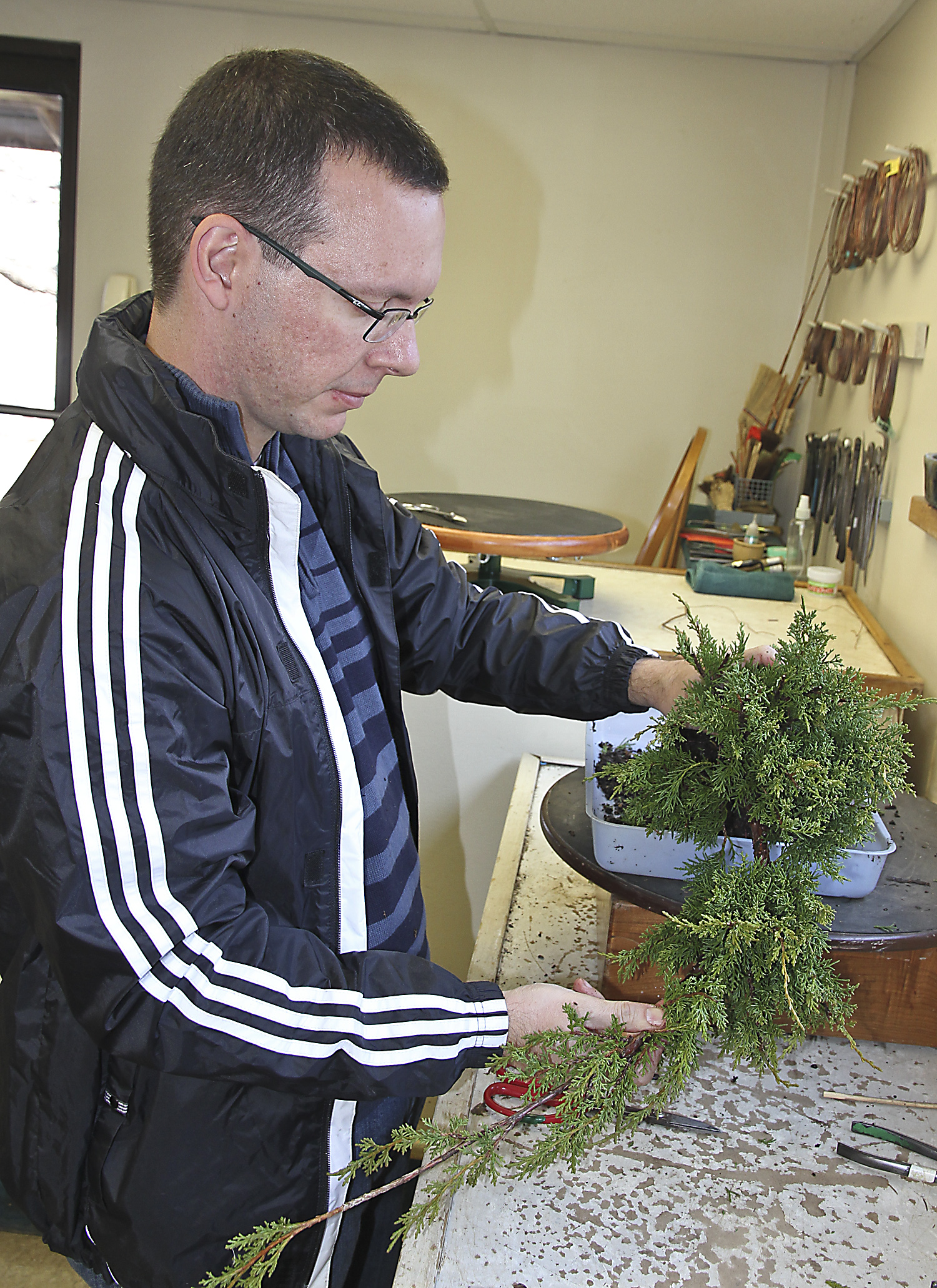
Dr. Diego Denari took a six hour bus ride from his home to the San Paulo, Brazil airport then spent the next day and a half traveling to Rochester. He worked on a Sargent juniper

Image

John Wiessinger, who writes the interesting column “Right Before Your Eyes” for International BONSAI magazine came from Ithaca, New York. He worked on a collected Engelman spruce

During the workshop which followed, each student worked on their own bonsai with my assistance. Great bonsai were brought in for advice and work, some for structural design, others for refinement.

After a short lunch break another PowerPoint presentation was made on pruning theory and techniques, which was followed by another workshop. Some of the bonsai from the morning session needed additional work, while other new trees were worked on. Each student brought several trees to the Classical Bonsai MasterClass which are protected in the garage and only brought into the studio at the right time. This way the studio was not crowded and everyone had ample room to work with the many tools.

Image
Kip Neal from Main continued to work on his Trident maple bonsai we thread grafted earlier and also on a huge Forsythia he has been training


Image

At the conclusion of the first day the group went to a nearby Chinese buffet for dinner and we next all proceeded to the March meeting of the Bonsai Society of Upstate New York. At the meeting I presented a PowerPoint presentation on the history, care and appreciation of Shohin Bonsai. This was followed by a short demo on a Little Gem dwarf spruce and explanation of the many shohin bonsai members brought in to share with others. We had over 50 members and two guests (from Brazil and Maine) at this meeting. Next I conduced a workshop for 11 students and Harvey Carapella and Marc Arpag assisted me.

Image

It was quite a long day for me, but the four students and 50 some members of our bonsai society enjoyed and more importantly had the opportunity to learn from my five decades of bonsai study. We still have two more intense days to study Classical Bonsai art, and I’m all ready and prepared to assist the four students.

Dr. David L. Andrews

Image 

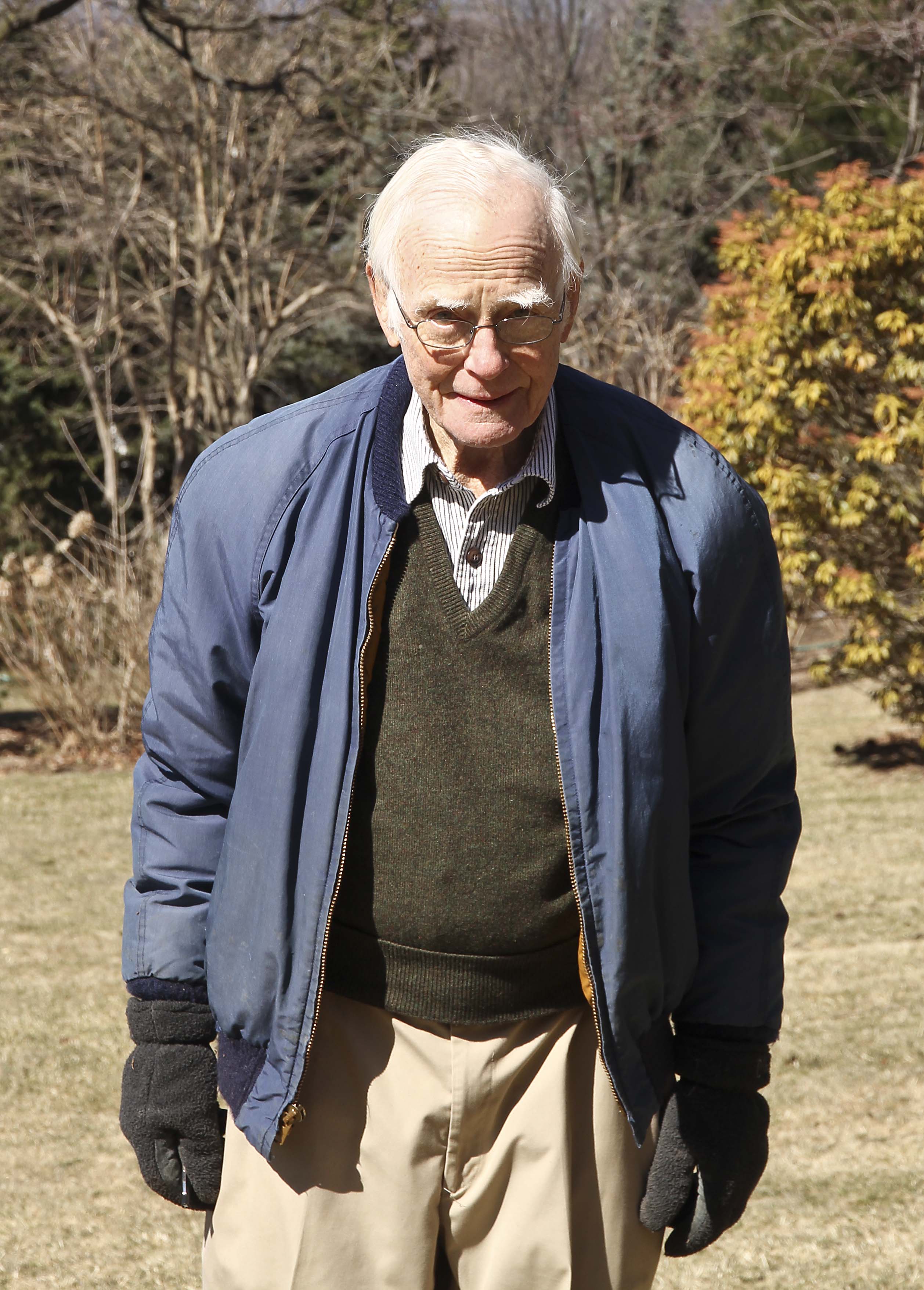
I have had the pleasure of knowing Dr. David L. Andrews for over 40 years when we were both directors of the Bonsai Society of Greater New York. Dr. Andrews, retired prominent New York City orthopedic surgeon, was an early student of Yuji Yoshimura for over 40 years. He loved bonsai studied intensively and soon became skilled and knowledgeable in many aspects of bonsai. Rock plantings and pines interested him and he became an expert in their creation and propagation. Dr. Andrews freely shares his knowledge and artistry and has often presented programs with Mr. Yoshimura. When visiting nurseries he always selected the largest specimens for training into spectacular large size bonsai. As a past president of the Bonsai Society of Greater New York, Dr. Andrews frequently presented programs at meetings and conventions around the country because he loved the art and wanted to share with others. I believe he was the first non-Californian to be invited to demonstrate at a Golden State Bonsai Convention, several decades ago.

 Image

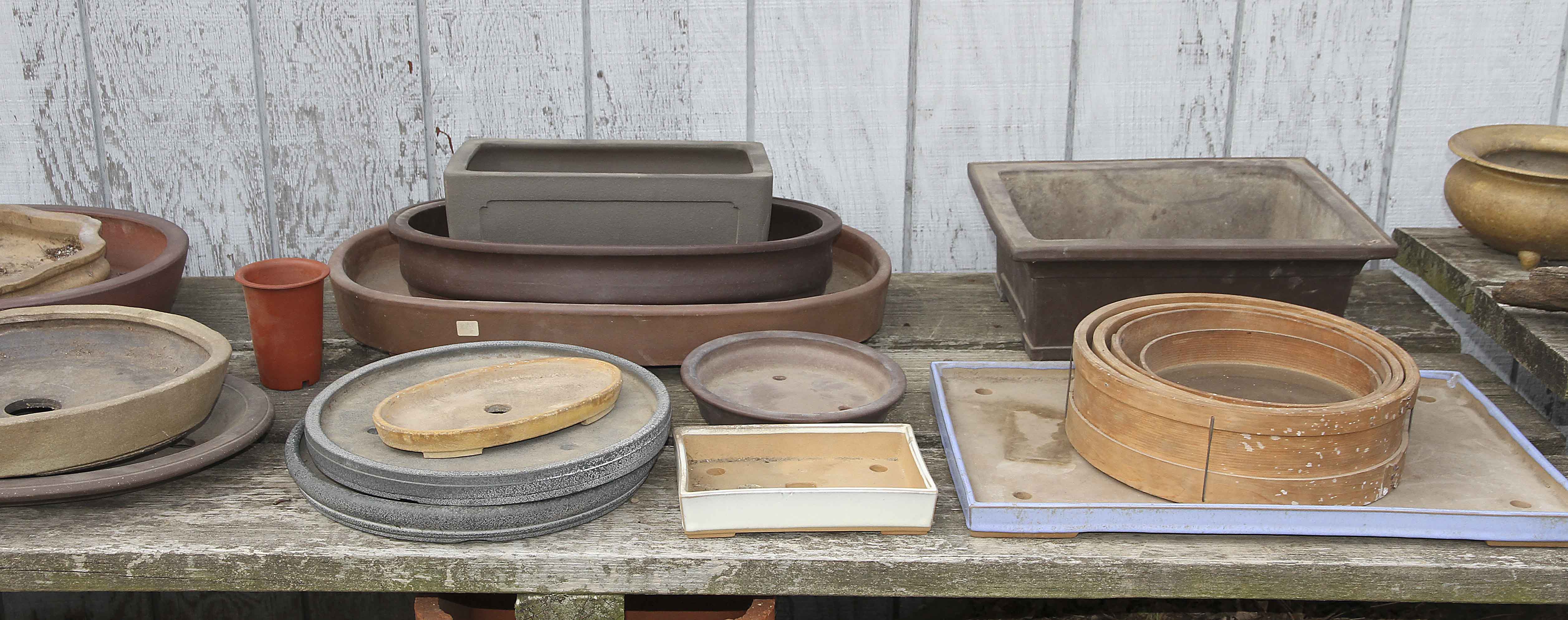
Dr. Andrews has not been actively involved with the bonsai community recently and planted all his bonsai into his large garden landscape. A few weeks ago Dr. Andrews told me he was going to move to New Hampshire and wanted to give all his bonsai containers to Chase Rosade and me. What a surprise and generous offer! Chase, Dr. Andrews and I coordinated our schedules and on Tuesday we met at his home in New Jersey, near the George Washington Bridge.

Image

Image

 Image

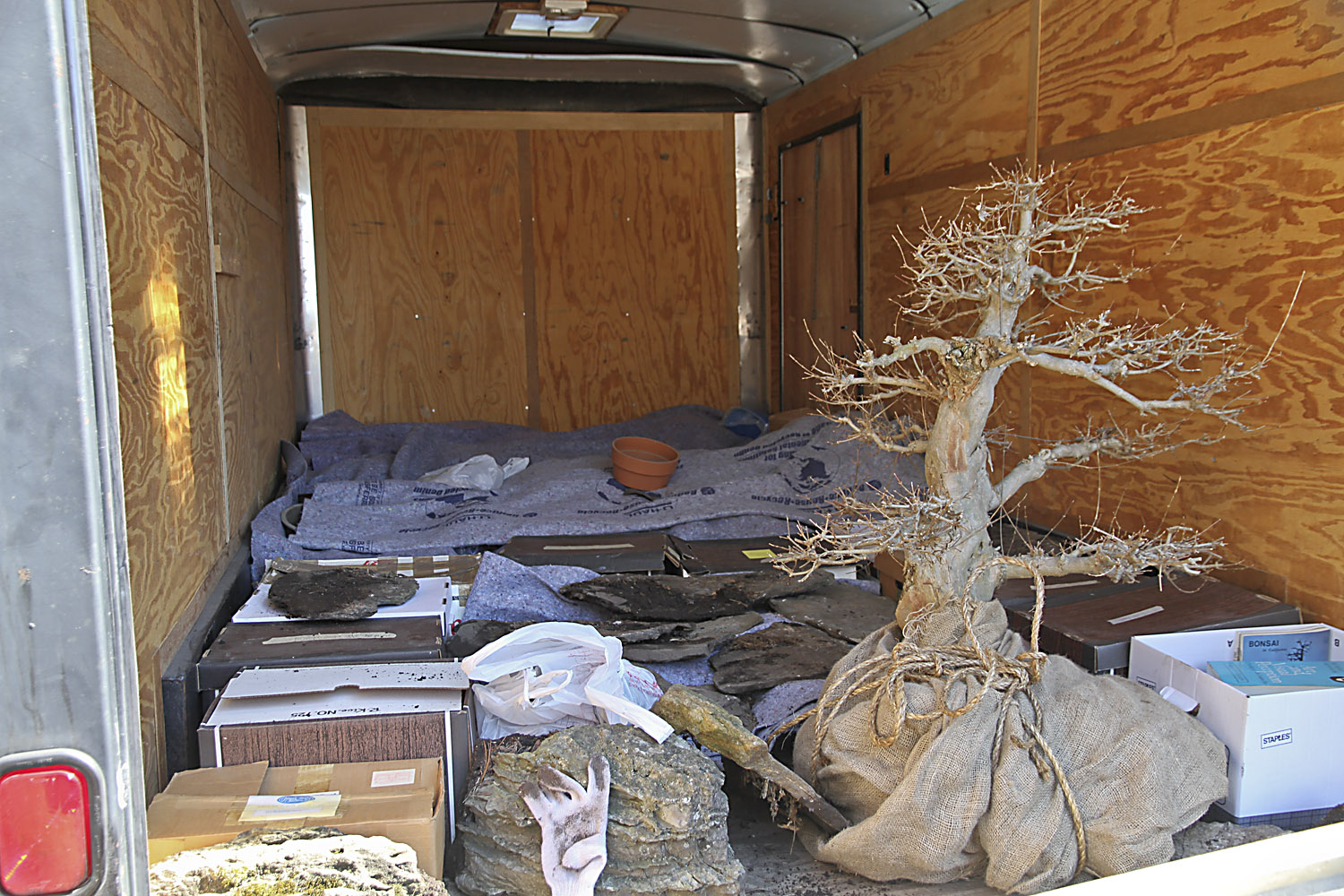
Blanket pads from U-Haul were used to carefully pack the containers

My son Chris drove six hours each way to New Jersey from Rochester to pick up the containers in my suburban and trailer. Bob Pfromm and Alan Adair joined us to help carefully load the heavy containers. The day before the trip I went to U-Haul and rented 24 packing blankets to protect the containers. These heavy blanket pads are excellent and a great deal too. They come six blankets in a bag for only $5 a day. Using the blankets we were able to carefully pack all the containers and stones and all arrived in Rochester unbroken or chipped.

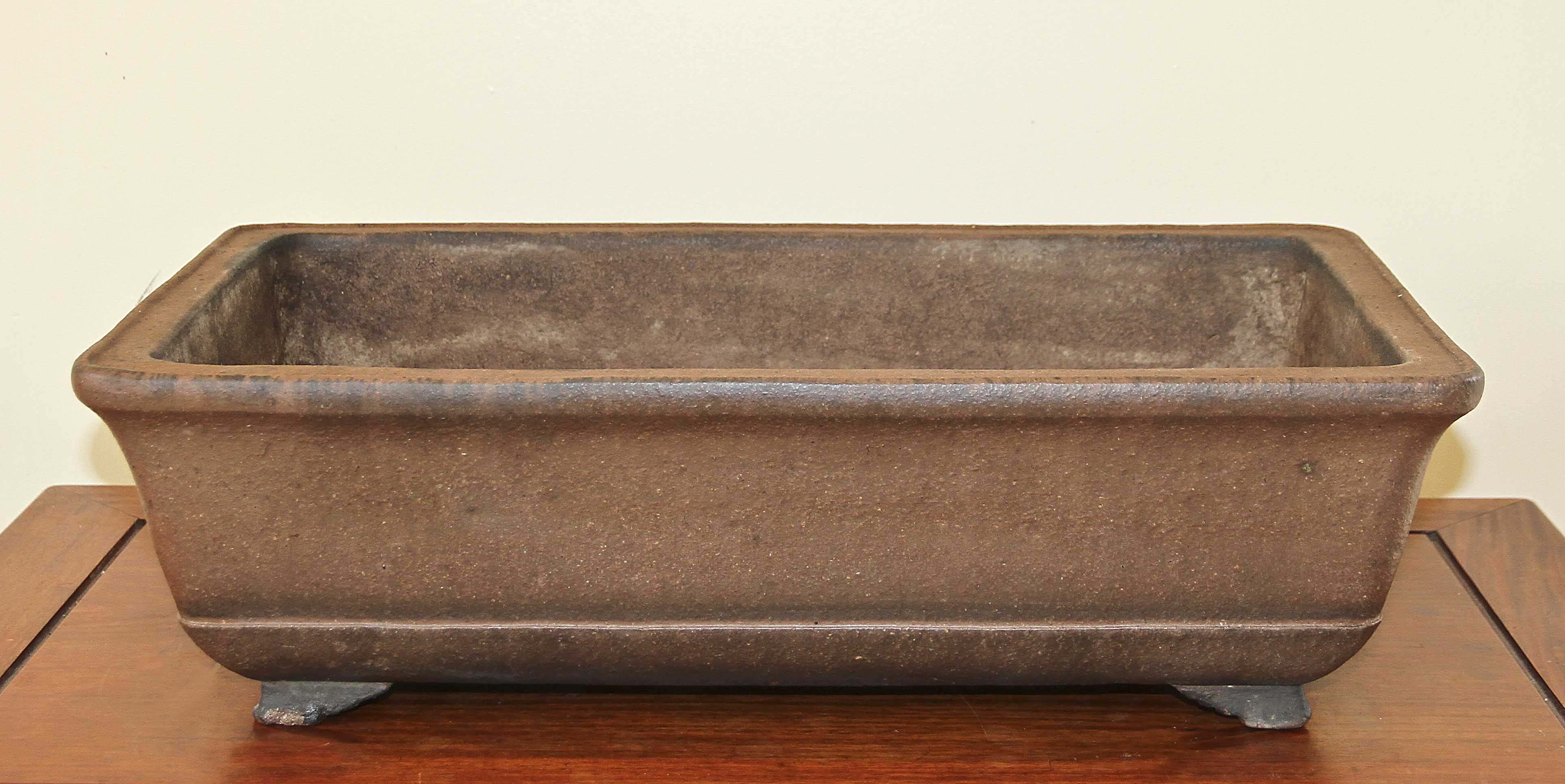
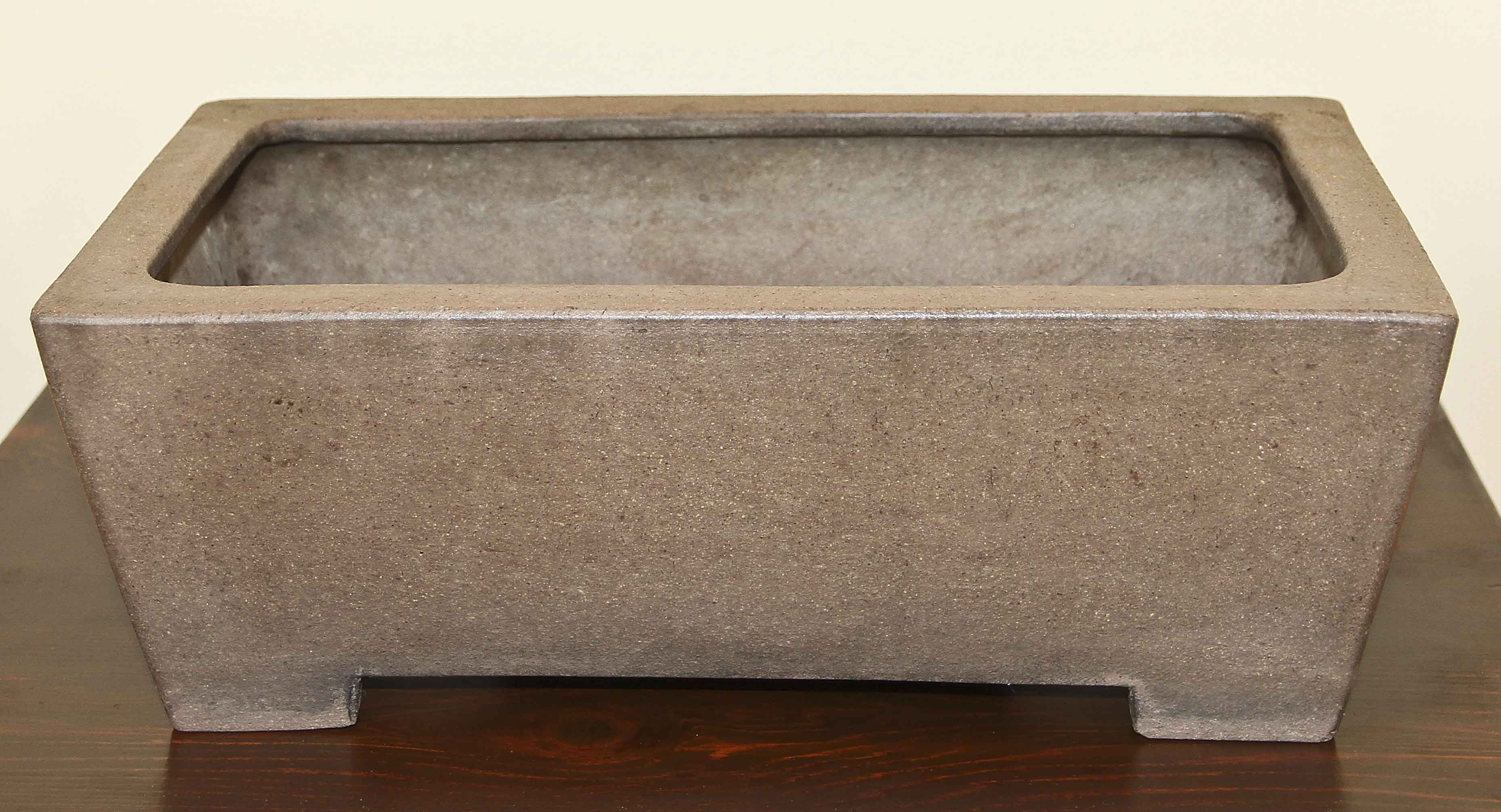
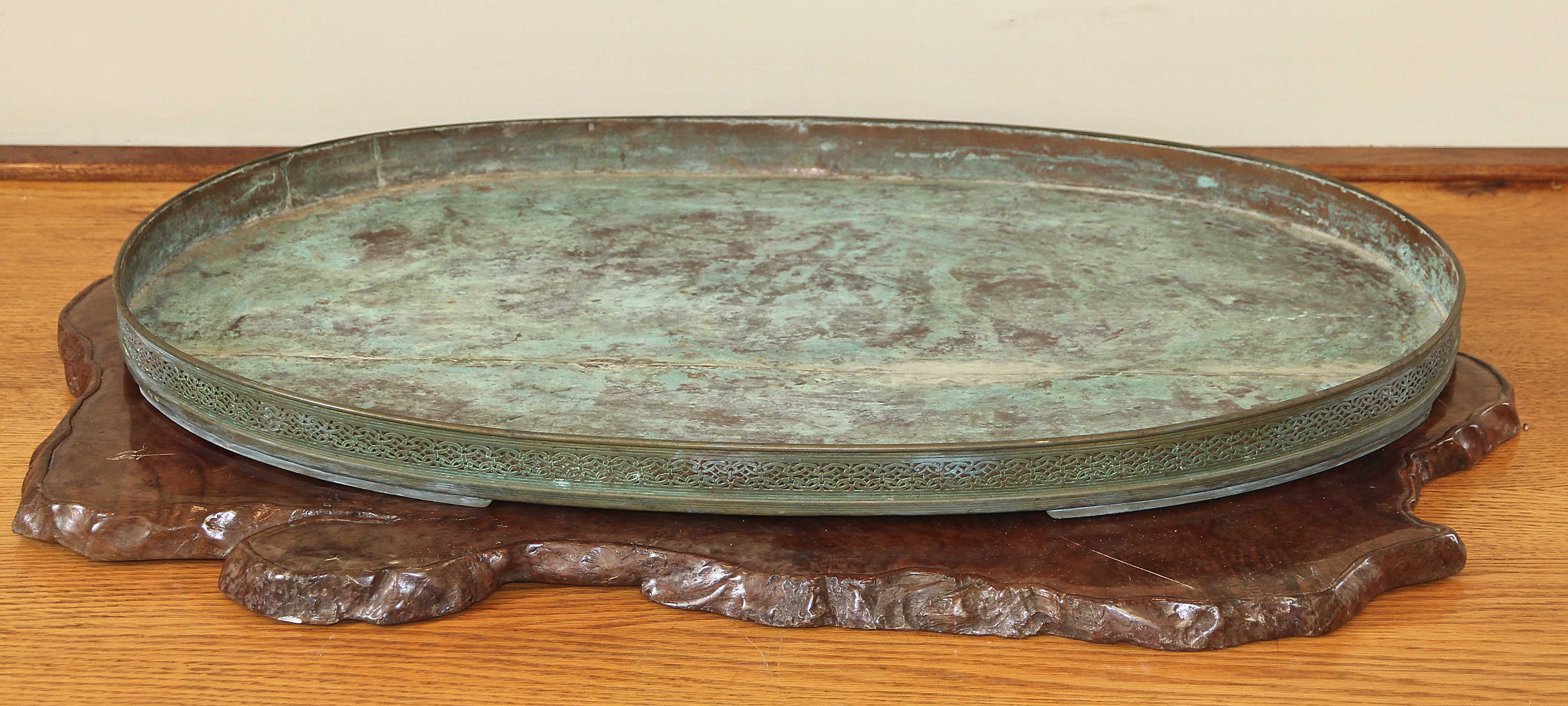
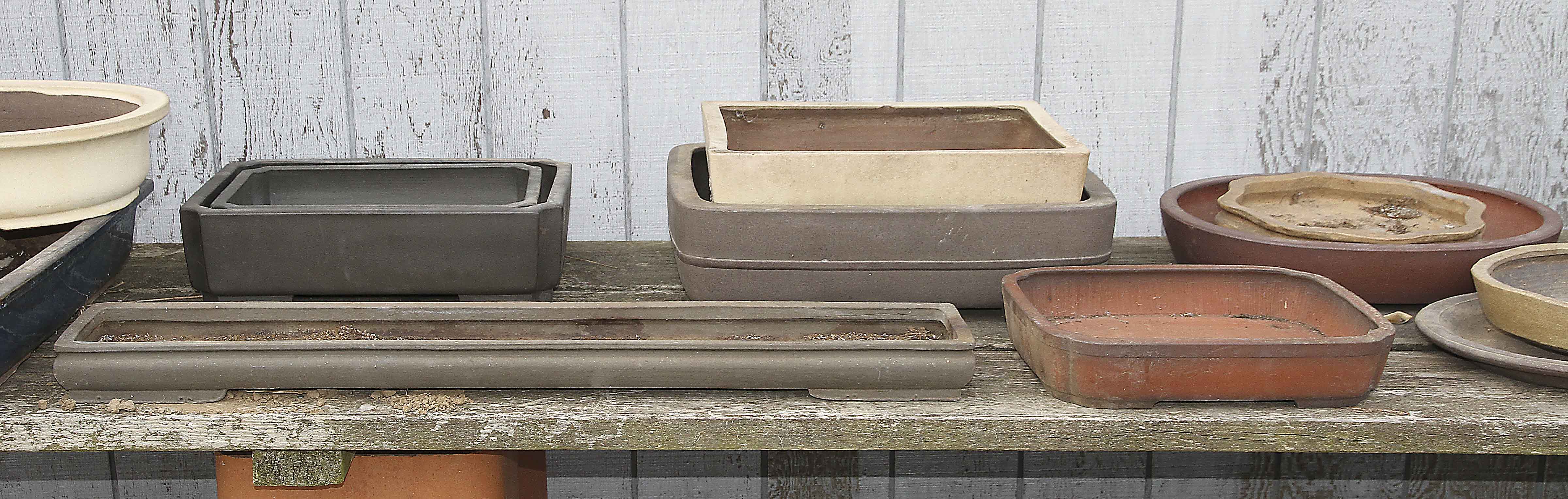
Dr. Andrews neatly stacked over 400 empty bonsai in small piles for Chase and me to select from. They ranged from two inches to over three feet in size. We quickly took turns picking out piles of containers and flipped a coin for a few choice large or unusual containers. Most of the containers were old and showed great patina from the decades of use.

Image


Image


Image


Image


Image


Image

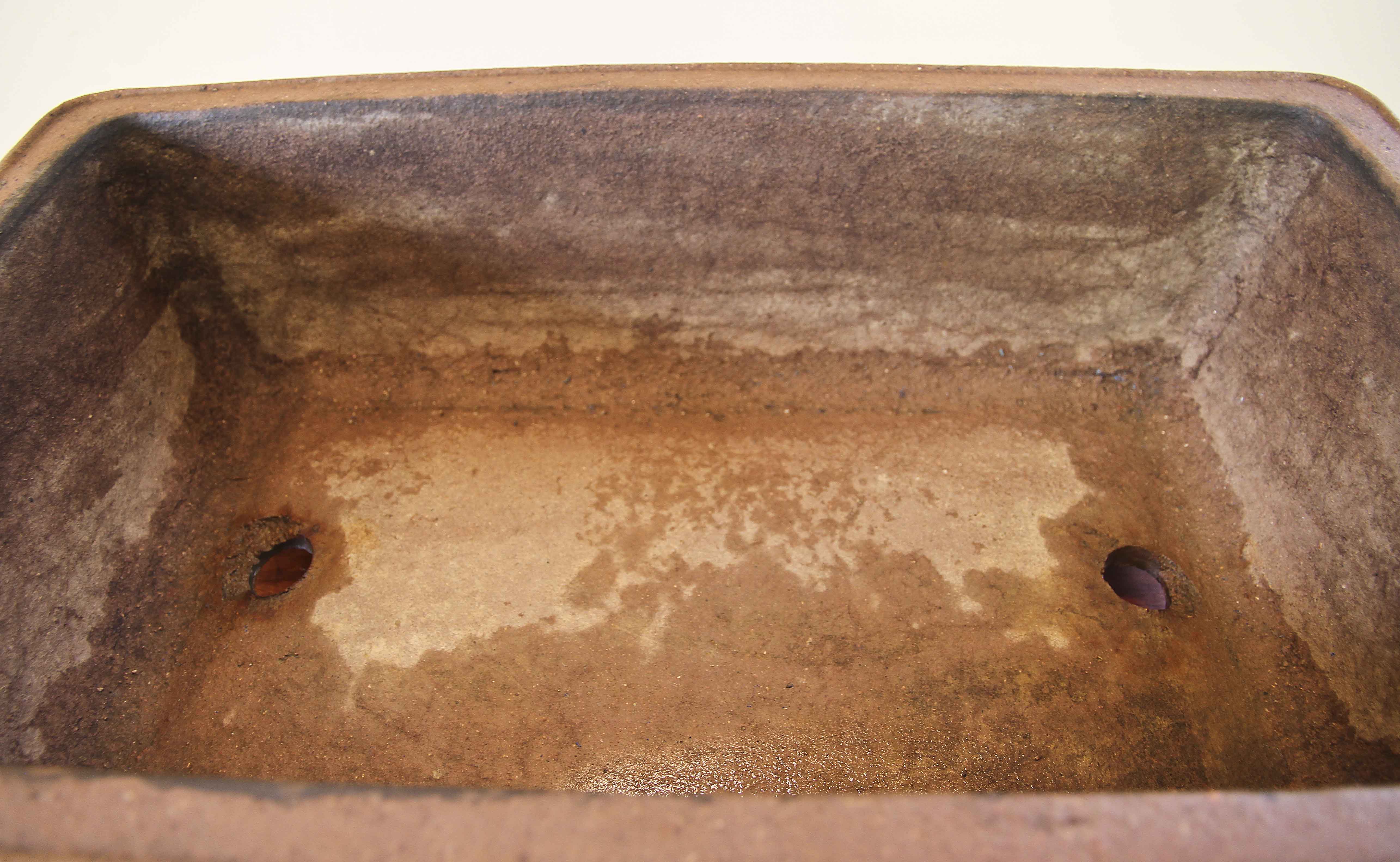
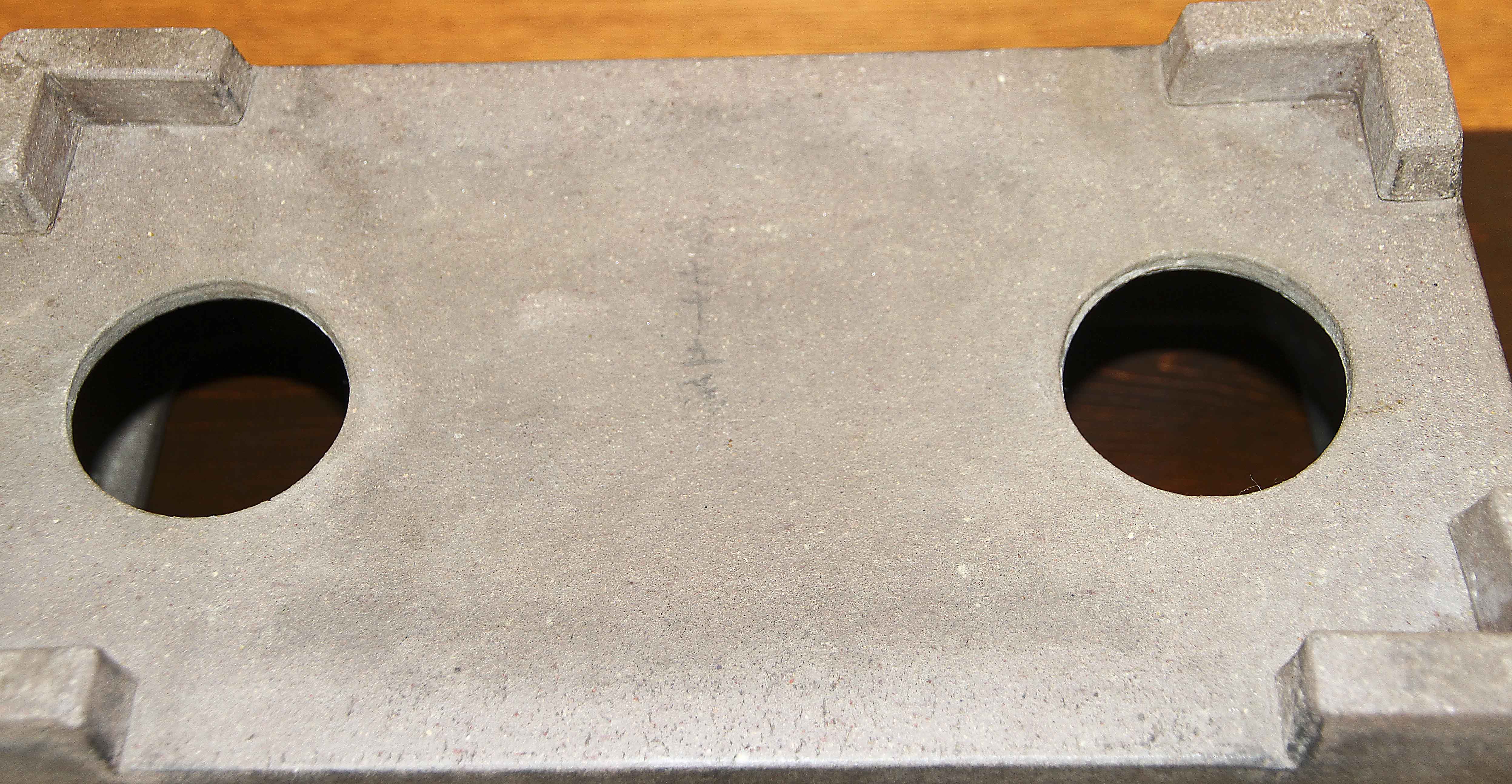
After cleaning two of the containers they look to be antique Chinese and photos are being identified in Japan as well as in the United States. There were two unusually long narrow containers and Chase and I each selected one. I have an idea for a different design group planting and am searching for the right plant material. Some of the containers had huge drainage holes while one small container had many small holes in a rosette pattern rather than the common size holes. Drainage screen is not necessary for this type of container. Most of the containers were old Japanese from famous Tokoname kilns. Some of the containers even had old price tags from California nurseries which have gone out of business 30 years ago. Some were originally priced at $3.

Image


Image


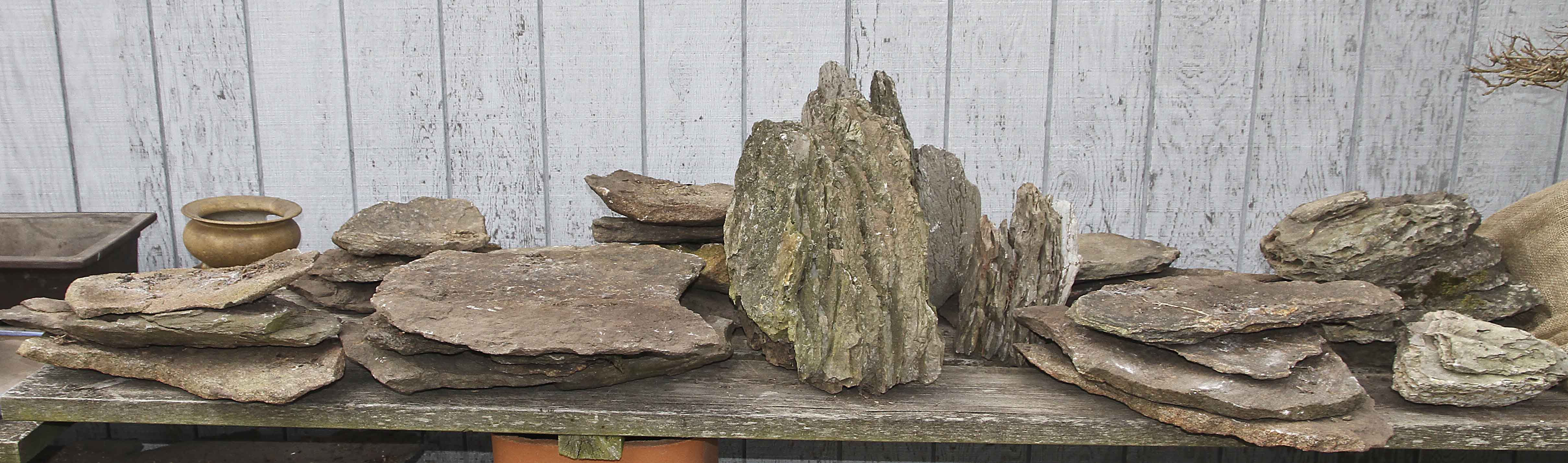
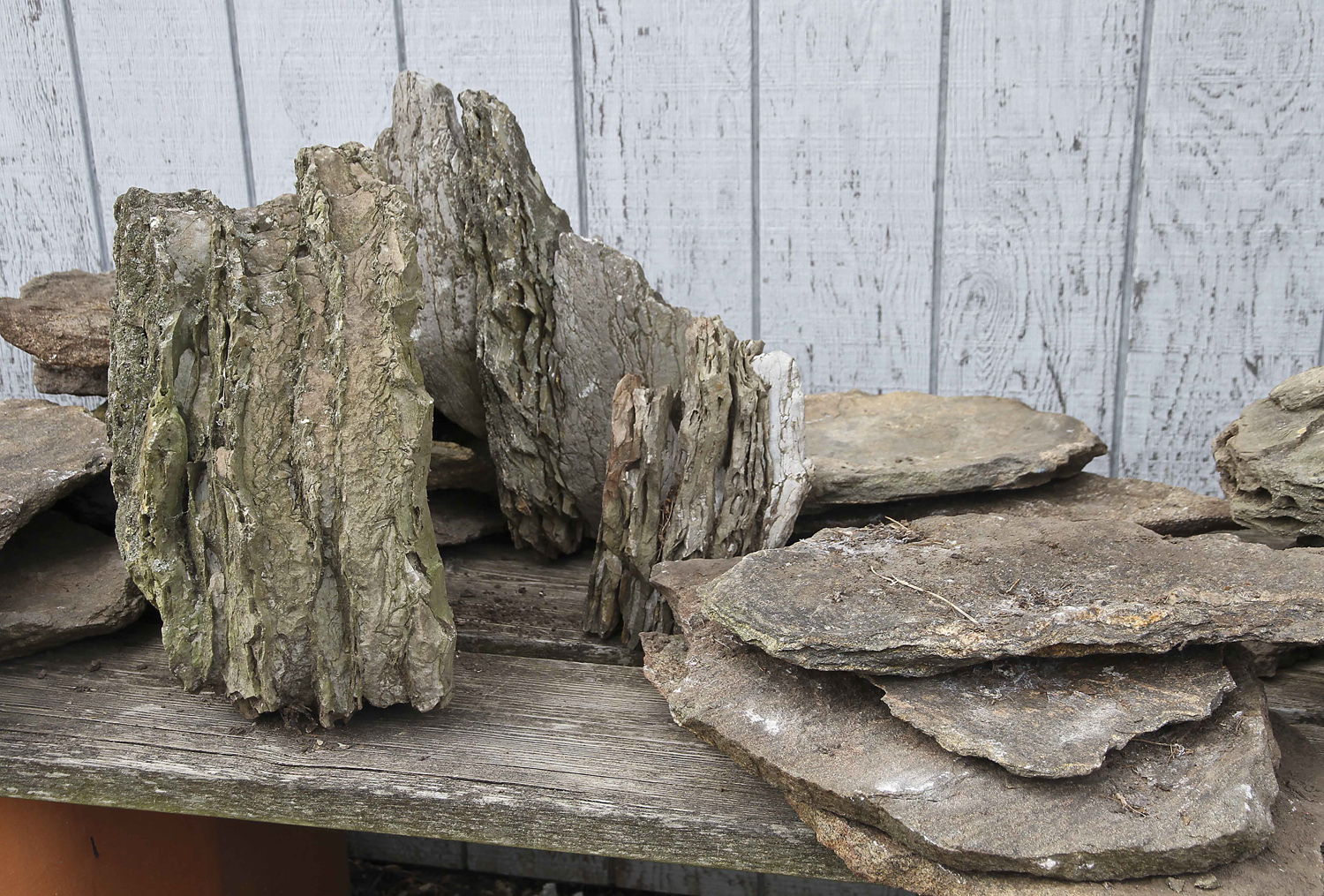
Since Dr. Andrews loves large rock planting bonsai he frequently traveled to Colorado to collect flat and curved granite slabs. Behind his home, near a gardening shed he had several piles of stones. I selected several of the smaller stones and Chase will pick up the larger rocks at a later date. We needed a shovel to unearth the flat stones which were still frozen to the ground. When selecting flat stones for bonsai it is best to make certain they are not broken, solid and thin. Ideally irregular interesting edges are preferred to create rock-planting bonsai. Avoid stones which have straight edges, or position them in the back of the planting where they will not be easily noticed. Sometimes flat edges can be carefully chipped to create a more irregular edge. The best stones are not completely flat, but rather are curved to hold the soil and tree. Of course size and weight is a consideration, that’s why Chase got the largest stones.

 Image

Image

Next to the piles of flat planting stones Dr. Andrews showed us two Trident maples and a few European hornbeam bonsai he planted in the garden a few decades ago. They were large bonsai all pruned and trimmed, ready for huge containers. I selected the smallest Trident maple and since Chase lives closer to Dr. Andrews than I do, he will return at a later date when the ground is not frozen to dig the remaining trees.

Image 

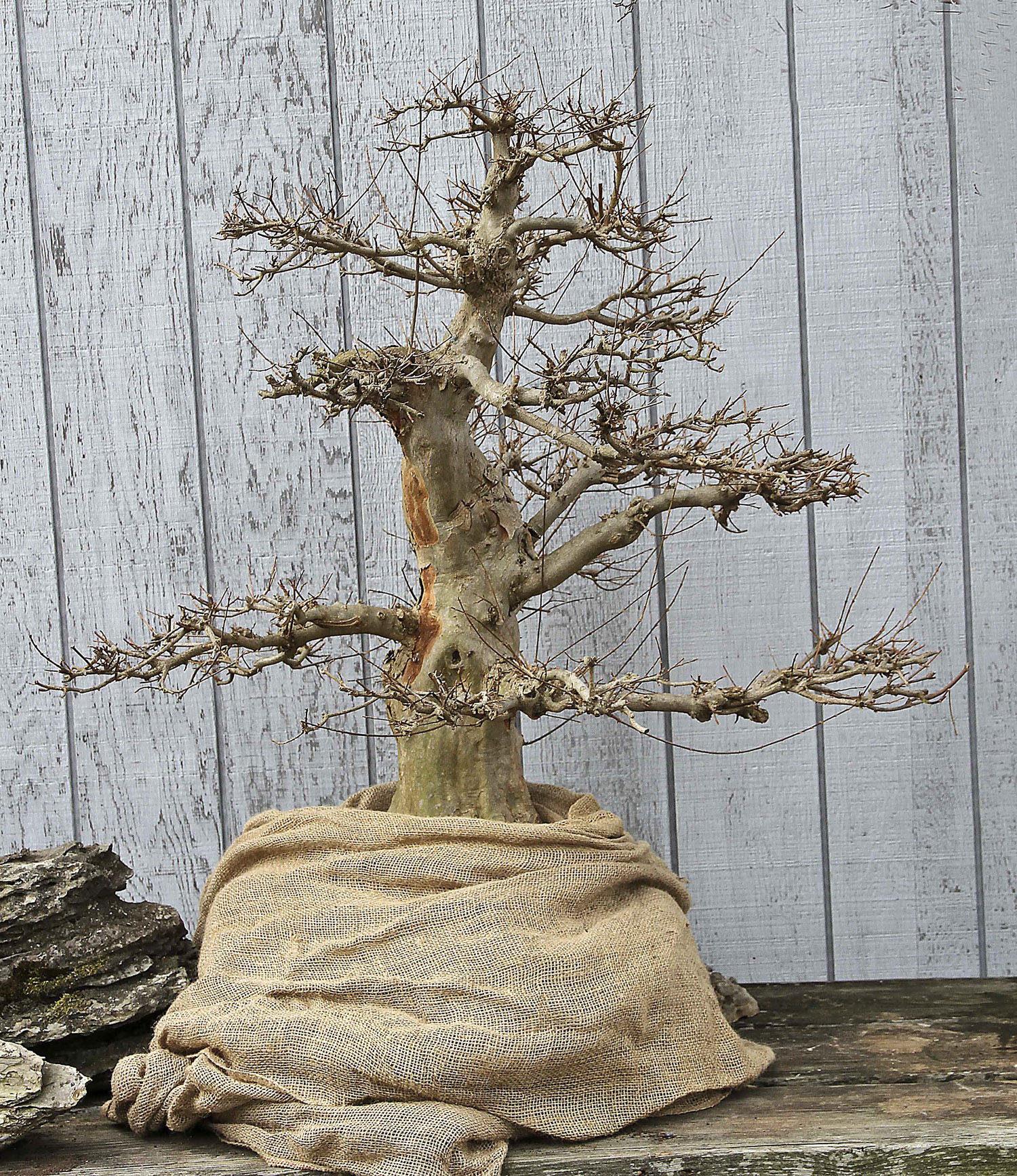
The small Trident maple I chose was started from a cutting Dr. Andrews obtained from another long time student of Yuji Yoshimura over 45 years ago. In order to develop a heavy trunk he allowed an escape branch to grow to a long length. Once the desired trunk size was developed, he pruned the escape branch. The basic structure of the bonsai has been developed and now needs to be refined. Next week I might use the Trident maple for my new three day Classical Bonsai MasterClass.
Image

When training bonsai in the ground for trunk development it is also important to think about the final desired size. Remember, the container and soil will also add weight to the bonsai which must be moved into a winter protection area in cold climates.
Included with the containers, Dr. Andrews had 12 boxes of old Japanese and English bonsai and suiseki magazines. Additionally there were boxes of historical notes and archives of the Bonsai Society of Greater New York and the American Bonsai Society. They will be cataloged and added to my bonsai reference library.

 Image

While Chris and my buddies were loading the containers and stones, Dr. Andrews asked me to walk through his garden of rare and unusual trees to identify some of the Japanese five-needle pines he had grafted decades ago and planted into the ground. I’ve never seen large sizes of the dwarf cultivars before. There were several four foot tall Nishiki black pines in addition to other rare pines. During our walk I noticed a large ten foot wide Birds nest spruce in his garden and he quickly pointed out that originally it was a 23 tree bonsai forest he planted in the ground. We walked through an orchard of large size apple trees, each pruned to look like a bonsai by Dr. Andrews. I found it interesting that he has transplanted most of the large apple orchard trees to better aesthetic locations. The orchard actually looked like a large forest bonsai, only the trees were approximately ten feet tall and growing in the ground.

 Image

This 10 foot Birds nest spruce was a 23 tree bonsai forest years ago

It was very generous of Dr. Andrews to give over 400 quality containers to Chase and me so others can appreciate and make use of the containers he collected and used for nearly five decades. It’s wonderful that Dr. Andrews continues to think about the future of the art and wanting to share his love with others. This gesture is typical of Dr. Andrews who often traveled during the night to bonsai gatherings bringing large demonstration material, teaching and returning to his busy medical practice in New York City. I hope he enjoys his retirement in his new home knowing that the love he has for his bonsai will be shared with others through the use of his containers.


The Kennett Collection Reduction Sale

Image

The Kennett Collection is the private bonsai collection of bonsai connoisseur Doug Paul who has created the finest bonsai collection in the United States. His fine eye and love of bonsai (and kopi) can be seen in each of the over 1,000 specimens he keeps surrounding his beautiful gardens and home in Kennett Square, Pennsylvania.

Image

Mr. Paul has traveled to Japan many times searching for fine quality bonsai to add to his collection. His love of Satsuki azaleas and Japanese five-needle pines is easily seen in the vast majority of the collection. He was the first American to display a bonsai in the Kokufu Bonsai Exhibition in Tokyo as well as other exhibitions. Select specimens which he has purchased are kept in Japan and displayed before importing into the United States.

A small full time staff care for the bonsai collection while world-class bonsai professionals from the United States, Japan, England and Italy regularly travel to Kennett Square to shape and train the trees.

Image

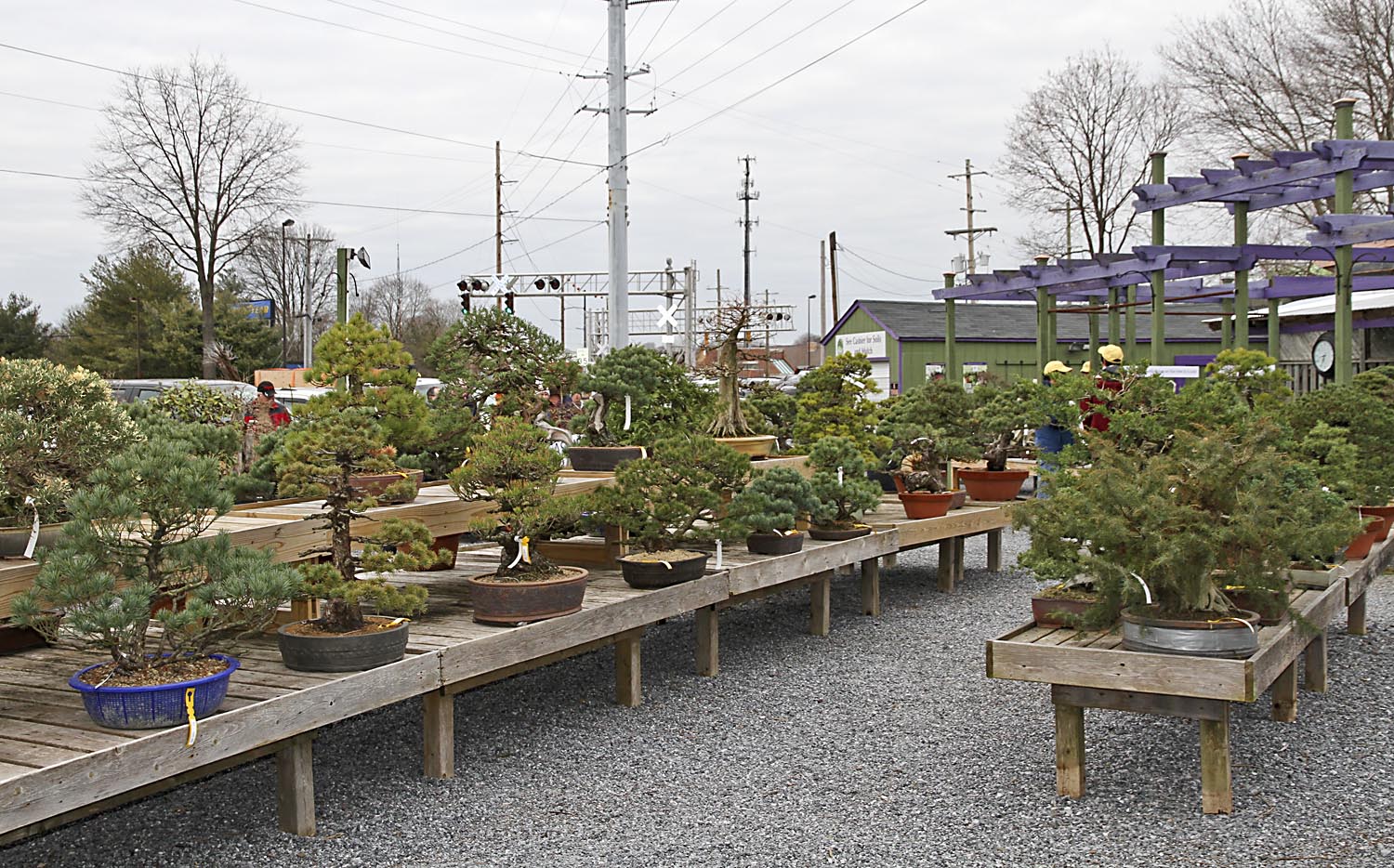
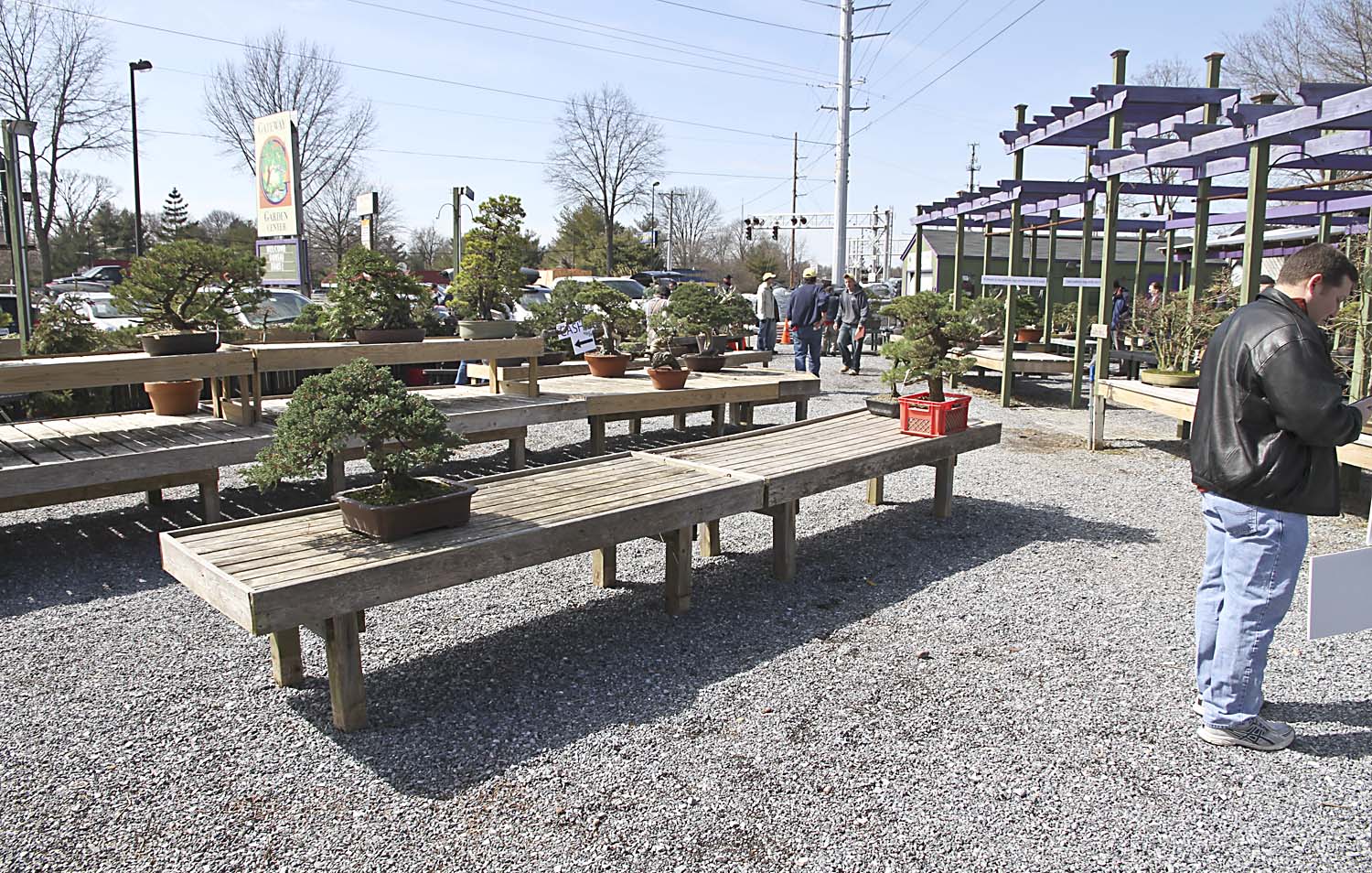
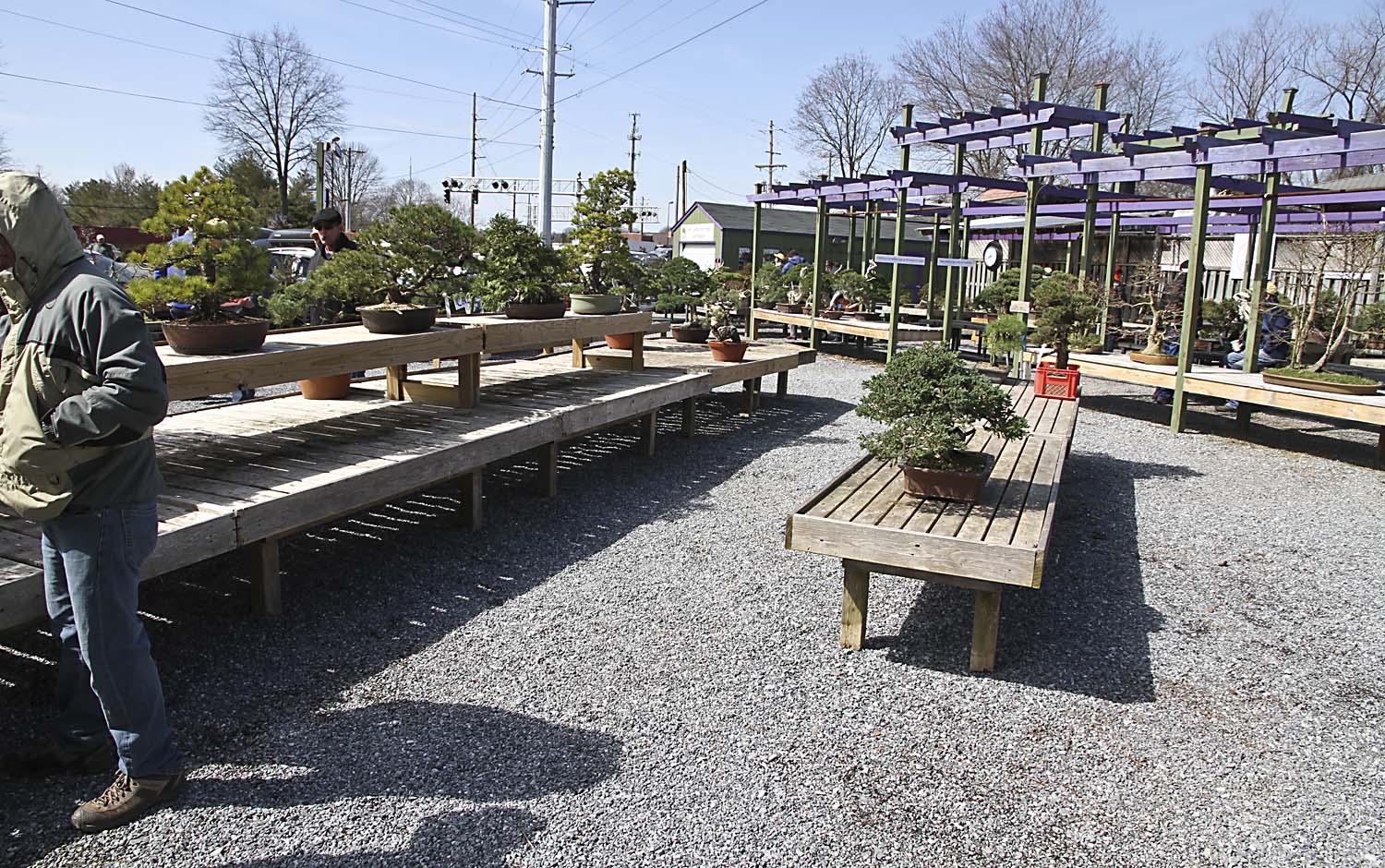
In order to make room for new specimens Mr. Paul needed to sell about 400 trees. Rather than selling them to professionals he chose to have a public auction on March 14-15-16, 2014 at a nearby garden center in Delaware where there was more room for the buyers as well as no sales tax. This way the public had a one-in-a-lifetime opportunity to add quality Japanese bonsai to their personal collections. It was very generous of him to price the bonsai at very low prices, even cheaper than he purchased them in Japan. Mr. Paul likes American and European bonsai containers and many of the bonsai sold were in expensive, one-of-a-kind containers. The prices of the bonsai ranged from $25 to $19,000.

All of the bonsai for sale were photographed ahead of time and posted in his web site so buyers could study and prepare their purchasing lists. The sale drew people from as far as Texas, Canada as well as most states east of the Mississippi River. Many prominent bonsai professionals were present adding to their personal collections as well as purchasing trees for their clients.

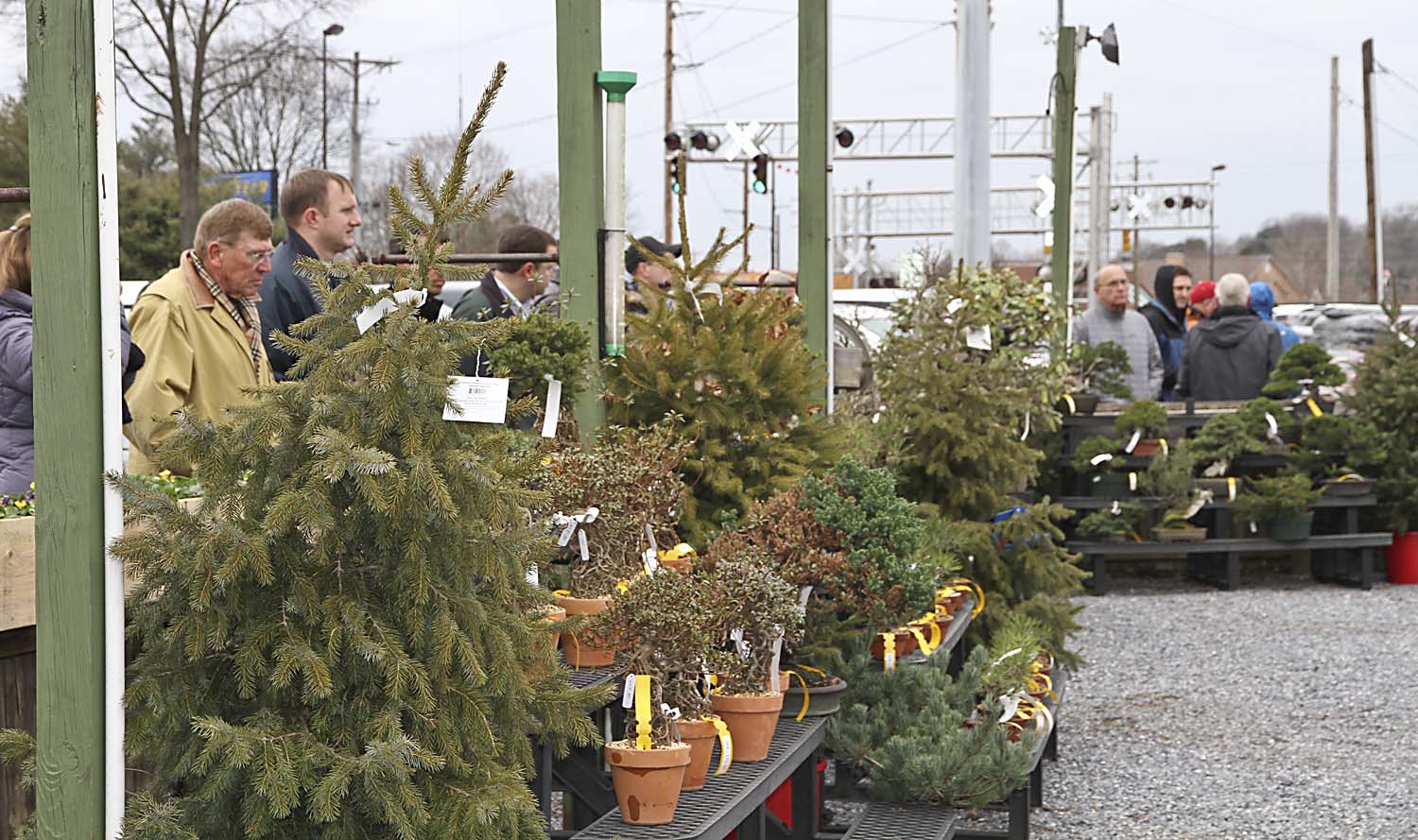
People began to gather well before the 10 am sale on Friday morning when the temperature was about 30F. There were perhaps 200 people in attendance and it looked more like a national bonsai convention than a private bonsai sale. Upon arrival buyers reached into a black box to get their wrist bands of 13 different colors which indicated the entry order into the sales area.

Image

Peter Warren from England organized and ran the sale and went over the rules before 10 am. People would be allowed in when their wrist band colors were announced for 10 minutes before the next group was allowed their turn for buying. A couple of minutes before 10am, the sign with the entry schedule was revealed. Peter reviewed the rules again and asked buyers to leave their trees until later in the morning to prevent confusion, which was an excellent idea.

Buyers had about 10 to 15 minutes to make their selection and only 3 trees could be purchased during their initial buying period. At 1pm the sale would be open to everyone and people could purchase additional trees. Also Peter announced that any cheating would not be tolerated and buyers would not be allowed to purchase any trees if caught. I did not see any cheating, but many disappointed buyers who were in the 13th group to enter. At the conclusion of his remarks Peter wished all buyers good luck.

Image

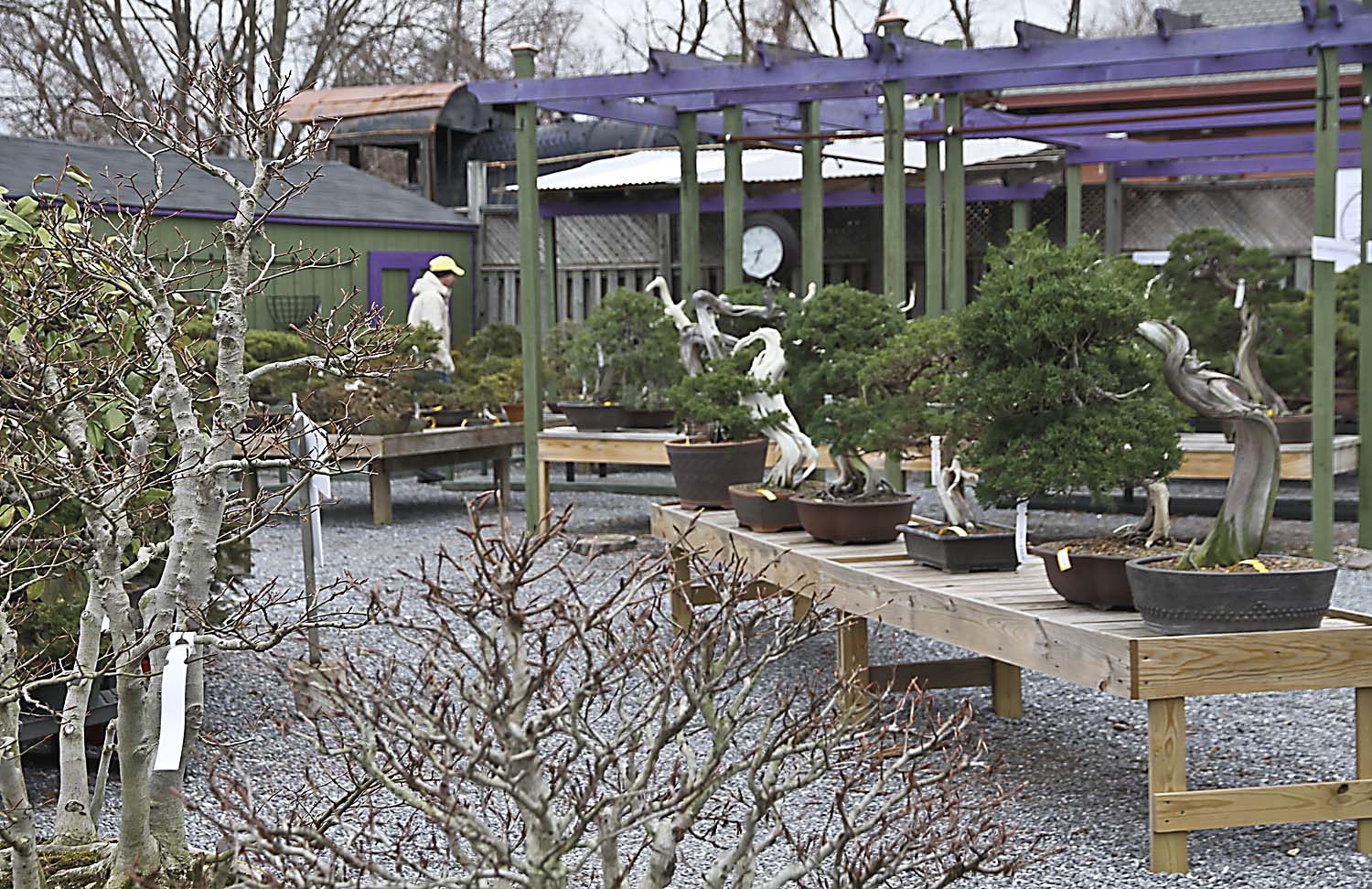
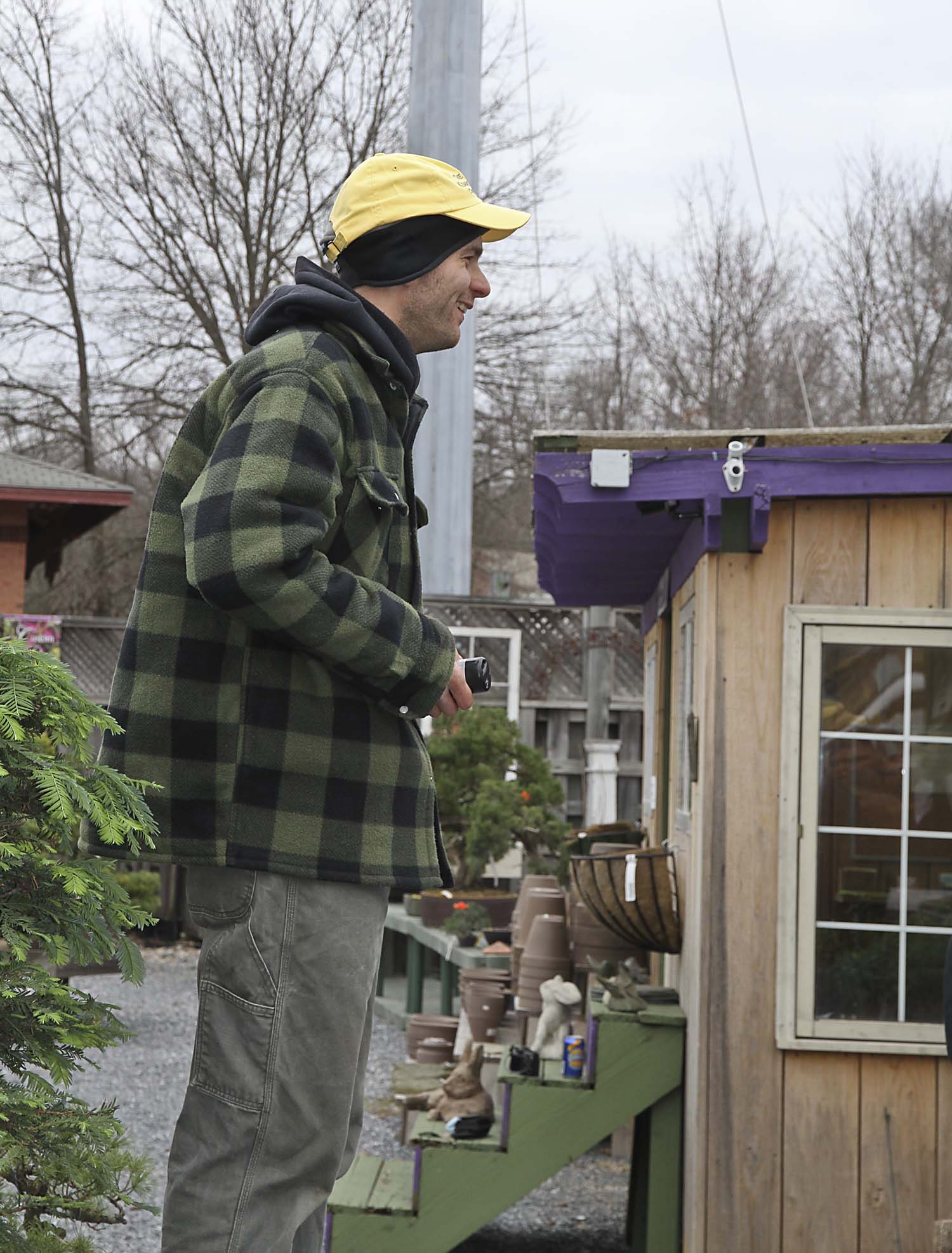
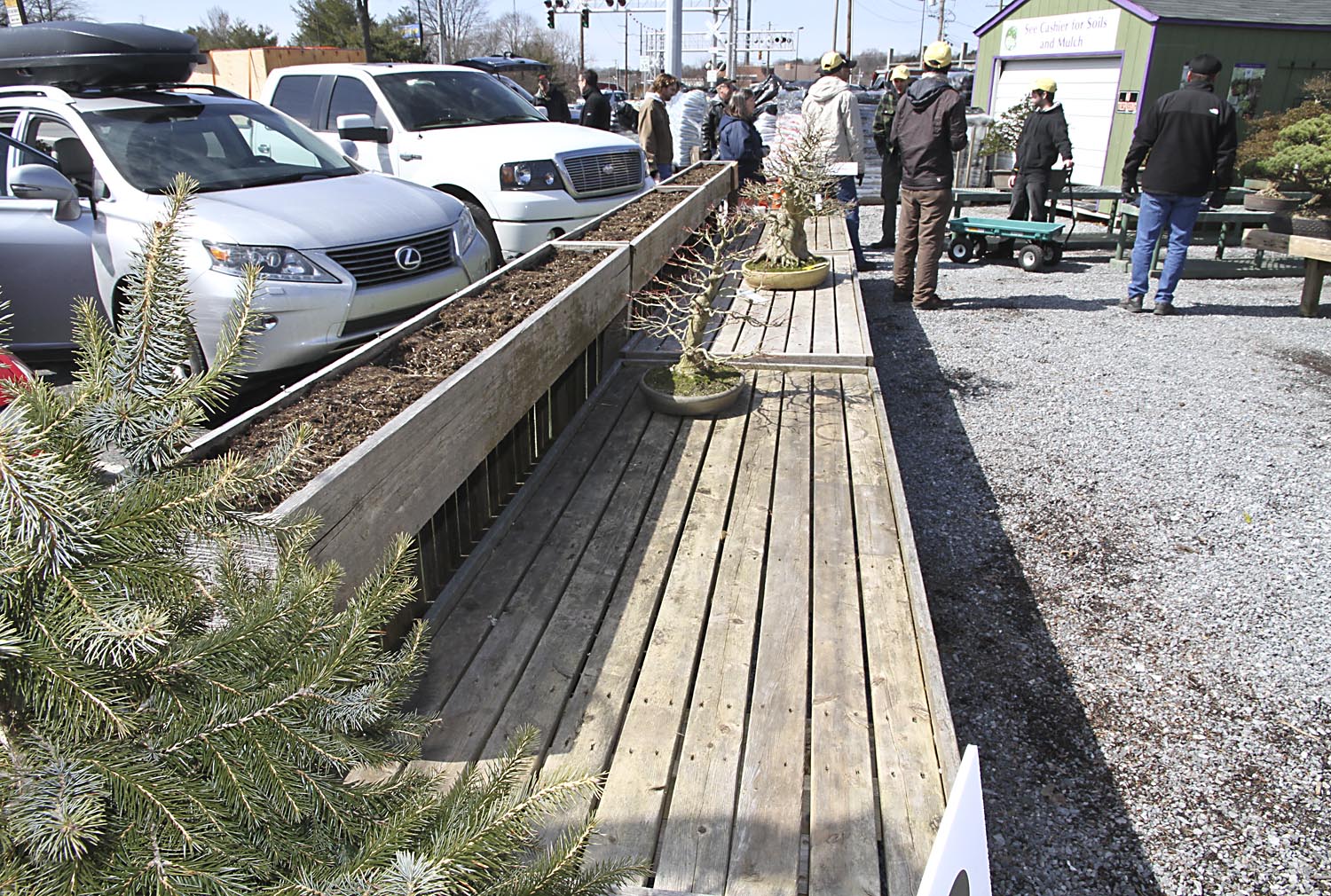
All the bonsai were well prepared and organized by species and size. Of course there was a large section of Satsuki azaleas and pine bonsai. Each tree had two labels with the item number and price. The white label remained on the tree, while if one wanted to purchase a tree they removed the yellow label. Therefore, once it was your turn to enter the sales area trees without a yellow label were already purchased. Buyers would then take their yellow labels into the heated tent with hot coffee and doughnuts to get a receipt of their purchases. At the next table the receipts were taken, paid for and returned to the lucky buyers to retrieved their trees. Only the staff, all in yellow hats, were allowed to pick up the trees and move them into the loading area. They even helped people pack their cars and trucks.

Image

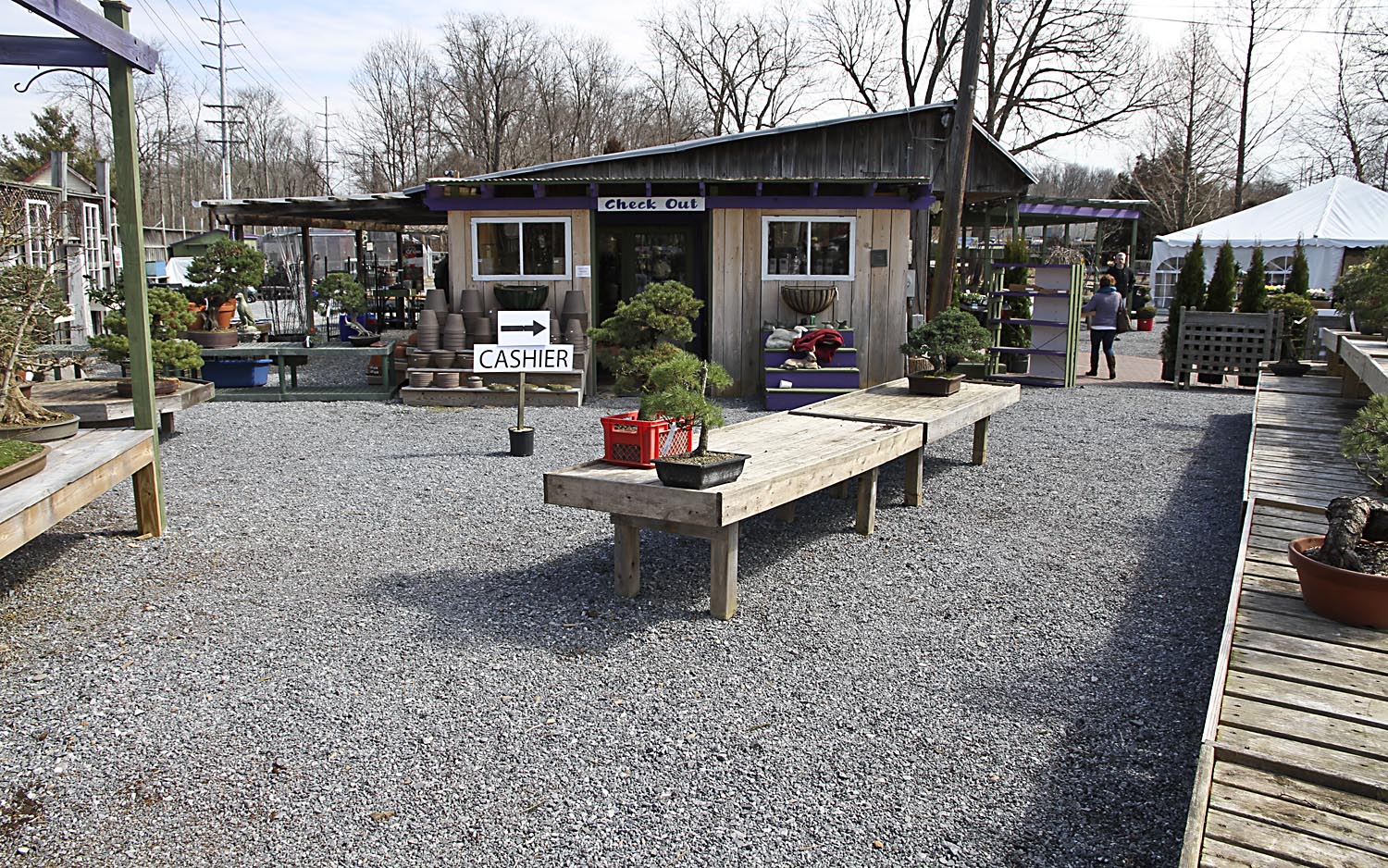
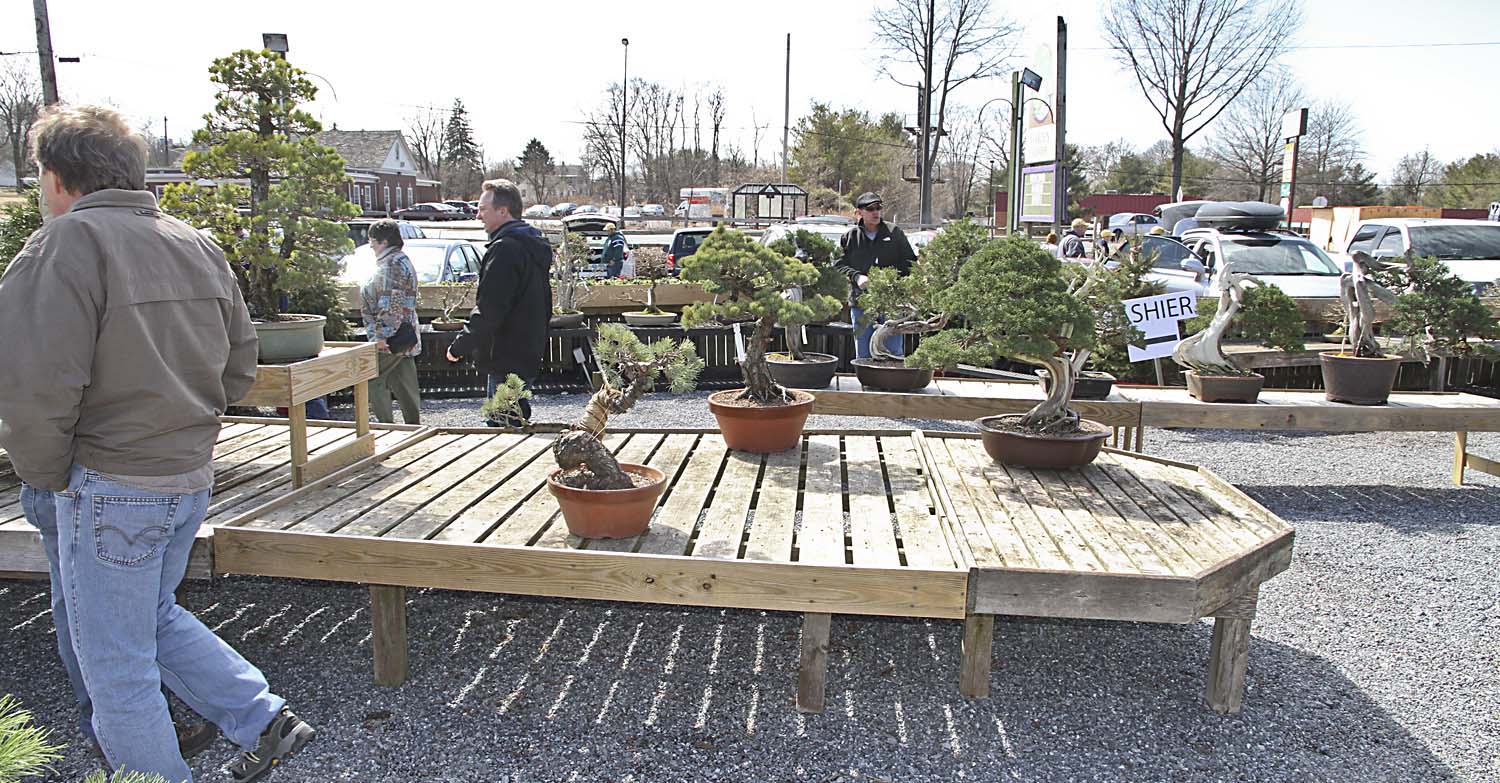
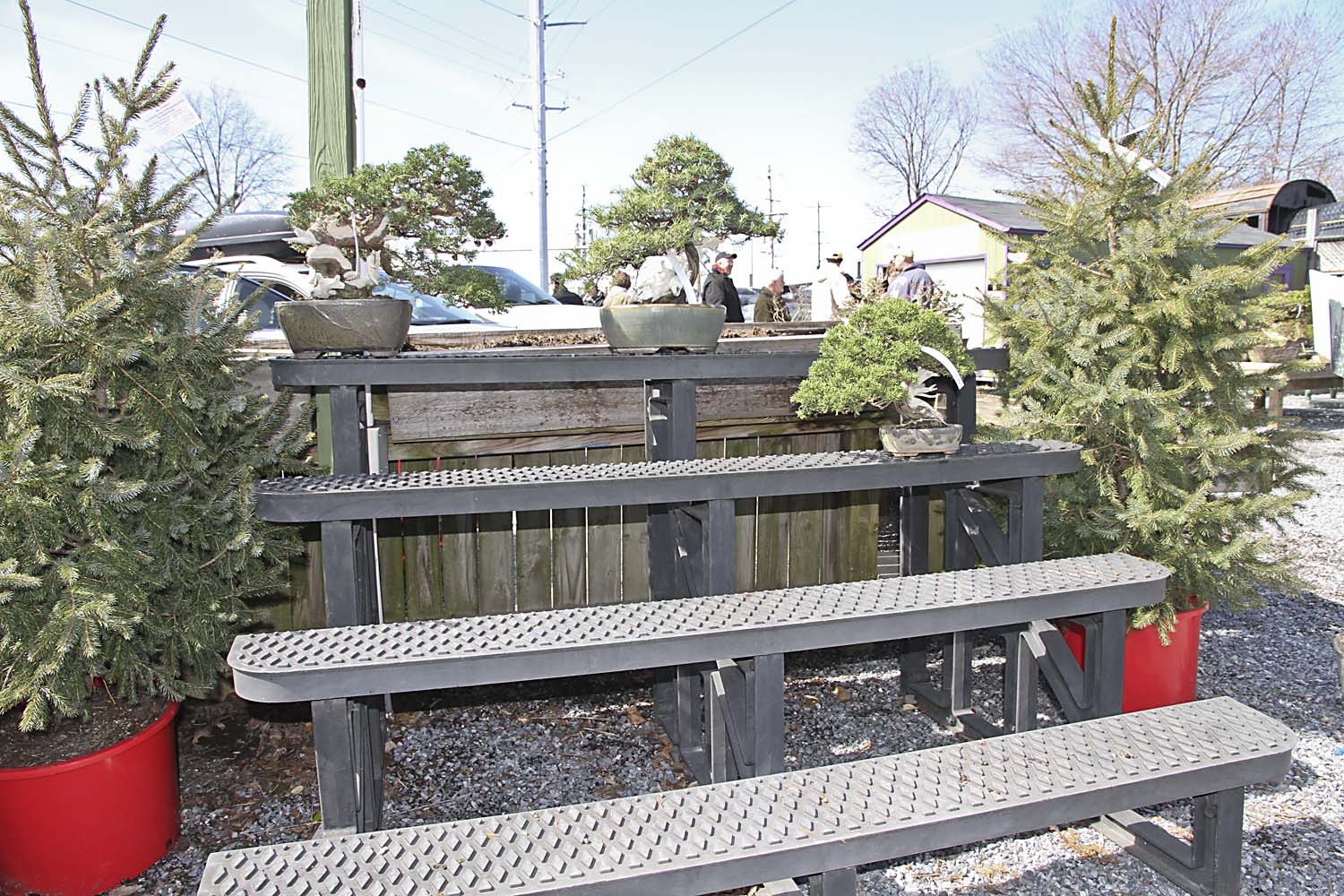
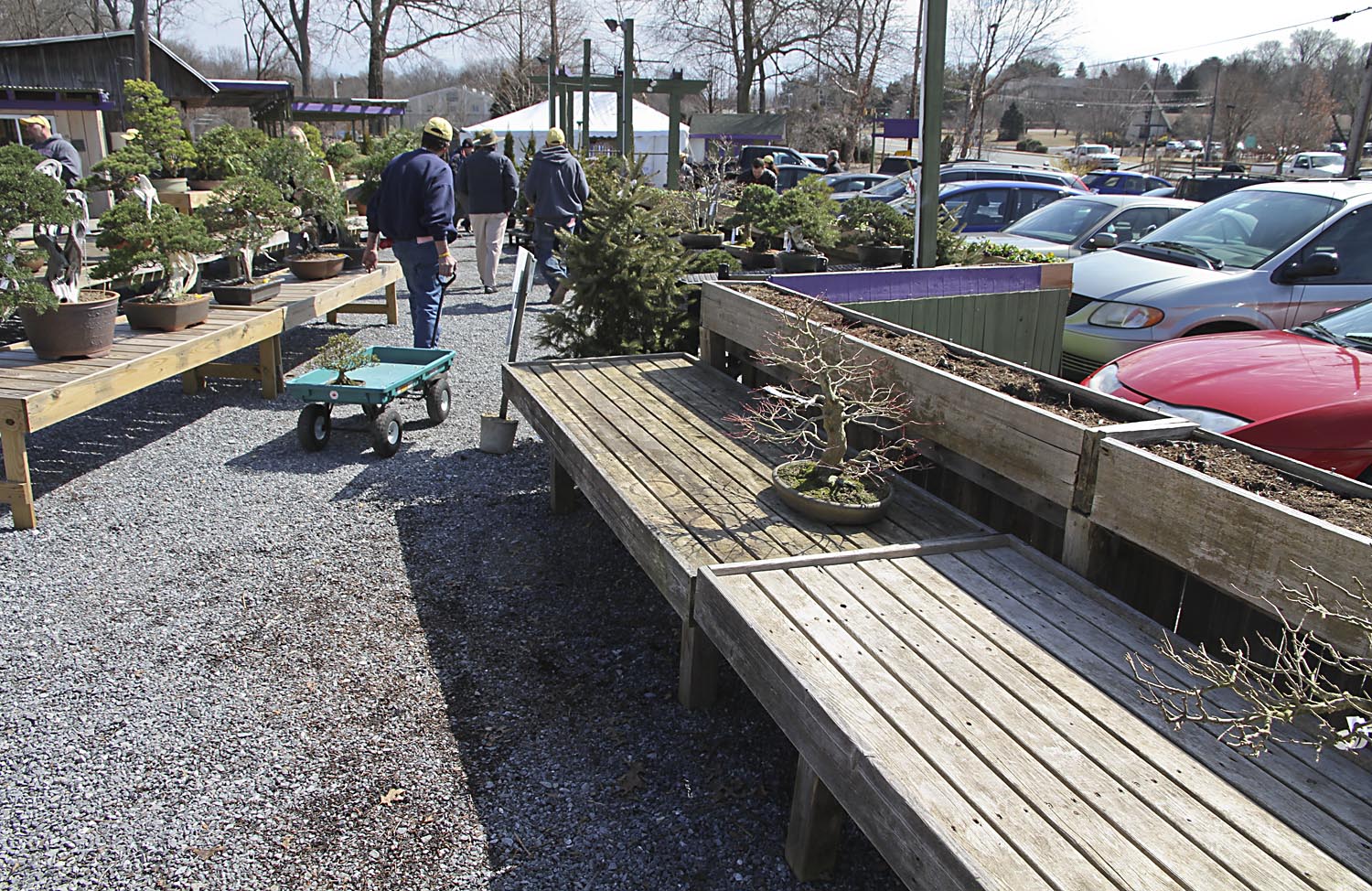
Around noon all the buyers had entered and the sales area was nearly empty. It was unbelievable how fast the trees were sold. In some of the attached photos you will see empty tables with only a few trees remaining, however, if you look closely, very few were still for sale with the yellow labels. Only the white identification labels remained.

Image

During the sales period, Peter Warren from England, Minoru Akiyama from Japan as well as Suthin were there to assist people with their purchases and answer questions.

Image

Later on Friday afternoon it was announced that because of the lack of remaining bonsai the sale would close on Saturday at 1pm and would not open on Sunday as scheduled. You can’t sell trees if you don’t have them.

Image

Image

It was warming to me to see so many smiling happy people adding quality bonsai to their collection because of the generosity of Doug Paul. Hopefully the bonsai will be well cared for and shaped and perhaps displayed in a future US National Bonsai Exhibition.

Image

Image

Although my wife Diane and I were in the 8th entry group we were able to purchase 4 of my client’s top choices (3 yellow labels for me and 1 for Diane) for his personal bonsai collection. But, unfortunately none of the bonsai on our affordable list for resale purposes remained, except for one small Japanese five-needle pine nursery stock.

Bonsai we purchased for our client:

Image

Image

Image

Image

My purchase…….

Image

Mr. Paul needs to be thanked for making the trees available to the public for sale and also for the extremely well organized sales procedure and rules which were fair as well for everyone.

Do You Like Satsuki Azaleas? Then You’ll Love Our New Satsuki Bonsai Tour!

Image

Image

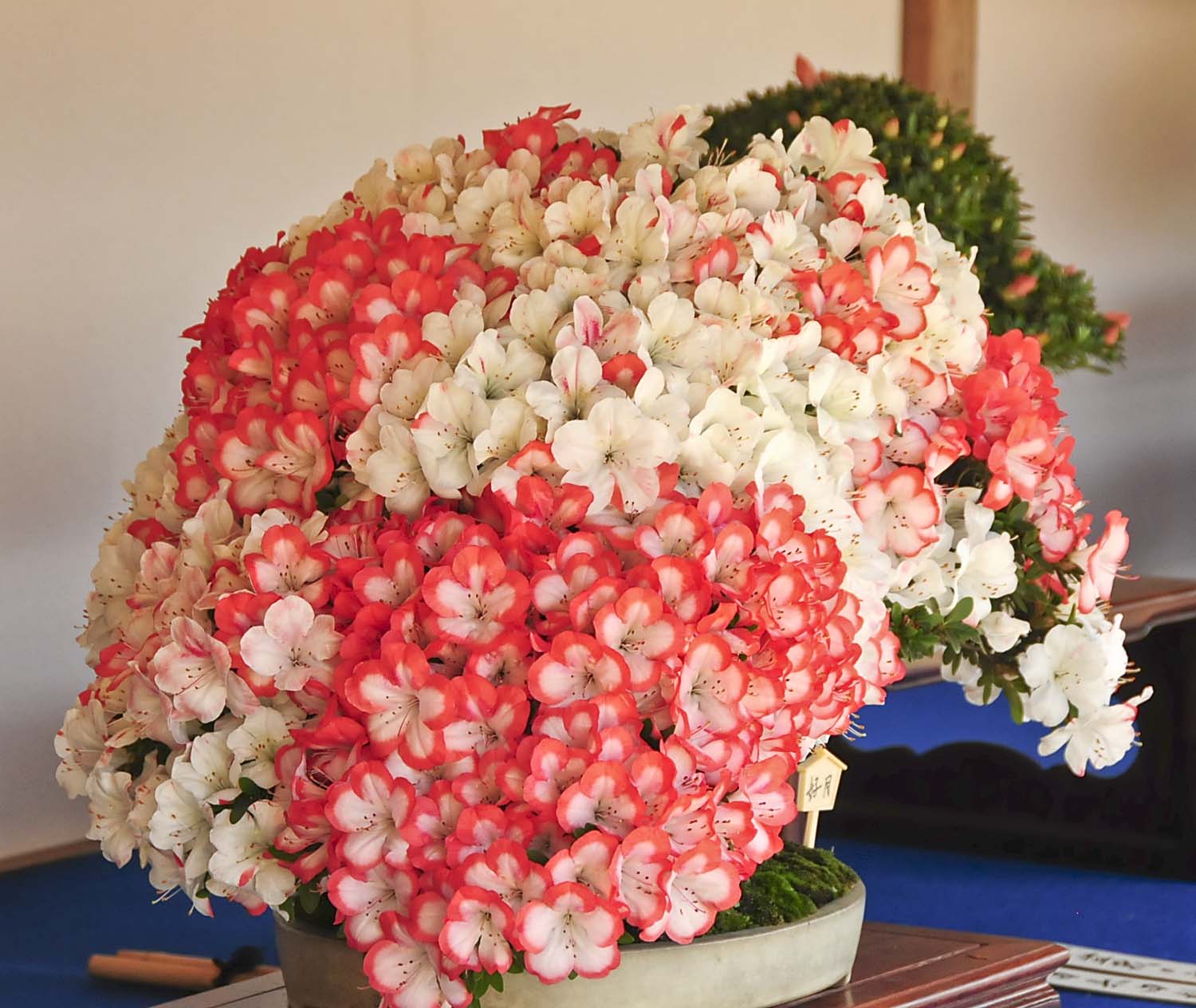
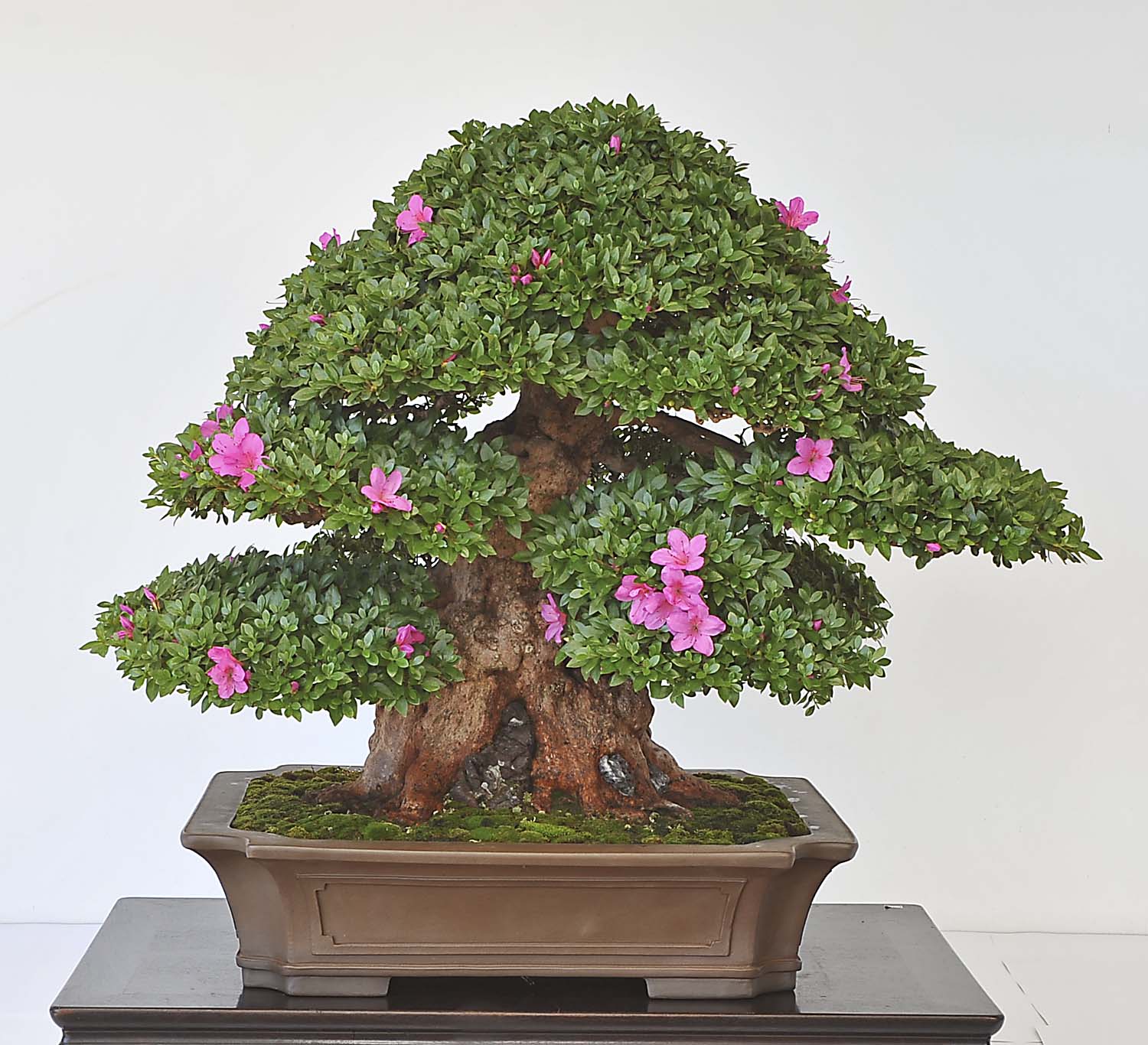
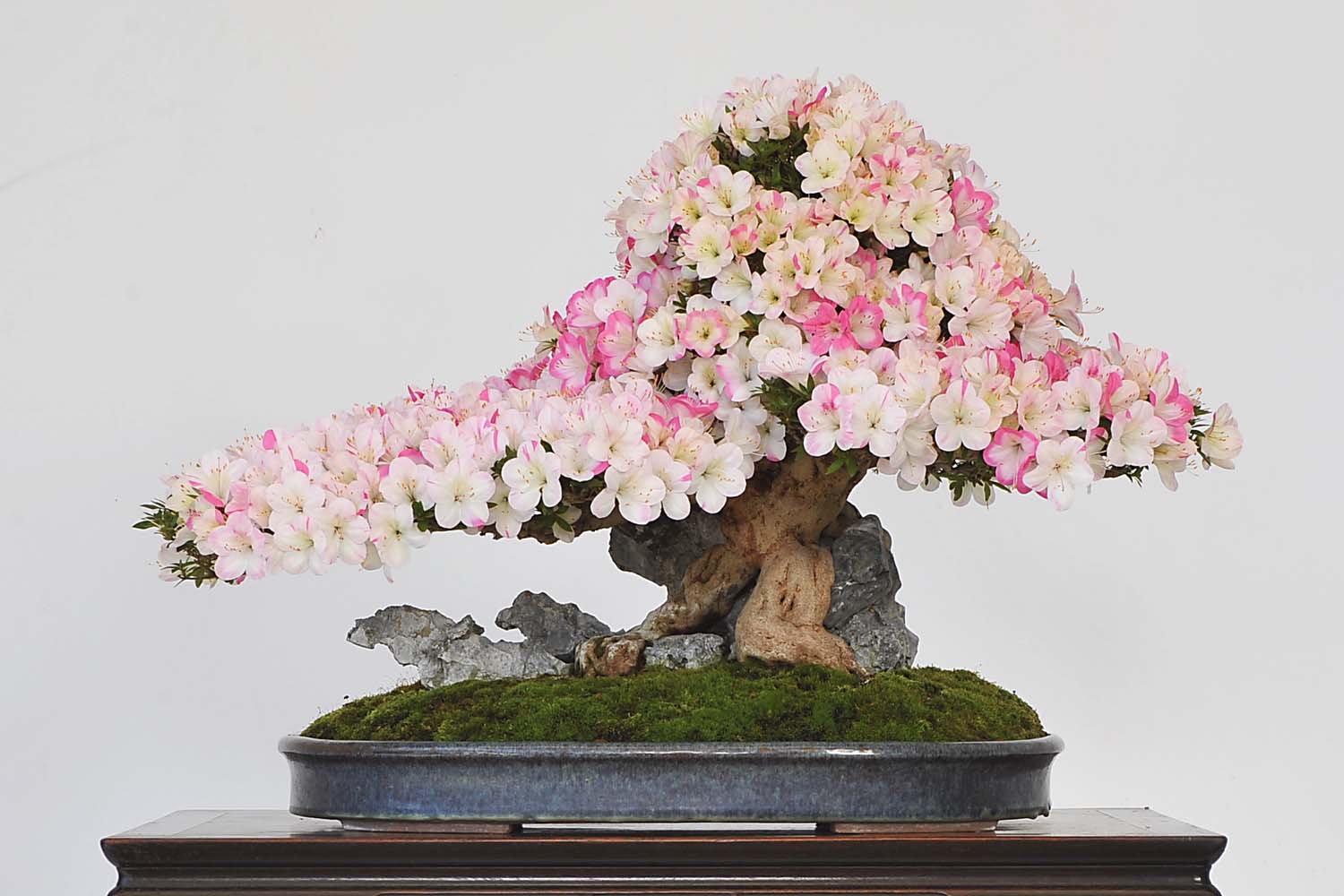
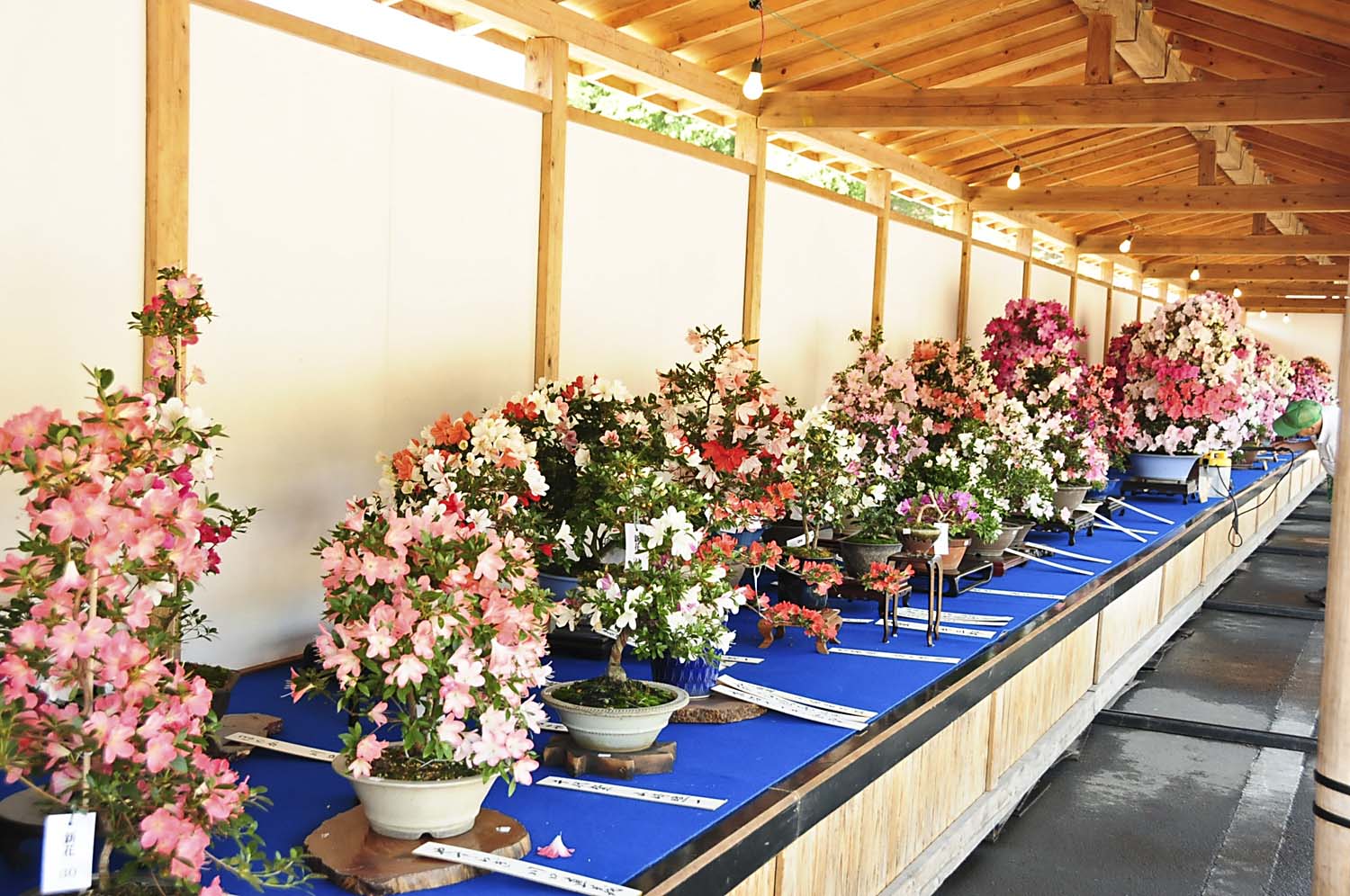
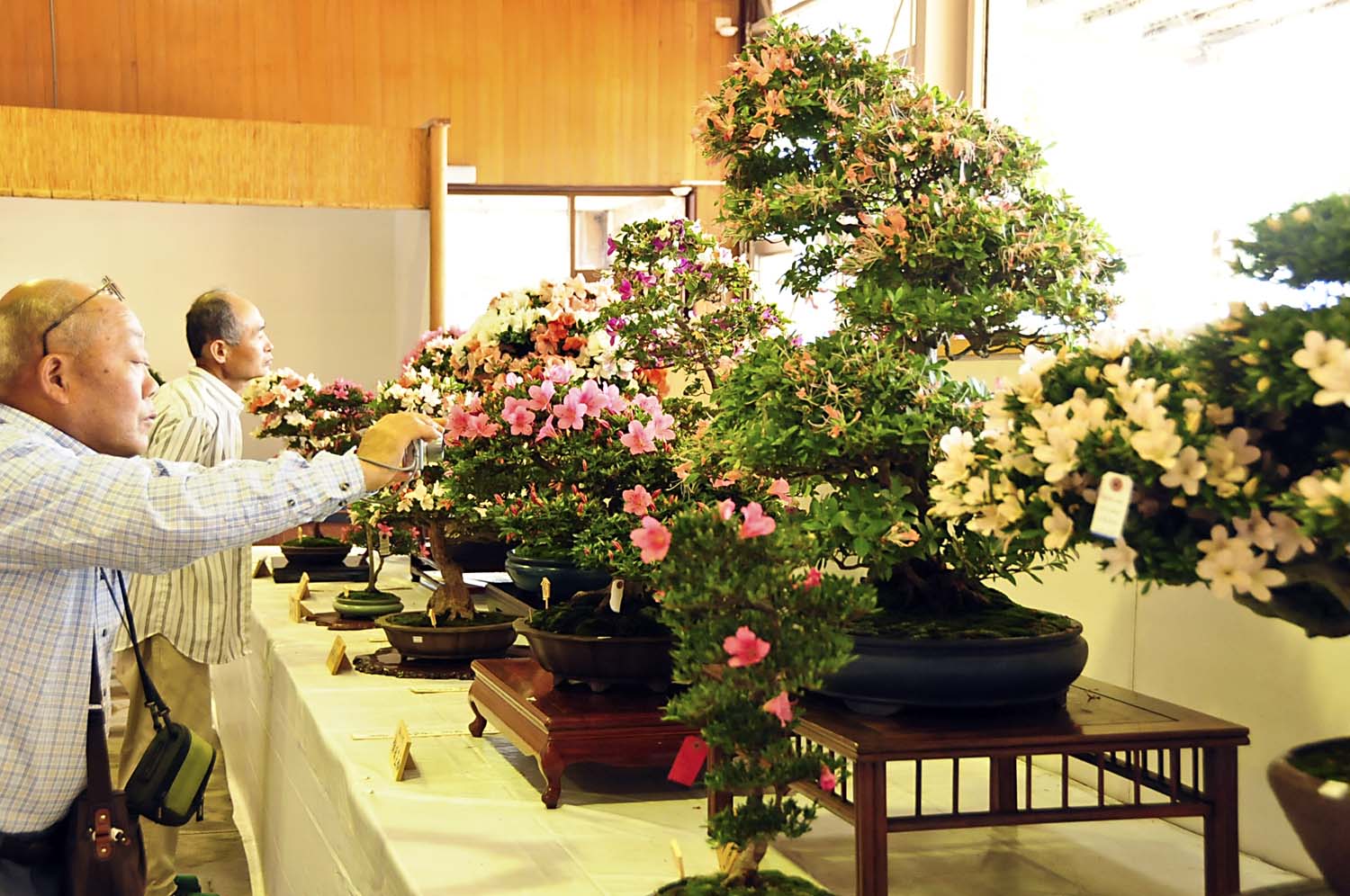
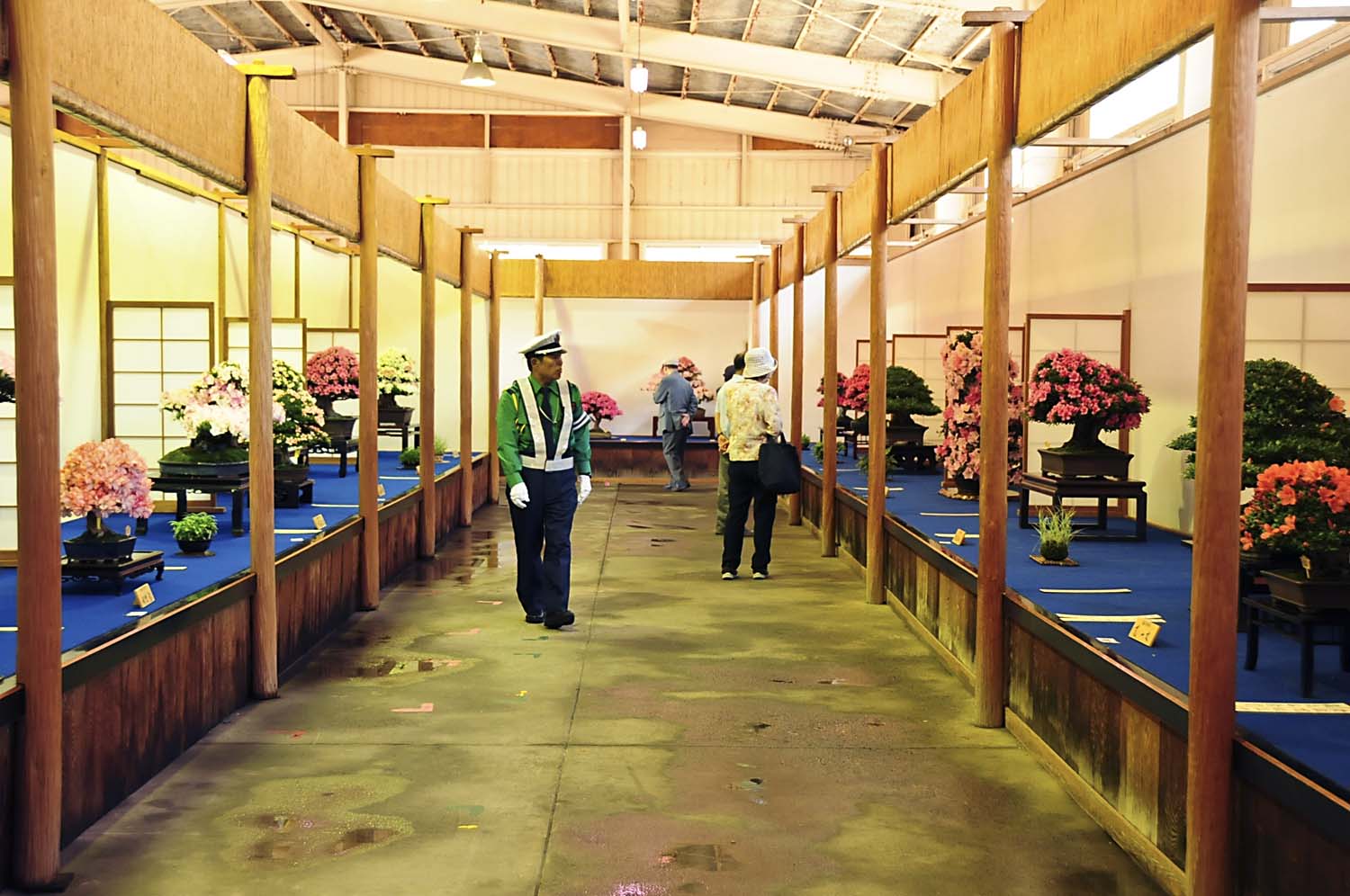
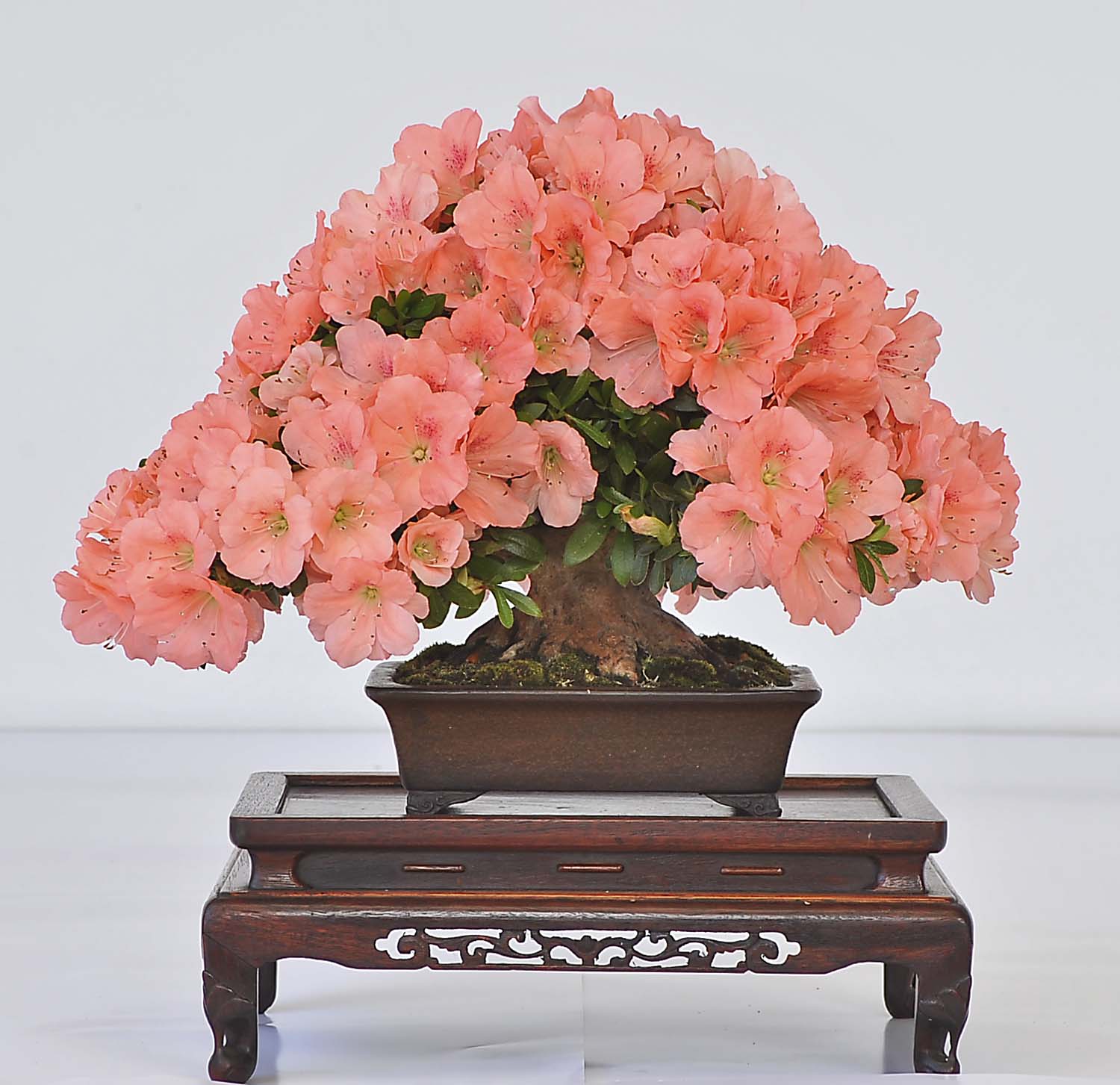
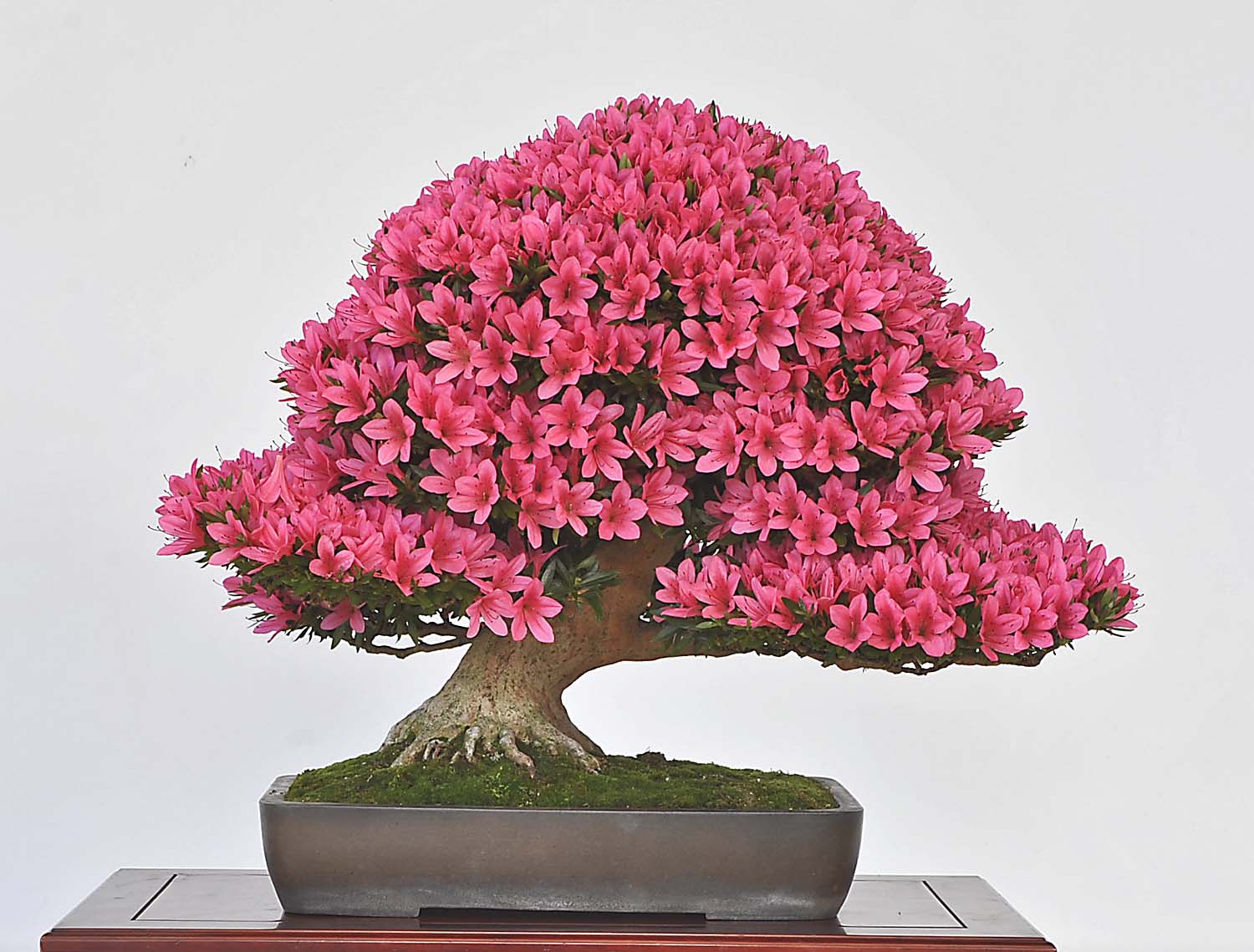
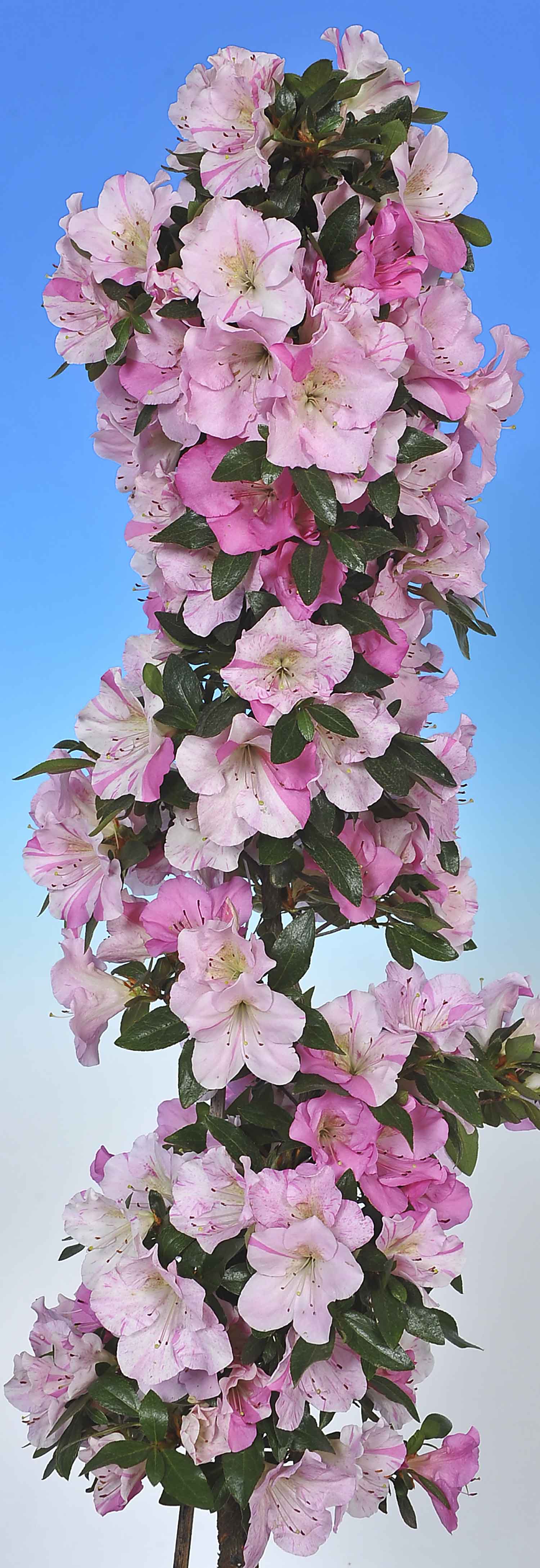
Satsuki azaleas are the jewels of the late spring/early summer bonsai season. The colorful blossoms in many shapes, colors and sizes as well as the interesting trunk shapes are eye candy for the discriminating bonsai enthusiast.

 Image

Image

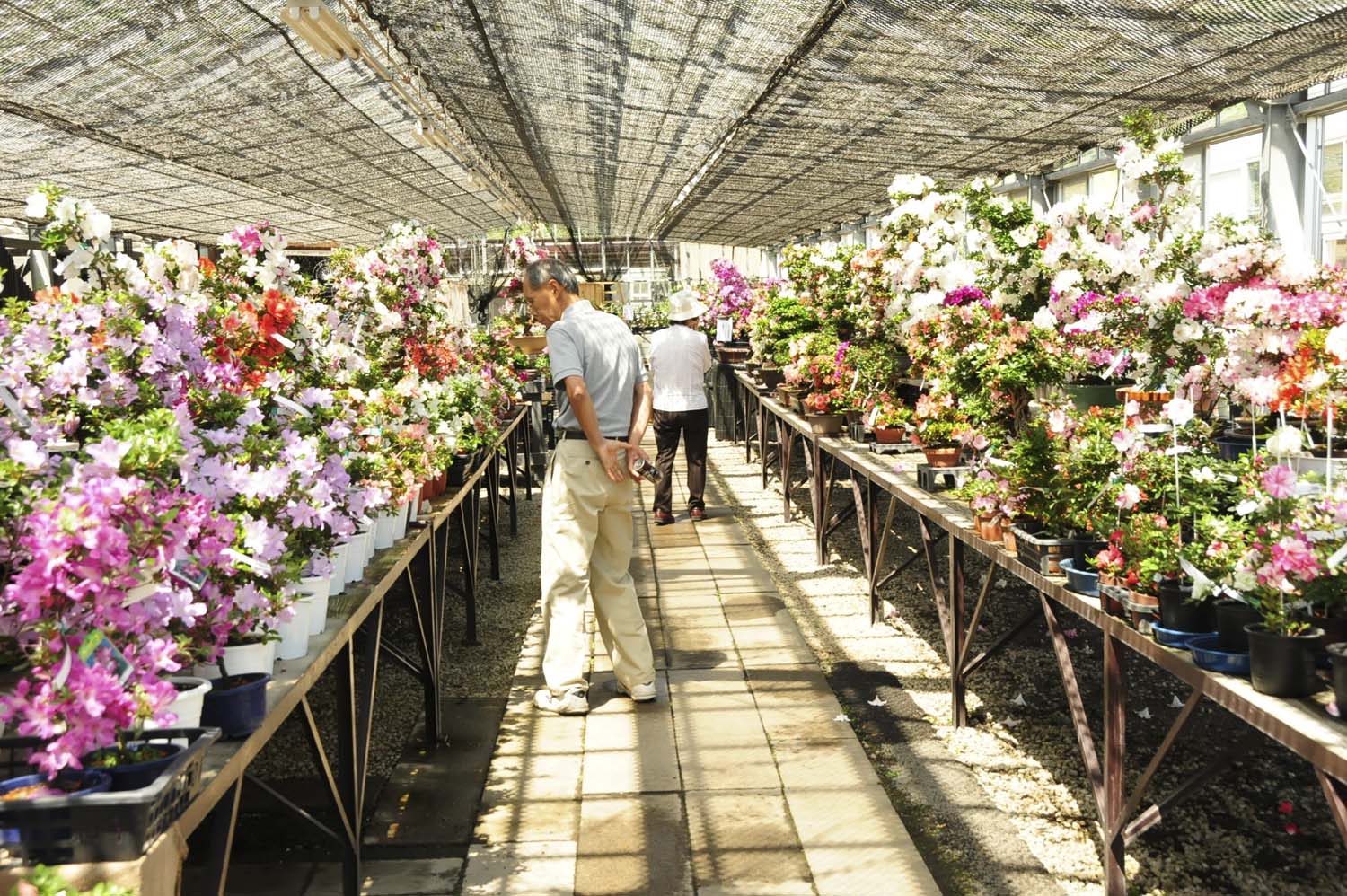
Because of their popularity, Satsuki azaleas are a big time bonsai industry in Japan, mostly centered around the Kanuma area, north of Tokyo near Nikko. The natural availability of Kanuma soil is the secret to producing dynamic bonsai at reasonable pricing. Satsuki azaleas thrive in Kanuma soil, which is minded in the Kanuma City area. You can see fields upon fields and greenhouses all full of Satsuki azaleas being propagated, field grown, then finished in containers ready for the Japanese as well as foreign markets.

Image


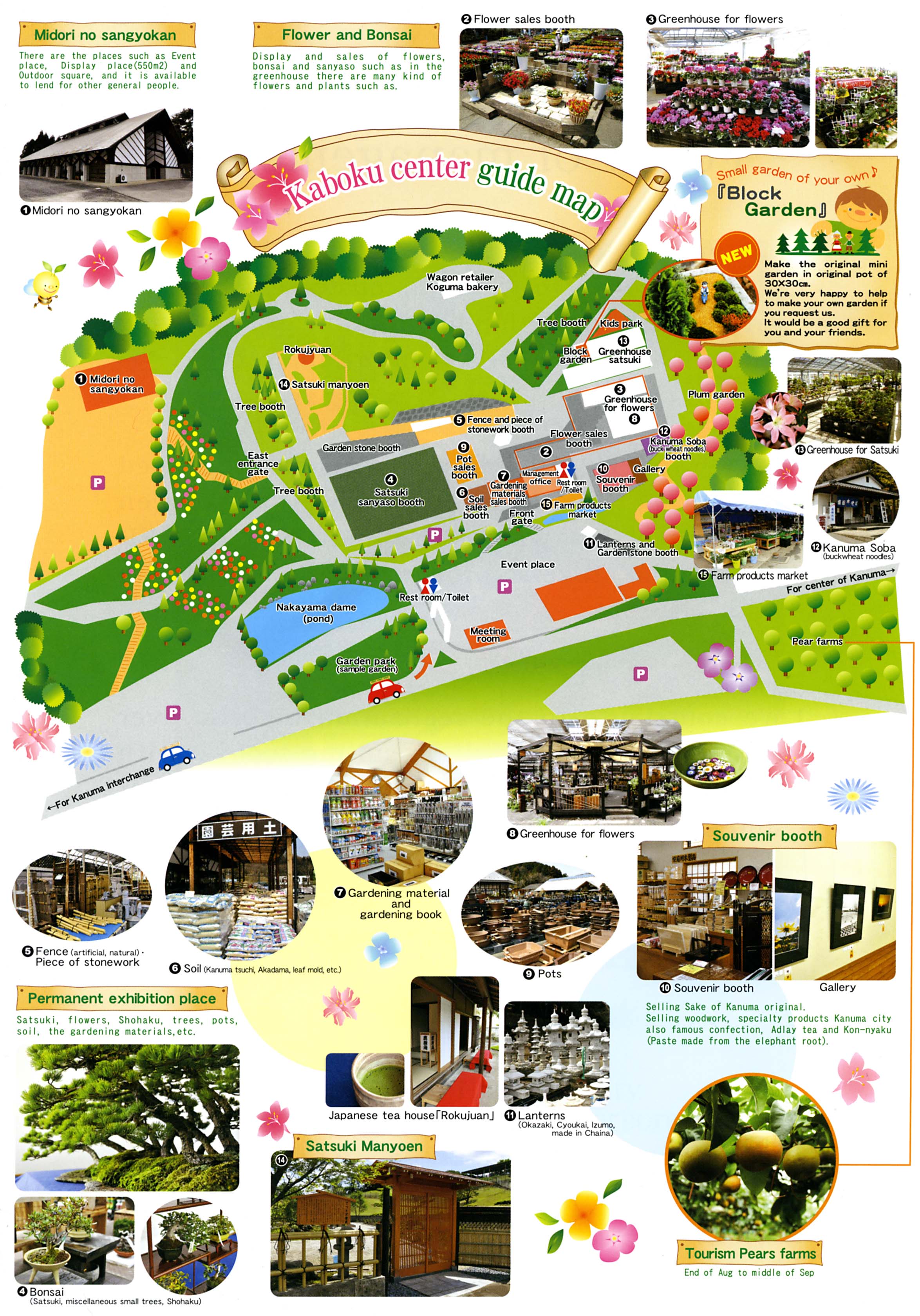
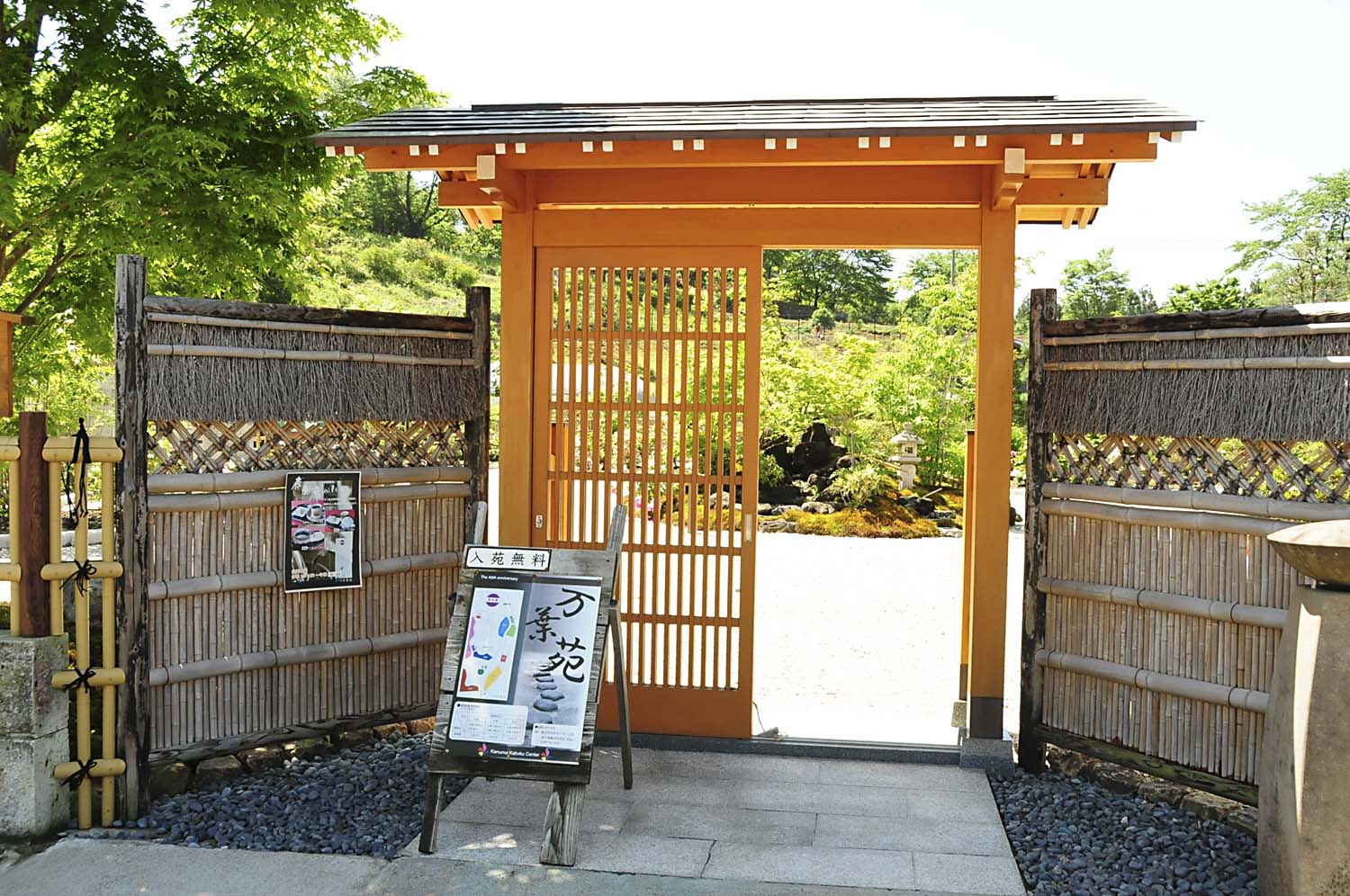
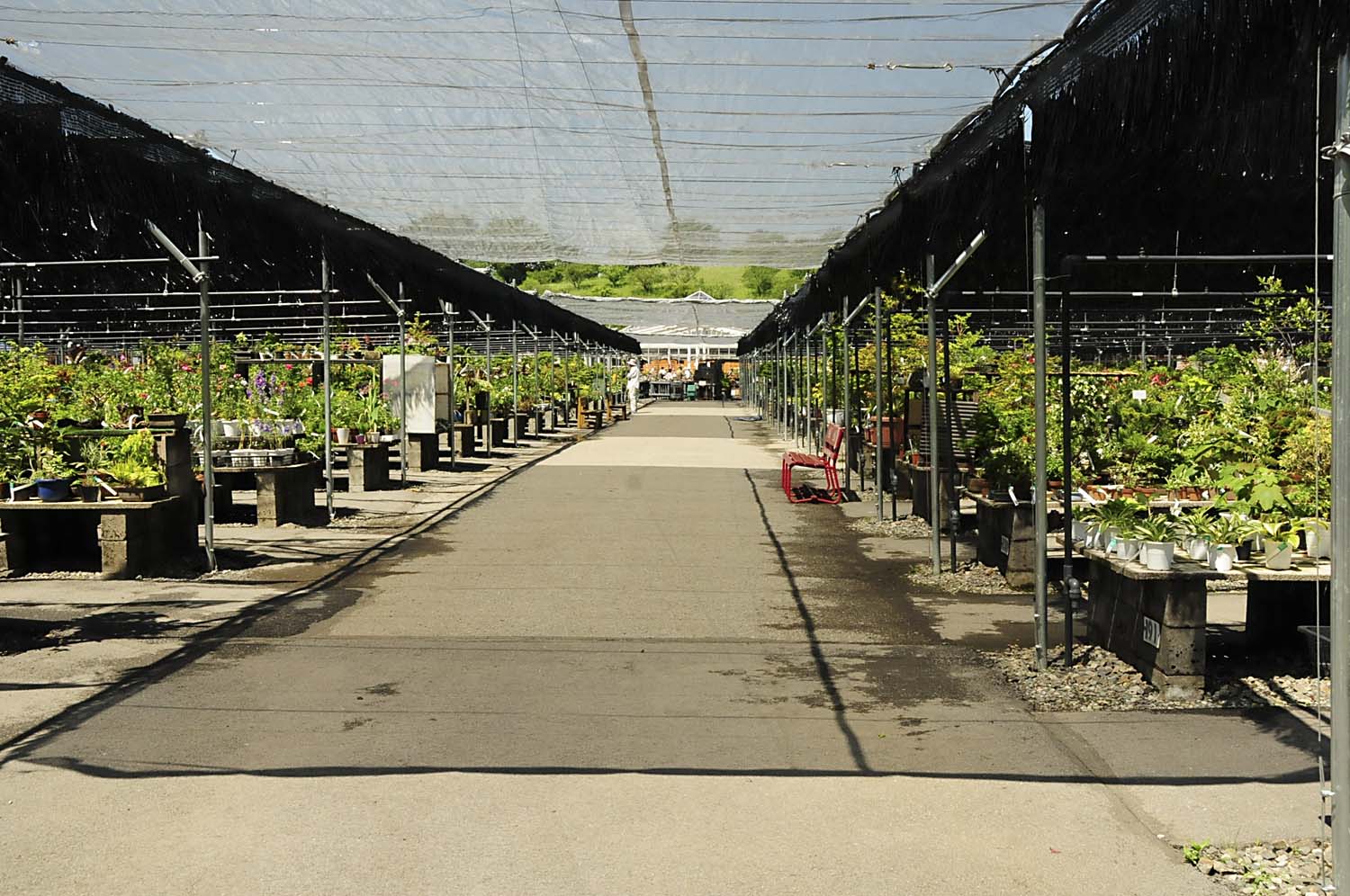
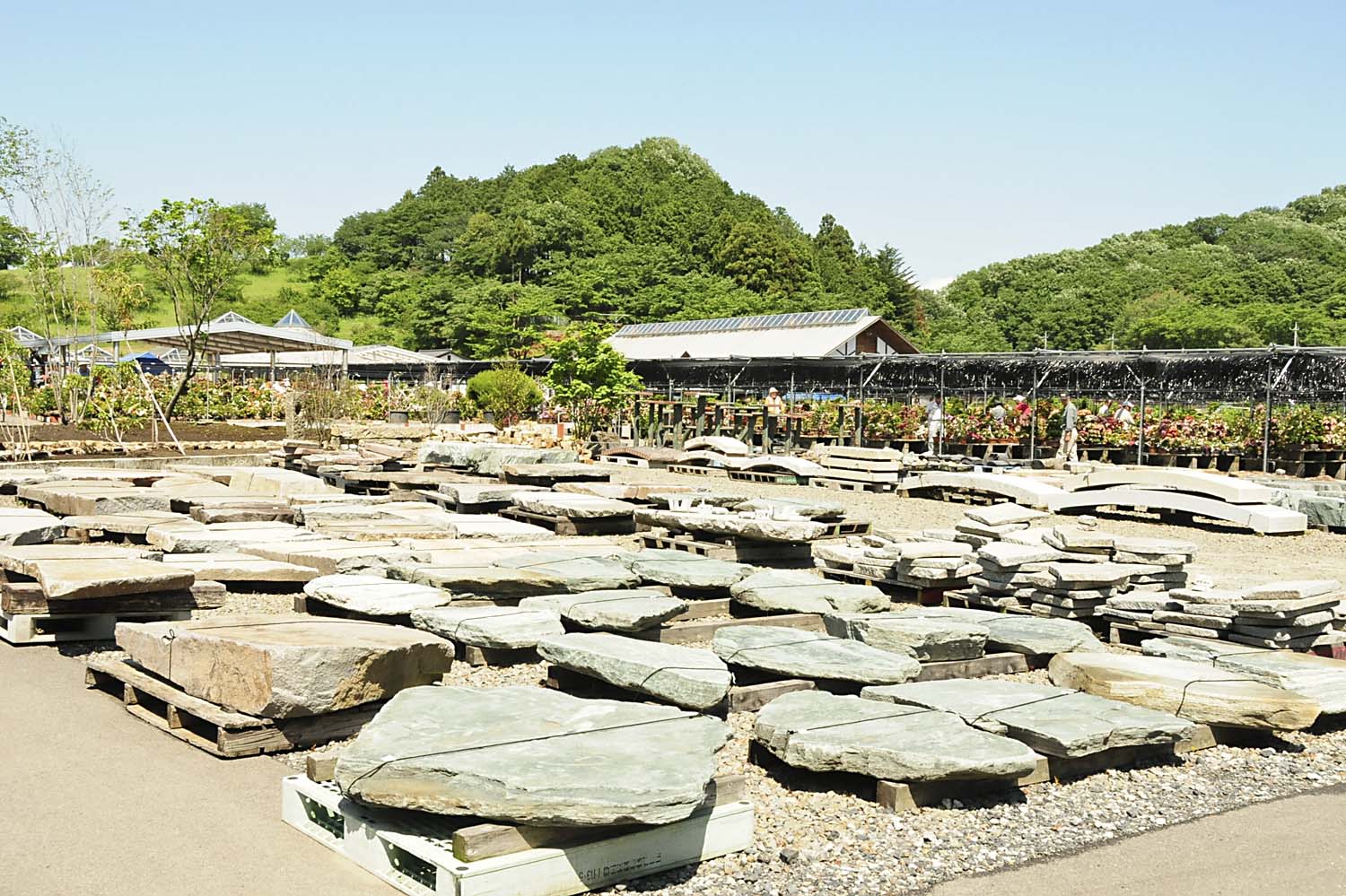
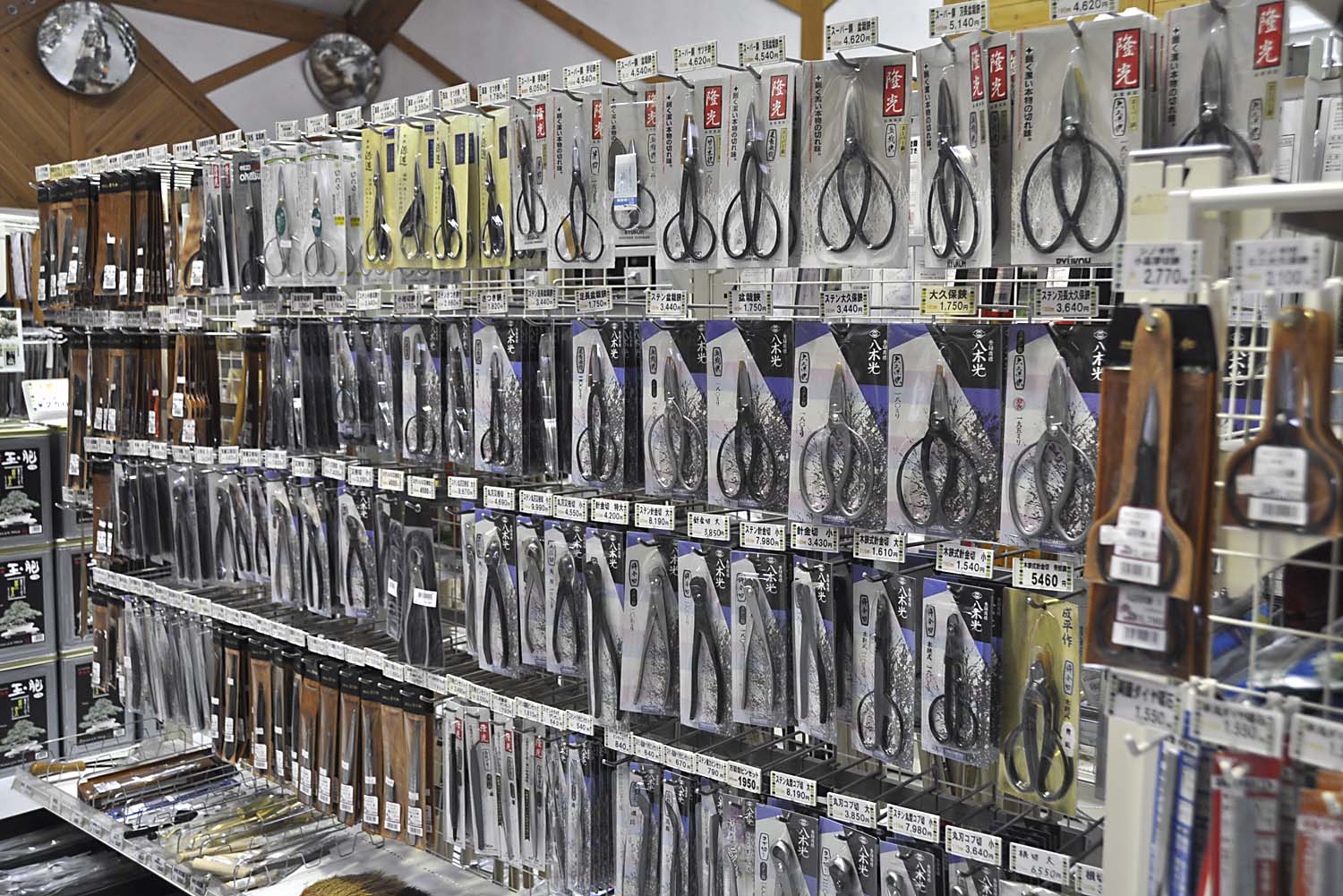
Since Satsuki azaleas blossom in late May and early June the City of Kanuma holds an annual Kanuma. This year the Kanuma Satsuki Festival will be held from May 31 to June 9, 2014 at the Kanuma City Kaboku Center. The two acre complex includes: a permanent exhibition and sales area over a half acre alone, one and a half area auction area, and greenhouses. Additionally the complex has a garden tree sales field of seven acres, additional greenhouses, restaurant and a 66 acre wild bird forest, plus more. This is a truly unique center for Satsuki azalea bonsai production, exhibitions and sales.

 Image

Image


Image

Image

Image

Image

Image

Image

Image

Image

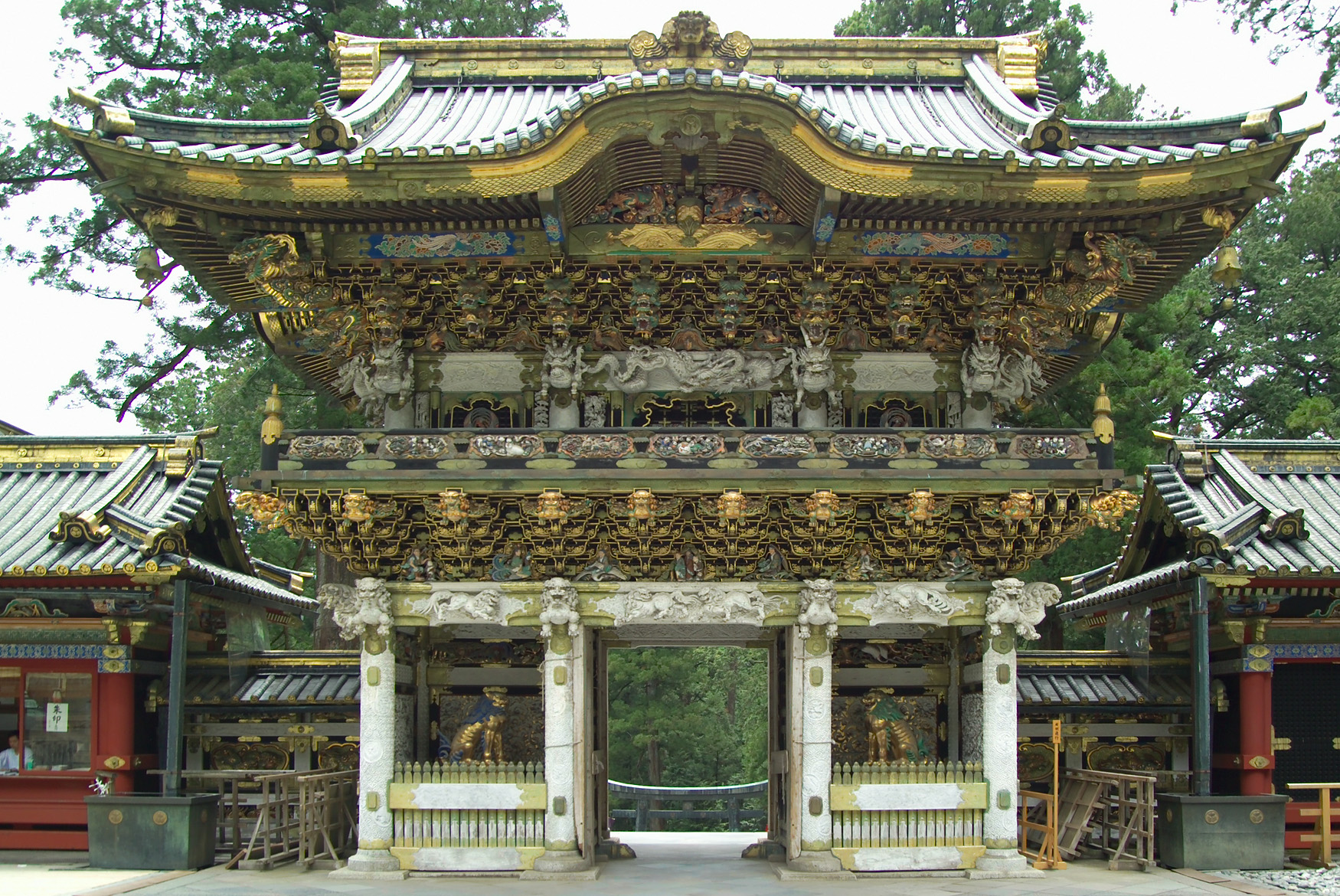
This year for the first time Kora Dalager and I will be leading a special tour to Japan highlighting the Kanuma Satsuki Festival in addition to visiting Omiya Bonsai Village, the Omiya Bonsai Art Museum, the private collections of Kunio Kobayashi and Masahiko Kimura and Seiji Morimae’s S-Cube, the largest bonsai garden in Japan. Additionally we will begin our exploration to Japan by visiting the Nippon Satsuki Exhibition in Ueno Park and also the colorful Toshogu Shrine famous for its colorful buildings and ancient giant Cryptomeria trees. This was the home of the Tokugawa Shogunate.

File:Nikko Toshogu Yomeimon M3249.jpg

 
Cedar Avenue of Nikko

We will attend the opening of the Kanuma Satsuki Festival and have a full day to study the thousands of Satsuki bonsai, visit the sales area as well as the lovely garden areas. Photos from the 2013 Kanuma Satsuki Festival are included here.

Image

Image

Image

Image

Image


 A Private Visit To The Garden Of Shinji Suzuki

Additionally, also for the first time, we are having an optional tour to the bonsai garden of award winning bonsai artist Shinji Suzuki. The optional tour will take place the day before the Satsuki Bonsai Tour begins. Mr. Suzuki lives in Obuse, north of Nagano Japan which will a ride on the bullet train, regular trains, taxi ride as well as an additional night in our Tokyo hotel. Additional photos may be seen in this blog from my recent visit in the February archives.

Image

Image

Image

Please contact Kora Dalager or me for availability of this small limited optional tour and pricing:

kora@astound.net

wnv@internationalbonsai.com

Image


Image

Join us on an exciting new tour to see, study and explore the Satsuki Azalea world in Japan as well as experience the Japanese bonsai world and culture of Nikko.

Image

Image

Image

Ueno Green Club Sales Area

Image


Image

The sales area is a major part of most bonsai gatherings. The sale of bonsai, suiseki and other accessories for the training and appreciation of the arts is necessary for the professional bonsai artists.

The Nippon Bonsai Cooperative is the professional organization for bonsai artists and growers. A small corner lot, near the Ueno Park Zoo has been leased to the Nippon Bonsai Cooperative for many decades at a low rental price. Across the street is the headquarters for the Nippon Bonsai Association, which is a different organization from the professionals.

Approximately 20 years ago the Nippon Bonsai Cooperative organization removed the old low buildings and constructed a new, state of the art multi purpose, three story building for sales, exhibitions, meetings and judging for the Kokufu Bonsai Exhibitions. Each of the professional bonsai artists/growers was accessed a certain percentage of the building costs and they are all stockholder owners of the building, not the rented land.

Image


Image


Image


During the Kokufu Bonsai Exhibition they provide complimentary continuous shuttle bus service from the Ueno Green Club to the exhibition which is held in the Metropolitan Art Museum, about 10 minutes away. They want, and need, the customers to visit and shop in their sales area. Although sales are drastically down from the “bubble years” in Japan, bonsai business is still big.

There are two main sales area of the Ueno Green Club, indoor sales for high end items and outdoor sales for others. Don’t get me wrong, you can still spend tens of thousands of US dollars (not Japanese yen) for individual bonsai, containers and suiseki outdoors.

Image


The first floor of the building contains the major bonsai artists’ sales areas, as does the second floor. The top third floor is dedicated to the sale of shohin bonsai, containers and other items.

Image


Image


Image


Image

Outdoors you can find almost anything you want and are not even looking for to enhance your growing and appreciation of bonsai and suiseki. Old containers, antiques and scrolls are offered for sale, in addition to tools and suiseki. Sometimes old Kokufu Bonsai Exhibitions are available, but I was fortunate to find them first this year.

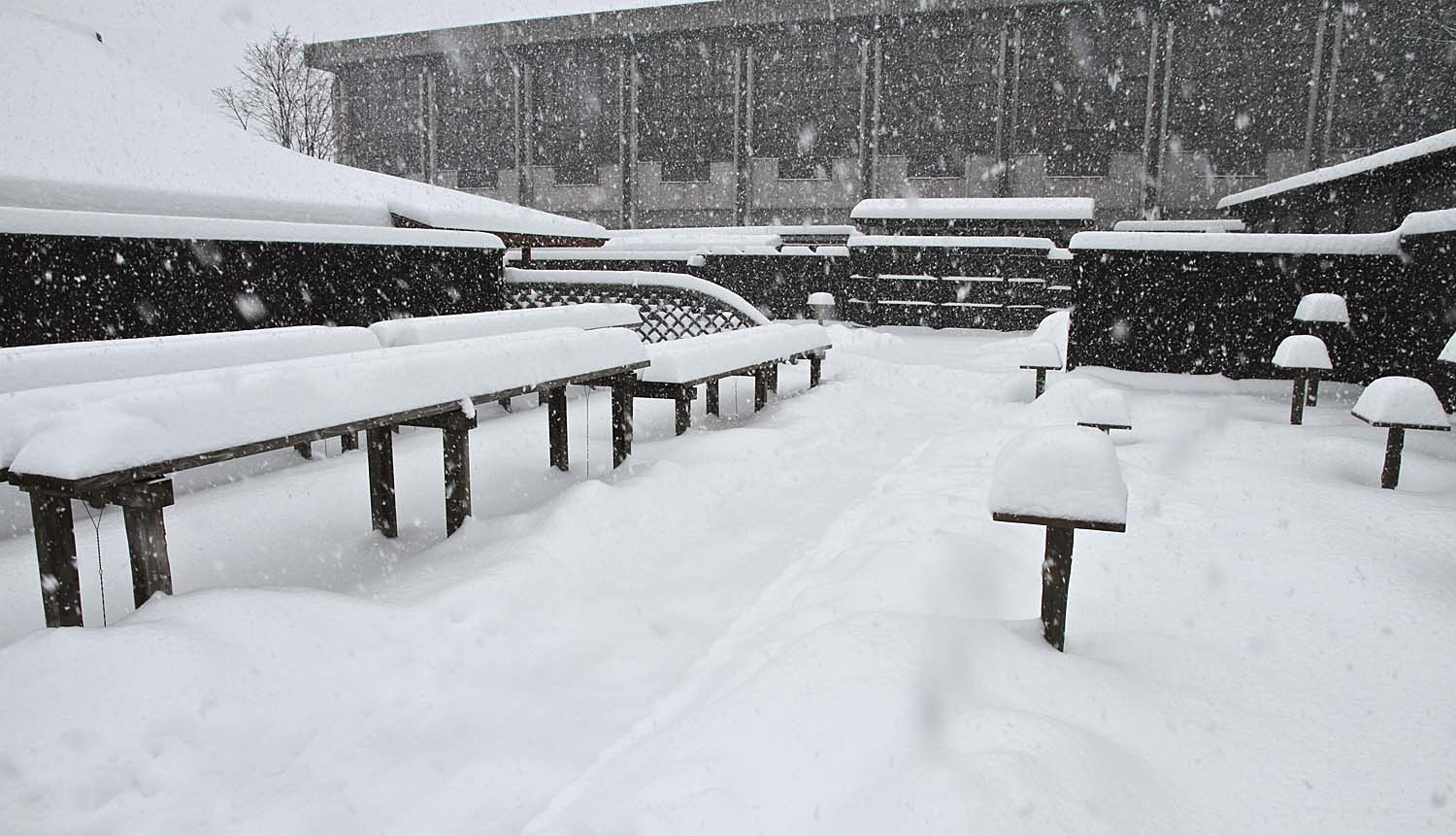
The outdoor sales areas are considerably less expensive to rent than the warm and comfortable indoor areas. This was evident during the worse snowstorm Tokyo experienced in 45 years a couple of days ago. No, I did not bring the snow from Rochester. You could not even see the bonsai for sale outdoors and vendors were quickly carefully brushing the cold wet snow off the delicate branches to avoid damage. It’s also not nice out there when its windy and quite cold.

Image

Major Japanese bonsai collectors, and occasionally foreign visitors too, make pilgrimages to the exhibition and sales area yearly which the vendors are quite thankful for. They bring their finest items for sale. Oh, photographs are allowed both inside and out. It’s cheaper to take photos than buy a container for over $5,000.

Image


Image


Image


Image


Image


Image


Image

Like in the United States, bonsai is still a “cottage industry” in Japan and vendors are friendly and help each other. Anyone who travels to Japan to see the Kokufu Bonsai Exhibition should make the Uneo Green Club a destination to see what is currently popular and experience the hustle and bustle of the bonsai industry of Japan. Who knows, you may even purchase something to the surprise and appeciation of a Japanese vendor.

2014 88th Kokufu Bonsai Exhibition– Part 2

Image

Image

Image

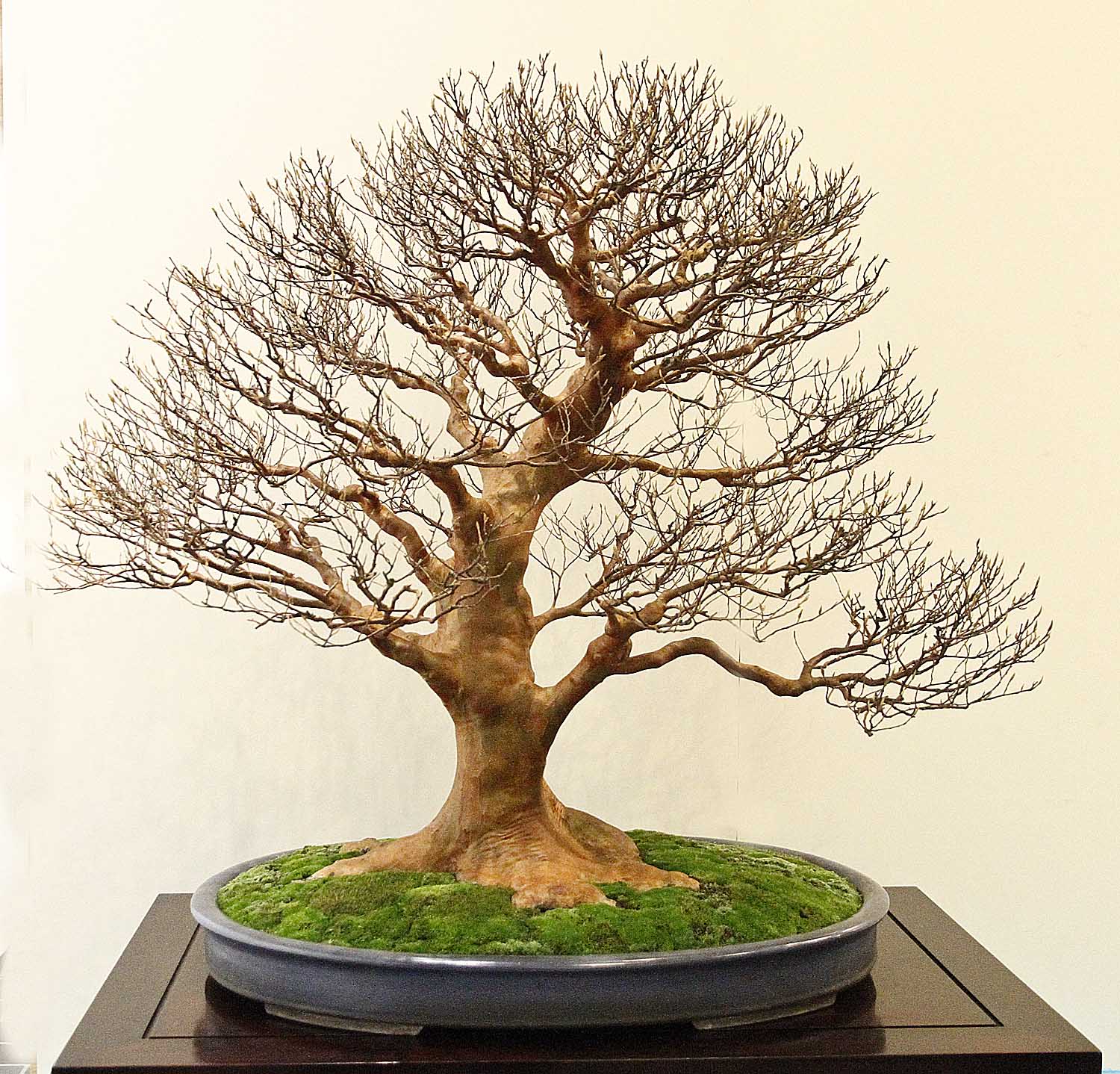
On Sunday, February 9, 2014 Part 2 of the 88th Kokufu Bonsai Exhibition opened in the Tokyo Metropolitan Art Museum in Ueno Park. On Saturday all of the nearly 300 bonsai were removed and replaced with new masterpieces. Now, I’ve been at more Kokufu Bonsai Exhibitions than I remember and I’m still amazed at the number of new bonsai which are displayed each year. There are a few repeats, but most of the trees are new. I wonder how many masterpieces are out there in Japan, but remember, new specimens are always being created while old masterpieces pass on.

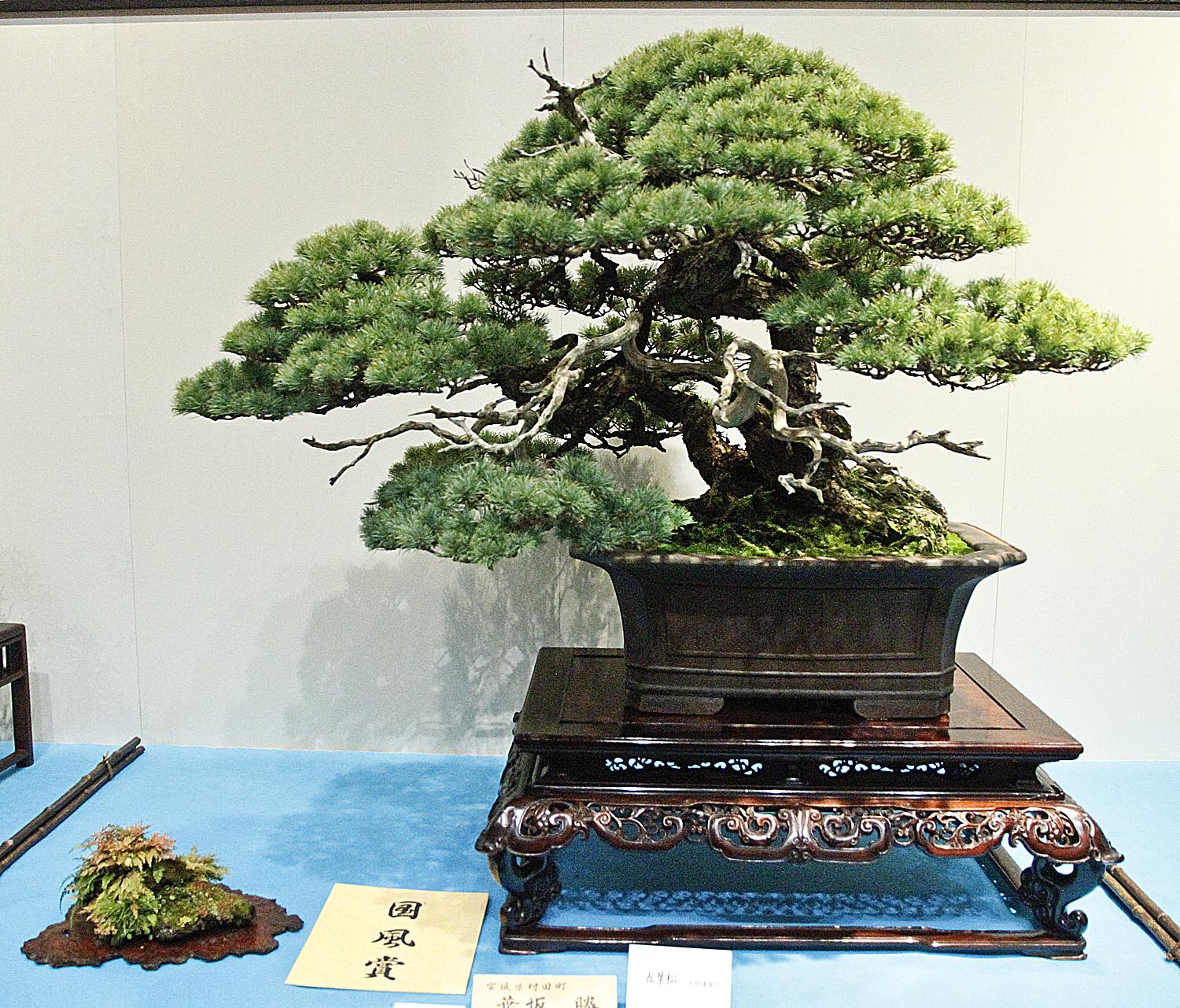
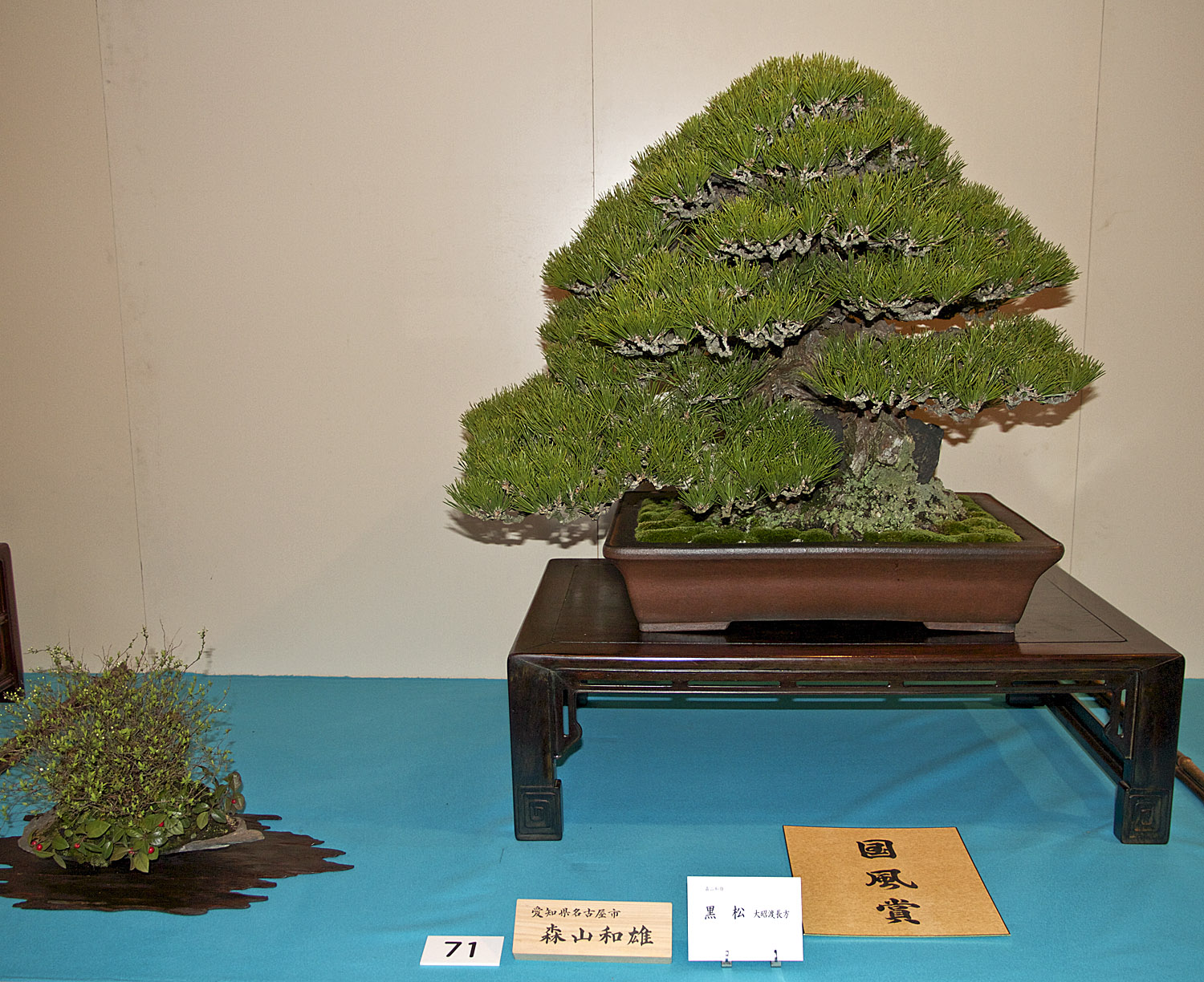
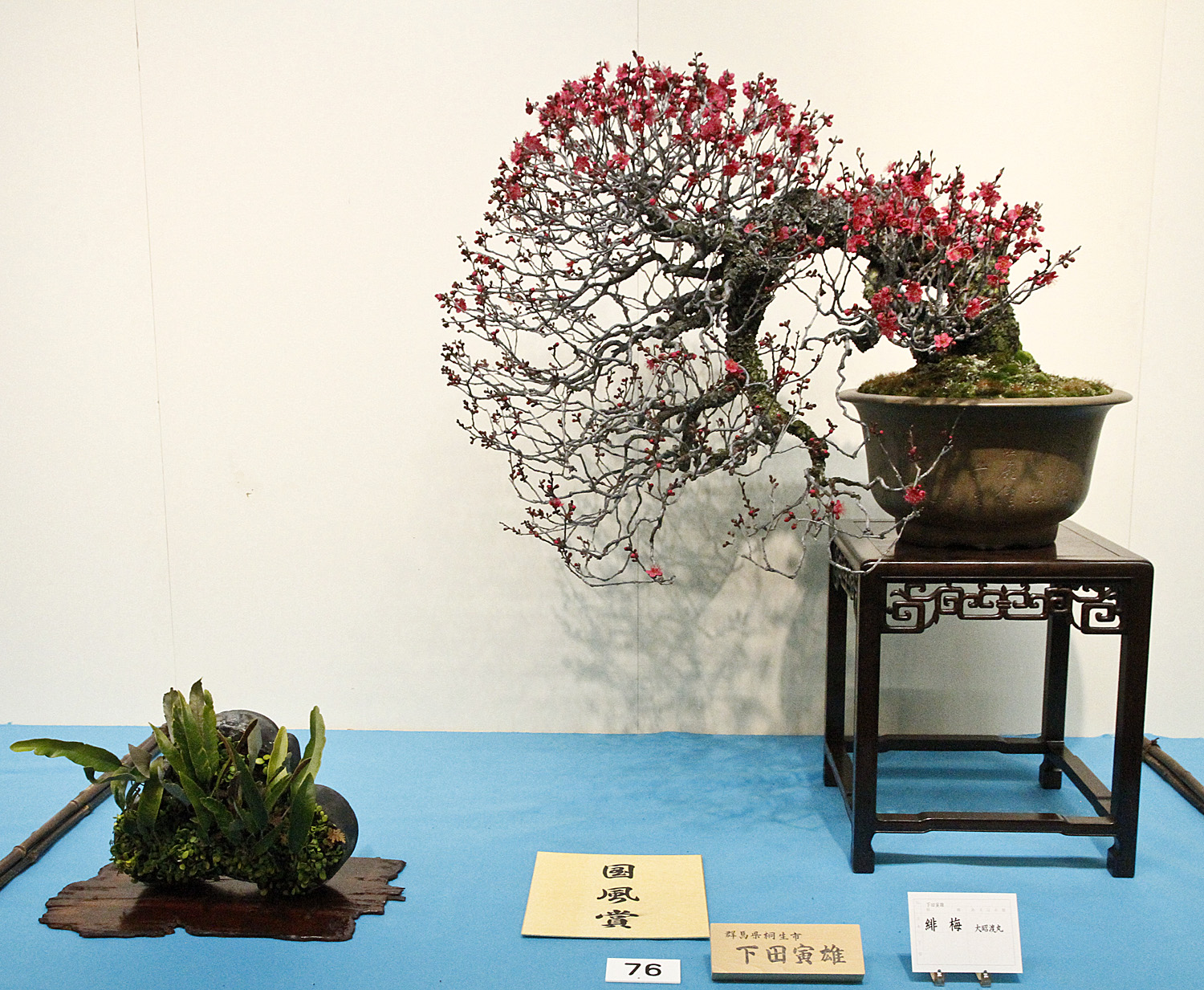
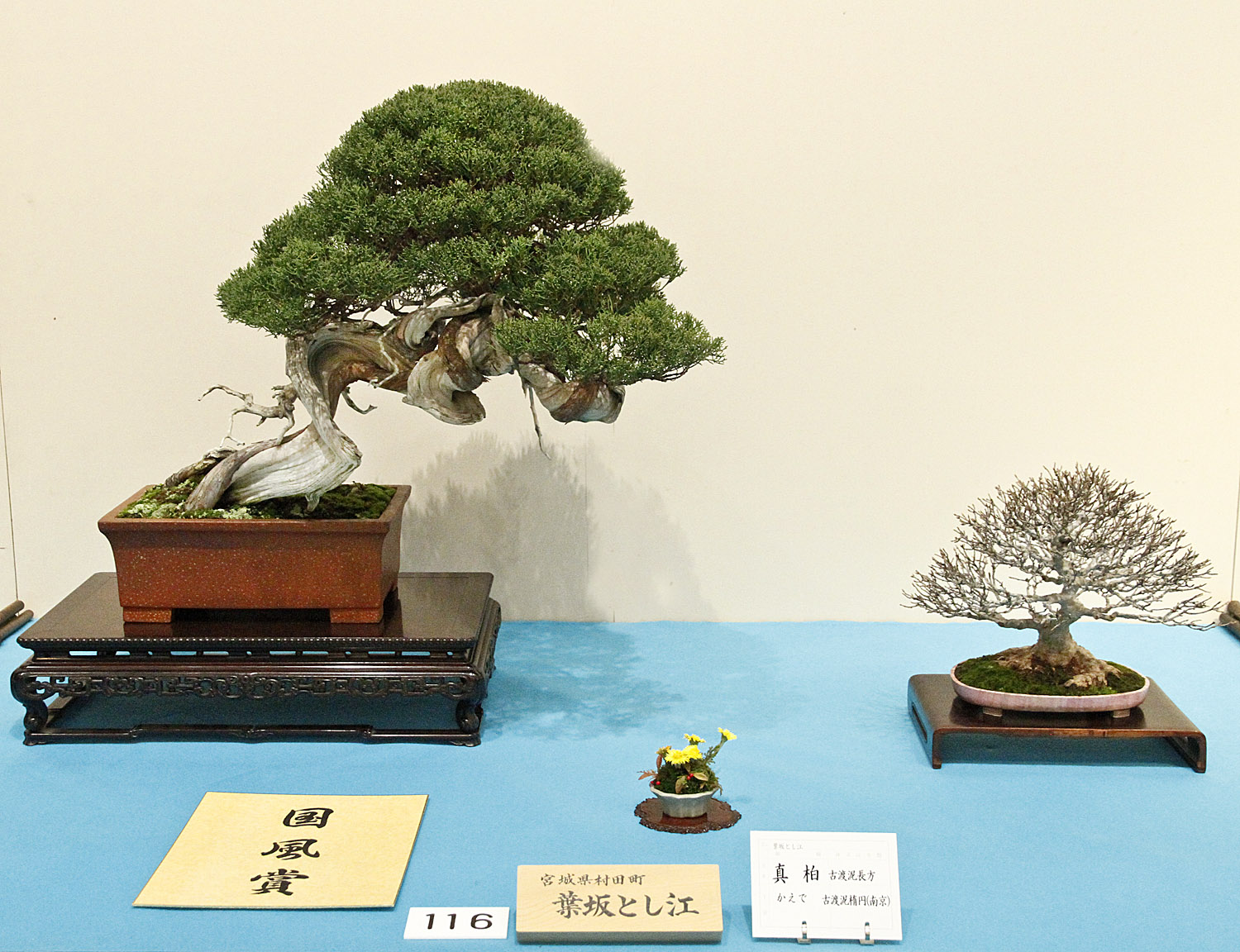
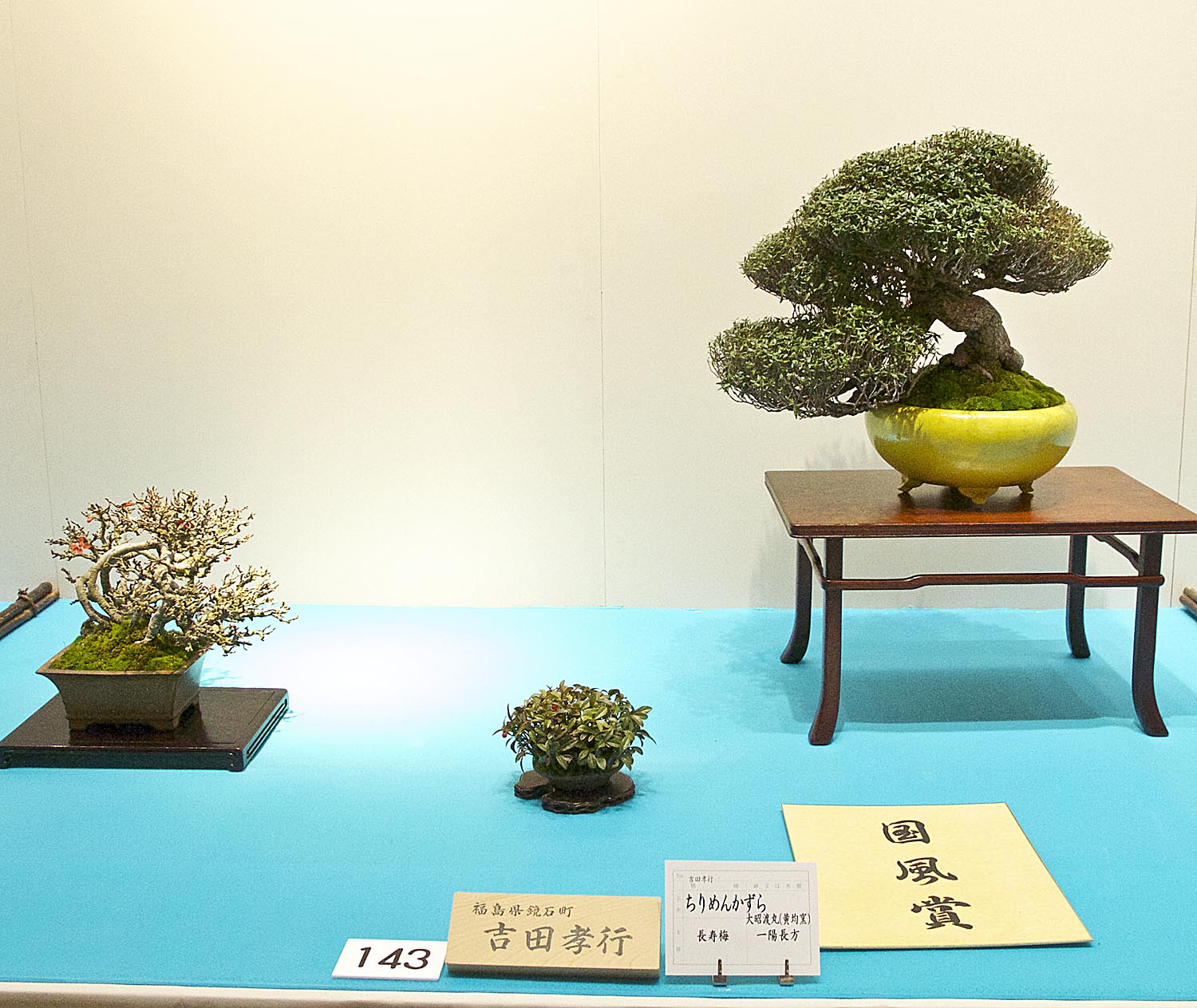
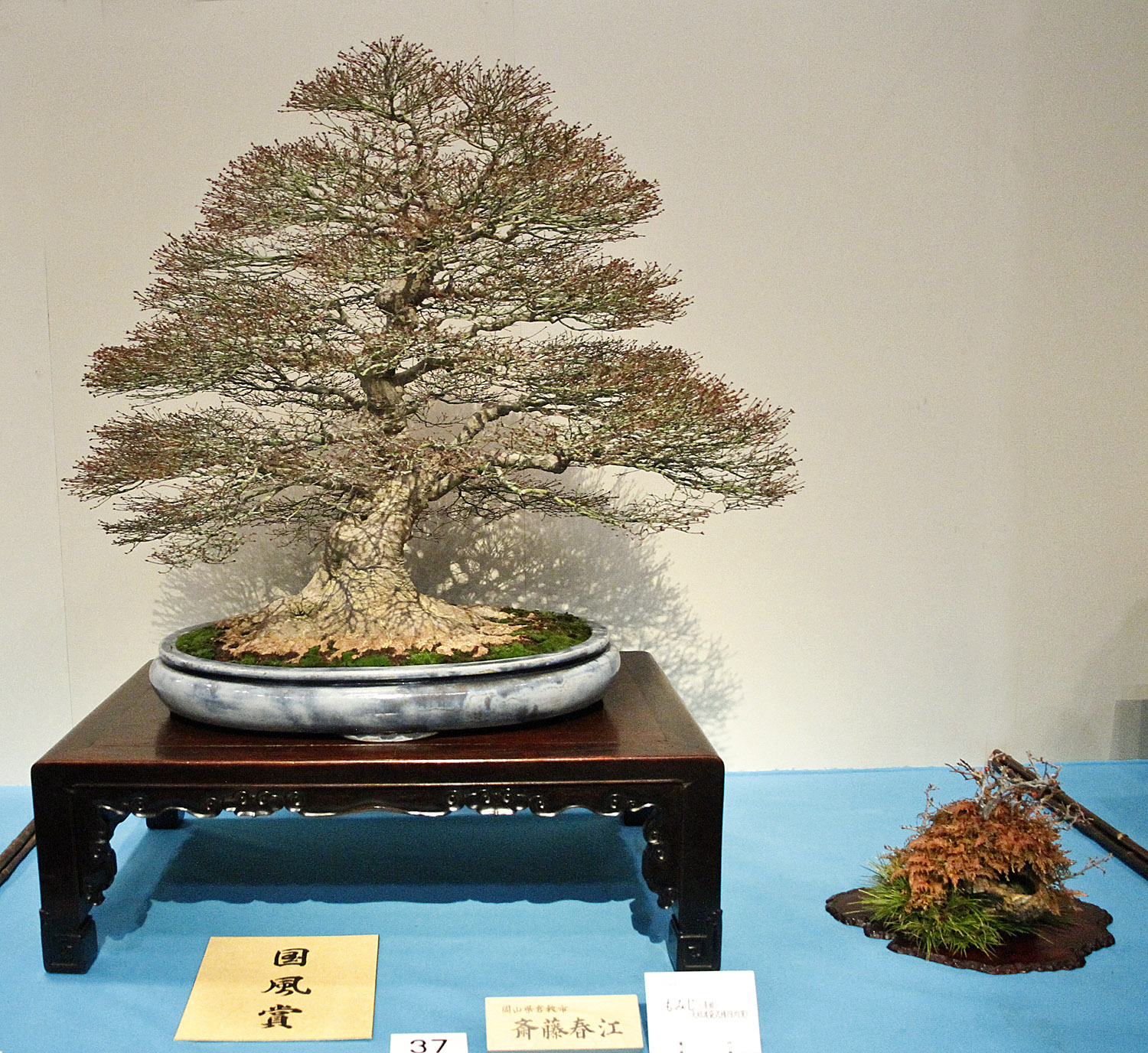
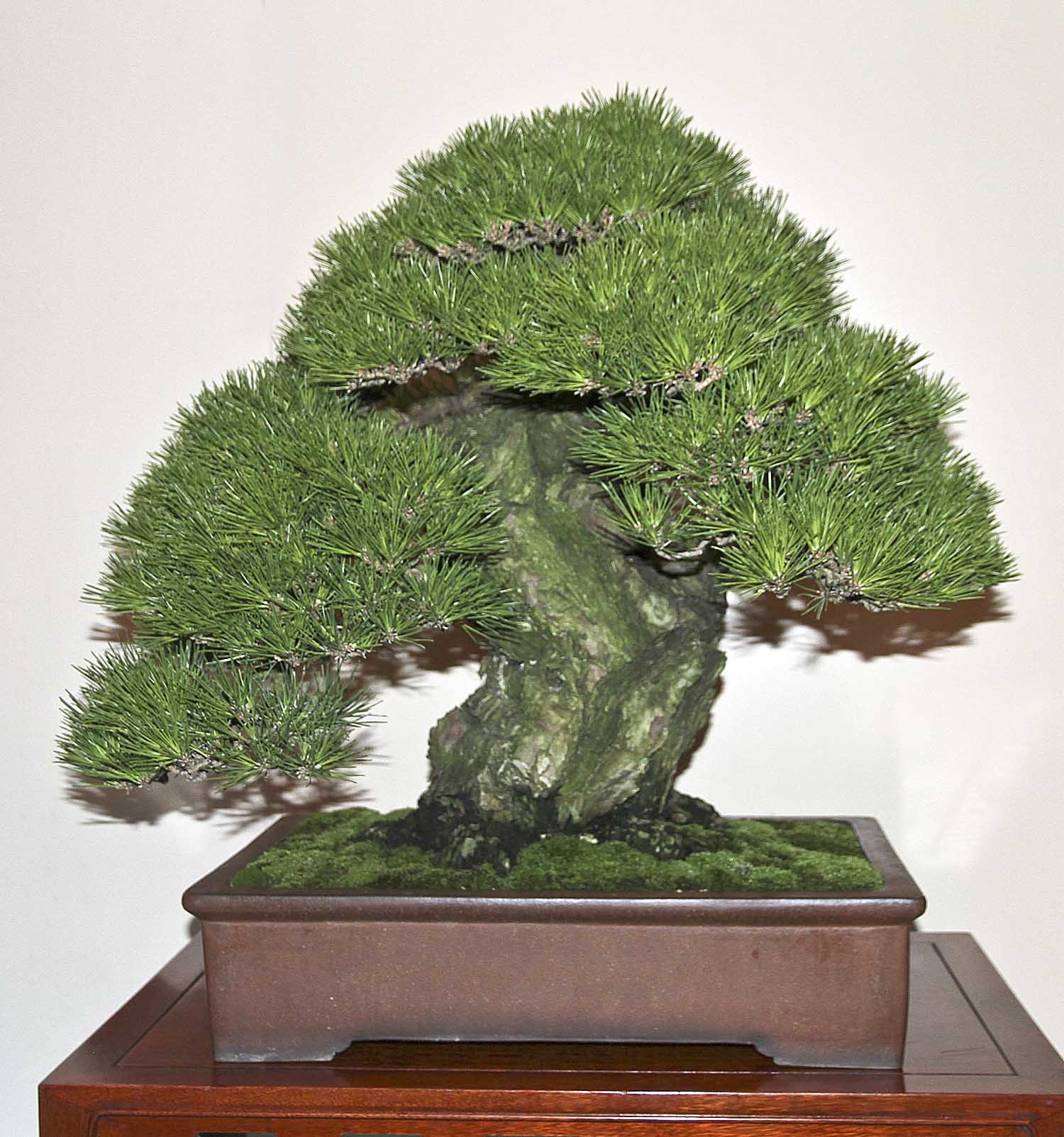
Part 2 also had 170 displays, 26 important bonsai masterpieces and 55 medium size bonsai. There were again only 5 shohin bonsai compositions. The judges selected 6 Kokufu prize bonsai for Part 2.

 Image

Kokufu Sho Award, Japanese five-needle pine, Pinus parviflora


Image

Kokufu Sho Award, Japanese black pine, Pinus thunbergii


 Image

Kokufu Sho Award, Japanese flowering apricot, Prunus mume


 Image

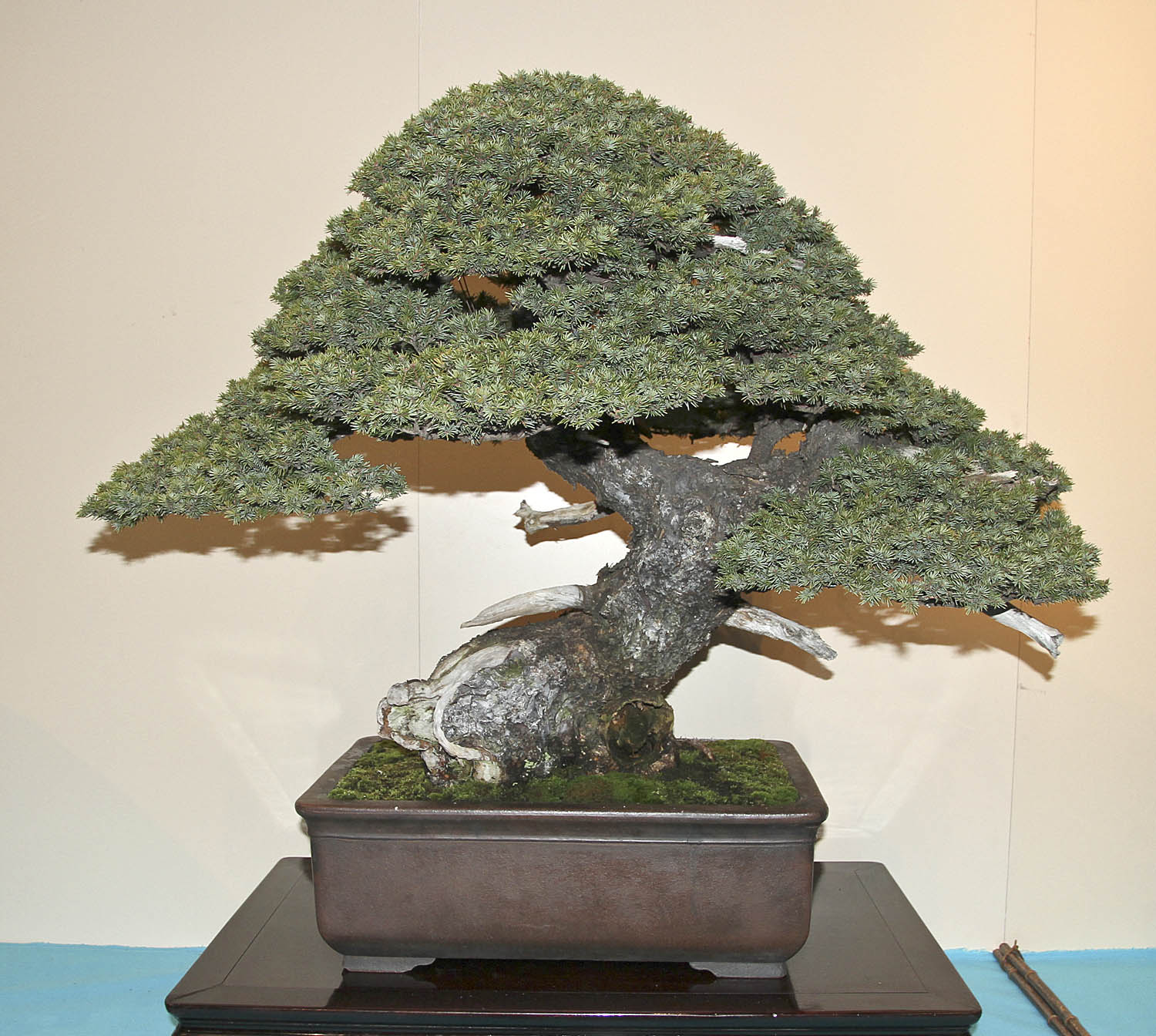
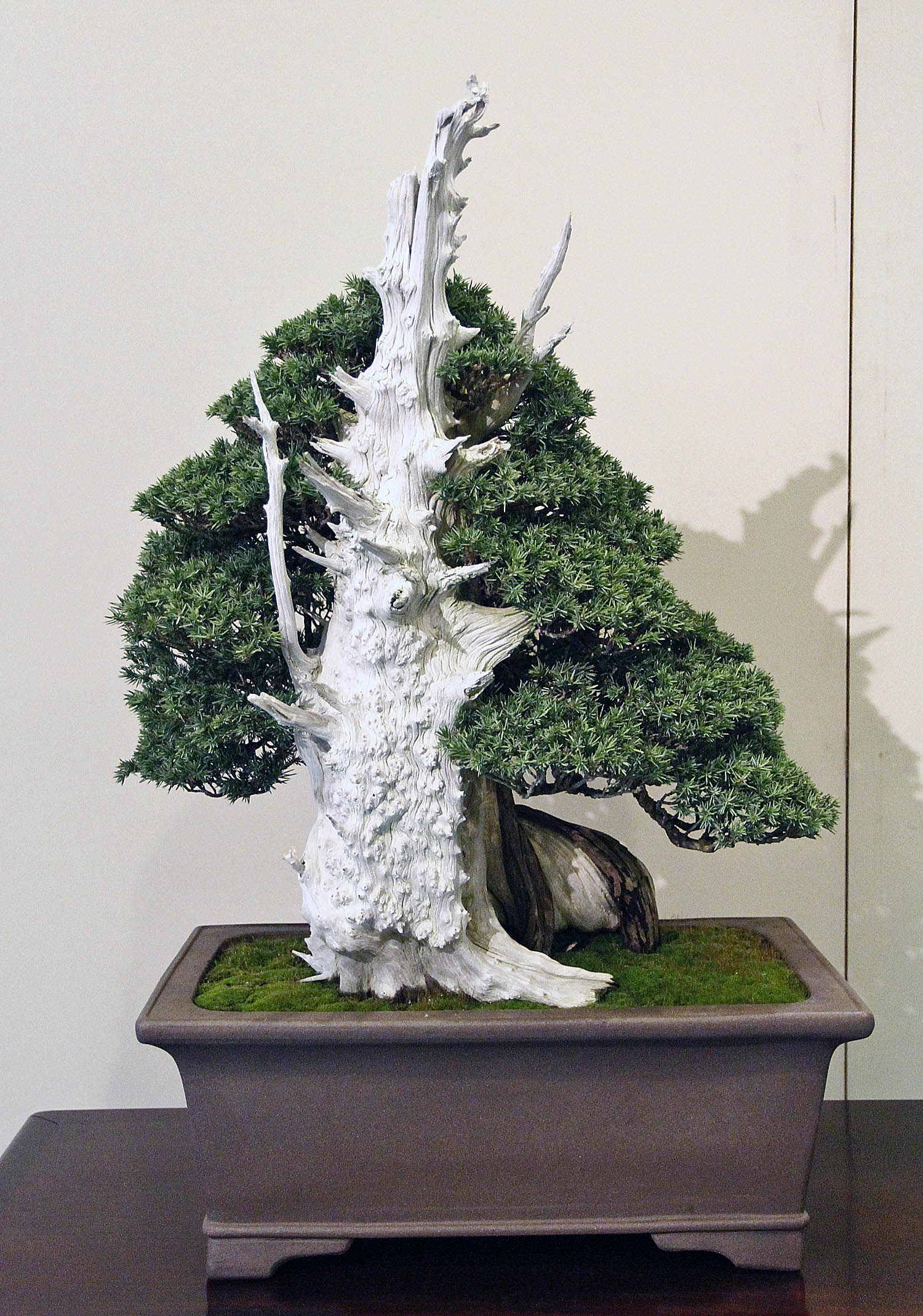
Kokufu Sho Award, Sargent juniper, Juniperus chinensis var. sargentii ‘Shimpaku’


 Image

Kokufu Sho Award, Dwarf star jasmine, Tracelospermum asiaticum ‘Nana’


 Image

Kokufu Sho Award, Kiyo Hime Japanese maple, Acer palmatum ‘Kiyo Hime’


Both parts of the exhibition were superb this year, however, personally speaking, I liked Part 2 best. Perhaps because one of the finest masterpiece Kiyo Hime Japanese maple bonsai was on display. It’s the first time I’ve seen this tree. No, actually I saw it at Mansei-en Bonsai Garden in Omiya Bonsai Village on Friday as it was being prepared for the switch out on Saturday. This cultivar is one of my favorites.

Image

Ezo spruce, Picea glehnii


Again there were pink lights against the bright blue table coverings with the addition of dramatic spot lighting which did not make it easy to photograph. But below are a few of the bonsai which made an impression on me. Enjoy their beauty!

Image

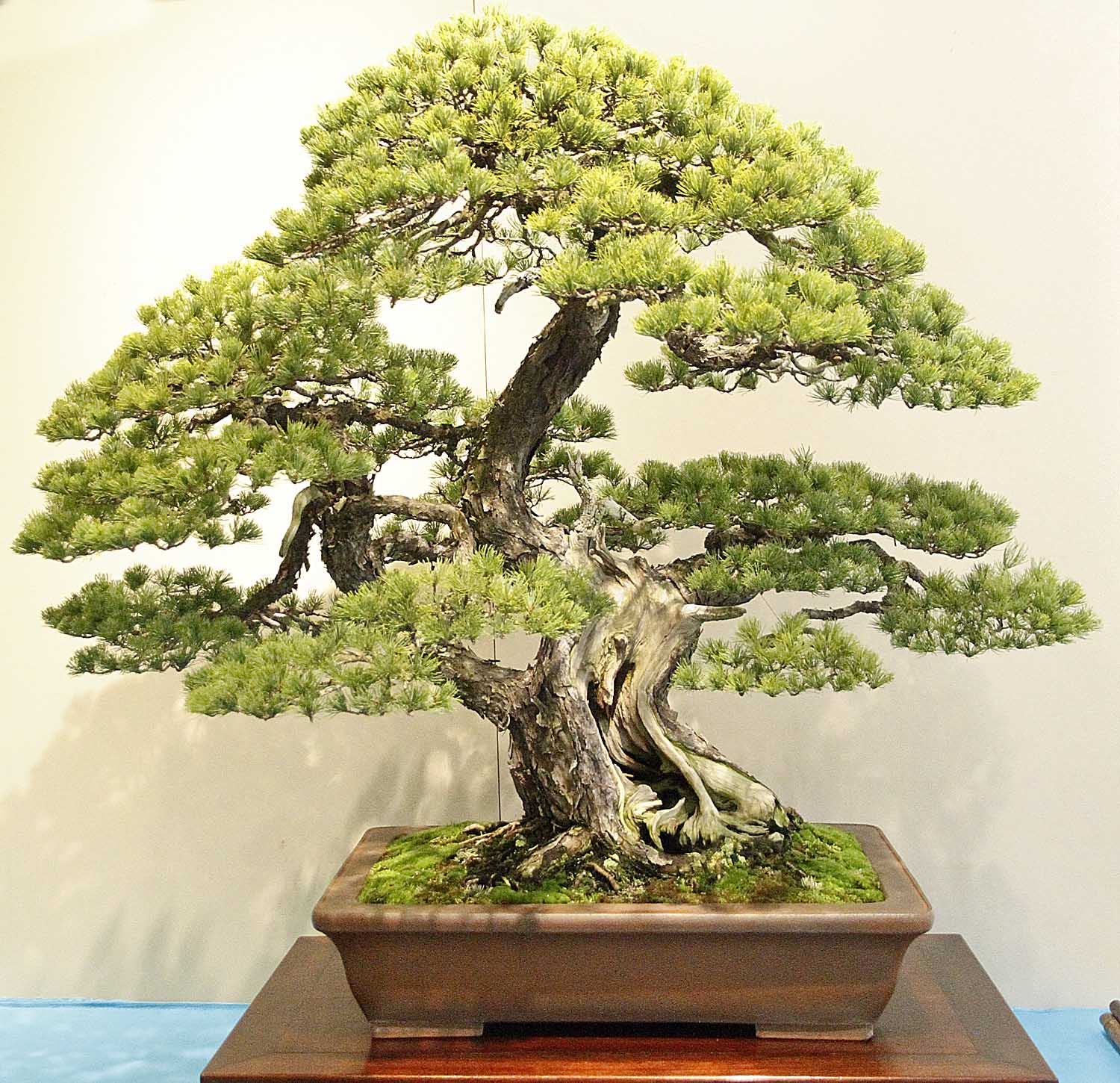
Japanese five-needle pine, Pinus parviflora 


Image

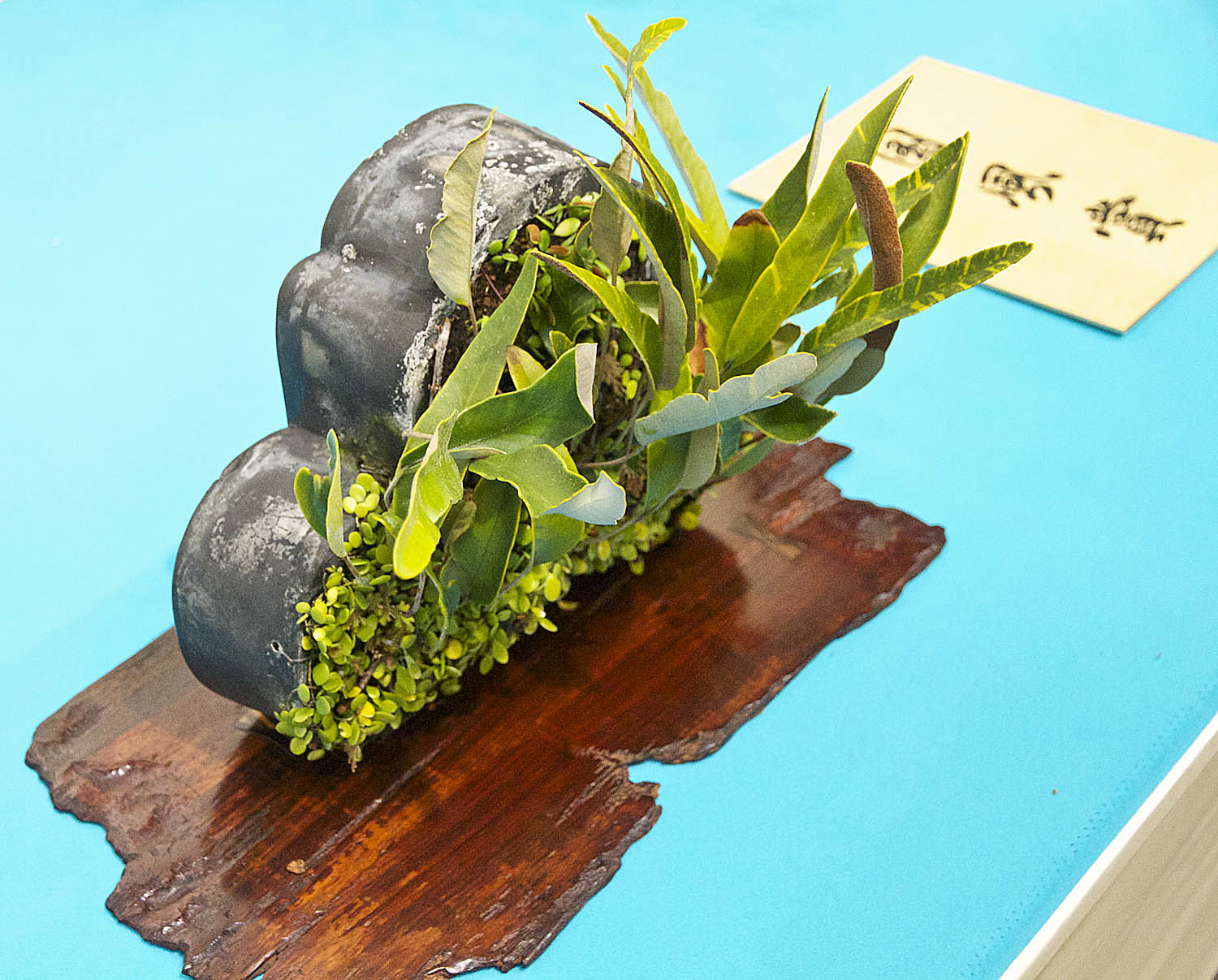
Companion planting


Image

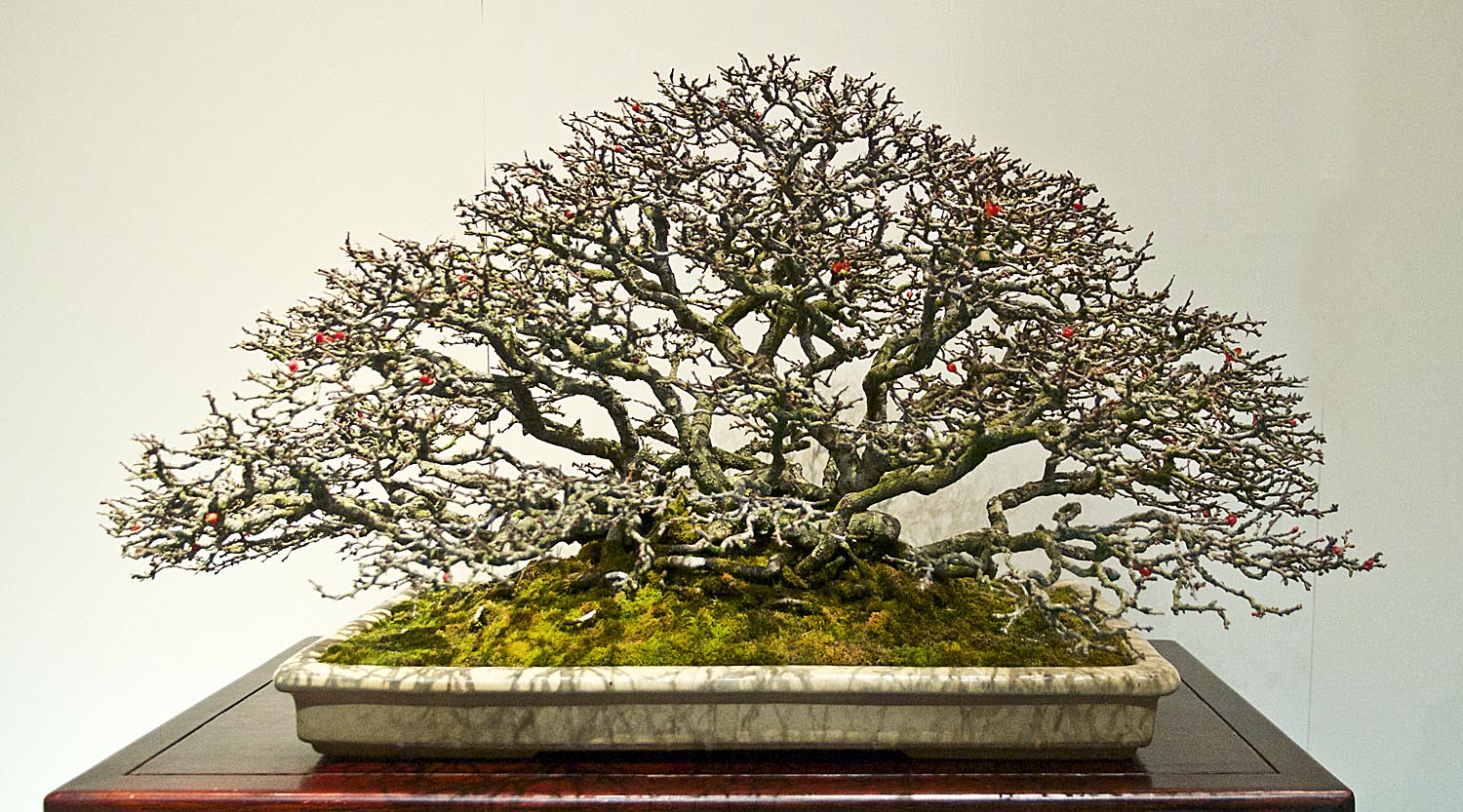
Chojubai flowering quince, Chaenomeles japoinica ‘Chojubai’


Image

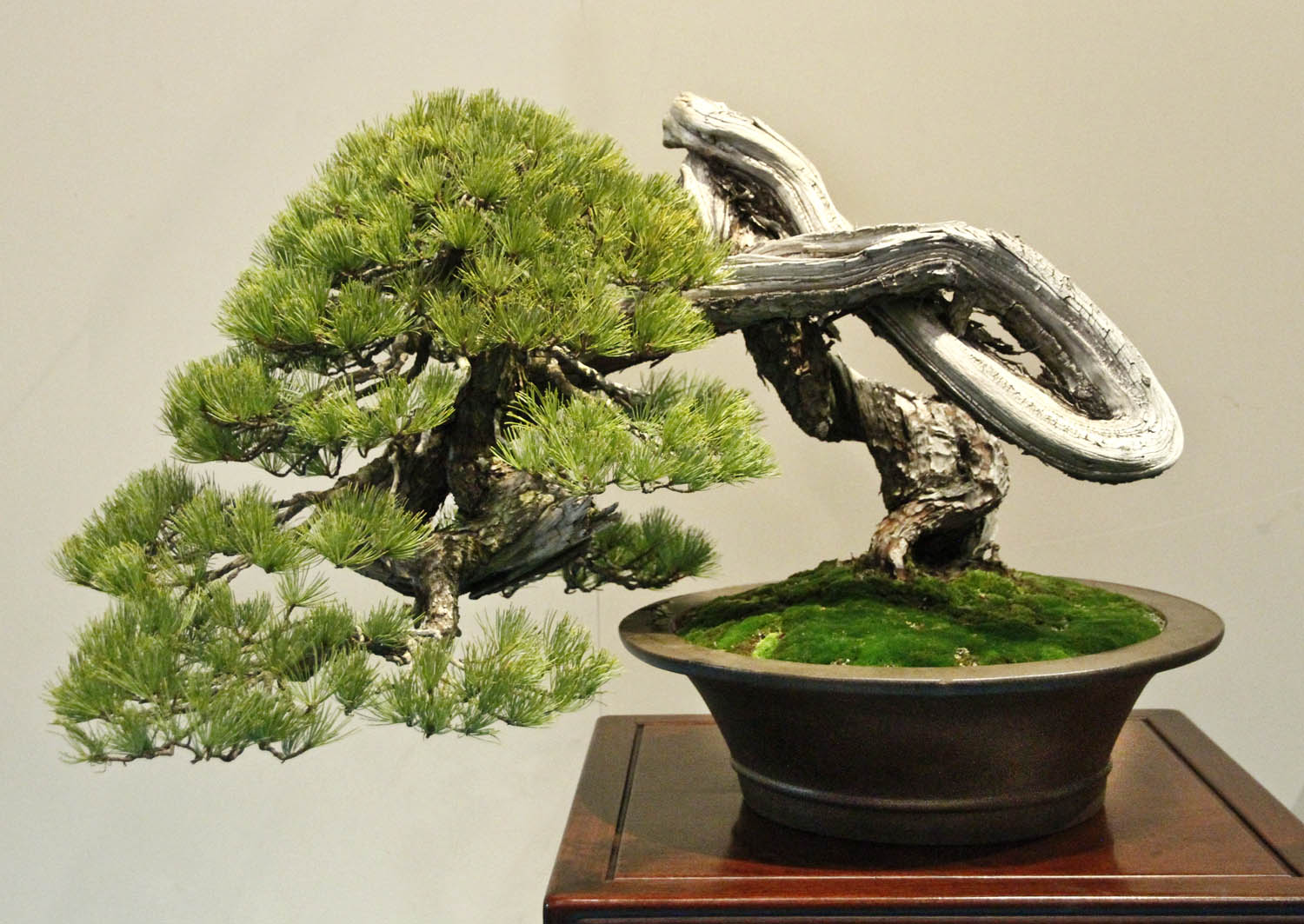
Japanese five-needle pine, Pinus parviflora


Image

Korean hornbeam, Carpinus turczaninovii


Image

Japanese five-needle pine, Pinus parviflora


Image

Companion planting


Image

Trident maple, Acer buergerianum, yes, that’s an orange container


Image

Trident maple, Acer buergerianum, yup, another orange container


Image


Shohin bonsai composition


Image


Sargent juniper, Juniperus chinensis var. sargentii ‘Shimpaku’


Image

Companion planting


Image


Japanese black pine, Pinus thunbergii


Image


Dwarf stewartia, Stewartia monadelpha


Image


Needle juniper, Juniperus rigida


Image


Trident maple,  Acer buergerianum


Image


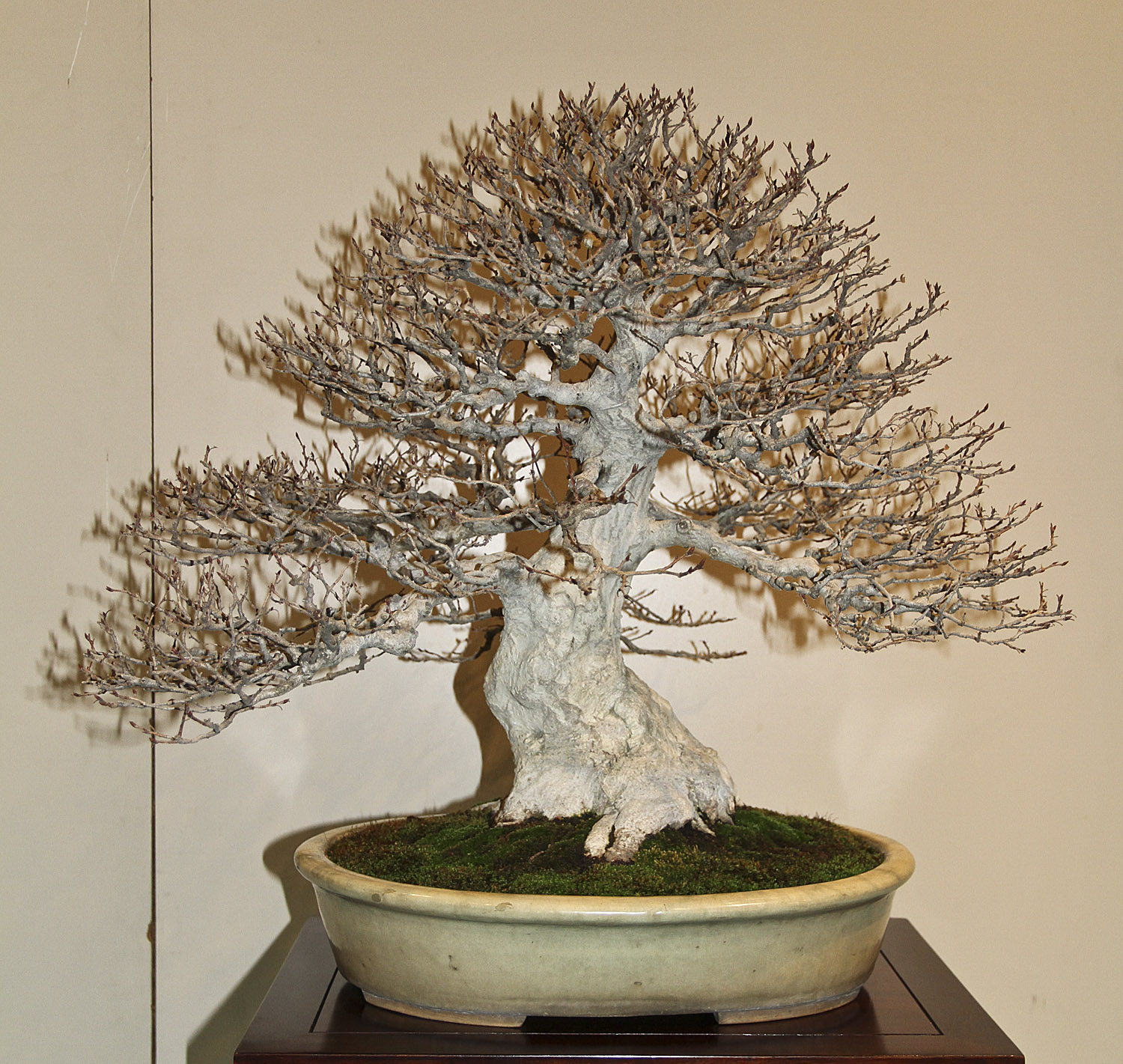
Japanese grey-bark elm, Zelkova serrata


Image


Japanese garden juniper, Juniperus procumbens


Japan Suiseki Exhibition at the Tokyo Metropolitan Art Museum

Image

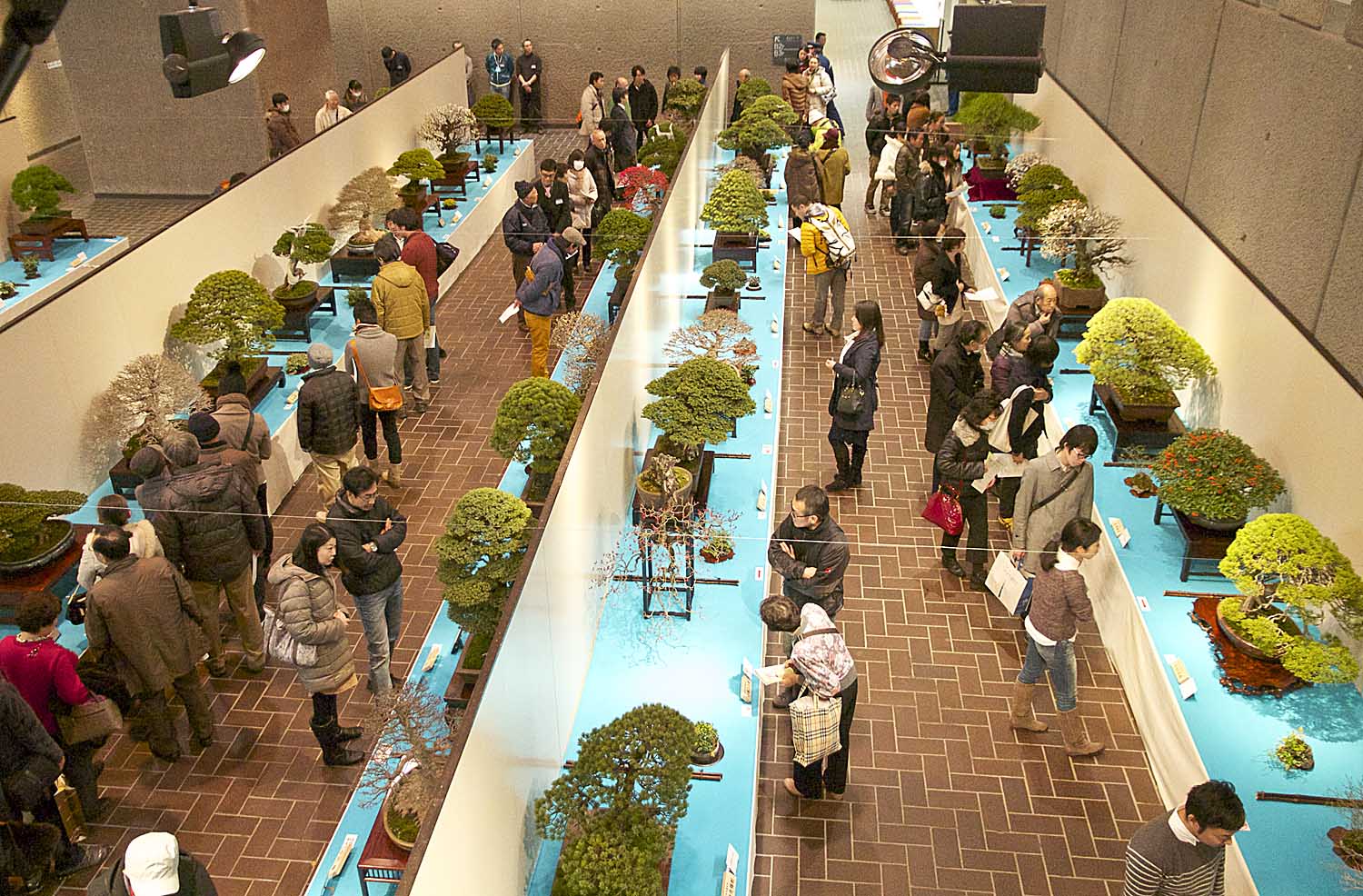
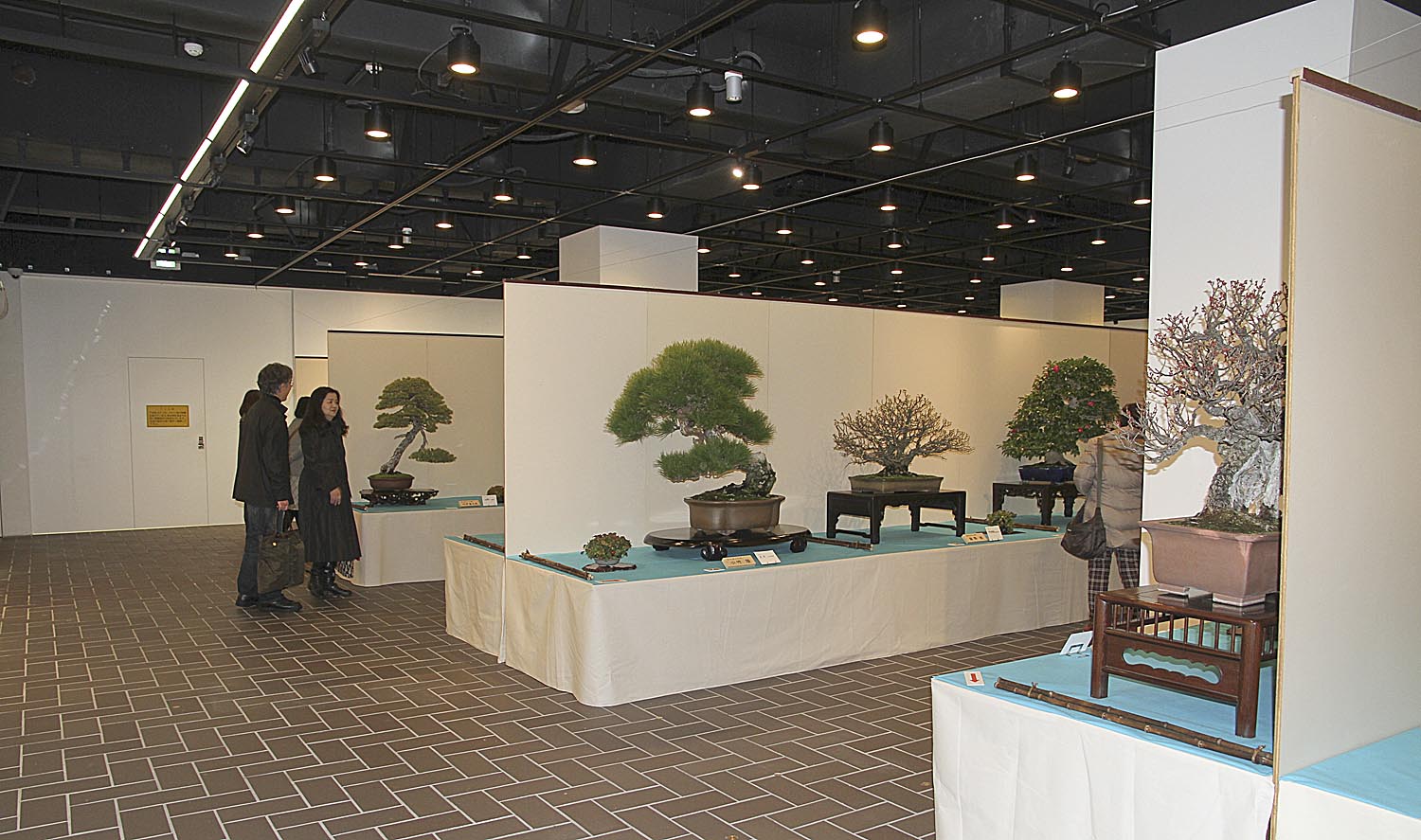
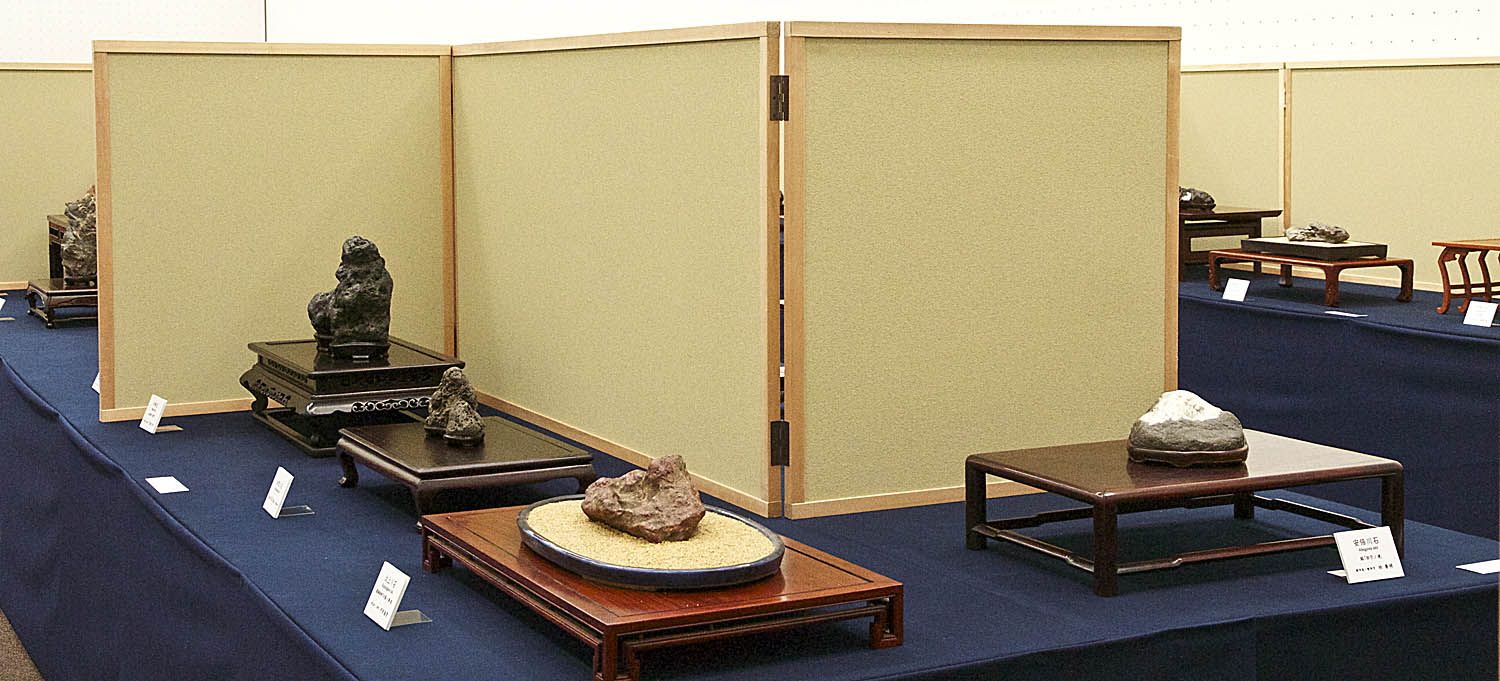
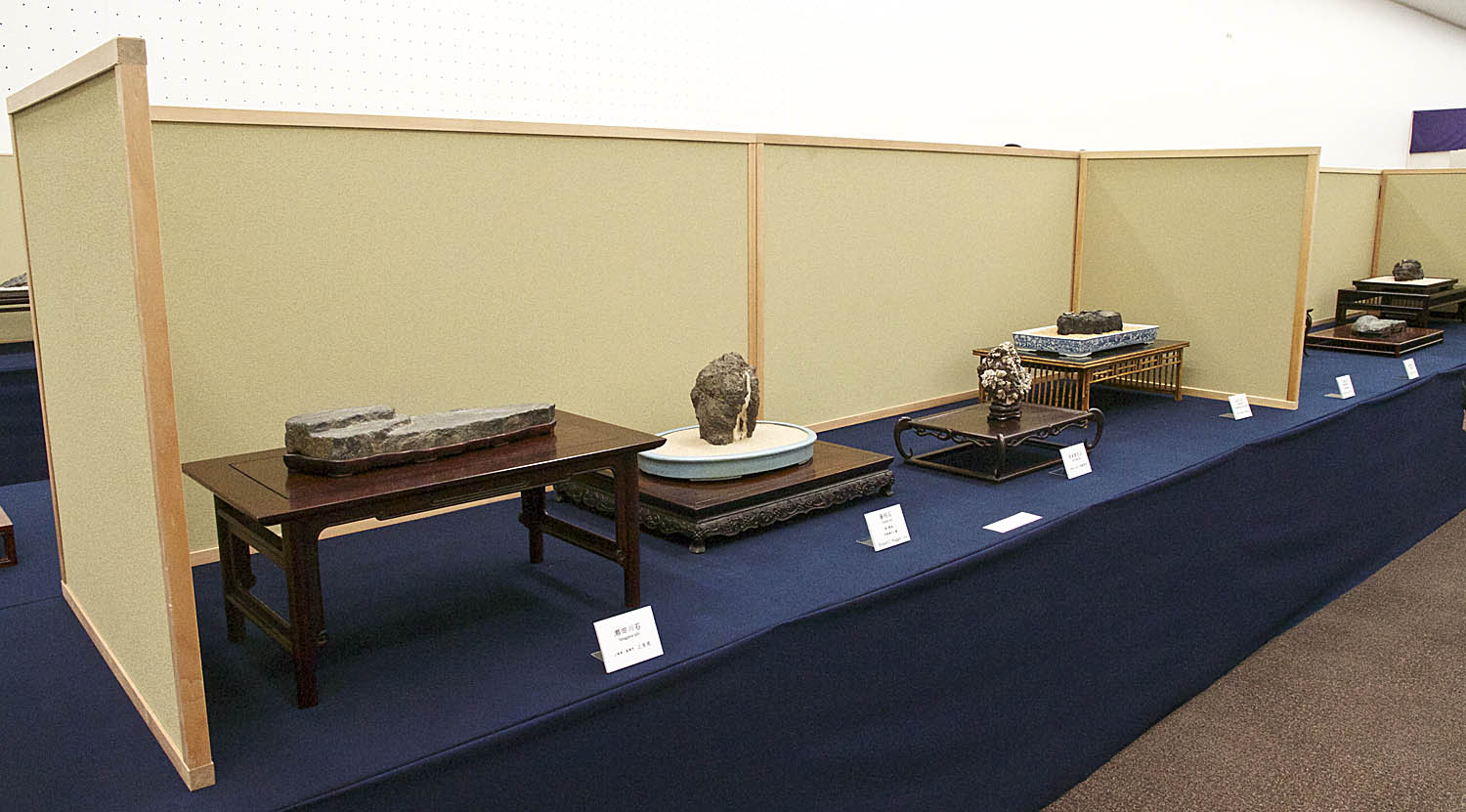
History was made on February 9-13, 2014 when the newly reorganized Nippon Suiseki Exhibition held the first ever suiseki exhibition at the Tokyo Metropolitan Art Museum. Under the leadership of Kunio Kobayashi (Chairman) and Seiji Morimae (Secretary General), the event was held concurrently during Part 2 of the Kokufu Bonsai Exhibition so people could enjoy both arts in one venue (separate floor galleries). This brings a new era to the combination, appreciation and promotion of bonsai and suiseki.

Image

Image

Image

Image

Image

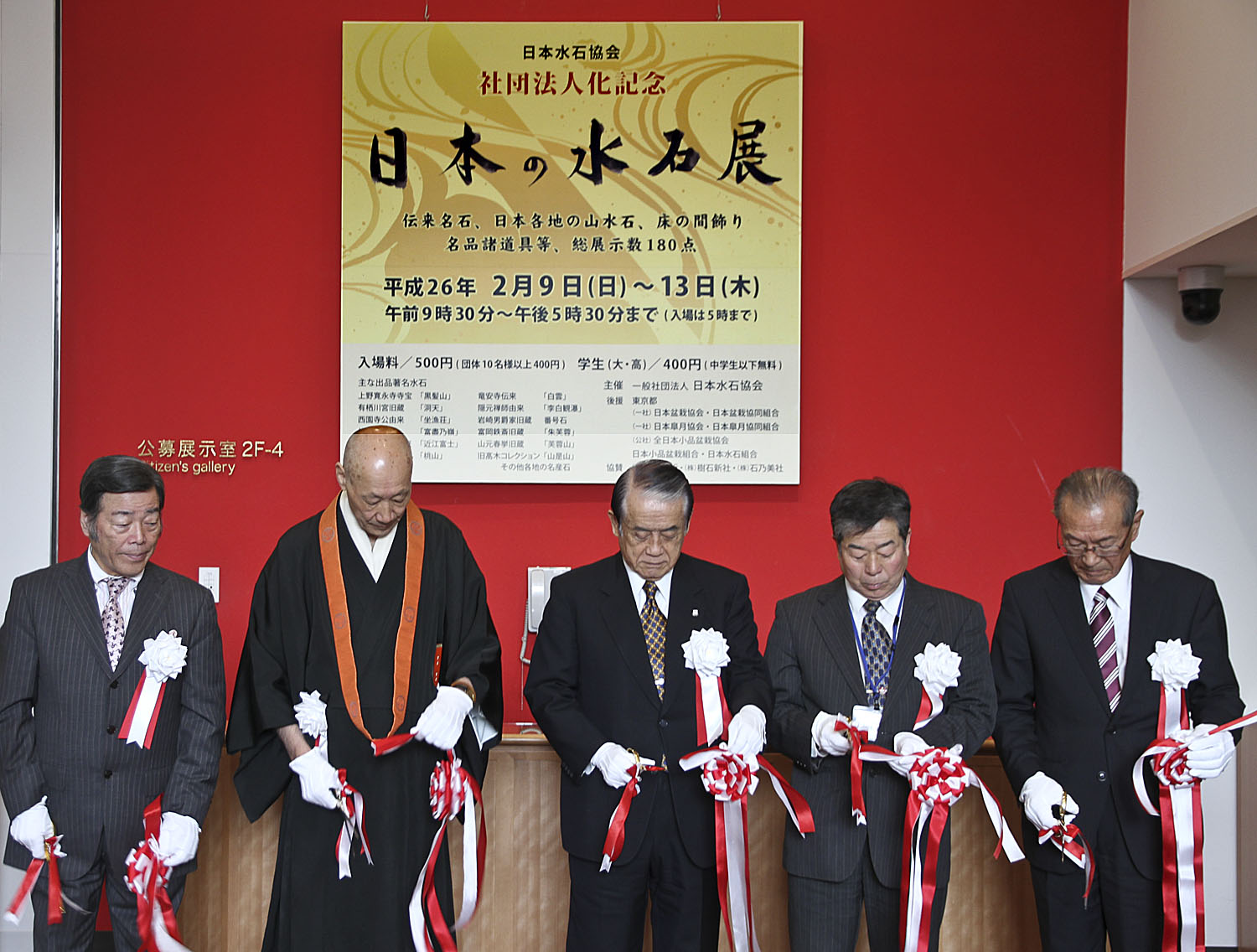
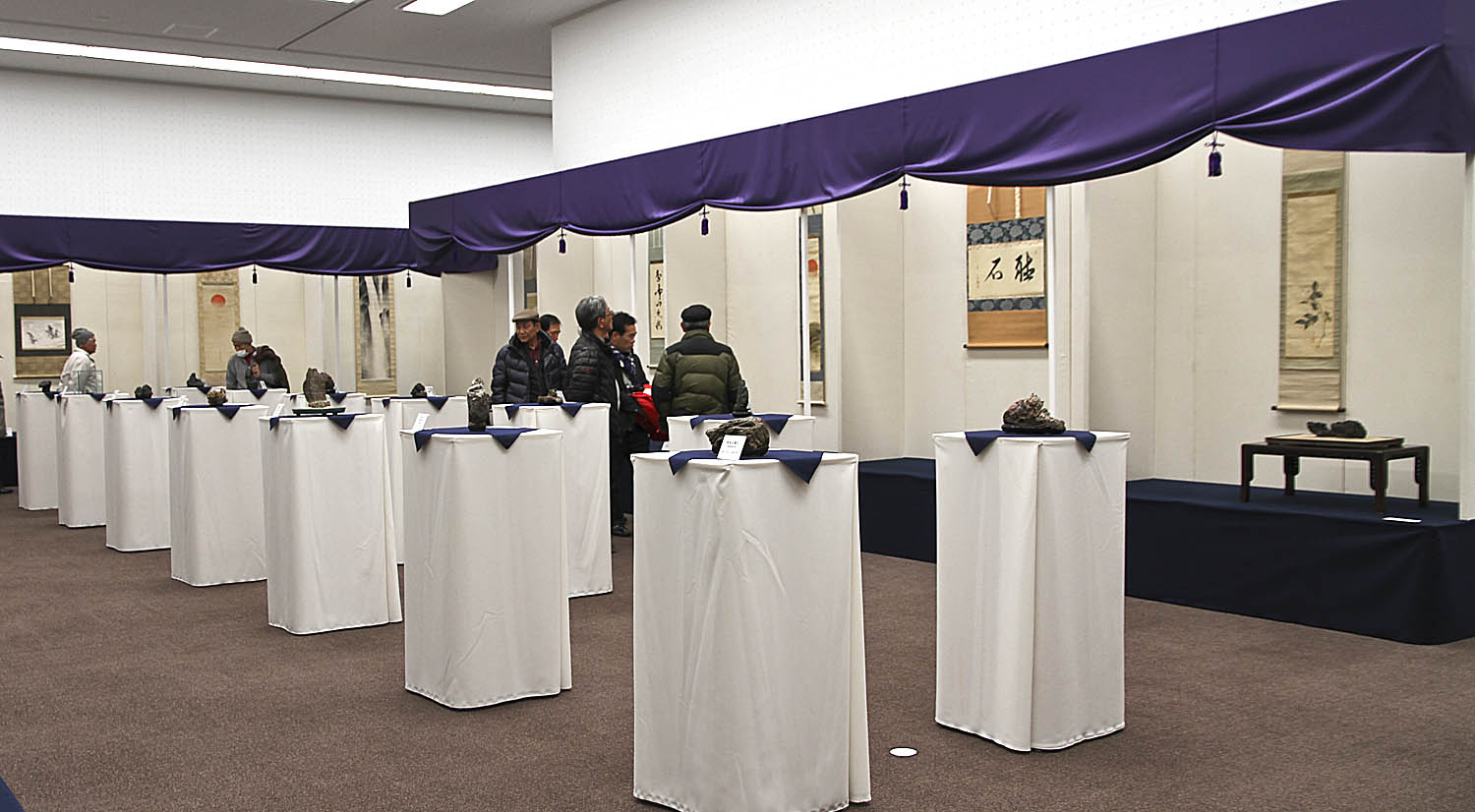
As often the case, the opening ceremony was a colorful event with a few speeches from prominent figure heads and officers. Seiji Morimae was the MC and did an excellent job keeping the event moving along. After the formal ribbon cutting ceremony they lead visitors into the four gallery exhibition containing some of the most famous suiseki in Japan including a rare treasured suiseki which has not been seen outside a Ueno temple for over 45 years.

Image

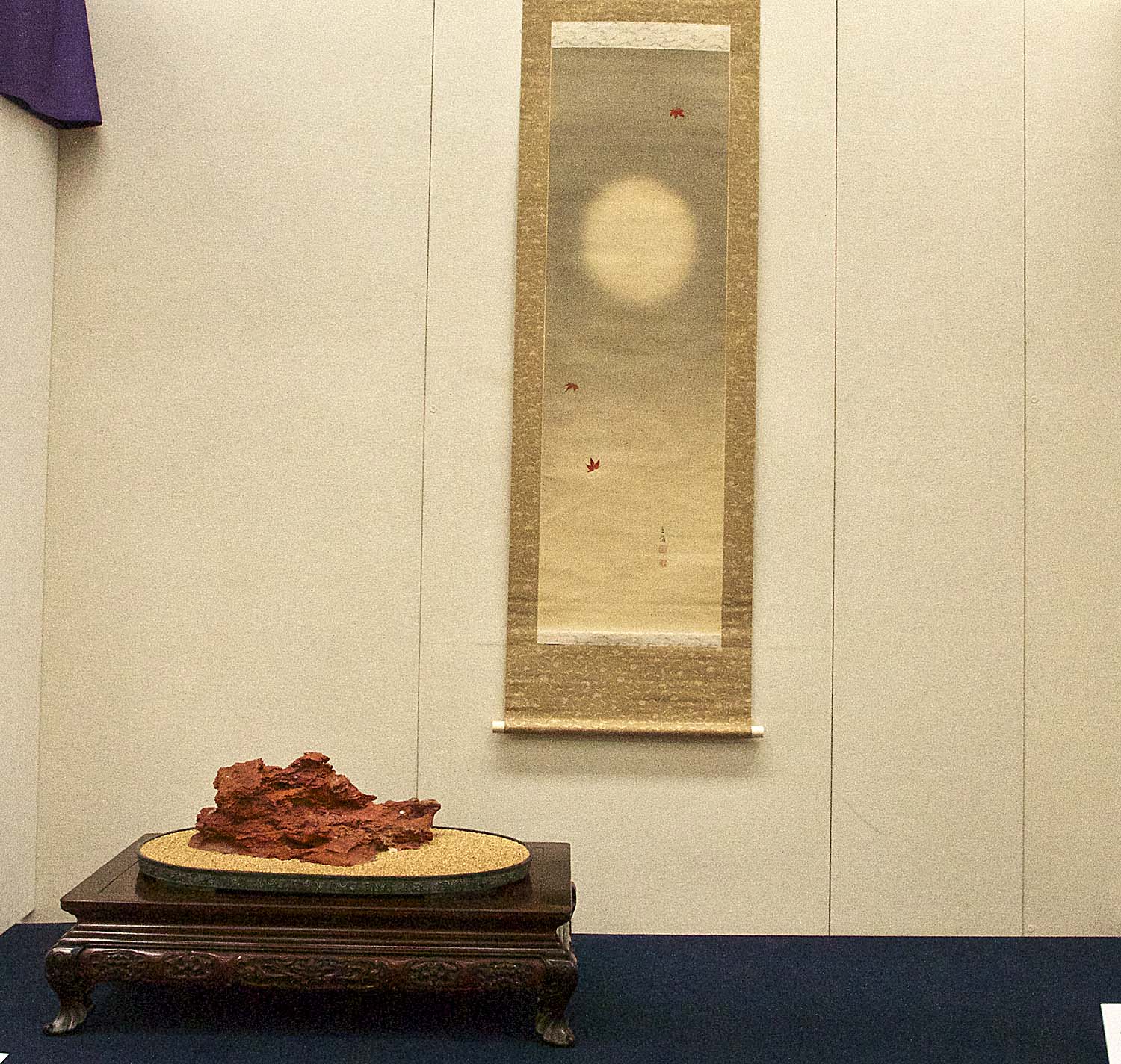
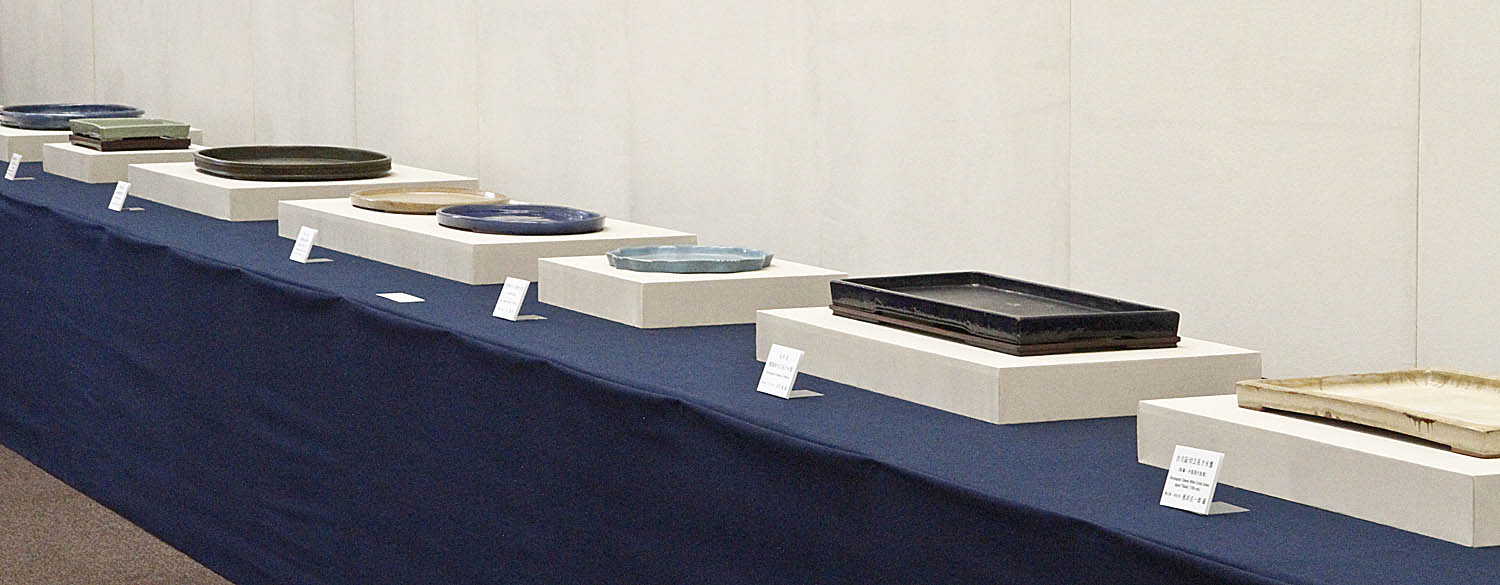
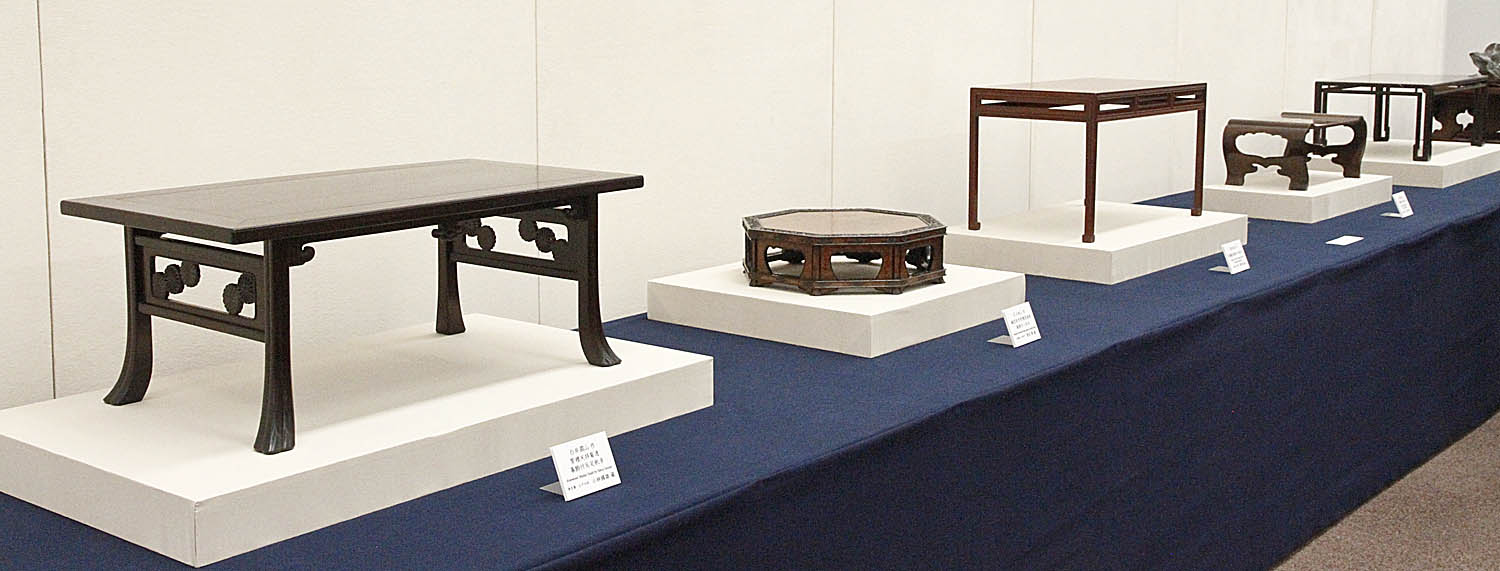
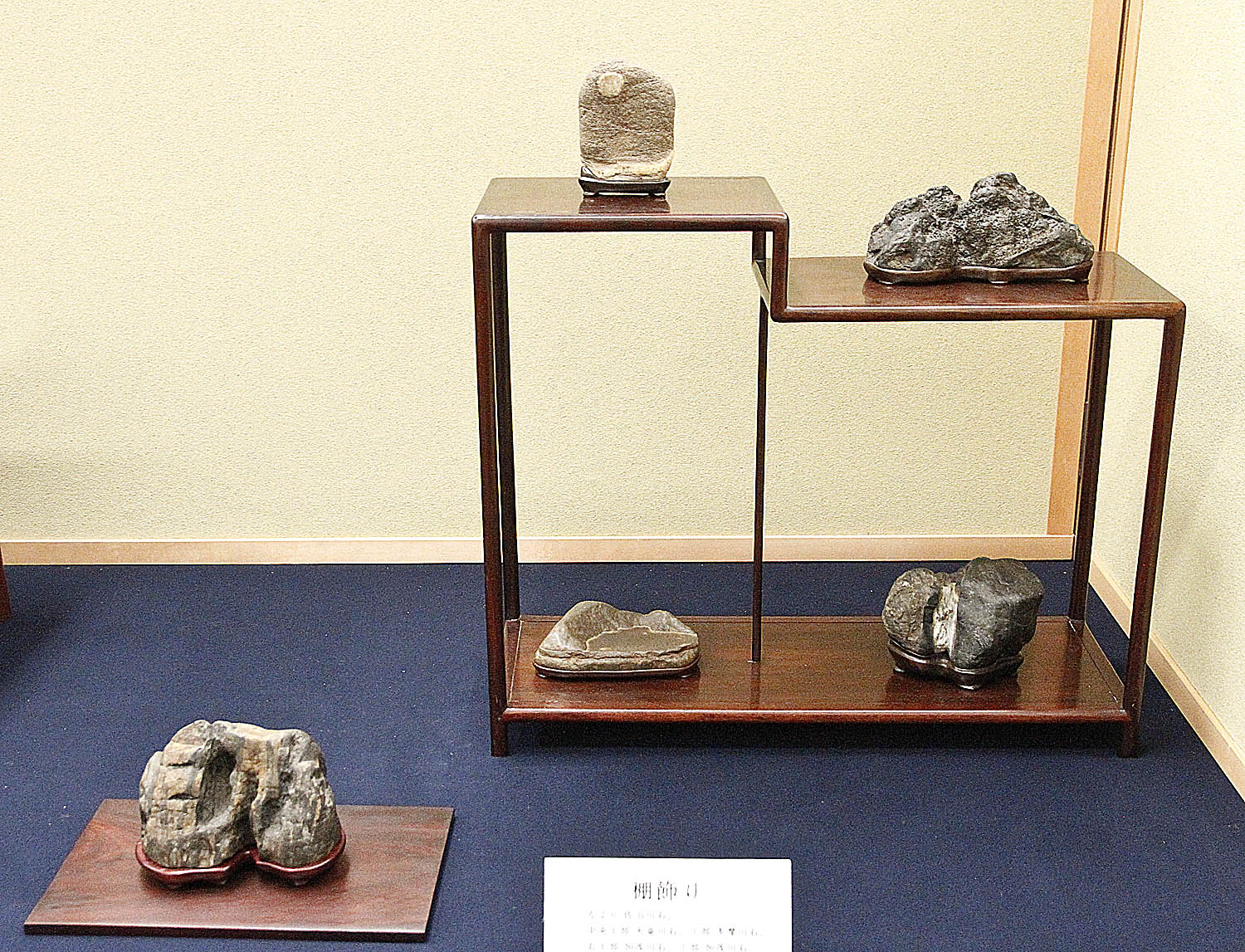
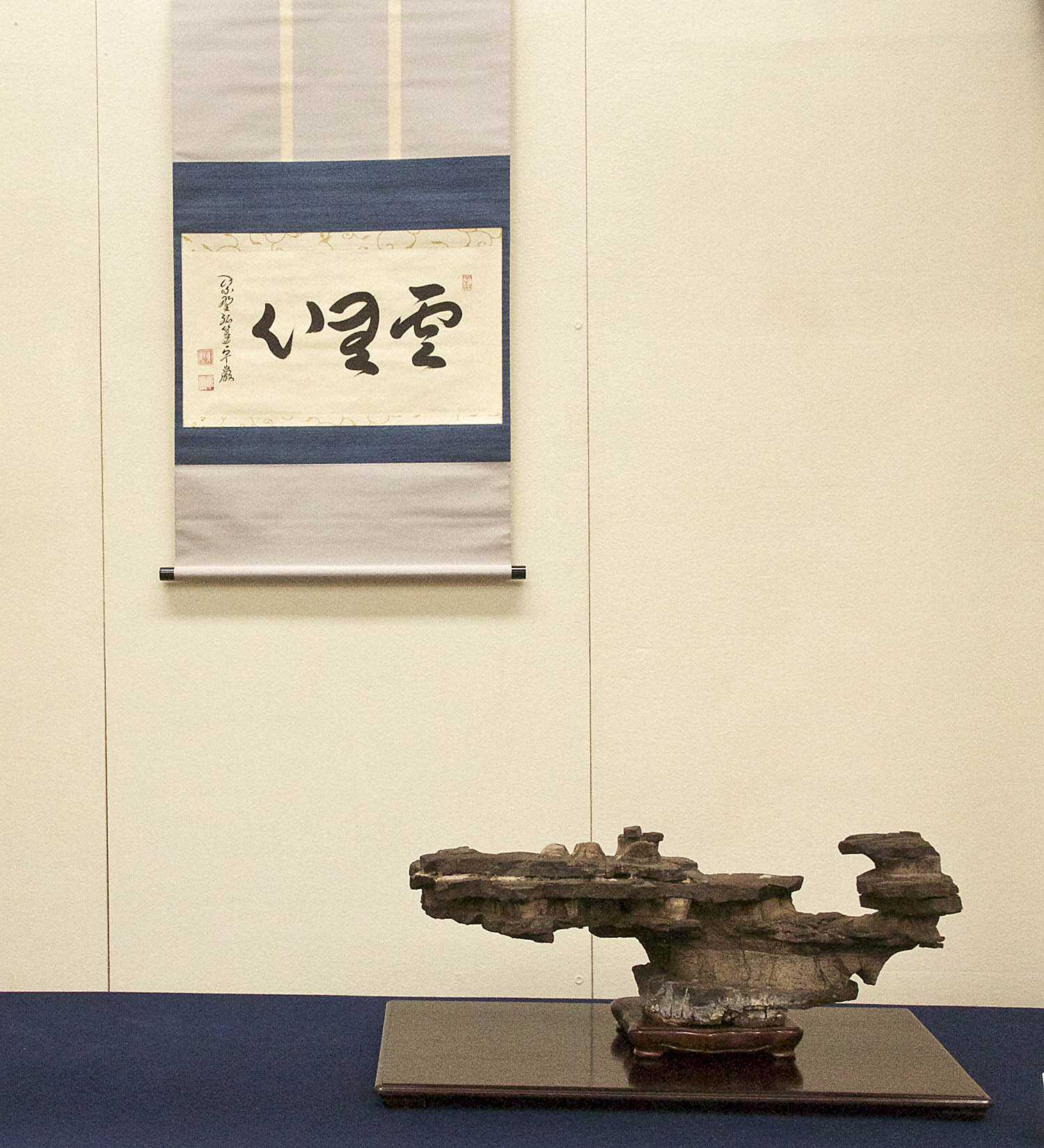
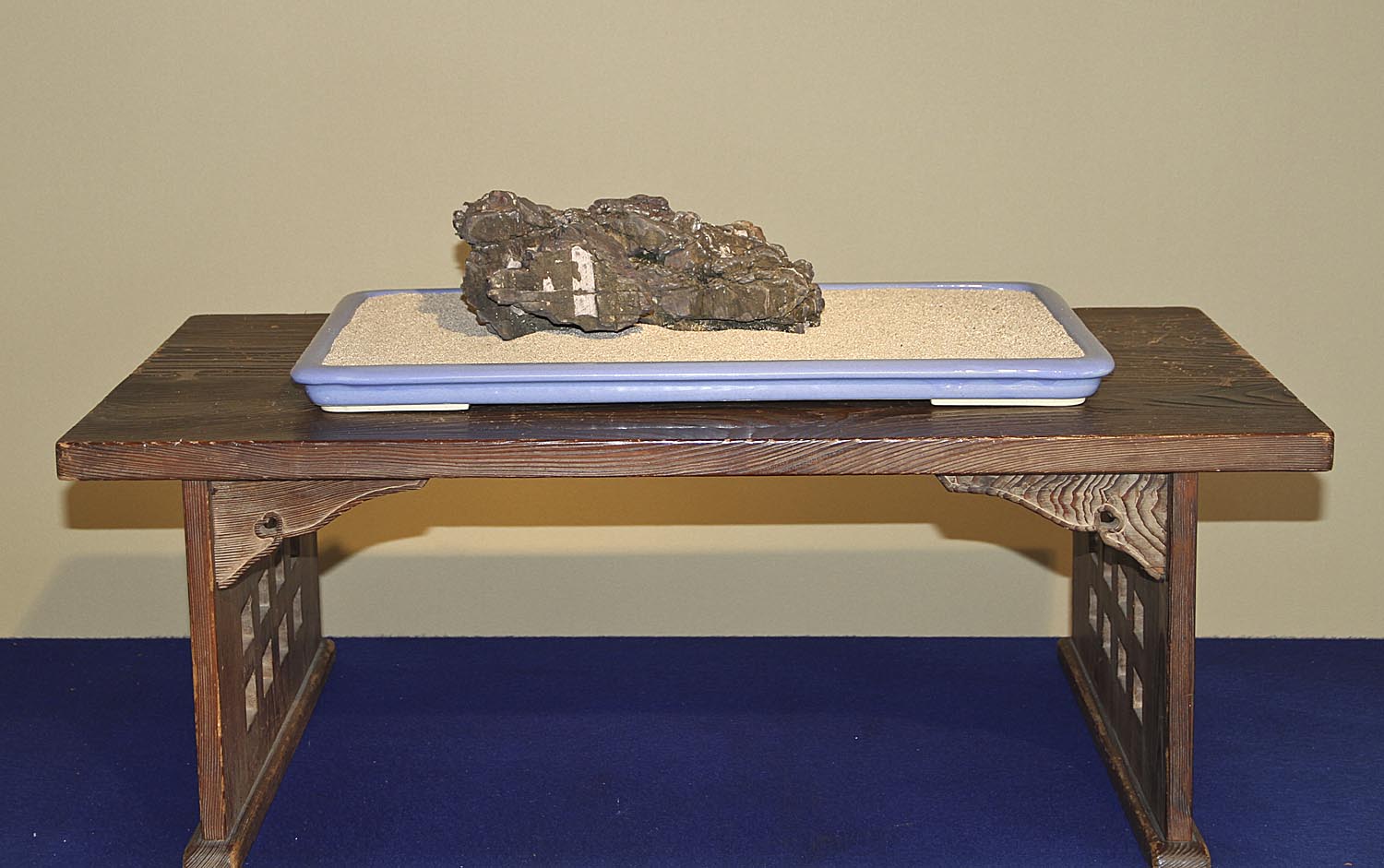
Included in the Japan Suiseki Exhibition were 5 special exhibits, 28 tokonoma alcove displays featuring long elegant scrolls, 135 general exhibits and a display of 15 suiseki accessories of historic display tables and water basins. Soil and water were not permitted in this second floor museum gallery so companion plants were not displayed with the stones and the water basins were shown with dry sand, which is unusual for Japanese suiseki exhibitions. Actually, the lack of companion plants put more focus on the stones.

Image

Image

Image

Image

Image

Image

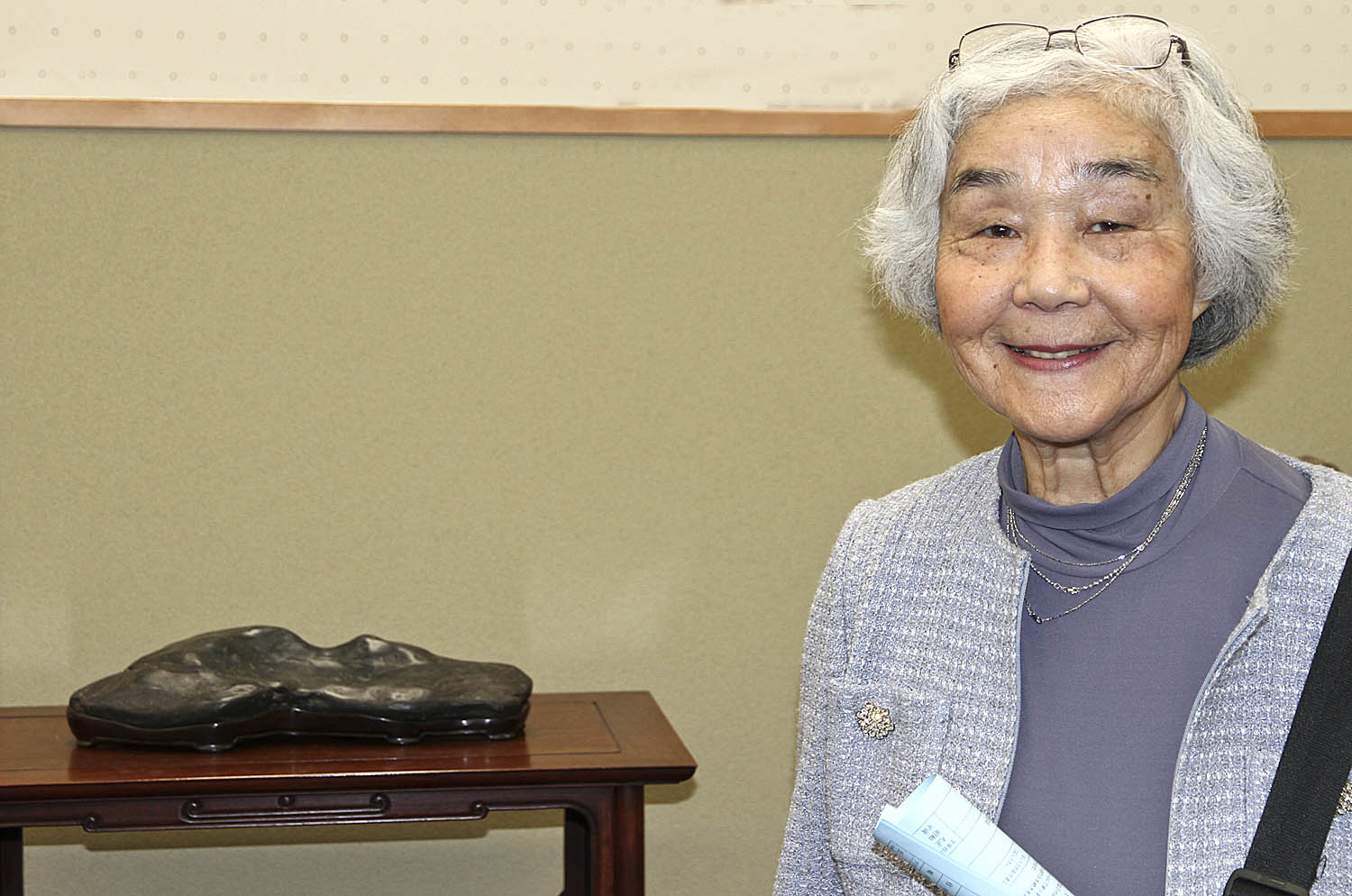
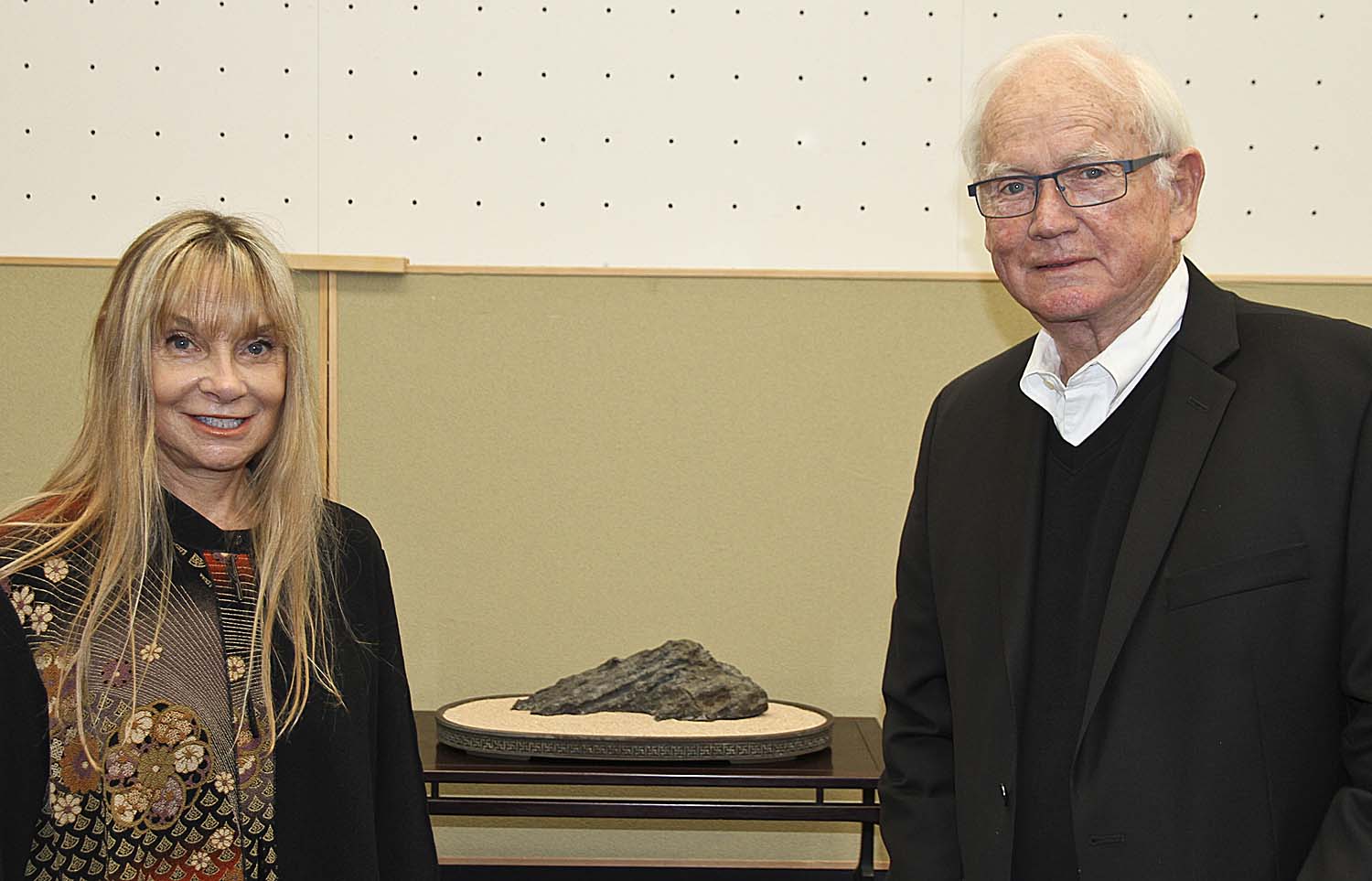
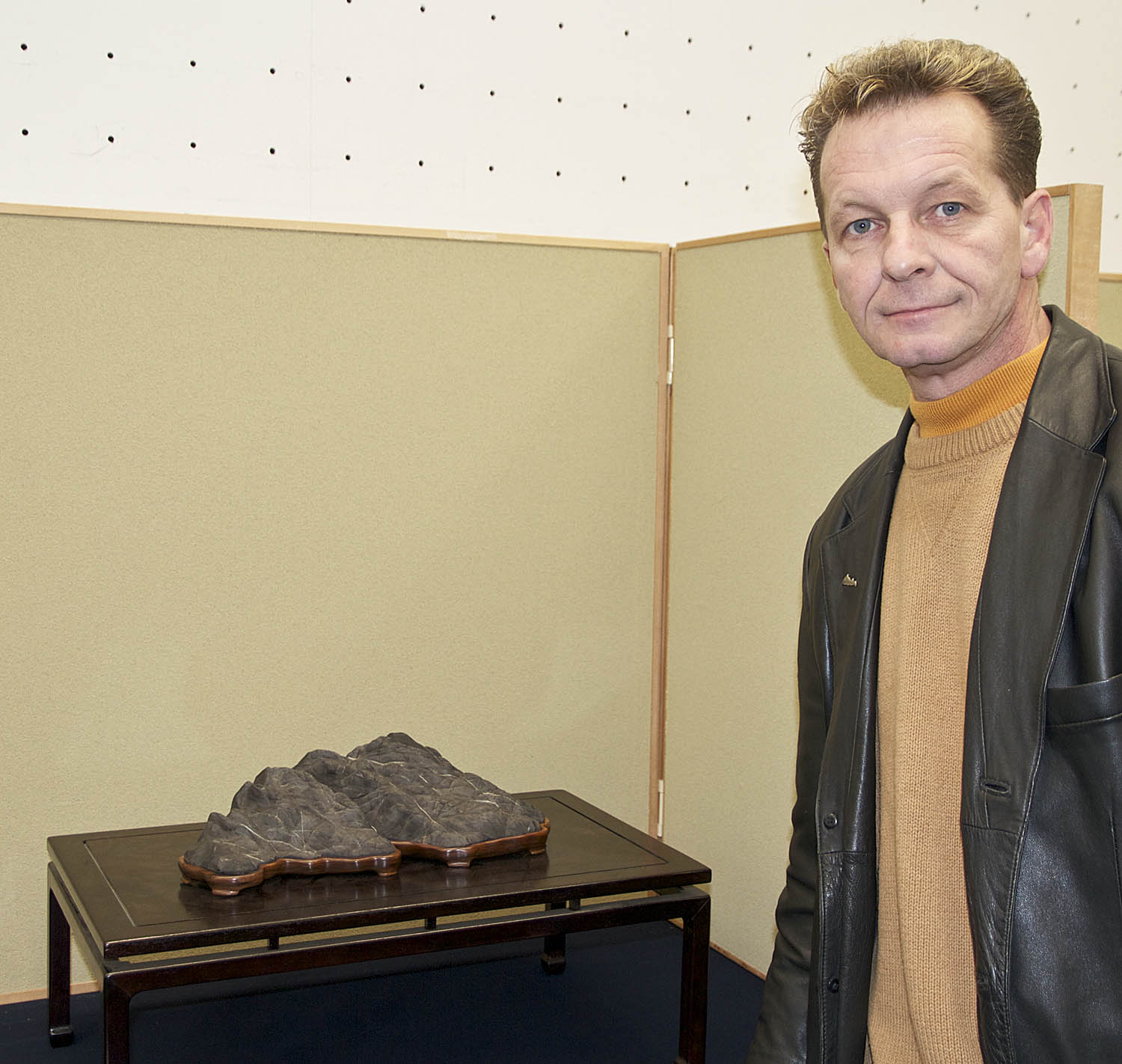
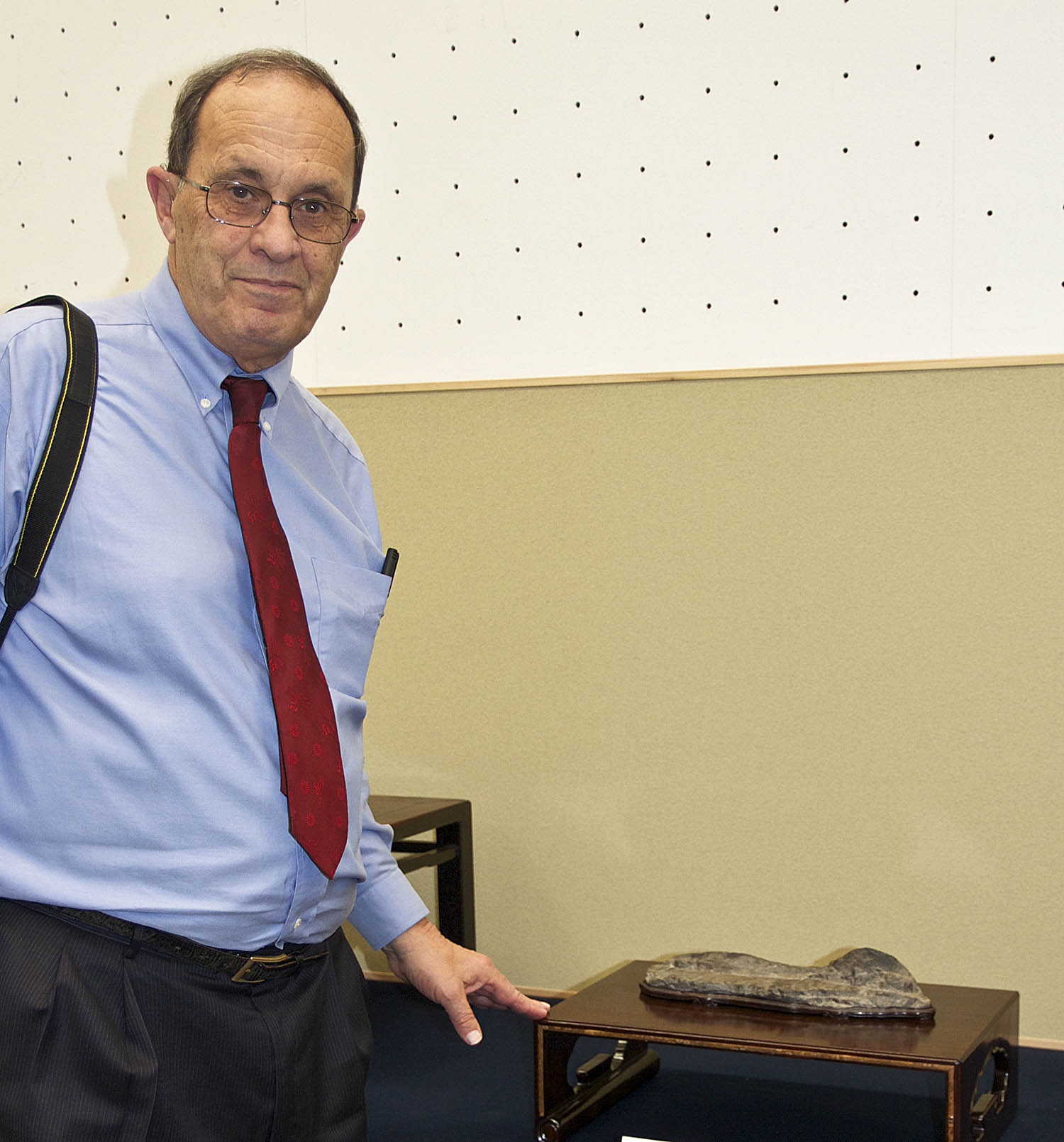
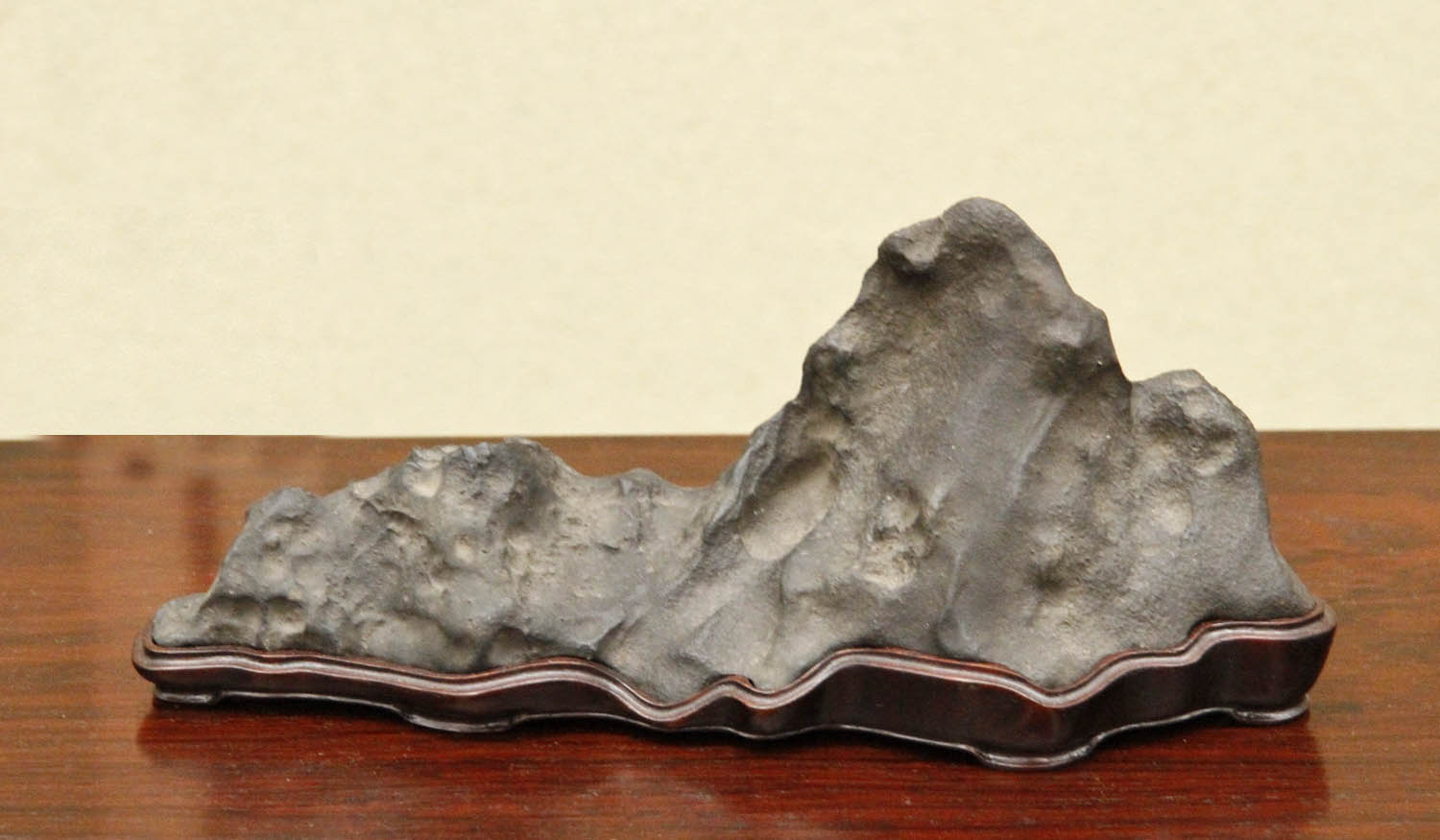
Among the general exhibits were 10 prominent foreign suiseki lover’s displays of some of their finest Japanese suiseki: Dato K. H. Chua (Malaysia), David J. Sampson (England) and Martin Pauli (Switzerland).

The foreign suiseki exhibitors from the United States were:

Image

Hideko Metaxas, California

Kamuikotan Ishi

Image

Larry & Nina Ragle, California

Sajigawa Ishi

Image

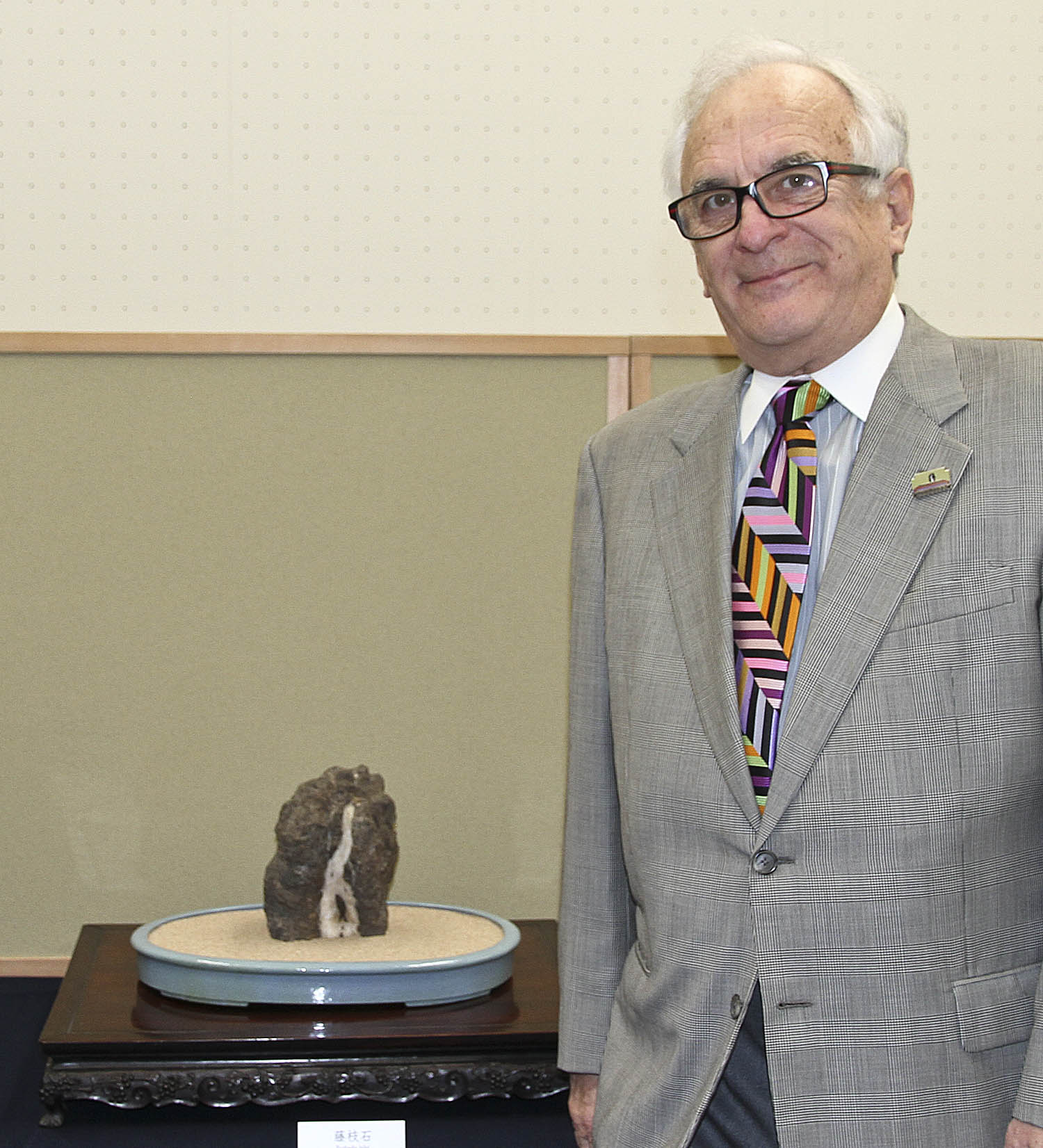
Ronald C. Maggio, New York

Fujieda Ishi

Image

Sean L. Smith, Pennsylvania

Seijaku Ishi

Image

Tom Elias, California

Setagawa Ishi

Image

Wil, New York, now living in Tokyo

Chikuzen Maguro Ishi

Image

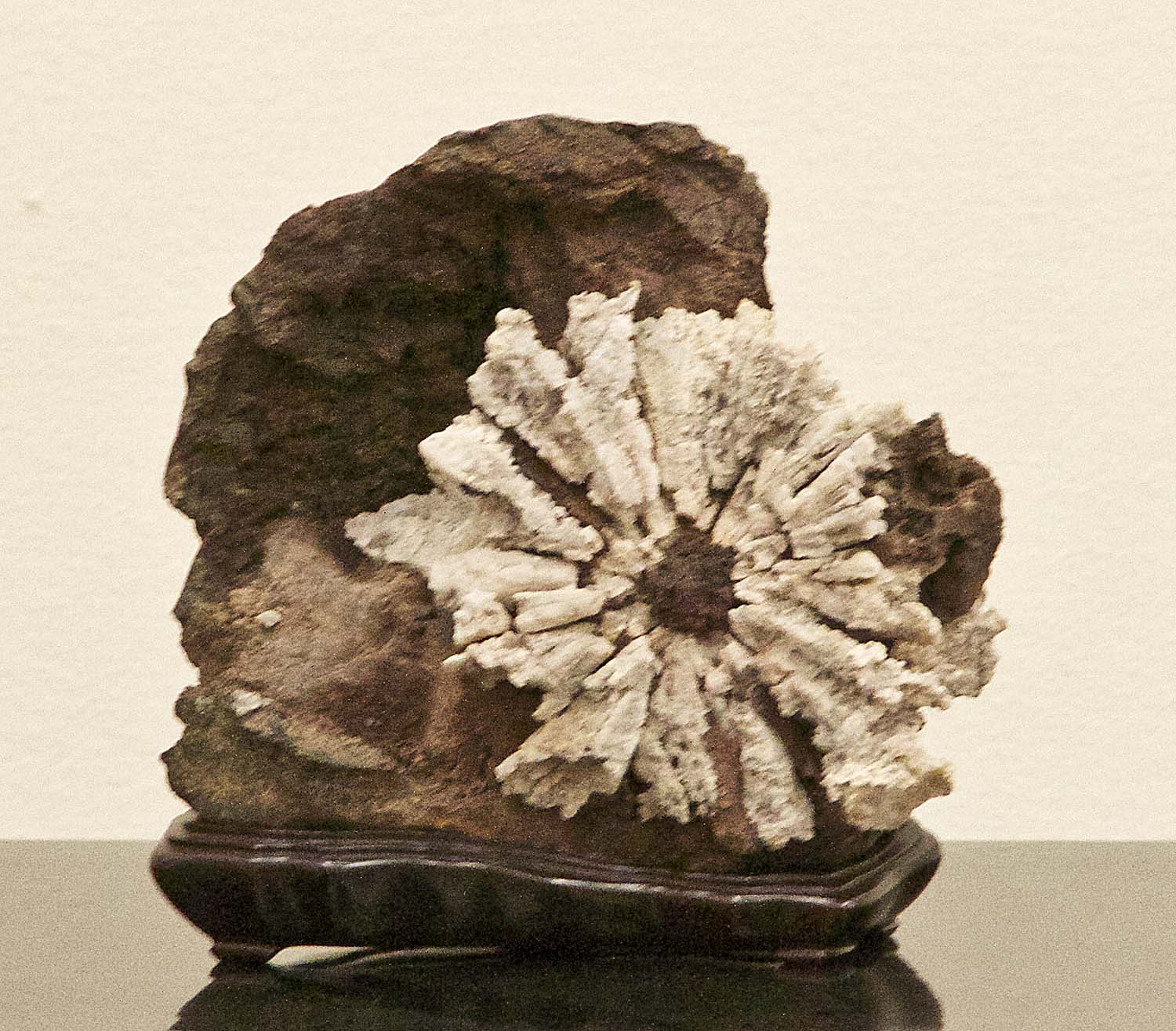
William N. Valavanis, New York

Tamagawa Ishi

Image

Image

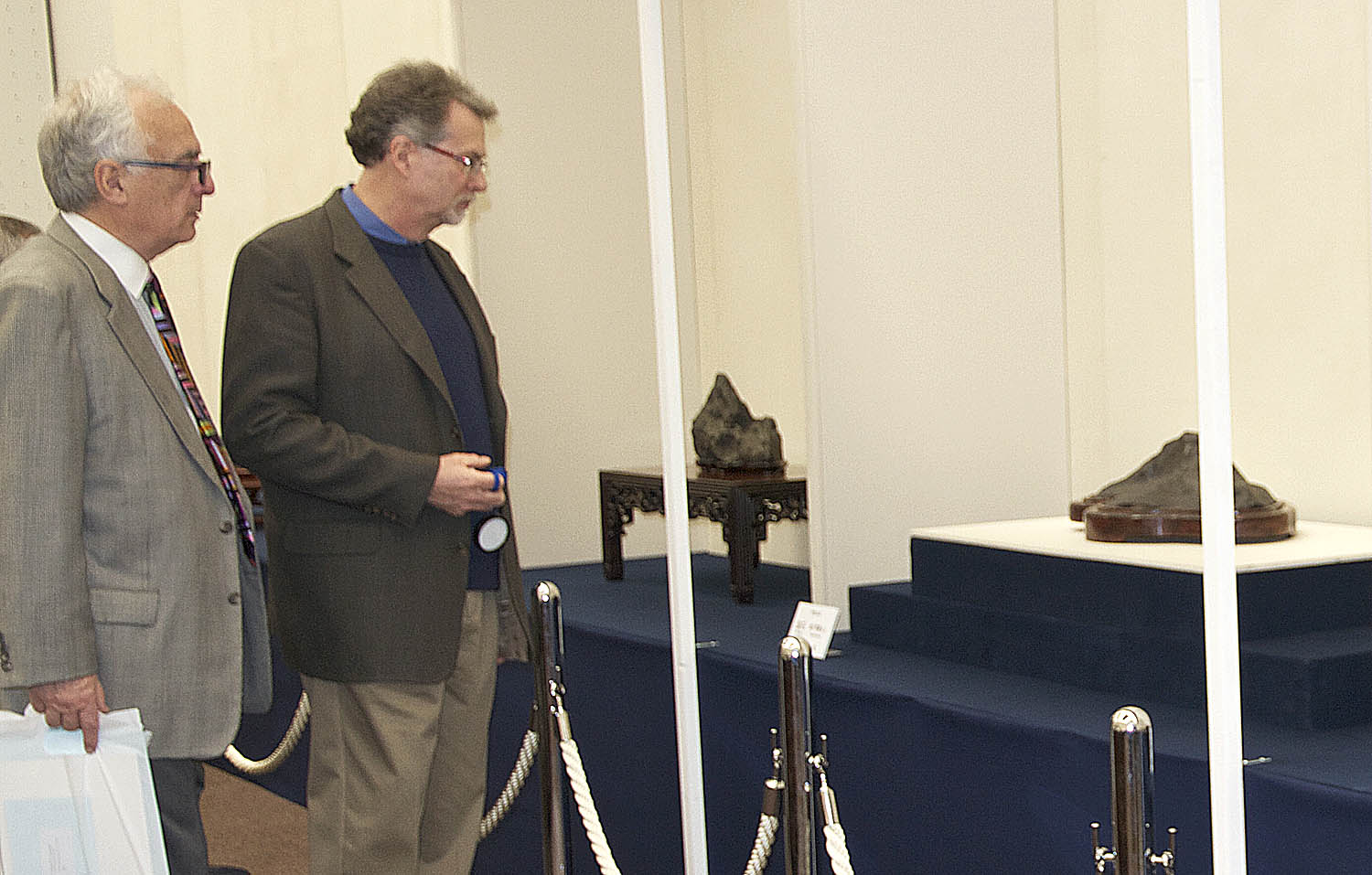
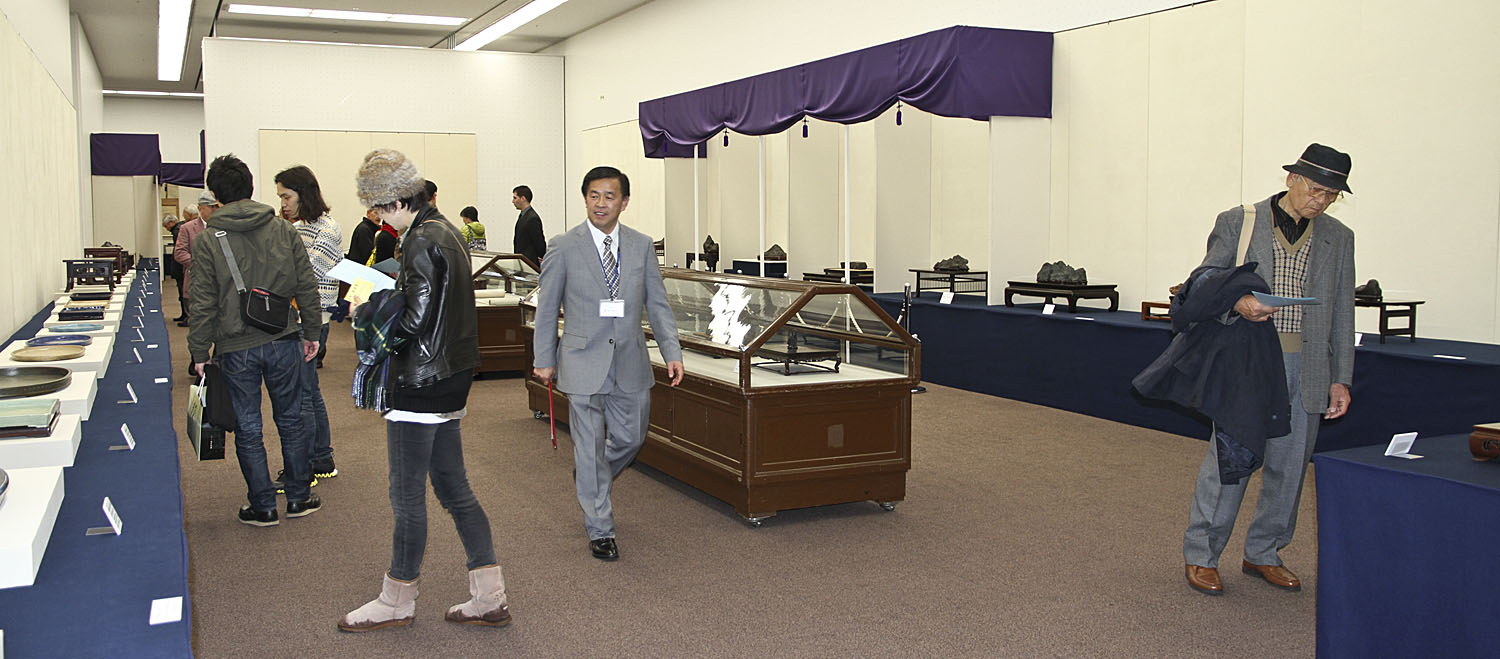
The exhibition was beautifully staged and laid out. Small size historic suiseki, boxes and bronze ornaments were displayed in long museum glass cases. The ample room surrounding the displays, tokonoma alcoves and pedestals allowed visitors to fully appreciate their beauty. I have personally studied many suiseki exhibitions in Japan, the United States, China, Indonesia and around the globe and have never seen such high quality stones displayed better and more beautifully. I’ve already made two visits to this exhibition and will return several times on Monday and Tuesday before I leave Japan.

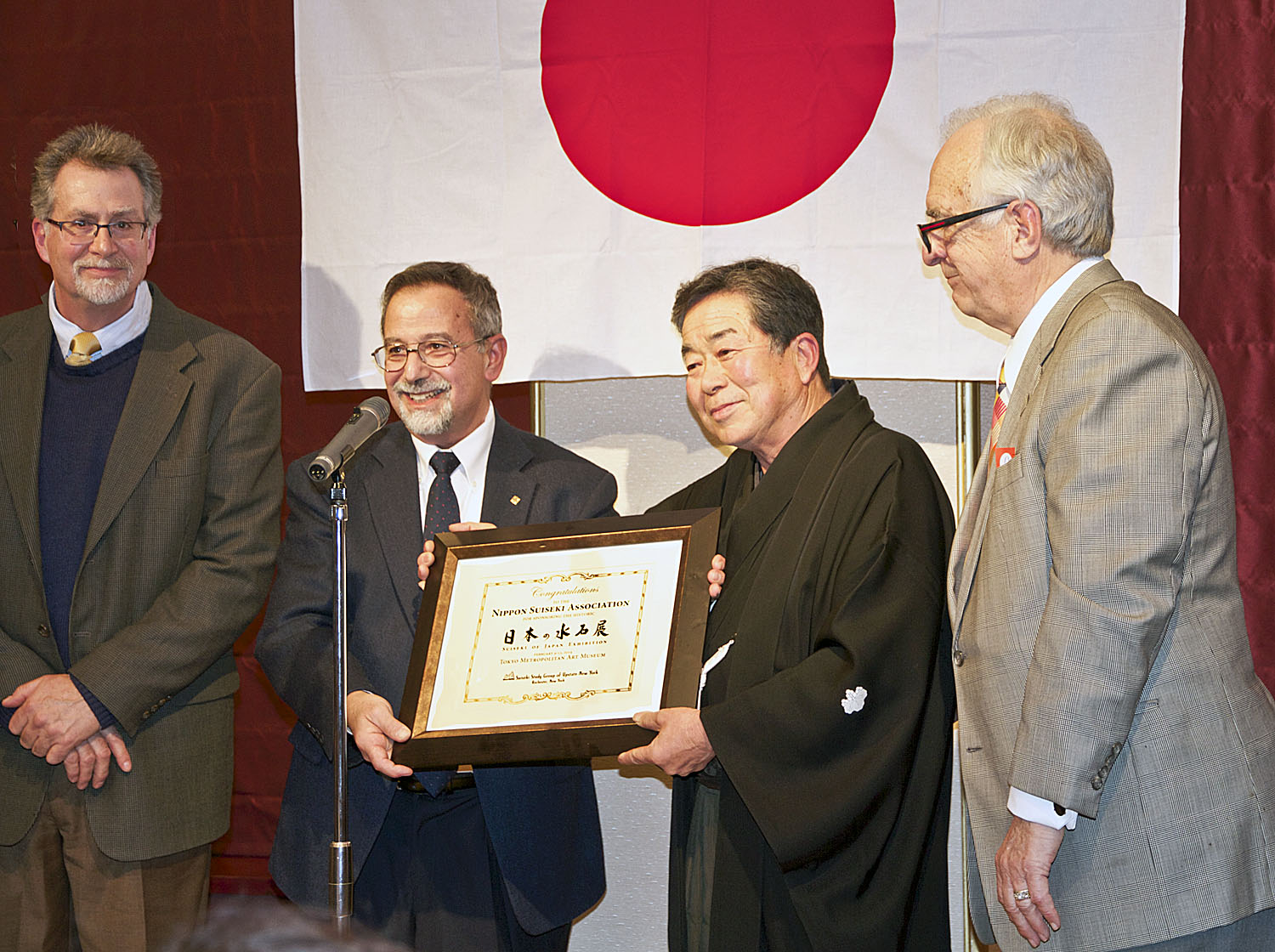
In the evening of the opening day, the Nippon Suiseki Association hosted a party for the exhibitors. Our entire tour group was honored to have been invited to this special event. The Suiseki Study Group of Upstate New York 20 presented a congratulatory certificate to Kunio Kobayashi commemorating this important exhibition. At the presentation, our study group members Ron Maggio, Marc Arpag and I expressed our appreciation to the Nippon Suiseki Association and for leading the way to promote suiseki. We have learned quite a bit by studying the exhibition.

Image

A 232 page full color exhibit catalog was published of all the exhibits and is available on my web site at:

http://www.internationalbonsai.com/page/1442819

A Visit To Shinji Suzuki’s Bonsai Garden

Image

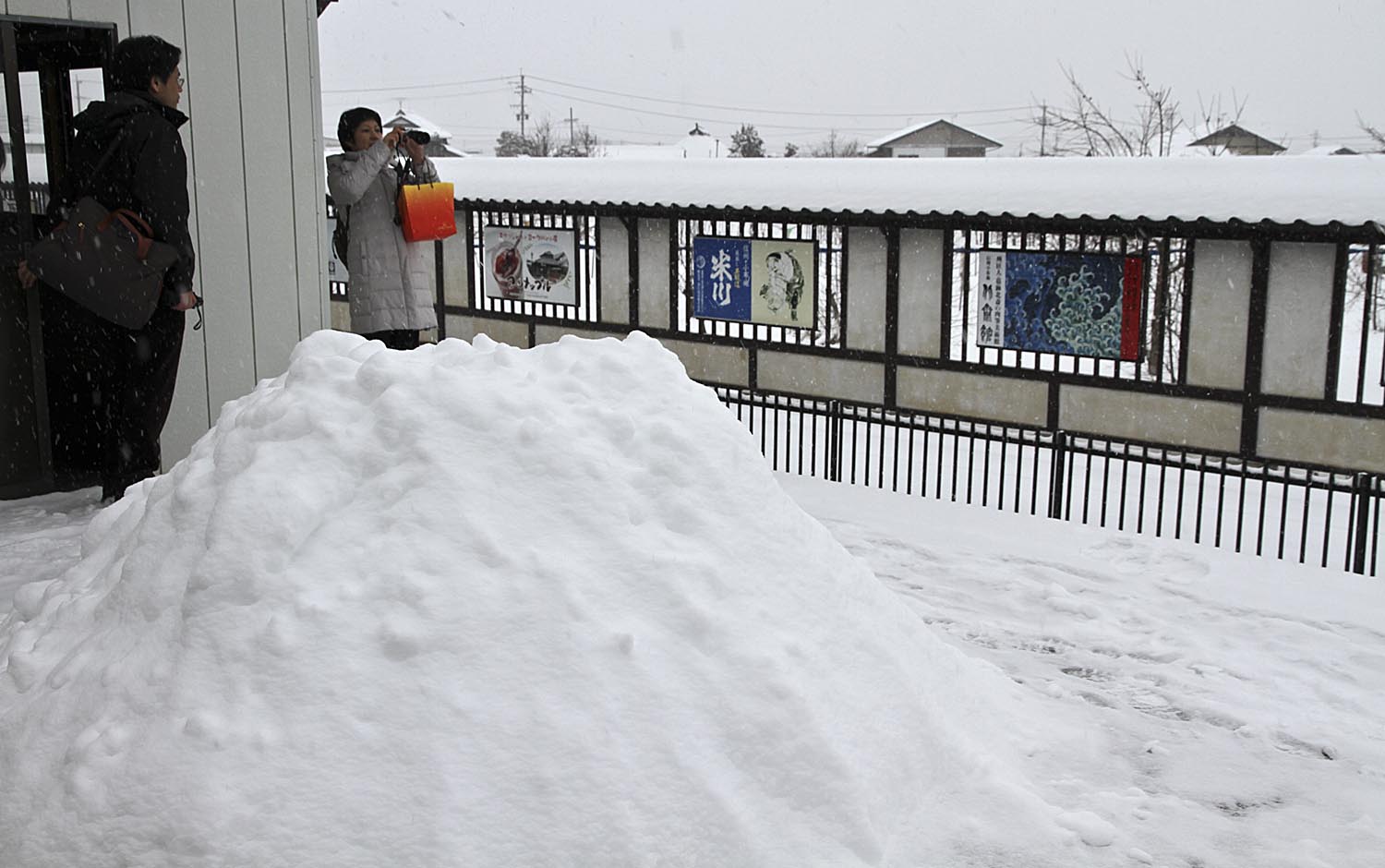
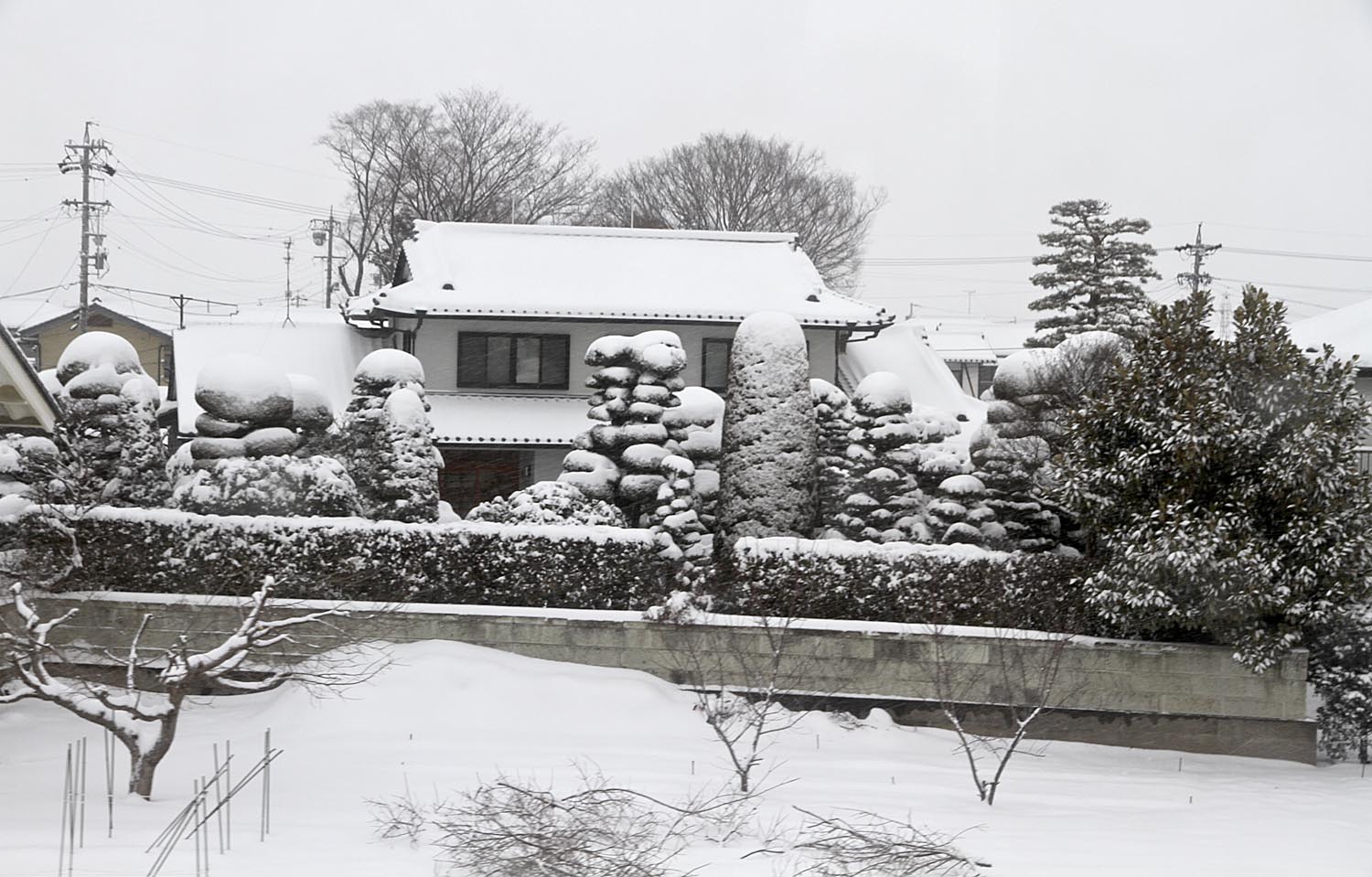
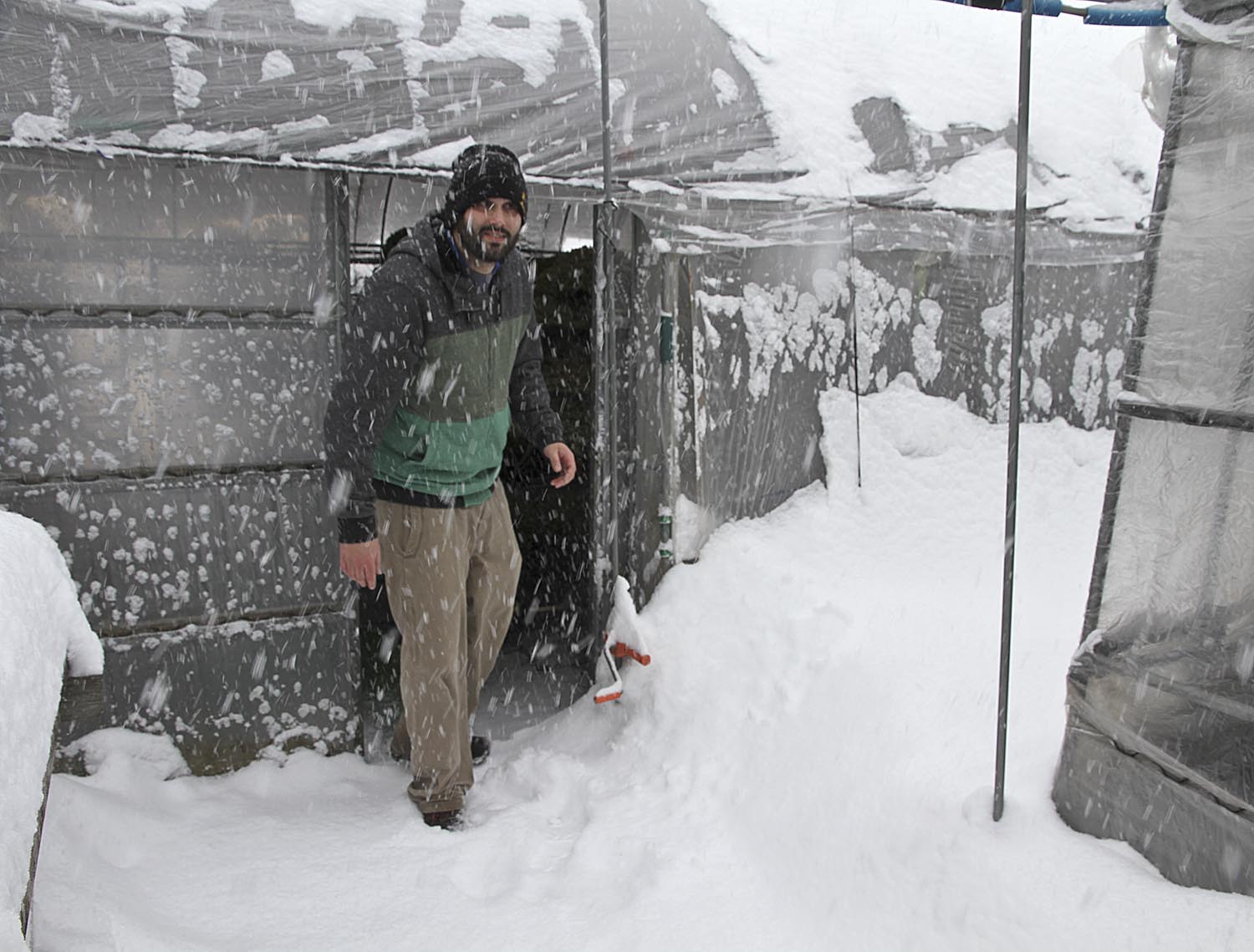
Heavy snow continues to fall in Tokyo on Saturday, it’s one of the biggest storms I’ve experienced in Japan. This would be just an ordinary snowfall for Rochester, NY, where nothing would be closed and school would go on as normal.

Image

Image

At breakfast I saw Michael Hagedorn with some of his students who were on their way to Obuse, near Nagano to visit Shinji Suzuki’s garden. Michael studied there about seven years ago and is returning for a few days. Mr. Suzuki is in Tokyo setting up the Kokufu Bonsai Exhibition Part 2 and the new Japan Suiseki Exhibition. Since I’ve never visited Mr. Suzuki’s garden, Marc Arpag and I immediately changed our plans and joined Michael’s group. Everyone stayed in Obuse for a few days, but Marc and I returned to Tokyo a couple of hours later.

Obuse is a few hours from Tokyo in normal weather. But this snowstorm made the trip up a bit longer, and the return to Tokyo took an extra three hours. When we got back to Ueno Station we needed to wait 30 minutes before we could catch a taxi.

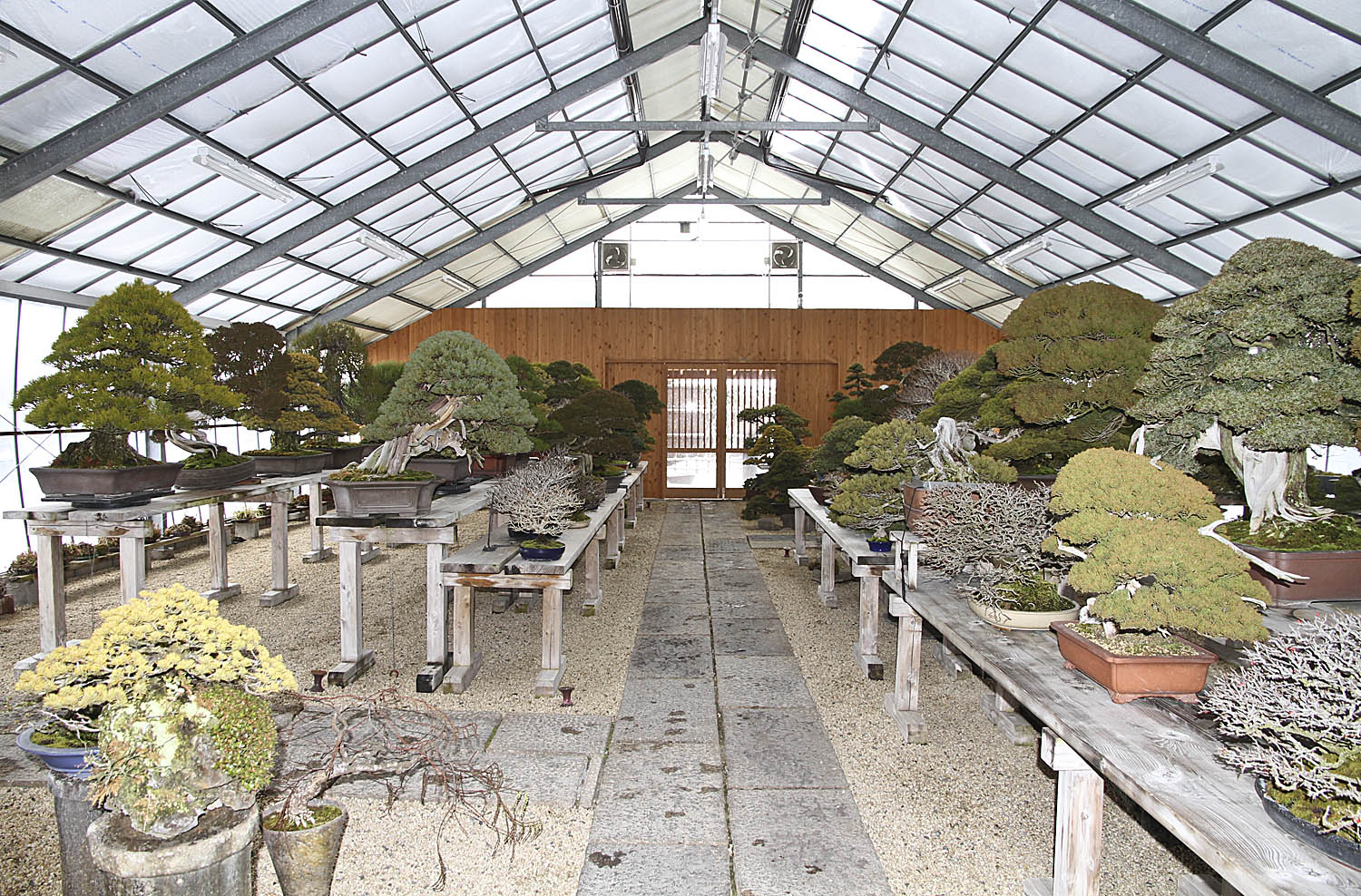
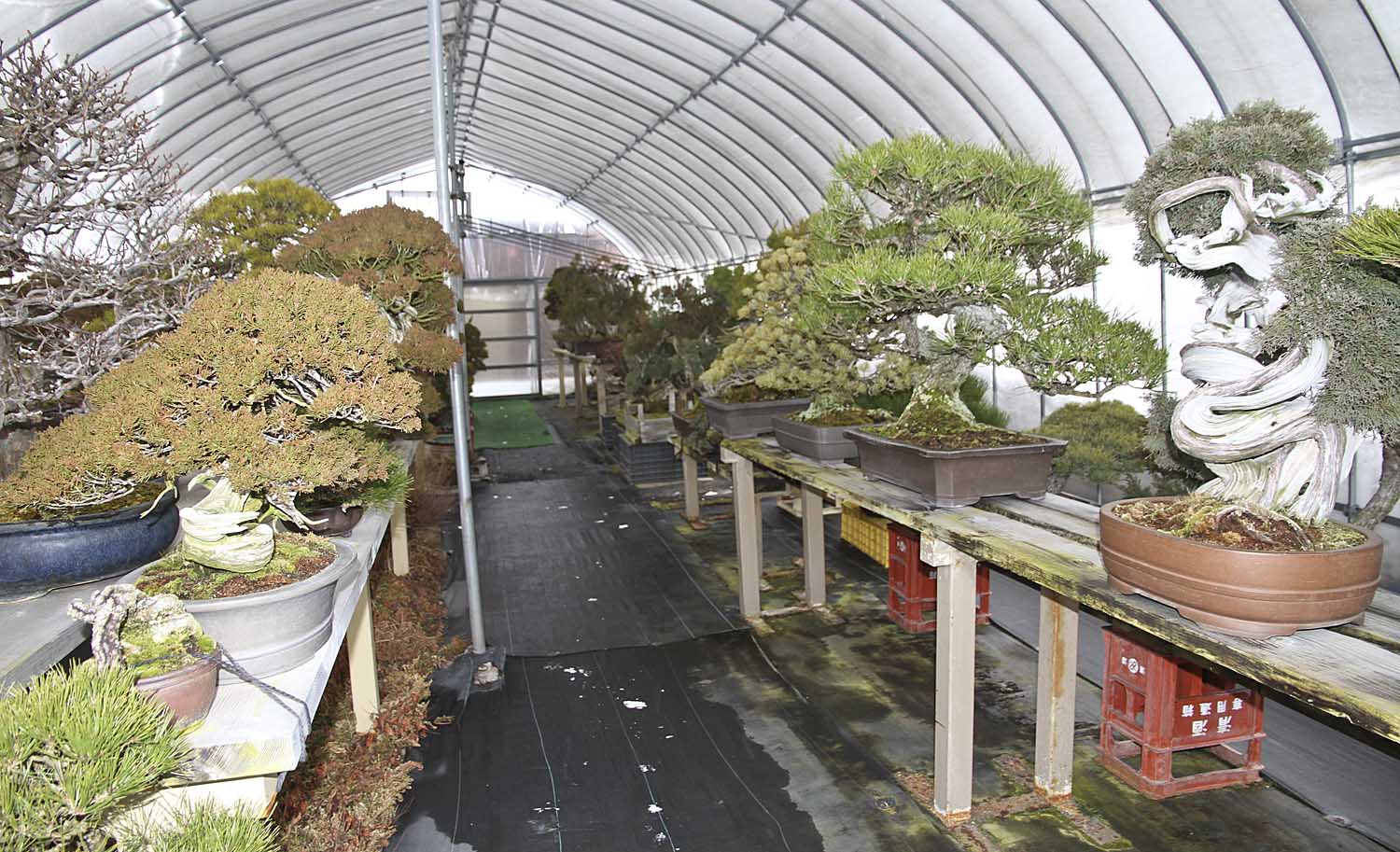
Mr. Suzuki’s garden is beautiful (even in the snow) and immaculate. You could eat off the floors. Everything was pristine and orderly. All the containers were straight on the benches parallel with the edge of the board. Even the carpets and tarps on the floor in the repotting greenhouse were precise. Well, not many people are aware of these small things, but small details are what distinguishes a true master. I believe surroundings are a direct reflection of an artist’s work and personality. You only have one opportunity to make a first impression, and Mr. Suzuki’s garden did a superb job impressing Marc and me.

Image

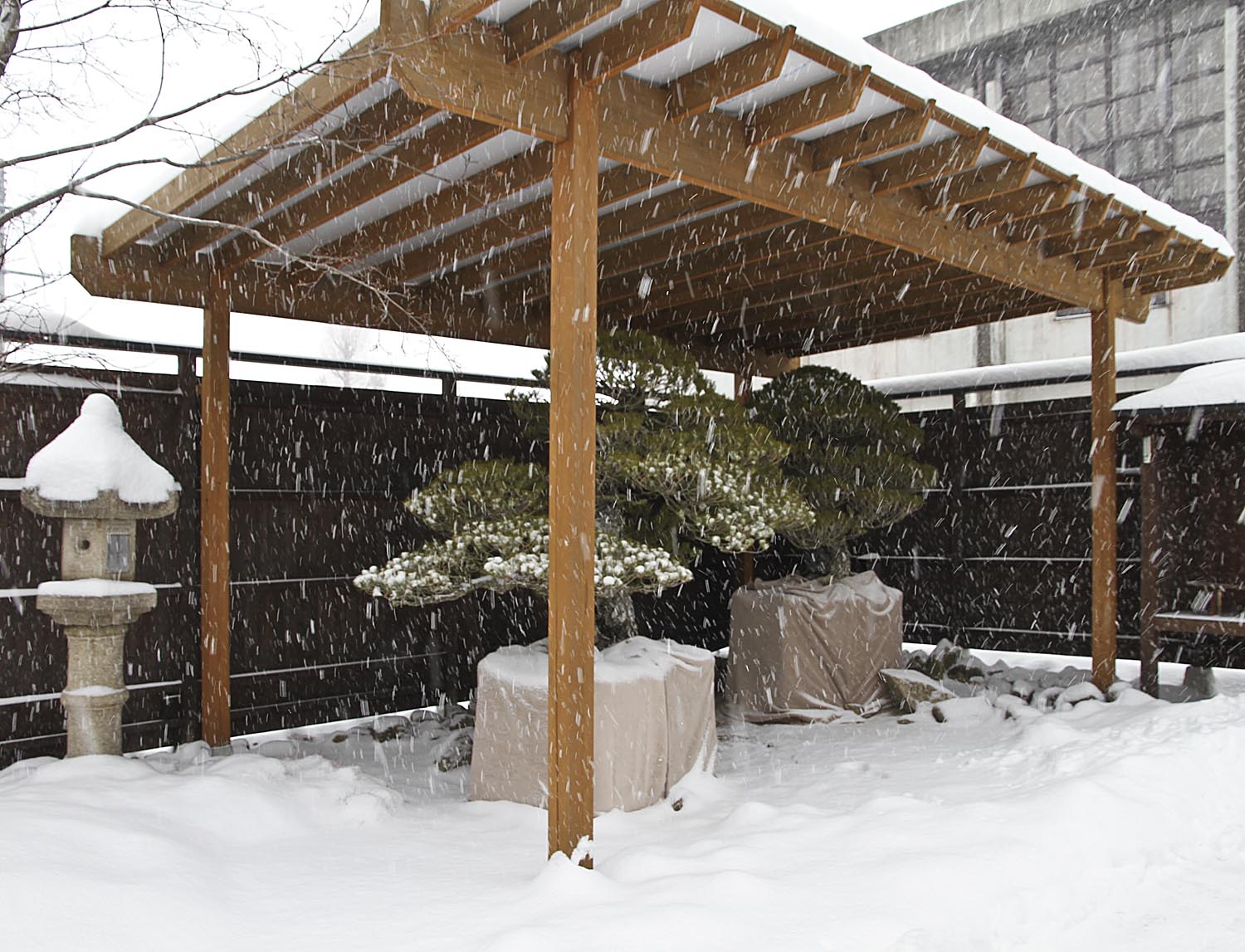
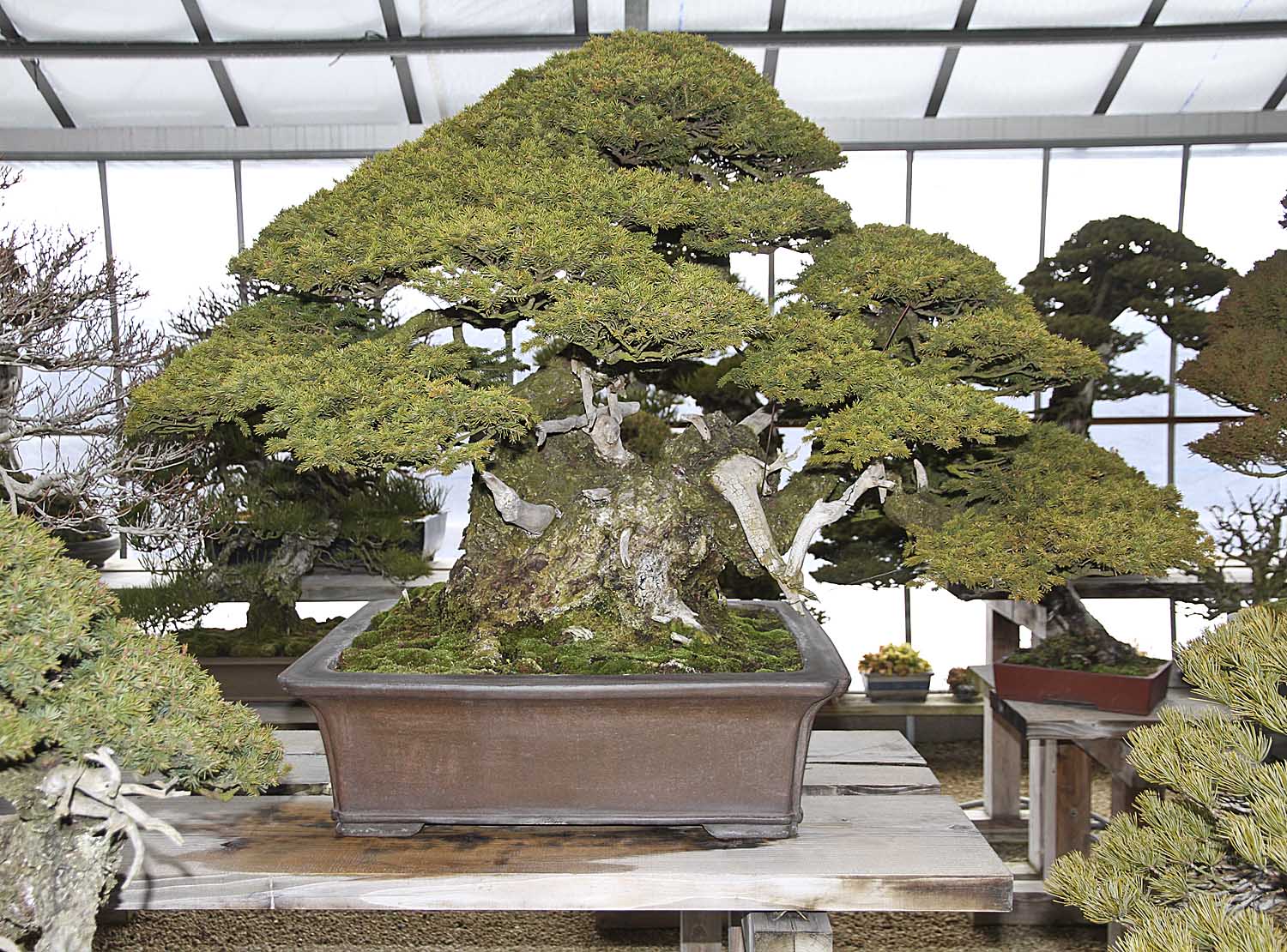
In the entrance way to Mr. Suzuki’s garden were two large historic Japanese red pine bonsai under shelter. These bonsai are from the Tokugawa era and have been container grown for over 250 years, perhaps even 300. They are some of the oldest bonsai in Japan.

Image

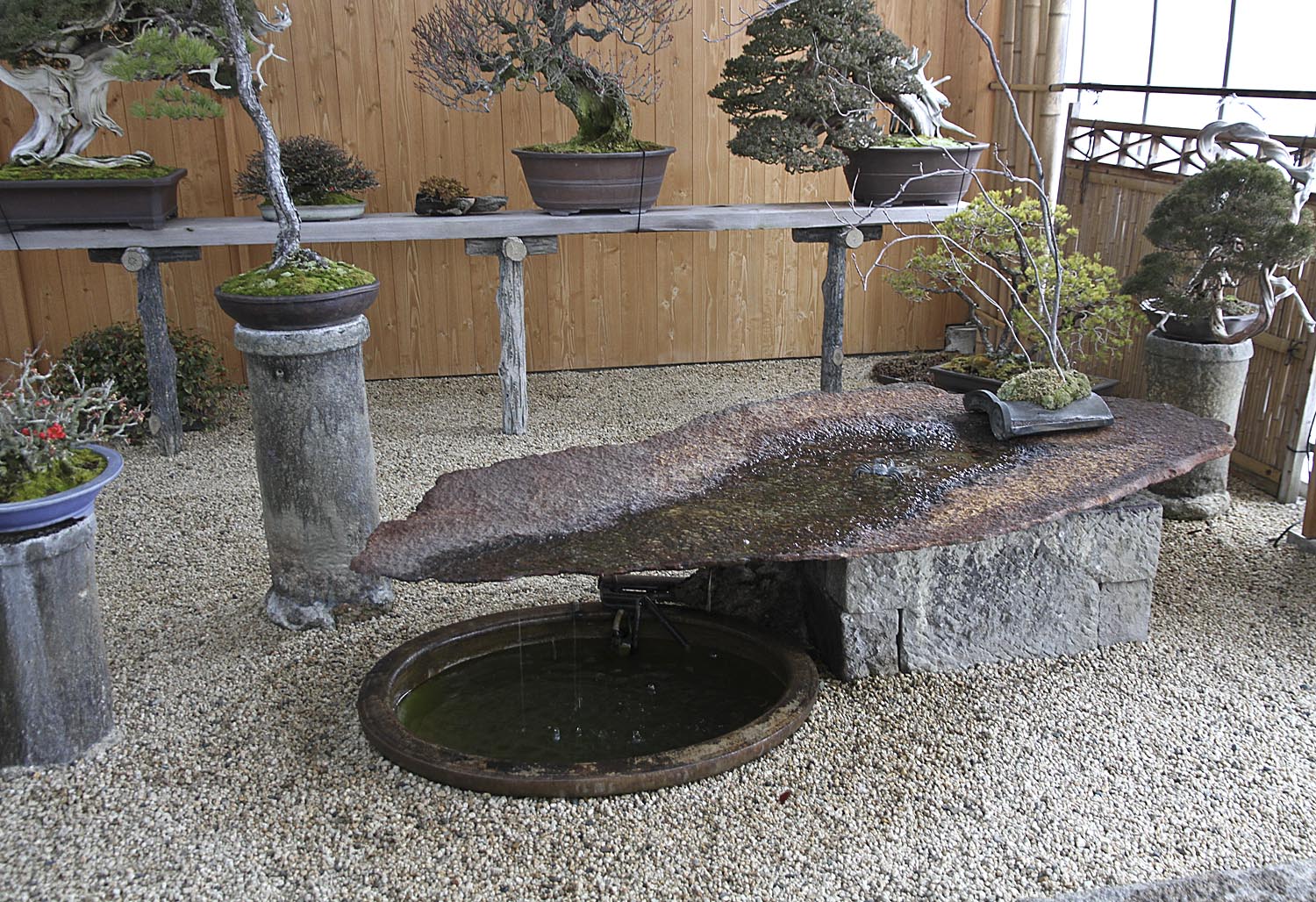
The reception room had a large tokonoma alcove with a beautiful multiple trunk Japanese maple bonsai. Also displayed in the room were a Sargent juniper and Japanese flowering apricot bonsai. Thus, an evergreen, deciduous and flowering bonsai were on display, and each of a different style. A truly distinctive display to welcome visitors. The room had a small heater which was appreciated because it was freezing outside. Remember, I don’t like snow and cold weather and personally go dormant at 70F.

Image


Image


Image

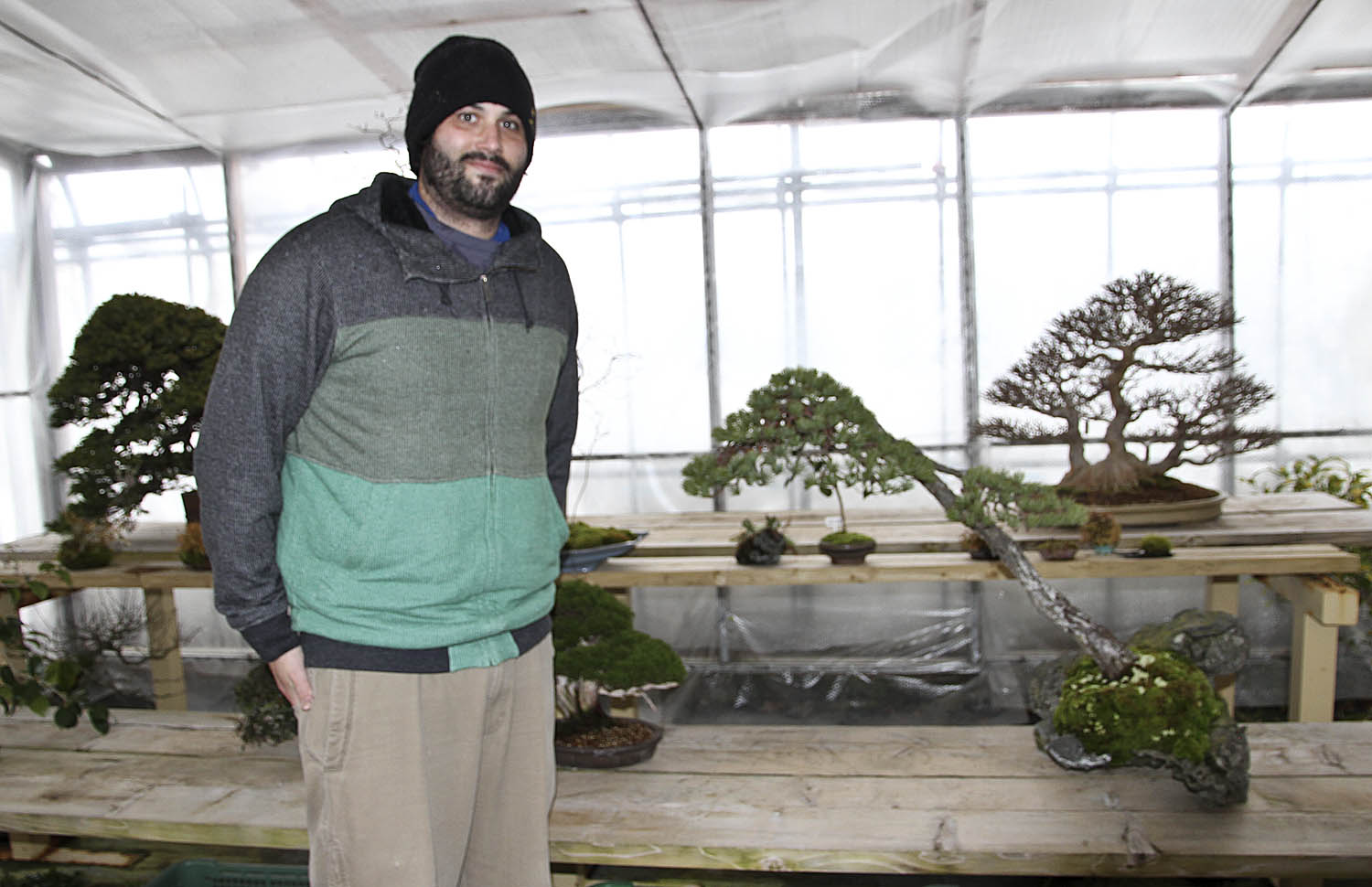
Tyler Sherrod, one of Mr. Suzuki’s apprentices from North Carolina gave us a private tour of all areas including several greenhouses, repotting greenhouse, container room and an entire building storing display tables.

Image


Image

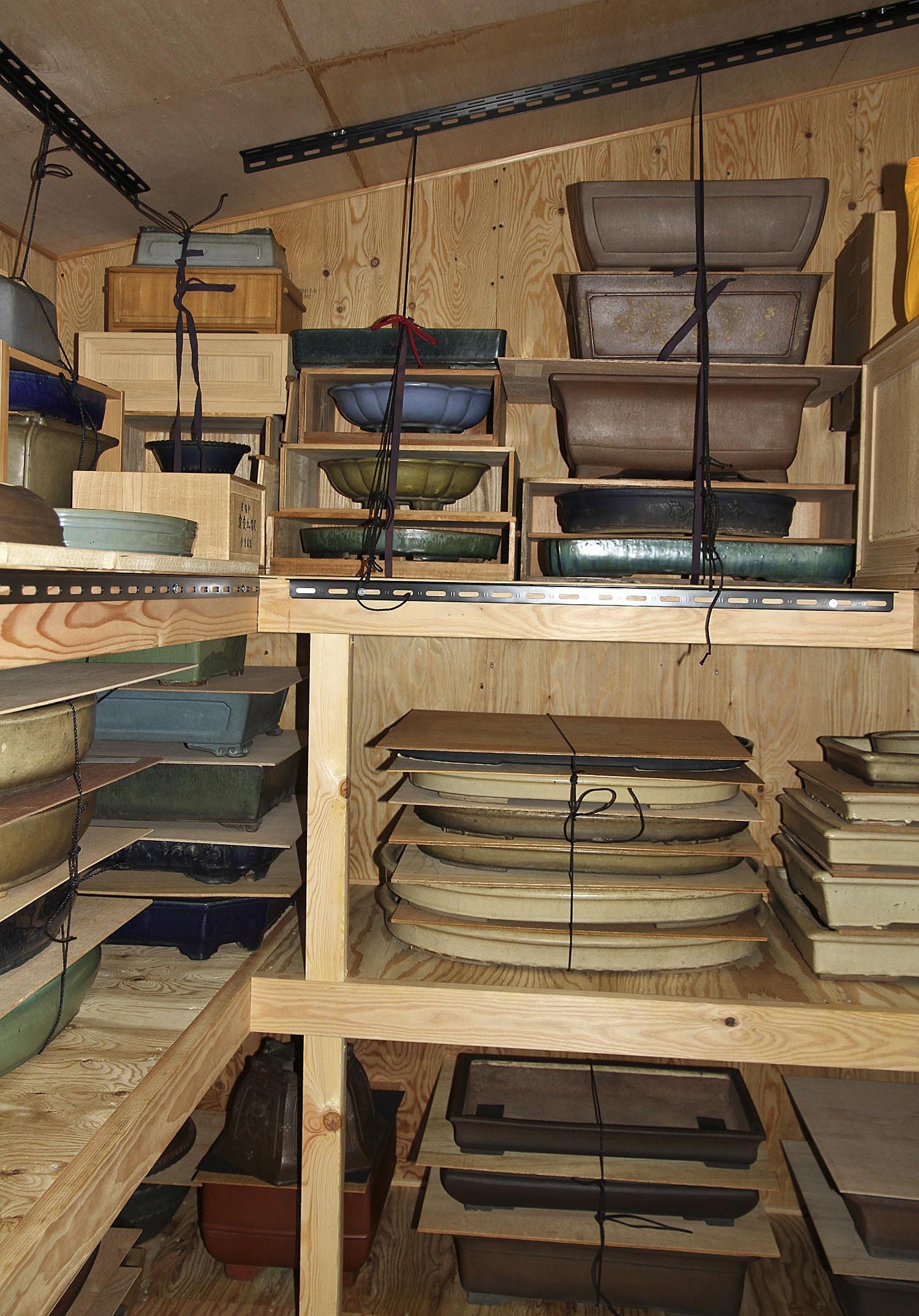
The finest containers and display tables were tied for protection in case an earthquake strikes. I even noticed several of the growing benches had cables anchoring them to the ground.

Image

Image

Image

Image

Image


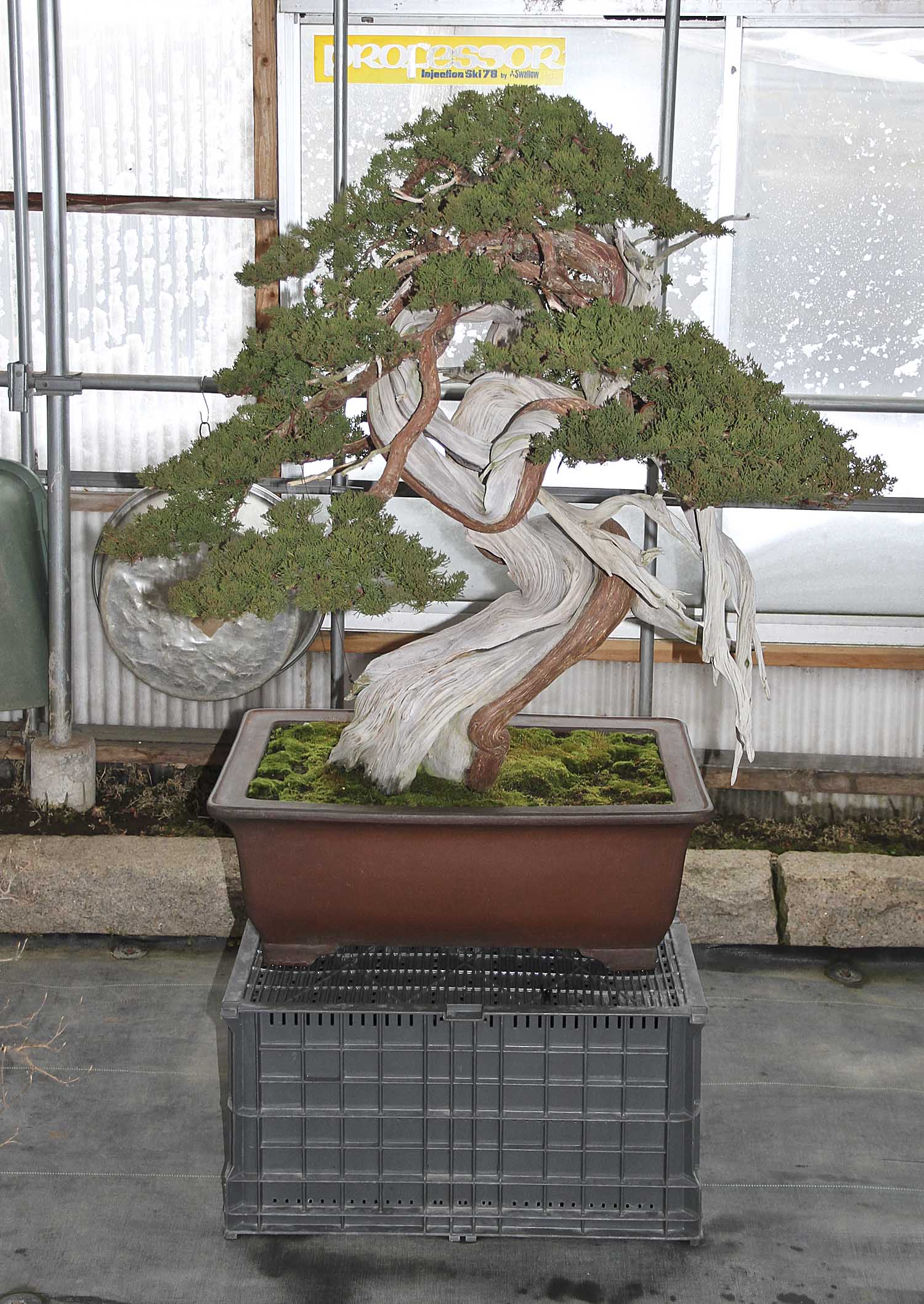
Mr. Suzuki was in Tokyo setting up the exhibits and had his other American apprentice Matt Reel, from Oregon, with him to help so they were not in Obuse during our visit. Matt Real recently completed a Sargent juniper bonsai restyle which was photographed for Kinbon magazine.

Image


Image

Tyler Sherrod showed us an unusual clinging-to-a-rock style Japanese five-needle pine bonsai which was entered in the Japan Bonsai Creator’s Exhibition and won an award.

Most of the bonsai were large evergreens, however deciduous species were also present. I even noticed an Enkianthus (Pearl bush) and deciduous azalea bonsai, as well as numerous Chojubai Japanese flowering quince bonsai.

Image

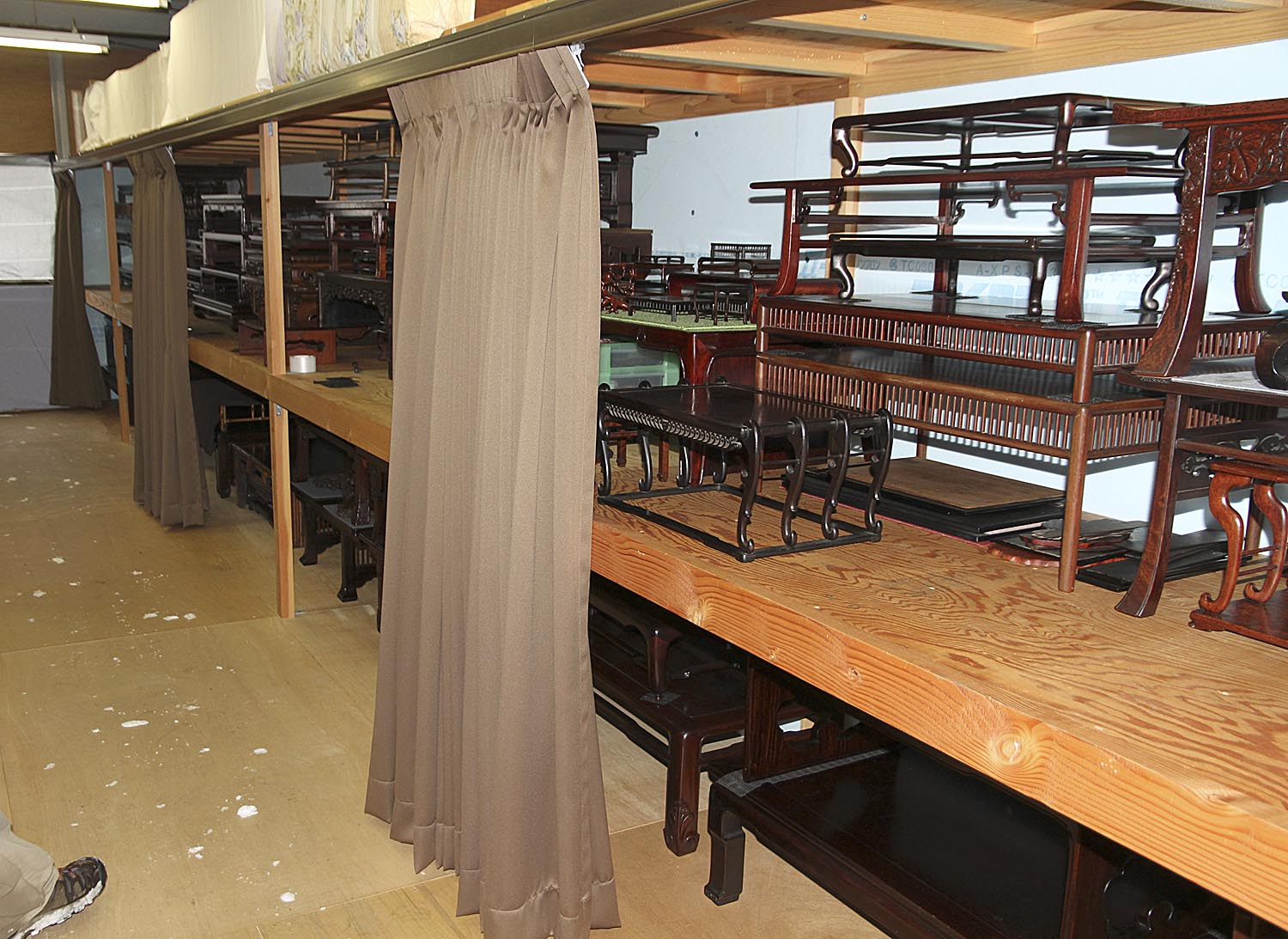
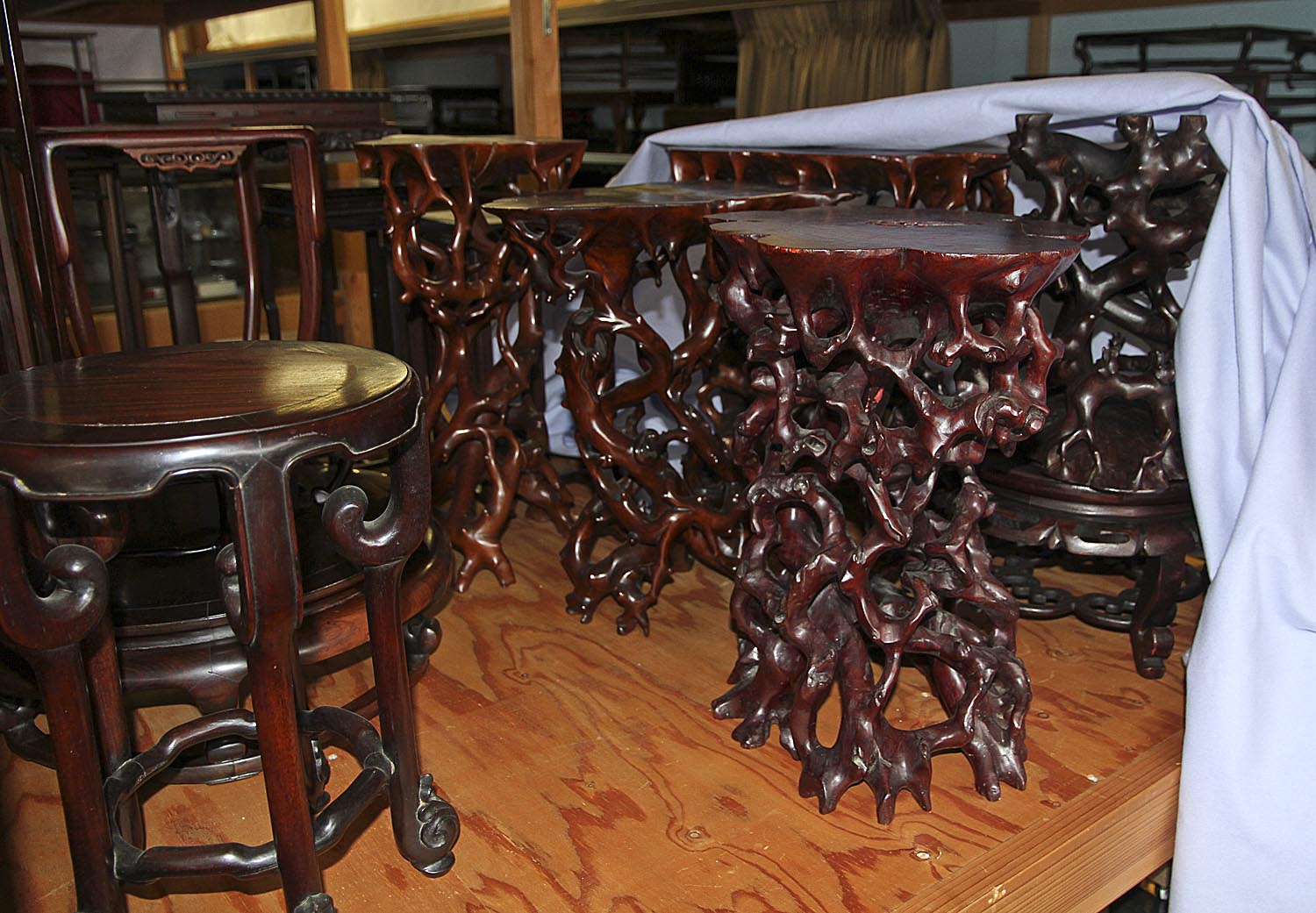
It was interesting to see one building full of display tables all behind curtains to protect the wood from strong light. They were grouped by size and style. All the tall cascade tables were in one area, next to the root stand section.

Image


Image

After our visit Marc and I took a taxi back to Obuse Station where we took a local train to Nagano where we immediately boarded the bullet train bound to Uneo. But, we sat on the train for about 90 minutes before it even moved and when it did, it was slower than normal because of the heavy snow. Obuse looked to have about 12 inches of snow, while Tokyo only got about 10 inches, but it’s still coming down hard and blowing snow too.

As mentioned before, God seems to be looking out for our tour, and it was a blessing to have switched our visit to Mr. Kimura, Omiya Bonsai Village and Mr. Morimae’s S-Cube garden from Saturday to Friday. The heavy wet blowing snow would have made for a memorable visit, but not the good kind. I have yet to see a snow plow, but did see one snow blower in Nagano. Businesses in Tokyo were closing early and moving snow with dustpans and brooms. The ground was slippery, but I was careful and did not break my foot for the seventh time. I’ve already broken one foot in Japan six years ago, that’s enough.

Other members of our tour returned to the Ueno Green Club sales area where all of the bonsai for sale in the outdoor areas were completely covered with snow. I did not see any customers in the photos I was shown.

Considering the cold weather and blowing heavy snow with travel delays, our 10 hour trip to Mr. Suzuki’s bonsai garden was well worth the extra time and difficult traveling conditions. I look forward to sharing the beauty of Mr. Suzuki’s garden and artistry with friends in our future bonsai tours.

Image