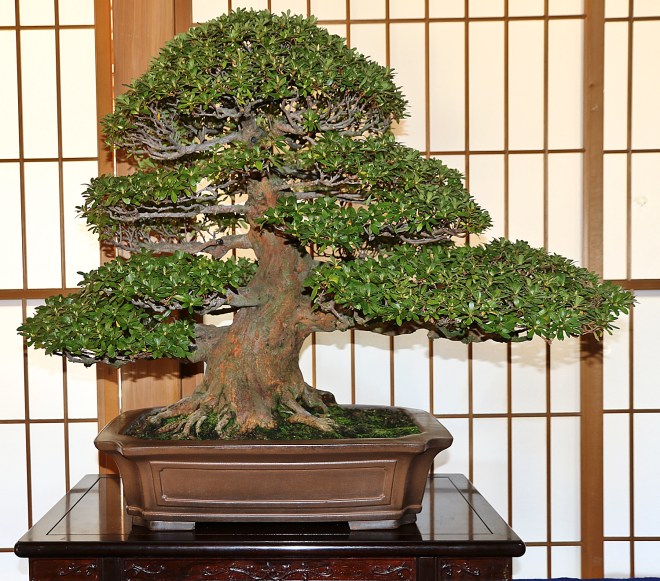
Its Seedling Time!

New Plants & Seedling Growing Tips

COVER 2

Now is the time to order bare root seedlings for future bonsai. Several thousands of healthy seedlings have arrived. Today ten members of my Monday Senior Crew inspected, graded, bundled and packaged them for mail orders for shipping throughout the United States starting soon.

1Harvey Carapella grading European beech

_P4A6080

Monday Senior Crew members: Rick Marriott, Bob Phromm, Paul Eschmann, Alan Adair


While we were working our cat Zeus was in a “bonding mode” and wanted attention. He often does this in the mornings, not in the evenings when you are watching TV looking for a fluffy pet to join you. That’s typical of most cats. The Trident maples and European beech are exceptional this season as well as a few exciting plants described below.


ZEUS TREE

Zeus is usually a mild cat


ZRUS 1

Zeus wanted to play today


ZEUS 2

He is a real hunter


European Beech

The European beech, which I personally prefer to Japanese beech, arrived in different sizes which are perfect for forest style bonsai. Although many do have initial foliage a bit larger than the Japanese beech, when container grown the European beech leaves quickly reduce in size. Also the foliage of European beech is thicker than Japanese beech which usually have larger thinner foliage. European beech is quite winter hardy and easy to grow. The Japanese beech has a more exotic name and attracts bonsai hobbyists quickly. Growing European beech for a season to establish fibrous roots, is a good idea before creating a forest bonsai. However this year’s seedling selection of European beech can easily be created into a forest this spring because of the excellent trunk sizes.

5

Alan Adair grading European beech seedlings

6

Great root systems!

7

Several European beech forests created from seedlings

8

Newly created European beech forest

9

European beech 1993

10

European beech 2012


The trick to developing small foliage on European beech is to remove the center of the opening shoots as soon as they can be seen. Since plants are generally more vigorous in the upper branches, shoots developing in that region are pinched first, as they open. The lower and inner branches open a bit later and must be pinched at a later time. It generally takes more than a week to pinch a developed beech bonsai. Sometimes it is necessary to check the bonsai more than once a day because shoots continue to develop all day long.


KONICA MINOLTA DIGITAL CAMERA

Pinch the center of the opening shoot


KONICA MINOLTA DIGITAL CAMERA

After pinching center of the opening shoot


Trident Maple

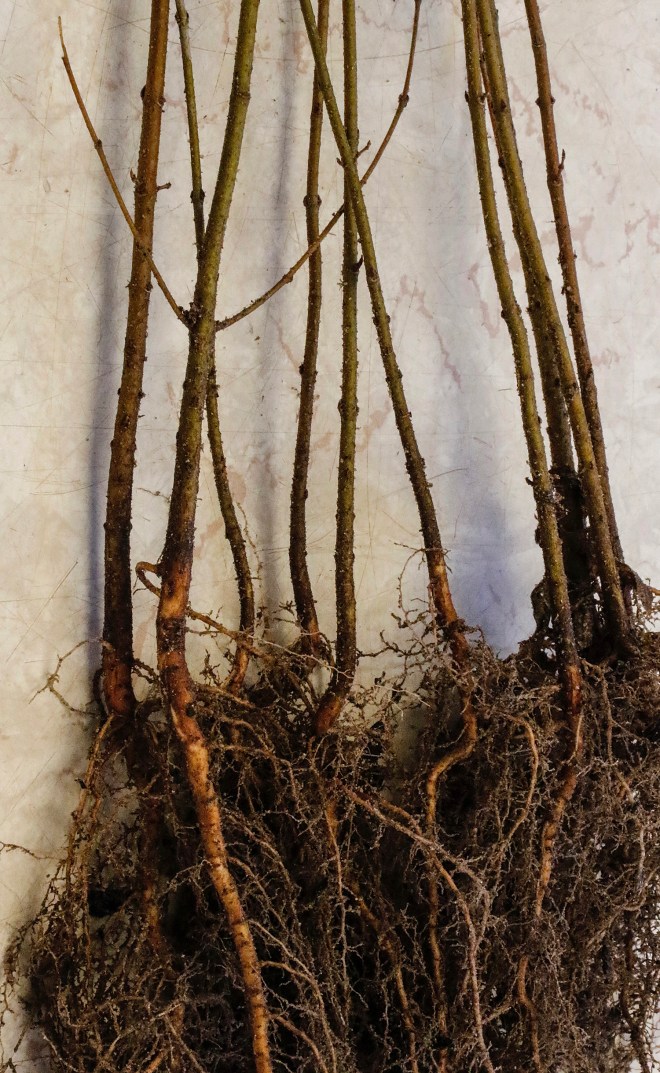
This season the Trident maple seedlings are superb, and PERFECT for root grafting because they are thin and flexible. There are several different sizes and each bundle has several if a forest bonsai is to be trained. Of course they can also be trained for specimen bonsai as well. Since they are flexible gentle as well as extreme curves can be created with these Trident maples. In autumn the foliage generally becomes yellow, orange or red, which depends on the weather and care provided. Seedlings planted in the ground will grow quickly and form thick trunks fast. But, if you want a bonsai with bends, ground growing from the beginning is not recommended. I suggest small seedlings, of most all deciduous species, are first potted in training containers for one or two years. This is the time to create interesting forms in the trunk with wire. Be certain to also create trunk movement from front to back in addition to side by side. By the end of a growing season the young Trident maples will have taken the new shapes and are ready for thickening in the ground. If you wire young seedlings in the ground they will quickly scar because of their fast growth. If you want a developed bonsai with gentle curves, initially exaggerate the curves. As the tree thickens, gentle bends will quickly develop into straight trunks.

13 

Harvey Caravelle grading Trident maples
 14

Trident maple seedlings


Sekka Hinoki Cypress

Quite popular in Japan, the Sekka hinoki cypress are rare in the United States. The dark green small foliage quickly develops into a tight “ball” which needs thinning. After thinning the small foliage the larger branches can be easily wired and shaped into stunning small or shohin bonsai. About a third or a bit more of the foliage can be safely removed when thinning out the plant. Cutting grown to eliminate grafting scars, the Sekka hinoki cypress will quickly become more popular in bonsai collections because of it’s beauty and tight growth habit.

18

Developed Sekka hinoki cypress bonsai

19

Before shaping and after shaping Sekka hinoki cypress


Amethyst Falls Wisteria

Both Chinese and Japanese species primarily grown for bonsai in the United States.

They are magnificent in spring with the long hanging fragrant blossoms. They also have the habit of invasive growing and often do not flower regularly. There is a selection of the American native wisteria named Amethyst falls, which is now becoming a prized garden plant because of the compact growth, small flowers without becoming invasive. Young plants grown in the ground or large training pots will quickly grow and can be easily wired into beautiful forms. Unlike the Chinese and Japanese wisterias, the Amethyst falls wisteria often blossoms again during the summer. The flower racemes are not long and Diane likes them before they open and look like clusters of grapes and last a long time. Young plants as well as established specimens blossom profulsely in late spring, and often again during the summer. The growth habit of Amethyst falls wisteria will slow down considerably when container grown and trained for bonsai. Our plants are propagated by cuttings to eliminate ugly graft unions.

20

Amethyst Falls wisteria bonsai


21

There are over a dozen excellent plants for bonsai in our new Spring 2016 Seedling & Pre-Bonsai catalog. This season several of the plants are available in larger pre-bonsai size which have been container grown for a season with trunks shaped with wire. Now is the time to place your order for early, mid or late spring delivery. Catalogs can be downloaded from our web site at:


http://www.internationalbonsai.com/files/1708315/uploaded/2016%20SEEDLING%20CATALOG%20web.pdf

Or you can easily order on line at:

http://www.internationalbonsai.com/seedling%20list

Many thanks for my friends to help preparing the seedlings today. Next week the Monday Senior Crew will join me to help pack the seedlings and pre-bonsai for shipping.

Good luck to everyone with your bonsai this season!

SEEDLING COVER


5th US National Bonsai Exhibition

2016 NATIONAL LOGO 2

Plans have now been completed for our exciting 2016 5th US National Bonsai Exhibition which will be in the same spacious and well lighted venue on September 10-11, 2016. The Exhibition was composed of 175 displays including 48 shohin bonsai compositions of 120 individual trees. The total number of bonsai displayed was 320 representing 107 artists from 27 states and two provinces of Canada.

3

9

All information is now available in our new beautiful web site which was created by Vicki Chamberlain at:   www.usnationalbonsai.com   The web site will be upgraded when necessary and the date of the latest edition is on the bottom of the home page.

1

16

In addition to the web site a large flyer, which folds out to a poster, is now at the printer and will be available in a couple of weeks. Let me know if you would like one. Additional copies are available for your bonsai club members, just let me know how many you need. If your club has a newsletter I can easily send you an ad, as I’m looking for as much complimentary publicity as possible.

15

14

Several changes will take place for this year’s Exhibition. We have a new Hilton Garden Inn Hotel as our official residence. The hotel is near the Exhibition and they will provide some shuttle service as available. They will also pick you up at the Rochester International Airport, if you call ahead.

SONY DSC

11

Our Award Banquet and Benefit Auction will be held at a highly regarded party house right around the corner from our hotel. The hotel will also provide shuttle service to the event. The Burgundy Basin Inn is large, spacious and I’ve reserved the ballroom which holds 500 people. The food is considered to be delicious and I’m sure we will not be crowded and be well fed.

13

12

This year we will have eight demonstrations as well as organized critiques by eleven of the most respected bonsai/suiseki artists in the United States.

6

5

Now is the time to submit a photo of your best bonsai for the selection process. Some have already been received as people seem to be anxious to share their bonsai. The deadline is June 1st OR until the spaces fill up. I don’t want to squeeze trees into the exhibition. Last year at the last minute we added more tables. Please encourage your friends to display too. An invitation flyer is also attached here.

8

7Should you have any ideas, questions or problems, kindly let me know so we can work together to present some of the finest bonsai in the United States to the world. Oh, I’m working on having food available too, but there are nearby restaurants.

2

We are always looking for new advertising venues and financial support to help with the production of the Exhibition as well to help subsidize trucks to bring your bonsai from long distances. I look forward to welcoming you and your support and participation for the exciting new 2016 5th US National Bonsai Exhibition.

2016 NATIONAL POSTER


Happy New Year!

ST. BASIL

New Year’s day is a special holiday for our family and religion for at least three reasons. Most important is to welcome in the New Year, a fresh new yearly beginning. Everyone gets another opportunity to enjoy and improve their lives for another year. This also applies to our bonsai as well as we have plans to change and improve their design.

BASIL 2

Also January 1st commemorates the feast of the circumcision of Jesus in the Orthodox Church. Jesus was Jewish and according to tradition baby boys were circumcised on the eight day after birth. Our church celebrates this event during the first Divine Liturgy of the New Year celebrated on January 1st for St. Basil.

BASIL 1

More importantly January 1st is also St. Basil’s day in the Orthodox Church. St. Basil was a forefather of the Greek Orthodox Church and is remembered for his kindness and generosity to the poor. He was also the first to establish hospitals, which I’m personally thankful for during these past couple of months.

DISPLAY

Since my baptismal name is Vassilios (Basil), January 1st is my names day, a holiday often celebrated more than birthdays. Sometimes the family of the person named Basil hosts an open house and friends are invited to visit. A couple of years ago Diane had New Year Open House and many of our friends were invited to help celebrate my names day. Of course I had to come up with a special alcove display in the studio featuring bonsai and the special events celebrated this day. There are many reasons to display bonsai and all of them are centered on creating a display atmosphere for enjoyment of the viewers. A Chinese quince bonsai, loaded with fruit (I did not add any) was selected to show the prosperity of the year. A Pomegranate would have been better, also a Pine showing longevity. But, I wanted to show prosperity. An icon of St. Basil was made into an insert for a scroll to celebrate the saint. Finally, Chinese quince fruit, along with a sharp, large root pruning bonsai knife was used for the accessory, with the knife commemorating the circumcision. This was a rather unusual, unorthodox display, but was created for my visitors which they enjoyed and we had many discussions. More information on display will be forthcoming in my new book The Art of Bonsai Display & Appreciation.

VASILPOITA

The celebration continues with the cutting of a Vassilopita, or St. Basil’s cake (or bread). A coin is baked into the cake and the person receiving the coin is to have good luck for the New Year. St. Basil began this tradition by returning jewelry to people by placing one in each cake. There is a specific order of cutting the cake also. First piece is for St. Basil, next one for the house and the following for members of the family by seniority. Following pieces are cut for friends. Diane makes delicious Vassilopitas we all enjoy. However yesterday we went through the cutting and nobody found the coin… yet. I took a peek and saw the outline of the coin, which will be found by the next person who cuts a piece. I want another piece, but will cut it from the opposite side and let another member of our family find the coin

3When I was a youngster my grandmother had a couple of customs for the New Year holiday. It was important that the first visitor who sets foot into the home was ideally a young innocent child with pure heart would bring a good omen and luck for the remaining of the year. We always hoped for a youngster, not an elderly person.

POMEGRANATE 1

The Pomegranate is a fruit with a long history going back to ancient times. It is widely revered as a symbol of fertility, prosperity, regeneration and the inseparable marriage of life and death. One of my tasks for my grandmother was to take a large, plump, ripe Pomegranate and smash it on the doorstep for good luck. The blessed luck was proportional to how far the seeds were spread. I also had to clean up the red mess which stains. We do not follow this tradition for obvious reasons, but I might start next year, with a piece of plastic on the floor.

2

1

Playing cards is also another Greek tradition. There are many other activities during this auspicious time, all believed to bring good luck and prosperity during the coming new year.

ZORBA 2

Zorba

Our family got a new St. Bernard-Boxer shelter puppy for Christmas, named Zorba. He now joins Zeena, Zeus, Kitty Kat and Damon.

ZEUS

Zeus

6P4A5947

DamonZENA

Zeena

KITTY KAT

Kitty Kat

COIN

Well, Diane was the lucky person to finally find the coin in the Vasiliopita, so she will enjoy good luck for 2016. Actually, I hope my entire family and friends all enjoy:

Good Luck, Good Health and Prosperity during 2016.

May all your bonsai stay small and crooked, in the right places.

FAMILY 2016


2015 Winter Silhouette Bonsai Expo

1

The 3rd Winter Silhouette Bonsai Expo was held on December 5-6, 2015 at the elegant North Carolina Research Campus in Kannapolis, North Carolina. Sponsored by bonsai hobbyist Steve Zeisel, this exhibition is unique on the east coast featuring deciduous bonsai without foliage so the true beauty can be appreciated. You can’t fake the beauty of deciduous bonsai, or at least, it is very difficult, because everything is exposed to the viewers once the leaves drop.

49

The venue is quite spectacular, even more regal than those I’ve seen in Japan and Asia. White marble walls and columns were tied together with an unusual geometric floor pattern surrounding a round table, truly a piece of art itself. The four story rotunda is the tallest south of Washington, D.C.

2

4

5

This year there were 62 individual bonsai displayed by individuals, not organizations, thus offering free expression of exhibits. And, there were some unique, stunning non-conventional displays, all in good taste. Creativity ran wild this year, which was not present in the first Winter Silhouette Bonsai Expo three years ago. Although most exhibitors and visitors came from the southeast, many traveled from the northeast as well as Florida. The quality of bonsai in Florida is rapidly becoming more refined and three of the top awards went home to Florida.

6

7

9

8

10

12

16

The displays showed individual thought in the tree and accent selection as well as the set up and “story” artists conveyed to the viewers, many completely North American.

15

There were about a dozen vendors from the east coast offering containers, display tables, tool, supplies as well as bonsai and pre-bonsai. The two rooms were busy throughout the weekend.

11

14

17

13

19

18

20

21

22

25

23

24

27

29

28

35

26

30

33

31

32

36

34

37

On Saturday Owen Reich, from Nashville, Tennessee, presented a demonstration on Silverberry bonsai talking and making a few changes on an old specimen originally imported from Asia. He showed and demonstrated the necessary respect when working with an aged bonsai.

38

39


Wm. N. Valavanis next did something different; he showed a PowerPoint program designed for the public to introduce them to classical bonsai art. Information was also presented for experienced bonsai hobbyists as well. Following the program he demonstrated the basic techniques for creating a bonsai from common nursery stock.

40

41


Sunday’s two programs began with a critique of the entire exhibit by Wm. N. Valavanis where constructive comments were made on the bonsai, containers, training, display as well as the display tables selected. Lively discussions took place when exhibitors were questioned about their displays.

42

43

44


In the afternoon Ken Duncan and John Geanangel from Columbia, South Carolina, worked together creating an unusual clinging-to-a-rock style bonsai using old Kingsville dwarf box. Composed of heavy stones the bonsai will be kept on a nursery cart and protected during the winter. John also filmed the exhibit and posted a video on You Tube at: https://youtu.be/3dXmvg60y_0

45

46

During the exhibition and demonstrations Joe Noga was in a back room, his normal dark habitat, professionally photographing all the bonsai. The high quality images will be displayed upon completion of adjusting the color.

47

Steve Zeisel should again be congratulated on organizing and hosting a beautiful display of naked bonsai for the community. I was again honored to be able to participate in some way and look forward to the next Winter Silhouette Bonsai Expo next December.

48

49

2015 Japan Autumn Bonsai Exploration– Part 7, Final

0

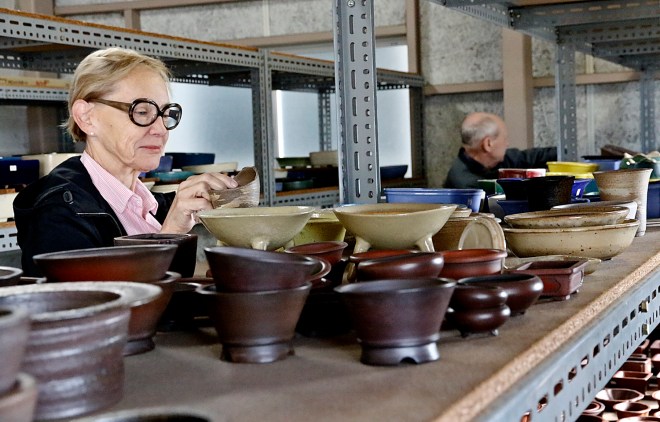
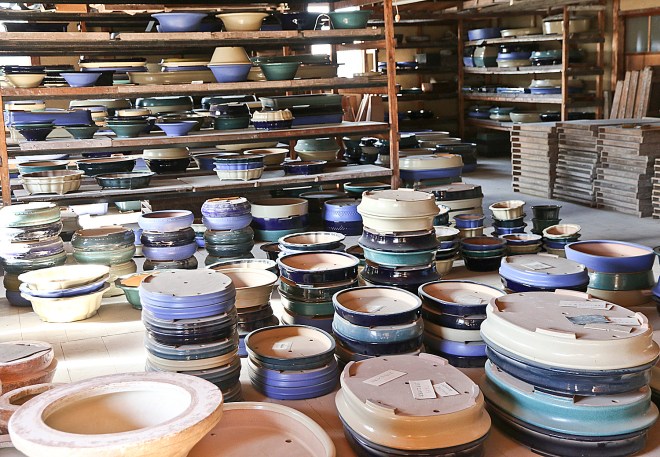
Tokoname is the name of a town known for centuries for producing ceramics. Although westerners associate Tokoname with good bonsai containers, it is most famous for producing tea bowls, sewer tiles and toilets, not bonsai pots.

1

About 20 years ago there were over 100 potters producing bonsai containers. Today there are only about 10 because of the Chinese imports. It’s important to realize that the inexpensive Chinese pots known in the United States is not what comes to Japan. There is a finer grade exported to Japan, so good, I’ve seen them at the Kokufu Bonsai Exhibition. There is an extensive color catalog issued every few years. The newest and current catalog is smaller, but still hefty. All the potters use the same catalog and the prices are consistent throughout Japan. You can’t get pots cheaper by coming to the factory, only one price.

One of popular tour extensions Kora and I offer for our members is a visit to Tokoname to purchase containers. We have a pot dealer which offers a substantial discount to our group and moves us around the town visiting different potters.


Yesterday we visited several potteries:

2

5

4

3

KOYO

Known for his spectacular glazes, mostly in small sizes. Mr. Koyo wanted to trade hats so we exchanged headwear.

 13

SHUHO

Here again Mr. Shuho has beautiful glazes and small and medium size pots.


IKKO

Both glazed and unglazed containers are made by Mr. Ikko

9

10

11

12

14


REIHO

This is one of my favorite potters because of the quality and unusual glazes. I can always find one of his pots for my deciduous bonsai. Now only Mr. Reiho and his wife produce pots. Mrs. Koyo makes small unglazed pots and finishes her husband’s work.


7

6

YAMAAKI

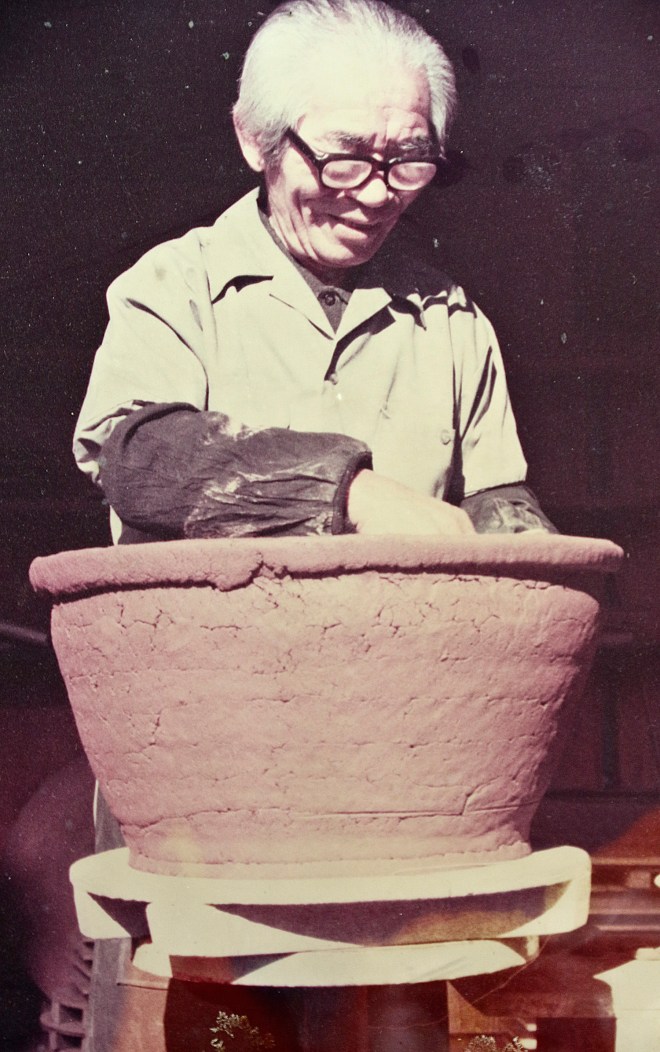
Although the Yamaaki Kiln is open for business, they stopped making pots several years ago. When I first came to Japan 45 years ago I had the opportunity to meet the founder of the Yamaaki Kiln, Mr. Sadamitsu Kataoka, and was pleasantly surprised to see an old photo of him hanging on the wall. It must be an old photo and not of the best reproduction. But, the photo you are seeing is better than the one hanging on the wall.


16

GYOZAN

Mr. Gyozan is considered to be the NO. 1 potter in Japan. He generally makes larger size unglazed pots alone. But, his lovely wife makes beautiful paintings on his smaller sizes.

15

He is known for purchasing back pots he made 35 years ago because of the unique coloring. The large container on the second shelf on the right in his showroom had a price of US$ 10,000.

17

He wanted to show our small group how he makes containers and proceeded to quickly make one. Then he smashed it and dumped it in the clay recycling container.

His quality and unique coloring are know around the world, even in China where they are producing replicas complete with Mr. Gyozan seal and signature on the bottom. He is now changing his identification marks and I saw one container signed “Gyozan” in cursive English.

It took a considerable time to account, pay and have all our pots packed up for our return trips to the United States, Puerto Rico, England and Australia. My plane departs Nagoya in a couple of hours so this will be the last blog for our annual autumn tour to Japan. I hope you enjoyed my brief reports as much as I did experiencing Japan.

18

2015 Autumn Japan Bonsai Exploration– Part 6

1

Daiju-en Bonsai Garden

We took the bullet train from Kyoto to Nagoya where we boarded our private bus for the day. First stop was Daiju-en Bonsai Garden of Toru Suzuki, third generation proprietor of the garden. I was fortunate to have known all three artists beginning with Saichi Suzuki over 35 years ago. Mr. Suzuki lived near a temple in Okazaki where a special cultivar of Japanese wisteria was growing. It had individual beautiful purple flower racemes, which can reach a length of SIX feet! Really. My chopstick size cutting gift from Mr. Suzuki is now thicker than me covering my “great wall” bonsai display. So far I’ve only been able to grow ONE flower to 56 inches, but I’m really not a size queen and truly appreciate those flowers of any length. He was one of the pioneers of pine bonsai and is most well known for the introduction of the Zuisho cultivar of Japanese five-needle pine. In the early 1950s, now last century, he was part of a private study group including Yuji Yoshimura and Fusazo Takeyama, Saburo Kato, Hiroshi Takeyama’s father among other prominent leaders of the bonsai community at that time.

4

3

10

9

8

6

Toshinori Suzuki, Saichi’s son took over the family garden and continued to develop techniques. He specialized in Japanese black and five-needle pine, Needle juniper and Cryptomeria. His son Toru, is now the proprietor and a current leader of the Japanese bonsai community. He is in charge of the recent Nippon Bonsai Taikan Exhibition we visited a few days ago.

2

During the war there was a 350 year old Miyajima Japanese five-needle pine bonsai sitting behind a cement wall in Hiroshima when the bomb was dropped. It survived and is now one of the most well known bonsai in the United States which is now part of the National Bonsai & Penjing Museum in Washington, D.C. What I found out this trip is that Saichi Suzuki was the artist responsible for its training. Now, there happened to be another bonsai sitting next to this bonsai which also survived the blast. This large size Japanese black pine now is in the Daiju-en Bonsai Garden, under the care of the third generation proprietor. It greets visitors upon entry to this compact bonsai garden.

5

7

11

There are numerous award winning bonsai in the garden, created by Saichi, Toshinori and Toru Suzuki. Mrs. Suzuki speaks English as was a help answering questions.


12

Shimpuku-Ji Temple

Our next stop for the day was in the nearby Shimpuku-Ji Temple, established in the 6th century. Now reduced in size, it still has a quiet beauty. The head priest Mr. Omura is a bonsai enthusiast and has one of the best collections of bonsai in Japan. Although not numerous, most are masterpiece bonsai creations of Saichi and Toshinori Suzuki.

15

14

No, I did not need to walk up OR down those steps to reach the temple.

18

Mr. Omura greeted and welcomed our group to his temple and spoke a bit about it’s history. He even took us behind the large ancient altar to show us sacred items. But more important for our group was visiting his modern bonsai museum.

16

17

20

25

21

22

19

24

13


Mr. Omura likes Princess persimmon and has many including a special display in his gallery. He even toured us through his “back area” not open to the public where he maintains his bonsai and develop new trees, especially Princess persimmon. He likes unusual deciduous bonsai, my favorite group of trees, and has great specimens of Forsythia, Rose, Hydrangea, Ivy, Witch Hazel and more.

29

28

27

23

We had a delicious vegetarian luncheon which featured bamboo since the temple grounds sits in a bamboo forest. All the dishes, utensils, cups, trays and most of the food was made from bamboo.

30

Mr. Komura showed us a Chinese quince bonsai he is preparing for the upcoming Kokufu Bonsai Exhibition in February. He also has many of the past Kokufu Award winning bonsai in his collection. All the bonsai are maintained by Mr. Omura, but Toru Suzuki and Boon assist when needed. Clearly you can see the enjoyment he gets by appreciating his bonsai collection.

26


2015 Autumn Japan Bonsai Exploration– Part 5

6P4A5361

Genko Kai Exhibition

On November 21-22, 2015 S-Cube sponsored and produced a special exhibition for the Genko-Kai, a small group of bonsai collectors with high quality bonsai and suiseki. Held in the Hoshu-In Buddhist temple, established in 1608, the complex is normally not open to visitors. This temple is in the Daitoku-Ji complex of numerous smaller temples of the Rinzai School of Japanese Zen including the popular Daisen-In on many garden tours.

The Genko-Kai is headed by Seiji Morimae comprised of his clients who want to share the beautiful bonsai and suiseki collections. He has superb taste in bonsai, suiseki and display.

Seiji Morimae designed the displays in the individual 11 rooms of the temple, each holding one to several bonsai or suiseki. Along with the help of his S-Cube staff Mr. Morimae presented an excellent selection of bonsai and suseki. They all suggest seasonality.

6P4A5343

6P4A5342

6P4A5360


Upon entering Hoshu-In a dramatic dry landscape sits in front of the main building with several smaller rooms, each tastefully arranged with bonsai and suiseki. The suggested route is to go around to the other side which is flanked by a pond and tall building which I forgot to photograph. I was preoccupied by absorbing the beauty and design of the garden.


6P4A5358

I was truly touched with this entire exhibition and the atmosphere of the presentation. Not too many exhibitions do that for me. That’s why when I returned to my hotel room I discovered many of my favorite trees were not photographed because I was studying them and how they were presented. That does not happen to often to me.

6P4A5355

Even though the lighting was dim, each tree and stone could be clearly seen, studied and appreciated. The low light, in good taste was not conducive for photographing, especially since it was necessary to sit on the floor for each display, not good for my knees. But, it is important to realize the purpose of this exhibition was not to take good photos in sufficient light, but rather to move your soul while appreciating bonsai and suiseki from private collections which are never or rarely displayed.

6P4A5356

6P4A5353

6P4A5351

Throughout Japan the best bonsai belong to private collectors who are clients of the bonsai artists. These trees are usually NOT part of the individual bonsai artist’s collections. When seen in bonsai gardens, foreigners normally assume all the trees belong to the bonsai artist. However most of the trees are simply boarded there for proper care, maintenance or for sale by clients.

6P4A5348

6P4A5349

Mr. Morimae’s lovely daughter Yukiko served tea in one of the tea room which also displayed a beautiful Persimmon bonsai while visitors marveled at the simple display.

6P4A5368

6P4A5377

6P4A5382

6P4A5379

6P4A5351

6P4A5336

In a separate building S-Cube set up a private sales area, also in good taste. Old famous containers and bonsai were offered for sale. I even saw a registered “Important Bonsai Masterpiece” Sargents juniper for sale. But, Mr. Morimae also included many affordable display tables and containers which friends purchased.

6P4A5378

6P4A5367

6P4A5374

Mr. Morimae also featured two Japanese five-needle pine bonsai from the Daizo Iwasaki Collection for sale, complete with certificate of provenence. Each tree and container for sale was labeled, but the label had to be turned over for pricing.

6P4A5380

There was one bonsai I wanted to buy, but could not get it into the country, or afford it either. It was only US $800,000.00, got to get all those zeros in. I even noticed and photographed this tree at S-cube last week. It was grown from a collected seedling by Mr. Koizumi for over 50 years. He is the manufacturer of Green King bonsai fertilizer.

6P4A5337

The Genko Kai Exhibition was a moving experience personally for me which featured stellar masterpiece bonsai and suiseki. I appreciate Mr. Morimae’s hard work, taste and desire to share the beauty of his client’s trees and stones. It’s important to realize ALL these items must be packed up and trucked back to Hanyu by his friendly and hard working staff. Even his wife and daughter were there to host and help when needed.

2015 Autumn Japan Bonsai Exploration– Part 4

_P4A5473

The 35th Nippon Taikan Bonsai Exhibition runs from Saturday through Tuesday. I was fortunate to have the privilege to watch the judging all day on Friday, before the exhibition officially opened, and attend all day on Saturday and Sunday. A few of the trees changed a bit with the autumn coloring and some dropped their leaves as well. I learned a great deal during the past three days and saw many long time friends, both from around the world and Japan.

_P4A54798

4

2

7

5

_P4A5463

_P4A5480

3


1

Japanese rose! I’ve never seen such a large s ize beautifully trained Japanese rose bonsai, and I’ve seen a lot. But was also surprising is that this award winning bonsai, (best deciduous bonsai) did not have a “proper” display table. OK, so someone made a wooden box and covered it with purple cloth, I can understand that. However it is too SHORT for the long cascading branch which is touching the table top. There is nothing wrong with innovation and creativity, but to make it too short is a mystery to me. Perhaps they ran out of wood, cloth or money? Anyways, a superb masterpiece Japanese rose which gave me much pleasure and a surprise. I’m always learning.


10

9

11jpg

12


Of course there was a sales area! Someone had to pay the high rent and also for the exorbitant electric bill for the great lighting.

13


16

Trident maple


17

Multi colored dwarf Star Jasmine


18

Sekka dwarf hinoki cypress


14

15

19

Japanese maple, NOT Trident maple, a beauty!

_P4A5475


6

20

24

21

23

22


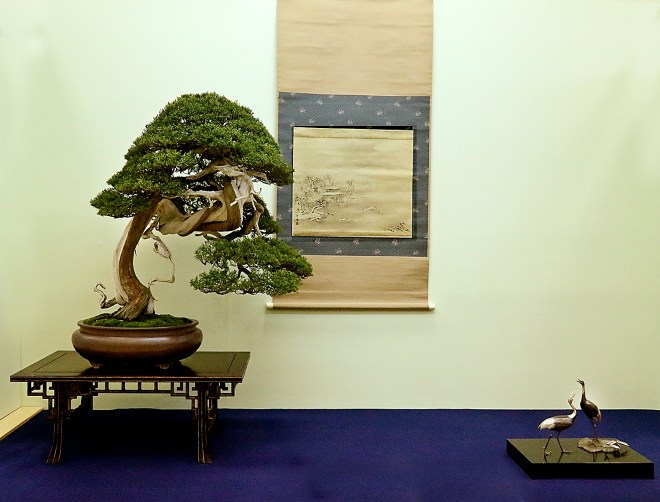
I’m quite interested in the appreciation of bonsai through the art of display. Companion plants are commonly displayed with bonsai to enhance the display. I’m currently working on my ninth bonsai book, this time on the display of bonsai. So, many photos of companion plants were taken, perhaps a few might be used for the new book. In the meantime enjoy the beauty of these small jewels which are nearly essential for bonsai display. They are most commonly used to suggest seasonality especially with evergreens which don’t change much during the year. Some species turn “bronze” during cold weather (for protection) and can indicate winter, however. A hanging scroll or painting is also used to denote the season with evergreens as can an accessory (ornament, other art or natural object.)

25

These are the last group of photos of the exhibition for this blog. I hope you enjoyed looking at the beautiful Japanese classical bonsai as much as I have for three days- wish it could have been more. Finer quality photos will appear in a future International Bonsai issue.

26

2015 Autumn Japan Bonsai Exploration– Part 3

49

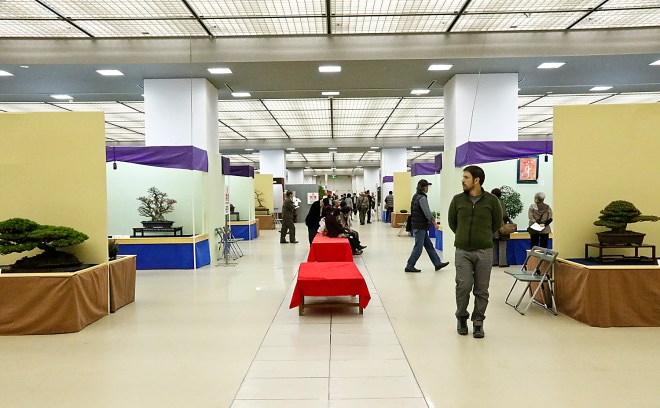
The 35th Nippon Bonsai Taikan Exhibition takes place at the Miyako Messe in Kyoto, Japan on November 21-24, 2015. This is probably the second most popular and one of the largest bonsai Exhibitions in Japan, at least in Western Japan. Over 250 displays contain many more bonsai since some have two or possibly three trees, plus the shohin bonsai compositions. Only four shohin bonsai compositions were displayed, probably because the Gafu Bonsai Exhibition will take place in the same room in early January which is the top shohin bonsai exhibition.

48

47

46


The quality of bonsai selected for the exhibition is not as high as the Kokufu Bonsai Exhibition in February. But rather, professional bonsai artists select trees from their clients. Mr. Kimura told me that actually the judging for this exhibition is much more difficult than the Kokufu Bonsai Exhibition because only one tree per category must be selected, while for the February exhibition approximately five trees are selected for the coveted Kokufu Prize.

45

44

43

42

41

40

39

37

38

35

Set up and judging take place on Friday, the day before the opening of the exhibition. Three or four outstanding bonsai from each category are selected by professional bonsai artists. The trees were placed on long tables down the center of the exhibition hall in the following categories: large, medium and small size evergreen, deciduous and satsuki bonsai. Then shohin bonsai, rock plantings, literati style and several suiseki categories. I was surprised to see only one, two or three stones were selected for each category, but many more were in the exhibition.

33

34

32

31

After lunch comes the interesting part, as the judges make the final selections for the top awards. All of the bonsai selected in the morning are outstanding, and any would be worthy of awards. However, several of the final judges are not too familiar with bonsai but are important art, media and political figures. Of course the top officers of the Nippon: Bonsai, Shohin, Professional, Suiseki and other organizations are members of the judging team. They sometimes guide the others into the fine qualities of bonsai.

30

A few days ago I noticed two outstanding bonsai in Mr. Kimura’s garden which belong to his clients I guessed they would be prize winners. Both were excellent and both won the top two awards, a Japanese black pine and Needle juniper. I guessed correctly…..

20

21

There were three special displays by: Mr. Baba with a comprehensive display of vintage Tokufuji containers, a Korean hornbeam bonsai display from a client of Kenji Oshima and a new modern display from one of Shiji Suzuki’s clients. This was a most unique “modern display” designed by Seiji Morimae. I was surprised that the bright silver background photographed nicely, much better than the purple, green and yellow backgrounds of the main exhibit. Have you ever tried to photograph a golden Trident maple against a yellow background? Although photos were again allowed by the general public (GREAT), the trees were displayed for aesthetic appreciation rather than for photos so anything I can capture is good. Each tree was professionally photographed for the upcoming commemorative album.


Modern Bonsai Display designed by Seiji Morimae featuring three bonsai and two suiseki from Shinji Suzuki’s client

29

28

27

26

24

25

23

22

Enjoy the nearly 50 photos of “bonsai porn” as my friends call the photos in this blog. Also, please remember that finer quality photos will be published in a future issue of International BONSAI magazine. These photos are only quickly adjusted to show you highlights of our bonsai tours. There was not a blog entry yesterday because my jet lag is now over and got a good night’s sleep rather than waking up at 3 am to correct photos and produce this blog. More to come from this superb exhibition, plus another fine surprise.

19

18

13

10

14

12

15

5

9

8

4

16

2


7

6


11

Difficult to explain this exhibit, come to one of my programs…

1


2015 Autumn Japan Bonsai Exploration– Part 2


23

1

8

6


Thursday morning was spent at the Shunka-en Bonsai Museum of Kunio Kobayashi in Tokyo, Japan. The beauty of bonsai displays here is unparallel in Japan.

2

3

4

22

24

25

26

Mr. Kobayashi’s apprentice Jin speaks English and explained the many displays and bonsai in the museum to our group. He mentioned we were lucky, normally about 15 bonsai are on display, but today there are over 50 trees because of an autumn exhibition with client’s bonsai.

9

7

14

10

11

12

5


Every time I visit Shunka-en Bonsai Museum there are more and more bonsai, mostly larger sizes which Chinese clients like. Also there were a great number of suiseki all packed up, complete with display tables for next February’s Nippon Bonsai Suiseki Exhibition. Mr. Kobayashi is the current chairman and the accepted stones are collected to be photographed for the album in his garden. I hand carried Mike Pollock’s and my suiseki for the exhibietion which will be in February, during Part 2 of the Kokufu Bonsai Exhibition. Actually, they were both carefully packed in bubble wrap, then in a box inside one of my suitcases. Suiseki are not permitted as hand carry items because they can be lethal weapons, guess you knew that already.

16

17

15

28

27

20

18

19

25


13

Recently Mr. Kobayashi finished constructing an apprentice dormitory with 7 bedrooms, 2 showers and 2 toilets. Additionally, an imported wooden stove from Norway was installed on the ground floor. Mr. Kobayashi is now a master pizza chef enjoying making the Italian pies, nearly daily in his new fireplace. I caught him cleaning the ashes from his new hobby preparing for tonight’s dinner.

6P4A4787

29

30

31

21