Amy Liang Bonsai Museum Opening– And New Book Release


6P4A5084.jpg

6P4A5031.jpg

On Thursday, November 3, 2017, international bonsai master Professor Amy Liang formally opened her new Bonsai Museum at her home in Taipei, Taiwan. As always, Amy’s impeccable and distinctive attire matched her photogenic persona. She changed her clothes three times that afternoon, each more beautiful than the previous. Her museum is called “Purple Garden” matching her beautiful Chinese style purple outfit.

IMG_1300.jpg

I’ve visited her collection several times in the past and she has extensively expanded her garden to effectively display her bonsai collection, all around her property. When entering her bonsai museum people were escorted upstairs into a museum reception area with gift shop. Amy warmly greeted her guest and was autographing her new book, The Revelations of Bonsai, reflecting on her 50 year milestone bonsai journey. Books were flying off the shelves as Amy individually autographed copies for her guests. I had to patiently wait in line for 30 minutes twice, I returned to get more copies for friends back home. Her friendly staff photographed Amy as she posed with her guests. The large size hardcover, and quite heavy, new 302 page book is beautifully produced and full of color and black and white photos of her life, thoughts and bonsai activities around the world for the past half century.

IMG_5261.jpg

IMG_5774.jpg

Together with her doctor husband they have five lovely daughters who all look quite similar. Her husband showed me around as he was proud of his wife’s accomplishments. Each daughter helped the 1,200 guests during the day.

6P4A5077.jpg

IMG_4496.jpg

IMG_7765.jpgThe bonsai garden museum is large and is segmented into about five areas, each featuring small displays of several bonsai. A room was also dedicated to her collection of Suiseki and viewing stones.


6P4A5006.jpg6P4A5026.jpg6P4A5030.jpg

6P4A4995.jpg6P4A5001.jpg6P4A5005.jpg6P4A5000.jpg6P4A4999.jpgThere were a large number of small and miniature size, enough to make another posting of these diminutive treasurers later.

IMG_8976.jpg6P4A5019.jpg6P4A5053.jpg6P4A5021.jpg

6P4A5057.jpg6P4A4991.jpg6P4A4994.jpg6P4A5029.jpg6P4A5072.jpgA buffet was available next to the ceremony area which began at 3:30 pm. Short speeches preceded the actual “Official Opening and Book Release” along with her granddaughter’s dancing. Invited VIP guests were called to the stage and given a long popper to twist and open at the exact opening. Suddenly red and white confetti was all over the place as a large gold and red balloon package exploded revealing a huge replica of her new book.

6P4A5079.jpg

6P4A5081.jpg

Later in the early evening Amy hosted a private dinner party for 380 of her friends and family. Singers and dancers added to the festivities. There were so many people in the large room that there were remote TVs set up throughout so guests could enjoy the festivities as they dined on a special delicious meal. What a wonderful ending for a beautiful lady’s special day. Amy also arranged for four buses to take here guests to Taichung for the next day’s opening of the bonsai convention three hours away.

IMG_1325.jpg


Join Us In A Small Tour To See Japan’s Finest Bonsai


1.jpg

Have you ever considered to visit the Japan bonsai community?


6P4A4610.jpg

Here is your opportunity to experience the finest bonsai exhibition in the world PLUS to visit private bonsai collections, gardens and the Japan Suiseki Exhibition. A visit to Tokoname to purchase bonsai containers is also available too!

10.jpg


In early February Kora Dalager and I will be leading another one of our popular value-priced trips to Japan. Only a small number of members will be accepted for this tour so we will have ample time to fully appreciate the beauty of the treasured bonsai in Japan.


6P4A6752.jpg

6P4A6748.jpg

Omiya Bonsai Village, the mecca of bonsai, will be experienced, where you will see the top four bonsai gardens where many of the famous masterpiece bonsai have been created and are maintained. You will have the opportunity to meet the top bonsai artists and see their trees, both outdoors and in small indoor displays.


14.jpg


The Omiya Bonsai Art Museum, near the village will be on the tour where formal instructive displays, in English, can be seen as well as formal bonsai alcove displays. You can then stroll through a large outdoor garden with masterpieces displayed throughout. Directly across the street we will experience a delicious Japanese luncheon.

8.jpg


Bonsai artist Masahiko Kimura will be on the tour and here you can see many of the top evergreen bonsai in his small, intimate garden. He always has time for us and answers your questions as well.

21.jpg


27.jpg


6P4A6670.jpg


121.jpgA visit to Seiji Morimai’s nearby S-Cube bonsai garden is always a highlight because of friendly hospitality while seeing thousands of bonsai and suiseki. He also accepts credit cards as well…. Bonsai containers, at great prices as well as display tables and art are always popular with our groups.

_P4A6607.jpg


4.jpg

6P4A6629.jpg


Kiunio Kobayashi’s Shunka-en Bonsai Art  in Tokyo is visit you will not forget. Here approximately ten indoor formal bonsai displays will feature some of the finest, and most expensive bonsai in Japan. Outdoors a small koi pond is surrounded with other masterpieces. Having run out of room, another area has been constructed on top of the building holding antique containers and more suiseki. Truly a breathtaking experience!

2.jpg

11.jpg28.jpg

7.jpg

17.jpg


A bullet train ride will bring you to the city of Shizuoka near Mt. Fuji, where Taisho-en Bonsai Garden of Nobuichi Urushibata will be visited. Although the garden generally specializes in shohin bonsai, Mr. Urushibata’s son Taiga has large dynamic bonsai. He studied with Mr. Kimura and is also traveling to the upcoming 2018 6th US National Bonsai Exhibition in September to judge and demonstrate his techniques.


18.jpg

20.jpg


28.jpg

34.jpg


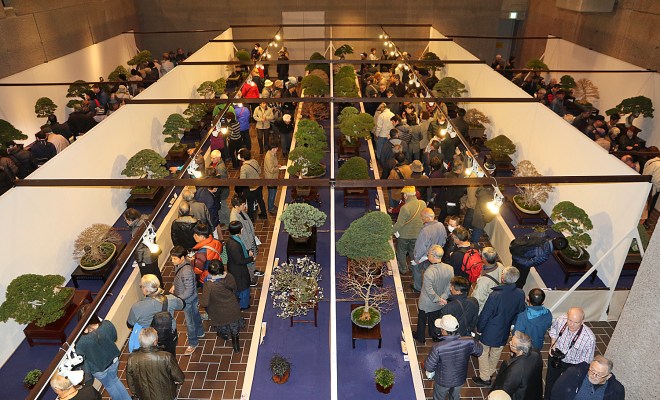
Of course, the main highlight of this tour is the Koku-fu Bonsai Exhibit Part 1 where approximately 250 stunning masterpiece bonsai are on formal display in the Tokyo Metropolitan Art Museum. Many of the famous masterpieces seen in books and magazines will be shown. After the exhibit closes for a day ANOTHER 250 bonsai will be displayed in Part 2!

00000.jpg

00.jpg

7.jpg


14.jpg

3.jpg


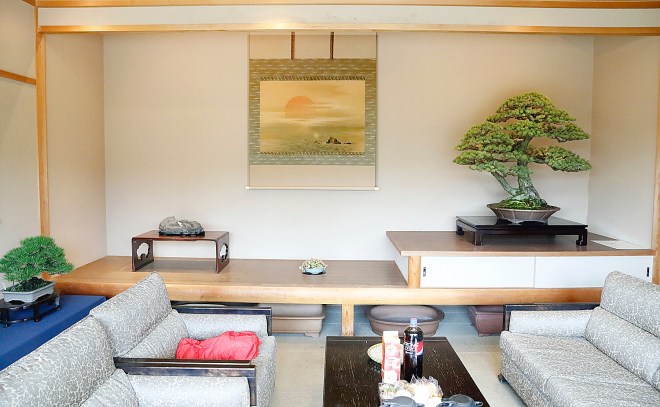
Upstairs on the fourth floor of the same building you will have the opportunity to attend the opening ceremony of the Japan Susiseki Exhibition. Here, in addition to rare and beautiful famous stones you will see antique water basins and important bonsai display tables. Suiseki are also displayed with appropriate hanging scrolls.

4.jpg

6.jpg

7.jpg

A free shuttle bus from the museum complex will take you to the Ueno Green Club, a three story building full of bonsai, containers, tools, display stands and more are offered for sale by the top bonsai gardens in Japan. The surrounding parking lot is also crammed full of items for sale.

6P4A0320.jpg

6P4A0325.jpg

6P4A0329.jpg


If members are interested a short buying side trip can be arranged to Tokoname, an ancient pottery town. Although most famous for toilet bowls, they are now famous for high quality bonsai containers. You will meet some of the top bonsai potters and also have the opportunity to watch them hand build bonsai containers in their factories. All the containers are offered at special discounted prices for our tour.0.jpg


13.jpg


12.jpg


As if all of this is not enough, our tour has been planned to begin the day after the popular California Shohin Bonsai Seminar near San Francisco, CA. Many people simply make a stop in California on their way to Tokyo (usually at no extra airfare,) attend the seminar and continue on to Japan. Additional information on this seminar can be found at: www.calshohin.org

CA SHOHN SEMINAR.jpg

California-Shohin-Seminar-How-it-Works_Page_2-1024x496.jpg


3.jpg

2018Flyermed.jpg

If you want to see highlights from our past tours to Japan, check out my archives and go to the February entries. Here you will see many photos from our tours.

https://valavanisbonsaiblog.com/2017/02/

https://valavanisbonsaiblog.com/2016/02/

https://valavanisbonsaiblog.com/2015/02/


6P4A6724.jpg


36.jpg

Join Kora Dalager and me for another tour to see the Japanese bonsai world. Please contact Kora at kora@astound.net for additional information. She can arrange special visits if you like. Be certain to mention if you are interested in the Tokoname bonsai container buying trip, as it is NOT mentioned in the tour flyer below.


A tour flyer is available at: www.internationalbonsai.com/files/1708315/uploaded/WINTER%202018%20TOUR%20FLYER.pdf


I look forward to exploring the Japanese bonsai world with you in February.


IMG_9363.jpg

Trident Maple Clump Style Development

TRIDENT CLUMP

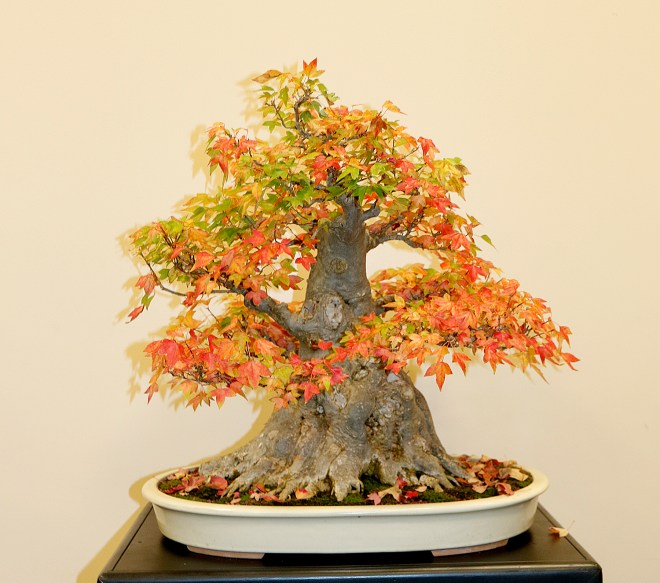
When I returned home on Monday from teaching in California, I was greeted by my Trident maple clump in brilliant autumn coloring. A few other bonsai are also just starting to show color. Hopefully my garden and bonsai will be colorful when I return home from Taiwan next week. On November 11, 2017 at 1pm EST, I’ll be doing a question and answer live broadcast from my garden and hopefully the garden and bonsai will be colorful. Check out Bonsai Empire for the details: http://www.bonsaiempire.com

1

Before removing from the stone about 15 years ago in MAY.

The history of this bonsai and its development is interesting. Several decades ago Philis Wishnick created a rock planting with at least seven Trident maples, Acer buergerianum, in a class under the direction of Yuji Yoshimura. The stone is solid granite which Mr. Yoshimura shaped and glued a small rock on the bottom for stability in the correct orientation for optimum beauty.

She gave me the bonsai about twenty years ago with a few missing trees from her original design. I put the bonsai in my display garden and just watered it (intelligent neglect.) I had the rock planting for many years and simply watered it and did light trimming. Eventually the roots filled the peat much soil mixture and became large, so large that it pulled the anchoring wires Mr. Yoshimura cemented on the stone pulled off. Often I would lift the bonsai off the stone and dunk it in a pail of water to keep it hydrated.

2

3

4

Still not thin enough

5

6

Eventually, I had to do something to keep it alive so in mid-May, when the Trident maple was in FULL leaf it was removed from the rock, easy, just lift. My assistants Doug McDade and Doug Taylor helped me with the transplanting. I directed as the two took a reciprocating saw and simply sawed off the bottom of the root ball. It was not quite thin enough for me so we peeled off another layer. The reciprocating saw is a handy tool for me and often used when transplanting bonsai.

8

Front or back view

7

Front or back view


Only four of the original trunks remained and had grown together creating a clump style bonsai. I carefully positioned the Trident maple clump in a new container so it would look good from both sides. Since I’m not Japanese using four trunks did not bother my aesthetic sense.

The bonsai grew well and was maintained as a bonsai with two acceptable fronts. This is handy when displaying and a left to right eye movement is needed and also when a right to left eye movement is required for effective display, especially in areas with a solid wall on one side.

The bonsai was only transplanted once since it was removed from the stone. I don’t remember defoliating the bonsai, especially not during this past growing season. This Trident maple naturally had small neat foliage.


By the way, the original granite stone now has a multiple trunk Benichodori Japanese maple growing on it which looks good from both sides, an indication of a well-designed bonsai. It too also needs transplanting.

MAPLE ROCK


Enjoy autumn, it does not last that long….

2017 Golden State Bonsai Federation Convention– Part 3 The Viewing Stone Exhibit

SIGN.jpg

6P4A4938.jpg

6P4A4925.jpg

6P4A4937.jpg

6P4A4932.jpg6P4A4934.jpg

6P4A4949.jpg

6P4A4931.jpg

6P4A4950.jpg

6P4A4947.jpg


6P4A4929.jpg

6P4A4921.jpg

6P4A4922.jpg

6P4A4916.jpg

6P4A4945.jpg

6p4a49231.jpg

The next and largest section is devoted to viewing stones of North America. The following section highlights several contemporary viewing stones displays.


6P4A4940.jpg

6P4A4935.jpg

6P4A4944.jpg

6P4A4927.jpg

6P4A4926.jpg

6P4A4915.jpg

_P4A4919.jpg

6P4A4945.jpg

6P4A4917.jpg

6P4A4924.jpg

6P4A4928.jpg

6P4A4942.jpg

_P4A4951.jpg

Finally, this exhibition ranges from traditional to contemporary while acknowledging the growing popularity of viewing stone connoisseurship around the world.


6P4A4953.jpg6P4A4943.jpg


2017 Golden State Bonsai Federation Convention– Part 2 The Judged Bonsai Exhibit, Demonstrations & Workshops

6P4A4905.jpg


_P4A4977


6P4A4974.jpg


The Judged Bonsai Exhibit consisted of about 20 bonsai of varying sizes with an excellent representation of mixed species and styles. A colorful Trident maple and Firethorn in fruit added seasonality to the exhibit. The bonsai were judged and awards several awards were presented. Adequate space was allocated to present creativity in formal bonsai display.


6P4A4970.jpg

6P4A4903.jpg


6P4A4967.jpg


6P4A4902.jpg

6P4A4909.jpg


6P4A4968.jpg


6P4A4904.jpg


6P4A4969.jpg


6P4A4971.jpg


6P4A4 879.jpg

6P4A4975.jpg


6P4A4901.jpg


6P4A4900.jpg


Demonstrations & Workshops6P4A4959.jpg

Then three headliners for the convention, Kunya Kobayashi (Japan), Boon Manakitivipart (California) and David Nguy (California), presented several lecture/demonstrations, critiques and workshops. Other artists conducted 24 workshops, 4 seminars of a wide range of topics and 10 critiques of all three exhibits.

6P4A4955.jpg


6P4A4957.jpg


IMG_3965.jpg


IMG_1775.jpg

IMG_1376.jpg


IMG_0652.jpg


IMG_5686 2.jpg


I was kept busy presenting two seminars (Literati Bonsai and Dwarf Japanese Maple Bonsai,) a workshop and two critiques. During my first seminar on Literati Bonsai, Kunio Kobayashi and his two apprentices came to watch my presentation. My slide program was finished and I was simply demonstrating on three small young plants to illustrate different forms of literati style. Unfortunately, while wiring, bending and shaping a small skinny Double Flowering Water Jasmine, the trunk snapped, twice, in front of Mr. Kobayashi with loud cracking sounds heard throughout the room. The bonsai evolved from a small size bonsai to shohin size and nearly mame bonsai size….!

IMG_4717.jpg


IMG_6715.jpg

2017 Golden State Bonsai Federation Convention– Part 1 The Main Bonsai Exhibit

6P4A4876

The 40th Golden State Bonsai Convention was held on October 26-29, 2017, in Riverside, California. This well organized, run and attended event is probably the best annual bonsai convention in the United States. It is well supported by approximately 50 bonsai clubs in California and several affiliated clubs in adjoining states.

6P4A4880

6P4A4878

The annual convention, held in the north one year and in the south in alternate years, consists of excellent lecture/demonstrations, workshops, critiques, seminars, exhibits and dinner banquets where attendees can enjoy bonsai fellowship. A large vendor area is always a highlight of the convention with items from throughout California and the United States are   for sale.

6P4A4879

6P4A4884.jpg

This year there were three bonsai exhibits: the main bonsai exhibit, a judged bonsai exhibit and viewing stone display as well.

6P4A4881.jpg


6P4A4882.jpg

The Main Bonsai Exhibit

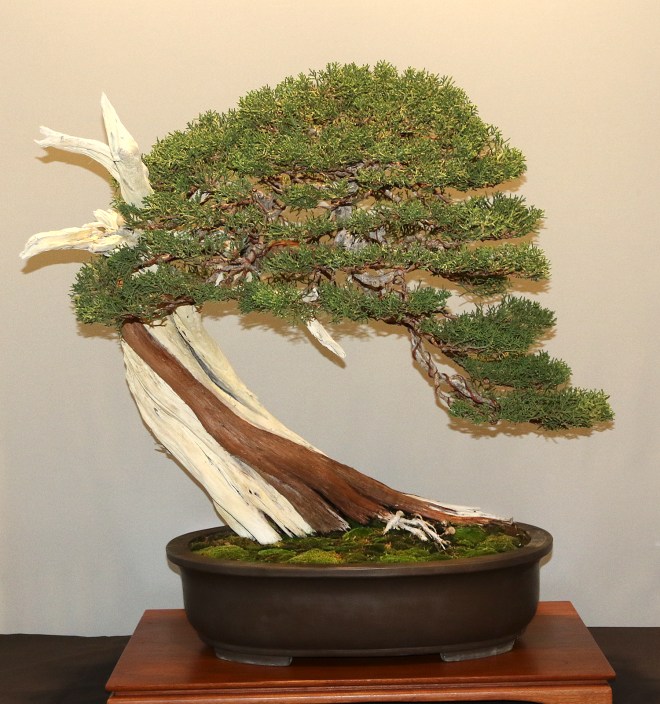
This year the Main Bonsai Exhibit consisted of beautiful and healthy mostly large size evergreen bonsai. They were individually impressive, but collectively as an exhibit nearly all were narrow-leaf evergreens which was boring and lacked seasonality because they were all mostly dense green crowns. Yes, there was a Serosa, a Chinese elm and Satsuki azalea along with two shohin bonsai compositions, but they were mostly green as well and lacked variety of species and sizes.

6P4A4883.jpg

6P4A4   892.jpg


6P4A4885.jpg


6P4A4888.jpg


6P4A4891.jpg


6P4A4892.JPG


6P4A4894.jpg


6P4A4896.jpg6P4A4898.jpg


6P4A4893.jpg


6P4A4899.jpg

Discover Shikoku! The Journey Within– Part 5 (Final Part)

RAIN


A Rainy Visit to Ritsurin Park

6P4A4678


IMG_2095

IMG_6610

IMG_6607

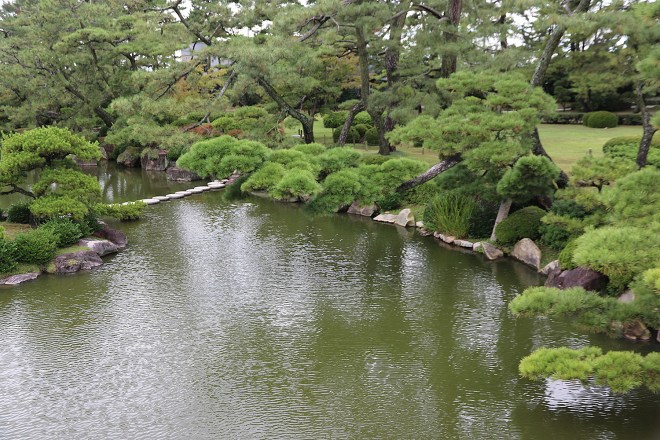
It rained on and off during most of my five-day visit to Shikoku which preceded Typhoon Luca packing 142mph winds and heavy rains. I left just before it was forecast to hit Tokyo on Monday, and had difficulties connecting on line on my last day in Japan. On Saturday morning we were treated to a special treat, a private traditional breakfast featuring delicious local vegetables in an old teahouse in Ritsurin Park. The tokonoma alcove had a beautiful ikebana flower arrangement which was a refreshing change from the TV displayed in the alcove the night before in my hotel room. Only fine treasured items are usually displayed in this special area. I guess some value TVs more than art.

6P4A4668

6P4A4685


6P4A4688

6P4A4705


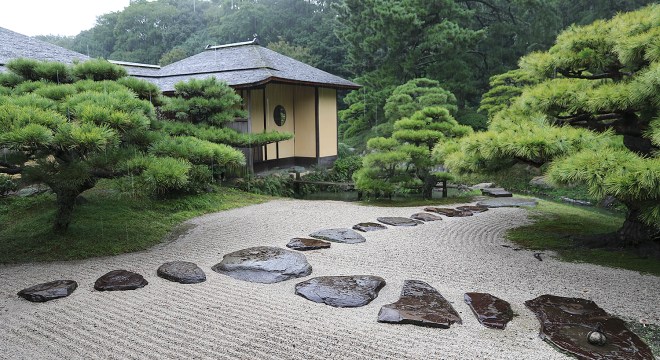
Ritsurin Park took on a misty feeling during the pouring rain as we strolled through the garden with umbrellas and my camera wrapped in a towel. There is a large trained Japanese five-needle pine garden tree in front of the Kikugetsu Tea House near the edge of the main pond. It originally was a bonsai over 300 years ago when the Emperor presented it to the Feudal Lord. Since it was a treasured gift from the Emperor, it was not maintained as a bonsai and was planted in the garden. The garden tree grew and is trimmed yearly and the long horizontal branches are supported with large wooden logs. The Japanese five-needle pine was started from a grafted tree on to Japanese black pine, which has now features exposed roots. I’ve been admiring its beauty for 47 years and delighted to see it each time I visit Ritsurin Park.

6P4A4695

6P4A4712

Ritsurin garden was started in 1625 by the Feudal Lord and was later transferred to the powerful Matsudaira Clan in 1642 that developed, enlarged and completed the garden design. A descendant, Count Yorinaga Matsudaira was keen for small size bonsai and with his wife developed one of the first, largest and most famous collections of shohin bonsai. He also assisted and supported the establishment of the Kokufu Bonsai Exhibition which began in 1934, held twice yearly. He had a featured display from his collection in every exhibition until his death in the 1940s which his wife continued until her passing in the early 1980s. I feel honored to be the caretaker of one of his original Japanese maple shohin bonsai.


 _P4A4860.jpg

30th Kokubunji Bonsai & Green Festival– Creative Bonsai Displays

Several years ago a local Takamatsu High School began a project where high school girls enrolled in an industrial arts program used bonsai to display their hand made furniture. Both wood and glass were used for their projects. I was impressed with their creativity and there were always a group of proud students with their happi coats answering questions.

_P4A4418.jpg

_P4A44    34.jpg

_P4A4420.jpg

_P4A4421.jpg

_P4A4422.jpg

_P4A4428.jpg


6P4A4819.jpg

_P4A4813.jpg

6P4A4834.jpg

6P4A4835.jpg

6P4A4842.jpg


6P4A4853.jpg


6P4A4854.jpg

Valavanis Bonsai Demonstration

IMG_0401.jpg6P4A4739.jpg

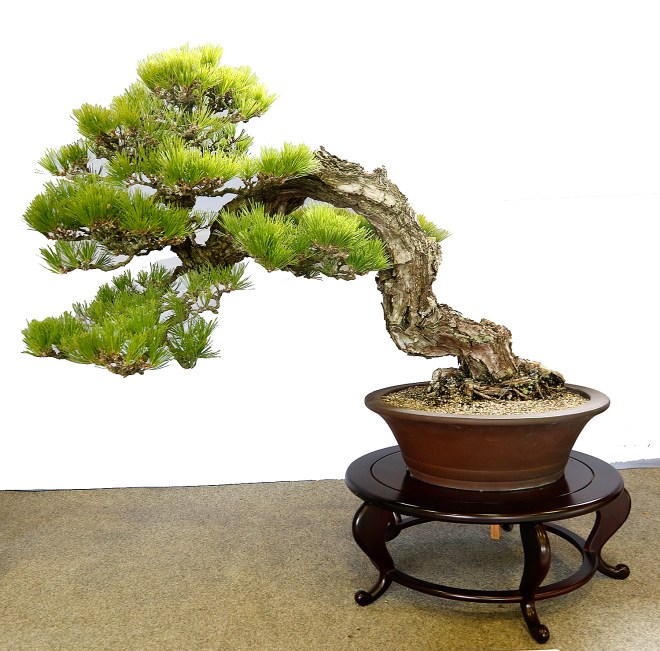
Again, I was honored during this trip to present a lecture/demonstration at the 30th Kokubunji Bonsai & Green Festival. Koji Hiramatsu provided an excellent Japanese red pine which collected by a client of his about four years ago. It is approximately 50 years old and was well established in a training pot and was even tied in for extra stability.

IMG_0161.jpg

Hiro Yamaji’s son, Takamasa (Taka,) was my assistant for my demo which was translated by Gerald Rainville from British Columbia, Canada, where he operates Shikoku Bonsai Canada. Jerry originally studied with Hiro Yamaji and Koji Hiramatsu’s father in the 1980s. He returned to Kokubunjiu to help with the exhibition.

6P4A4752.jpg

IMG_3413.jpg

Taka is currently an apprentice with Minoru Akiyama in Yamanashi, Japan, and returned home to help his family with the festival. Later that evening he left the festival and family to join Mr. Akiyama on their way to Philadelphia to work on the Kennett Collection. He did a great job assisting me and even helped Jerry translate “Sissy Wire” from English into Japanese for my demo, many of the audience chuckled. I look forward to watching Taka develop as a bonsai artist and the third generation of the Santo-en Bonsai garden of Hiro Yamani.

IMG_5128.jpg

IMG_9031.jpg

6P4A4780.jpgDiscover Shikoku part 5


All three of us worked for about an hour to a full house audience who wanted to see what a foreigner could do styling Japanese bonsai. The final adjusted photo of the demonstration tree is my projected future development of the bonsai.

FUTURE.jpg

This concluded my short five-day visit to Shikoku Island for the Japanese government tourist bureau to research and promote the wonders of beautiful Shikoku. But, I’ll return to Japan in a few weeks, (after teaching next week in California and the following week in Taiwan) for the Japan Bonsai Taikan Exhibition. Two weeks ago I was teaching in China and last week I was in Washington, DC. And returned home to complete my bonsai classes.


IMG_5458 2.jpg

Watch for my article in a future issue of International BONSAI, and visit Discover Shikoku!

http://www.discovershikoku.com

logo


Discover Shikoku! The Journey Within– Part 4

BLACK PINE


35th Kinashi Bonsai & Garden Tree Festival

The 35th Kinishi Bonsai & Garden Tree Festival was also held on October 20-22, 2017 a short ride from the Kokubuji Bonsai Green Festival in the town of Takamatsu.

_P4A4561

6P4A4579

6P4A4578

6P4A4563

_P4A4576

_P4A4571

_P4A4568

_P4A4566

Although the formal display was not as large, all the bonsai were stunning. The main emphasis of this festival seemed to be both the indoor and outdoor sales areas with some unbelievable prices.

6P4A4585

6P4A4582

6P4A4601

6P4A4611

6P4A4587

6P4A4594

Japanese black pine, US$115.

6P4A4596

Japanese black pine, US$ 158. Really!!

6P4A4597


Nakazu Bansho Garden

3

Nakazu Bansho Garden was built by the second feudal lord of Marugame, who lived in a castle up high on a hill, but wanted to enjoy the beautiful scenic Seto Inland Sea close up. So, he constructed a large stroll garden next to the sea. The area has now been built up over the past several centuries, but a wall has been built to indicate the original sea shore line. This garden is about an hour’s drive from Takamatsu and worth every minute of the time needed to get there. The garden also has two museums, one for ceramics and the other devoted to paintings.


6P4A4637

6P4A4625

6P4A4637

6P4A4657

One of the highlights of the Nakazu Bansho Garden is a trained Japanese black pine in the shape of an umbrella. It consists of only ONE tree and has been trained for hundreds of years. Small posts hold up the century old heavy branches. There are over 1,500 trained pine trees throughout the garden. An area is devoted to Camellias which were full of fat buds for their autumn splendor.

6P4A4636

6P4A 4623

6P4A4639

6P4A4614

6P4A4649

6P4A4653

6P4A4623

The pond was designed in the shape of Lake Biwa, north of Kyoto and several bright red bridges which carry visitors from one side of the pond to the other. The views are breathtaking and its now one of my favorite, if not the favorite garden in Japan.

6P4A4646

6P4A4643


6P4A4660


1

6P4A4612


Watch for my article in a future issue of International BONSAI, and visit Discover Shikoku!

http://www.discovershikoku.com


Discover Shikoku! The Journey Begins– Part 3


6P4A4515

30th Anniversary Kokubunji Bonsai Green Festival

The 30th anniversary of the Kokubunji Bonsai Green Festival is being held on October 20-22, 2017, in the town of Kokubunji. This is one of the two bonsai production towns or areas of Takamatsu. The other bonsai area is Kinashi, more on that festival in a future blog.

_P4A4429

Hiro Yamaji and Koji Hiramatsu are the main organizers and leaders of this large and important festival which attracts thousands of bonsai hobbyists. The exhibition is comprised of both armature, professional and invited bonsai.

RIBBON CUTTING

I was honored to participate in the Opening Ceremony and Ribbon Cutting, yes, complete with white gloves standing on a red carpet. Sound familiar? They also had a Taiko Drum Presentation, which is missing and will not be part of our US National Bonsai Exhibitions… .

6P4A4401

6P4A4398

Mr. Saito, a bonsai collector from Okayama and Director of the Nippon Bonsai Association had a special exhibit of seven of his finest masterpieces on display. They were magnificent and all have been displayed in past Kokufu Bonsai Exhibitions, many award winning. I’m quite familiar with many of these bonsai and am including old photographs of their true naked beauty from past shows.

6P4A4404.jpg


KIYO HIME.jpg

Kiyo Hime Japanese maple in a deep container. If you are wondering where that beautiful blue glazed antique is, look at the image of the Chinese quince. That’s a famous container often appearing in both the Kokufu and Taikan Bonsai Exhibitions.

Mr. Saito also has large special displays at the November Taikan Bonsai Exhibitions which have themes. In the past he has exhibited several masterpiece Japanese maples, Korean Hornbeam, Hinoki cypress, Chinese quince and many others. Kenji Oshima is the curator of his collection. Next month he will display Pomegranates.

6P4A4511.jpg

QUINCE.jpg

6P4A4400.jpg


BUNA.jpg


6P4A4485.jpg


_P4A4431.jpg


_P4A4499.jpg


6P4A4502.jpg

_P4A4434.jpg


6P4A4470.jpg

6P4A4471.jpg

This cut leaf Japanese maple has excellent trunk taper which is hidden this season. I’ll have to return during the winter season to enjoy its naked beauty. But, I really don’t need a reason to return to Japan.

_P4A4417.jpg

_P4A4450.jpg

_P4A4478.jpg


_P4A4442.jpg


_P4A4437.jpg

6P4A4472.jpg


_P4A4497.jpg


6P4A4473.jpg

6P4A4447.jpg6P4A4486.jpg


The sales area was hopping with sales. It seemed that mostly shohin bonsai were for sale and blossoming companion plants were popular with the lady visitors.


6P4A4512.jpg

6P4A4538.jpg


6P4A4518.jpg

6P4A4526.jpg


All the bonsai were beautiful, especially a special display featuring “Creative Displays,” which I’m certain will interest Westerner who want to express individually, or something different than classical Japanese bonsai. That’s a hot topic which I don’t have the time to discuss here and now.

_P4A4418.jpg


Watch for my article in a future issue of International BONSAI, and visit Discover Shikoku!

”www.discovershikoku.com

logo


logo


Discover Shikoku! The Journey Within– Part 2


6P4A4211

Yesterday we traveled in our large comfortable van from Kochi in southern Shikoku Island to Kagawa in the north. Even with the light, sometimes heavy rain the drive was beautiful going through mountain passes and in many tunnels. Mist was rising from the mountains and some spectacular views of waterfalls and native trees were enjoyed.

The City of Takamatsu is the capital of Kagawa Prefecture and home to the largest bonsai pine production in Japan. According to 2014 figures, 219 bonsai nurseries shipped 75,000 bonsai valued at approximately US $2,400,000. There are two major production areas, Kinishi Bonsai Village and Kokubunji Bonsai Village. Each has their own bonsai festival in April and October, this weekend and I’ll report on them in the next blog entry.

6P4A4219

Kandaka Shoju-en Bonsai Nursery

This is one of the oldest and most respected bonsai nurseries on Shikoku Island and now operated by fifth generation bonsai artist Keiji Kandaka. His father, forth generation is now 84 years old and still working, while the sixth generation son and grandson is also working in the nursery.

6P4A4249

Keiji Kandaka

_P4A4281

This is the season to remove old needles

6P4A4269

Mr. Kandaka’s father

_P4A4287

Mr. Kandaka’s son– sixth generation of Kandaka Shoju-en Bonsai Nursery

6P4A4210.jpg

6P4A4209.jpg

I first visited Kandaka Shoju-en Bonsai Nursery in 1970, when all of us were younger. The main focal point of this garden is a huge, 200 year old trained Japanese black pine garden tree, not bonsai. There are two main branches, each spreading about 25 feet in each direction, but trained horizontally, about one foot high. The trunk rises from the center and is quite powerful. I’ve been told Chinese buyers want this tree, but it would be impossible to ship.

6P4A4237

6P4A4243

I asked Mr. Kandaka about the origin of this container. He was not certain but said perhaps Shigaraki or Tokoname-ware.

6P4A4216

6P4A4219

6P4A4223

6P4A4251.jpg

Duplicate State.jpg

6P4A4267.jpg

Masterpiece famous bonsai are throughout the nursery and there are thousands of smaller commercial quality bonsai, many which would be show worthy “masterwork” bonsai in the United states. I saw a few interesting cascade Sargent juniper bonsai trained with three main trunks, but it was raining and difficult to properly photograph. Even with Photoshop they will be hard to correct. But, I’ll try later in my spare time, IF I ever get any.

 6P4A4291.jpg

Kokubunji Bonsai Center

The approximately 20 bonsai nurseries in Kokubunji formed a cooperative sales area, open to the public where each nursery offers their trees for sale.

6P4A4305.jpg

6P4A4292.jpg

6P4A4321.jpg

6P4A4292.jpg

6P4A4323.jpg6P4A4300.jpgWhile we were there Hiroyoshi Yamaji, second generation bonsai grower pulled in with two trucks to pick up trees for sale at the festival tomorrow. He was accompanied by his wife and son, who is now an apprentice with Minoru Akiyama. He returned home to help the family business during this important event. Sound familiar? Loving wife and sons returning home to help. The bonsai industry, both in Japan and the United States is still considered to be a “cottage industry” dependent on family support.

6P4A4318.jpg

_P4A4314.jpg

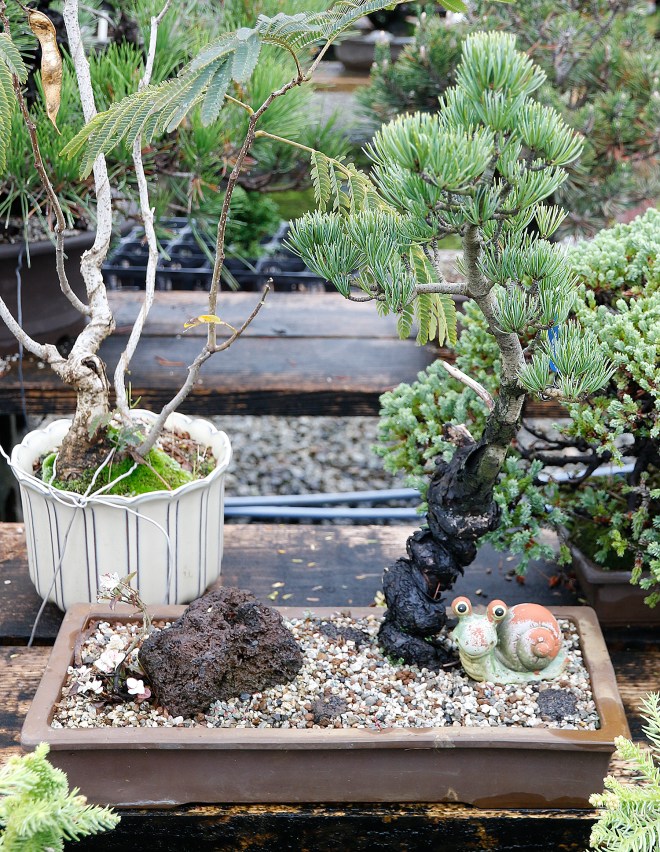
Most of the bonsai were pines, of course, but there was a smaller are under shade cloth for deciduous, small and azalea bonsai.
_P4A4311.jpg

_P4A4309.jpg


6P4A4324.jpg

Bonsai Shrine

This was the first time I’ve visited the Bonsai Shrine. See, I have not seen everything yet, but enjoying trying. The shrine dedicated to the God of plants, trees and flowers. It is high up on a steep hill and when arriving, you must walk down slippery metal steps only to go back up on steep concrete steps. They were slippery, especially in the rain and I’m proud to say I got up AND down again on my own two feet, which have been broken six times, first time broken in Omiya Bonsai Village.

6P4A4326.jpg

6P4A4326.jpg

Next to the Bonsai Shrine there is a huge stone commemorating the significant contributions of the Suezawa family to the bonsai production area. I remember a Mr. Suezawa about 30 years ago and he was over 80 years old at that time. He owned “Suezawa Heights” as well as many good pine bonsai. When I went shopping, he wanted cash in hand before I selected bonsai. I said OK, but need plastic bags. He stopped, thinked, then rode his bicycle down, and back up the mountain with bags so he could make a sale.

 6P4A4330.jpg

Konishi Shoraku-en Bosnai Nursery

Operated by Yukihiko Konishi, this nursery produces pine bonsai as well as brokering large trained garden trees for sale to the Chinese market. His son produces blueberries under shade cloth to protect the delicious fruit from hungry birds.

6P4A4337.jpg


6P4A4341.jpg


6P4A4359.jpg


6P4A4358.jpgMr. Konishi was recently awarded a government sash award medal for his contributions to bonsai. He is also active in ASPAC (Asia Pacific Bonsai & Suiseki Association) and the (WBFF) World Bonsai Friendship Federation where he is a consultant, like me to help the organization. In 2011, he was the chairman for the successful and well attended ASPAC Convention in Takamatsu. He is one of the prime leaders of Japanese bonsai and I frequently see him around the world at bonsai conventions and exhibitions. I’ll be with him in a couple of weeks in Taiwan.

6P4A4332.jpg

6P4A4357.jpg


6P4A4355.jpg

He showed us a new Japanese black pine seedling introduction he is propagating. It’s an unnamed selection which has short needles, but are quite attractive because of their angled character.


Mr. Konishi has many fields and he showed us how Miyajima Japanese Five-needle Pine are produced. Young Japanese black pines are used as understock to produce good roots. They are tightly wired and developed in the ground. The wire is NOT removed, but rather bites into the trunk and swells into interesting forms. In a few years the wire scars disappear.

6P4A4353.jpg

6P4A4352.jpg6P4A4349.jpg

The Nishiki (Cork bark) Japanese black pine develops bark into “wings” and adds to create an interesting heavy trunk. By the way, this bark characteristic is can also be seen on Japanese red and Japanese five-needle pines, as well as a few deciduous species. The pines are mostly grafted, but there are a few cultivars which will root. Although the bark is disnctive and adds impact to the bonsai design, it is not easy to produce a bonsai with a thick lower trunk to create taper. Usually the lower trunks are thin and do not appear to be attractive. However, with skill, some propagators can produce low grafts where the bark seems to roll over presenting a thick lower trunk with taper. The Nishiki Japanese black pine was once popular and quite expensive, but was over produced and not widely grown here now. In the past decades, I’ve seen fields of beautiful developed Nishiki Japanese black pines, plowed down to make room for other varieties which have value.

6P4A4302.jpg

A good graft


_P4A4315.jpgA poor graft

_P4A4285.jpg

6P4A4342.jpg


I saw an interesting Nishiki (Cork bark) Japanese black pine in Mr. Konishi’s display area. The bonsai had a different character than others I’ve seen and studied. I know there is a cultivar with only develops the winged bark on branches, rather than the trunk. However, Mr. Konishi explained that this bonsai was collected from a nearby mountain 50 years ago and is not grafted, even though it looks like it. He told me that it had thick bark which was quite heavy and fell off, only leaving the winged bark on the branches. I suggested super glue…..

6P4A4259.jpg

BoPoster for the Kinishi Bonsai & Garden Tree Festival. YES, I know what the

Watch for my article in a future issue of International BONSAI, and visit Discover Shikoku!

http://www.discovershikoku.com

logo