Discover Shikoku! The Journey Within– Part 2


6P4A4211

Yesterday we traveled in our large comfortable van from Kochi in southern Shikoku Island to Kagawa in the north. Even with the light, sometimes heavy rain the drive was beautiful going through mountain passes and in many tunnels. Mist was rising from the mountains and some spectacular views of waterfalls and native trees were enjoyed.

The City of Takamatsu is the capital of Kagawa Prefecture and home to the largest bonsai pine production in Japan. According to 2014 figures, 219 bonsai nurseries shipped 75,000 bonsai valued at approximately US $2,400,000. There are two major production areas, Kinishi Bonsai Village and Kokubunji Bonsai Village. Each has their own bonsai festival in April and October, this weekend and I’ll report on them in the next blog entry.

6P4A4219

Kandaka Shoju-en Bonsai Nursery

This is one of the oldest and most respected bonsai nurseries on Shikoku Island and now operated by fifth generation bonsai artist Keiji Kandaka. His father, forth generation is now 84 years old and still working, while the sixth generation son and grandson is also working in the nursery.

6P4A4249

Keiji Kandaka

_P4A4281

This is the season to remove old needles

6P4A4269

Mr. Kandaka’s father

_P4A4287

Mr. Kandaka’s son– sixth generation of Kandaka Shoju-en Bonsai Nursery

6P4A4210.jpg

6P4A4209.jpg

I first visited Kandaka Shoju-en Bonsai Nursery in 1970, when all of us were younger. The main focal point of this garden is a huge, 200 year old trained Japanese black pine garden tree, not bonsai. There are two main branches, each spreading about 25 feet in each direction, but trained horizontally, about one foot high. The trunk rises from the center and is quite powerful. I’ve been told Chinese buyers want this tree, but it would be impossible to ship.

6P4A4237

6P4A4243

I asked Mr. Kandaka about the origin of this container. He was not certain but said perhaps Shigaraki or Tokoname-ware.

6P4A4216

6P4A4219

6P4A4223

6P4A4251.jpg

Duplicate State.jpg

6P4A4267.jpg

Masterpiece famous bonsai are throughout the nursery and there are thousands of smaller commercial quality bonsai, many which would be show worthy “masterwork” bonsai in the United states. I saw a few interesting cascade Sargent juniper bonsai trained with three main trunks, but it was raining and difficult to properly photograph. Even with Photoshop they will be hard to correct. But, I’ll try later in my spare time, IF I ever get any.

 6P4A4291.jpg

Kokubunji Bonsai Center

The approximately 20 bonsai nurseries in Kokubunji formed a cooperative sales area, open to the public where each nursery offers their trees for sale.

6P4A4305.jpg

6P4A4292.jpg

6P4A4321.jpg

6P4A4292.jpg

6P4A4323.jpg6P4A4300.jpgWhile we were there Hiroyoshi Yamaji, second generation bonsai grower pulled in with two trucks to pick up trees for sale at the festival tomorrow. He was accompanied by his wife and son, who is now an apprentice with Minoru Akiyama. He returned home to help the family business during this important event. Sound familiar? Loving wife and sons returning home to help. The bonsai industry, both in Japan and the United States is still considered to be a “cottage industry” dependent on family support.

6P4A4318.jpg

_P4A4314.jpg

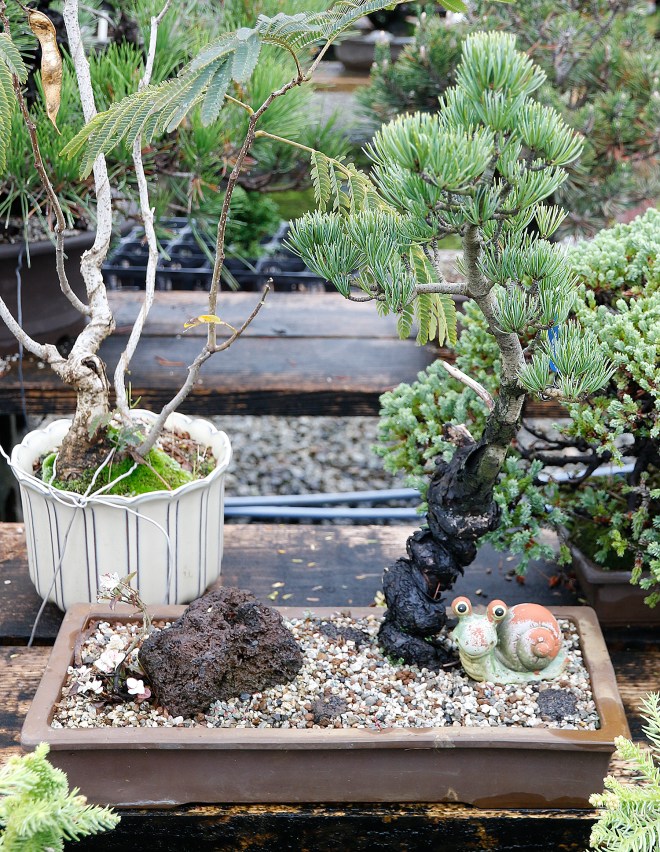
Most of the bonsai were pines, of course, but there was a smaller are under shade cloth for deciduous, small and azalea bonsai.
_P4A4311.jpg

_P4A4309.jpg


6P4A4324.jpg

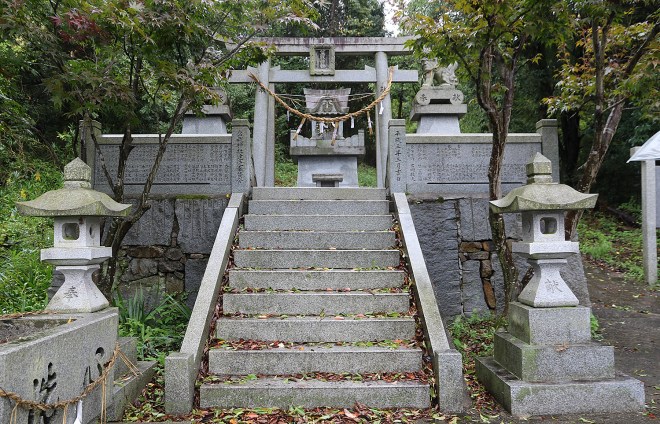
Bonsai Shrine

This was the first time I’ve visited the Bonsai Shrine. See, I have not seen everything yet, but enjoying trying. The shrine dedicated to the God of plants, trees and flowers. It is high up on a steep hill and when arriving, you must walk down slippery metal steps only to go back up on steep concrete steps. They were slippery, especially in the rain and I’m proud to say I got up AND down again on my own two feet, which have been broken six times, first time broken in Omiya Bonsai Village.

6P4A4326.jpg

6P4A4326.jpg

Next to the Bonsai Shrine there is a huge stone commemorating the significant contributions of the Suezawa family to the bonsai production area. I remember a Mr. Suezawa about 30 years ago and he was over 80 years old at that time. He owned “Suezawa Heights” as well as many good pine bonsai. When I went shopping, he wanted cash in hand before I selected bonsai. I said OK, but need plastic bags. He stopped, thinked, then rode his bicycle down, and back up the mountain with bags so he could make a sale.

 6P4A4330.jpg

Konishi Shoraku-en Bosnai Nursery

Operated by Yukihiko Konishi, this nursery produces pine bonsai as well as brokering large trained garden trees for sale to the Chinese market. His son produces blueberries under shade cloth to protect the delicious fruit from hungry birds.

6P4A4337.jpg


6P4A4341.jpg


6P4A4359.jpg


6P4A4358.jpgMr. Konishi was recently awarded a government sash award medal for his contributions to bonsai. He is also active in ASPAC (Asia Pacific Bonsai & Suiseki Association) and the (WBFF) World Bonsai Friendship Federation where he is a consultant, like me to help the organization. In 2011, he was the chairman for the successful and well attended ASPAC Convention in Takamatsu. He is one of the prime leaders of Japanese bonsai and I frequently see him around the world at bonsai conventions and exhibitions. I’ll be with him in a couple of weeks in Taiwan.

6P4A4332.jpg

6P4A4357.jpg


6P4A4355.jpg

He showed us a new Japanese black pine seedling introduction he is propagating. It’s an unnamed selection which has short needles, but are quite attractive because of their angled character.


Mr. Konishi has many fields and he showed us how Miyajima Japanese Five-needle Pine are produced. Young Japanese black pines are used as understock to produce good roots. They are tightly wired and developed in the ground. The wire is NOT removed, but rather bites into the trunk and swells into interesting forms. In a few years the wire scars disappear.

6P4A4353.jpg

6P4A4352.jpg6P4A4349.jpg

The Nishiki (Cork bark) Japanese black pine develops bark into “wings” and adds to create an interesting heavy trunk. By the way, this bark characteristic is can also be seen on Japanese red and Japanese five-needle pines, as well as a few deciduous species. The pines are mostly grafted, but there are a few cultivars which will root. Although the bark is disnctive and adds impact to the bonsai design, it is not easy to produce a bonsai with a thick lower trunk to create taper. Usually the lower trunks are thin and do not appear to be attractive. However, with skill, some propagators can produce low grafts where the bark seems to roll over presenting a thick lower trunk with taper. The Nishiki Japanese black pine was once popular and quite expensive, but was over produced and not widely grown here now. In the past decades, I’ve seen fields of beautiful developed Nishiki Japanese black pines, plowed down to make room for other varieties which have value.

6P4A4302.jpg

A good graft


_P4A4315.jpgA poor graft

_P4A4285.jpg

6P4A4342.jpg


I saw an interesting Nishiki (Cork bark) Japanese black pine in Mr. Konishi’s display area. The bonsai had a different character than others I’ve seen and studied. I know there is a cultivar with only develops the winged bark on branches, rather than the trunk. However, Mr. Konishi explained that this bonsai was collected from a nearby mountain 50 years ago and is not grafted, even though it looks like it. He told me that it had thick bark which was quite heavy and fell off, only leaving the winged bark on the branches. I suggested super glue…..

6P4A4259.jpg

BoPoster for the Kinishi Bonsai & Garden Tree Festival. YES, I know what the

Watch for my article in a future issue of International BONSAI, and visit Discover Shikoku!

http://www.discovershikoku.com

logo


Discover Shikoku! The Journey Within– Part 1

6P4A4102

I was invited to Shikoku Island in Japan by Kohei Kubota (Discover Shikoku!) and Takahiro Miyazaki (International Tourism Division for Shikoku) to visit and report on interesting sites for bonsai tourists. I arrived on Tuesday evening and we began our exploration in the city of Kochi on early Wednesday morning. Although I’ve been visiting Shikoku Island since 1970, I’ve never had the opportunity to visit Kochi and looked forward to the adventure.

6P4A4124

Shikoku Island is comprised of four prefectures (Shikoku means four provinces), Kagawa, Ehime, Tokushima and Kochi which is the largest most southern prefecture. It is a popular stop for the Shikoku Pilgrimage which visits 88 important official temples.

 6P4A4107

Chikurin-Ji Temple

Founded by Gyoki, a Buddhist high priest in 724, this temple is a treasure to experienced, not to be missed. Monk Yamada showed us around highlighting the important and interesting sights. In the main hall we saw a small statue of Buddha, but was quickly pointed out that the main statue was stored in the large wooden box behind. It is brought out once every 50 years and the last time it was viewed was three years ago. We did not the required 47 years to wait, so must return then to see it then, if I’m alive…

hh

6P4A4122

6P4A4121

6P4A4111

6P4A4109

6P4A4118

6P4A4123


6P4A4116.jpgThe grounds and gardens were immaculate and there were many large old garden trees. I was impressed to see large Hinoki cypress, Chamaecyparis obtusa, growing with several small seedlings beneath growing in the lush moss. Very few people have actually seen the common, species Hinoki cypress, which is an important timber tree in Japan. Most people are familiar with the Dwarf hinoki cypress, a common garden tree frequently trained for bonsai.

 6P4A4125

Makino Botanic Garden

Next to the Chikurin-ji is the Makino Botanical Garden, which was originally land belonging to the temple. Dr. Tomitaro Makino was a well-known botanist who collected 400,000 botanical specimens and named over 1,500 species. When I first came to Japan in 1970 I was immediately introduced to his Flora of Japan book by my teacher Kyuzo Murata, Kyuka-en Bonsai Garden, in Omiya Bonsai Village. This books if filled with beautiful botanical drawings and is an important volume in my bonsai reference library which I often use today.

6P4A4144

I was excited to visit this botanical garden opened in 1958 to honor Dr. Makino and his accomplishments. The bronze stature of him is holding a tall mushroom which was one of his favorite plants.

6P4A4148

The hills and valleys were scenic and appeared to be natural, but every plant was planted in certain locations in important botanical sequences.

6P4A4139 copy

6P4A4126

goyo

Japanese five-needle pines, Pinus parviflora

blackJapanese black pines, Pinus thunbergii

6P4A4131

6P4A4138

Pinus thunbergii ‘Ogi’  which has fasciated or crested growth. Interesting and rarbe, but not suitable for bonsai

red

Japanese red pines, Pinus densiflora

6P4A4128

We were fortunate to visit yesterday because they had a special exhibit of pines. There were three sections to the display featuring Japanese five-needle pine, Japanese red pine and Japanese black pines. These were displayed for their unique cultivars, NOT for their bonsai forms. I found this especially valuable for my education because I’ve only read about some of these cultivars, not actually having seen them. There were single needle cultivars of Japanese red and black pines, as well as golden Japanese red pines and cork bark cultivars.

6P4A4164

6P4A4165

Outside the pine exhibit were a few large Chabo Hiba hinoki cypress. This dwarf cultivar was used for bonsai in the early 1900s and many of the historic first bonsai imported to the United States were of this cultivar, which is difficult to find.

6P4A4140

There was another exhibit building featuring Chinese and Japanese native orchids which were in full flower with aromatic blossoms. Across from the orchid display was a special exhibit of Acorus, or Dwarf sweet flag, Acorus gramineus.

6P4A4142

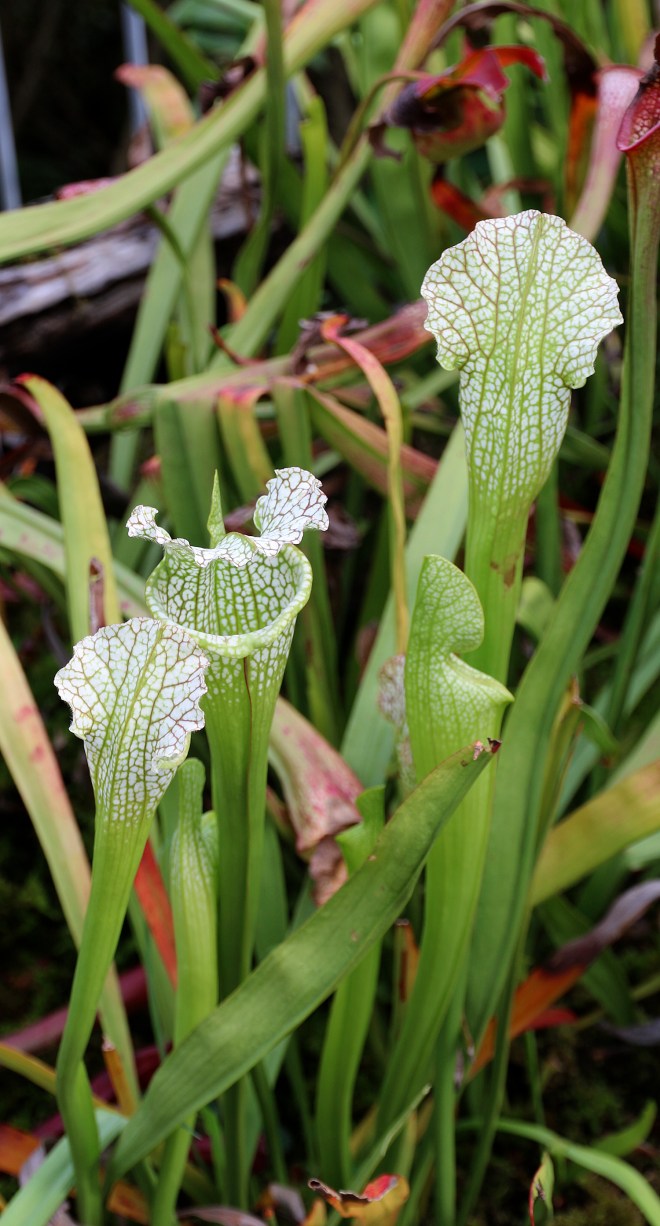
Walking through the botanical garden was a tropical greenhouse in the distance. Many plant species which are used for bonsai training were seen as we walked through the hilly gardens. In the greenhouse were unusual tropical plants and an outdoor display of carnivorous plants, several native to the United States. Nearly every plant in the botanical garden was labeled, which I found helpful.

6P4A4149

6P4A4151

6P4A4154

6P4A4158

6P4A4163

This carnivorous plant looks like Dark Vader!

This visit was valuable for me. There is more to bonsai art than just pruning, wiring and shaping… which most people do not understand or appreciate.

 6P4A4180

Garden of Monet

6P4A4181

Views are appreciated for their scenic reflections

There are only two official “Gardens of Monet” in the world and we were fortunate to visit the one near Kochi. Claude Monet was a founder of French impressionist painting and loved and treasured Japan’s ukieo-e wood block prints. He developed his personal garden in France so he could paint beautiful scenes. The village of Kitagawa developed this unique Garden of Monet.


6P4A4166

6P4A4167

6P4A4172

6P4A4169

6P4A4171


We were fortunate to be guided by the head gardener who explained many interesting facts. The original garden, opened in 2003 duplicated exactly the original garden in France. However, as the French plants grew, they failed because of the difference of moist and wet climates. So, this garden changed to Japanese species which are in the “spirit” of Monet. The head gardener visited France and Europe to study the scenes and species and has done a superb job developing and maintaining the Garden of Monet, which features vast areas of colorful flowers, as well as water gardens with blue water lilies Monet liked to paint. Plus, a garden of light was developed.

6P4A4176

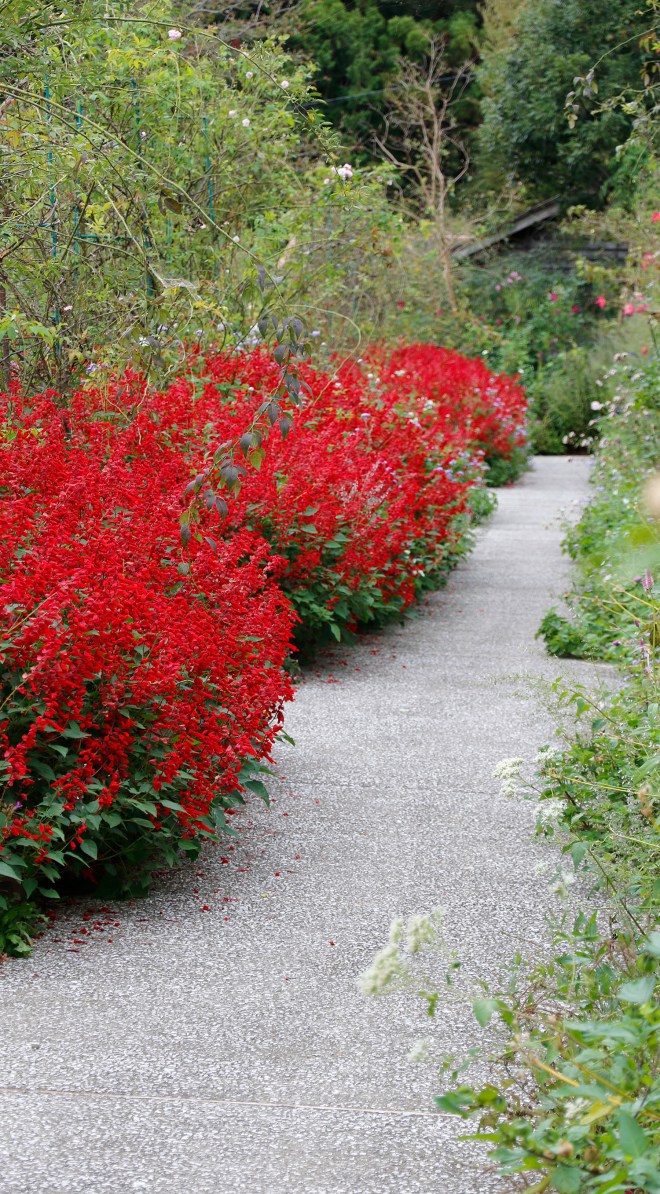
Although the gardens and vistas looked unkempt, they are actually planned and skillfully maintained. I also saw something new “Super Salvia” a tall growing Salvia from the United States.

 6P4A4193

Oka Palace

Next, we briefly visited the Oka Palace, developed by a wealthy merchant built in 1844. The Tosa Clan Lord would stay in the Oka Palace during his stay in the area, preparing for his required visit to Edo, every year. His procession was comprised of 500 people and took two to three months.

6P4A4190

We visited his sitting room, slightly elevated from other rooms and saw where he sat viewing his small garden featuring a trained garden tree which has been trained to look like a dragon’s face. Since the Tosa Lord was not there, I took the privilege to use his seat to enjoy the garden view.

6P4A4192

6P4A4187 6P4A4195

Ioki Cave

On our return trip back to Kochi City we stopped at the Ioki Cave which was made by flowing water andsandstone erosion from earthquakes some three million years ago. This well-known cave for its peaceful and healing properties.

6P4A4196

The entrance was dark, and I was a bit apprehension to enter because it was completely dark inside. I saw a small white bag hanging on a stick and was told it keeps the wild boars away. Later we were told the cave is home to bats, poisonous snakes and wild boars. Following the winding path in the shallow water (we were given boots and helmets) suddenly the sky opened up to a magnificent sight. I thought I was in Jurassic Park!

6P4A4198

The cave is well known for its unique fern communities. Forty different fern species are native in this cave. Japan has 400 to 600 different fern species. Kochi Prefecture has more native ferns than all of North America.

6P4A4199

That was quite busy day, especially with Jet lag! Next we cross Shikoku Island to Kagawa Prefecture home to the Takamatsu area featuring the finest pine bonsai production in the world.

6P4A4203

6P4A4200

Watch for my article in a future issue of International BONSAI, and visit

Discover Shikoku!

http://www.discovershikoku.com

2017 4th Zhongguo Feng Penjing Exhibition– Part 4 Stones, Sales Area & More

_P4A3675

_P4A3582

Mixed in with the shohin bonsai displays were beautiful stone arrangements, small and elegant of course. They were displayed on traditional shohin bonsai box stands. Some of the stone arrangements had artificial trees, very cute and probably took a great amount of time to create, but easy to care for.

_P4A3676

_P4A3580

6P4A3500

_P4A3570

_P4A3571

_P4A3577

_P4A3604

There were several displays featuring grasses and two hanging bonsai as well.

_P4A3679

_P4A3651

_P4A3652

_P4A3653

_P4A3872

_P4A3715


The entire exhibition was held in the center of a huge greenhouse complex. Surrounding the exhibition on three sides, but still in the greenhouse complex was the sales area which wrapped around the exhibition.

6P4A3973

6P4A3972


On one side there were mostly plants and bonsai, from young untrained material to developed, and heavy bonsai which needed to be moved by a fork lift. All looked healthy and clean. Nearly all were Chinese, but I did spot many Japanese imports. Since I’ve been to Japan a couple of times, I can easily recognize Japanese bonsai, especially the Satsuki azaleas. I did not spend too much time looking at the plants because they were too tempting and I did not want to get into trouble. But, if they were easily importable, I would have purchased many.

_P4A3655

6P4A3513

6P4A3976

6P4A3977

6P4A3975

There seemed to be a great number of sales areas devoted to shohin bonsai, containers and display tables. Hand carved root stands were abundant if you looked. In June I had a difficult time finding the perfect size shohin display table for a Sargent juniper displayed at the 2017 US National Shohin Bonsai Exhibition held in North Carolina. Suddenly I came across a wide selection of small square display tables. When I approached the salesperson he looked proud of his hand made tables and took one off the table and stood on it. It was only three inches square, but quite strong. Unfortunately the airline personal were stronger and I now have a “kit.” But I purchased several of different sizes for future displays.

6P4A3979

6P4A3984

6P4A3981

6P4A3978

6P4A3514

6P4A3985

6P4A3657

The larger size bonsai containers were quite elegant. Each registrant received a beautiful commemorative container upon arrival. Two of the identical containers were put into the auction and were sold for $2,000 and $3,000. Each container was numbered and the ones auctioned had special numbers which are considered lucky.

6P4A3504

This bonsai was planted on an interesting piece of driftwood and looked different.

6P4A3794

A couple of more photos of the demonstrators. Elsa Boudouri from Greece created a beautiful Japanese black pine, while Chris Xepapas from Australia shaped a cascade Sargent juniper while I shaped another Japanese black pine. We were three Greeks, but never had the opportunity to get a group shot together. So it takes two images to get us all together.

6P4A3792

6P4A3803

Two Greeks and my Australian friend & assistant

The entire exhibition was great, well organized and hosted by friendly young people who spoke English and were helpful. A big thanks to the three groups organizing the event and to Robert Steven who arranged for the demonstrators from around the world. Well done!


2017 4th Zhongguo Feng Penjing Exhibition– Part 3 Exhibition

1

2

3

I was very pleased to see this exhibition, as it was different from others I’ve seen in China. There were a wide range of different styles and sizes represented which presented an interesting balance, something for everyone. I was told it “almost” represented all the different styles of bonsai in China. Some of the bonsai were huge, while most were of average size. But I believe there were more individual shohin bonsai than larger trees. The only reason I’m in one of the photos is for size comparison, but remember, I’m not that tall. Good things come in small sizes. Compare the prices of small bonsai containers to larger pots.

4

_P4A3870

_P4A3694


The exhibition was in a huge greenhouse complex with shading on the ceiling to shield the harsh sun and intense heat. Red and white flags decorated the ceiling to break up the wide expanse. Surrounding the exhibition, but still in the greenhouse complex, were the vendors offering a wide range of products and plants which will be in Part 4.

_P4A3881

_P4A3868

_P4A3880

_P4A3680

_P4A3681


The layout and design of the exhibition was great! Three walls surrounded the exhibition which displayed shohin and small size bonsai. The lighting and white backgrounds were perfect for photographing and a good representative can be seen in Part 1 of this blog.

_P4A3877


The central part of the bonsai exhibit was a delightful stroll through a maze of tall yellow backgrounds which were able to be put side to side to make a wider background for the larger size trees t. It was easy to get lost, but everywhere one turned you could see another beautiful small display which lead visitors through a lovely stroll through the bonsai. All were painted yellow and were of different heights which provided an interesting view for the visitors. The yellow color was not perfect for photos, but the exhibition was not set up for photographers. Nearly every background wall had a much lower attached lower block where a shorter bonsai or was displayed.

_P4A3695

_P4A3722

_P4A3724


Careful and thoughtful taste was used when grouping the trees into effective smaller displays, many quite distinctive. In most cases, size and direction of the trees were considered.

_P4A3728

_P4A3729

_P4A3685

Common Pomegranate, not the dwarf cultivar

_P4A3731

_P4A3878

_P4A3882

_P4A3883

_P4A3887

_P4A3888

_P4A3889

_P4A3891

_P4A3893

There were several grass plantings. An identical 3 foot wide planting of  Dwarf Acorus planted with stones on a marble tray sold for US $3,000. in the auction.

_P4A3900

_P4A3903

_P4A3922

_P4A3904

Note the display table has been cut on one side

_P4A3905

_P4A3928

6P4A3885

6P4A3918

6P4A3982

This shohin Japanese black pine was in the sales area, not the exhibition

_P4A3699

This was my personal favorite bonsai in the exhibition

_P4A3678

As in most of the exhibitions I’ve attended in China, the opening ceremony and first day were extremely crowded and made it difficult to photograph the exhibition. But on the third day one could roll a bowling ball through the exhibition and not hit a single person. On the first day seven busses were necessary to move people from our beautiful and comfortable hotel to the exhibition. On our last day, everyone fit in one bus.

_P4A3929

2017 4th Zhongguo Feng Penjing Exhibition– Part 2 Demonstrations

3

While over 10,000 people enjoyed the beautiful bonsai and visiting over 300 vendors the organizations sponsoring the exhibition arranged for Robert Steven to coordinate the demonstration programs.

4


There were thirty demonstrators from throughout the world, each working on conifer bonsai, mostly Sargent Juniper, Japanese five-needle pine and Japanese Black & Red Pines.

22

23


All the demo trees were well established, many in bonsai containers. The many Chinese demonstrators, however, had a definite advantage because they brought their own material, mostly pretrained and much larger and quite a bit different that the trees provided to the foreigners. I don’t blame them and I would have the same if had the opportunity.

7

10

There were five sessions for the demonstrations, during two and a half days. Although three hours were allocated for each demo, most did not require the total time.

17

Eight demonstrations were on the same stage at the same time, but the last session only had six demonstrators. During the demos there was loud Chinese music in the background. Behind the eight demonstrators was a huge LED projection screen with close ups of the people working, and these changed as well all the time. It was quite distracting for both the viewers and demonstrators. Carefully look at the next photo of Sharon from Germany working. There is a black circle around her, while the red circle is around her projected image. Kind of strange…. There is also a head above her head from the screen as well.

2

2A

All the demo trees were displayed beforehand next to a hanging scroll of each demonstrator’s face, name and country. A great unique idea! And, the same image was also used on large banners announcing the demos and also used on the custom made aprons. Even better a duplicate scroll was presented to each demonstrator along with a certificate at the conclusion of each demo.

1

11

12

20

25

24

8

9

19

5

6

1615

13

21

18

I selected my Japanese black pine demo tree and decided on a good front to make a simple classical bonsai. The back had an ugly scar with a piece of dead wood imbedded into the hollow scar. Just before my demo I decide to turn the tree around to emphasize a long lower branch for the focal point. Unfortunately, that left the scar exposed. But I brought my own tools, and copper wire too, since I don’t really like using sissy wire. During the demos there was a moderator in Chinese with a translator. When he approached me he grabbed the lower trunk of my tree to move it. Well, I had a wooden mallet which I was using to hollow out the trunk in my hand and said ‘NO’, he kept his hands on the rough bark, so when I went to smack his hand, he moved. I nicely explained that the rough bark requires years to develop and is highly prized. I then needed a sweet tea break, not McDonalds, but still delicious… and full of sugar. My good friend Dianne Boekhout from Perth, Western Australia assisted me and we both had black hands after needle plucking and wiring. She has helped me several times and know how I work, and is also President of the Australian Associated Bonsai Clubs.

27 BEFORE

28 NEW FRONT

29 NEW AFTER DEMO

30

I did NOT add the cone and got lucky we did not knock it off while shaping  the tree

31

32WNV DEMO


Actually, just before our demo I spotted another great tree, a large Japanese red pine. So, I tried to switch it, however the Chinese owner brought it from home for his demo so it was not available. Good thing we did not use it. He had SEVEN people helping him shape the tree and took all the allocated time.

26

2017 4th Zhongguo Feng Penjing Exhibition– Part 1 Shohin Bonsai

6P4A3516

6P4A3530

The 2017 4th Zhongguo Fen Penjing Exhibition is being held on September 28-30, 2017 at the International Garden City in Rugao, China, a long three hour bus trip from the Shanghai Airport. This is the largest penjing exhibition in China with 150,000 members. There are well over 200 exhibit areas and a countless number of individual bonsai because of the large presence of shohin bonsai.


This blog part will cover some of the shohin bonsai which rather impressed me. Larger bonsai, demonstrations and more during the next parts.

6P4A3501

_P4A3615

_P4A3620

_P4A3548

_P4A3633

_P4A3 548

6P4A3623

_P4A3609

_P4A3498

_P4A3636

_P4A3590

_P4A3589

_P4A3587

_P4A3567

_P4A3584

_P4A3626

_P4A3628

_P4A3629

_P4A3630

_P4A3631

_P4A3632

6P4A3502

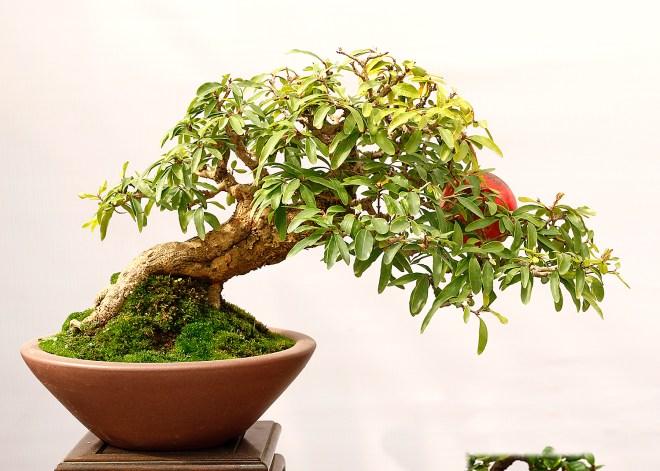
Autumn is the time of the year pomegranates begin to ripen and I like the small fruit, especially when displayed on SMALL size bonsai. Actually, I’m working on a new pomegranate program, and exposed root style program as well, but I guess you can tell that from these photos….

_P4A3647

_P4A3648

_P4A 3647

_P4A3649

_P4A3643

_P4A3642

_P4A3638

_P4A3597


2017 Autumn Open House & Sale Report

1

The 2017 Autumn House & Sale was held on September 2-3, 2017 at the International Bonsai Arboretum in Rochester, New York. In addition to my garden and bonsai collection we hosted the Upstate New York Suiseki Exhibit.

2

4

3

5

Two programs on suiseki and four bonsai demonstrations were scheduled during the two day event. Despite the cool and occasional wet weather we had a good turn out and were able to welcome visitors from New York, Pennsylvania, Vermont, Canada, Ohio as well as China and other states. Jason Henderberg brought his drone and camera and was able to take some aerial photos as well as video clips included in this report.

6

8

9

The first program was presented by Les Allen from Erie, Pennsylvania, who recently returned from China where he also presented a program on American suiseki. He brought several examples from his collection to share with the audience as well as a map of the United States indicating famous collecting areas.

10

12

11

13

His teacher, Zhou Yishan from Shanghai came with Les and spoke about Chinese stone appreciation for a while. He is one of the top authorities on stones in China and has lived in Japan for many years. He recognized me from visits many years ago in Japan and we enjoyed memories.

16

17

18

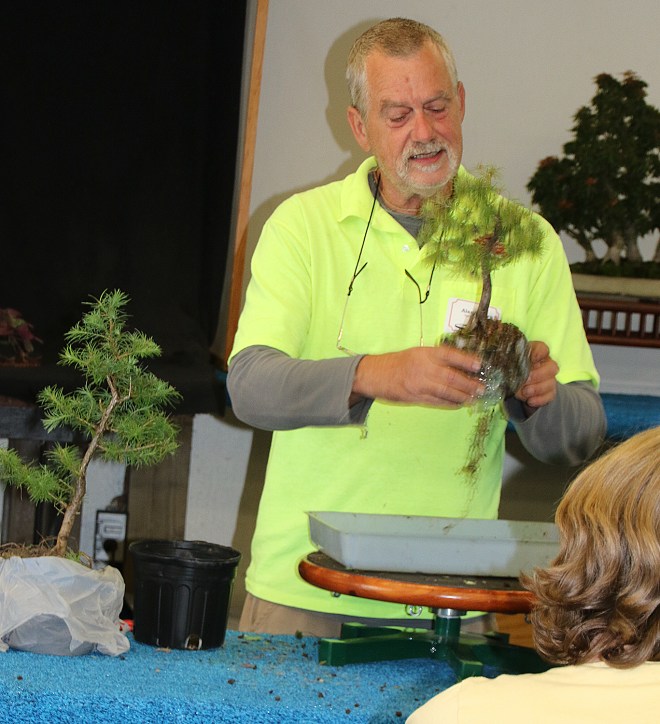
Alan Adair, my assistant and Larch authority presented a program and demonstration on how to train Larch for bonsai. He brought several of his specimens to illustrate his training techniques and how the bonsai should be developed.

19

20

22

23

21

24

My first demonstration was held outdoors because of the large size of the Dwarf Alberta spruce bonsai. I created it 43 years ago and it needed trimming and the perspective was changed from a distant view forest to a near view forest.

14

Sunday began with Marc Arpag, President of the Bonsai Society of Upstate New York and suiseki leader speaking on Japanese suiseki. A large number of fine suiseki from his collection was explained and shared. At the end he took a some of the audience into the suiseki exhibit and explained fine points of stone appreciation.

25

Next Harvey Carapella, past president of the Bonsai Society of Upstate New York brought one of his older collected Eastern white cedar bonsai to show how strong the growth has developed. He continued to thin out the foliage then wired the bonsai. He also brought a developed Eastern white cedar bonsai he developed from another collected tree for several decades.

27

I concluded the two day event with a demonstration on a Colorado blue spruce which Todd Schfaler, First Branch Bonsai, in Denver, Colorado, collected several years ago. He had it well established so it was safe to prune, wire and shape into a classical bonsai form. Actually the demo began the day before when I explained what I was attempting to show and did some wiring with my assistant Alan Adair.

30

29

The second day was necessary to complete the demonstration because the tree was exceptional and I did not want to rush the shaping into a short time period. Some pretty heavy annealed copper wire was used to move the large heavy branches. Actually not too many branches were removed from the tree, most were only rearranged to fit into my classical bonsai form ideals.

AFTER

RED POT

OVAL POT

After the demonstration the tree was photographed and then restudied. Its best to photograph a bonsai, ideally in black and white, to actually see how the bonsai looks. Photographs do not lie. Several branch adjustment were made and the tree was rephotographed. Two virtuals were made in Photoshop to illustrate how the bonsai will be developed during the next few years. A vintage red glazed container was used at first to emphasize the height of the bonsai. Next an unglazed modified oval Chinese was used which added balance and stability to the presented form. The bonsai will be transplanted next spring when the new growth emerges. Although both the glazed red and unglazed brown containers are suitable, my taste, today is for the unglazed modified oval. However, the final decision will be made next year.

WNV DEMO


Many of my friends and students came and helped to host the event. Some cooked and served hot dogs, some acted as guides for the suiseki exhibit as well as my personal bonsai collection. And, a few friends were on hand to direct visitors to where the bonsai and containers were for sale. Everyone had a wonderful experience to learn and to appreciate bonsai as well as suiseki.

ZEUS

Even one of our cats, Zeus, liked my suiseki display!

2017 5th Upstate New York Suiseki Exhibit

6P4A3336

On September 2-3, 2017 the Upstate New York Suiseki Study Group held their 5th exhibit during the International Bonsai Arboretum Open House & Sale in Rochester, New York. The greenhouse was transformed from a working area to an unusual setting to highlight the beauty of suiseki.

6P4A3382

6P4A3354

6P4A3342

A total of 39 suiseki were displayed from members in New York State and Pennsylvania. Stones originated from New York, California, China and Japan.

6P4A3345

6P4A3374

6P4A3378

6P4A3379

6P4A3370

6P4A3346

Members who displayed suiseki included: Ron Maggio, Harvey Carapella, Joe Moore, Les Allen, Harry Clark, Bob Blankfield, Marc Arpag, Ken Buell, Fran Mahoney, Joe Letner, Rick Marriott, Tom Friday and Wm. N. Valavanis.

6P4A3367

6P4A3366

6P4A3363

6P4A3364

A variety of suiseki forms were displayed including figure stones, landscape stones, and object stones. The stones were displayed in hand carved daiza as well as in American, Chinese, Japanese and antique ceramic and bronze water basins.

6P4A3362

6P4A3338

6P4A3358

6P4A3357

6P4A3352

6P4A3343

On Saturday Les Allen spoke on American suiseki and on Sunday Marc Arpag discussed Japanese suiseki. They took visitors into the suiseki exhibit and answered questions as well as discussed interesting stones.

6P4A3355

6P4A3347

6P4A3340

6P4A3339


The 6th Upstate New York Suiseki Exhibit will be held in 2019.

What’s New At The Open House & Sale?

GARDEN VIEW

Our 2017 Autumn House & Sale will be held this weekend, September 2-3, 2017, at the International Bonsai Arboretum in Rochester, New York.

GARDEN TABLE

This spring has been quite productive for creating new bonsai as well as refining classic masterpiece bonsai. Here are a few highlights visitors can see this weekend. Some of these bonsai have never been publically displayed.

Bonsai Demonstrations

My demonstration tree for Saturday and Sunday’s FREE demo is an old collected Colorado Blue Spruce. Todd Schlafer, First Branch Bonsai, in Colorado, collected it.

SIDE A

TODD

Before the Saturday demonstration I’m going to change the appearance and feeling of an old Dwarf Alberta Spruce forest I originally created 43 years ago.

ALBERTA SPRUCE

SNOW

I promise it will not snow during the Open House & Sale. However, snow has been recorded in Rochester, New York, EVERY month of the year!

Award winning demonstrators will transform and refine some beautiful bonsai, explaining their techniques and answering questions. Alan Adair will discuss the culture and care of Larch bonsai on Saturday at 11am. Harvey Carapella will demonstrate his techniques for refining an ancient Eastern White Cedar on Sunday at 11am.


Dwarf Colorado Blue Spruce

A few weeks ago Diane stopped by a nearby garden center and discovered a couple of interesting trees, a Waldbrunn Colorado Blue Spruce and a Sharps Pygmy Japanese Maple. She sent me a few photos and the next day we went together to pick up the two trees. She has a good trained eye. This cultivar of spruce is new to me and has small foliage with a bluish color.

1

Before

COLORADO SPRUCE AFTER

After 6 hours of shaping

We recently displayed at the 41st Park Avenue Fest, featuring over 350 artists from across the country. We have participated in nearly 30 of the events selling indoor beginner bonsai, a few specimens and demonstrating. This is done to introduce another group of the public to bonsai, hopefully for them to register for my Introductory Bonsai Course and purchase a healthy and beautiful indoor bonsai. It works; so far we have 11 students for Saturdays and 5 for Monday evenings, plus those who register at the Open House. Good friends Rick Marriott and Alan Adair along with Diane talked to the public and sold bonsai while I demonstrated on the spruce and maple.

WNV

Although the retail price was $42.99, there was a 30% sale on so I actually only paid $30 for the tree. Not bad….
Diane really picked a winner with the Waldbrunn Colorado Blue Spruce! The trunk had excellent trunk taper and movement with plenty of branches. On Saturday I worked five hours to shape the tree, this is in addition to spending another hour finding the base of the trunk and surface roots before the festival demonstration. The wiring and shaping took so long because I had to answer questions too.

We took the new bonsai to the Mid-America Bonsai Exhibit and quite a few people wanted to buy it. Diane was offered $500 for the bonsai but refused the offer. She wants us to develop it for the 7th U.S. National Bonsai Exhibition in 2020.

The Sharps Pygmy Japanese Maple also came out well, but did not take nearly the time to design, prune, wire and shape. When I finished I was mad because it would have made an excellent demonstration for my Black Scissors Live Demo Around the World on Sunday, September 10th at 2pm. I did not expect the tree to be a good demonstration tree, but it was. It’s extremely difficult to demonstrate on a deciduous species and end up with more than a skeleton or stump. This tree had plenty of branches with small foliage.

Since the maple and spruce came out quite nice we returned to the garden center to look for more. Luckily we found two more of the Waldbrunn Colorado Blue Spruce and another Sharps Pygmy Japanese Maple. I’ll use the maple as part of my live demonstration, which will be on Training Maple Bonsai on Sunday September 10th at 2pm East coast time.

My assistant Alan Adair and I transplanted the spruce into a training pot. He washed the soil surface looking for additional roots to display.

Senbazu Satsuki Azalea

SATSUKI SENBAZU

FLOWERS

A few years ago Joe Noga traveled to Japan to purchase Satsuki azalea bonsai. I was enthralled with a new cultivar, which has GREEN blossoms so purchased two young specimens. Both are growing and began to bloom in June. They are still blossoming, now in September! Come see the green flowers.


Large Scots Pine

I have a couple of very large Scots pine bonsai. One needed transplanting a few years ago, but we did not have time to repot it. A few weeks ago my Monday Senior Crew and I took an hour out of our weeding time and finally transplanted it into a large container.

1 copy

2

3

5


Spanish Olive

OLIVE

In September 2013 I was invited to an international conference on Penjing and Bonsai in China. Bonsai artists from ten countries participated in the event where I met Antoni Payeras from Spain. He talked about the fantastic small leaf olives native to Spain. He told me he was going to send me one and to simply treat it like a Bougainvillea. Some time later Diane called me while I was teaching somewhere informing me that someone sent me a dead stump from Spain. She said there were no roots and most of the trunk was dead wood. Upon return home I immediately potted the stump and put it into my cold greenhouse.

Well, it sprouted everywhere with tiny dark green leaves, unlike the commonly grown Olives seen in California. Antoni later told me that the stump was over 150 years old and it is rare to find a small old specimen with aged bark and deadwood. I simply allowed the shoots to grow and wired the long ones into horizontal positions. Of course, all the long shoots, which were removed, were rooted. The long shoots are stiff, but manageable to shape when young.

Five years later the tree began to look interesting so a few days ago I trimmed it and transplanted it into a special container that Cheryl Owens presented to me on my 40th anniversary of bonsai study, which was 14 years ago. The container was hand made by Michael Hagedorn who no longer makes containers, so it is rare. The dead wood was treated with lime sulfur to preserve the interesting and delicate dead wood.

OLIVEA POT

POT BOTTOM


Shohin Bonsai Fingered Citron

CITRON

The Fingered Citron, also called Buddha’s Hand, Citrus medica var. sarcodactylis, is an interesting plant to grow for its unusual fruit shapes. I have tried to grow it for decades, but only about ten years ago figured out how to grow it. Flowers and fruit are generally present on the plant.

A couple of years ago three shoots looked like they would make good cuttings, so I trimmed and rooted them. One of the small cuttings was wired and to my amazement now has three fruit developing. I wonder how it will stand up when the fruit matures.

CITRON FRUIT

SMALL FINGER CITRON

Dwarf Ezo Spruce

EZO SPRUCE

I’ve been growing an unusual cultivar of Dwarf ezo spruce for about 40 years. It is finally ready for a special display container. I looked in Japan several times but did not find the right container. Finally, I commissioned, Gyozan, (Yukizyou Nakano,) who is currently considered to be the top potter to make a container for the Dwarf ezo spruce. He finally completed the container and I was able to pick it up in April during my tour of the World Bonsai Convention. This bonsai has not been publically displayed in its new container.

GYOZAN

Koto Hime Japanese Maple Forest

I’m fortunate to have created three Koto Hime Japanese maple forests. They are a large, medium and small size. The medium size forest was transplanted into a 150 year old antique Chinese container obtained at Seiji Morimae’s S-Cube Uchiku-Tei garden.

KOTO HIME FOREST 1

KOTO HIME FOREST

Third Anniversary Black Scissors World Wide Demonstration Tree

At the Park Avenue Festival I also had time to work on the Sharps Pygmy Japanese Maple, which also came out well, but did not take nearly the time to design, prune, wire and shape. When I finished I was mad because it would have made an excellent demonstration for my Black Scissors Live Demo Around the World on Sunday, September 10th at 2pm. There will be live demonstrations from 50 artists around the world throughout the day. I did not expect the tree to be a good demonstration tree, but it was. It’s extremely difficult to demonstrate on a deciduous species and end up with more than a skeleton or stump. This tree had plenty of branches with small foliage. We returned to the nursery and were able to find another suitable specimen. My demonstration on Maple Bonsai will be on Sunday, September 10th at 2pm East coast time.

SHARPS PYGMY DEMO

Suiseki Exhibit

The Suiseki Study Group of Upstate New York will be having our 5th exhibit during the Open House. In addition to the stones on display there will be two suiseki lectures by Marc Arpag and Les Allen, both days at 10am.

6P4A3022

There are many more “new” bonsai in our garden. My Monday crew has been busy weeding and cleaning up the main display area as well as the sales area and growing area. I can’t afford to pay anyone, but we can feed our friends.

CREW

 CREW.JPG

SHOHIN.JPG

COMPANION.JPG

Join us this Labor Day weekend. All the demonstrations and exhibits are FREE, no registration or entrance fee. However, the delicious hot dogs, chips and soft drink are $2.00. Mark is bringing his special hot sauce too. Vintage Japanese bonsai magazines as well as old copies of International BONSAI are free. I look forward to welcoming friends and sharing my bonsai.

OPEN HOUSE.JPG

21.jpg 

40th Mid-America Bonsai Exhibi

6P4A3116

The Midwest Bonsai Society held their 40th annual exhibit on August 18-20, 2017 at the Chicago Botanic Garden in Glencoe, IL. Having attended, exhibited and selling all 40 of the exhibits (except for two when our home burned down seven years ago) I can say the quality of the trees is improving, especially with the professional category in my opinion. There are many more companion plantings displayed with the bonsai and this year there are many more suiseki on display.
a_P4A3113
Best of Show: Twisted trunk pomegranate by Dr. Gary Andes
v_P4A3114
First Prize in the professional division: Kahima Japanese maple by Wm. N. Valavanis
6P4A3138
Second Prize in the professional division: Japanese black pine by Mark Fields
Kathy Shaner from California spent considerable time, all day on Friday, judging the bonsai and making comments for improvements for the exhibitors.
6P4A3167
6P4A3166
6P4A3120
6P4A3126
6P4A3169
The many parking lots were full on Saturday, but crowds visiting the bonsai exhibit and vendors did not seem as large as in the past. There were several events going on at the same time throughout the large botanic garden.  Admission is free for the bonsai exhibit, however the Chicago Botanic Gardens charges $30 per car for parking. Larger vehicles must pay higher parking fees.
6P4A3119
6P4A3122
6P4A3118
6P4A3144
6P4A3131
6P4A3149
6P4A3123
6P4A3124
6P4A3130
6P4A3127
6P4A3128
6P4A3129
6P4A3135
6P4A3140
6P4A3132
6P4A3133
6P4A3143
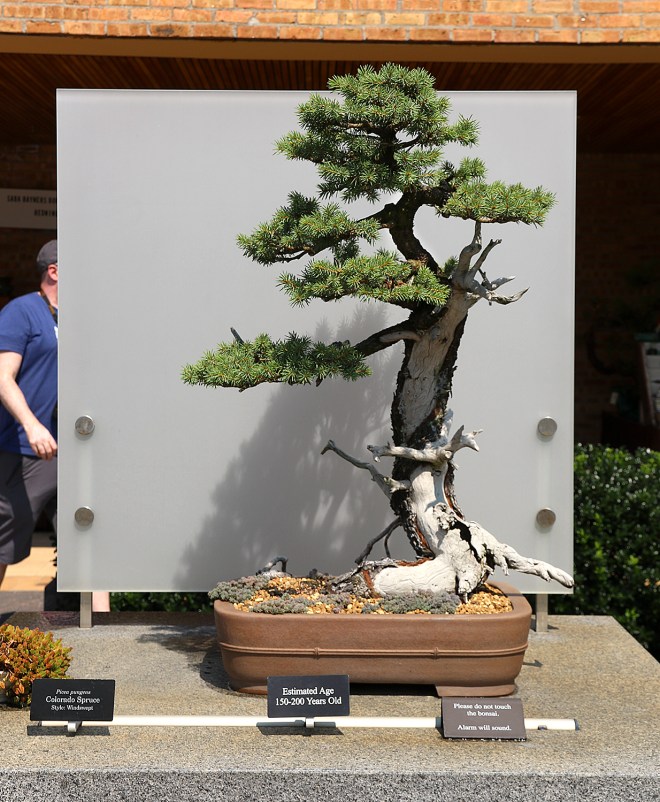
As usual the Chicago Botanic displayed several of their bonsai in two courtyards on unusual display tables with backgrounds and lighting. Curator Chris Baker is doing an excellent job maintaining and improving their large collection.
6P4A3150
6P4A3171
6P4A3151
6P4A3155
6P4A3165
6P4A3159
6P4A3156
6P4A3158
6P4A3154
6P4A3156
6P4A3162
6P4A3164
6P4A3160
I also brought my Dwarf Brush Cherry bonsai which I displayed 40 years ago. The companion planting created in my last blog was next to the bonsai. The Chicago Botanic Garden made a nice sign to commemorate the event.
6P4A3170
SIGN.jpg
Workshops and demonstrations were also being conducted during the three day exhibit. Participating in this exhibit is one of the highlights for my year seeing long time bonsai friends and family but sadly denotes that summer is nearly over.