Japan International Bonsai Tour Exploration– Autumn 2013, Part 1

Image

After a two hour delay and airplane evacuation in Chicago due to tornadoes, we finally arrived in Japan for our semi annual bonsai tour led by Kora Dalager and me. This time we have a good small group of eleven people including two ladies from Australia.
Image

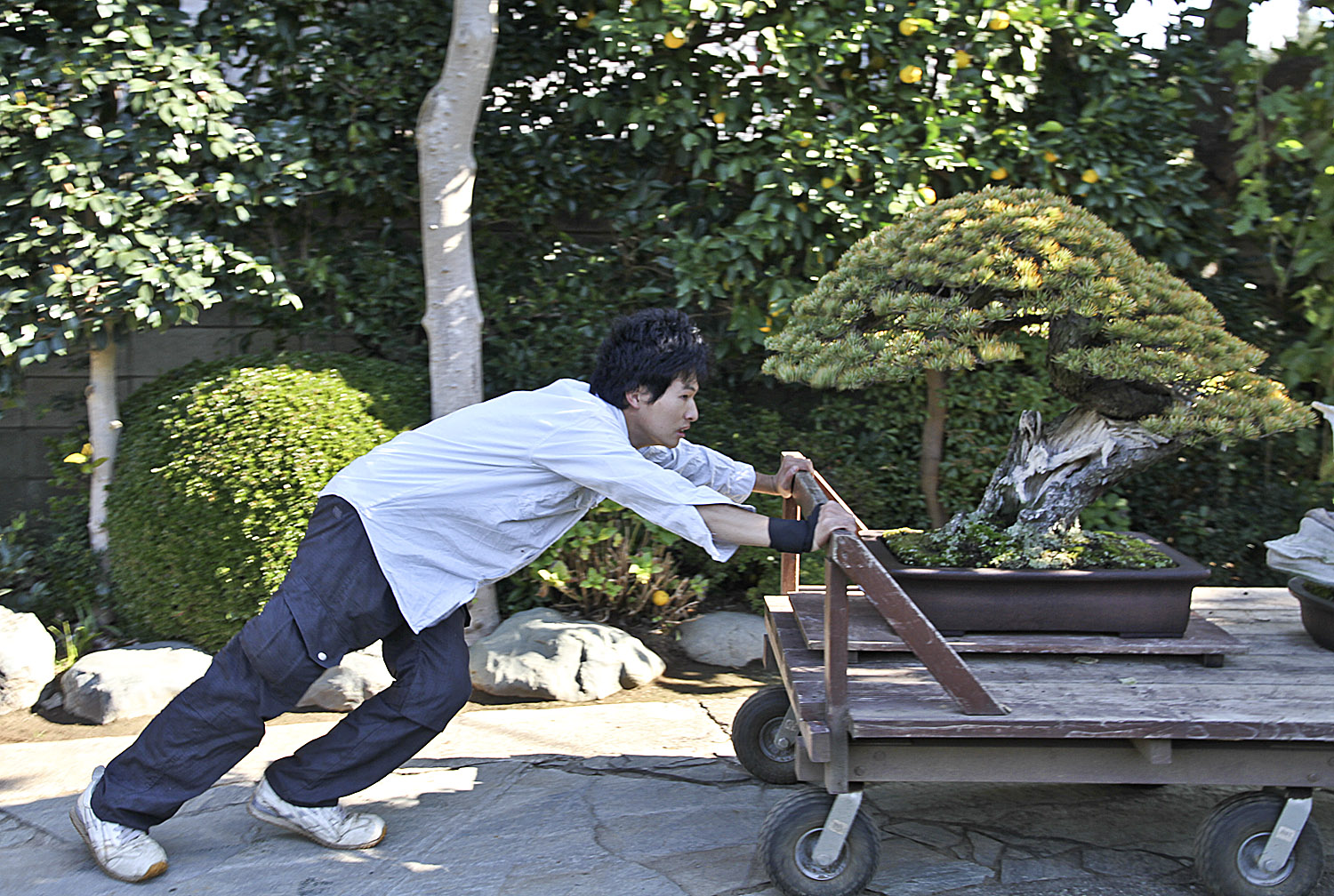
Moving one of the February Kokufu bonsai ten exhibition prize winning trees to be loaded for display in the Taikan Bonsai Ten exhibition in Kyoto. This bonsai belongs to a client of Masahiko Kimura.

ImageImage

Beautyberry and Firethorn bonsai in the container room.

Tuesday we first visited Masahiko Kimura’s garden, near Omiya, by our private bus. As always, his bonsai are spectacular and although I’ve been visiting his garden for over 30 years, the trees looked the best this time. Our tour enjoyed glorious, warm sunny weather, and the bonsai took on a special glow, which reflected their unique beauty as well the tender loving care of Mr. Kimura.

Image

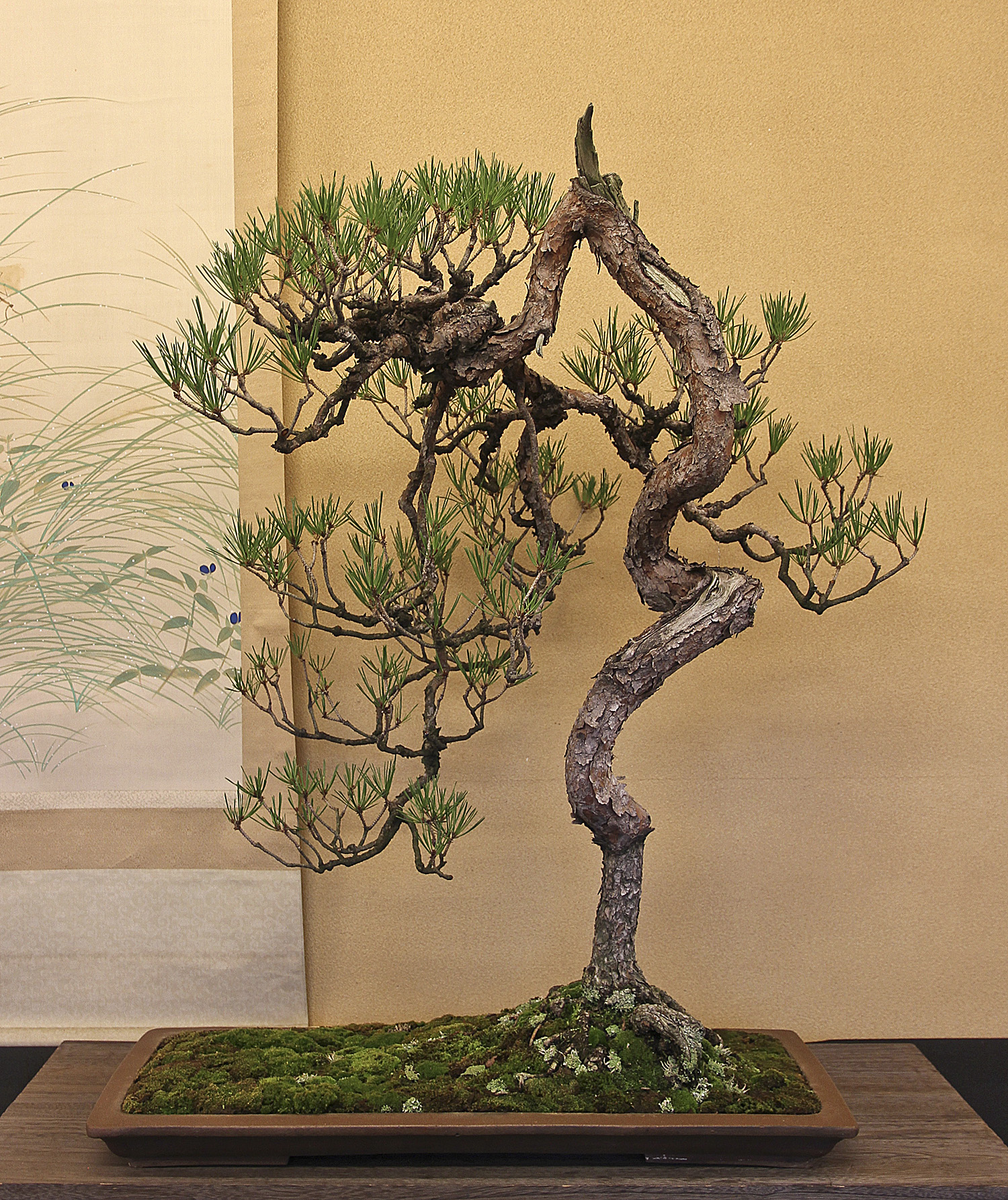
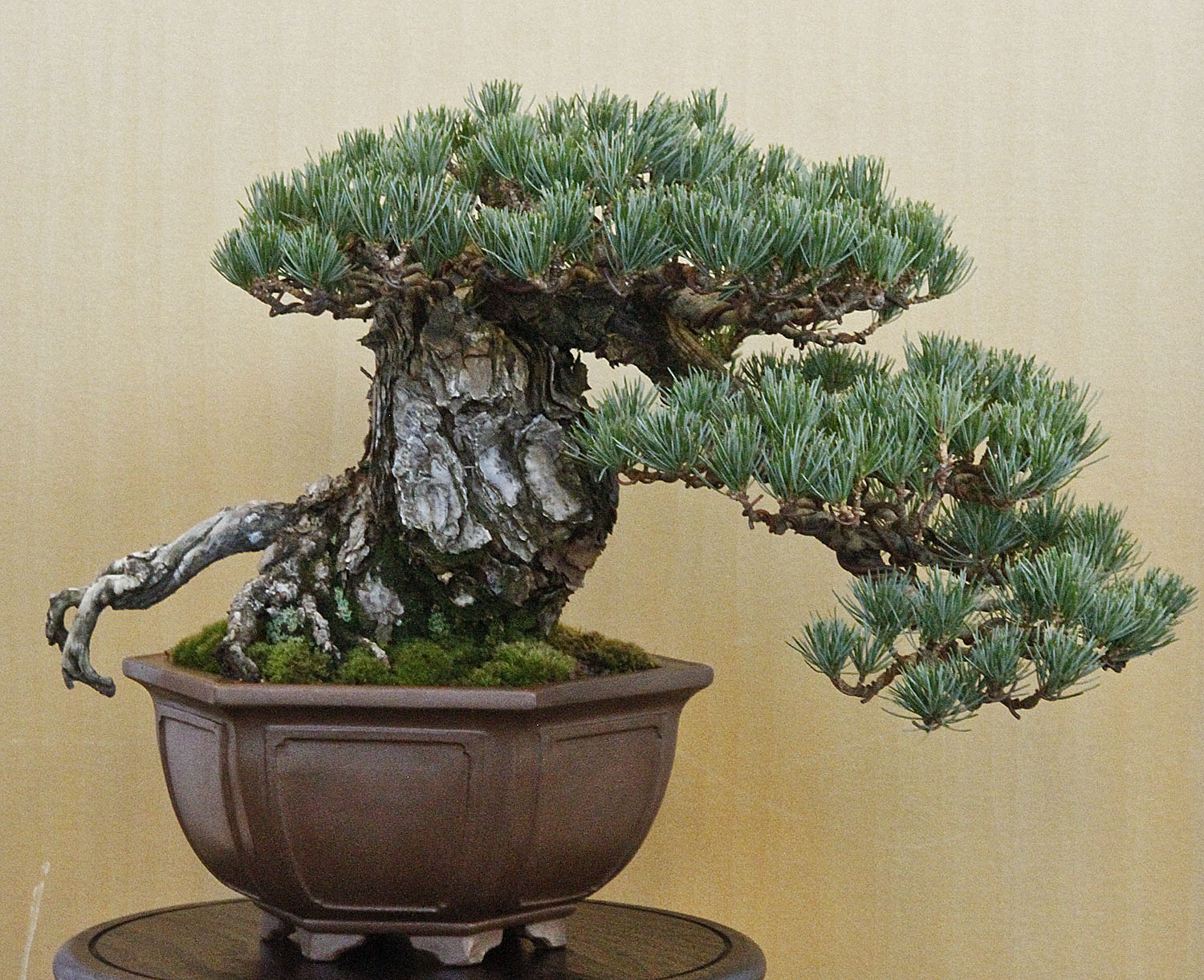
He was busy directing three apprentices moving large trees in preparation for displaying at the Taikan Ten Bonsai Exhibition rapidly approaching in Kyoto. Since judging day is on Thursday, they must be preparing to load them in a truck later on during the day or early on Wednesday. I think Mr. Kimura mentioned that he was only displaying seven or eight of his client’s masterpieces. He led me to an area where there were a large windswept Japanese five-needle pine and informal upright Japanese black pine, all manicured for display. Mr. Kimura asked me which is best and will win the coveted Prime Minister Award, the highest award in the exhibition. It was a tough question because both were magnificent. One was quite dramatic and had an active form with the several long windswept branches while the other had a quiet, triangular shape. When asked again I finally said the windswept was unique and interesting, but I personally preferred the informal upright Japanese black pine. I asked him which do you like, and he said the windswept pine, but did not know which would win in Kyoto. I wish both bonsai good luck. We shall see on Thursday.

On a lower bench I saw a group of Chojubai flowering quince in training pots, but am not sure if they were to be used for individual bonsai or accessory plantings. The entire public display garden seemed to have a new layer of gravel, without any weeds of course.

Image

Small size Chojubai flowering quince.

After allowing our group to look and photograph his bonsai Mr. Kiura took a break from directing his apprentices and invited us to tea and then offered each of us our choice of a Taikan Ten, Bonsai Creator’s, or Omiya Bonsai exhibition album.

We need to move on to our other stops on our busy schedule because Sean Smith phoned me while we were at Mr. Kimura’s. He and his lovely daughter Savanna are being hosted by Seiji Morimae, S-Cube in Hanyu. Mr. Morimae wanted to make certain that our group would be at his garden by 3pm because he had a special visit arranged with the major of Hanyu City.

Image.

Omiya Bonsai Art Museum.

Image

During the short bus trip to the Omiya Bonsai Art Museum, we ate lunch on the bus to save time. Autumn colors were quite bright on the deciduous bonsai. There were even a couple of Japanese flowering apricot bonsai displayed with golden yellow leaves. The first part of the display hallway in the museum features about five small display areas with stunning medium size bonsai on display. Each was displayed by different bonsai artists in the Omiya Bonsai Village. It was interesting to see what each artist selected to show.

I was particularly impressed with the Japanese five-needle pine bonsai displayed by Hiroshi Takeyama who does not specialize in evergreen species, but rather deciduous trees. People tend to limit the scope of bonsai artists to a few specific species or styles, but they are skilled with many different species and styles. For example Mr. Kimura is well known for his dramatic, old thick trunk juniper bonsai. However, he is also quite skilled with creating delicate forest and rock planting bonsai as well. The medium size Japanese five-needle pine bonsai shown by Mr. Takeyama is a good example of his diversity creativity.

Image

Mansei-en Bonsai Garden entrance area.

We then took a walk into the Omiya Bonsai Village using a short cut.  However there was road work in the way of my intended path. There was a guard near the open road ditch, but I pointed to where we wanted to go, and not wanting to confront eleven foreigners, decided just to let us go through. Well, there is now a house where the road used to be so we had to take another turn to get to the Mansei-en Bonsai Garden of Hatsuji Kato and his son Haruhiko. Each time I visit this garden there seems to be more and more trees and especially new bonsai containers.

Imagee

Private reception room at Mansei-en Bonsai Garden.

Many of Mr. Kato’s Japanese maples were turning red, some yellow. The Chinese quince were not quite turning red, but the award winning Twisted pomegranate was bright yellow. He had several bonsai in his three tokonoma (like all Japanese words are both singular or plural) were beautiful. There were many trees quite detailed and will probably be taken to Kyoto for the exhibition.

Image

Japanese maple.

Image

Twisted trunk pomegranate.

Down the street and around the corner we visited Seiko-en Bonsai Garden of Tomio Yamada and his famous daughter Kaori who invented saika-bonsai to popularize the art. There was a TV crew photographing one of his well known Shishigashira Japanese maple bonsai which was beginning to change color. We did not want to disturb the activity so only appreciated the beauty of Mr. Yamada’s bonsai with our eyes, not cameras. He has some of the finest and most refined bonsai in Japan, all neatly maintained in a small garden.

Image

Kyka-en Bonsai Garden.

Image

Historic and famous Zelkova bonsai.

Image

Cacti and succlents.

Our next brief stop was at Kyuka-en Bonsai Garden of Isamu Murata and his son Yukio. His father, Kyuzo Murata introduced me to the Japanese bonsai world during my first apprenticeship with him in 1970. The garden has become smaller during the decades, but the trees have become more beautiful. Everyone admired the famous Zelkova bonsai in the garden. Mr. Murata was in Tokyo working on the Imperial Bonsai Collection, but his son, Yukio and wife Rumiko showed us around. Yukio speaks perfect English and has an excellent sense of humor. He asked when my other foot was going to break…. again. So, then I knew it to move on.

Image

Fuyo-en Bonsai Garden.

Our last stop in Omiya Bonsai Village was to the Fuyo-en Bonsai Garden of Hiroshi Takeyama, the immediate past president of the Nippon Bonsai Associationn. He specializes in deciduous and unusual bonsai and has a distinct style for forest planting bonsai. This is my favorite bonsai garden in Japan because I have a fondness for deciduous and unusual bonsai. As always, his garden is a multitude of autumn color.

Image

Hiroshi Takeyama with his Japanese five-needle pine bonsai and orchid arrangement.

Image

Famous Sargent juniper bonsai.

Image

Apprentice watering maple bonsai.

Image

Zelkova bonsai.

Image

Japanese maple bonsai.

Image

Cascade Hawthorn bonsai in a custom made container made by Koyo.

Image

Container lip detail.

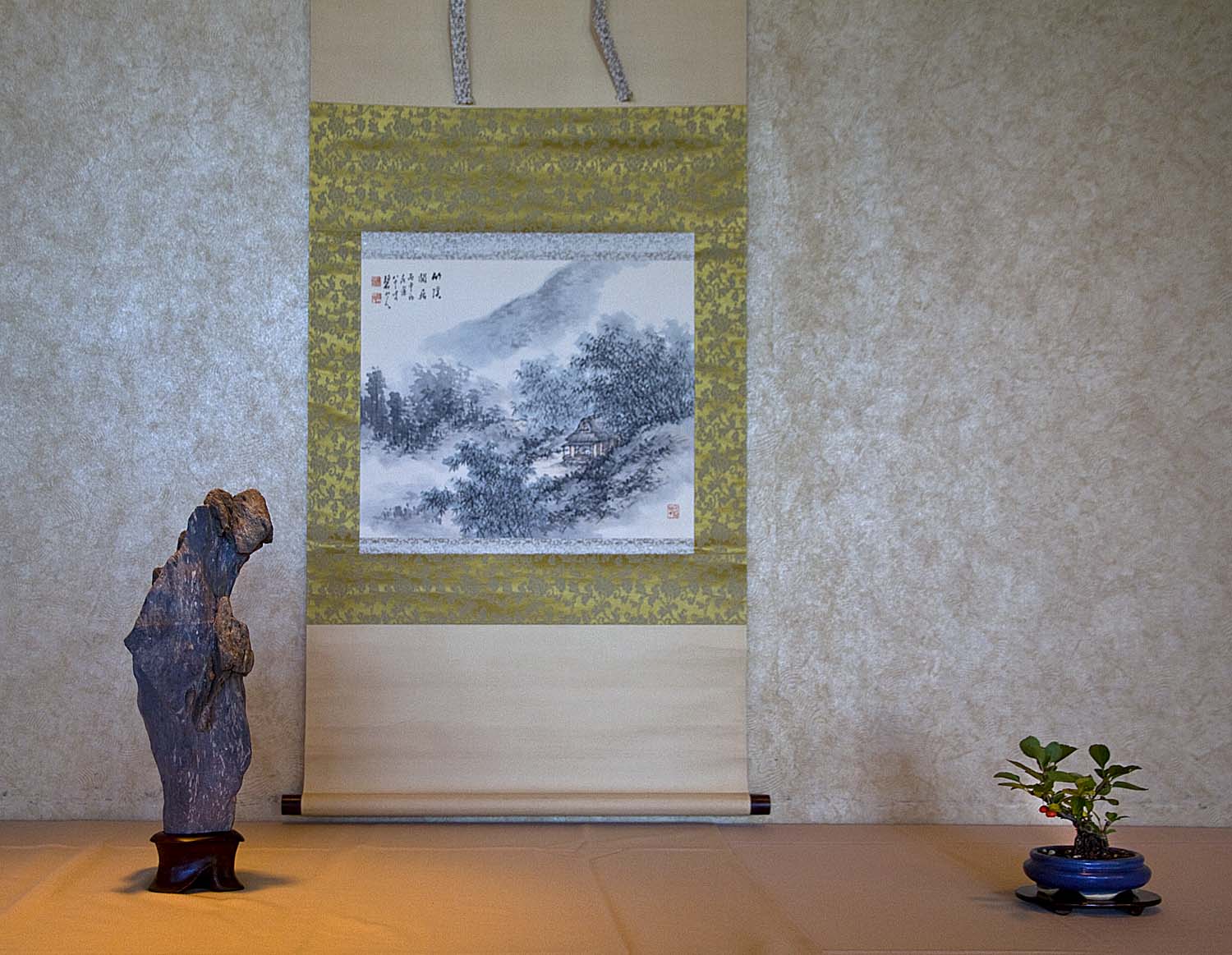
Mr. Takeyama always has a beautiful bonsai on display in his reception room. However yesterday I was a bit confused with the composition. Next to his Japanese five-needle pine was a gorgeous white flowering Phalenopsis orchid with six huge sprays of perfect form. So, I had to ask and then remembered that Mr. Takeyama was recently awarded a special medal from the Emperor for his bonsai activity. So the orchid was a congratulatory arrangement. There are many types of tokonoma display, and Mr. Takeyama wanted to display the orchid he received.

Image

Mayor Komei Kawata receiving new book book.

Image

Our tour group with Mayor Kawata and Sean and Savanna Smith.

We rushed to our private bus to the city of Hanyu where Seiji Morimae has his bonsai garden. During the trip, Sean called, again, check on our exact location because Mr. Morimae, like most Japanese, are punctual and we needed to be at his garden by 3pm. Upon arrival to the S-Cube garden we were not allowed to enter but were told to get back on the bus. Mr. Morimae explained that we were going to the Hanyu City Hall and that I must make a few remarks.

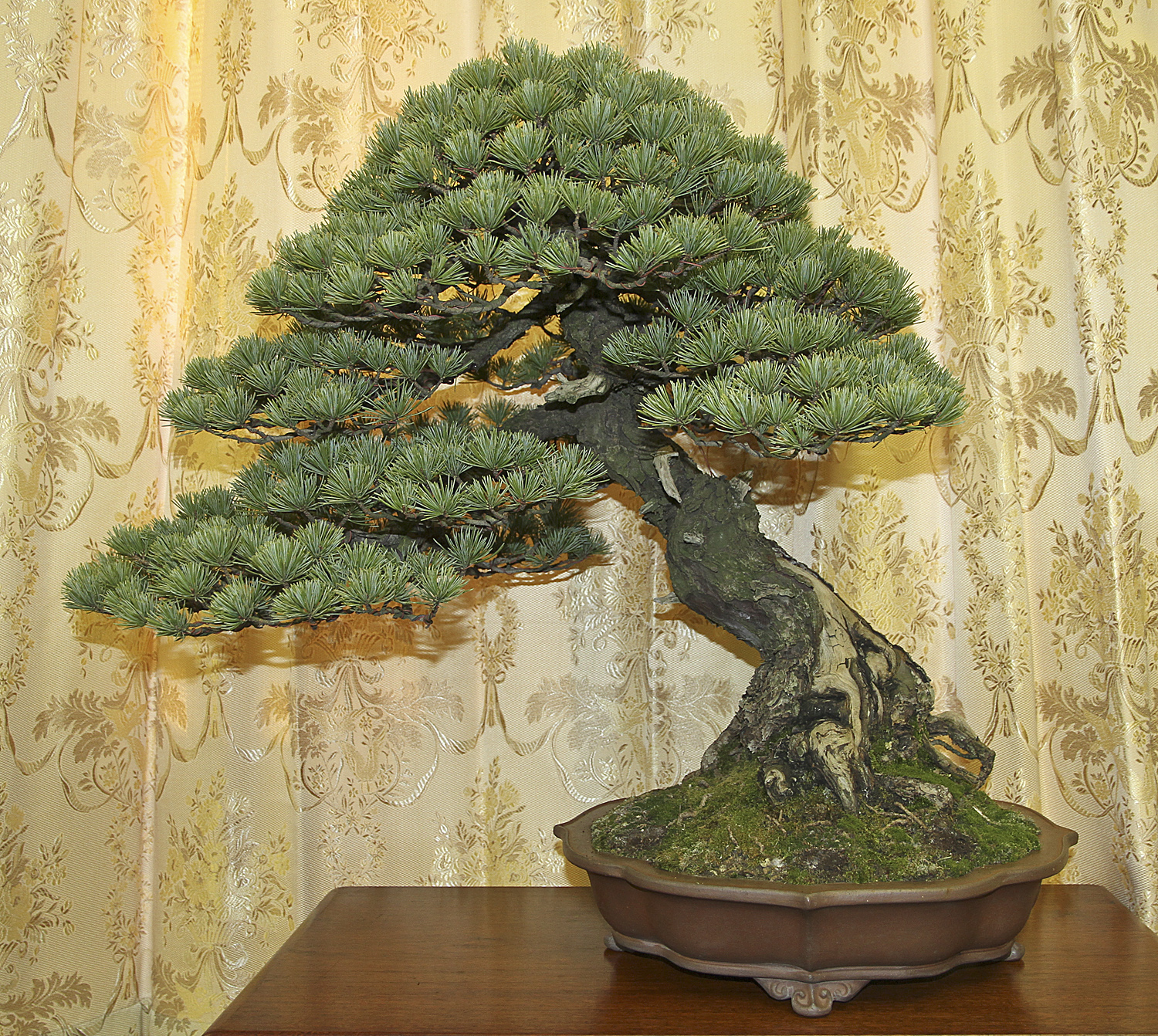
We were welcomed by Mayor Komei Kawata, who we met last year when he came to S-Cube to welcome us to Hanyu. We were then escorted into City Hall, where all the city employees clapped to welcome us as we entered. So after I made a few remarks our entire group was escorted upstairs to a board room decorated with a beautiful suiseki and Japanese five-needle pine bonsai. This bonsai was displayed by Mr. Yamada many years ago in the professional Bonsai Creator’s Exhibition and is now owned by Mr. Morimae. The history of bonsai and suiseki is an important part of appreciation and respect which most people do not comprehend.
Image

Japanese five-needle pine bonsai displayed by Seiji Morimae at the Hanyu City reception.

Image

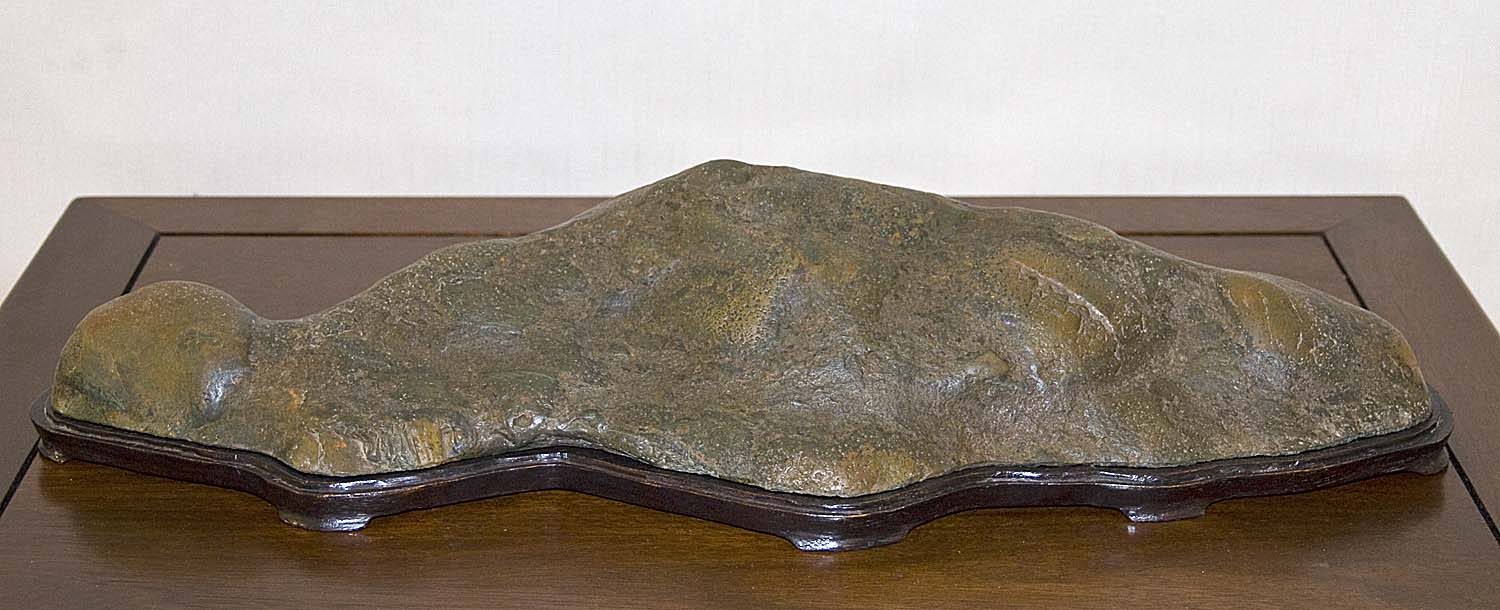
Setagawa tora ishi suiseki.

Mayor Kawata made a few welcoming remarks and told us about the sister city of Hanyu with Millbrae, CA. After presenting everyone with a small cartoon book of the city’s mascot he gave me a beautiful photograph of Mt. Fuji next to cherry blossoms, very Japanese. Of course I presented him with a copy of may newest book and the new issue of International BONSAI. Many photographs were taken.

Image

S-Cube display garden entrance.

We returned to S-Cube where we enjoyed the remaining long day looking at Mr. Morimae’s huge bonsai, suiseki and antique collections. He is always purchasing bonsai collections, remodeling them and re selling. He holds monthly auctions at his garden Display room featuring antique bonsai, suiseki and other art. tracts bonsai professionals from long distances.Image

Sales area featuring antique bonsai, containers, suiseki and other art for sale.

Image

A collected Sargent juniper bonsai.

Image

Sumac bonsai.

Image

Japanese red pine bonsai.

Mr. Morimae showed us another plot of land, twice the size of his present garden right in front of his entrance gate. Since it “was” a rice field, 1,000 dump trucks of fill soil was being brought in to raise the field to street level. This will be the new display garden for S-Cube and I look forward to watching it’s development. Knowing Mr. Morimae for over 30 years, I know it will be spectacular and will not take long before it looks attractive.

As we left S-Cube around 5 pm, Kora arranged for Mt. Fuji to be directly in front of the bus, beautifully silhouetted against the orange setting sun. Quite a spectacular ending for a spectacular day introducing our tour members to the Japanese bonsai world.

I’m quite pleased that over 30,000 people from over 107 countries are finding my blog interesting and watching my commentary on my “Bonsai World.” It is important to realize that my entries are mostly instant, spontaneous because I want to quickly share my discoveries around the world, as well as share information which I have learned during the past half century with other.

If you want to read and learn from more grammatically correct, edited, educational articles which have better photos (really! All color corrected and in focus) please consider subscribing to my International BONSAI magazine.

Image

International BONSAI magazine is the first and only professional bonsai magazine published in the United States. Now in our 35th year of publication, International BONSAI, in full color, introduces information, articles and photos, some of which cannot be found elsewhere in English. The beautifully illustrated articles and photographs show beginners and advanced bonsai hobbyists how they can develop a bonsai collection from nursery stock, young plants as well as from collected trees. Information is also presented on bonsai exhibits, events, new plants and book reviews. Advance bonsai hobbyists are finding articles on bonsai display, Mr. Kimura’s classroom instruction and the shohin bonsai course valuable for their bonsai education. International BONSAI is an excellent addition to your bonsai reference library as well.

You can easily subscribe for 2013 (back issues promptly sent for the year) or 2014 or both year from our web site at: www.internationalbonsai.com/page/1403493

Upon my return home next week I must finish the 140th copy, the 2013/NO. 4 issue before participating at the Winter Silhouette Exhibition in North Carolina: http://www.winterbonai.com

Image

Winter Arrives in Upstate New York

Image

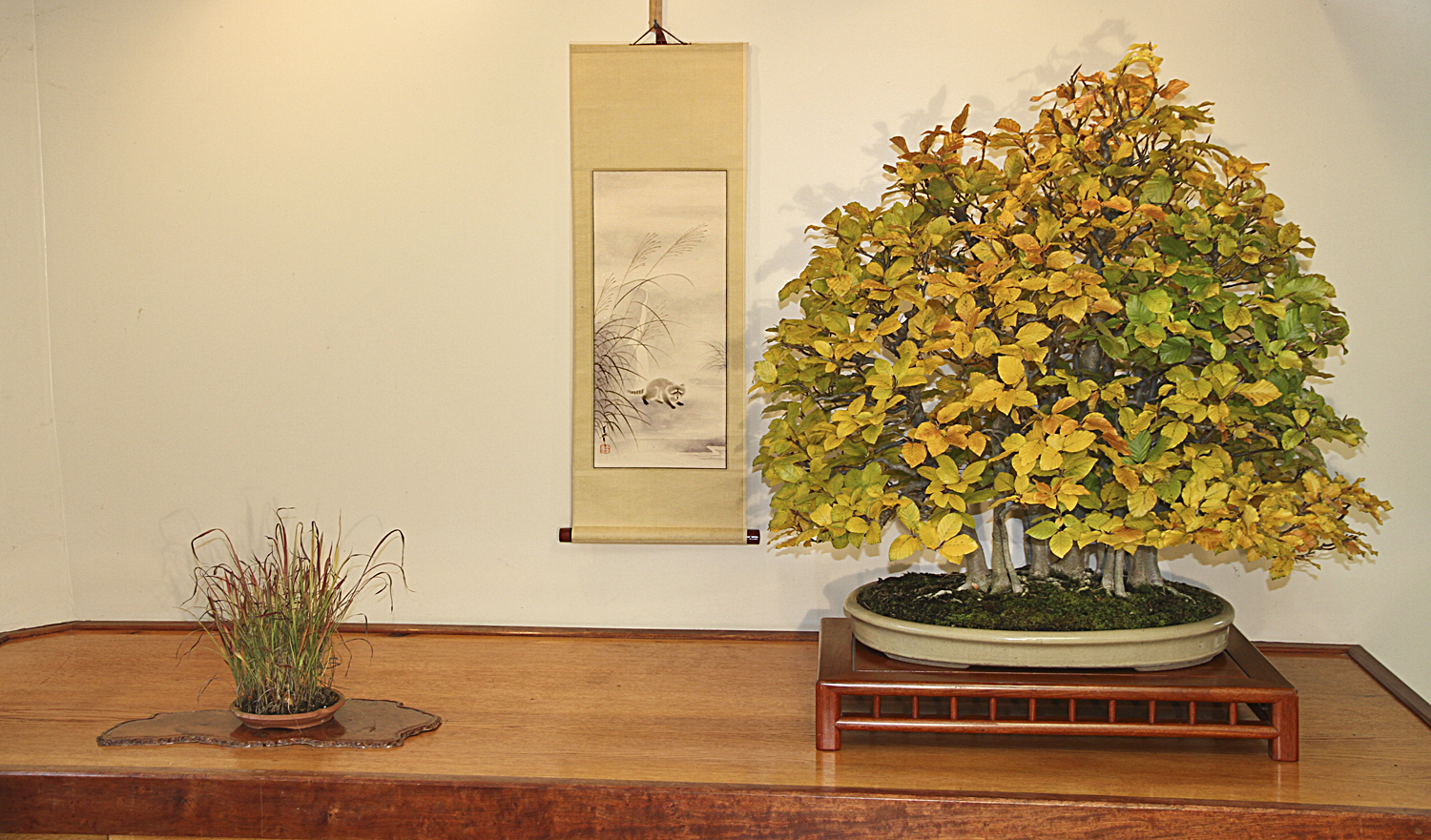
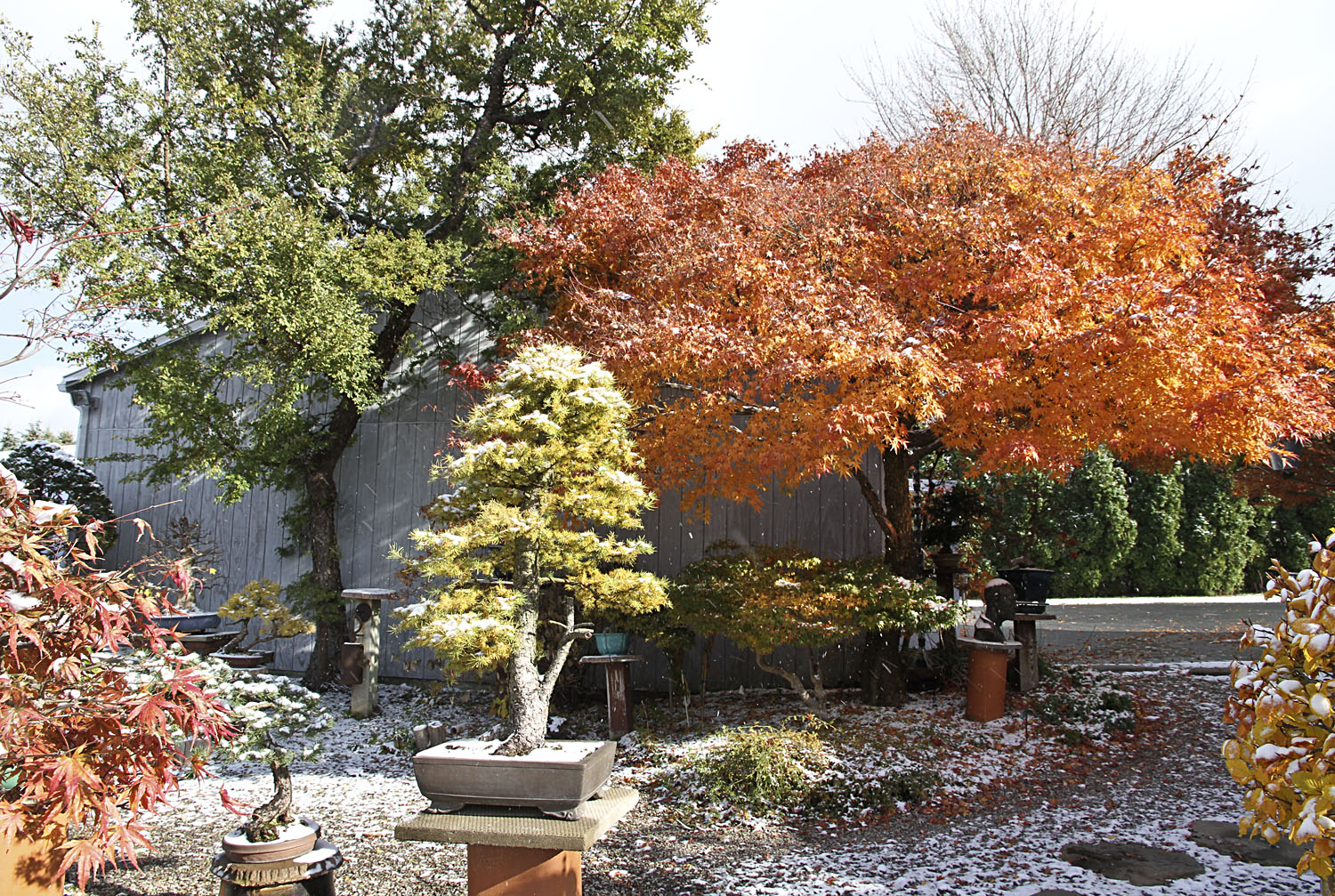
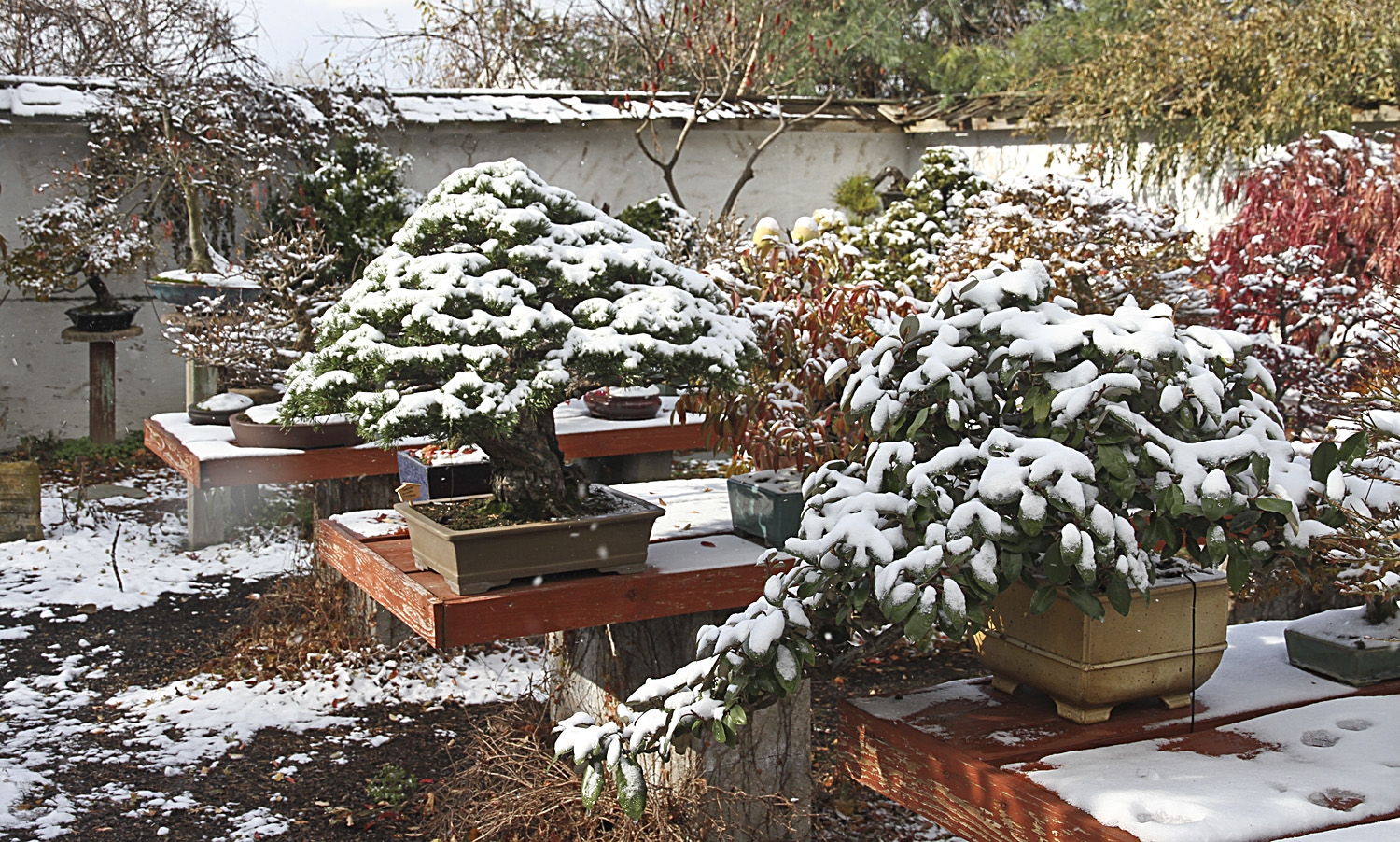
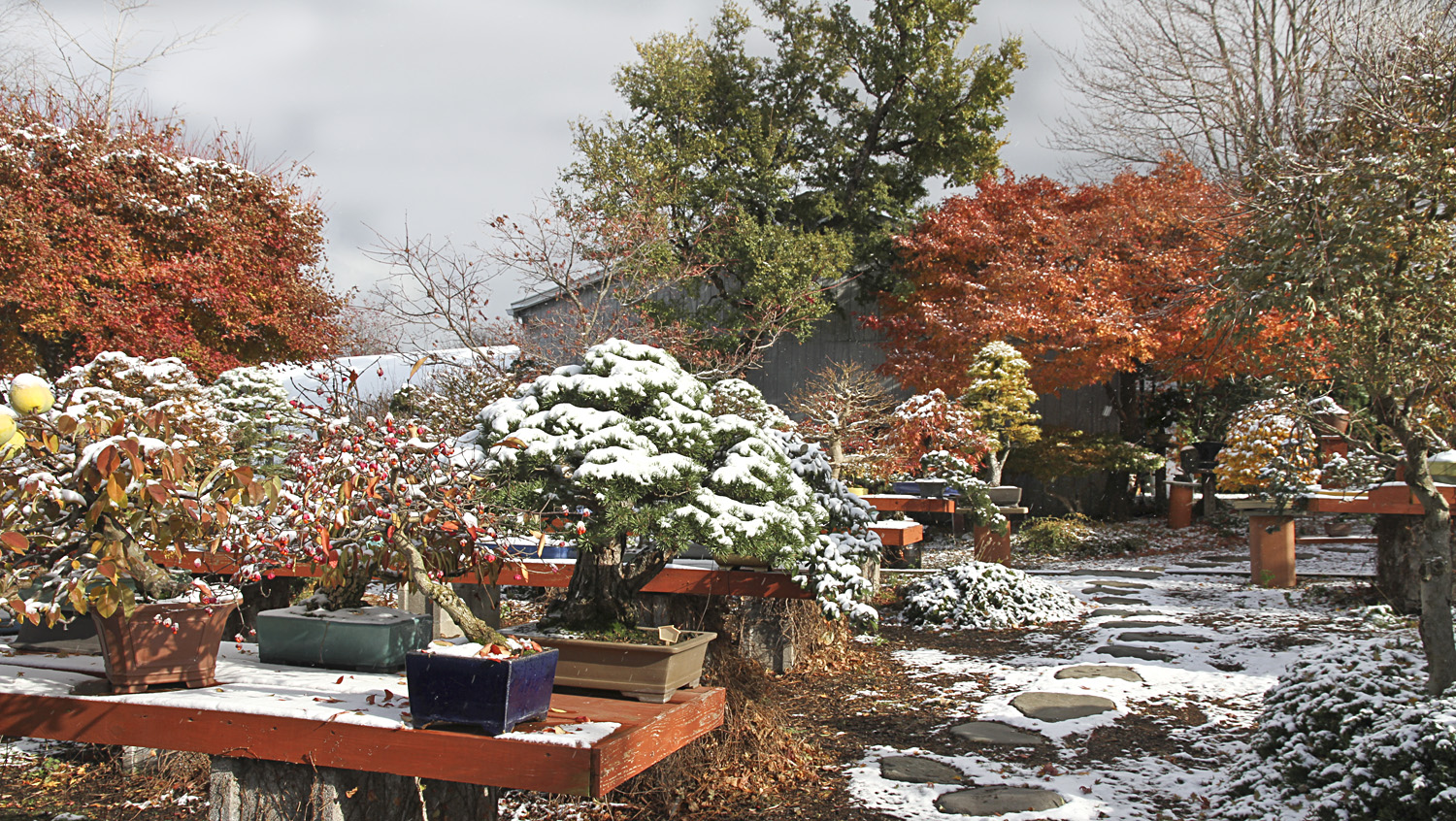
Upon return home from Australia I discovered that we did not have our typical brilliant autumn colors upstate New York is famous for. The colors were beautiful, but not like in the past years. In fact, many of my deciduous bonsai still have green leaves, even though it snowed a couple of time. Yes, I’ve had shoveled too.

 Image


Image

Image

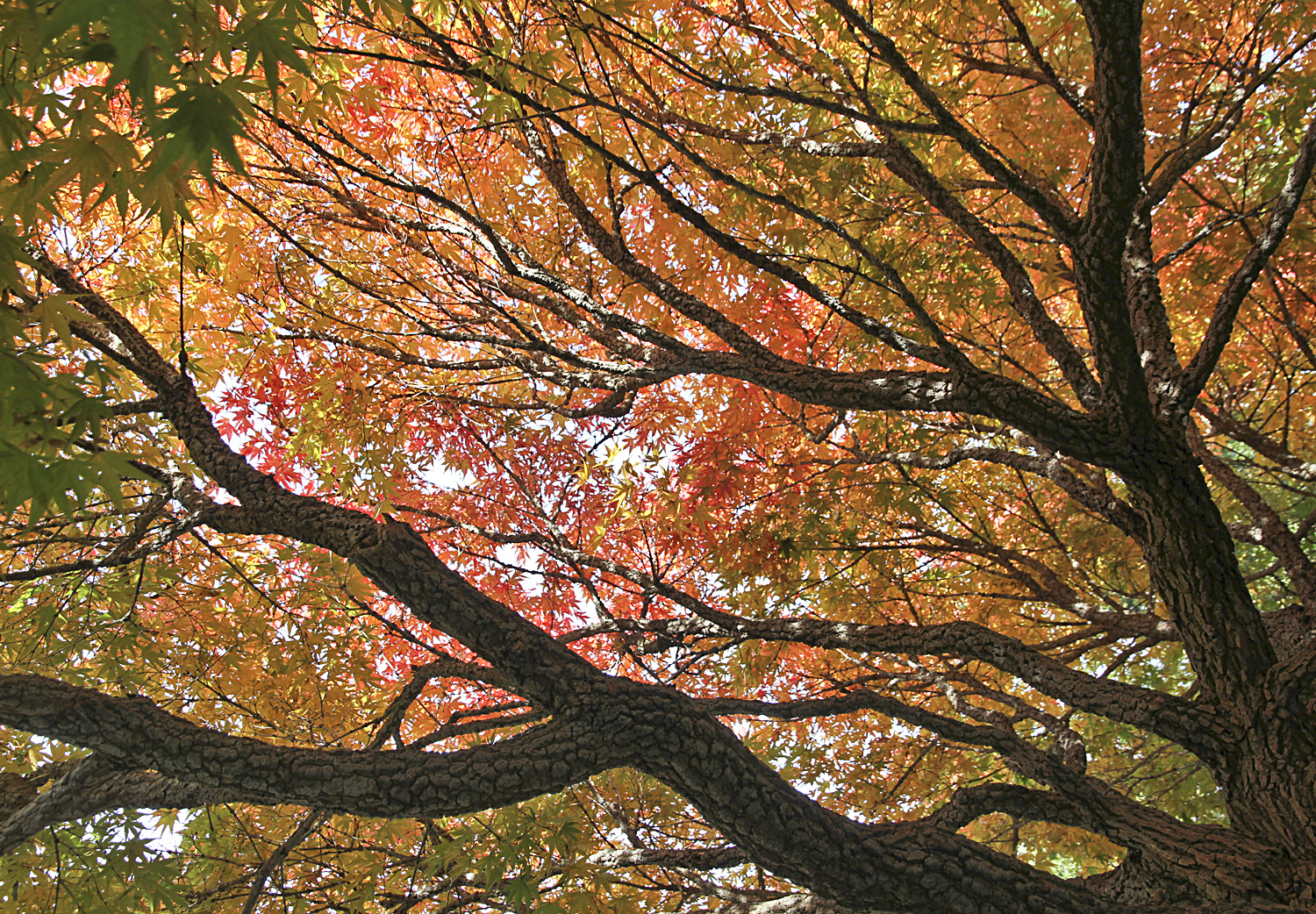
There are several factors which affect the coloring of deciduous bonsai foliage in autumn. Of course the reduced daylight actually triggers the onset of dormancy. I’ve watched as it actually noticeable in late July. The daylight gets shorter each day and the foliage changes from a bright green to dull green.

 Image

Image

Image

Image

In addition to the reduced daylight, I’ve learned that watering and feeding the bonsai will greatly affect the autumn coloring. If a bonsai is stressed by not providing adequate water, especially in late summer, the colors often are more intense. Also, maintaining a regular fertilizer schedule with high nitrogen, through September and into October will delay the onset of autumn coloring.

Image 

Actually high levels of nitrogen in autumn will help bonsai over winter and provide them with what they need to grow vigorously in spring. NO, the application of nitrogen fertilizer in autumn will NOT stimulate new growth which will be damaged by autumn frosts IF your bonsai have been regularly fertilized throughout the summer growing season. The addition of a nitrogen content fertilizer will not stimulate new growth. However, IF your trees have not been fertilized regularly an application of a nitrogen content fertilizer may stimulate late summer new growth which may be damaged.

Image 

Late each summer I select a few deciduous bonsai which will receive extra loving care in preparation for excellent autumn coloring. The trees are repositioned in different areas in my display garden which receive the maximum amount of full sun. Even though the entire display area is in a full sun exposure, through the past 26 years I’ve learned there are several “sweet spots” which receive better sun. The selected bonsai are moved into those areas and rotated weekly so the sunlight will reach all areas of the deciduous trees. Also, watering is carefully maintained and often fertilizer is stopped earlier rather than later.

 Image

Usually, this technique works. Last year I got lucky, and we also had better weather. The trees which I selected were cared for and turned into their brilliant autumn coloring, just in time for my friend, Joe Noga who traveled from North Carolina, to take the final photos for my new book. The trees were outstanding, as can be appreciated in my newest book: Classical Bonsai Art. If you don’t have it, you should add a copy to your bonsai library, not only for inspiration, but also for detailed training and plant information not found elsewhere. The book also makes an excellent holiday gift, even for yourself, and can be easily ordered at:

http://www.internationalbonsai.com/page/1442819

Classical Bonsai Art is still on sale for only $50 which is a bargain for a large size book which includes over 675 detailed and color correct photos.

The photographs included in this post show my bonsai in beautiful autumn color, especially to those in areas of the world where they can’t experience it. However, the colors are not as intense and brilliant as in the past, as people in our area will confirm.Image

 Image

We have had two snowfalls and the low temperatures have dropped to below 25F. As the snow melts over the bonsai it tends to clean the bark which is good. Normally, this would be the best time to put your bonsai into their winter protection structures. However, I still feel it’s too early for our region. The temperatures for the next few days should reach 60F, and I’d rather have the bonsai outside rather than in, especially since my winter protection areas are in low light.


 Image

Image

Image

Bonsai are trees! Trees want to live and can withstand some cold temperatures. This tends to “toughen” the bonsai and makes them healthier. It’s not a good idea to pamper your bonsai too much as it often weakens them.

 Image

As we were preparing the bonsai for winter, by removing old, dead, discolored foliage and organic fertilizer remnants, a few looked pretty good so I took the time to photograph a couple. Photographing a bonsai requires the skill and knowledge of photography and also a few secrets to create the best photos. Yuji Yoshimura taught me that it’s better to photograph bonsai when dry.  This allows the detailed bark to be easily seen and photographed. If the bark is wet, it’s dark and does not show any detail. When I returned home from Australia one of my finest sinuous style American larch bonsai was looking pretty good. So, I brought it into my photo studio, set up the lights and noticed that the base of the trunk was wet. I took a few photos and confirmed that the bark was too wet. I left the bonsai on the display table but moved the lights and waited, and waited some more. After 11 days, I finally decided enough is enough and photographed the bonsai, and a few others as well. The brilliant golden color of the foliage was lost, however it was still attractive. And, those of you who grow larch know that the small needles quickly drop and make a mess all over the moss, container and display table and needed to be cleaned up several time. After I photographed the bonsai I took it outside and used the leaf blower to remove many of the old foliage. That’s a handy tool to use in autumn.

Image 

Image

All my best bonsai will remain outside until I return from Japan, then we will put them into their overwintering areas. This coming weekend my Saturday Bonsai Crew will help again and the bonsai in the sales area will be moved into the poly houses. I still have a few trees which look pretty good. I hope they lose their leaves quickly as I’m preparing bonsai for the Winter Silhouette Exhibition in North Carolina on December 7-8th. Information can be found here:

www.winterbonsai.com

I hope to see many friends and some beautiful bonsai at the show where I’ll be presenting a lecture/demonstration on Dwarf Japanese Maple Bonsai and a critique. Enjoy what is left of autumn.

Image

2013 GOLDEN STATE BONSAI CONVENTION

Image

October 31 – November 3, 2013

Marriott Convention Center, Burbank, California

Before returning home from my successful teaching tour throughout Australia, I stopped in California for the 36th annual convention of the Golden State Bonsai Federation, one of the best in the United States. Many old friends were met and surprised to see me here, especially in a boot cast and on my scooter for my sixth broken foot. I told them, just think what I cold have done if both my feet were not broken!
Image

Image

Image Image  ImageImage  ImageImage Image Image Image Image

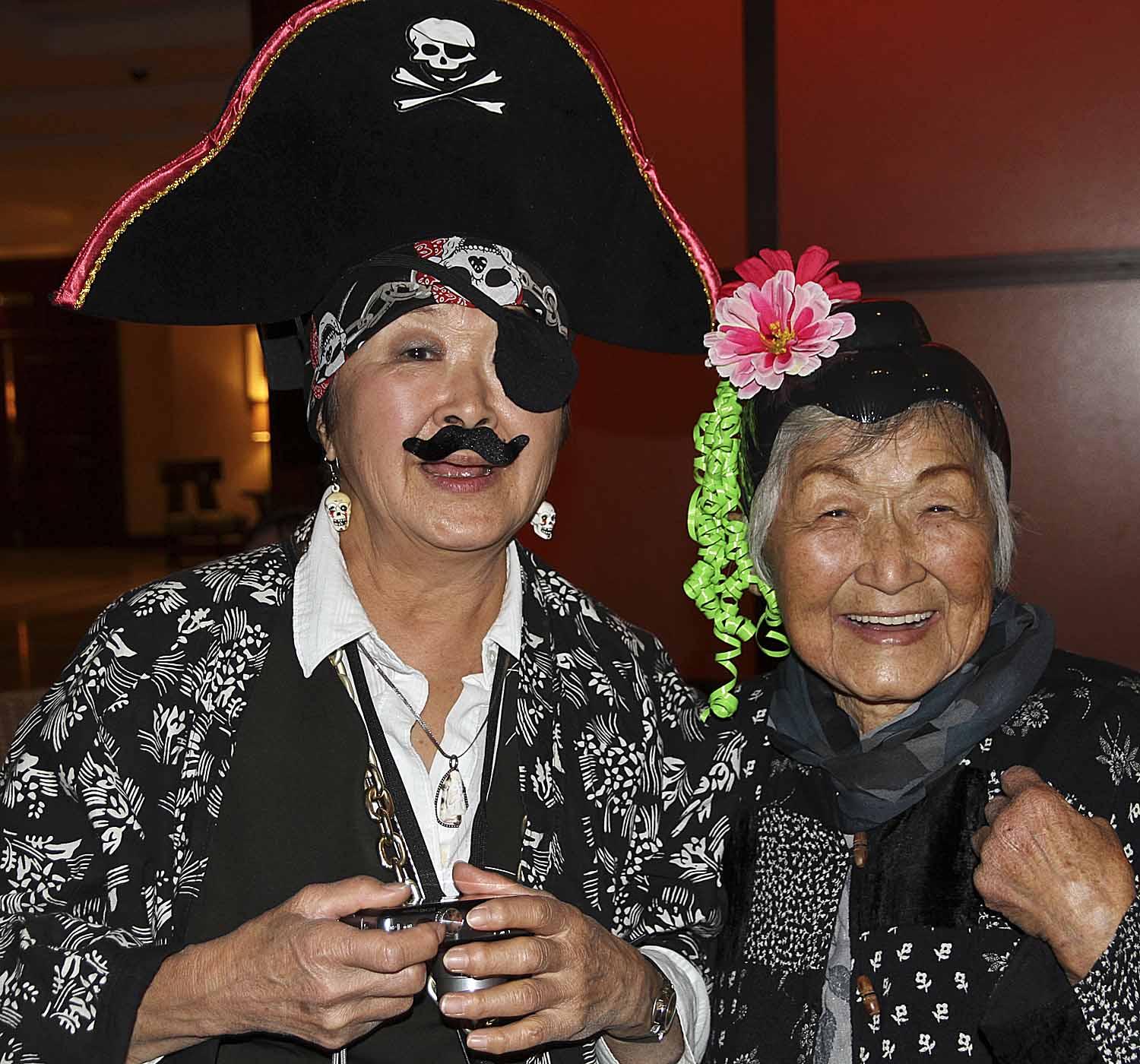
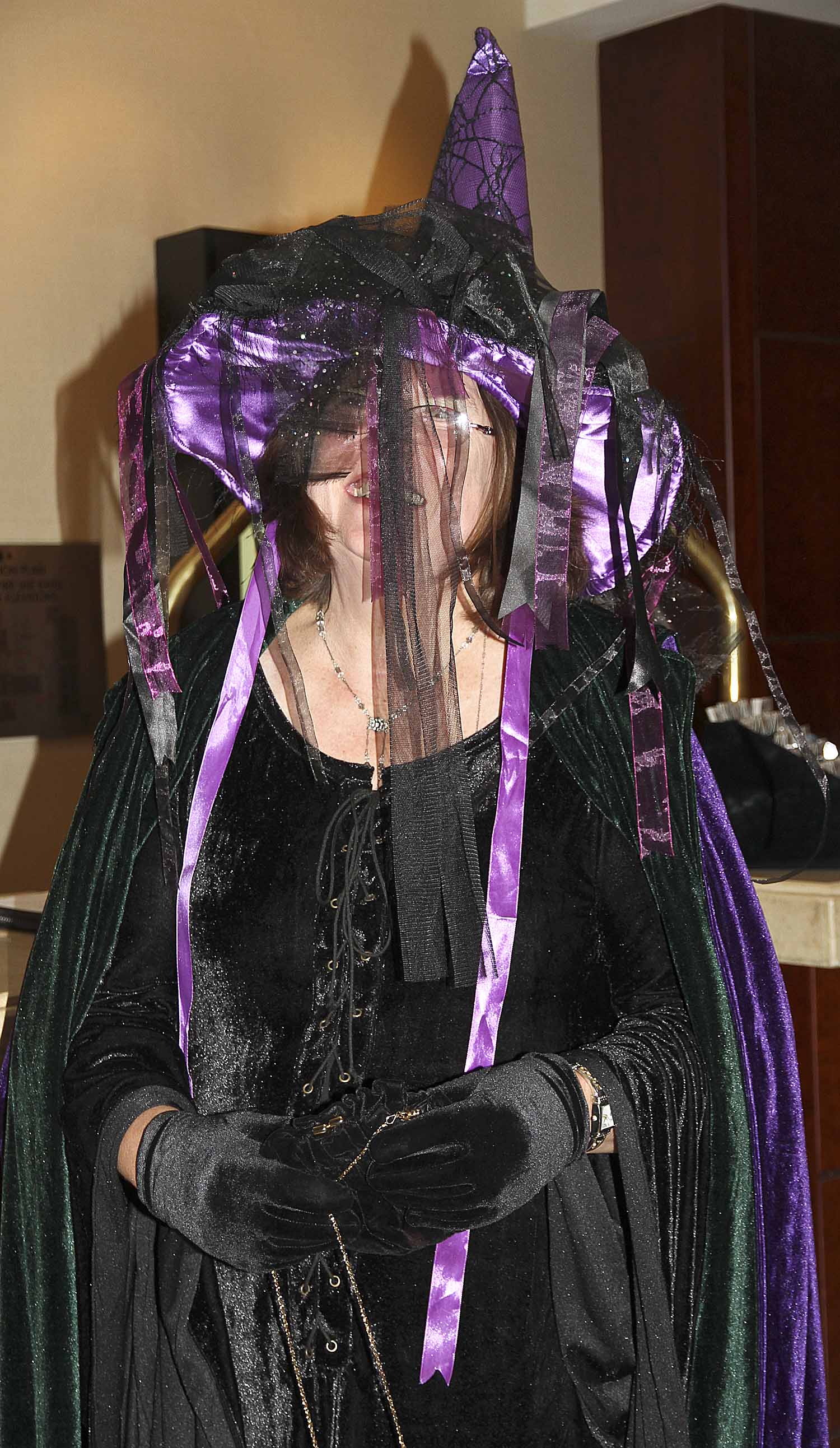
The convention started on Halloween and there was a special “Halloween Costume Bus Tour Party” in Hollywood passing many historic movie/TV studios while watching thousands of Californians enjoying the holiday, in all types of costumes. Some were traditional, many were unusual while most were exotic and revealing. Everyone in our group dressed up and we all had a great time watching the people on our private double decker bus complete with “refreshments.” Some of our group’s costumes were creative, but we all wanted to see which one of the “Kathy Shaners” was the real one, as there were several. Can you tell which one is the real Kathy?

Image ImageImage

Workshops, seminars and demonstrations and a huge benefit raffle are customary for these conventions, but this convention was different with the theme “Bonsai Artist Studio: Outside the Box” where the three headliners, Peter Warren, David DeGroot and Suthin Sukolosovisit presented several programs in a studio setting as well as demonstrations.

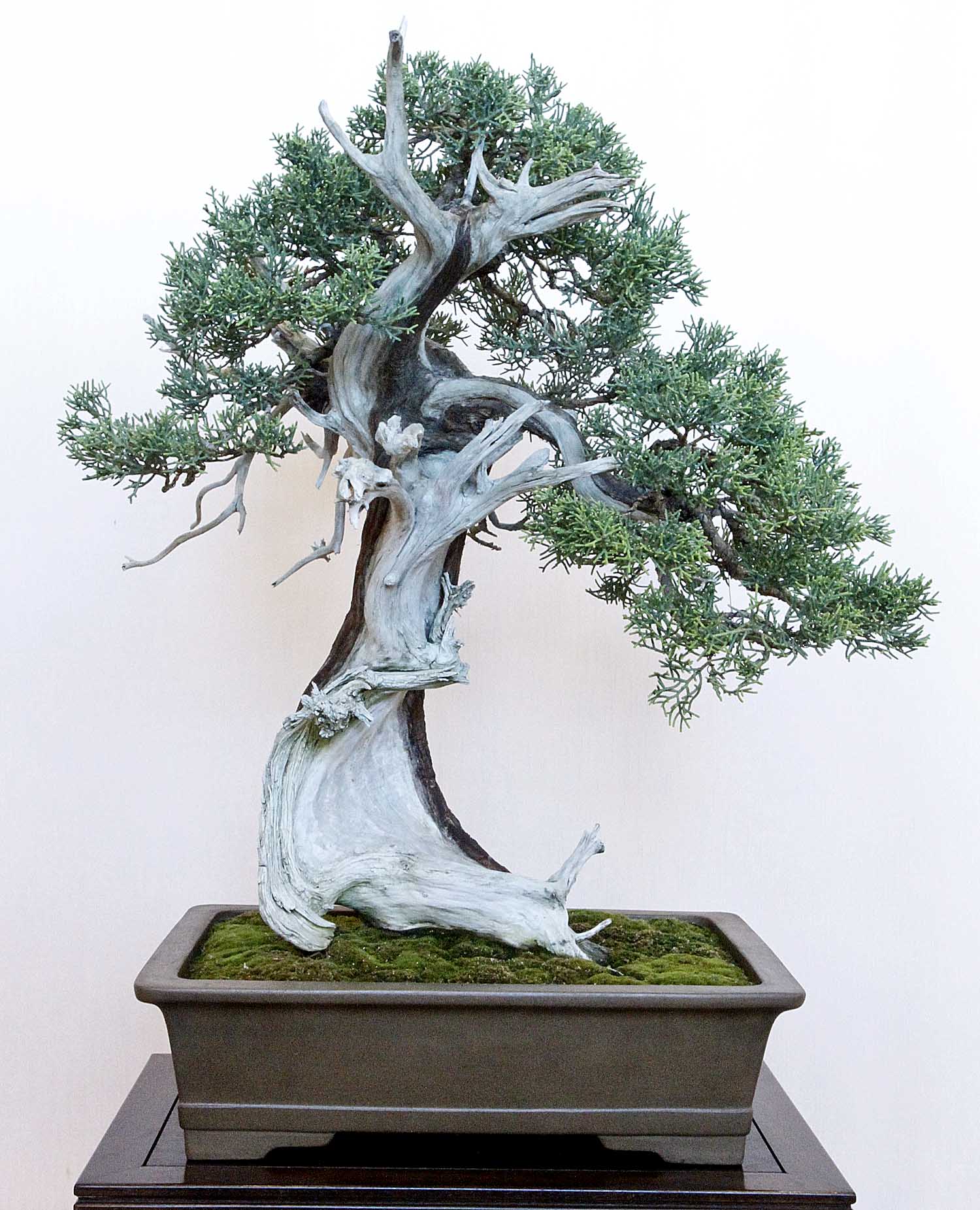
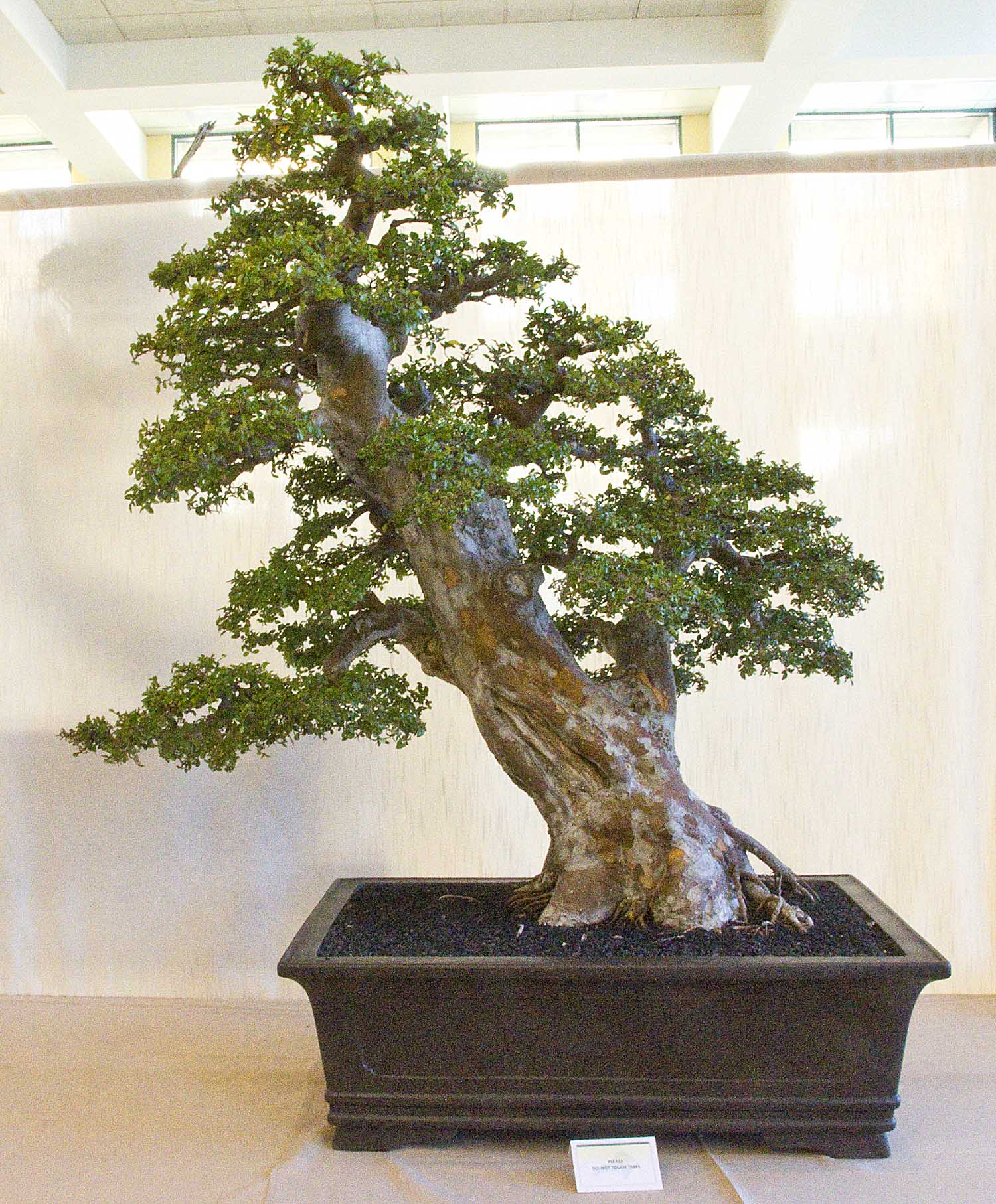
There were four exhibits, the convention bonsai exhibit, a competitive bonsai exhibit, a suiseki exhibit and a special display of Japanese suiseki & chrysanthemum stones from the private collection of Tom and Hiromi Elias. A few of the bonsai and suiseki which were interesting to me follow.
Image

Image

Image

Image

Image

Image

Image

Image

Image

Image

Image

Image

Image

Image

Image

Image

Image

Image

Image

Image

Image

Image

Image

ImageImage

Image

Image

Image

Image

My next stop is finally home sweet home for a couple of weeks before leading my biannual bonsai tour to Japan with Kora Dalager.

BILL JUMPS A BROAD– Part 6 Final!

Bonsai Society Of Western Australia

Image

Two years ago I was invited to The Bonsai Society of Western Australia on my return trip home from the South African Bonsai Convention where I was teaching. The club had some excellent trees in Perth and the people were friendly. The dynamic, energetic and well organized Dianne Boekhout is president and did an excellent job planning my teaching tour this year, just as she did two years ago where I went completely around the world in 21 days.

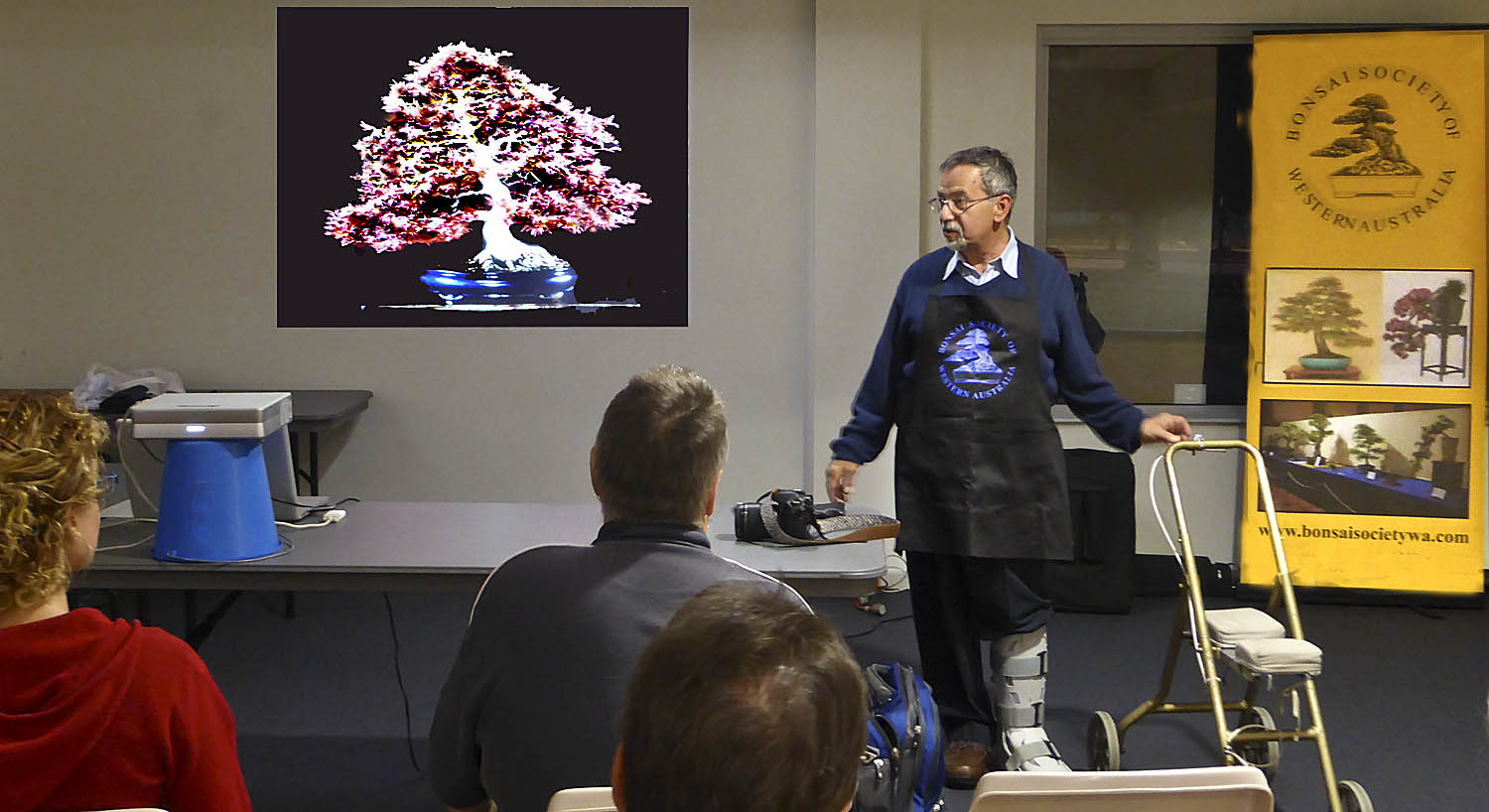
The Bonsai Society of Western Australia again invited me back and I’ve just finished presenting six programs: two critiques, two lecture demos and two workshops. Additionally another program was presented for another local club The Bonsai Workshop. That’s quite a lot of information to absorb in a couple of days and tiring for me as well. Well, this group is up to it and are serious about learning bonsai. Their bonsai and understanding is increasing and it was a pleasure to see the same working core of people still involved promoting bonsai and making information available to new comers to our art.

Image

Image

The first critique had some interesting bonsai, mostly foreign to me because they primarily are using native Australian plant material. As I’ve mentioned before, this area of the world reminds me of Florida with mountains. The plants are similar, but of tremendous diversity. We went to a nursery and I hardy recognized any plants. At the critique all the plants were well shaped and well shaped. A few of them were displayed on proper stands. I briefly spoke about display tables and how some kind of table or even a covered box raises the bonsai off the table to elevate the tree and shows respect for greater appreciation. That’s all I said. Two days later at my literati bonsai seminar nearly ALL the bonsai were displayed on stands and a few even had companion plantings. These people are serious about learning, improving and listened to what I trying to share with them.

Image

Image

Image

Image

Image

Image

The next day after the critique we had my Cascade Bonsai Seminar beginning with a lecture/demonstration and continuing in the afternoon with a workshop. Two years ago, during my last teaching trip here, I presented a unique demonstration taking a 45 inch tree and removing 17 inches from the bottom creating a 28 inch tall tree. Only the top section and root system was kept, 17” of the straight trunk was eliminated. The new shortened tree had power. Well, this year they had some interesting material and I again did something different, well for me at least.

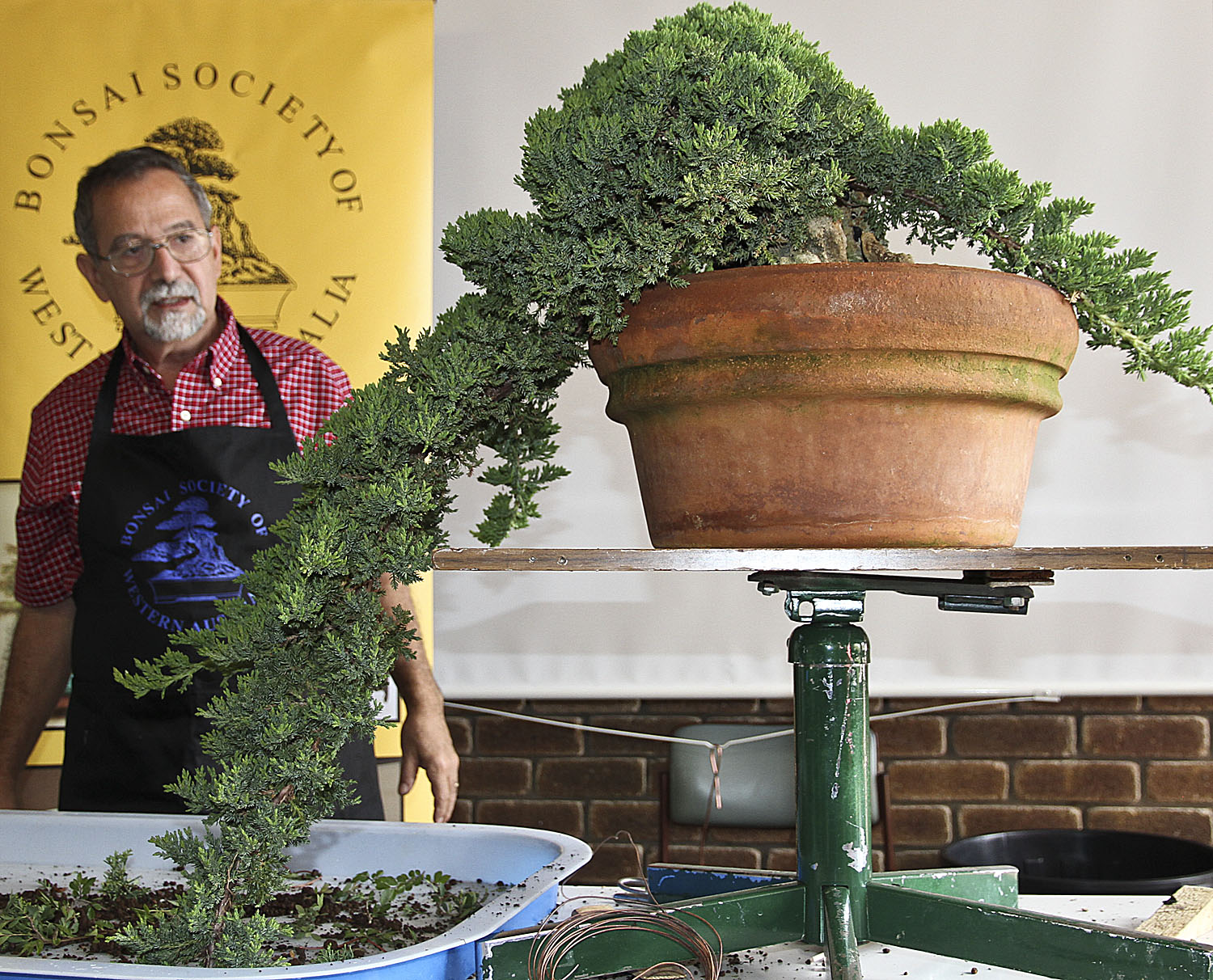
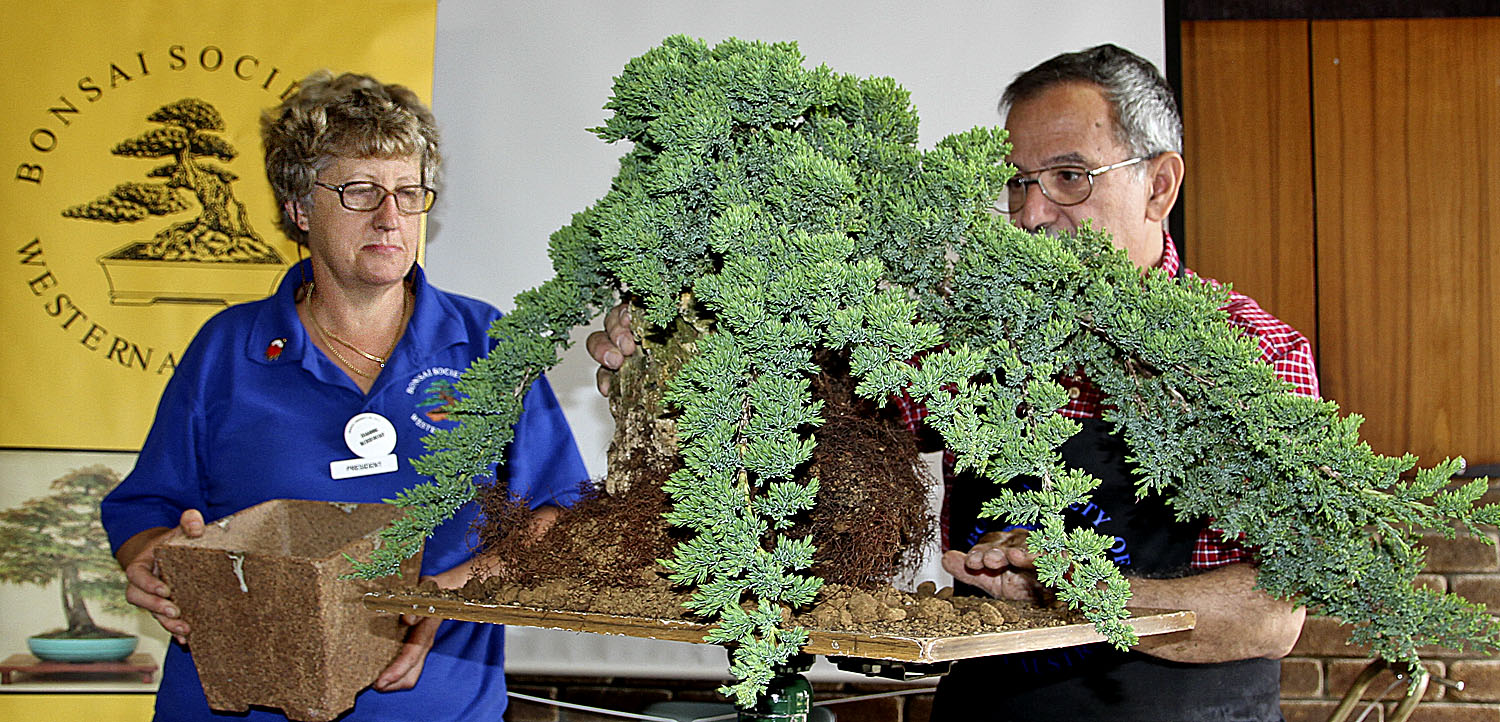
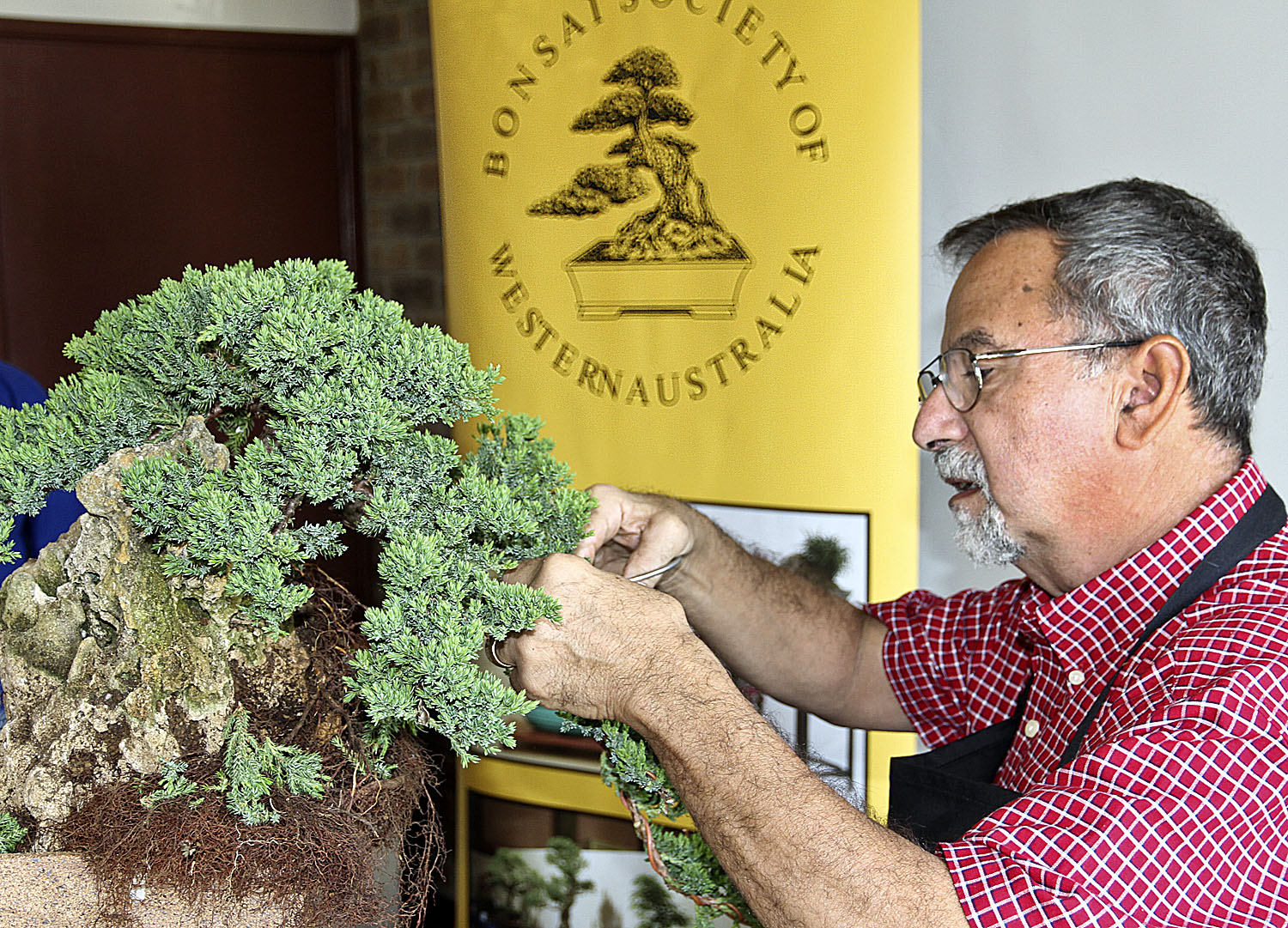
My demo tree, a large Dwarf Japanese garden juniper, was being trained in the root-over-rock style in a clay training pot. The pot was heavy and I was not allowed to move it, but was able to turn the tree while working on it. The trunk had potential for a good cascade style bonsai, but I was not particularly interested in the rock. In fact, I had planned on removing the tree from the rock. Upon closer study, the combination was quite good and we decided to create a root-over-rock cascade style bonsai. The “right” container was not available, but Dianne, my host for my visit, went home and returned with a couple of suitable pots. She assisted me in the wiring and potting and the tree came out better than anticipated. A workshop on cascade style bonsai followed where nearly everyone created this style.

Image

Image

Image

Image

The next day we had the identical schedule, but only with my Literati Style Bonsai Seminar. As mentioned there were an abundant number of excellent literati style bonsai, all on display tables and we used many of them to illustrate design elements and offered suggestions for refinement.

Image

Image

Image

Image

Image

The demonstration tree was again not the normal 5 gallon size juniper which is common in many areas. Diane had a well trained informal upright style Dwarf Japanese garden juniper which was developed and looked good, just as it is. Since she has other similarly styled bonsai this specimen was not special and was boring in her collection. So I removed most of the branches with her approval that of the members. Remember I mentioned the members have an excellent understanding of bonsai. The result was a literati style bonsai.

Image

Original front before redesign

Image

Original back before redesign

Image

Removing front branch

Image

Another branch gone

Image

One more to go

Image

Container selection- too large, but right shape, color and quality

Image

The smaller container, right size and shape

Two containers were available for the tree, one was the perfect design, color and quality, but slightly too large. The other container was about the right size, but everyone, including me liked the color and shape of the larger pot. So, we had a discussion on container selection and what is the most important element for deciding which pot to use: color, size, design or quality. That’s not an easy answer especially

for good trees and with a learned audience there were many valid opinions. I potted the tree in the smaller container but wish I had a “pot shrinker” for the larger one. We continued on with showing proper transplanting techniques for the beginners in the group. All my programs in Perth were free, including the workshops, and open to the public. The club is trying to expand the art in the state as well as get new members.

Image

Image

Image

Image

Image

Completed demo tree redesigned

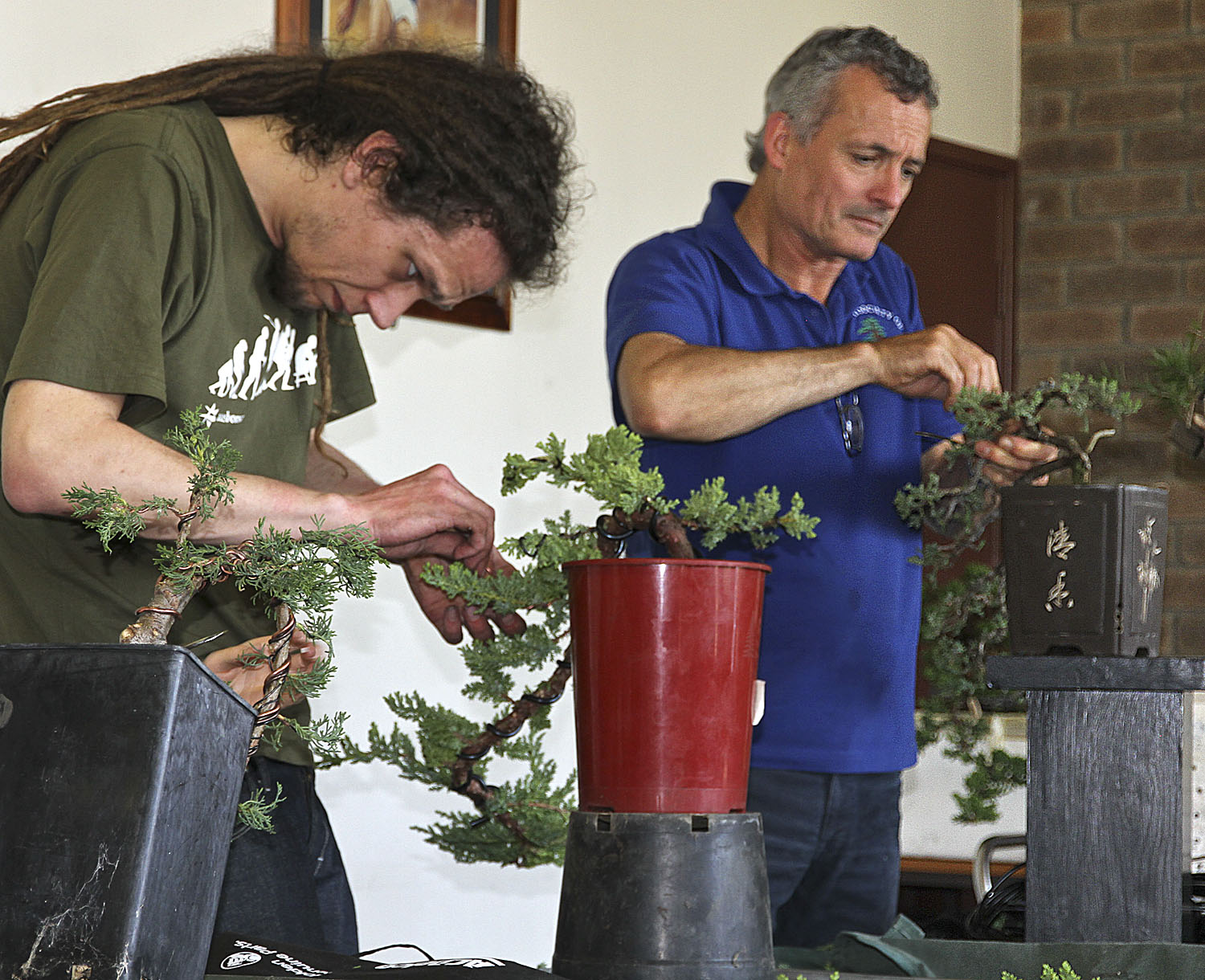
Again after lunch we had a workshop where everyone created a literati style or forest bonsai. Most of the students were the same serious members from yesterday, I guess they were not tired of me yet.

Image

Image

Filippe worked on a forest with Japanese boxwood cuttings he rooted and grew

Image

Nick created a literati style Dwarf Japanese garden juniper

Since my next program was in the evening, Dianne took me on a whale watch trip on a boat in the Indian Ocean. It was quite fun and I enjoyed seeing these huge mammals migrate from the north to Antarctica in the south for the hot summer months. The whales are beautiful and large too, the tongue weighs two tons and their heart weighs another ton. Since they were moving rapidly the whales did not do any tricks, but I was able to get a few photos of them diving into the deep, blue water below. I had a “whale” of a good time…

Image

Image

Image

In the evening we had a special critique where members brought in the tray landscapes they created in my workshop two years ago. Just by chance I had photographed them two years ago after the workshop and they were among the 40,000 images on my Mac laptop. After searching and formatting them a new Powerpoint presentation was created and shown with the critique. I was amazed at how well the members trained and refined their tray landscapes. Looking back at the original images some were just stick forests, but developed into pleasing tray landscapes.

Image

2011

Image

2013

Image

2011

Image

2013

The following evening I presented my Aspects of Bonsai Design program which included a critique for The Bonsai Workshop group. Many interesting bonsai, mostly of native Australian plants, were discussed.

Image

During the past 12 days I have presented 16 educational programs for five bonsai societies and a study group. As my teaching tour throughout Australia concludes I’d like to thank the society members who participated in my educational events, my friendly hosts who made me feel welcome and especially Dianne who spent considerable time to organize the event. Additionally, my wife Diane and Senior Crew who cared for my bonsai during the trip need to be thanked, because without them, the trip would not be possible.

But, I’m not home yet, the Golden State Bonsai Convention in California is my next stop.

BILL JUMPS A BROAD- Part 6 Final

Bonsai Society Of Western Australia


Two years ago I was invited to the Bonsai Society of Western Australia on my return trip home from the South African Bonsai Convention where I was teaching. The club had some excellent trees in Perth and the people were friendly. The dynamic, energetic and well organized Dianne Boekhout is president and did an excellent job planning my teaching tour this year, just as she did two years ago where I went completely around the world in 21 days.

The Bonsai Society of Western Australia again invited me back and I’ve just finished presenting six programs: two critiques, two lecture demos and two workshops. Additionally another program was presented for another local club The Bonsai Workshop. That’s quite a lot of information to absorb in a couple of days and tiring for me as well. Well, this group is up to it and are serious about learning bonsai. Their bonsai and understanding is increasing and it was a pleasure to see the same working core of people still involved promoting bonsai and making information available to new comers to our art.

The first critique had some interesting bonsai, mostly foreign to me because they primarily are using native Australian plant material. As I’ve mentioned before, this area of the world reminds me of Florida with mountains. The plants are similar, but of tremendous diversity. We went to a nursery and I hardy recognized any plants. At the critique all the plants were well shaped and well shaped. A few of them were displayed on proper stands. I briefly spoke about display tables and how some kind of table or even a covered box raises the bonsai off the table to elevate the tree and shows respect for greater appreciation. That’s all I said. Two days later at my literati bonsai seminar nearly ALL the bonsai were displayed on stands and a few even had companion plantings. These people are serious about learning, improving and listened to what I trying to share with them.

The next day after the critique we had my Cascade Bonsai Seminar beginning with a lecture/demonstration and continuing in the afternoon with a workshop. Two years ago, during my last teaching trip here, I presented a unique demonstration taking a 45 inch tree and removing 17 inches from the bottom creating a 28 inch tall tree. Only the top section and root system was kept, 17” of the straight trunk was eliminated. The new shortened tree had power. Well, this year they had some interesting material and I again did something different, well for me at least.

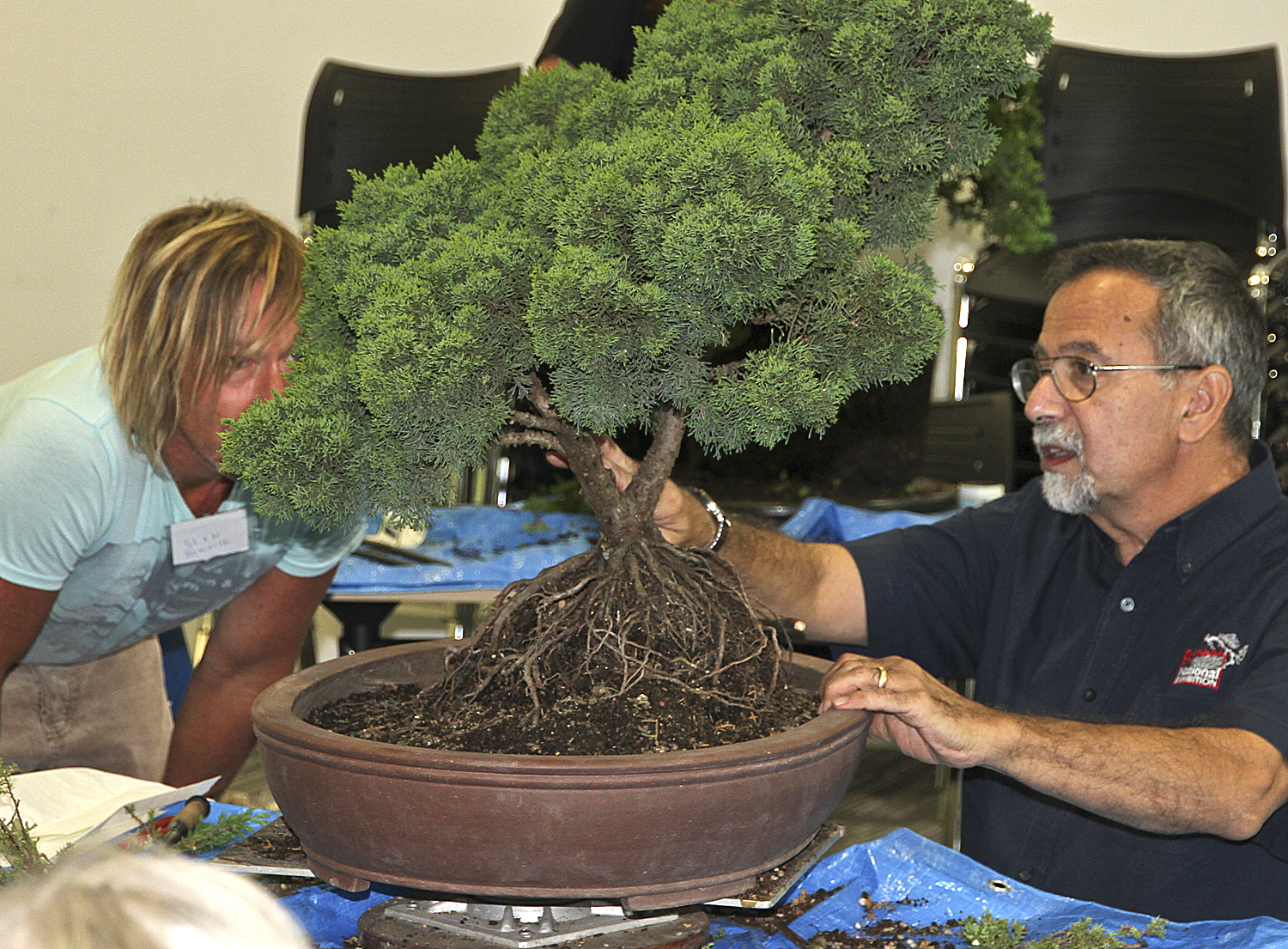
My demo tree, a large Dwarf Japanese garden juniper, was being trained in the root-over-rock style in a clay training pot. The pot was heavy and I was not allowed to move it, but was able to turn the tree while working on it. The trunk had potential for a good cascade style bonsai, but I was not particularly interested in the rock. In fact, I had planned on removing the tree from the rock. Upon closer study, the combination was quite good and we decided to create a root-over-rock cascade style bonsai. The “right” container was not available, but Dianne, my host for my visit, went home and returned with a couple of suitable pots. She assisted me in the wiring and potting and the tree came out better than anticipated. A workshop on cascade style bonsai followed where nearly everyone created this style.

The next day we had the identical schedule, but only with my Literati Style Bonsai Seminar. As mentioned there were an abundant number of excellent literati style bonsai, all on display tables and we used many of them to illustrate design elements and offered suggestions for refinement. The demonstration tree was again not the normal 5 gallon size juniper which is common in many areas. Diane had a well trained informal upright style Dwarf Japanese garden juniper which was developed and looked good, just as it is. Since she has other similarly styled bonsai this specimen was not special and was boring in her collection. So I removed most of the branches with her approval that of the members. Remember I mentioned the members have an excellent understanding of bonsai. The result was a literati style bonsai.

Two containers were available for the tree, one was the perfect design, color and quality, but slightly too large. The other container was about the right size, but everyone, including me liked the color and shape of the larger pot. So, we had a discussion on container selection and what is the most important element for deciding which pot to use: color, size, design or quality. That’s not an easy answer especially for good trees and with a learned audience there were many valid opinions. I potted the tree in the smaller container but wish I had a “pot shrinker” for the larger one. We continued on with showing proper transplanting techniques for the beginners in the group. All my programs in Perth were free, including the workshops, and open to the public. The club is trying to expand the art in the state as well as get new members.

Again after lunch we had a workshop where everyone created a literati style or forest bonsai. Most of the students were the same serious members from yesterday, I guess they were not tired of me yet.

Since my next program was in the evening, Dianne took me on a whale watch trip on a boat in the Indian Ocean. It was quite fun and I enjoyed seeing these huge mammals migrate from the north to Antarctica in the south for the hot summer months. The whales are beautiful and large too, the tongue weighs two tons and their heart weighs another ton. Since they were moving rapidly the whales did not do any tricks, but I was able to get a few photos of them diving into the deep, blue water below. I had a “whale” of a good time…

In the evening we had a special critique where members brought in the tray landscapes they created in my workshop two years ago. Just by chance I had photographed them after the workshop and they were among the 40,000 images on my Mac laptop. After searching and formatting them a new Powerpoint presentation was created and shown with the critique. I was amazed at how well the members trained and refined their tray landscapes. Looking back at the original images some were just stick forests, but developed into pleasing tray landscapes.

The following evening I presented my Aspects of Bonsai Design program which included a critique for The Bonsai Workshop group. Many interesting bonsai, mostly of native Australian plants, were discussed.

During the past 12 days I have presented 16 educational programs for five bonsai societies and a study group. As my teaching tour throughout Australia concludes I’d like to thank the society members who participated in my educational events, my friendly hosts who made me feel welcome and especially Dianne who spent considerable time to organize the event. Additionally, my wife Diane and Senior Crew who cared for my bonsai during the trip need to be thanked, because without them, the trip would not be possible.

But, I’m not home yet, the Golden State Bonsai Convention in California is my next stop.

BILL JUMPS A BROAD- Part 5

Two Bonsai Hobbyists

Image

Image

Image

Image

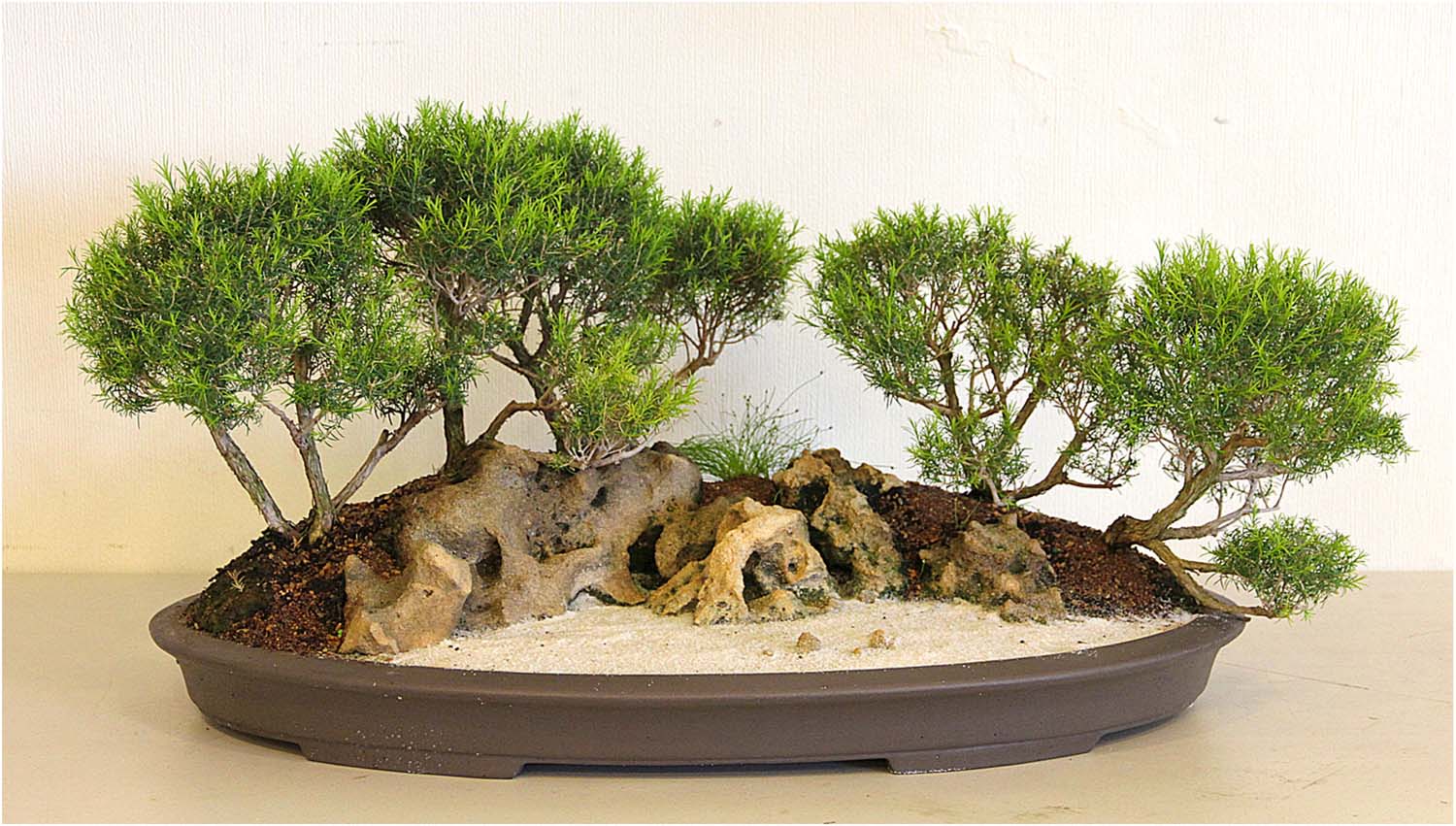
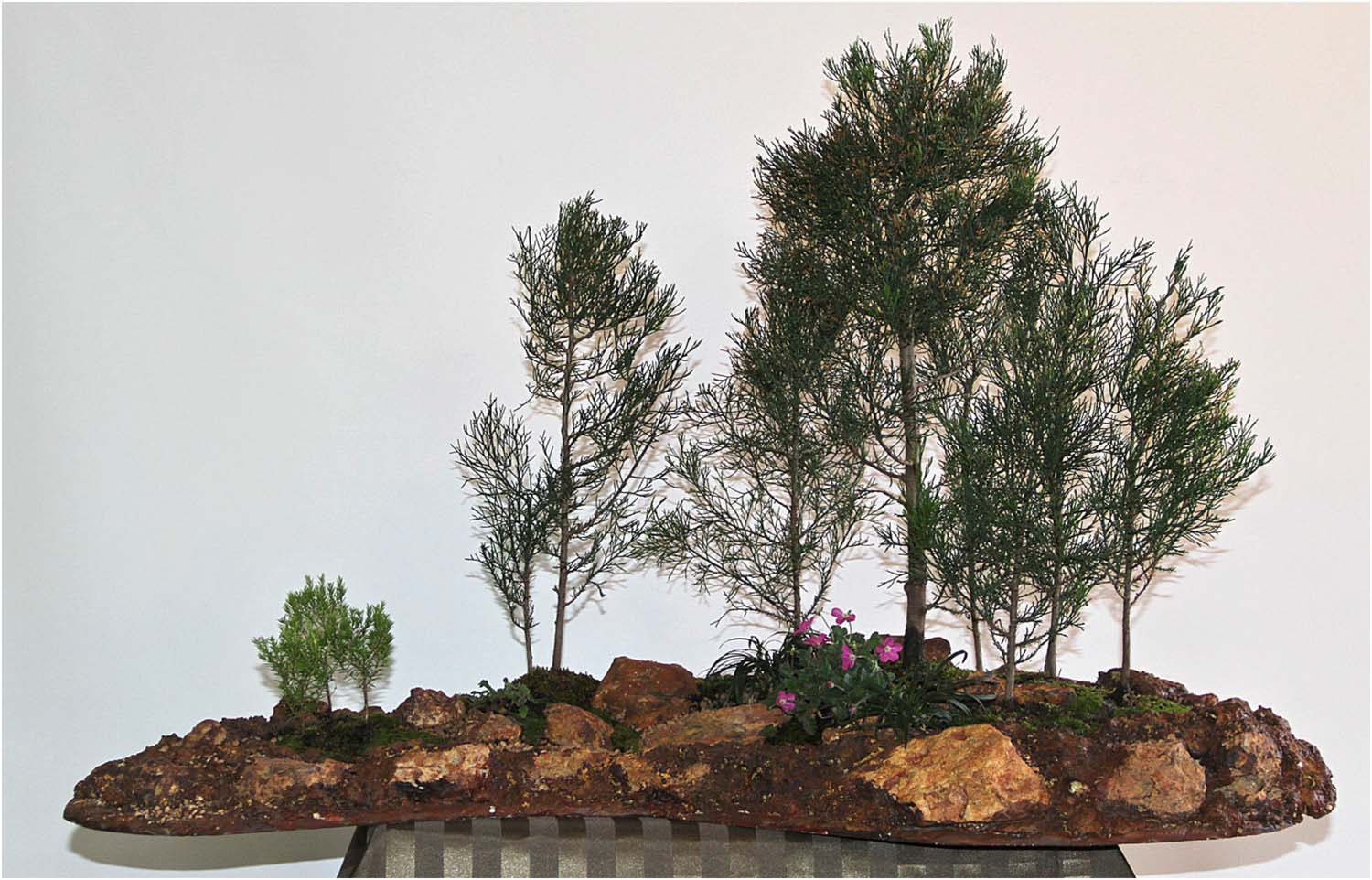
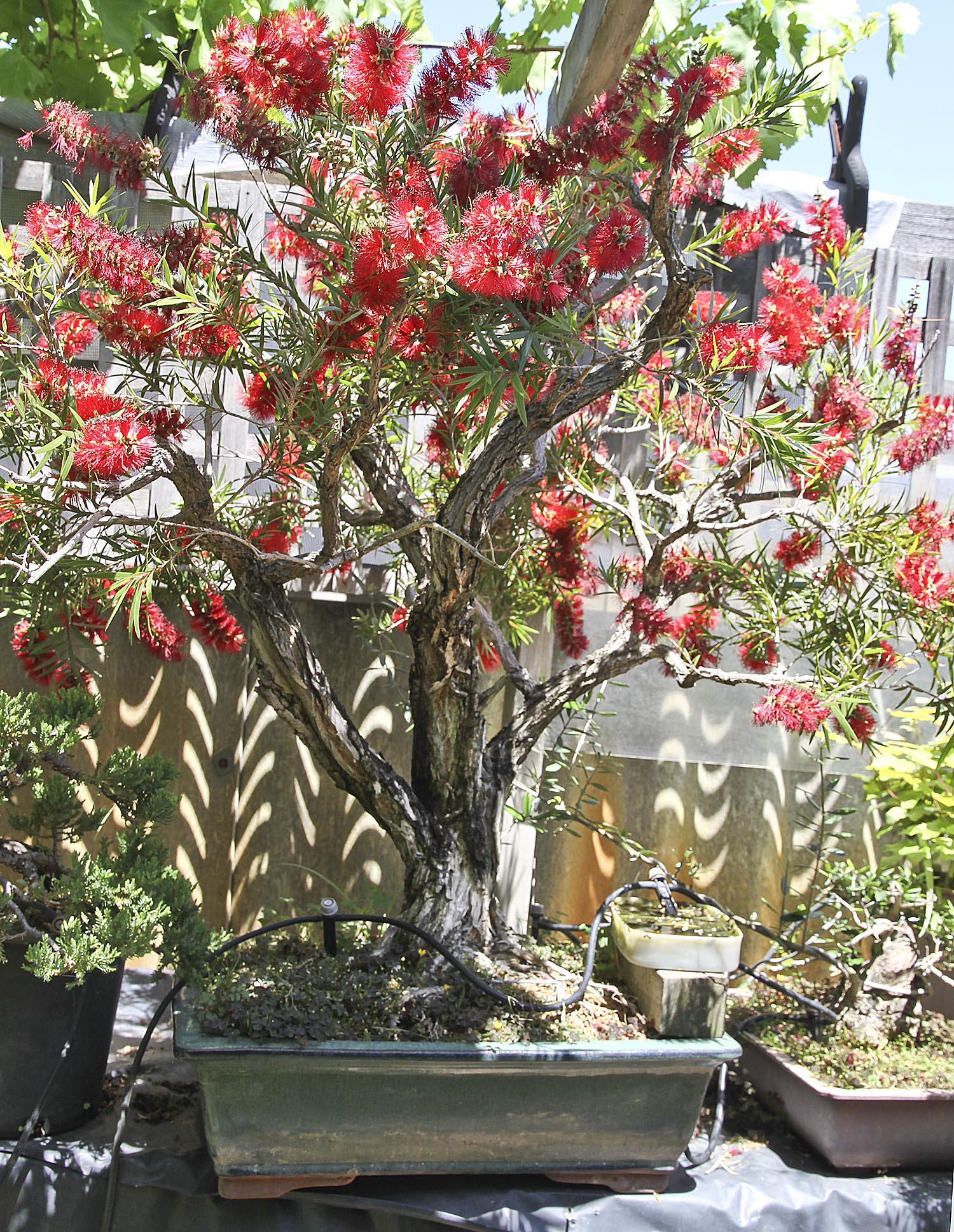
The Australian native plants are a wide and diverse group of which are quite different than what I’m familiar with. Many are also native in South Africa because of similar climates. A few of these plants are common landscape plants or invasive in Florida. Since there is a great diversity of plant material here the botanical names are important. It is quite difficult to import plants into Western Australia from the other states so the group tends to use the native plants for bonsai training, although Junipers, Chinese elm, Ficus, Olives and Japanese black pine can be found, especially in bonsai nurseries.

It’s interesting to note that most members of the Bonsai Society of Western Australia have an excellent working knowledge of both the botanical and common names of the native plant material. That’s important because there are over 700 species of Eucalyptus, over 200 species of Melaleuca (Paper bark) and over 80 species of Leptosperum (New Zealand Tea tree).

Derek W. Oakley

Image

Image

Melaleuca cuticularis

Image

Melaleuca eliptica

Image

Image

Italian Stone Pine

Image

Image

Image

Image

Image

One of the longest members and a past president of the Bonsai Society of Western Australia is Derek Oakley with his wife Sue. I met Derek in 1985 when I first gave a presentation for his society when he was beginning bonsai. He has developed his skills and artistic design quite well and is now one of the most prominent bonsai artists in Western Australia.

Derek has an encyclopedic knowledge of Australian native plant material. He knows all the botanical and common names as well as how suitable they are for bonsai training. Some species can be drastically pruned back to old wood, while most others must have some green foliage remaining after trimming.

His garden is small, but completely packed with beautiful bonsai of all shapes and a multitude of plants native to Western Australia. Many of the original plants were collected in the bush as well as Chinese elms. Since Derek has an understanding of the peculiar growth habit of Australian native plants he applies it to his bonsai training as well as sharing the information with club members.

I was particularly impressed with his shohin bonsai, especially his Chinese elms. Some have been propagated from root cuttings as well as stem cuttings. They are maintained in shallow pans of moist gravel because the dry out quickly. Currently summer is beginning and the forecast for today is 95F. It gets windy here in addition to the scorching sun so he has a frame for shade cloth which will then be pulled over his bonsai soon.

Image

Image

Image

Casuarina

Image

Image

Sue Oakley also has her own bonsai collection which she grows and trains herself. There are several tray landscapes which are particularly distinctive. She also loves small pots and suiseki and has the walls of two rooms completely filled with her small treasures.

Both Derek and Sue are still active members of the Bonsai Society of Western Australia and display their trees often as well as share their knowledge so others can train Australian native plants.

C. J. Leo

Image

Image

Originally from Singapore, C.J. has been training bonsai for over 30 years. He retired to Perth about 20 years ago and started a new bonsai collection in his new home. He travels extensively in Asia studying the landscape as well as plant material. His collection of over 700 trees is packed into a small suburban yard and could easily fill his five acre lot in another location. Rather than move the bonsai C.J. has decided to reduce his collection by 300 pieces. I wish I lived closer to him. He has a few Junipers, Chinese elms, Plums, Pines as well as common species he is training for bonsai.

Image

Image

Baekia

Image

Japanese black pine air layer, note roots on lower left

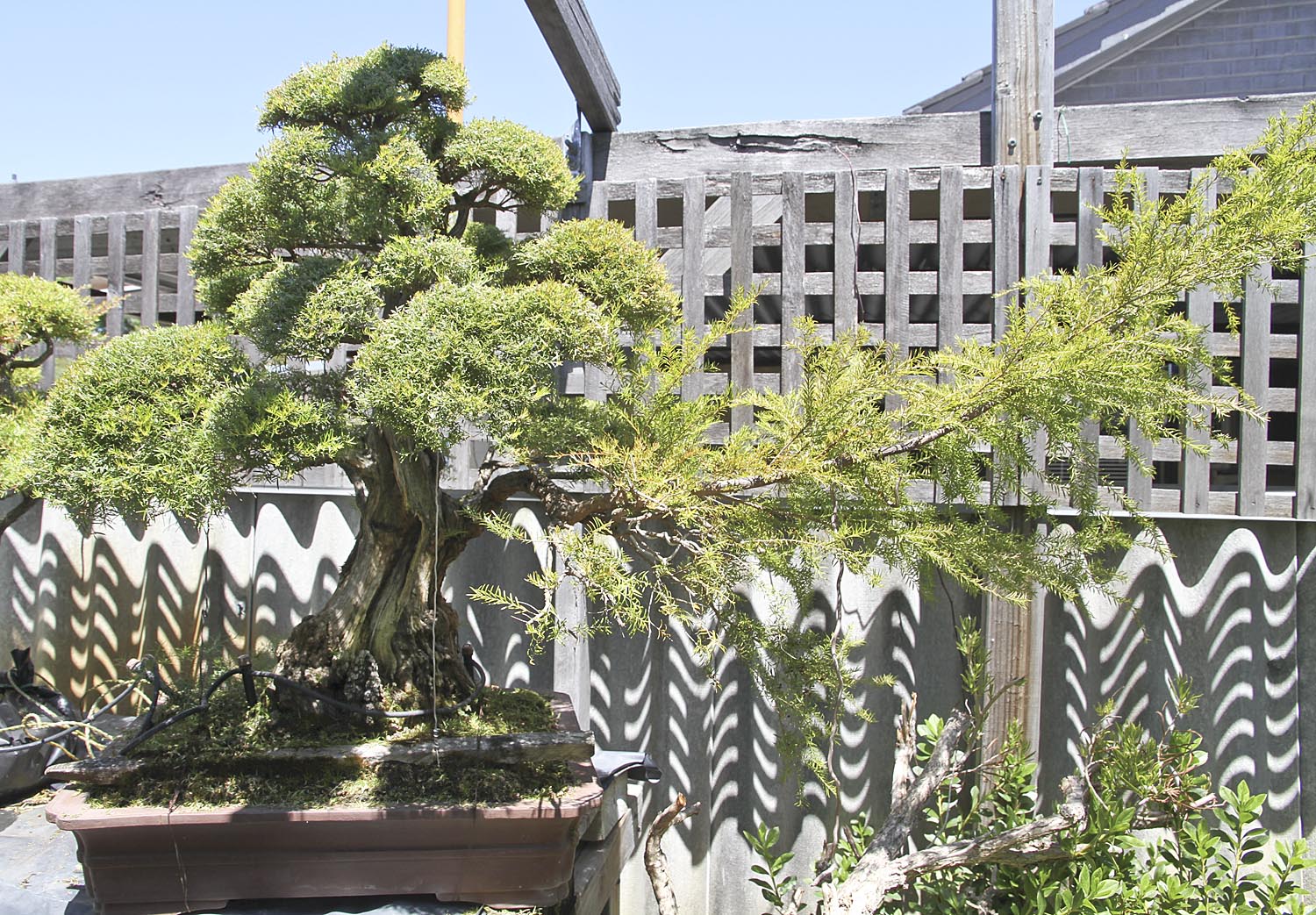
Although C.J. has some collected Australian native plants, as well as those dug from gardens, his specialty is the New Zealand tea tree, Leptosperum scoparium which he originally obtained from nurseries. Now he starts them from seed and air layers as well. I’ve tried for years to grow the New Zealand tea but kill them when transplanting. Even for others this species is extremely difficult to grow, as well as training for bonsai. Well, C.J. is THE authority for cultivating and training the species, but is quick to point out that he occasionally loses a well developed bonsai he has had for over ten years for no apparent reason.

Image

Image

Image

Image

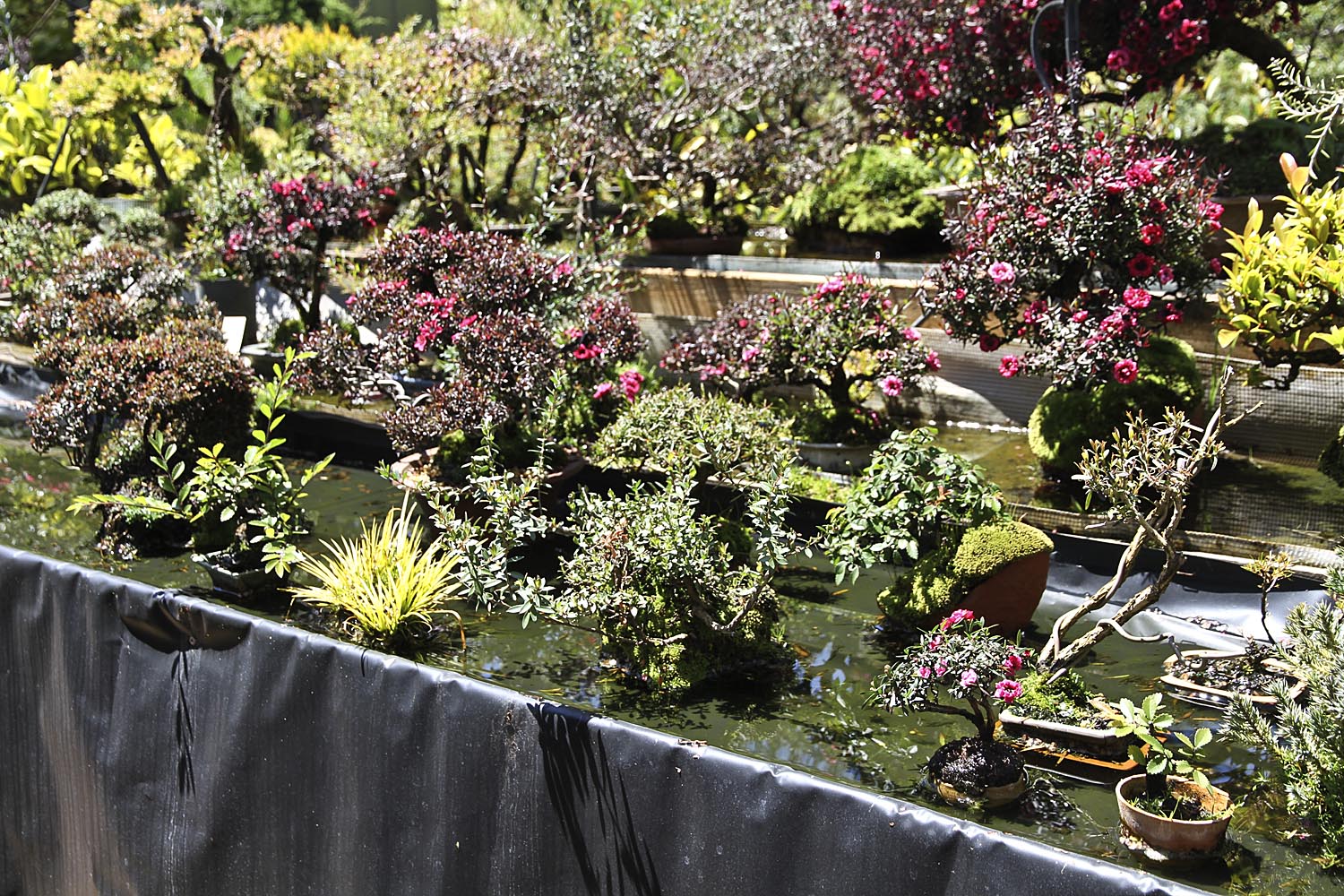
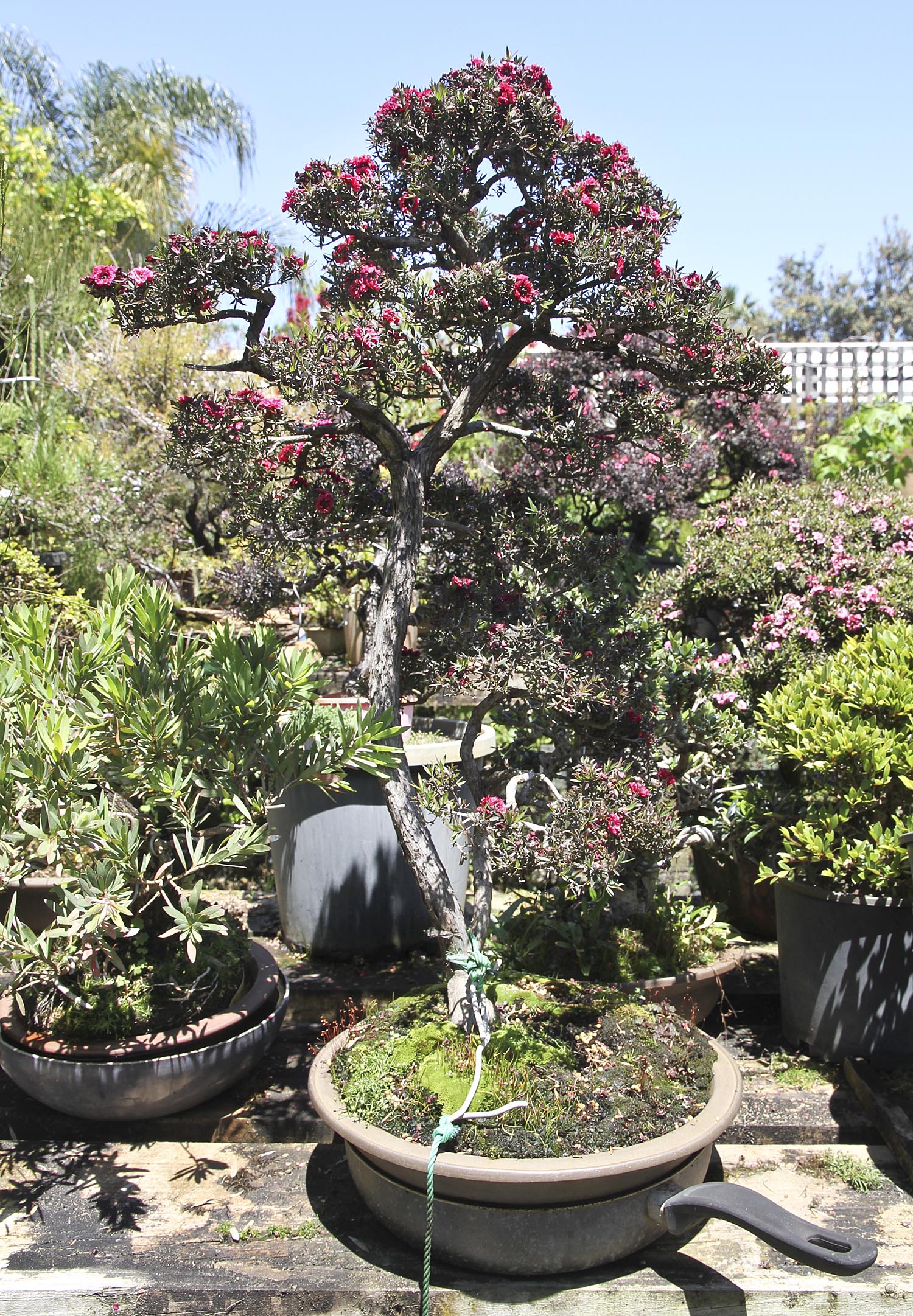
C.J. keeps all of his New Zealand tea trees sitting in water, not in moist sand. The roots like to grow into the water and he has his shohin bonsai in a large water tray. Some of his larger specimens are in old frying pans and others have their pots wrapped in heavy water holding plastic. He rarely transplants but sometimes air layers the plants to put them into new containers. They like to be pot bound, at least in his garden.

Image

Trim first to silhouette

Image

Thin out after establishing silhouette to allow fresh air and sunlight

Image

Image

Image

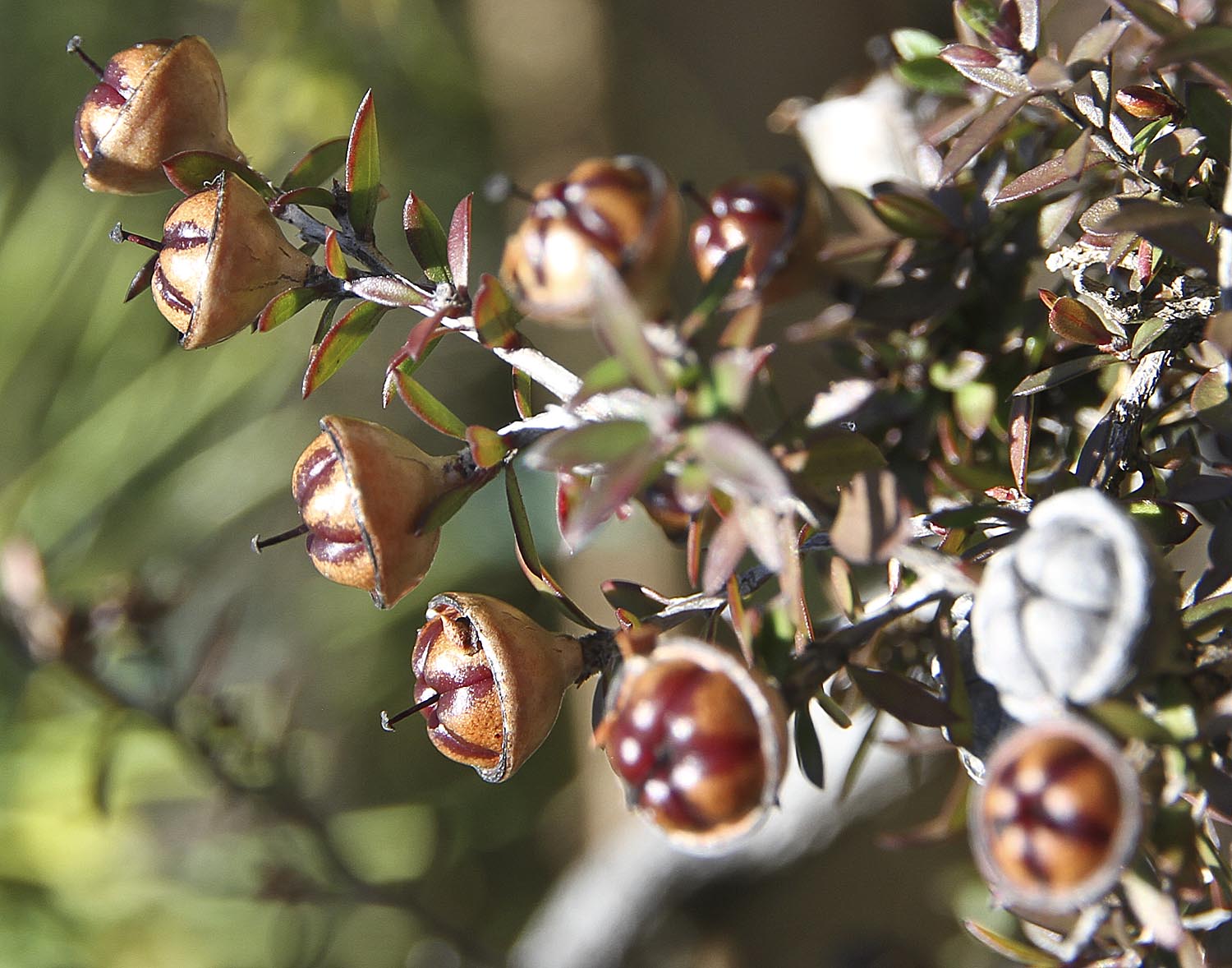
Seed pods of New Zealand tea tree

Image

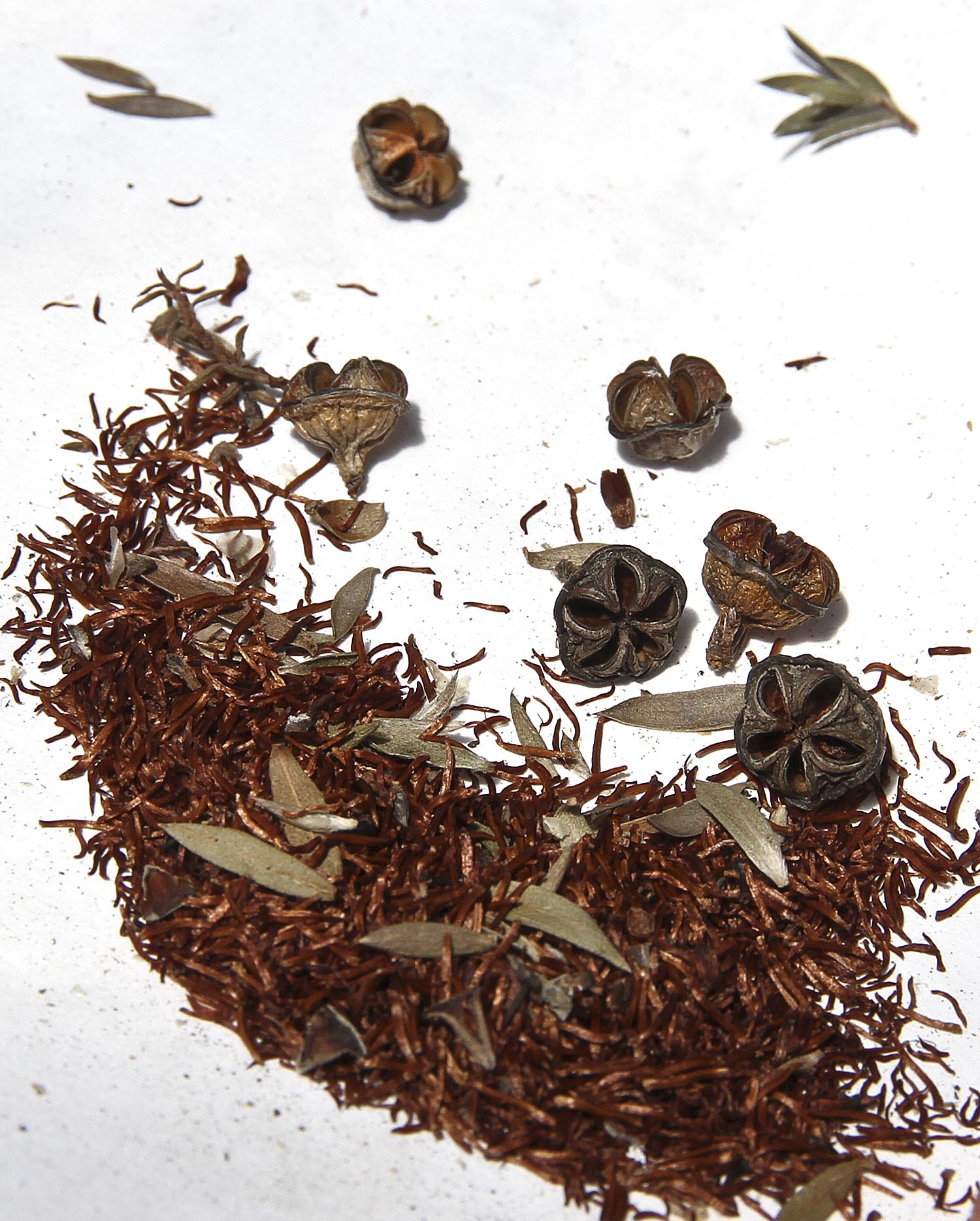
Seeds of New Zealand tea tree

His garden is filled with New Zealand tea trees of many different colors and forms which he has grown from seed. He is searching for a yellow flowering cultivar, and may just develop one from his seedlings. There are many species of Leptospernum, and like other members of the Bonsai Society of Western Australia is familiar with the botanical and common names as well as their growth characteristics for bonsai training. And, he displays his bonsai and shares his knowledge and experiences with other members of his club.

Image

Chinese elm

BILL JUMPS A BROAD- Part 4

National Bonsai & Penjing Collection Of Australia

Image

Image

Image

Image

Image

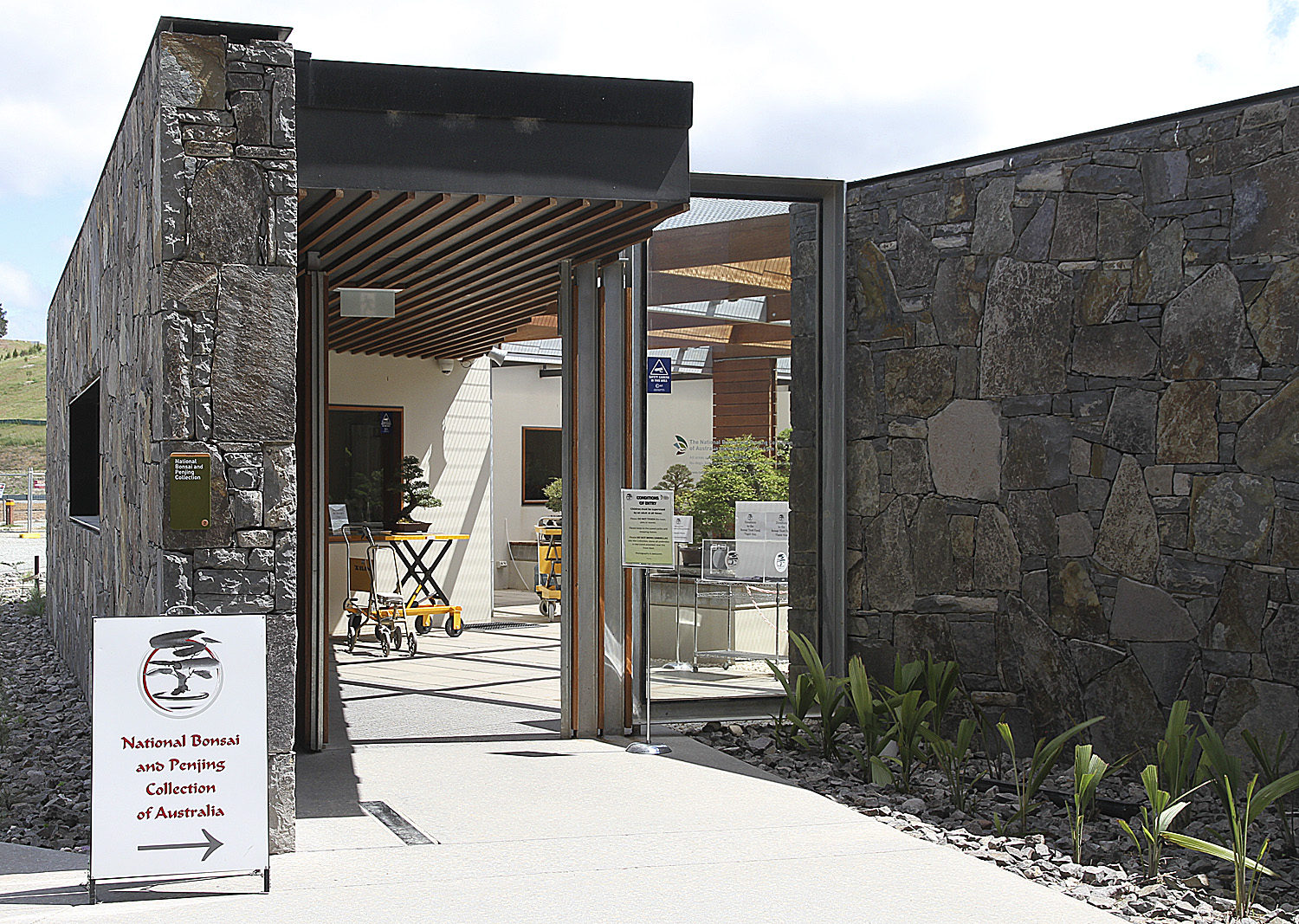
My next stop on my teaching tour throughout the Australia continent was Canberra, the capital city. At the National Arboretum Canberra the local club and Australian Associated Bonsai Clubs (National Federation) helped to establish and support the newly opened “National Bonsai & Penning Collection of Australia,” often called the National Bonsai Collection.

Image

The use of words interests me and I always try to be as accurate and correct as possible. That’s one part of my unusual characteristic which was influenced by my teacher Yuji Yoshimura. At home in the United States we have the “National Bonsai & Penjng Museum” at the United States National Arboretum, often called the “National Bonsai Collection.” Now Australia has a National Bonsai Collection too which is quite good. Perhaps it’s just me, but when someone refers to the “National Bonsai Collection” I wonder which one they are talking about, the one in the United States or Australia. OK, if you are in the US, it’s the one in Washington, DC, and if in Australia the collection in Canberra. However, for some people who are working and promoting bonsai around the world it’s often confusing. That’s why I usually call the collection in Washington, DC, the “US National Bonsai & Penjing Collection” and the one in Canberra the “National Bonsai & Penjing Collection of Australia.” Ok, now that I’ve got that off mind, back to my bonsai journey.

Image

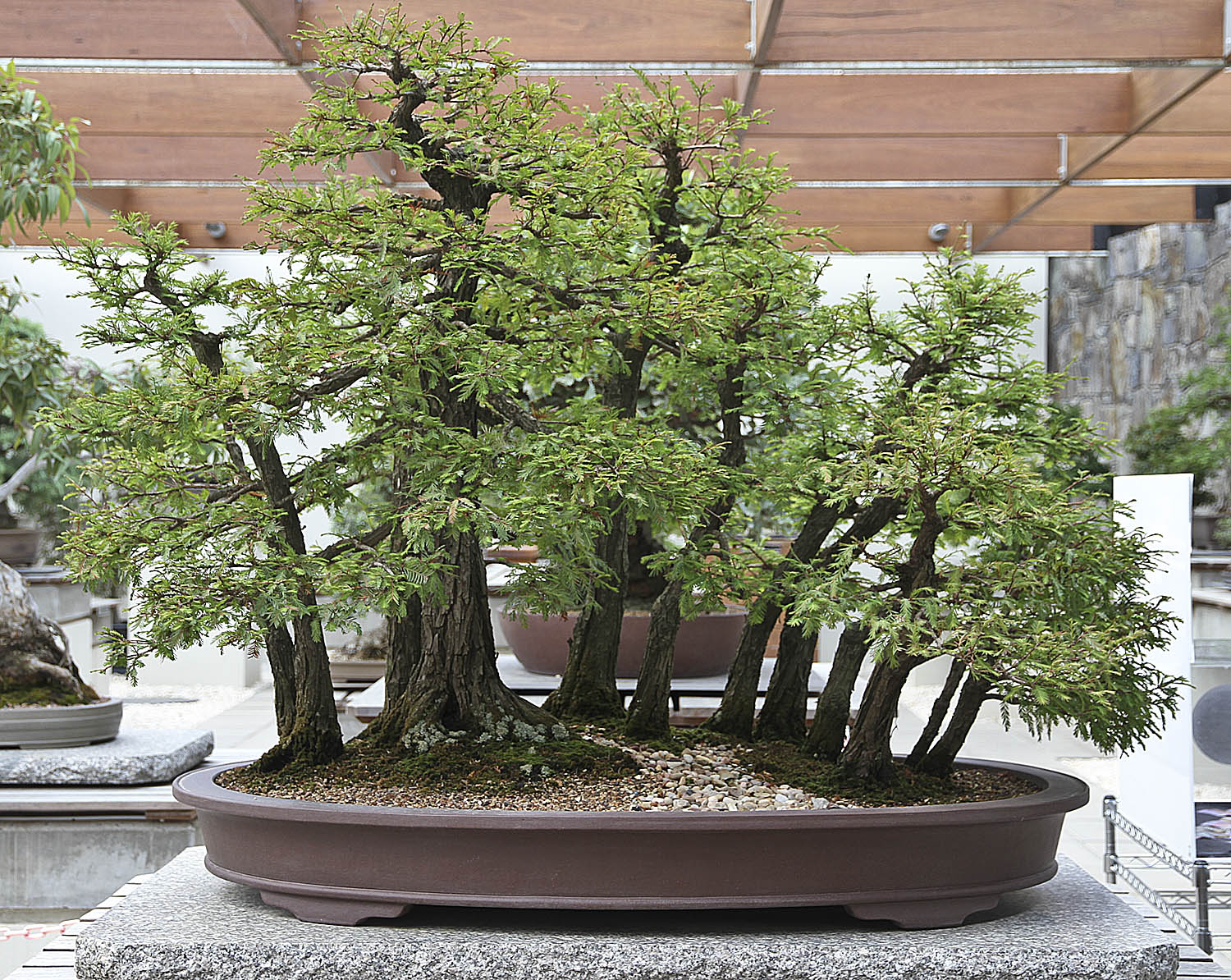
Montezuma cypress or Swamp cypress or Bald cypress

Image

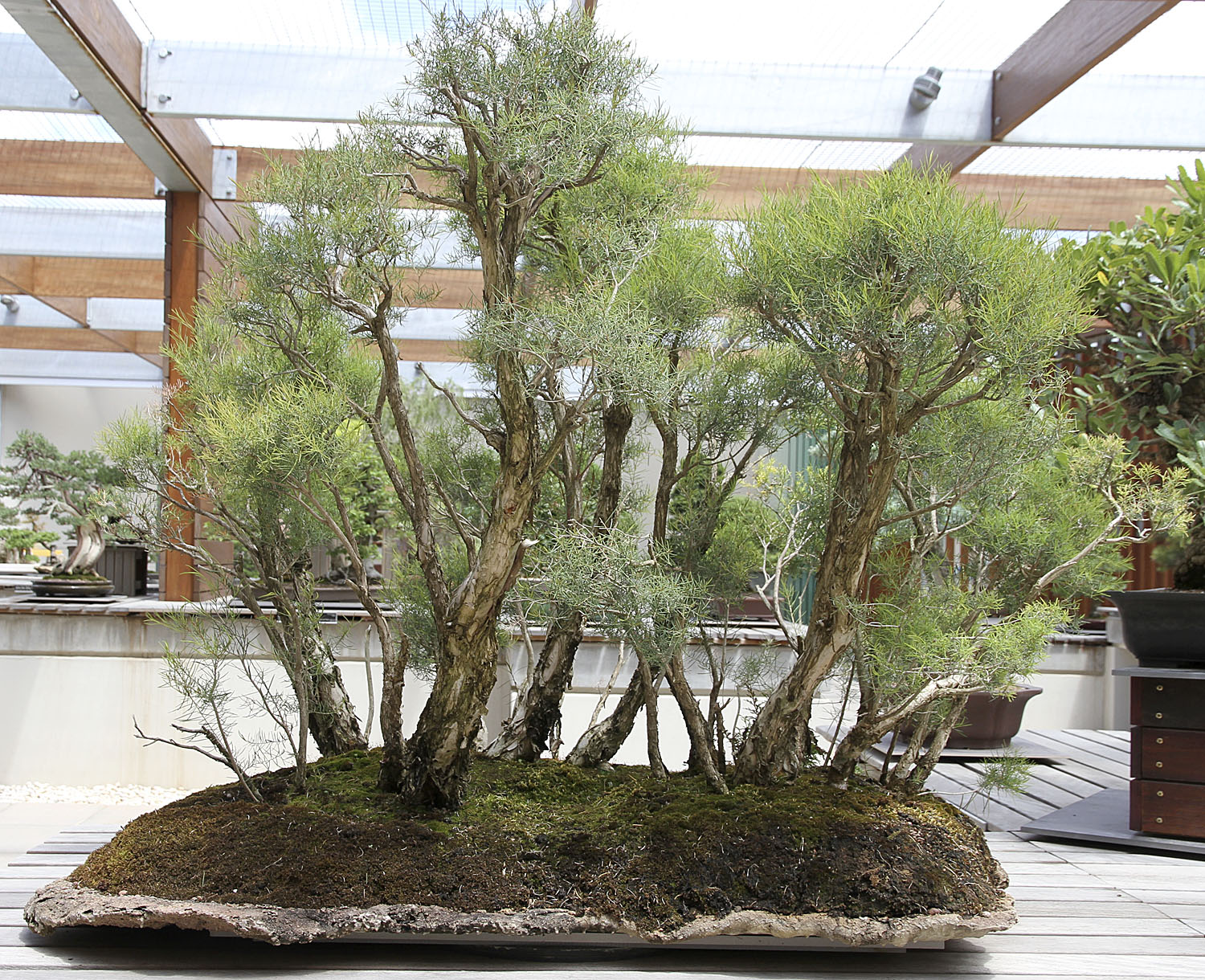
Melaleuca

Image

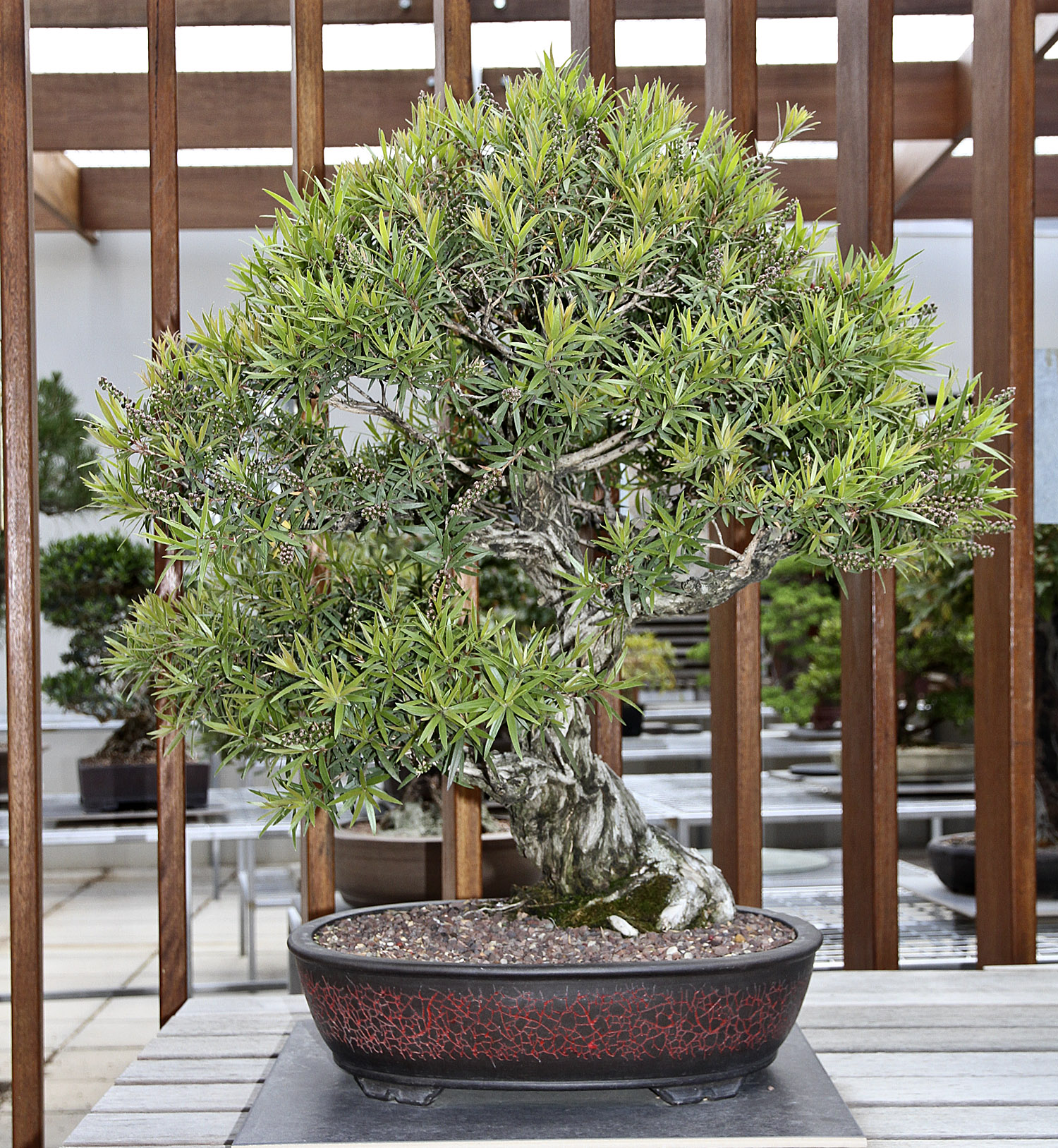
Bottle brush

Image

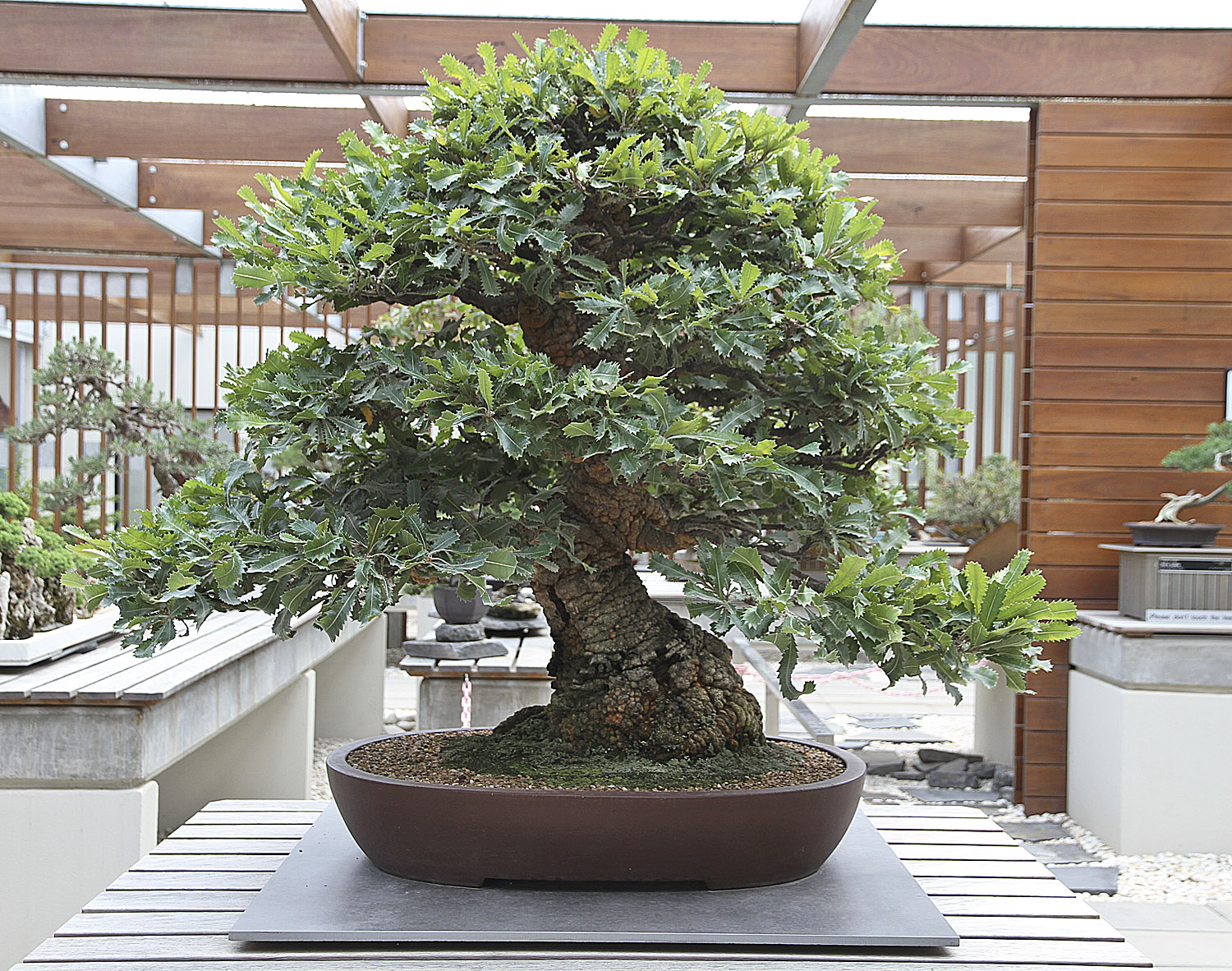
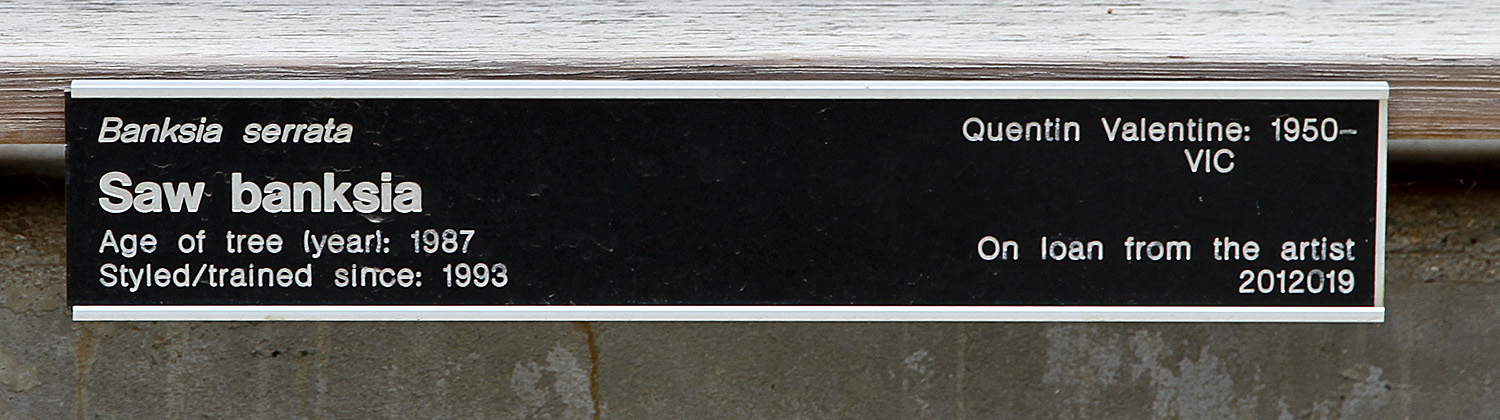
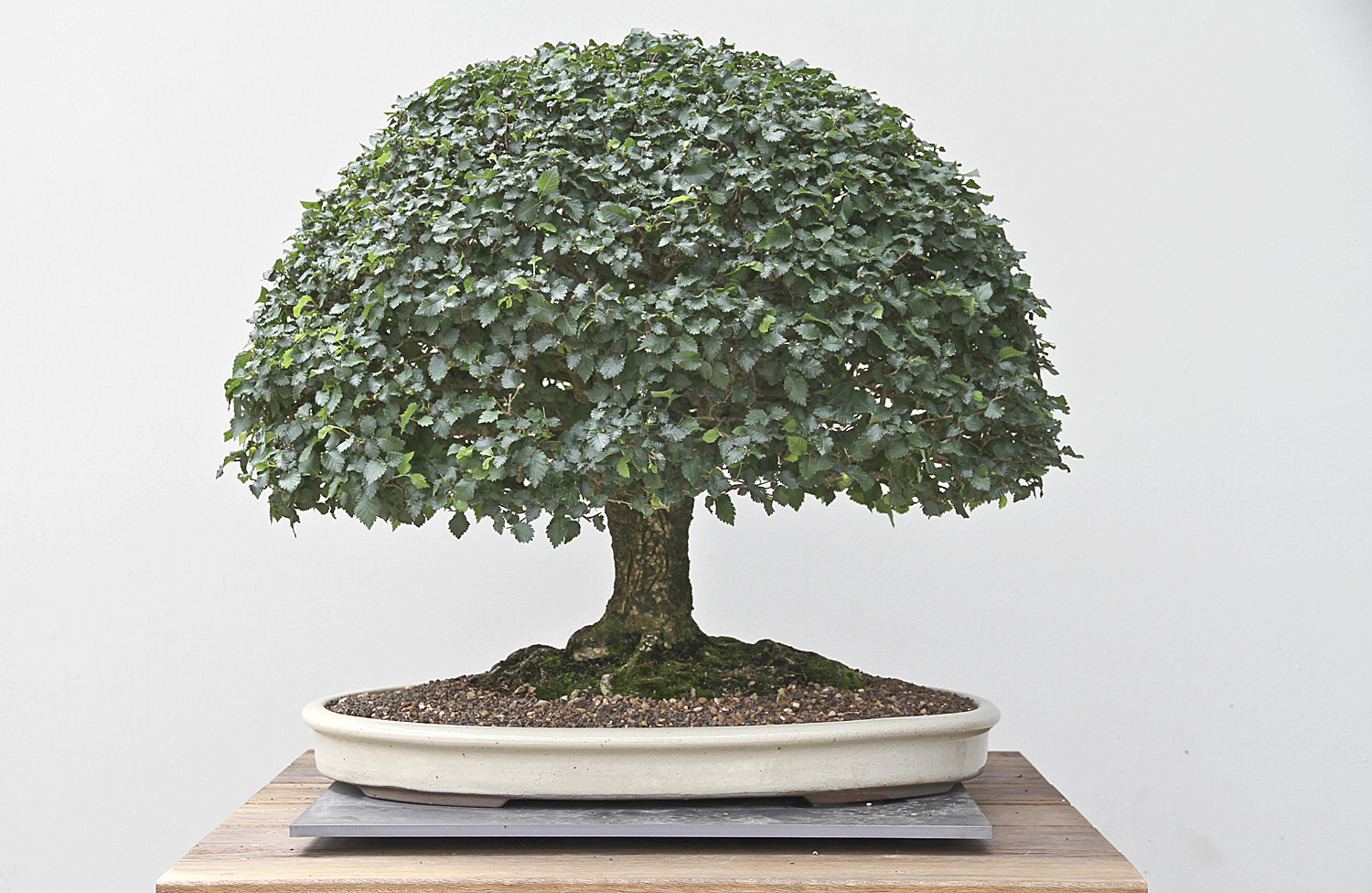
Saw Banksia

Image

Sample label

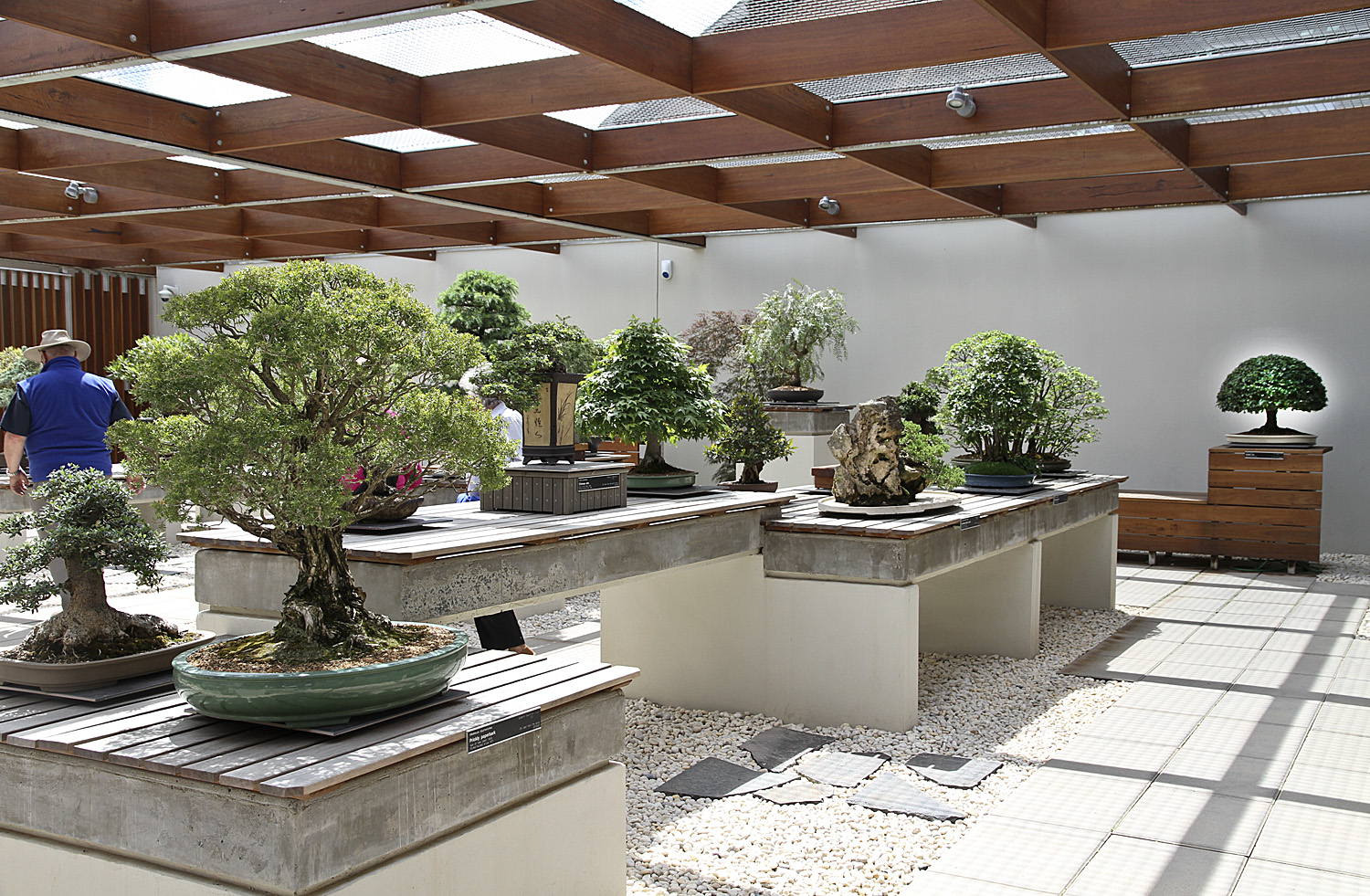
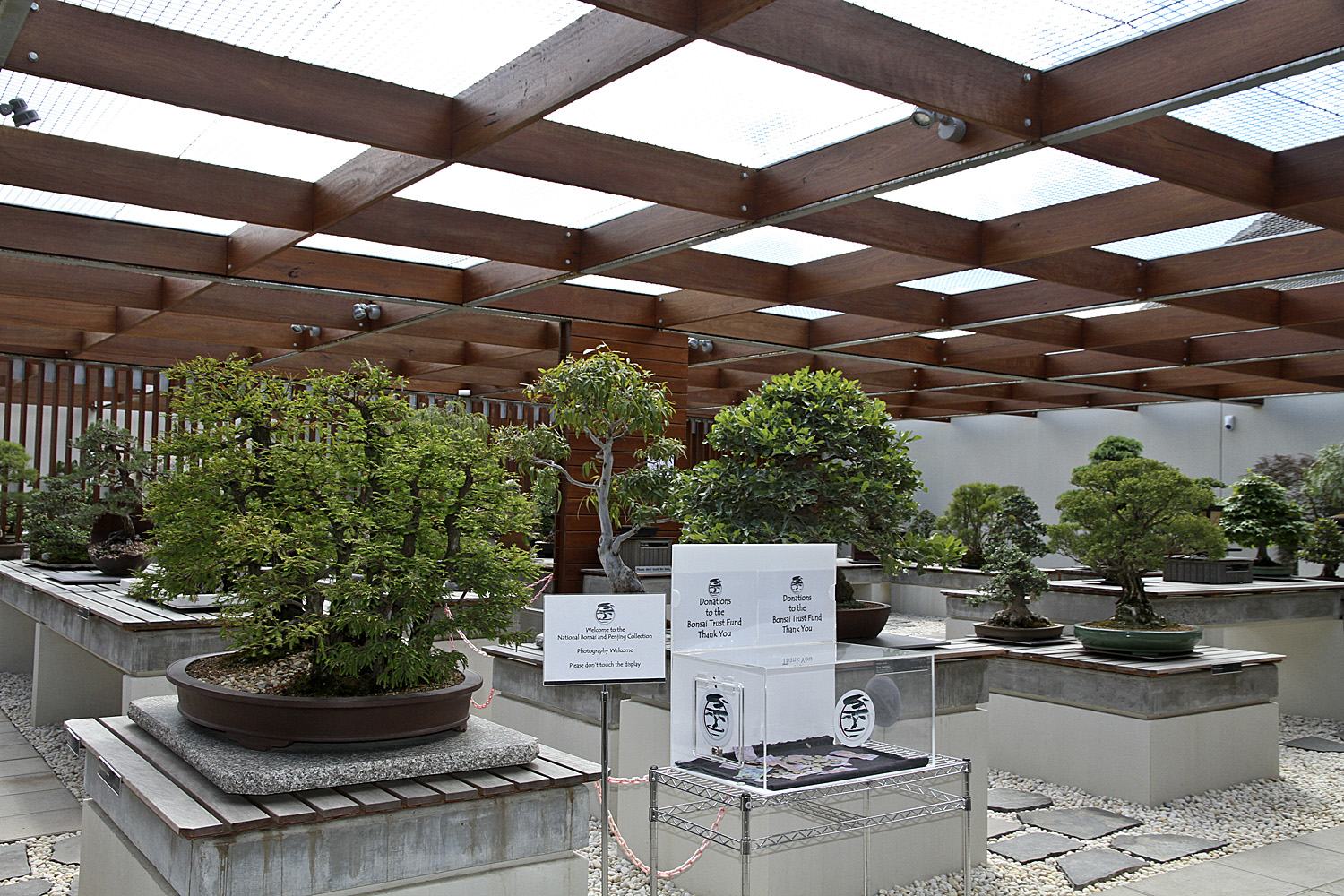
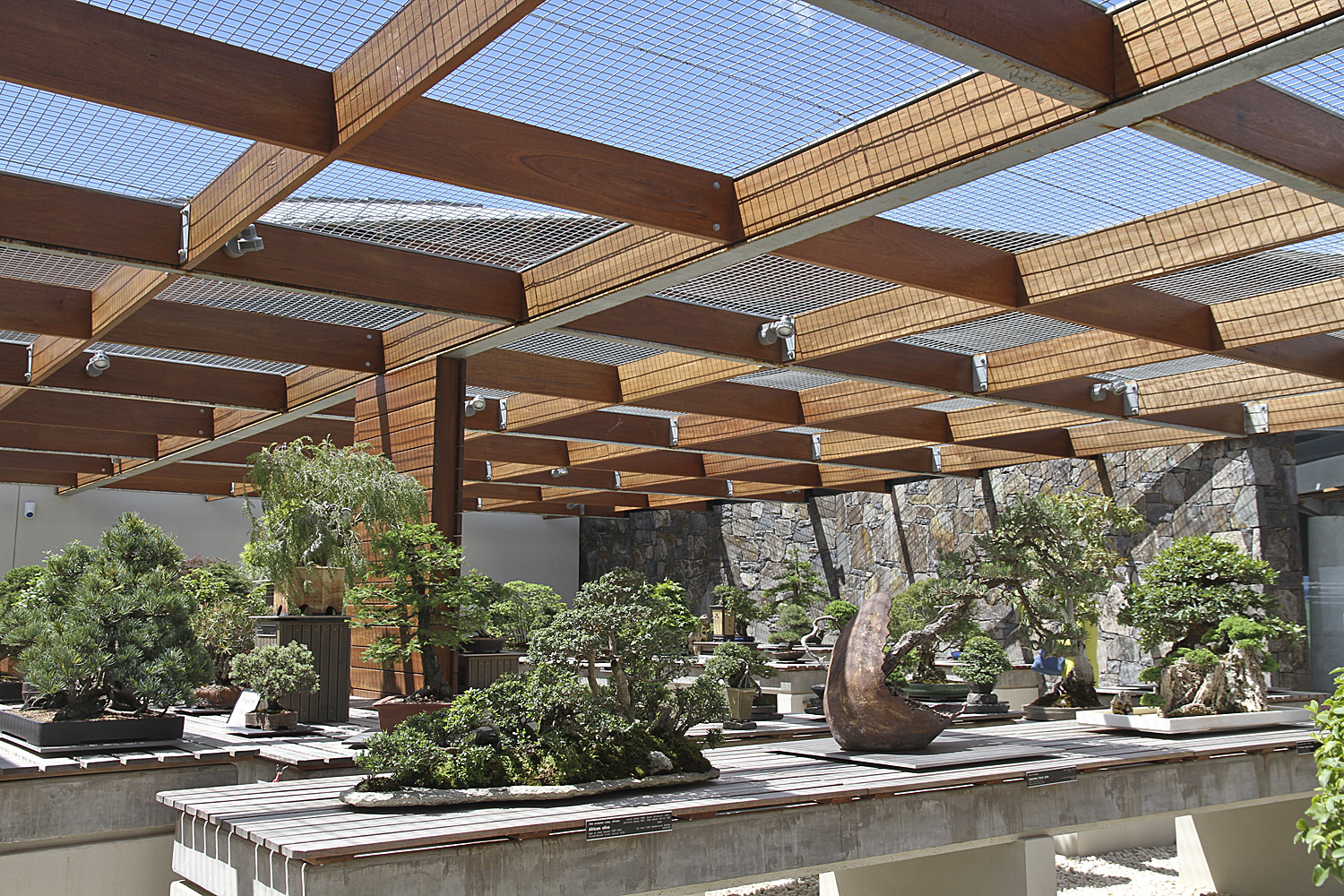
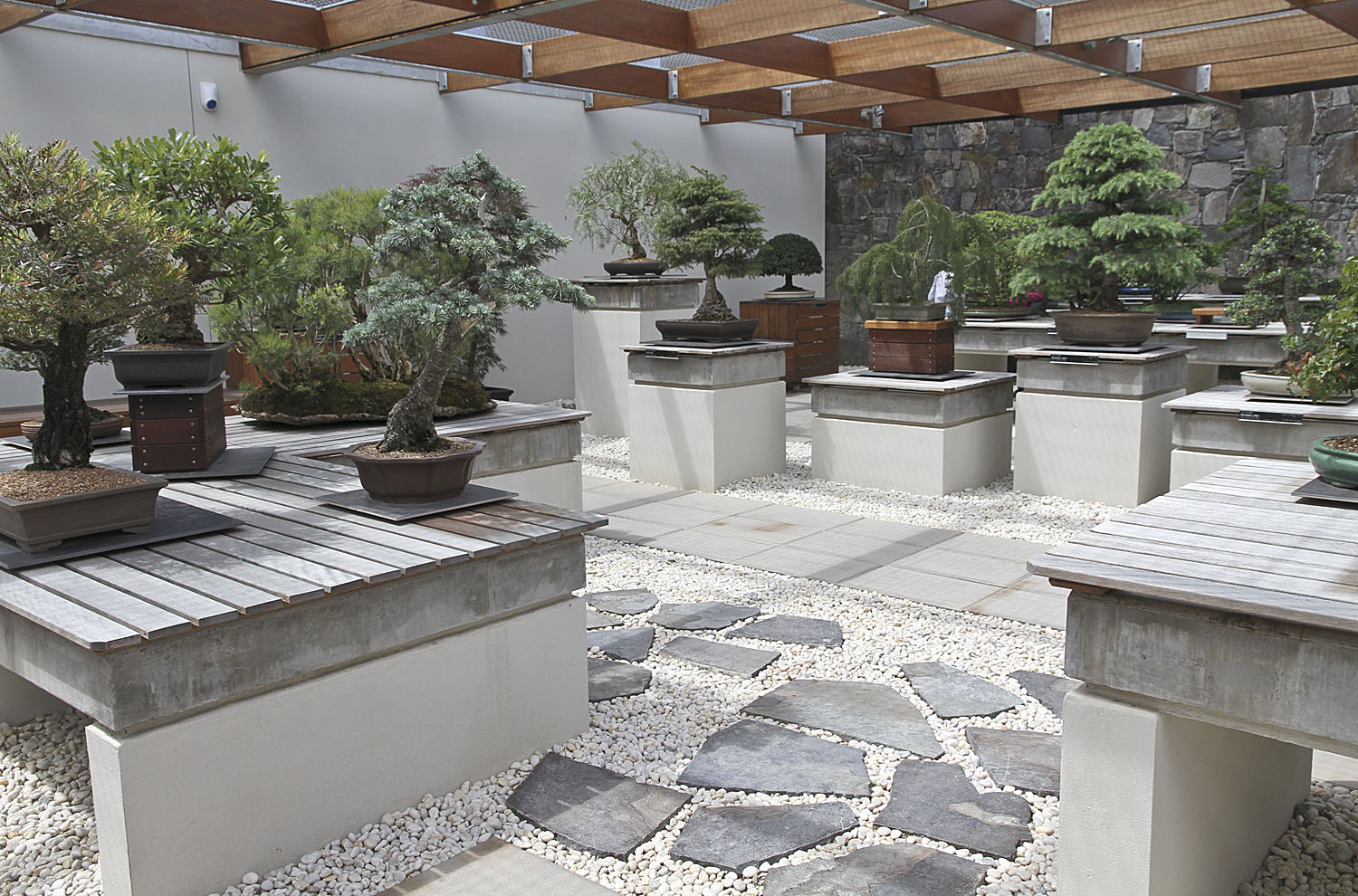
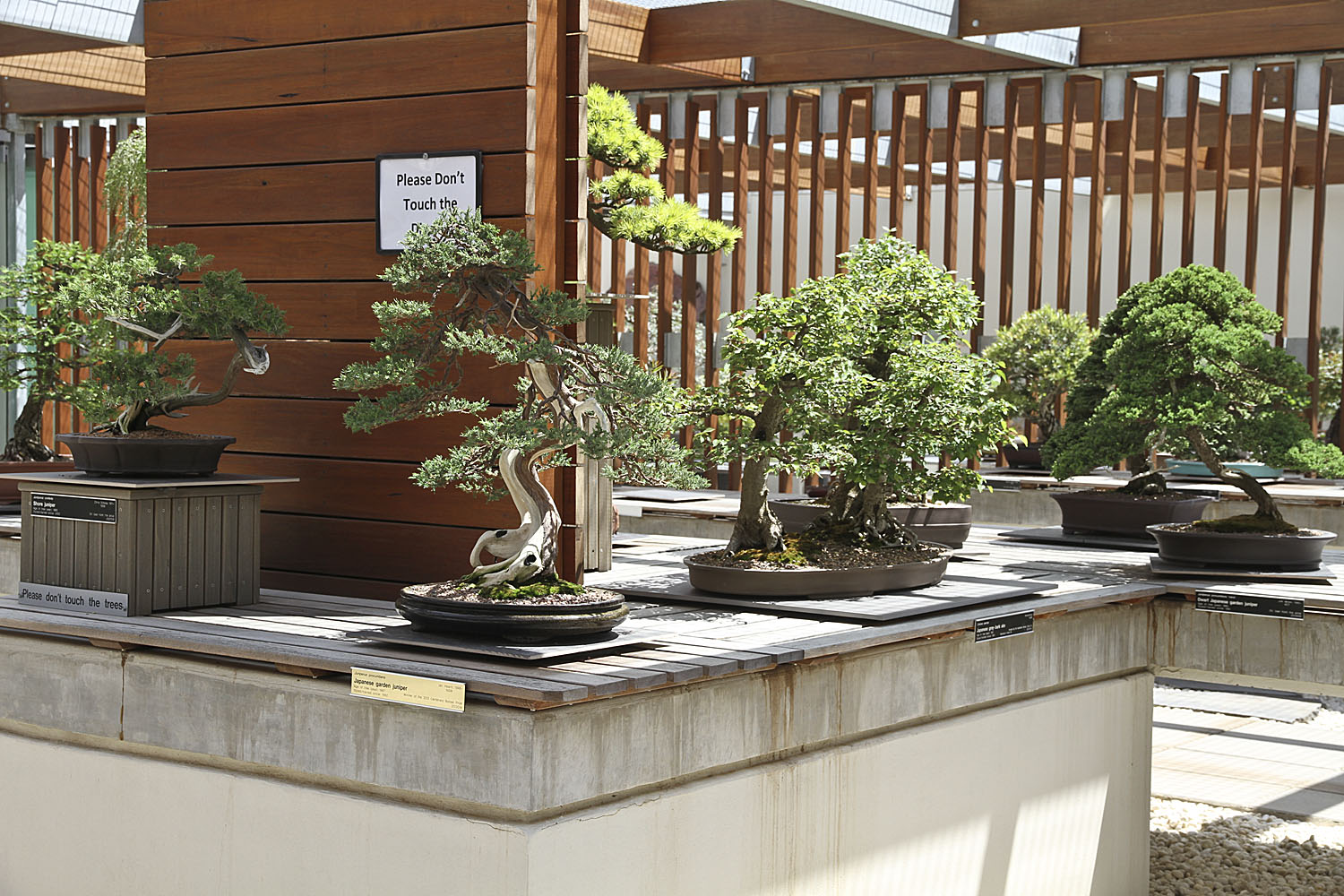
The National Bonsai Collection of Australia was opened in 2008 but had the formal grand opening in February 2013. The site is quite picturesque, high on a hill right next to the new visitors center of the National Arboretum Canberra. The entire bonsai display area is bright and open with plenty of room to enjoy the beauty of the collection. The bench supports are concrete, but covered in wood to prevent excessive heat build up which might dry out the bonsai quickly. Each bonsai has plenty of room around it so the beauty of each specimen can be enjoyed and studied. The entire area is clean and weed free too. Quite a number of the bonsai had a plain light colored background which was excellent for photographing.

Image

Shohin bonsai table

There are approximately 80 bonsai in this world-class collection created by leading Australian bonsai artists. The bonsai are all donated by artists or their families and friends, while many are on loan from artists throughout the country. Each tree is labeled and also includes the name and birth date of the artist. I found the birth and death dates interesting and inquired about it and was told that is how art galleries label their art. I wonder if some individuals are sensitive about their age.

Many of the trees are Australian natives and are strange and unique. Some of them are styled to express their natural growth habit in Australia, but all well designed. The curator Leigh Taafe is doing an excellent job maintaining the bonsai in the artist’s original design as well as in good health. Members of the local Canberra Bonsai Club volunteer to help and have three shifts daily to help Leigh. That’s quite a commitment from a local club.

Image

Chinese em

Image

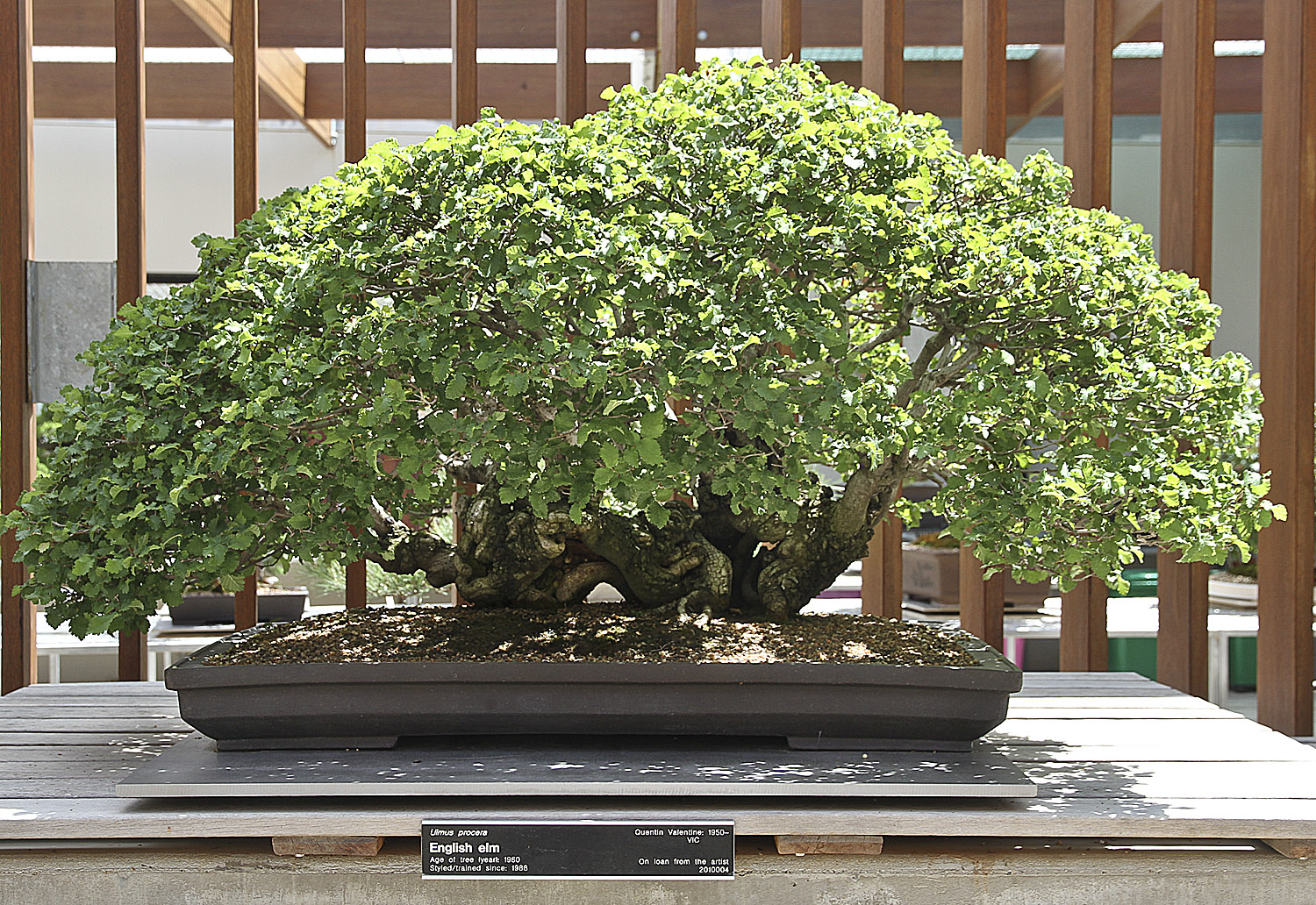
English elm

Image

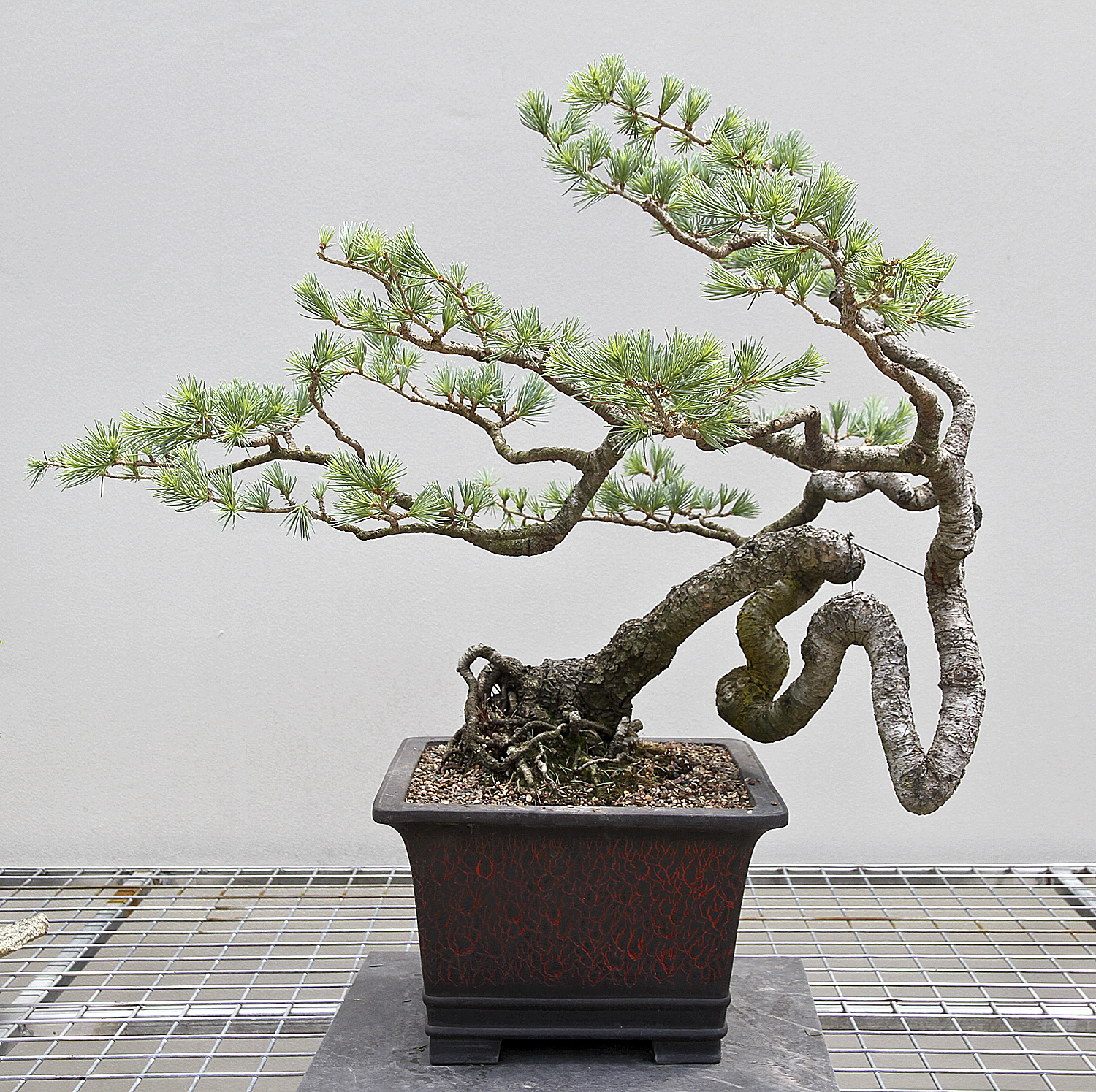
Blue Atlas cedar with an interesting focal point trunk

Image

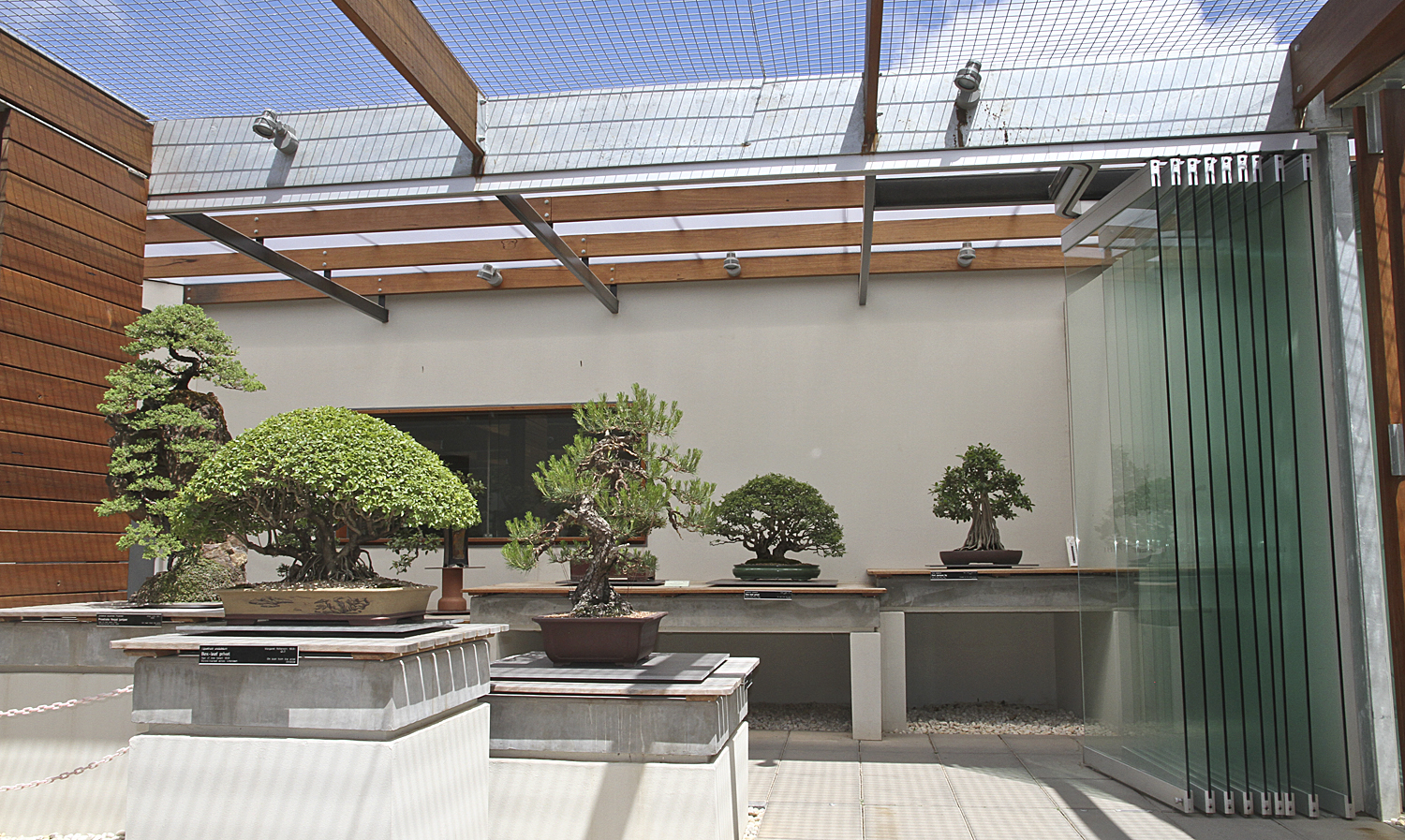
In Canberra the weather can get cold in winter so there is a well designed area with a solid clear roof with folding glass doors which are closed during cold weather. Figs and other sub-tropical species are maintained in that section during the winter.

Image

Protected area with solid clear roof and folding glass doors on the right

Image

Ficus which must be protected in winter

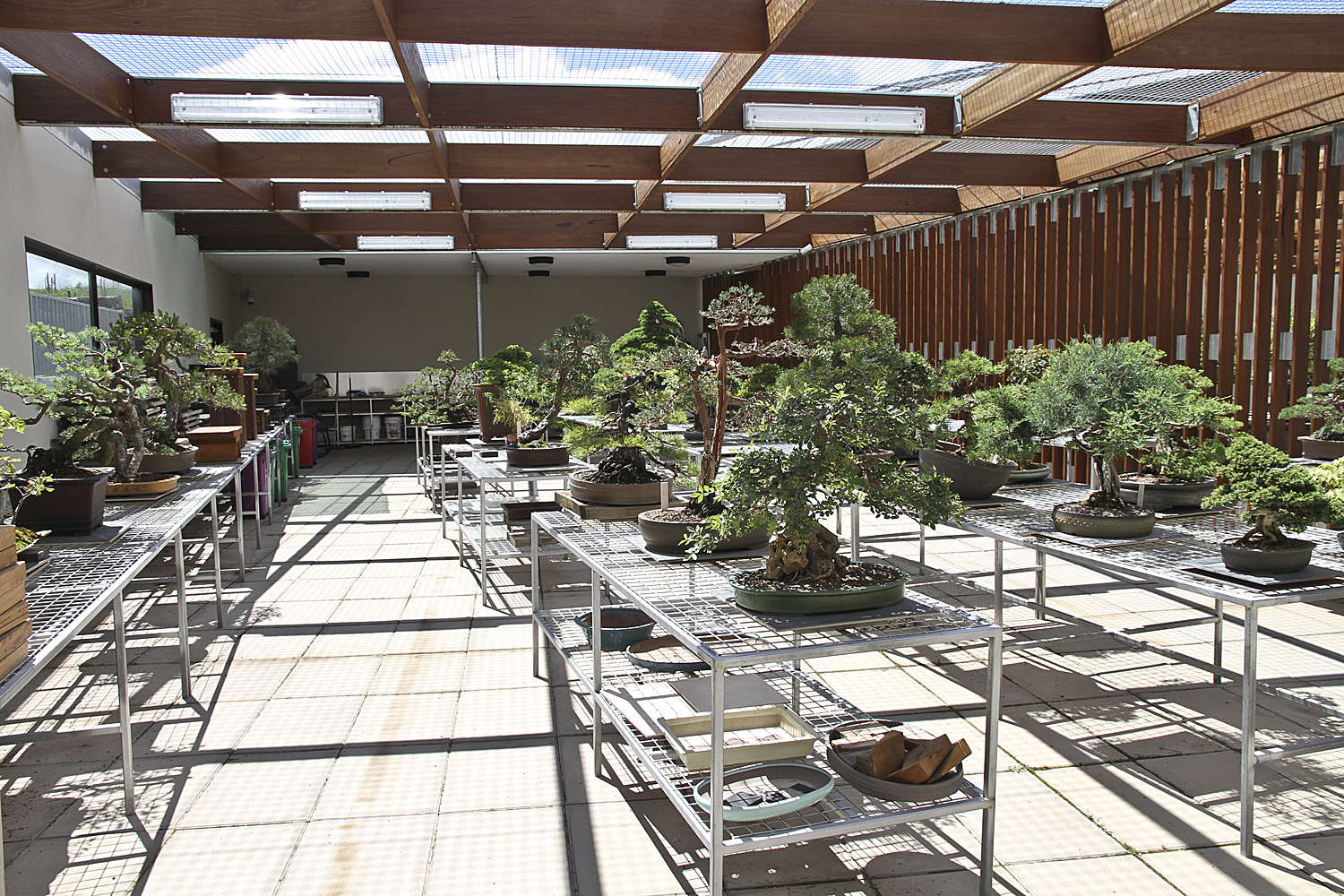
In the rear, but clearly visible from the public area, is the workroom. The bonsai in that area are also clean, neat and weed free. Recently redesigned bonsai and those not at their peak of beauty are maintained in this area.

Image

Work area

Image

Work area

The National Bonsai & Penjing Collection of Australia is open daily, except Christmas and has free admission. I highly recommend a visit to see beautiful Australian bonsai and look forward to a future visit to see how well the collection improves in the future.

Image

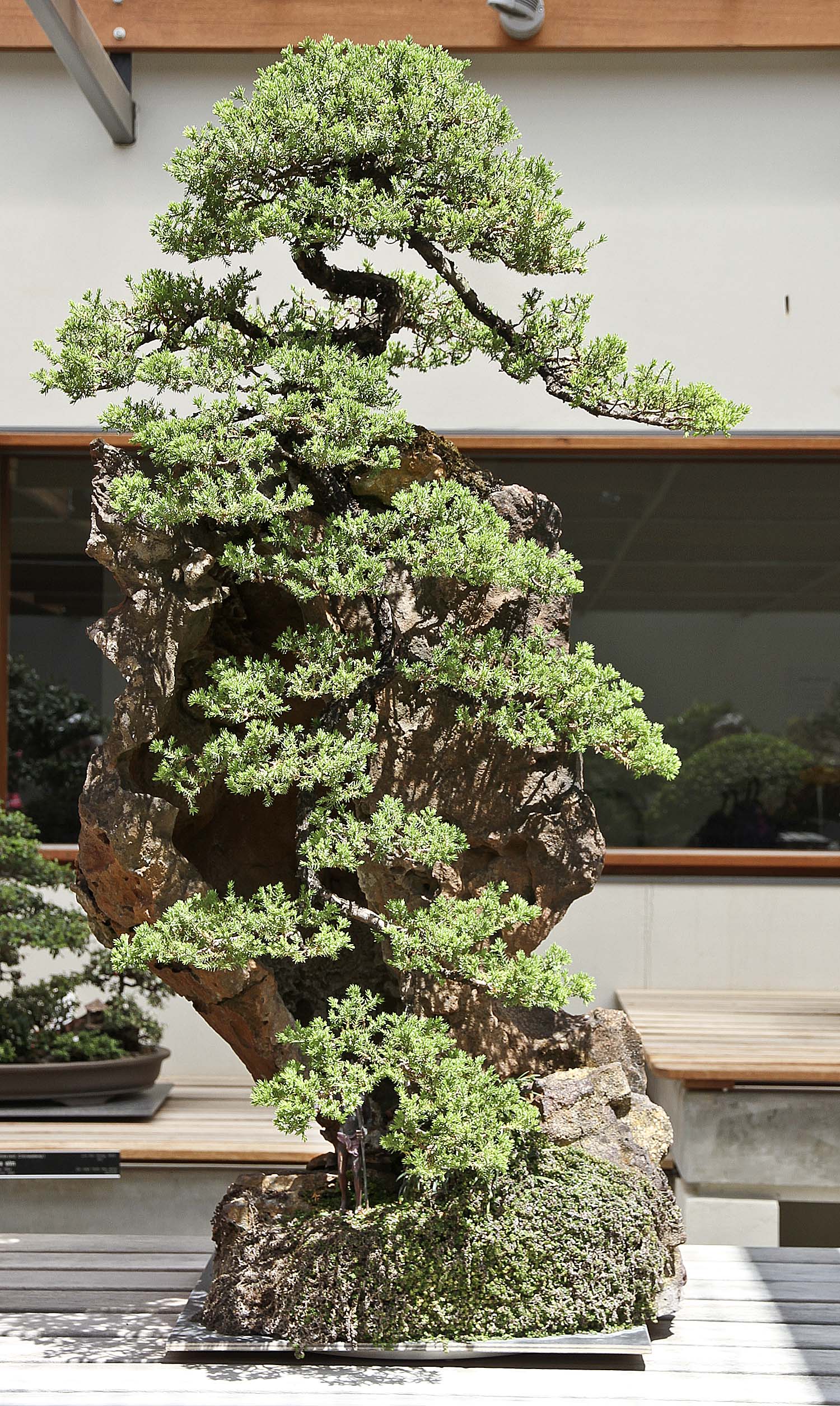
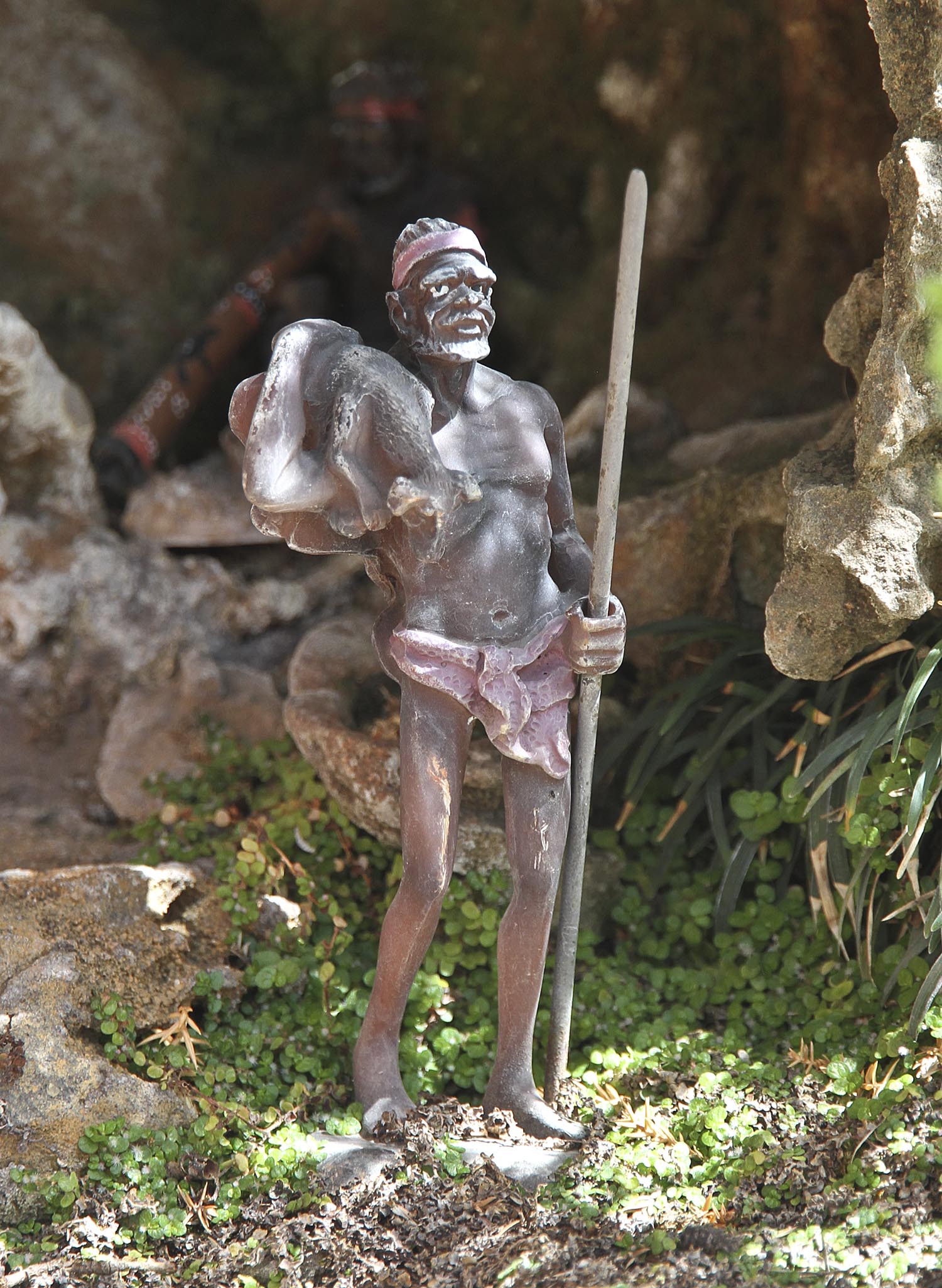
A few years ago the Australian Prime Minister made a formal apology to the Aborignal people (original custodians of the land) for taking the land. One person created a rock planting bonsai to commemorate the event. On the bottom left he discretely put a statue of an Aborigine.

Image

Canberra Bonsai Society

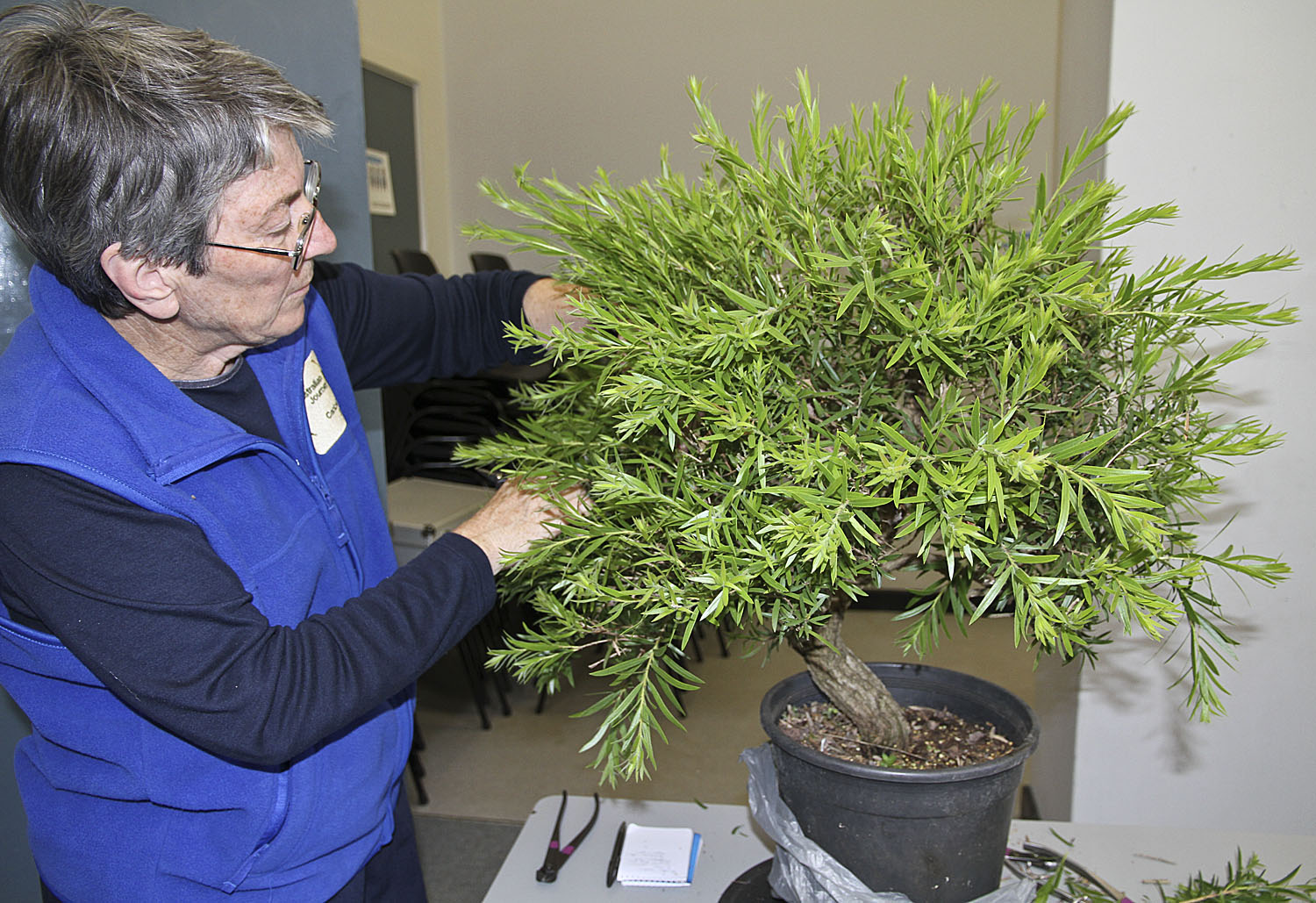
Two lectures and a critique were presented to member of the Canberra Bonsai Society where my new book quickly sold out, but orders were collected to be shipped to the club in bulk to save on the expensive shipping charges. There were some interesting questions during my lectures, critique and workshops as well which indicated a deep understanding and appreciation of bonsai by many members.

Image

Image

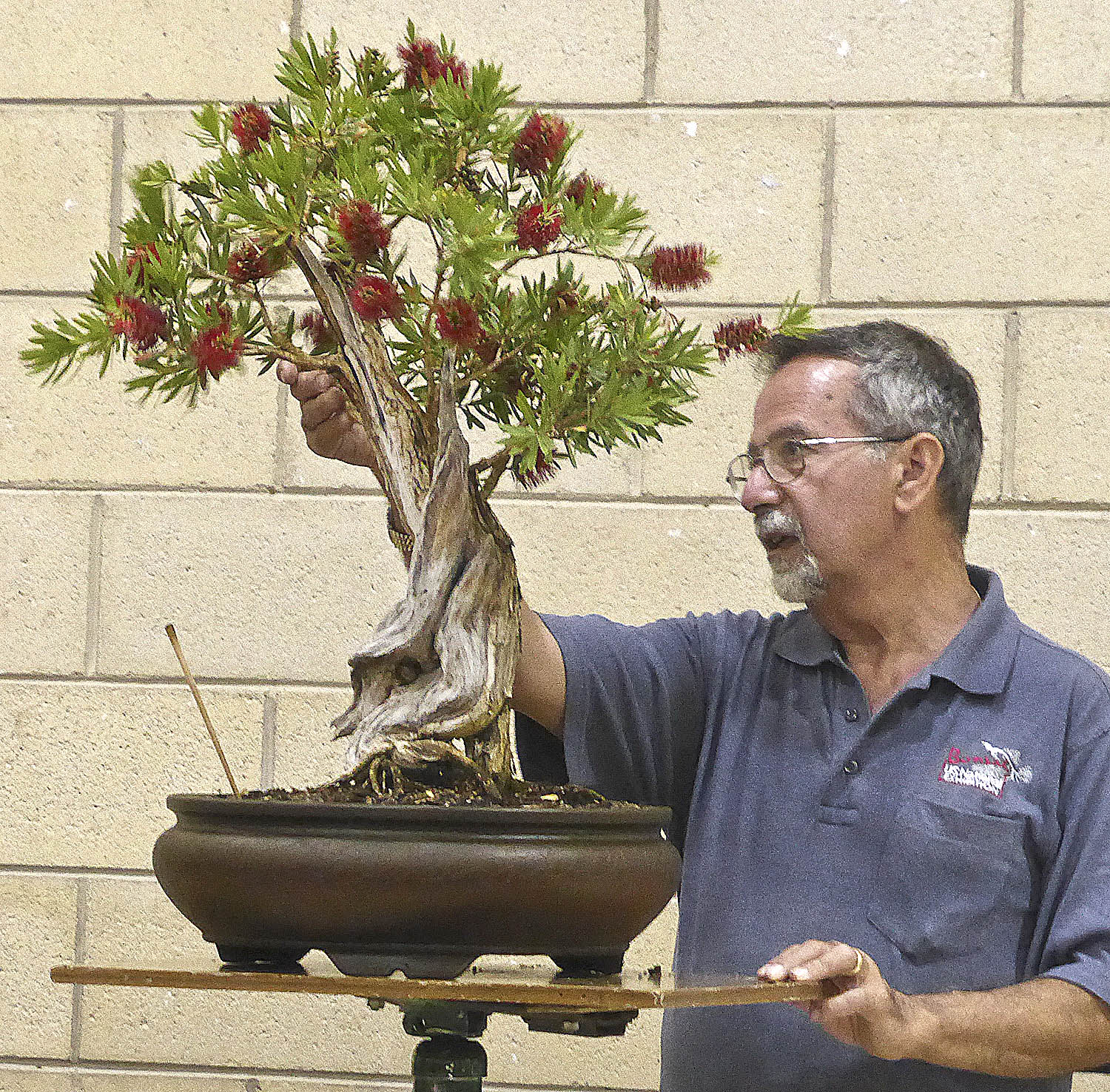
Ruth working on a Bottlebrush

Image

After improvement

Image

Chinese elm before improvement

Image

Chinese elm after working

Image

Peter working on a Japanese maple

Image

Glenda redesigned a Chinese elm forest

Image

After redesigning the Chinese elm forestThe next day was spent on two workshops where people brought interesting plant material for advice and improvement. Several forests were created and redesigned. A short program was presented on repotting since the question came up on removing wedges from the root ball to improve air circulation in the soil and renew old roots. After my two workshops I flew across the continent to Perth for my educational programs.

BILL JUMPS A BROAD- Down Under Part 3

Image

Although I like teaching workshops with approximately ten students, considerably more attention and instruction can be individually provided if fewer are present. Private study groups with limited members or, even better, one-on-on workshops are the best way of teaching bonsai because additional time can be spent instructing each student and questions are more easily answered. This situation is best however, if everyone is on the same level of bonsai understanding and skill techniques. Of course, having no “trouble makers” make it even better.

Image

I had the rare opportunity to have such a private workshop for only four friendly students, on the same level in a relaxing environment for everyone. We had the all day learning session in a shade house of a bonsai nursery which had closed to the public a few years earlier. Everything which could be desired was present. When discussing container selection there were a large number available for examples as were bonsai to illustrate design and techniques.

Image

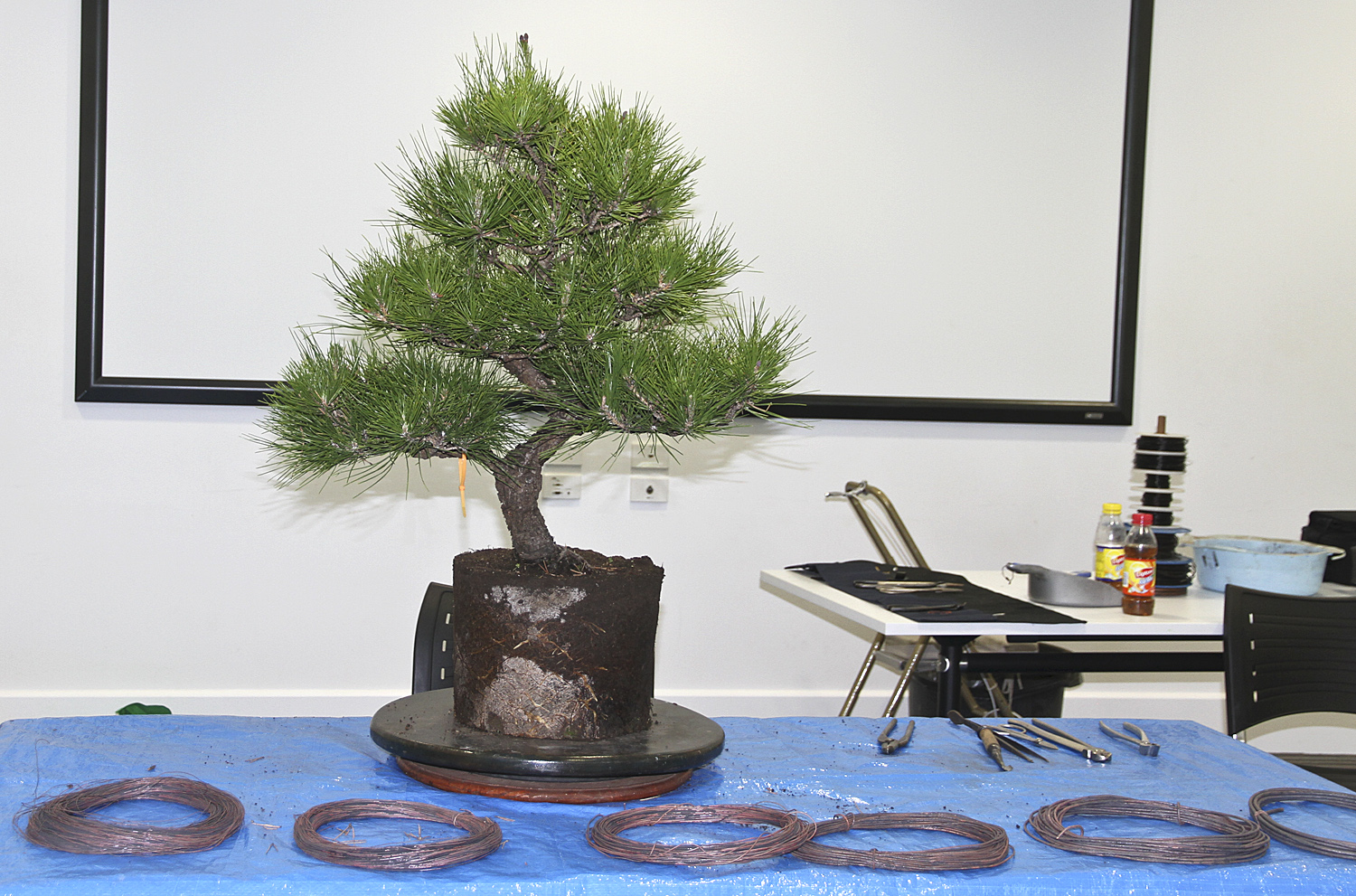
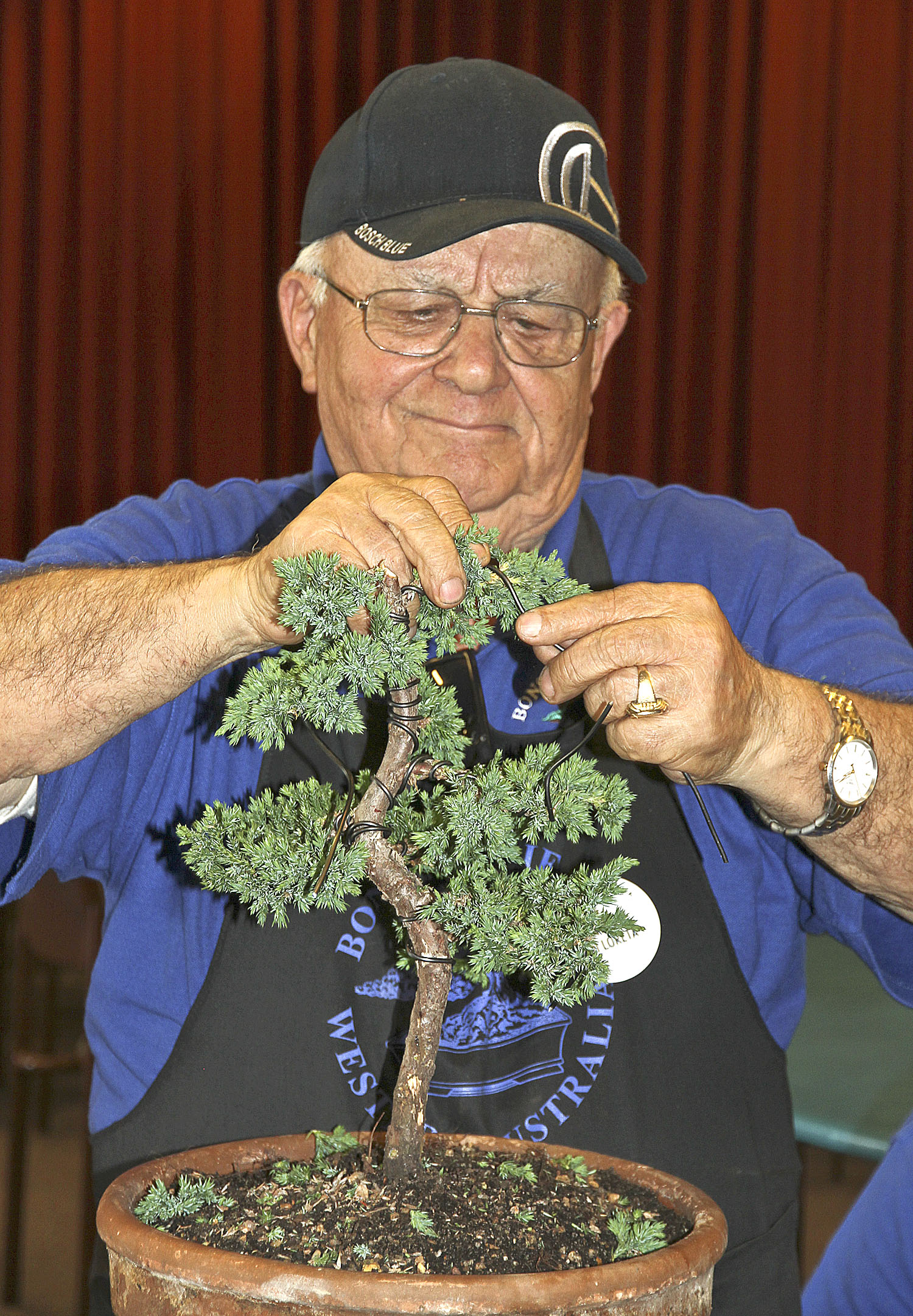
Although each student was experienced and proficient with wiring, several specifically wanted to improve their techniques for wiring effectively as well as be aesthetically pleasing. As most people know I do not prefer to use “sissy wire” and only use copper. Three of the students have never used copper before and wanted to try their hand with the best wire available for training bonsai. After showing why copper is best, and demonstrating on a branch of each bonsai they were let go to completely wire their own trees. I reminded them of the sign my dentist had hanging in his office “you only have to brush the teeth you want to keep”, and in keeping with that theme, they knew if they wanted to keep a branch, it better have wire correctly and beautifully applied. We did not concentrate on training wiring, but wiring to refine bonsai for exhibitions.

Everyone finished more than one tree, which was NOT the goal, but rather to learn new techniques which could be applied to other specimens, as well as answering difficult questions on bonsai training, aesthetics and personalities honestly.

Image

Image

Display area on top of a buried round water holding tank

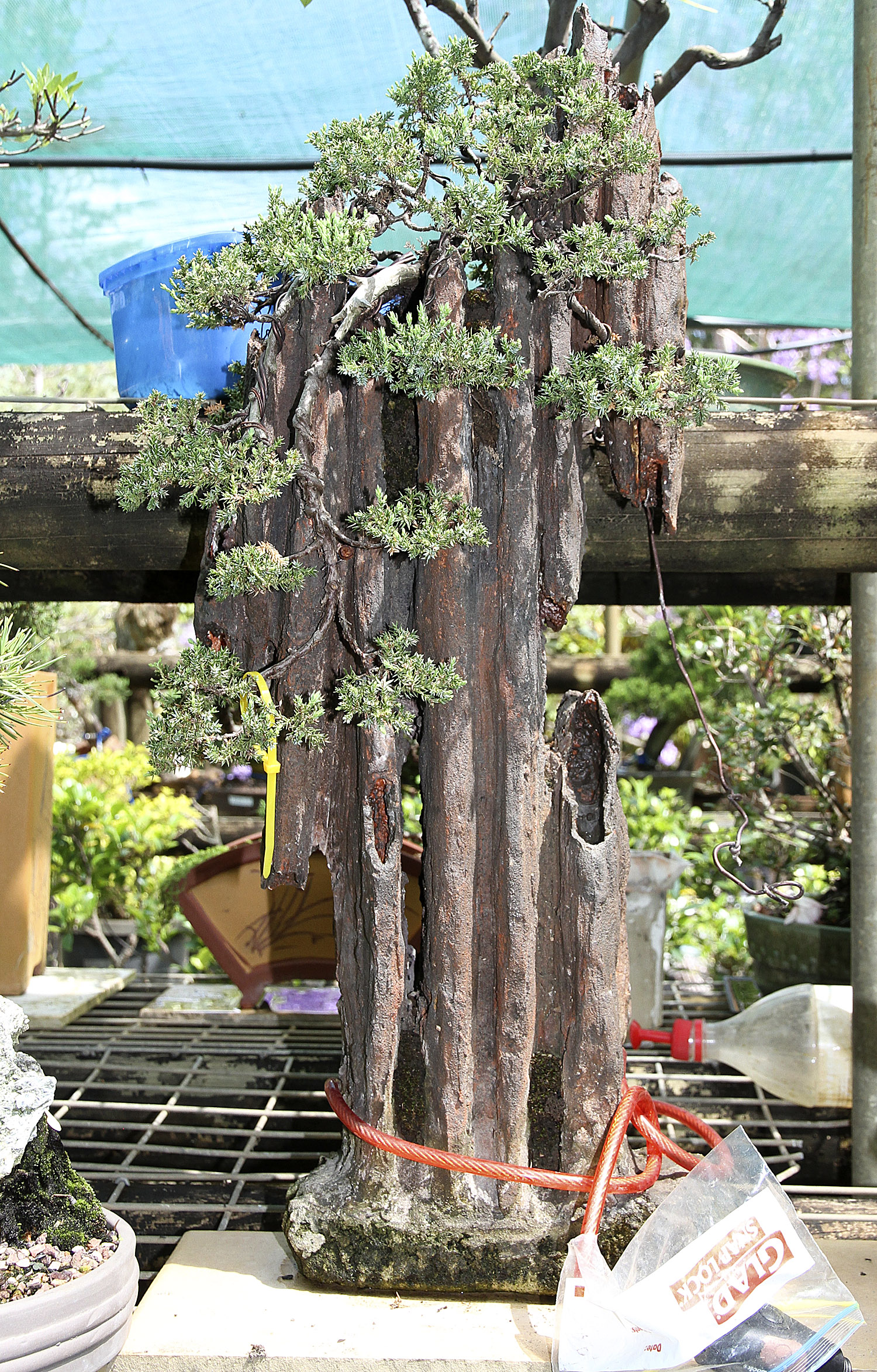
The private study group was organized by Carole Waller who established and recently closed her Bonsai World Nursery. Her private collection was beautiful, and as everyone, had many bonsai in training and some just being allowed to grow to see how they developed. It was most interesting for me to see that she had large reservoirs of buried water tanks for watering her bonsai. Many have this situation in aired and dry areas. This creative lady has created some beautiful artificial rocks for bonsai planted in the clinging-to-a-rock style. Several of the bonsai were also planted in interesting pieces of wood.

Image

Image

Image

Image

Image

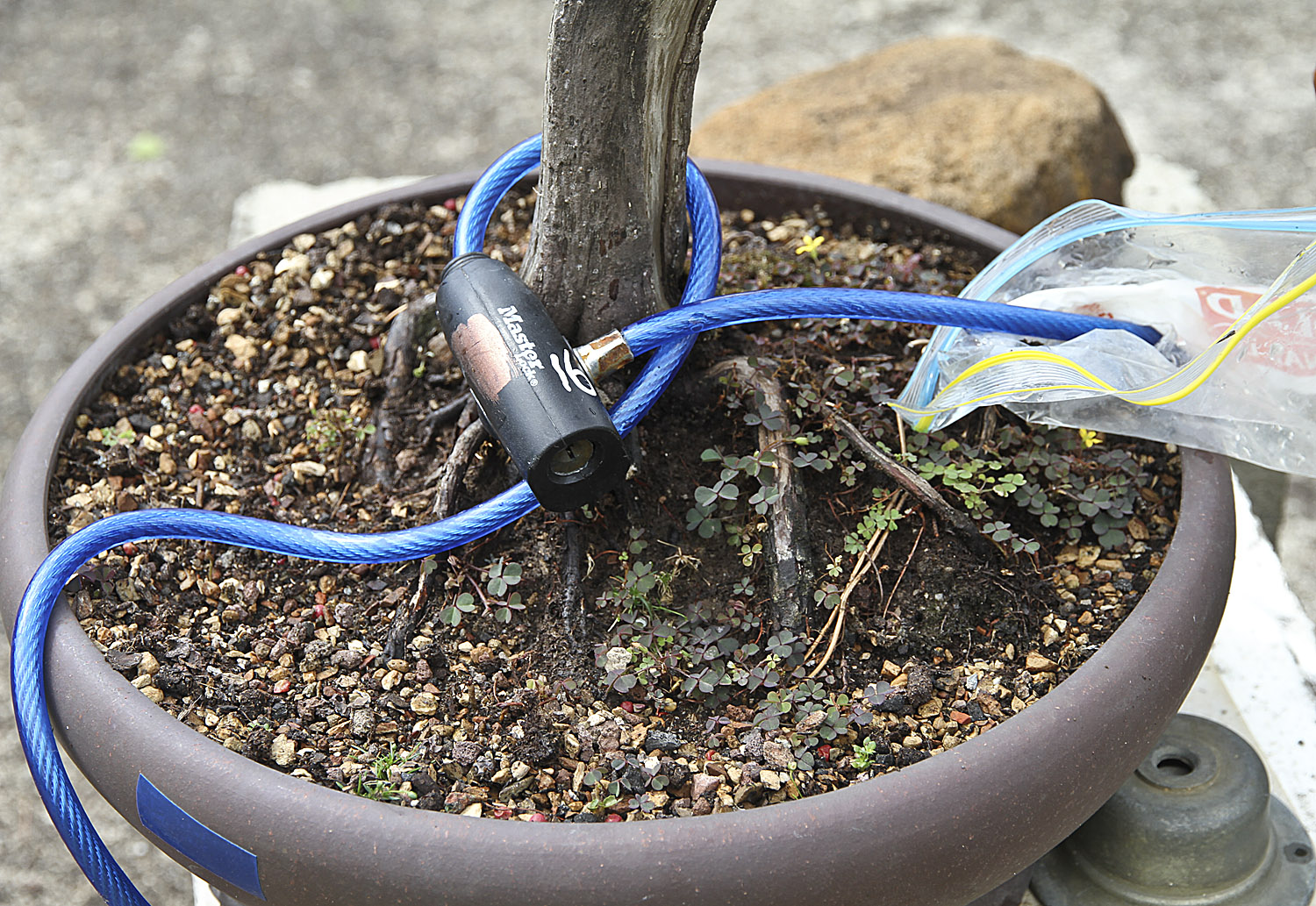
Theft is a problem with bonsai growers around the world. Carole has minimized the problem by wiring each bonsai to the stand using a bicycle or motorcycle cable. Each cable has its own individual keyed lock, which must be protected from water by wrapping in a plastic bag. Yes, individual keys are necessary for each bonsai which can be a problem if the identification numbers wash off.

Image

Image

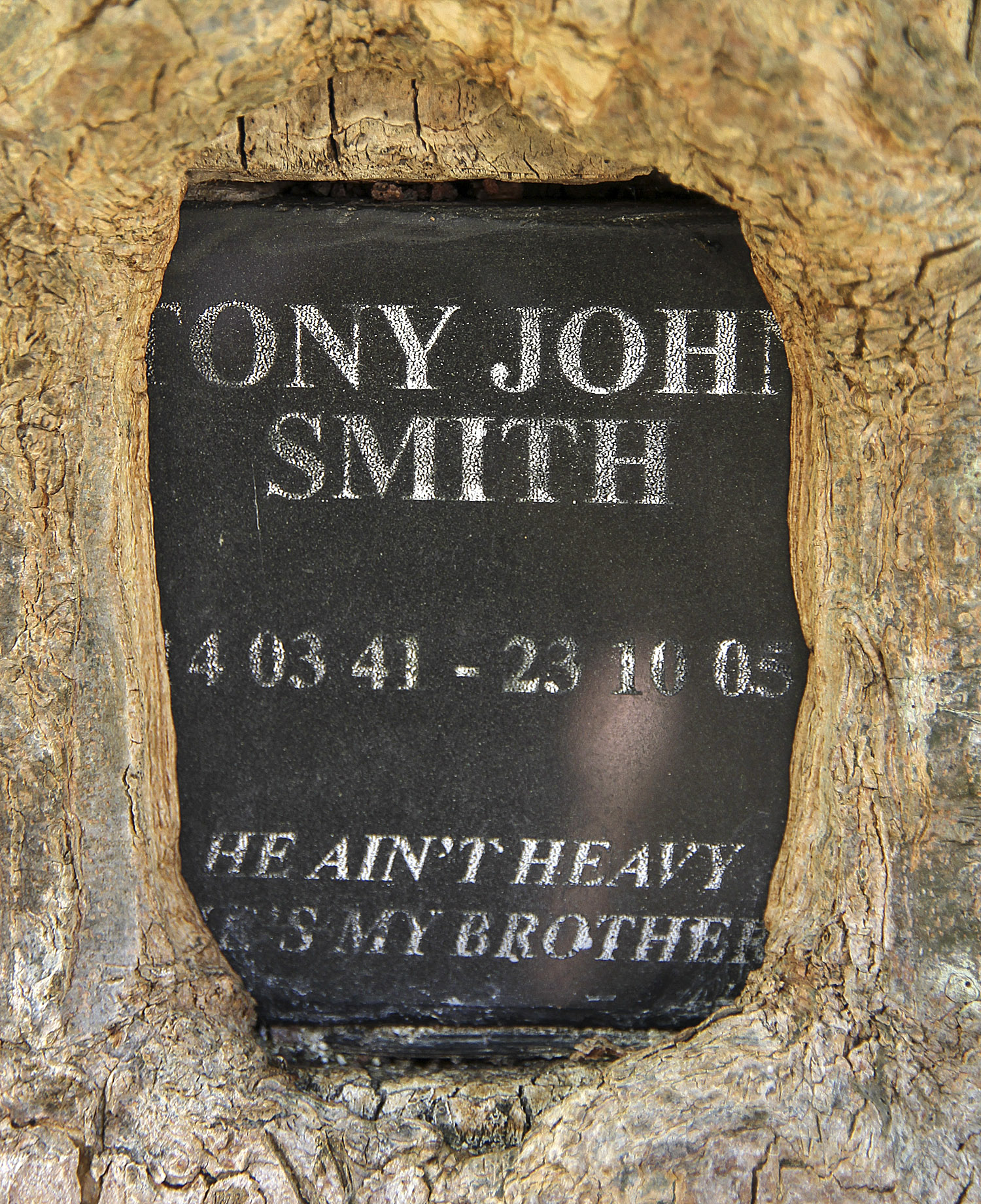
She had a “memorial bonsai” Trident maple for her brother who passed away a few years prior. Carole took a large heavy trunk Trident maple and bored a good size hole in the front of the trunk. Then she buried his ashes in a container which as imbedded into the trunk.

Bonsai are to be enjoyed and appreciated and that’s the most important reason to be in this hobby. Many people simply want to enjoy the form they create with the plant material, others want to “show off” prize specimens or compete with others. I find it rare that some people are sensitive to life, the plant material, and while respecting life, want to memorialize close friends and family. I’m certain Carole would not want to publically display her Trident maple in a club show, but that was not the reason for creating this bonsai. She wanted to remember her brother in a special private way. I’m sure others have similar trees. One of my friends wants to be cremated and have his ashes mixed in with organic fertilizer cakes. Others want their ashes spread on the surface of their bonsai when they pass. But, personally, that’s not an option for me because as a Greek Orthodox Christian we are not allowed to be cremated. But, I would not object to having a rare dwarf Japanese maple planted near my grave as a small garden tree.

Image

A small mattress placed on the floor of a garden wagon to protect bonsai containers, and a bottle of ice tea

Image

Image

Goshu Bonsai

Image

Image

Image

Long time friends, Lindsay and Glenis Bebb were my next hosts in their comfortable home. I have never taken a shower before and looked out the window to enjoy a beautiful bonsai garden view. Recently retired from a successful bonsai nursery in Brisbane they are now concentrating on their own personal bonsai collection, as well as limited teaching. They are also, more importantly, giving back to the bonsai world by becoming leaders in world wide bonsai organizations sharing their many decades of bonsai experiences so others can improve the art as well as improve the bonsai community.

Image

Image

Lindsay Bebb will be one of the three international judges at the 4th U.S. National Bonsai Exhibition on September 13-14, 2014 in Rochester, New York. Additionally, he will be joined by his wife Glenis, another skilled bonsai artist, in presenting an educational lecture demonstration at the highest level exhibition in the United States. In addition to showcasing some of the finest bonsai in the country for others to enjoy this exhibition is important for many bonsai businesses who depend on exhibitors for handmade containers, display tables, supplies as well as instruction for displaying their finest trees in this world class event.

Image

Many of the bonsai in their garden are on the large size, but not as huge as those I recently studied in China. But they do have one large Bougainvillea which is over six feet tall in a six foot wide container which has never been moved since placed in their garden seven years ago. Photos do not do justice to the beauty of many bonsai, and this specimen is one of those. In China I had my photo taken with many trees only to illustrate their size (plus I’m short and make the trees appear larger,) in spite of not being in the habit of putting my face in bonsai photos for publicity.

Image

Image

Image

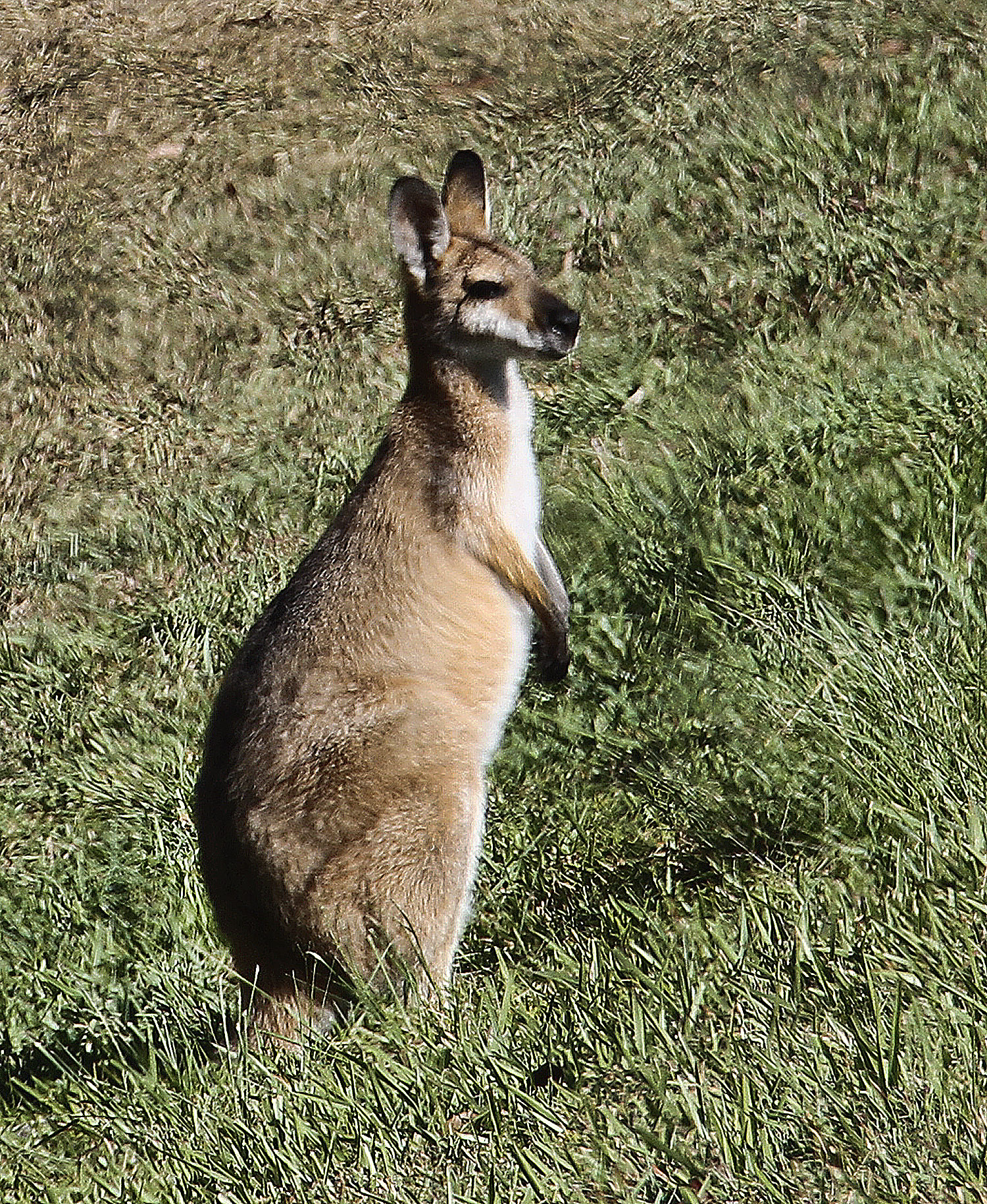
My teaching in the Brisbane area, including the Sunshine Coast and Gold Coast has been rewarding and enjoyable for me as well as helping me to understand sub-tropical plant material. All of the club activities were well organized, meetings conducted efficiently and on time with friendly people. My long time hosts were hospitable and me feel welcome to their country. Lindsay and Glenis took me to see some kangaroos, so it looks like I’ll be returning to the land down under in another two years time.

Image

My teaching trip throughout Australia is not over yet, I’m just flying away to another city to share my love, passion and techniques of classical bonsai art with others.

Image

BILL JUMPS A BROAD- Down Under Part 2

Image

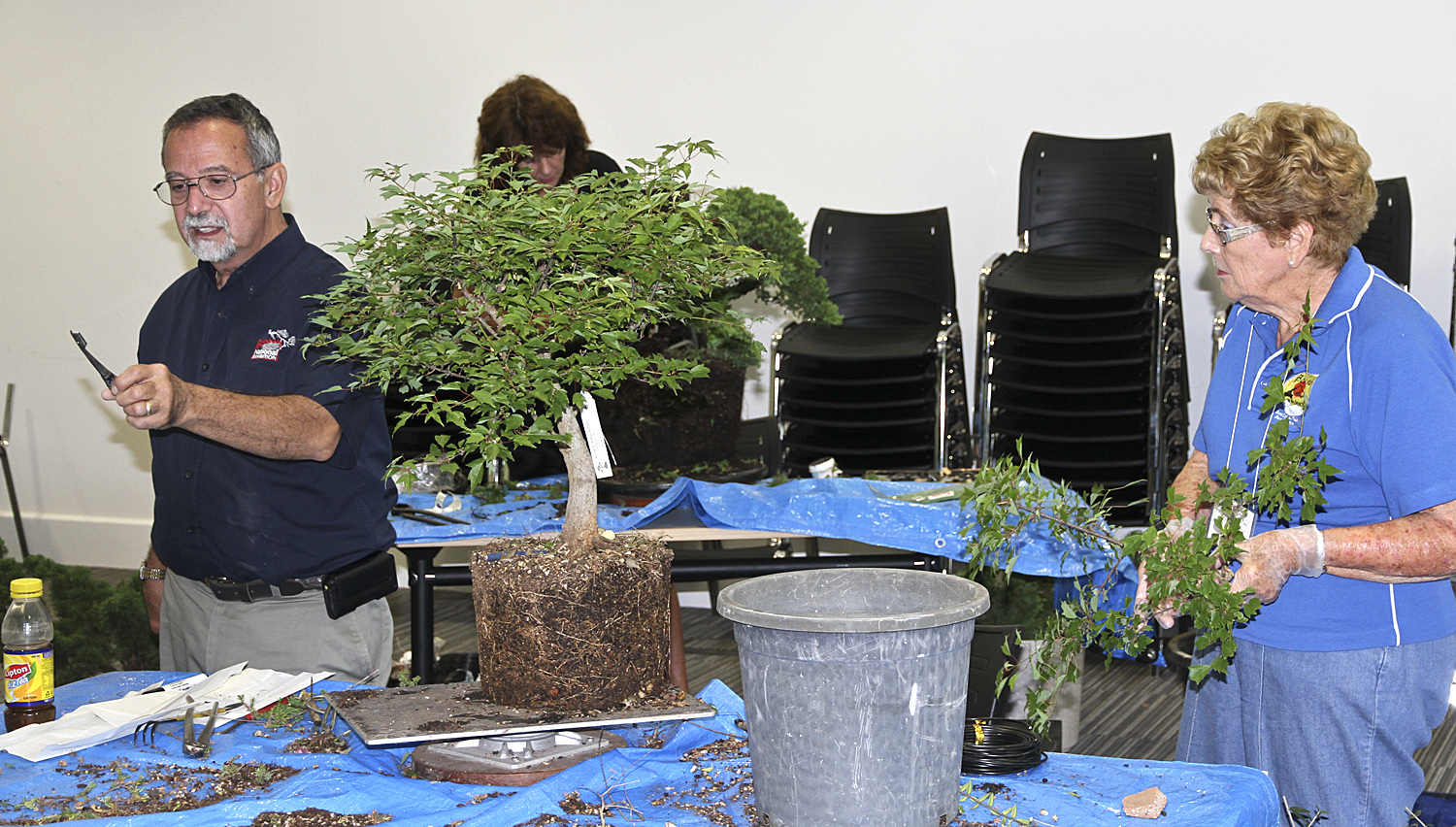
My next visit was to the Gold Coast Tweeds Bonsai Club in the Gold Coast of Australia where the next BCI and Australian Associated Bonsai Clubs will have their joint convention next August. We began with a workshop for ten members. A wide variety of species were brought from a collected African olive, Seiju elm, Trident maple, well trained Japanese black and red pines and, of course Dwarf Japanese garden junipers.

Image

Image

Image

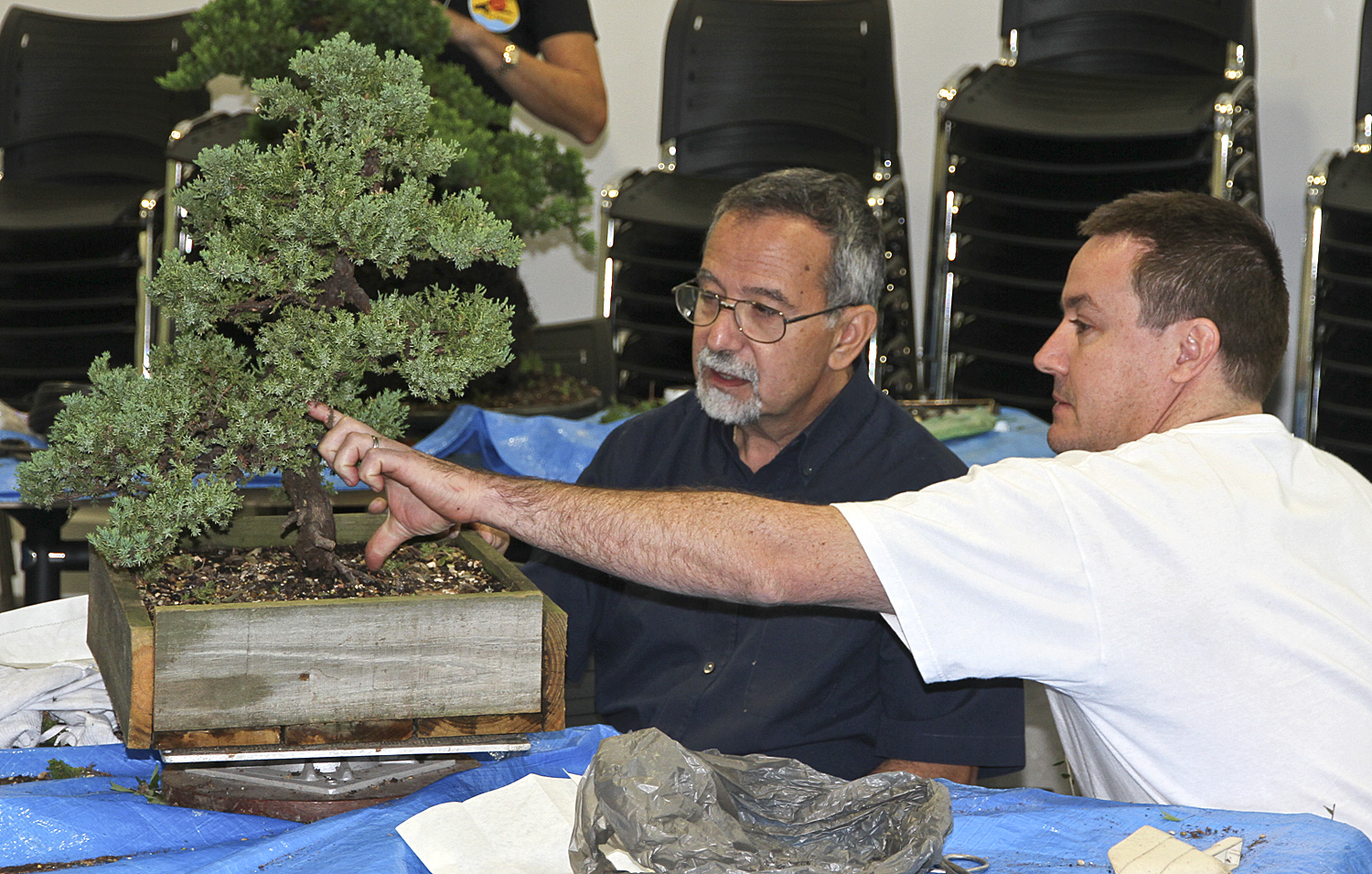
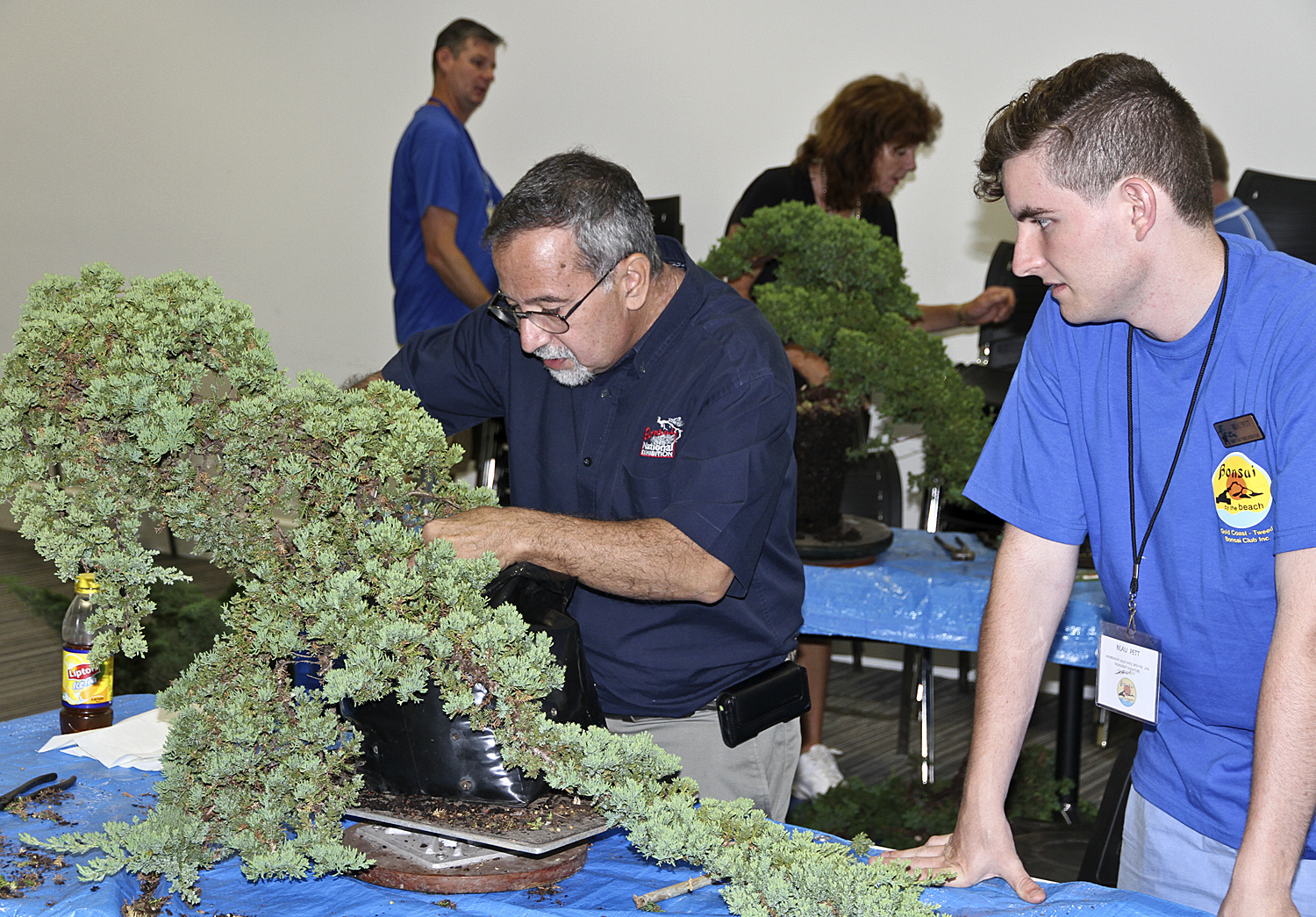
Since there were many observers, I like to set up a table in the front of the room where I worked. Each student, one by one, brought their workshop bonsai and we discussed the source, previous training, health, design and what the student wanted to do. Then I presented my suggestions for improvement and usually made a few basic cuts to start the training process. Then each student went back to their individual tables and worked on their bonsai. After all ten trees were discussed I went around and helped each student. Finally, just before the end of the session everyone took their seats and the plants were brought up front again for comments and to show everyone the students’ fine work.

Image

I like this method of conducting workshops because the observers, as well as each student can see all the plants brought in and listened and participated in the initial evaluation. Even though the plant discussed did not belong to a student, they usually learn something from the others.

Image

Image

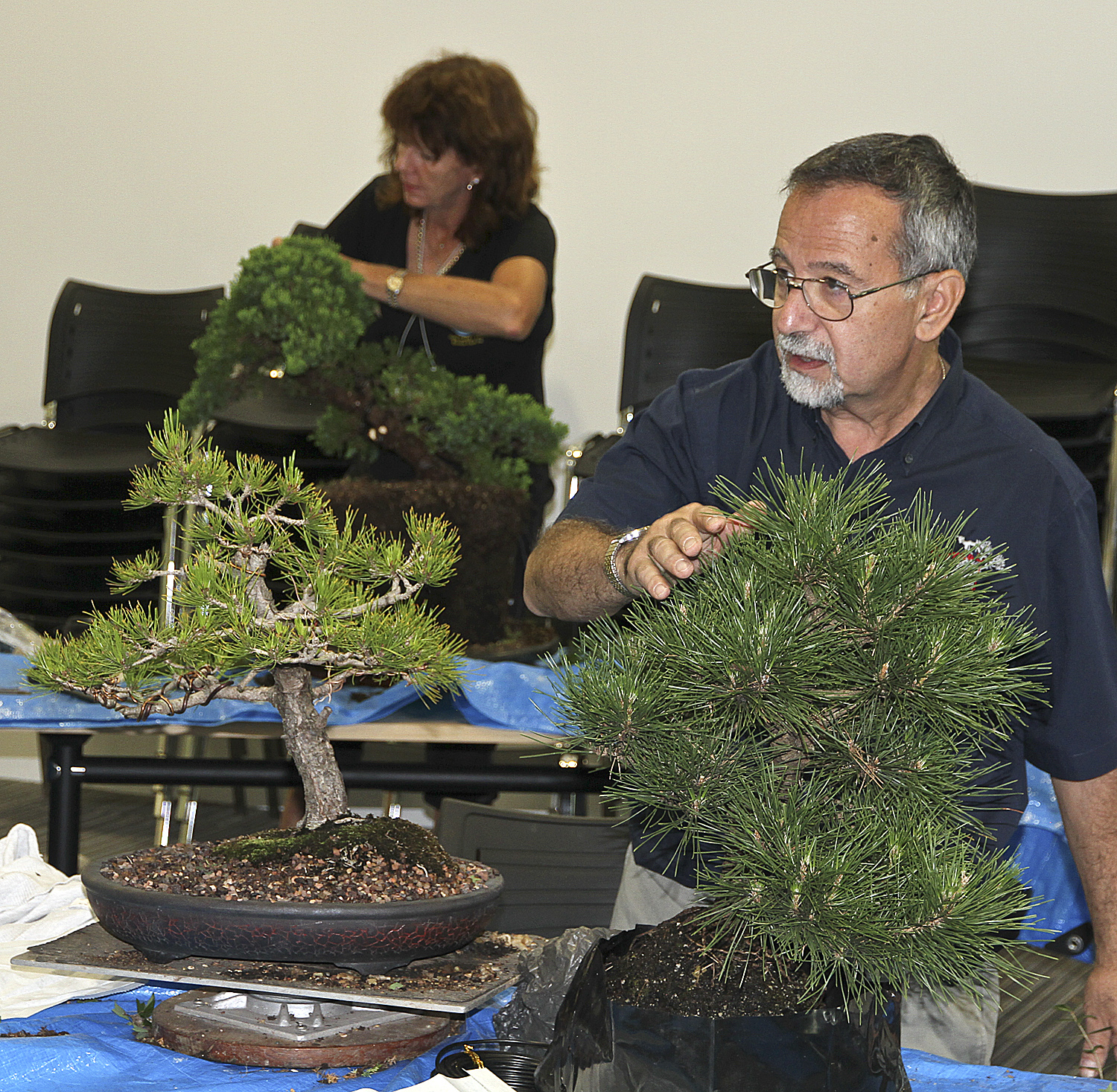
I had an excellent selection of demonstration trees, perhaps one of the best ever in my career. There was an excellent Japanese black pine which had been trained for perhaps twenty years which interested me and I felt could improve and provide information and techniques which students could use on their own bonsai in the future. When I saw the tree in the morning, before the workshop began, I immediately organized my Powerpoinot program on Japanese Black Pine Bonsai.” A slight refinement of the program was quickly made to customize the information for the club to provide images which would illustrate the background, sources, training, styles as well as design of pine bonsai.

Image

Image

The lecture demonstration followed and many interesting questions were answered so everyone could learn. The tree did not need much work, but needed some help in the crown because a few heavy branches were vigorously growing. In fact, several of the top branches had female pine cones developing. Information was presented throughout the presentation as I thinned out the needles, trimmed a few branches and wired. There was not sufficient time to completely wire the bonsai, however a few branches were finished to show how to correctly set the branches and provide a guide and perhaps, inspiration for the owner of the bonsai.

BILL JUMPS A BROAD– Down Under

Image

This is my fifth trip to Australia to teach classical bonsai art. I arrived on Thursday and my friends and hosts in the Brisbane area, Ian and Shelia Glew picked me up and took me to their new beautiful home. This time Ian took me around before my formal programs to show me the local interesting sights. We took a drive into the mountains where we went past the famous Crocodile Hunter’s Australia Zoo.

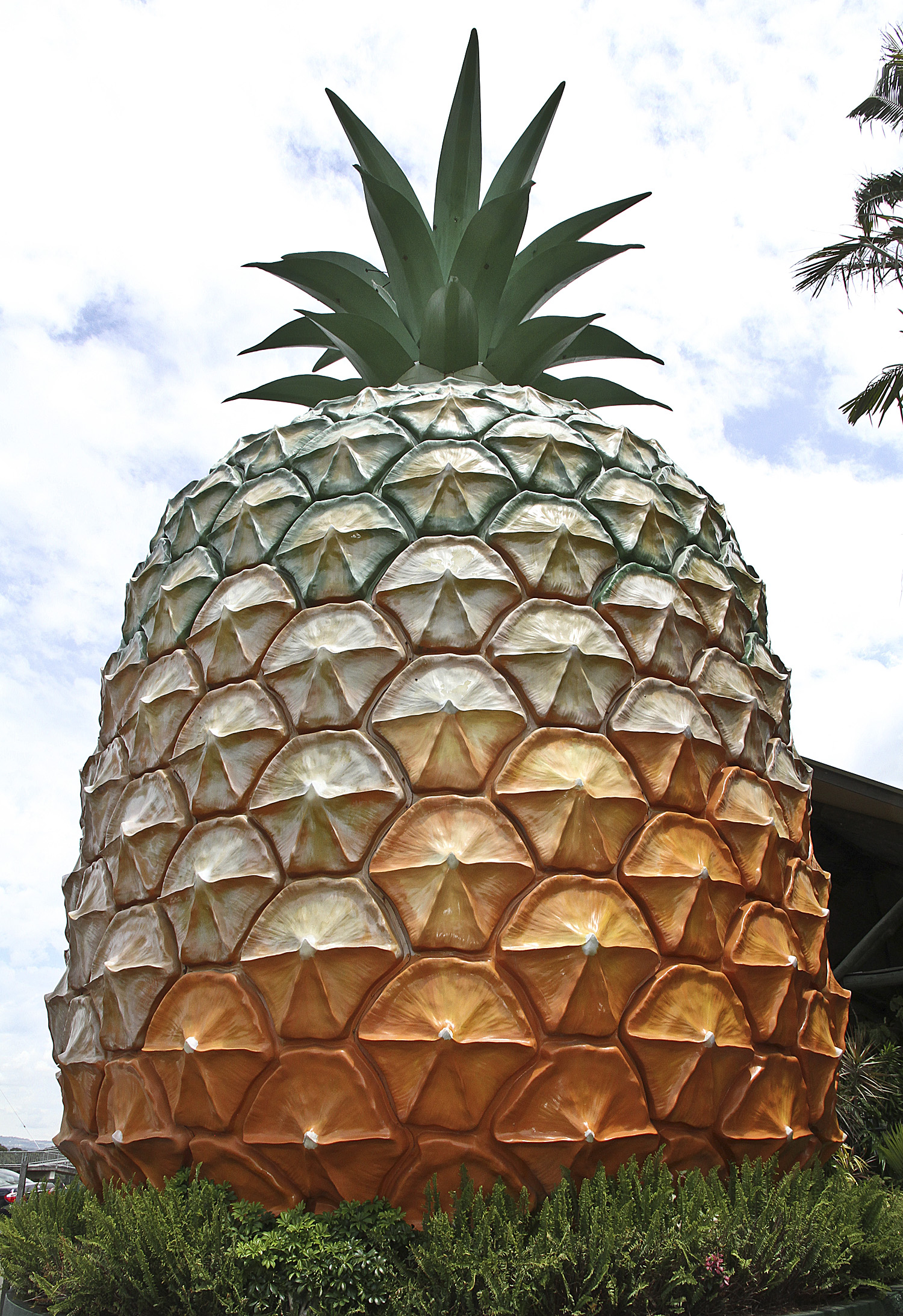
Image

Giant pineapple landmark near the growing fields

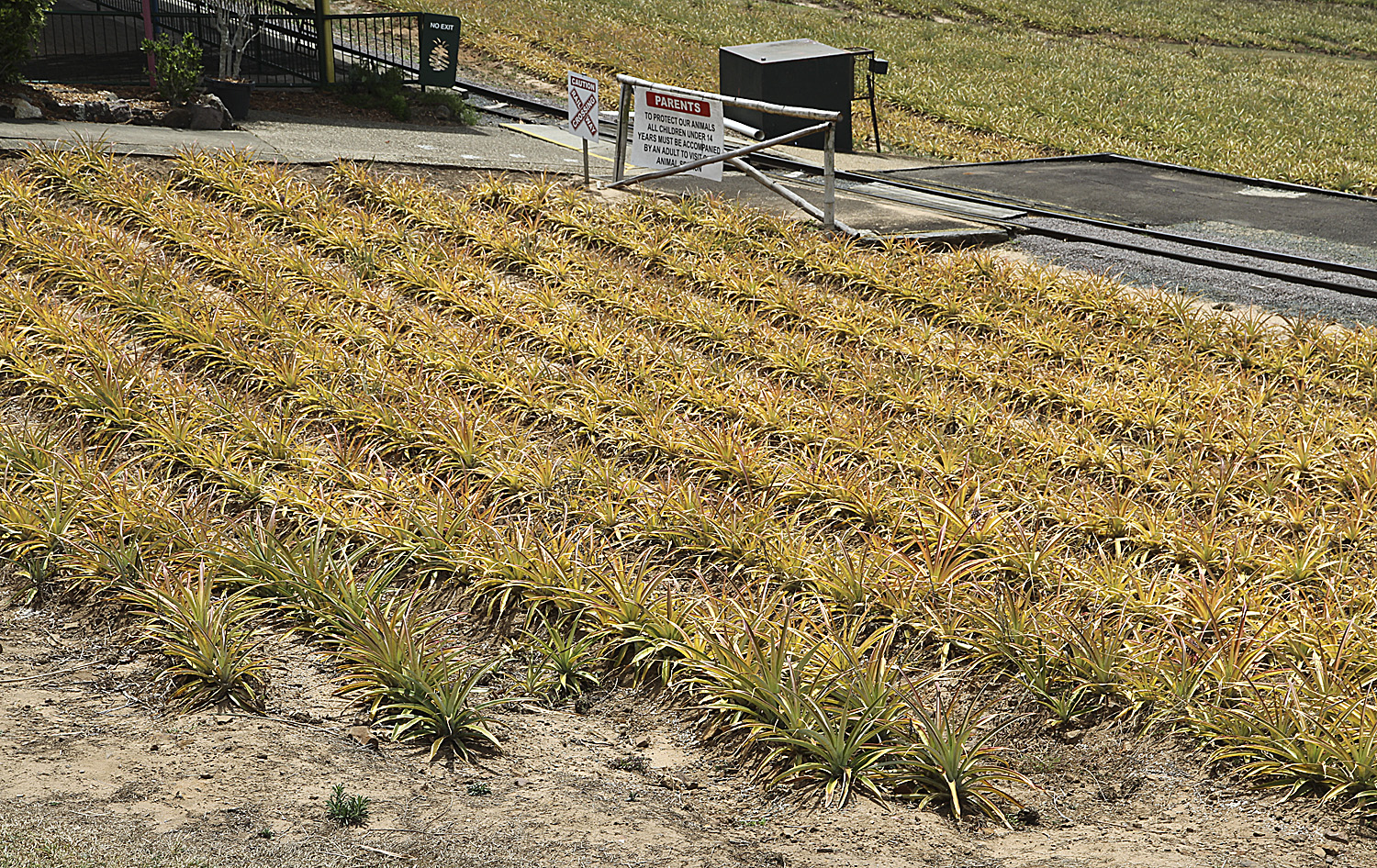
Image

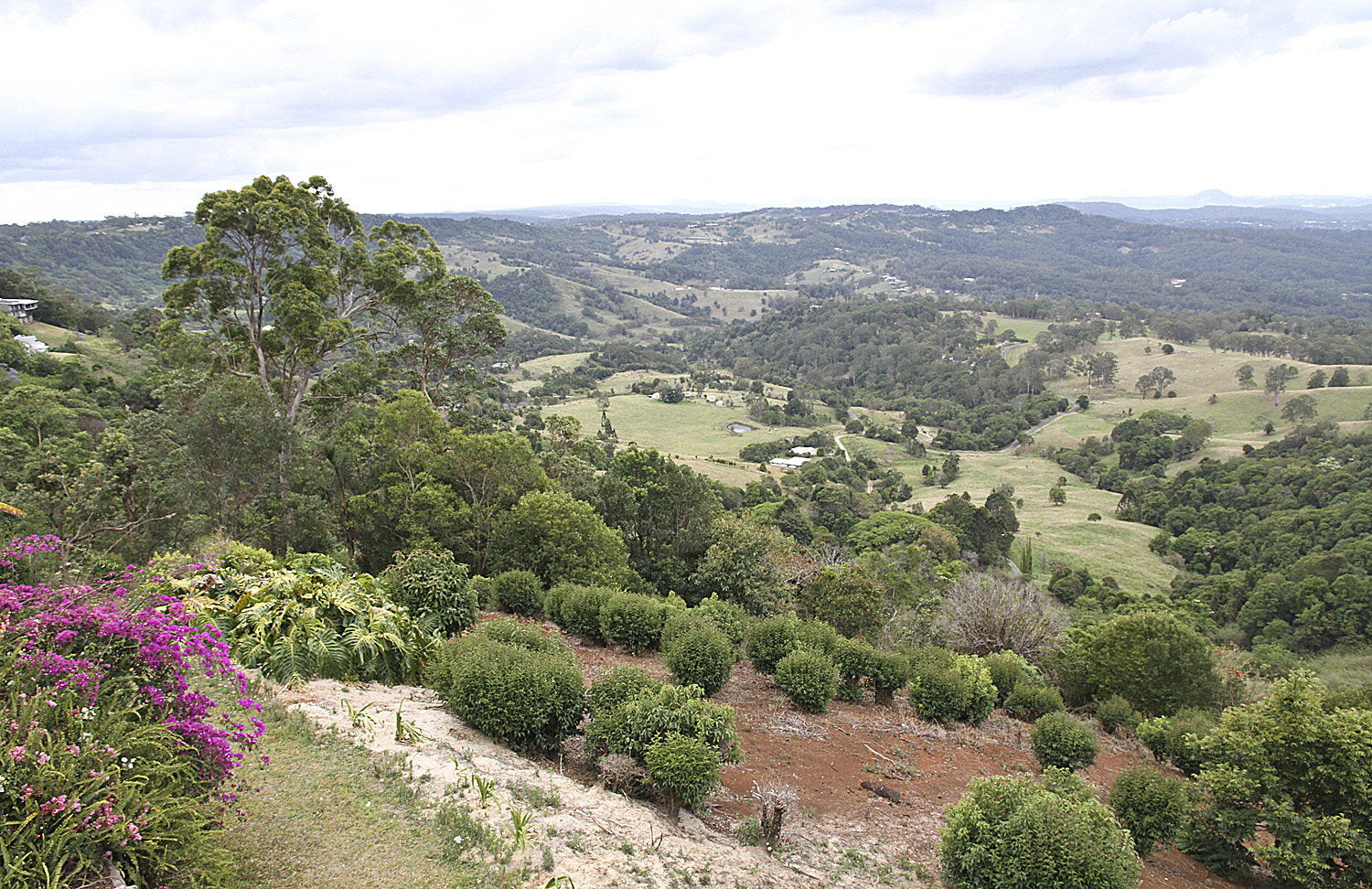
Nearby was a pineapple plantation which was interesting, in spite of no fruit during this time of the year. Magnificent mountain top views of the Pacific Ocean and the rolling hillside reminded me of parts of California. But, most of the landscape was similar to Florida with the sand, palm trees and other sub tropical plant material, mostly unknown to me, but quite interesting.

Image

Image

Image

Ian Glew and Tess Simpson with a Bougainvillea bonsai beginning to blossom

Image

Image

Image

Tiger bark fig

Image

Bald cypress grown from seed

Image

Image

We took a visit to Northside Bonsai an excellent and clean bonsai nursery run by Tess and Shelby Simpson with a wide variety of plants and pots too. I’ve visited the nursery before and selected the great Seiju elms used for the 2009 convention where they were used for my demonstration. Their nursery continues to shine and has loads of good bonsai for bonsai enthusiasts as well as a large assortment of trees for the general public to start them off on the wonderful world of bonsai. One of their large bougainvilleas, small for Chinese standards, was just beginning to come in blossom. Tess showed me some interesting new plants she is propagating for future introductions.

Image

Outdoor teaching area for workshops

ImageImage

Image

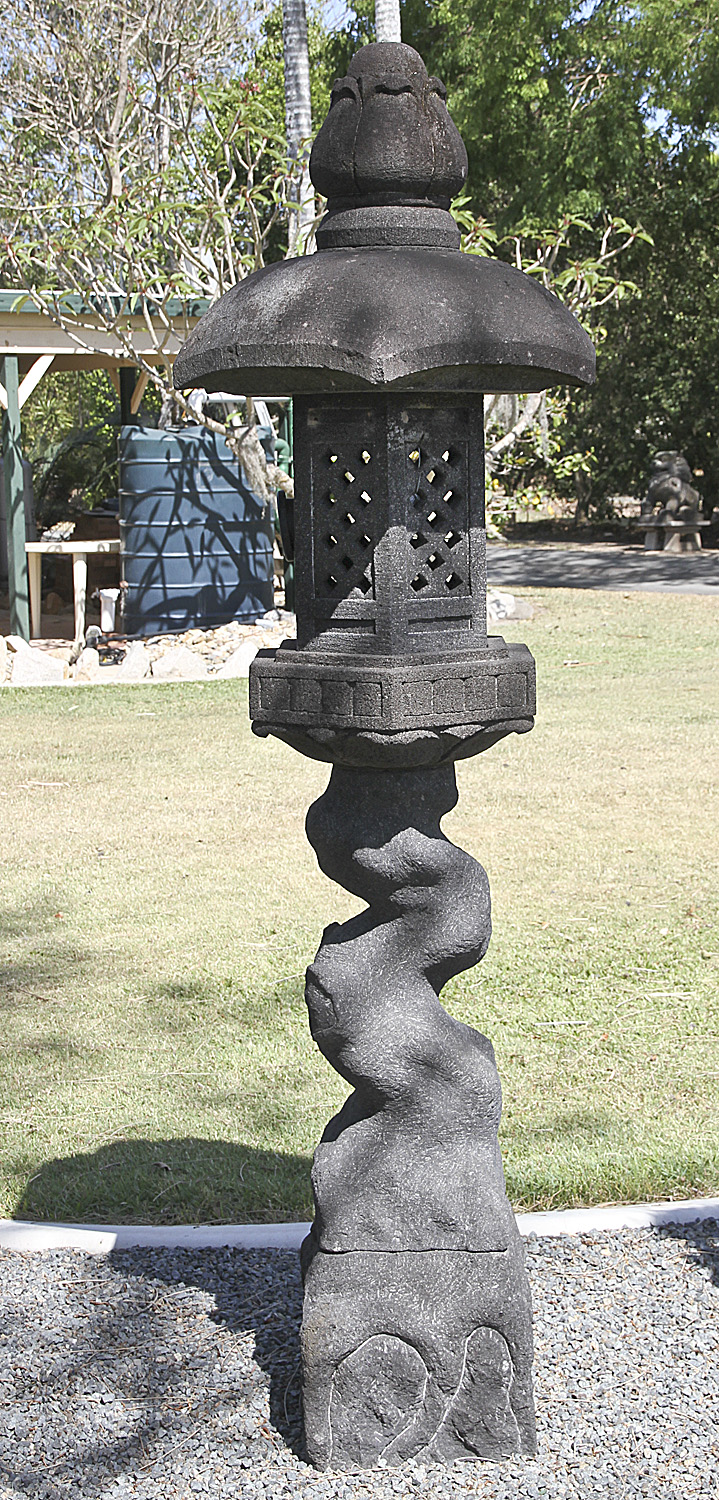
Interesting stone lantern base

Ian took me to the lookout where the whales were spotted a few days ago migrating to the southern areas where the water is cooler for the hot summer. Next to that area, but around small-secluded woods was the famous nude beach of the Australian Sun Coast… Too bad my cast and stroller do not like sandy beaches or rocky areas.

Image

Image

Image

Saturday was spent with the Sunshine Coast Bonsai Society beginning with an open workshop with about ten students. The plant material was quite good and I was particularly impressed with the size of a Lavender Star Flower or Grewia which had quite a large, but curved trunk. Another old Japanese black pine had been trained for over thirty years was unwired and trimmed and will be rewired this summer. It had already been candle pruned for the year and the second crop of smaller needles were opening.

Image

Bald cypress forest four years old from pencil size cuttings

Image

Bald cypress

Image

Queensland small leaf fig

Image

Benjamin fig from seed

Image

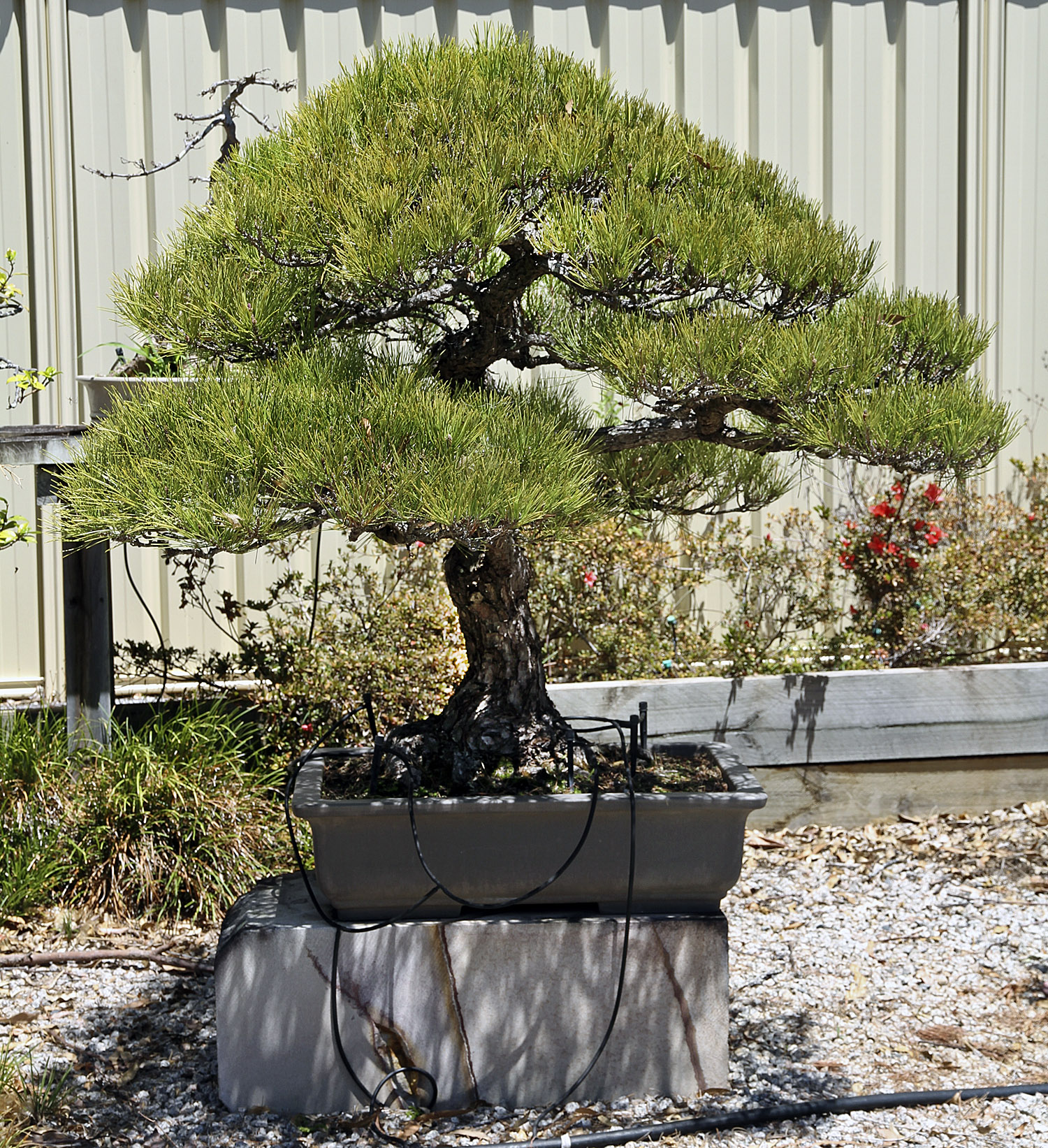
Japanese black pine

Image

Dwarf fig

Image

Juniper

When I arrived at the venue the society had a small display of fine bonsai for me to enjoy, and I really did. I was particularly impressed with the work of Shannon Young one of the younger members of the society. He showed me a small leaf fig which I saw at the 2009 Australian Associated Bonsai Club convention where I taught and presented him with an award of encouragement for the same tree. I guess it worked, because the tree has developed quite nicely. He also had a Benjamin fig trained in a slanting style shohin bonsai from SEED which was impressive.

Although Bald cypress is not native to Australia is it commonly used for bonsai, and they must really like this climate. I saw old looking trees, with rough bark and well developed branching where were under ten years old, from seed! Quite impressive! Shannon had a large forest set up in a corner display which was a two man bonsai. The trunks were magnificent as was the group planting composition. I found it difficult to believe he started the forest only four years ago from pencil size cuttings. He had another larger thicker specimen with quite a bit of dead wood as well.

However during the workshop there was a large Trident maple which was recently drastically pruned and had long new shoots, just right for initial wiring. So, before my demonstration after lunch I showed a section of my Maple Bonsai Program on how to drastically prune and subsequent care and training. Having my laptop with me containing over one hundred PowerPoint programs comes in handy when trying to present a comprehensive educational seminar. Its easy to quickly pull out an appropriate program to illustrate an important point.

Image

Selecting and explaining the Trident maples for the demonstration

Image

Basic composition

Image

Adding more trees

Image

Ian Glew assisting

Image

Crystal bowls used for cleaning moss, a high class organization. I should have brought my gold plated tools, they would have been appropriate

After the workshop I presented my Power point presentation on Forest Bonsai which was followed by a demonstration of creating a Trident maple forest. The society had selected an excellent assortment of trees to select from. One had a strange trunk with two heavy branches opposite each other so it was not used, as was another tree with excellent roots and branching, which I considered too good for a forest. Everything was prepared ahead of time including a beautiful new container hand made by the president Tony. It was exactly my design, I wonder how he knew? The unglazed oval pot had short wide flat feet with an outer lip. Tony has some South African relatives including a great great grandfather who first discovered and introduced the Gerbera daisies.

Image

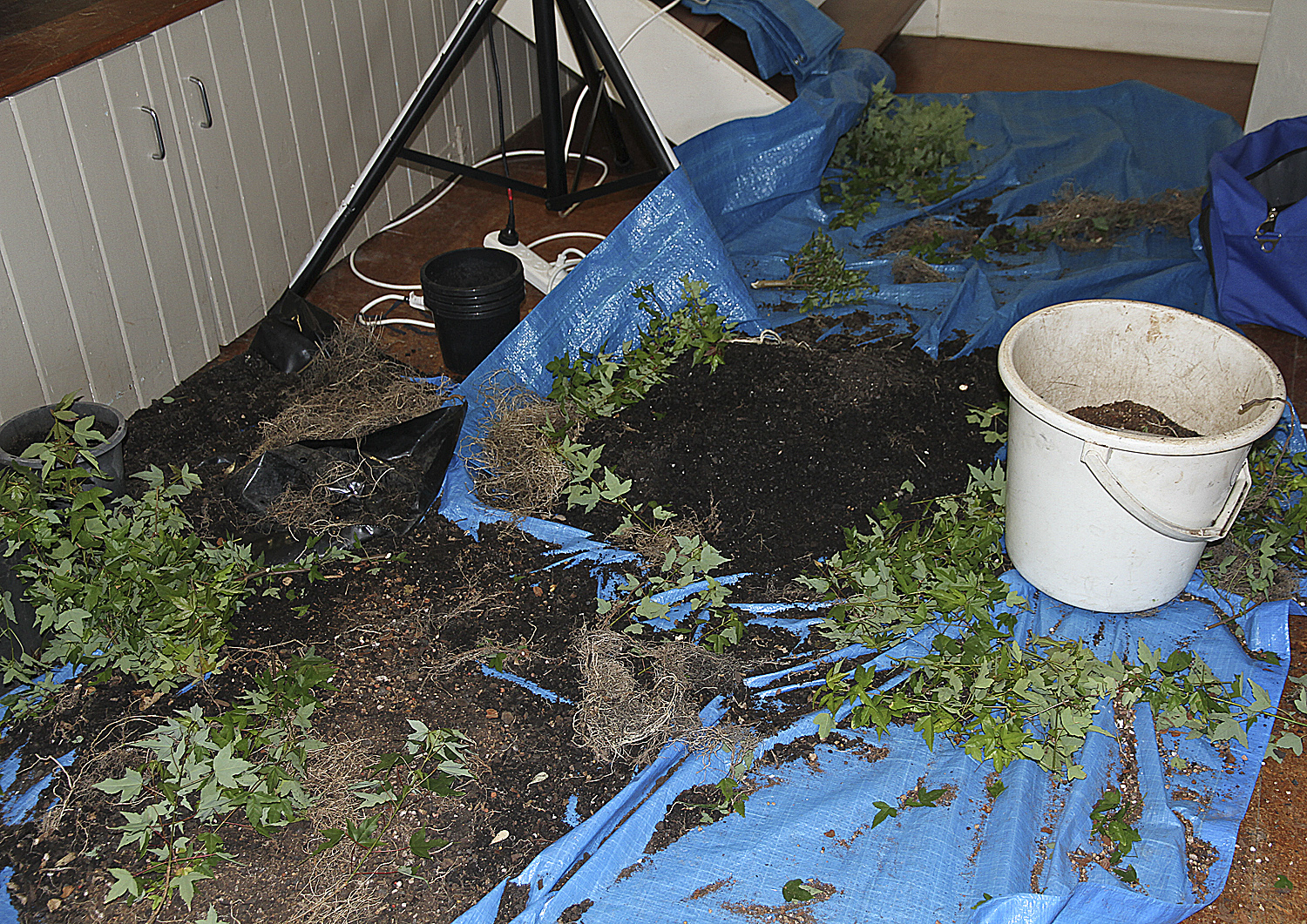
Messy floor after cleaning roots, but the forest came out great

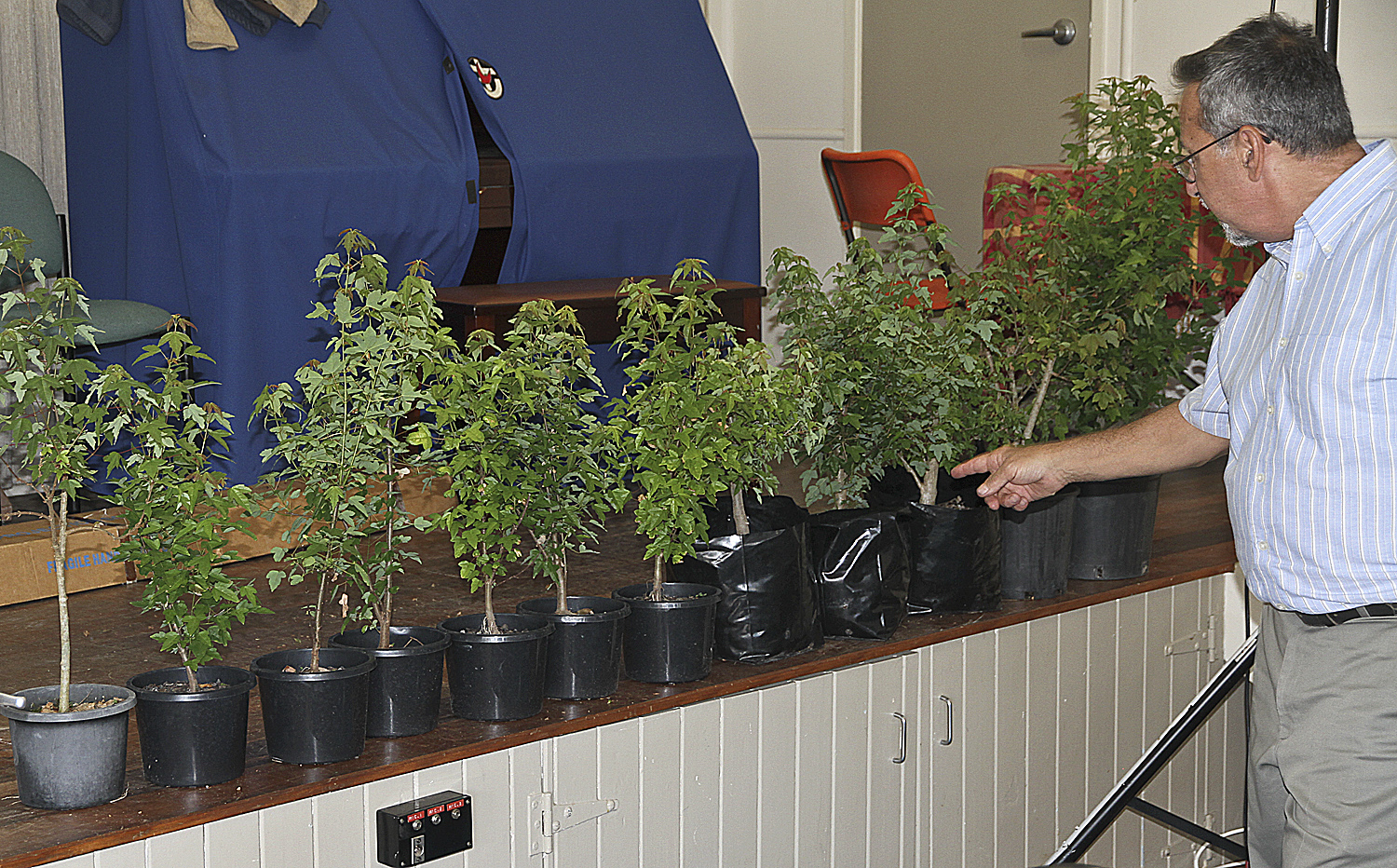
Ian Glew presents bonsai demonstrations throughout Australia and is well known. I’ve known him for years and he always helps me with my demonstrations when he is around. He assisted me in China in 2006 and in Puerto Rico as well as in the United States and Australia. He knows how I work and does great wiring too, but there was no wiring today. After discussing the assortment of trees he began to bare root them. We could not find a suitable trash container or box, but did have a couple of blue tarps so we simply opened them up and worked on them, dropping the excess soil and branches on the floor. Now, I’ve never worked like this before, nor made such a mess, anywhere, but I went along and got through the uncomfortable situation. As trees were added to the composition the positioning was explained. After planting the trees, I never counted the number as it was not important because more than eight trunks were used, soil was added and moss was applied to the surface. The society had great moss and they even “borrowed” some additional moss from the bonsai on display. After mussing came the interesting part where each tree was trimmed to height then thinned out to allow light and air to reach the inner branching. My design was then explained where asymmetrical balance is important. The copies of my newest book “Classical Bonsai Art- A half Century of Bonsai Study”  quickly sold out and Ian began to take orders for shipping.

Image

Completed demonstration Trident maple forest

Tomorrow I move on to the Gold Coast Bonsai Society then on to Canberra before ending up in Perth next week. I have not yet seen a kangaroo, but hope to. In Japan there is a saying that if you happen to view Mt. Fuji you will return. I’ve applied that saying to kangaroos in Australia and every time I’ve visited, I’ve had the good fortune to see a kangaroo and then return.