African, Oceanic Art & Classical Bonsai Exhibit in New York City

Screen Shot 2015-05-05 at 12.52.41 PM

1

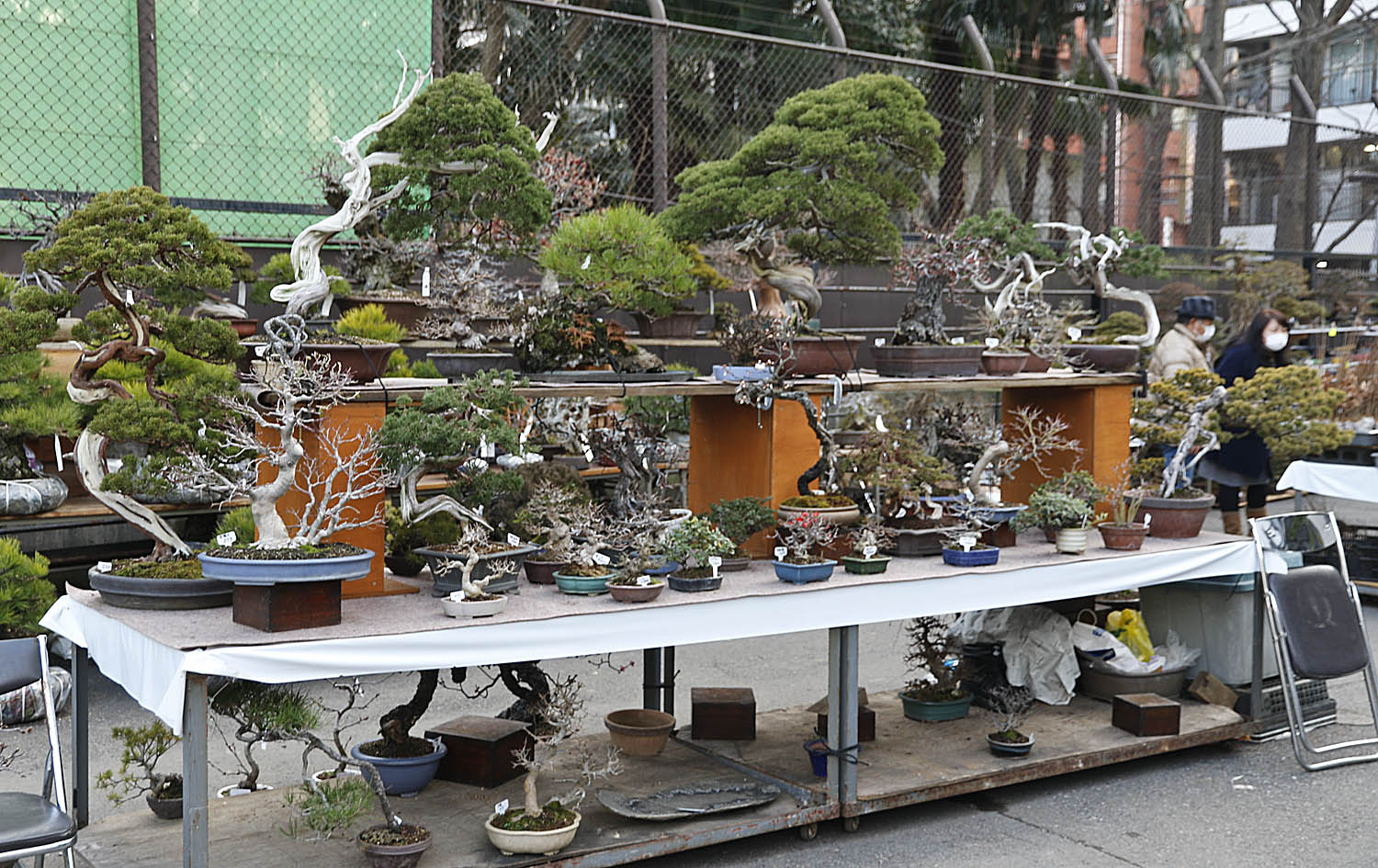
Wood sculptures and masks created by remote cultures for use in daily life and ritual will be on view, combined with classical bonsai in the unique exhibit: “Mastering Worlds; Exploring Space & Scale in Tribal and Asiatic Art.” The exhibit runs from May 13-17 at 291 7th Ave. PH, in New York, NY.

2

8

The exhibition is vetted, containing only authentic museum quality objects and marks the first time classical bonsai and ethnographic arts have been formally paired together. This exhibition and New York Tribal Arts Week is running concurrent with Frieze Week (Art Auction Week) and as well as the other Spring Art Fairs for visitors in New York City.

3

6

Among the several bonsai on display include an important Sargent juniper bonsai approximately 100 years old, originally from the Kennett Collection and a Japanese white pine approximately 100 years old, last styled by Sean Smith and displayed in the 2012 U.S. National Bonsai Exhibition.

7

4

Cole Harwell, CEO Cole Harrell African & Oceanic Art organized and is sponsoring the exhibition. Mr. Harrell comments: “In conjunction with New York Tribal Art Week, I’m proud to present this selection of African & Oceanic Art with classical bonsai to explore how cultures condense and materialize concepts of faith, identity and belief. By examining the different art forms with mutual regard to space and scale, I’m hoping viewers develop a fresh perspective into our mutual humanity.”

5

9

Admission to the exhibition is free. It opens on Wednesday, May 13th, with a viewing party Saturday, May 16, 6-9 pm, 291 7th Ave. PH, at 27th Street in New York City. Show Hours are by appointment only Wednesday, May 13th 11am – 8 pm through Sunday May 17th 11 am – 7 pm. RSVP: cole@coleharrell.com For details please visit: http://www.coleharrell.com or http://www.nyctribalartweek.com

Getting Ready For A Bonsai Show

CLUB SHOW

14

American larch bonsai on cork board

Most spring bonsai shows have probably taken place by now in southern areas. However, it’s now show time in the north. Our local bonsai exhibition will take place next weekend in Rochester, New York, and I’m always trying to improve each member’s display. Last month information was presented in this blog on how to make a quick and low cost companion planting from dwarf Columbine.

1

Dwarf Columbine companion planting on cork board

This month I’d like to suggest a quick and low cost “wooden slab” for companion plantings as well as smaller size bonsai. Traditionally, wood is used and although inexpensive types can be found, high end quality wooden slabs can cost hundreds of dollars, even for small 10 inch sizes. The prices increase with rare wood species and hand carved edge details.

2

Elm burl by Michel Villeneuve, Montreal, Canada

3

Wood from western USA tree species

4

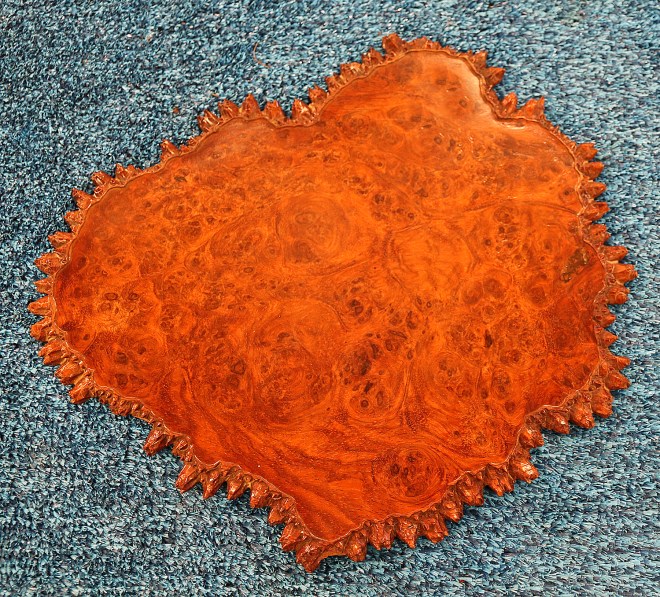
Chinese quince burl

5

Edge detail of Chinese quince burl

Several pieces of bamboo or reed can be tied together to make similar flat board for companion plantings and bonsai as well. However, traditionally bamboo “rafts” are only used during the summer season. Since the weather for the past few days in Rochester, New York, has been over 90F, summer has probably arrived here so bamboo “rafts” are suitable now.

6

Pack of 4 cork tiles, $10

Thin cork boards are readily available from craft stores or Lowe’s Home Improvement Centers. Although they come in different sizes, the 12” x 12” size is great and comes in packs of four cork boards for only $8-10 making each board about $2 each.

7

Round shape

8

Free form shape

They are easy to design by sketching an irregular round, oval or free form shape using a pencil. Then simply cut out the shape with a pair of scissors. But, if you carefully try to tear the oak with your fingers and finger nails the irregular edge will look better. The sizes can be individually made for specific containers or to fit many containers of similar sizes. That’s it, finished ready to show.

9

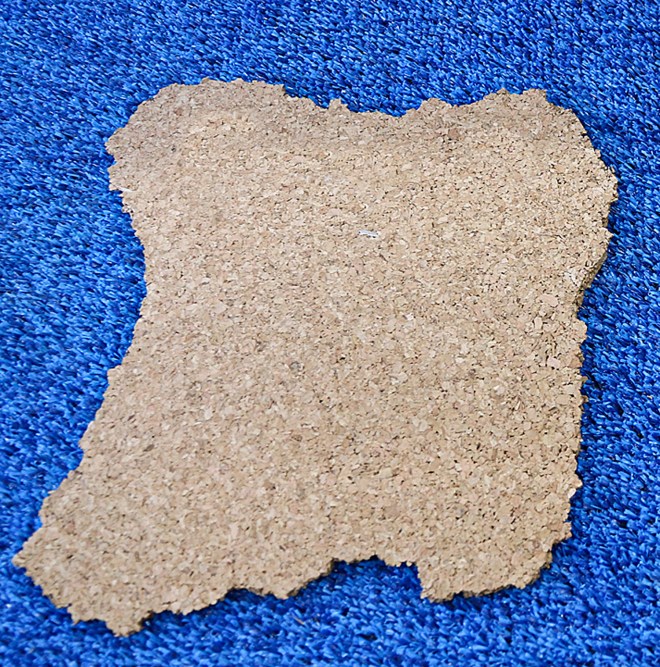
Unstained cork board

10

Unpainted cork board edge detail

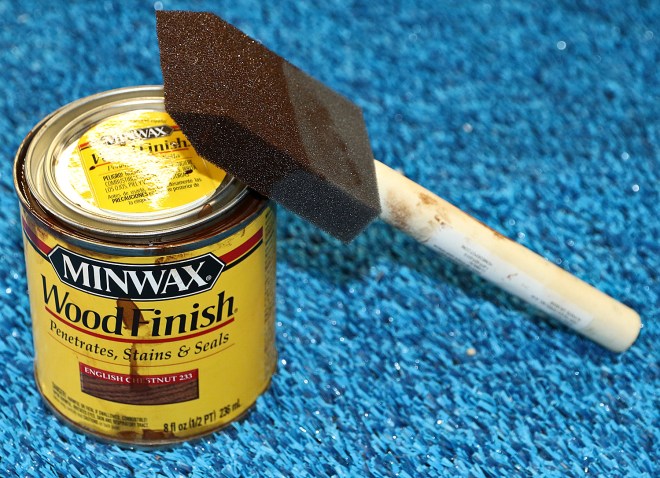
However, the cork board color is light and if you want to present a more finished “wooden slab” they are easily to paint. Dark colors are preferred to present a quite feeling, but ideally they should be a different color from the container and display table for the featured bonsai. I tried spray paint to darken the light colored cork, but got much better results using Minwax Wood Finish Stains that come in numerous colors. A foam brush works well for applying the stain, especially for coloring the edges. Simply press the foam brush around the edges first, then paint the flat surfaces last. If both sides are painted two different shapes will be created thus providing greater diversity when selecting the perfectly matched “wooden slab” for your companion planting or bonsai. This entire process can be done in only about an hour, but it’s best not to make them the day before the show.
11

Minwax Wood Finish Stain and foam bruch

12

Unstained and stained cork boards

13

Chinese quince bonsai on stained cork board

15

Crabapple bonsai on cork board

Larger Size “Wooden Slabs”

Sometimes larger sizes are necessary since the “wooden slab” should be larger than the container. It’s difficult to find larger sizes cork boards, but easy to place two smaller sizes together to appear as one. If the container is carefully positioned it is impossible to determine if one or two or even three cork boards are placed together. Once in Japan I saw a large forest style bonsai on an artificial flat stone displayed on a wooden board. But, upon closer study I found numerous smaller wooden boards carefully placed to appear as a larger size. When cutting out the cork boards, simply shape two boards with similar shapes.

16

Two unstained cork boards to be displayed together

17

Two unstained cork boards under larger bonsai

18

Companion planting on two stained cork boards

Thicker Larger “Wooden Slabs”

The thin cork boards are fine for smaller size companion plantings or small bonsai. However they may appear visually too light to anchor larger size containers. Ceiling tiles come in many sizes, but the 24” x 48” size is pretty standard and cost about $5. A utility knife comes in handy cutting out the initial design of the ceiling tile, but the edges look better when shaped by hand.

19

Unpainted ceiling tile after shaping

20

Painted ceiling tile

Ceiling tiles are usually white with small holes, not the best for displaying with bonsai. After shaping I sprayed the ceiling tile with a brown spray paint, making certain the edges are completely covered with paint. I did not initially like the effect, but the spray paint did fill in many of the ugly holes. So after the spray paint dried I simply used some of the same Minwax Wood Finish Stain used on the thinner cork boards and painted again. The result came out quite well. The thicker size is well proportioned for smaller and medium size bonsai.

21

Unpainted ceiling tile edge detail

22

Painted ceiling tile edge detail

23

Dwarf Ezo spruce bonsai on painted ceiling tile. Note the thicker size is in proportion to the larger size bonsai.

Both of these inexpensive “wooden slabs” are ideal for flat rock planting style bonsai where larger size display tables are difficult or expensive to purchase. They can also be cut to the shape of the individual stone. Make them a couple of inches larger than the stone all around for best effect.


SHOW

The 42nd Upstate New York Bonsai Exhibition & Sale will be held on May 16-17, 2015 at the Monroe Community Hospital in Rochester, New York. The show hours are 10am to 5pm daily with bonsai and ikebana demonstrations at 2pm. Approximately 100 fine quality bonsai from local members will be on display as well as Ikebana flower arrangements from the local Ikebana International society. About ten vendors will have bonsai and supplies for sale.

SHOW B

International Bonsai Arboretum Spring 2015 Open House & Sale 

D

E

B

Additionally to make a full day of your trip to Rochester, my annual Spring Open House & Sale will take place at the International Bonsai Arboretum on the same days as the bonsai exhibition from 10am to 4pm. Contact me for directions, questions or details.

A

The annual Lilac Festival down the street from the bonsai exhibition features over 700 lilac shrubs in over 400 cultivars. Come, visit Rochester– the snow has finally melted and warm weather has arrived (and I hope it stays), so come see, study and buy some great bonsai!

SMALL 2015 POSTER

Create A Companion Planting For Your Spring Bonsai Show

15

Its show time and the time for spring bonsai shows is rapidly approaching. In order to complete the presentation of your bonsai an appropriate companion planting, suiseki or figurine is often utilized next to the tree. Formal bonsai display requires study along with fine taste, which is a lengthy topic. Rather than to attempt to cover the theory, design and background of bonsai display, I’d like to present a quick and easy solution to creating an instant companion planting, which may enhance the presentation of your bonsai for your bonsai show.

Perennials are often used as companion plantings for bonsai. There are almost an unlimited number of different perennial species which are suitable for bonsai companion plantings. Dwarf or low growing plants work best. Often, when pot bound the foliage reduces in size and is more delicate. Pot bound companion plantings usually dry out quickly so keep many of them in a shallow saucer of water during the summer, especially dwarf Hostas with large leaf areas.

1

Perennial selection at Lowe’s Home Improvement Center

A few days ago I went to one of our local Lowe’s Home Improvement Centers and was surprised to see a display of dwarf Columbines growing in one quart pots for sale. The common Columbine, Aquilegia Canadensis, is a wild flower native to eastern North America, which reaches heights of approximately two feet.

4

The dwarf Columbine cultivar ‘Little Lanterns’ is an excellent dwarf mounding perennial suited for small areas and rock gardens because it only grows to ten or twelve inches in height. The small deep red and yellow nodding flowers stand above the blue green foliage and often last from April to June depending on the weather. I purchased a few pots of the ‘Little Lanterns’ columbine at $3.98 each and returned to my studio to create a spring blossoming bonsai companion planting.

2

First an appropriate container was selected. Generally shallow round containers with short feet are best for combining with bonsai for display. A smaller size companion planting is better than one which is larger. The choice of an unglazed or colored container depends on the bonsai container. Personally, if the bonsai container is glazed I’ll select an unglazed companion pot. If the bonsai container is unglazed a glazed companion pot is used. Also, if the bonsai container is symmetrical (round, square or equal-sided) an asymmetrical (rectangular or oval) companion pot is used. Likewise I like to combine asymmetrical bonsai containers with symmetrical companion plants. Many people like to use expensive containers for companion plantings. However, when the plants are fully grown they often overhang the container and sometimes the container cannot even be seen or enjoyed. Therefore, I generally do not use high quality containers for companion plantings and even used chipped or broken pots when the final result will be a full planting.

3

Two of these three plants are to be combined for the companion planting. The third plant was planted in a smaller container which will be displayed with a smaller size bonsai

I generally first select the bonsai to be displayed, then chose an appropriate companion pot. Then  proceed to create the companion planting or switch pots of an already established planting. If the companion planting is established, it is probably full of roots and the container can be easily switched. This is commonly done to change from a glazed to an unglazed container to contrast with the bonsai to be displayed.

10

Plastic screening placed over the drainage hole to keep the soil in the container

11

A small amount of the original soil, mixed with bonsai soil was first placed on the bottom of the container

Companion plantings are best presented when they completely fill the container, often overflowing. Sparsely planted companion plantings are not as effective as a container full of foliage and flowers as well. If a few smaller plants are planted in a larger companion pot and have not completely filled the pot it is best to wait and display in the future.

The bonsai, which will be displayed, is an American larch, Larix laricina, growing in an antique Chinese rectangular unglazed container. I collected this tree “north of Toronto, Canada” over thirty years ago on the lakeshore. Therefore a round blue glazed container was selected for the companion planting so it would contrast with the rectangular unglazed container of the bonsai.

Two of the ‘Little Lanterns’ columbines were selected for the companion planting since I wanted a full container of plants. Plants with plenty of unopened flower buds were selected to prolong the flowering season display. Its always advisable to select plants with many unopened flower buds to extend the blossoming period. However, try to select plants with at least one open flower bud to make certain the color will be suitable for displaying with a bonsai and especially is not the same color as the companion planting container.

5

First sharp trimming shears were used to cut the root ball in half

6

Although the pant appears to be pot bound, it is not

7

Note the roots are primarily growing around the perimeter of the pot and the center is dry

8

A bamboo chopstick was used to carefully tease the roots of each plant

Each plant was removed from the one quart plastic growing pot and was severely root pruned. Then about half of the soil was removed from one side of each of the two plants and they were combined to create a single plant.

9

A little bonsai soil was mixed with the original peat/bark nursery soil to fill the display container. The completed companion planting was immediately thoroughly watered and placed in the shade to recover from the transplanting.

12

The first plant was positioned in the new container

13

The second plant was added trying to keep the crowns of both plants close to each other so they appear to be one plant

14

Additional soil mix was added and gently firmed with a chopstick

A few days later the companion planting was groomed to remove any damaged leaves, old flowers and to create a symmetrical appearance. A stand was then selected for the formal display of the American larch bonsai. The companion planting must also sit on some kind of display table as well. Flat boards, wooden burls or bamboo rafts are commonly used for companion plantings. Since the bonsai is in a rectangular container on a rectangular display table I did not want to repeat the straight lines and selected an irregular shaped wooden burl for the companion planting.

15

The completed ‘Little Lantern’ columbine companion plant ready for display with a bonsai

This companion planting of ‘Little Lantern’ columbine is only an example of what can be created from commonly available perennials at local garden centers. There are hundreds of different Hosta cultivars which can also be used as well. Annuals can also used as companion plantings as well.

DISPLAY

This bonsai display is being prepared for the 49th Upstate New York Bonsai Exhibition on May 16-17, 2015 in Rochester, New York. Everyone is invited to visit the exhibition and see nearly 100 beautiful bonsai including my American larch bonsai. Also, it is no accident that both the American larch and ‘Little Lanterns’ columbine are both native to eastern North America. It is sometimes desirable to use companion plants which grow in the same area as the bonsai.

Ueno Green Club

1

6P4A0310

The Ueno Green Club is the headquarters for the Nippon Bonsai Cooperative a long time professional bonsai organization organized in 1931. The organization is a business corporation and members must be approved and pay a hefty entry fee, plus annual dues. Twenty one years ago there were over 500 members. Today the membership is approximately 250.

6P4A0312

Nippon BonaI Association Building

6P4A0315Nippon Satsuki Association Office

Twenty one years ago the Nippon Bonsai Cooperative built a three story building in the center area and removed the long buildings. Then a more modern building was constructed on the left side. The building is owned by the Nippon Bonsai Cooperative, but the land is leased. There is a close relationship with the Nippon Bonsai Association, a non-profit organization established in the early 1960s which was first established as the Kokufu Bonsai Society in 1934. Their headquarter building is located diagonally across the street from the Ueno Green Club. About a half block away is the headquarters for the Nippon Satsuki Association.

6P4A0320Third floor shohin bonsai sales during Kokufu Bonsai Exhibitions

6P4A0323 6P4A0324

6P4A0325Second floor bonsai sales during Kokufu Bonsai Exhibitions

2 3

6P4A0317

Outdoor sales area during Kokufu Bonsai Exhibitions

Located next to the Ueno Zoo on a corner lot the land actually belongs to a government organization and the corporation has a long term lease. The area was originally called the “Bonsai Club” and is used for auctions, meetings, exhibitions and selecting trees for shows. Originally there were long buildings around an open area where indoor activities were held. The open area in the center had tables for sales and displaying bonsai.

6P4A9232

Since the Nippon Bonsai Association and Nippon Bonsai Cooperative work closely together and membership overlaps, it is a bit difficult to distinguish their differences. However, one organization is a for profit professional corporation and the other is a non-profit association. The Nippon Bonsai Association rents the Ueno Green Club for three days each January from the Nippon Bonsai Cooperative for judging and photographing bonsai for the Kokufu Bonsai Exhibition.

AUCTIONS

4 5 6

The Ueno Green Club building is a modern three story building with very thick walls for earthquake protection. There are elevators which make moving large bonsai for exhibitions, auctions and sales easy. Each floor has been deigned to be partitioned to create individual rooms for meetings, judging, sales and bonsai displays.

SELECTING BONSAI FOR AWARDS AND EXHIBITIONS

10

PHOTOGRAPHING BONSAI FOR PUBLICATIONS

9

EXHIBITIONS

7 8

SALES DURING THE 2015 KOKUFU BONSAI EXHIBITION

26

6P4A0319

6P4A0330 6P4A0329

25  23 22

6P4A0318

oo

Yukio Murata, Kyuka-en Bonsai Garden just purchased young Trident maple seedlings for future masterpiece bonsai using Masakuni Tools

21 20 19 18 17 16

6P4A0332

6P4A0331

15

14 13 12

Peter Warren helped Minoru Akiyama, a graduate apprentice of Kunio Kobayashi, and his son in law, with this sales area. A large suiseki was sold which was in a wooden storage box with the owner’s name. The new client did not want the previous owner’s name on the box so Peter began to erase the inked name. It was taking considerable effort and someone suggested he use a power tool to sand off the name. Great idea, it worked!

27

28

Osamu Fukudata, another graduate apprentice of Kunio Kobayashi watches.

29

30

31

32

Most foreigners are familiar with the Ueno Green Club as only a sales area during the Kokufu Bonsai Exhibition, but it is indeed much more.

24

Omiya Bonsai Village, Masahiko Kimura & S-Cube

1

Each of our exciting bonsai tours to Japan includes a private tour to S-Cube, Masahiko Kimura’s studio, Omiya Bonsai Art Museum and the bonsai gardens in Omiya Bonsai Village. There are always new bonsai and other interesting things to see and study.

S-Cube
Seiji Morimae
Hanyu City
2 3 4 5 6
7 8 9 10 11
 
Masahiko Kimura
Saitama City
12 13 14 15 16 17
6P4A9562
9561
6P4A9563 6P4A9569
 
Omiya Bonsai Art Museum
Omiya
6P4A9582
6P4A9580 6P4A9579 6P4A9585
Mansei-en Bonsai Garden
Hatsuji & Takahiro Kato
Omiya Bonsai Village
IMG_9534
6P4A9586 6P4A9587
 
 
Seiko-en Bonsai Garden
Tomio & Kaori Yamada
Omiya Bonsai Village
000
 
Kyuka-en Bonsai Garden
Isamu & Yukio Murata
Omiya Bonsai Village
SONY DSC
IMG_9560
Fuyo-en Bonsai Garden
Hiroshi Takeyama
Omiya Bonsai Village
IMG_9571 IMG_9562
IMG_9558  IMG_9571 IMG_9562
IMG_9573

Shunka-en Bonsai Museum

1

Shunka-en Bonsai Museum in Tokyo is the home of Kunio Kobayashi who is one of the top bonsai artists in Japan and the world. His garden is a mecca for many, including me because of the high quality bonsai and especially his distinctive formal bonsai displays.

2

Winter flowering cherry, Prunus campanulata

3

Japanese five-needle pine, Pinus parviflora

4

Chinese quince, Pseudocydonia sinensis

5

Apprentice Jin explaining the magnificent display of a Japanese black pine

6

Japanese flowering apricot, Prunus mume

7

Japanese black pine, Pinus thunbergii

His museum has 15 display alcoves, all different styles. Apprentice Jin toured our group around and explained many of the small details most people miss and answered our questions as well in good English.
8 9 10
11
Although Mr. Kobayashi is most famous for Japanese black pines and Satsuki azaleas he has recently begun a love affair with maples. He has always had many Trident maples, but a few years ago he put several long tables in an area reserved for a garden featuring a beautiful stone. All of his Japanese and Trident maples are in one area so they can be easily cared for.
12 13
14
Large lumps of charcoal was evident on many species as was old rusty iron wire to improve the health of the trees. A comprehensive article written by a Cornell University professor who has been studying “biochar” can be seen in a recent issue of International BONSAI. I’ve been using and selling charcoal and have had excellent results. Contact me if you are interested in obtaining horticultural charcoal.
15
16
As always our group was warmly received at Shunka-en Bonsai Museum and is a highlight to all our tours.

2015 89th Kokufu Bonsai Exhibition– Part 2

1

Part 2 of Kokufu Bonsai Exhibition was held on February 10-13, 2015 at the Tokyo Metropolitan Art Museum in Tokyo, Japan, following a day closed where 181 bonsai displays were replaced with all new bonsai, except for the four special displays. The Japan Suiseki Exhibition opened on the closed day and the Ueno Green Club sales area was also open for visitors.

3

4

These two views may quickly seem similar to Part 1, however all the trees are new. However under close examination a few of the companion plantings were identical, but slightly rotated. I’m not certain because my personal study of Part 2 has not been completed yet, but I think I remember seeing a few display tables from Part 1.

2

Japanese five-needle pine, Pinus parviflora

19

Gardenia, Gardenia jasmoindes

17

Zuisho Japanese five-needle pine, Pinus parviflora ‘Zuisjo.’ Perhaps the reason for the increased number of this choice cultivar is because most are approximately only 50 years old and only now beginning to show aged rough bark. This cultivar is slow to start developing, but once established quickly grows fat. There have been several articles on Zuisho Japanese five-needle pine in International BONSAI authored by Julian Adams who has mastered the cultivation and propagation of this cultivar in the United States.

14

A colorful companion planting used for a shohin bonsai composition. Again, like Part 1, only five displays were shown.

12

This shohin Japanese grey bark elm, Zelkova serrata, had the finest twigs I’ve ever seen on a bonsai!

10

A small size Toyo Nishiki Japanese flowering quince, Chaenomeles speciosa ‘Toyo Nishiki’ with multiple colored flowers. Although red, pink and white blossoms are common for this great cultivar, I’ve often seen red branches grafted onto specimens to improve color distribution.

16

Chojubai Japanese flowering quince, Chaenomeles japonica ‘Chojubai.’ This species was quite common in both Part1 and Part 2, both as main trees in a medium size display and used as companion plantings. They are often planted on or with stones or in the multiple trunk style because they do not form thick trunks. The word “chojubai” means long life Japanese flowering apricot because the flowers and rough bark are similar to Prunus mume, also the flowers blossom for a long period of time, commonly from autumn through winter to spring.

Kokufu Award Winners

6

Japanese five-needle pine, Pinus parviflora. This bonsai has an interesting history and I saw it auctioned many years ago for over US $500,000. I’ve got photos of the auction, but recently delete them from my laptop collection of over 40,000 images. I needed to make room for new photos. But, of course I have original photos archived at home.

5

Trident maple, Acer buergerianum

9

Chinese quince, Pseudocydonia sinensis

7

Japanese grey-bark elm, Zelkova serrata

8

Japanese five-needle pine, Pinus parviflora

The “day off” or closed day was well worth the wait! A few observations on Part 2. The individual number of the following species seemed to be increased from Part 1: Satsuki azaleas, Zuisho Japanese five-needle pine and Japanese flowering apricots, many of which were blossoming or with opening flowers. There were two Twisted trunk pomegranate and even a Japanese larch, which is rarely seen in a Kokufu Bonsai Exhibition, or at least I’ve never seen on in a past exhibition. This cold loving species is not generally cultivated in the Tokyo region or from areas further south. Although Ezo spruce is also native to the same areas and is commonly seen is perhaps Japanese larch does not enjoy high humidity.
21
Japanese larch, Larix kaempferi
To me, the quality of individual specimens seemed a bit more refined, or at least to my taste in Part 2, compared to Part 1 of the exhibition. Again, like in the first showing, four rooms were filled with 181 displays each having a six foot width of beautiful compositions.
20
Needle juniper, Juniperus rigida displayed with an unusual companion planting
There were only two displays by foreigners, both Americans who I am not familiar with.
23
Itoigawa shimpaku juniper, Juniperus chinenensis var. Sargentii ‘Itoigawa,’ displayed by Larry Rahbone.
22
Itoigawa shimpaku juniper, Juniperus chinenensis var. Sargentii ‘Itoigawa,’ displayed by Victoria Dickinson.
13
Chinese quince, Pseudocydonia sinensis, created from air layering the top off another bonsai.
18
Dwarf camellia, Camellia luchuensis
24
Japanese five-needle pine, Pinus parviflora
15
Hinoki cypress, Chamaecyparis obtusa
25
Dwarf Japanese flowering quince, Chaenomeles japonica
11
Japanese grey-bark elm, Zelkova serrata
I hope you have enjoyed my photos of both parts of this year’s Kokufu Bonsai Exhibition. If you want to see better photos of the masterpiece bonsai on display, kindly subscribe to International BONSAI at http://www.internationalbonsai.com.  The official exhibition album showing over 400 individual bonsai will also be available from my web site as well.
Our bonsai tour is not over yet and I still have more photos, visits and experiences to share with friends, but need to find the time to process the photos. More coming……

2015 2nd Japan Suiseki Exhibition

1

The 2nd Japan Suiseki Exhibition was held on February 9-13, 2015 at the Tokyo Metropolitan Art Museum in Ueno Park, Tokyo. This is the same venue as the Kokufu Bonsai Exhibition held in a second floor gallery.
2
3
The timing of this exhibition was excellent with the opening day being held on the day all the bonsai are changed at the Kokufu Bonsai Exhibition. It offered visitors an excellent opportunity to see beautiful suiseki without the competition of bonsai.
4
5
Kunio Kobayashi
At the Opening Ceremony, Managing Director Seiji Morimae introduced all distinguished visitors from Japan, Indonesia and Taiwan. Representative Director Kunio Kobayashi spoke and welcomed everyone to this important and highest level suiseki exhibition in Japan. Seiji Morimae and Kunio Kobayashi were the primary organizers of the exhibition and oversaw all details.
6 7 8 9
There were individual suiseki exhibits as well as alcove displays. Additionally historic stones, display tables, water basins and bronze ornaments were displayed, with the smaller objects in glass cases.
16
15 14 13 12 11 10
Over 150 suiseki were displayed including 22 foreign stones. There were suiseki from Taiwan, Denmark, China, England, Malaysia, Switzerland and 9 stones displayed from the United States
17
Professor Amy Liang, Taiwan
18
Sean Smith, USA
19
Michael Pollock, USA
20
Hideko Metaxas, USA
21
Nina and Larry Ragle, USA
22
Douglas Paul, USA
23
Thomas Elias, USA
24
William N. Valavanis, USA
25
Mulberry display table with grapevine table top and bamboo-shaped elements by Katsuraki Kozan. This was my personal favorite display table.
26
Display table detail
Like the Kokufu Bonsai Exhibition, this show requires several visits to fully comprehend, appreciate and study the masterpiece suiseki.

2015 89th Kokufu Bonsai Exhibition– Part 1 Continued

1

Sunday was the busiest day of the exhibition. There was about a 45 minute wait to get inside. We were at the museum just before the opening at 9:30 am and still had to wait a considerable time, which was well worth the time. Even when we left several hours later there was a line, but a bit shorter than earlier.
2
Sargent juniper, Juniperus chinensis var. Sargentii ‘Itoigawa’
3
Shishigashira Japanese maple, Acer palmatum ‘Shishigashira’
4
Japanese black pine, Pinus thunbergii
5
Pearl Bush, Enkianthus perulatus. An uncommon species trained for bonsai, usually used as hedges.
6
Ezo spruce, Picea glehnii
Of course it was way to busy to even consider photographing the trees with thousands of people, so as usual we returned about 3pm in the afternoon and easily walked in. The crowd was thinning out and by the time we left, just after 4pm the exhibition was empty, except for all the bonsai artists who began to assemble just before 4pm to take their client’s trees back to their gardens.
13
Lower level main display room featuring large size bonsai with high ceiling… and lots of different light sources
There are four main rooms used for the bonsai exhibition. Downstairs there are two rooms displaying large size trees. The first room is the largest with a very tall ceiling and a multitude of different colored lights, just great for taking “artsy” photos which I was not interested in. The different colored lights were often aimed to highlight certain areas of the bonsai, but often failed to show the inner dead wood areas. But, its important to remember this exhibition does not allow photos so therefore is designed to make the trees look good for the general public. If you want to see better photos, simply subscribe to International BONSAI or purchase an exhibition album, details later.
14
Lower level display room with large size bonsai and short ceiling
On the same lower level there is a smaller room, also for larger trees, but with a much shorter ceiling. There was an entirely different feeling in that room.
15
Gallery level room featuring medium and small size bonsai
The next level up was in a gallery which showcased medium and small size bonsai, again with a high ceiling.
16
Smallest display room featuring shohin bonsai, medium size bonsai and small bonsai
Also on the gallery level, near the end of the exhibition there was a much smaller room, with a shorter ceiling. Small and medium size bonsai, which are gaining in popularity are displayed there in addition to the five shohin bonsai compositions. I’m sure there will also be more shohin bonsai displayed in Part 2 of the exhibition beginning on Tuesday.
12
Crepe myrtle, Lagerstroemia indica, shohin bonsai
7
Winter flowering cherry, Prunus campanualata
8
 Japanese black pine, Pinus thunbergii
9
 Japanese five-needle pine, Pinus parviflora
American Bonsai Exhibitors
17
Sargent juniper, Juniperus chinensis var. Sargentii ‘Itoigawa’
Douglas Paul
18
Japanese yew, Taxus cuspidata
Matthew Ouwinga
19
Sargent juniper, Juniperus chinensis var. Sargentii ‘Itoigawa’
Sean Burke
I saw bonsai displayed by owners from France, Italy and the United States. From America there were three exhibitors: Doug Paul, Matt Ouwinga and Sean Burke.
10
 Oriental photinia, Photinia villosa
As mentioned we stayed to photograph until the very end of the exhibition, which I found quite interesting and valuable for my personal bonsai education. Actually the Kokufu Bonsai Exhibition and Taikan Bonsai Exhibition are currently THE most important part of my bonsai education, which I enjoy sharing with others through my magazine International BONSAI and my teaching activities throughout the world. Through these two exhibitions, the finest in Japan and the world, I can see and learn contemporary classical bonsai design, species characteristics, display compositions, display table styles and matching to trees, companion planting design and display as well as simply enjoying the beauty of great bonsai masterpieces.
11
 No its not a dandelion!
 Perhaps Winter aconite, Eranthis hyemalis… I forgot
20
21
22
Isao Omachi seems happy Part 1 is over!
23
24
Note the photo on the transport table matches the bonsai on the display table
25
26
27
At exactly 4pm the artists and their many apprentices slowly began to remove their client’s bonsai. Trees were carefully taken off the display tables and often put on the floor on custom made wooden flats for transportation. Many of those transportation tables even had a photo of the bonsai which belonged on the custom made table attached to the boards. Some had short wooden supports, protected with rubber to avoid damaging the valuable containers, mostly antique Chinese. After placing the trees on the transport tables they were tied with rope to prevent movement. The small flat display tables under the companion plantings were also evenly lined up (which I was delighted to see) in preparation to move them back to the artist’s gardens. I wonder if some of the display tables and companion plantings will be used in Part 2, but probably not. Every bonsai display table was perfectly matched to each bonsai. These tables, which can cost in the tens of thousands of US dollars are often rented by the exhibitors from the handling bonsai artists, as are valuable containers as well. Renting display tables and containers is a popular activity in Japan. The display tables were carefully wrapped in heavy blankets and tied to prevent damage.
30
Seiji Morimae directing suiseki exhibition set up
Monday is the day all the trees will be changed for Part 2 of the Kokufu Bonsai Exhibition. But, also, Monday is the opening day of the 2nd Japan Suiseki Exhibition which is in the same museum building, but on a higher floor. We took a sneak peak into that set up and saw Seiji Morimae directing many people so the public would be amazed at not only the beauty of the suiseki by also their presentation.

2015 89th Kokufu Bonsai Exhibition– Part 1

1

The 89th Kokufu Bonsai Exhibition is being held in two parts this year in order to display more bonsai in an area which is slightly smaller than in previous years. Part 1, February 5-8, 2015 and Part 2, February 10-13 2015.
2
On February 9th all 181 bonsai displays will be switched in Part 1. Although there are 181 displays, there are perhaps 250 individual bonsai displayed as there are generally six trees in each shohin bonsai display and two or three trees in the medium exhibits. There are only five shohin bonsai exhibits in Part 1. There are six bonsai displayed by foreigners including three Americans. More on those and the shohin bonsai displays later.
3
Needle juniper, Juniperus rigida
4
Japanese flowering quince, Chaenomeles speciosa
5
Japanese five-needle pine, Pinus parviflora
Sinuous style, all root connected
Part 1 of the exhibition is excellent, lots of good trees. Even for me, a bit of overload so this report has not been posted as quickly as I normally do. First are a few overall photos, some impressive trees and the five Kokufu Award bonsai. It is extremely difficult to photograph with the varied lighting which makes many of the trees look purple or red. Many of the trees are in dark areas and often details cannot be enjoyed. Very hard to capture the beauty of each tree. And there four areas full of trees, each with different height ceilings and different poor lighting. Many of the trees are dramatically lighted, which look good but nearly impossible to photograph.
There were five Kokufu Prizes awarded in Part 1:
6
Japanese black pine, Pinus thunbergii
7
Itoigawa Sargent juniper, Juniperus chinensis var. sargenti ‘Itoigawa’
8
Deshojo Japanese maple, Acer palmatum ‘Deshojo’
9
Dwarf star jasmine, Trachelosperum asiaticum
10
Shohin Bonsai Composition
More photos and information coming. Enjoy the beauty of contemporary classical bonsai as of February 2015.
11
Camellia, Camellia sasanqua
12
Japanese flowering apricot, Prunus mume
13
Japanese fine-tooth holly, Ilex serrata
14
Japanese red pine, Pinus densiflora