


I spent my fourth and last day of study at the Nippon Bonsai Taikan Ten. Each time I traveled through the exhibition new trees, companion plantings and display are discovered. After the exhibition and sushi, I return to my hotel to check the photos and adjust interesting images for digital viewng.


The crowds are large in the morning each day, then they die down after lunch time. Over 10,000 visitors are expected which is a bit larger than in the past exhibitions under the leadership of Shinji Suzuki, chairman for the event. There were several foreign tour groups from Germany, Italy and other European countries. Often they go through the exhibition then on to the sales area. But occasionally I’ve seen some foreigners actually studying the bonsai and photographing.


Each day I continue to take photos for this blog, my PowerPoint presentations and International BONSAI.Several bonsai I missed during the last four days were photographed today with my iPhone X Max. It’s a great camera, as you have seen.


As displayed.

I think this might make a better composition….

Although I’ve visited the sales area daily, today I spent a bit more time looking at the beautiful bonsai. Looking at all the great bonsai at bargain prices is teasing to Americans, because it’s extremely difficult to get the trees into our country.
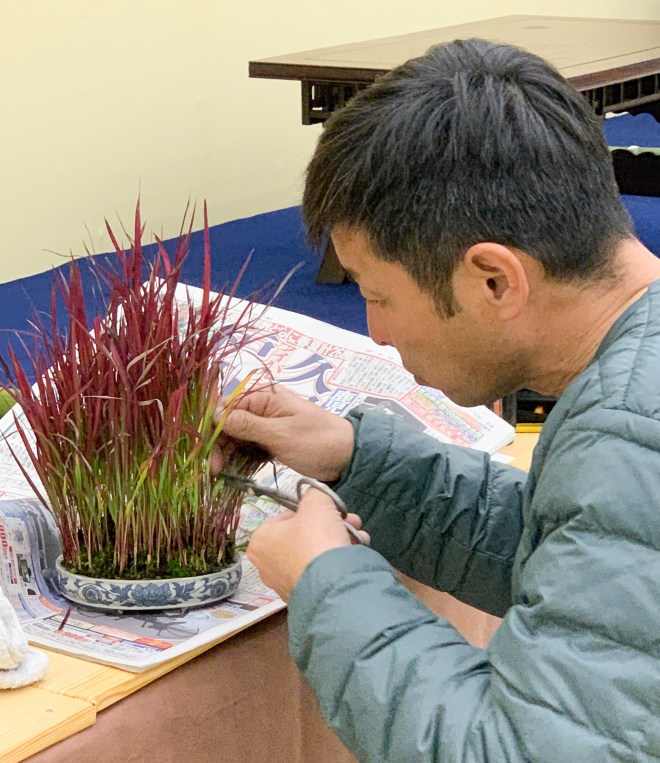


Again I visited again with Gerald Rainville from the Vancouver, Canada area. Last week we saw him at work at Koji Hiramatsu’s nursery in Takamatsu where he has been studying for the past few weeks. He’s been wiring small shohin Japanese black pines. Mr. Hiramatsu first started Gerald with wiring older larger shohin pines with large trunks. Then he wired 60 smaller Japanese black pine bonsai. Perhaps he started with the older pines because they had already been wired and trained in years past. The new pines did not have much training and Gerald did the initial styling. Along with Gerald was Evan Marsh from Sydney, Australia helping customers and meeting new foreign visitors at Mr. Hiramatsu’s sales area.

Gerald Rainville wired 60 of these small Japanese black pine bonsai. Only two remain.


I hope you all enjoyed my trip to Japan through my blog as much as I enjoyed sharing the images and commentary with you. If you found the trip interesting, please consider joining Kora Dalager and me for our small size tour to visit the Kokufu Bonsai Exhibition coming up in February. Send for a tour flyer or check out my website at:
http://www.internationalbonsai.com/files/1708315/uploaded/2018%20AUTUMN%20TOUR%20FLYER.pdf
We will of course, also lead another tour to Japan next autumn to visit the 39thNippon Bonsai Taikan Exhibition. And, next year the exhibition will not fall on the Thanksgiving holiday and people can join us exploring Japan and return home in time to spend the holiday with family and friends.
Tomorrow morning I return to reality, and the upcoming forecast blizzard in Chicago on my way home to Rochester, New York. Then I turn around and pack up on Tuesday and Wednesday so we can leave for the Winter Silhouette Bonsai Expo on Thursday. This exhibition is held in an elegant venue covered with marble walls and floors at the North Carolina Research Lab in Kannapolis, North Carolina on December 1-2, 2018. Consider attending this superb FREE exhibition featuring naked bonsai. Along with other bonsai artists I’ll be presenting a demonstration and critique on Sunday morning. My Saturday afternoon lecture/demo will explore cascade style bonsai with new photos from this tour. And, of course there will be three rooms with vendors offering their finest plants, containers and more, just in time for Xmas shopping. I hope to welcome you to the Winter Silhouette Bonsai Expo in Kannapolis, North Carolina, just outside Charlotte. Check out:


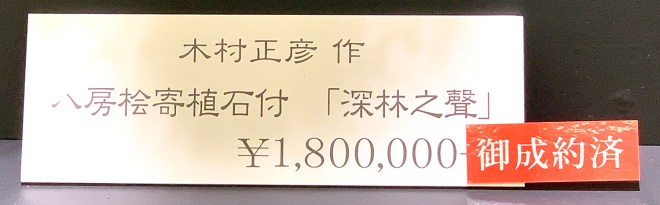


 The exhibition opened at 9:00am on Friday morning. By 10:00am ALL of Mr. Kimura’s bonsai were sold. And by noon ALL of the Chinese bonsai containers were also sold. The least expensive bonsai was $18,000. One antique Chinese container was sold at $180,000. Some are destined for China. It appeared to me the expensive items sold while some less expensive bonsai, containers and display tables remained, but there are still two days of sales remaining.




 Our group left Shikoku Island on the way to Kyoto on a train crossing the scenic Inland Sea which is dotted with many small islands. The weather was warm and sunny and the islands were quite picturesque. However, the bridge structure did not allow us to capture images without steel posts bisecting the views.








 Traditionally chrysanthemums are grown in several different forms. The basic form consists of one plant with three stems, of different heights and an exact number of leaves per stem. They are displayed in groups of 12 pots with four different cultivars of different colors. Quite interesting, but a bit boring. After you see one, you have seen them all. Kind of like shohin bonsai displays or satsuki azalea exhibitions.


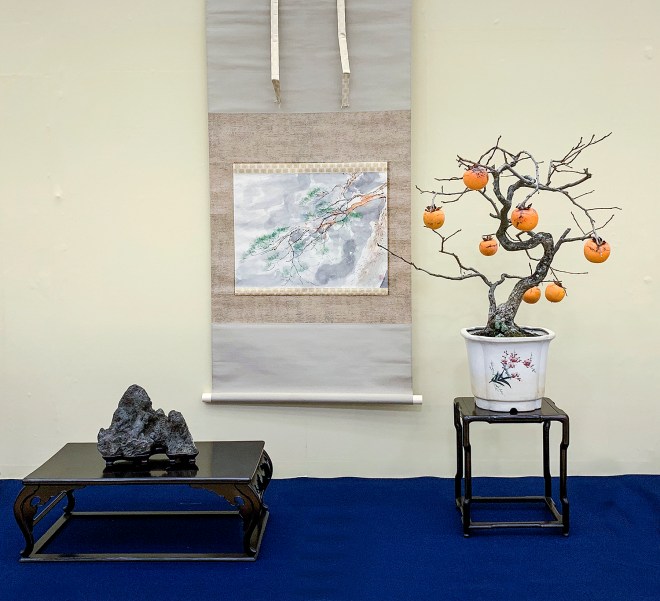
 When Mr. Kobayashi has guests, he brings a few bonsai indoors and arranges displays in one of the dozen or more alcoves in the museum. Each display features a major bonsai, companion and usually a hanging scroll. Jin Yasufumi, a graduate apprentice is now working for Mr. Kobayashi in the curator position for his museum. He is friendly and speaks excellent English. After our tour members looked around and came down from bonsai overload, Jin gave us a guided tour of the museum, including the upstairs container room full of antique and historic Chinese and Japanese containers, each valued more than average homes in the United States


You must be logged in to post a comment.