
Have you ever considered to visit the Japan bonsai community?
Here is your opportunity to experience the finest bonsai exhibition in the world PLUS to visit private bonsai collections, gardens and the Japan Suiseki Exhibition. A visit to Tokoname to purchase bonsai containers is also available too!

In early February Kora Dalager and I will be leading another one of our popular value-priced trips to Japan. Only a small number of members will be accepted for this tour so we will have ample time to fully appreciate the beauty of the treasured bonsai in Japan.


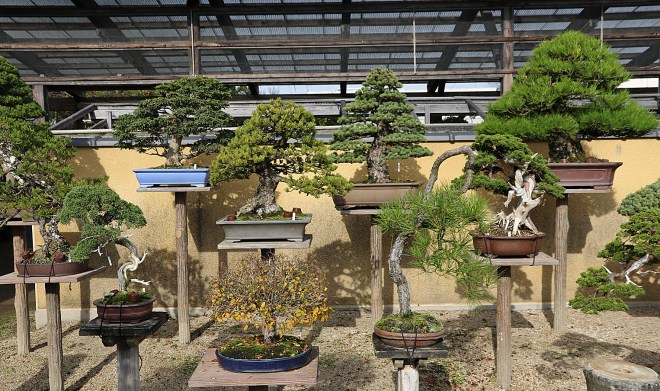
Omiya Bonsai Village, the mecca of bonsai, will be experienced, where you will see the top four bonsai gardens where many of the famous masterpiece bonsai have been created and are maintained. You will have the opportunity to meet the top bonsai artists and see their trees, both outdoors and in small indoor displays.

The Omiya Bonsai Art Museum, near the village will be on the tour where formal instructive displays, in English, can be seen as well as formal bonsai alcove displays. You can then stroll through a large outdoor garden with masterpieces displayed throughout. Directly across the street we will experience a delicious Japanese luncheon.

Bonsai artist Masahiko Kimura will be on the tour and here you can see many of the top evergreen bonsai in his small, intimate garden. He always has time for us and answers your questions as well.


 A visit to Seiji Morimai’s nearby S-Cube bonsai garden is always a highlight because of friendly hospitality while seeing thousands of bonsai and suiseki. He also accepts credit cards as well…. Bonsai containers, at great prices as well as display tables and art are always popular with our groups.
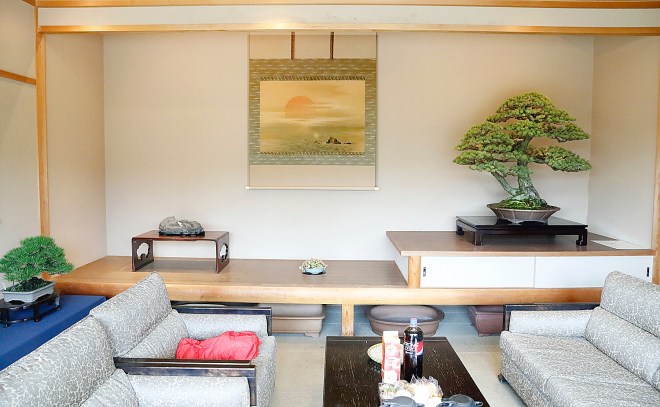


Kiunio Kobayashi’s Shunka-en Bonsai Art in Tokyo is visit you will not forget. Here approximately ten indoor formal bonsai displays will feature some of the finest, and most expensive bonsai in Japan. Outdoors a small koi pond is surrounded with other masterpieces. Having run out of room, another area has been constructed on top of the building holding antique containers and more suiseki. Truly a breathtaking experience!


A bullet train ride will bring you to the city of Shizuoka near Mt. Fuji, where Taisho-en Bonsai Garden of Nobuichi Urushibata will be visited. Although the garden generally specializes in shohin bonsai, Mr. Urushibata’s son Taiga has large dynamic bonsai. He studied with Mr. Kimura and is also traveling to the upcoming 2018 6th US National Bonsai Exhibition in September to judge and demonstrate his techniques.


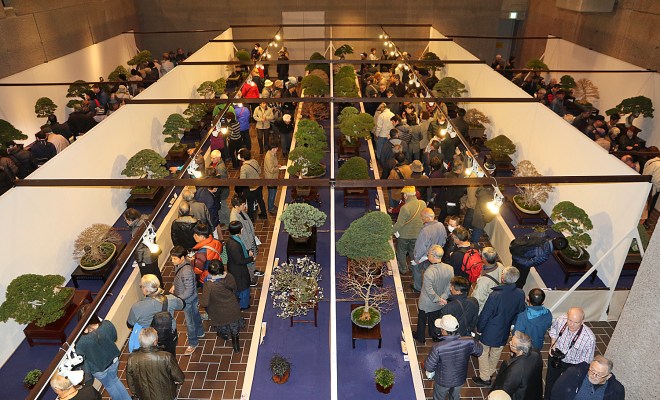
Of course, the main highlight of this tour is the Koku-fu Bonsai Exhibit Part 1 where approximately 250 stunning masterpiece bonsai are on formal display in the Tokyo Metropolitan Art Museum. Many of the famous masterpieces seen in books and magazines will be shown. After the exhibit closes for a day ANOTHER 250 bonsai will be displayed in Part 2!


Upstairs on the fourth floor of the same building you will have the opportunity to attend the opening ceremony of the Japan Susiseki Exhibition. Here, in addition to rare and beautiful famous stones you will see antique water basins and important bonsai display tables. Suiseki are also displayed with appropriate hanging scrolls.


A free shuttle bus from the museum complex will take you to the Ueno Green Club, a three story building full of bonsai, containers, tools, display stands and more are offered for sale by the top bonsai gardens in Japan. The surrounding parking lot is also crammed full of items for sale.


If members are interested a short buying side trip can be arranged to Tokoname, an ancient pottery town. Although most famous for toilet bowls, they are now famous for high quality bonsai containers. You will meet some of the top bonsai potters and also have the opportunity to watch them hand build bonsai containers in their factories. All the containers are offered at special discounted prices for our tour.


As if all of this is not enough, our tour has been planned to begin the day after the popular California Shohin Bonsai Seminar near San Francisco, CA. Many people simply make a stop in California on their way to Tokyo (usually at no extra airfare,) attend the seminar and continue on to Japan. Additional information on this seminar can be found at: www.calshohin.org


If you want to see highlights from our past tours to Japan, check out my archives and go to the February entries. Here you will see many photos from our tours.
https://valavanisbonsaiblog.com/2017/02/
https://valavanisbonsaiblog.com/2016/02/
https://valavanisbonsaiblog.com/2015/02/


Join Kora Dalager and me for another tour to see the Japanese bonsai world. Please contact Kora at kora@astound.net for additional information. She can arrange special visits if you like. Be certain to mention if you are interested in the Tokoname bonsai container buying trip, as it is NOT mentioned in the tour flyer below.
A tour flyer is available at: www.internationalbonsai.com/files/1708315/uploaded/WINTER%202018%20TOUR%20FLYER.pdf
I look forward to exploring the Japanese bonsai world with you in February.


You must be logged in to post a comment.